Español
 English

Why visit Castilla-La Mancha
The best things to do in Castilla-La Mancha depend on what you want to see between stops. The Tagus and the Júcar system explain why Toledo and Cuenca occupy hilltops and why their streets climb so sharply. In La Mancha, windmills are visible well before you reach the village, and roads cross fields for much of the way. In the mountains, bends and canyons shorten the list of places you can realistically see in a day. With three nights you can combine two of those landscapes. A week gives you time for all three.
Use the provinces to narrow your choice. Toledo offers the historic city on the Tagus, Consuegra’s windmills and Talavera’s ceramics. Ciudad Real takes in the Campo de Calatrava, the town of Almagro, wetlands and Mediterranean woodland. Cuenca spans river gorges, the mountains of the Serranía and castles on the southern plain. Guadalajara combines the Alcarria, the hills to the north and the Upper Tagus. Albacete leads from the city and its cutlery-making traditions to villages on the Júcar and mountain country around Riópar.
Many visitors begin by looking at the map from Madrid. The region also works as part of a trip towards the Mediterranean or southern Spain. Decide how you will end the trip before setting the order of overnight stops. Albacete can be a useful last base if you plan to continue east after visiting the mountains. If you fly home from your starting point, put the last night within reach of a straightforward connection.
When to go
Spring and autumn for walking and heritage
Spring is a good time to combine a morning in an old town with an afternoon outside. A cereal field around a windmill, a lakeshore and the sides of a limestone gorge respond differently to rain. Look up the forecast for the park or the village where the walk begins. During Holy Week, check where processions go and work out how you will reach your accommodation, especially if you plan to arrive after dark.
In autumn, put anything that needs good light early in the day. The sun might still be out when a gorge floor has gone into shade. The grape harvest makes for an interesting time to visit wine country, though working wineries have their own calendars. If you are coming for autumn colour in a beech forest, check how the season is going and whether access needs to be arranged. Keep a nearby town in reserve for the second part of the day.
Summer on the plains and winter in the hills
Start on exposed ridges or trails early in summer. In Toledo or Cuenca, split a long walk in two and put an indoor visit and a meal in the middle. At Ruidera, water levels, access and bathing rules are separate questions. Check the part of the chain of lakes that you intend to visit. A site farther down the valley may be quite different from the one in a photograph.
In winter, the cities let you pair short outdoor visits with museums. In the hills, expect occasional fog or ice on approaches to viewpoints and villages. A base with a choice of walks from the door makes it easier to use a short afternoon. If you are driving to see a small monument, check that you can visit it before setting off.
Getting there and around
By rail from Madrid
For a trip in 2026, use Renfe to check journeys from Madrid to Toledo, Cuenca, Ciudad Real, Puertollano or Albacete and verify the service on the day you need it. Search using the full station name and add the time it takes to get to your bed or first visit. Cuenca’s Fernando Zóbel high-speed station is outside the centre. Toledo’s railway station is low down compared with most of the places you will be visiting on foot. If you plan to leave in the evening, allow time to collect your bags and return to the railway.
If you are planning a rail trip, book each city as a separate stay or use Madrid as a base for day trips. A route that looks direct on a map can require a change in Madrid. Before choosing non-refundable accommodation, check the sequence you intend to travel and how long you would have between trains. If you arrive late, save your first short walk for the morning and allow for a separate trip to the historic centre.
Madrid-Barajas is worth comparing for a trip that begins in Toledo or Guadalajara. Alicante or Valencia may make sense for a route that starts or ends in Albacete. Check where you would collect a hire car or take an onward train and include any airport terminal transfer when comparing journeys. Select a first night that works with the arrival time, particularly if your onward trip is on a separate ticket.
When to hire a car
A car is more useful between villages and natural parks than in an old town. Consider picking it up when you leave the city and using the change of base to make your first rural stop. Ask your accommodation where to unload. A useful place to stop may be on a street below the entrance, even if the two points look adjacent on a map. If you are using a coach or bus, look up the return before buying a ticket and see how far the stop is from the specific site you want to visit.
In gorge country, check which bank your walk is on and where the nearest bridge is. Two viewpoints that appear close on a map can be a long drive apart. In La Mancha, check the complete town name. Alcázar de San Juan and Campo de Criptana are both handy for windmills, and each has its own town centre and hill.
What to see in Castilla-La Mancha
Things to do in Castilla-La Mancha on a first trip
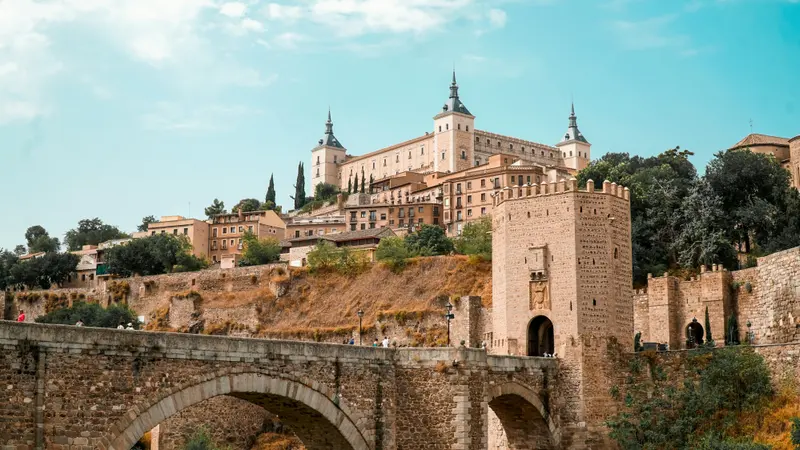
Start in Toledo at Zocodover, work out where the Alcázar stands and head downhill towards the cathedral. Continue towards Santo Tomé, the Jewish Quarter and San Juan de los Reyes. Use plazas as landmarks and take the side lanes when you have time. To finish the day, see the city from across the Tagus or head to the Mirador del Valle. From the other side of the river you can see how the hill and the bend determine the city’s shape. If you want an introduction to several buildings, compare guided tours of Toledo and check which interiors are included.
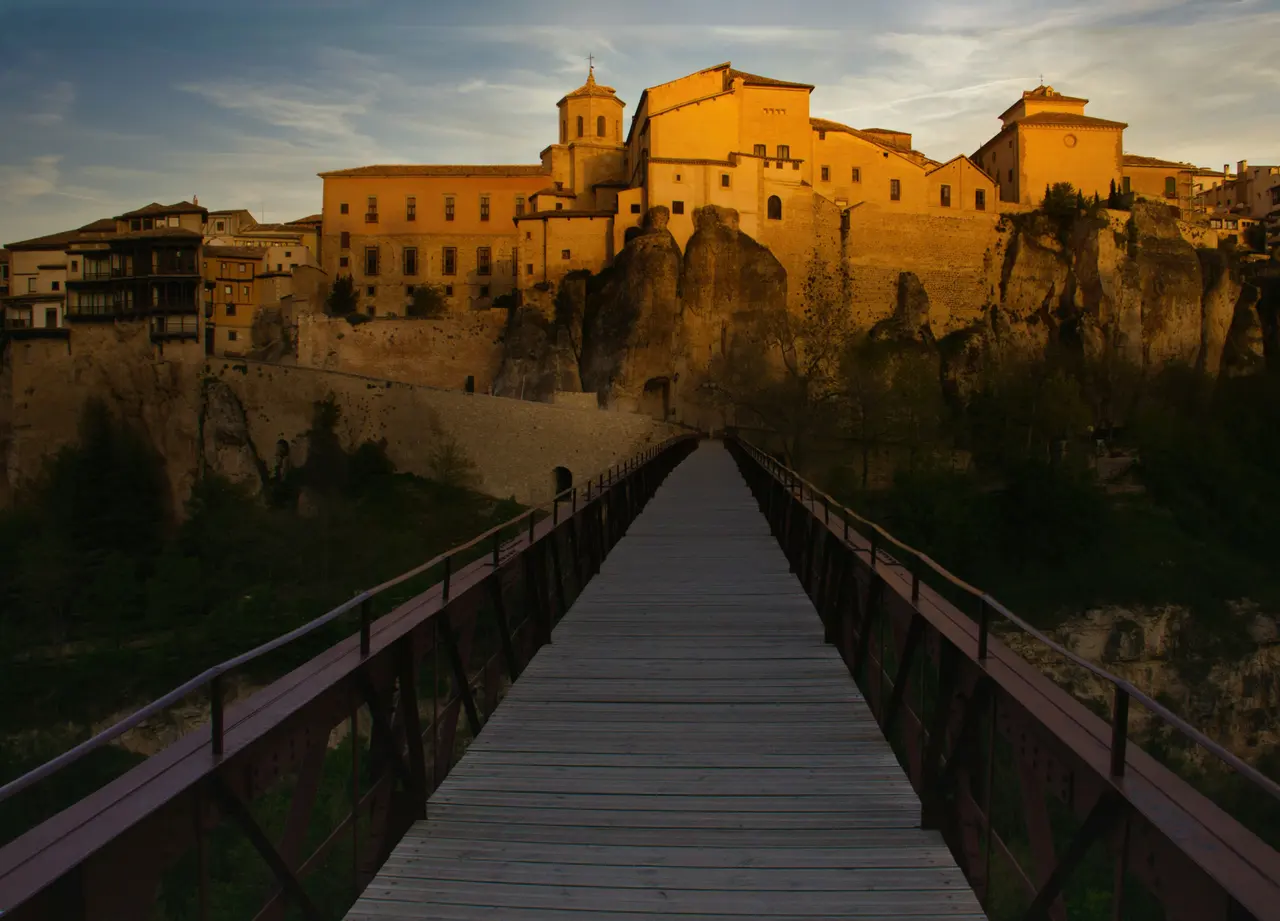
In Cuenca, start at Plaza Mayor for the cathedral and follow the streets towards the Casas Colgadas, the Hanging Houses. From San Pablo Bridge you can see how the houses overhang the Huécar gorge and look towards the former convent across the valley. Set aside some time for the Júcar side, too. A walk high on the ridge followed by a riverside stroll lets you see how different the cliffs and façades look from below.
Windmills, theatre and hill towns
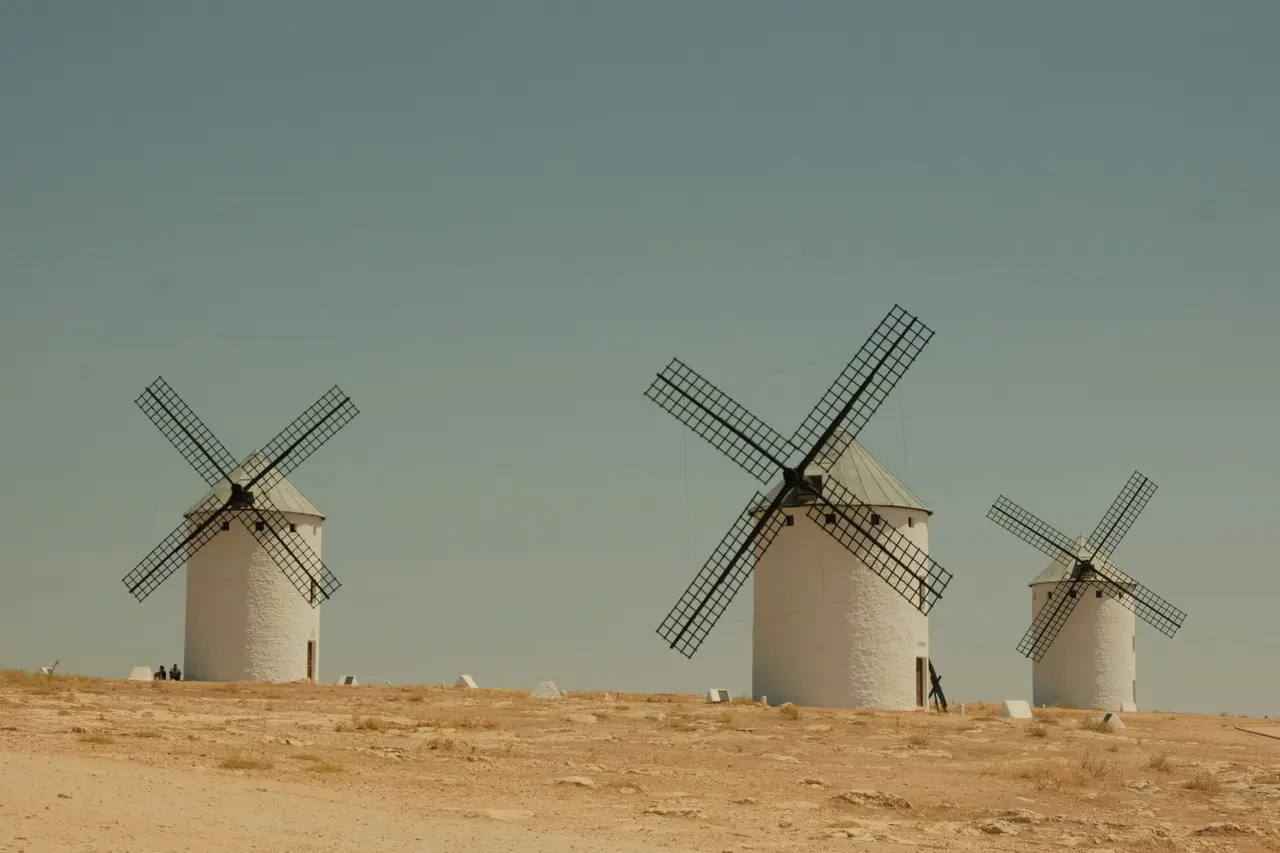
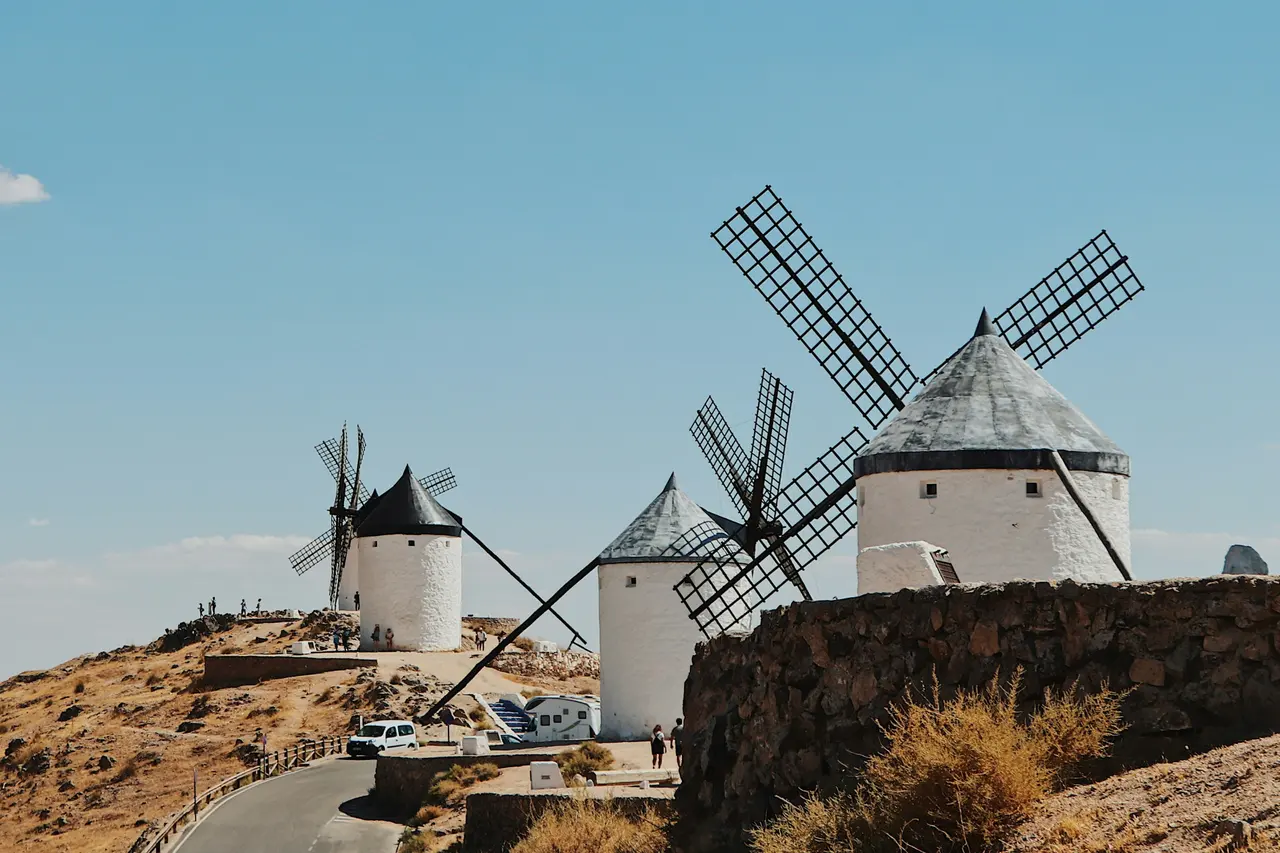
Consuegra and Campo de Criptana offer two different walks. At Consuegra, the windmills follow the ridge alongside a castle. At Campo de Criptana you can go from the mill hill down into the Albaicín quarter and see how the slope connects the two. If you visit both, pick one for a look inside a mill and use the other to take your time outside. Seeing the machinery puts the shape and position of the buildings in context.
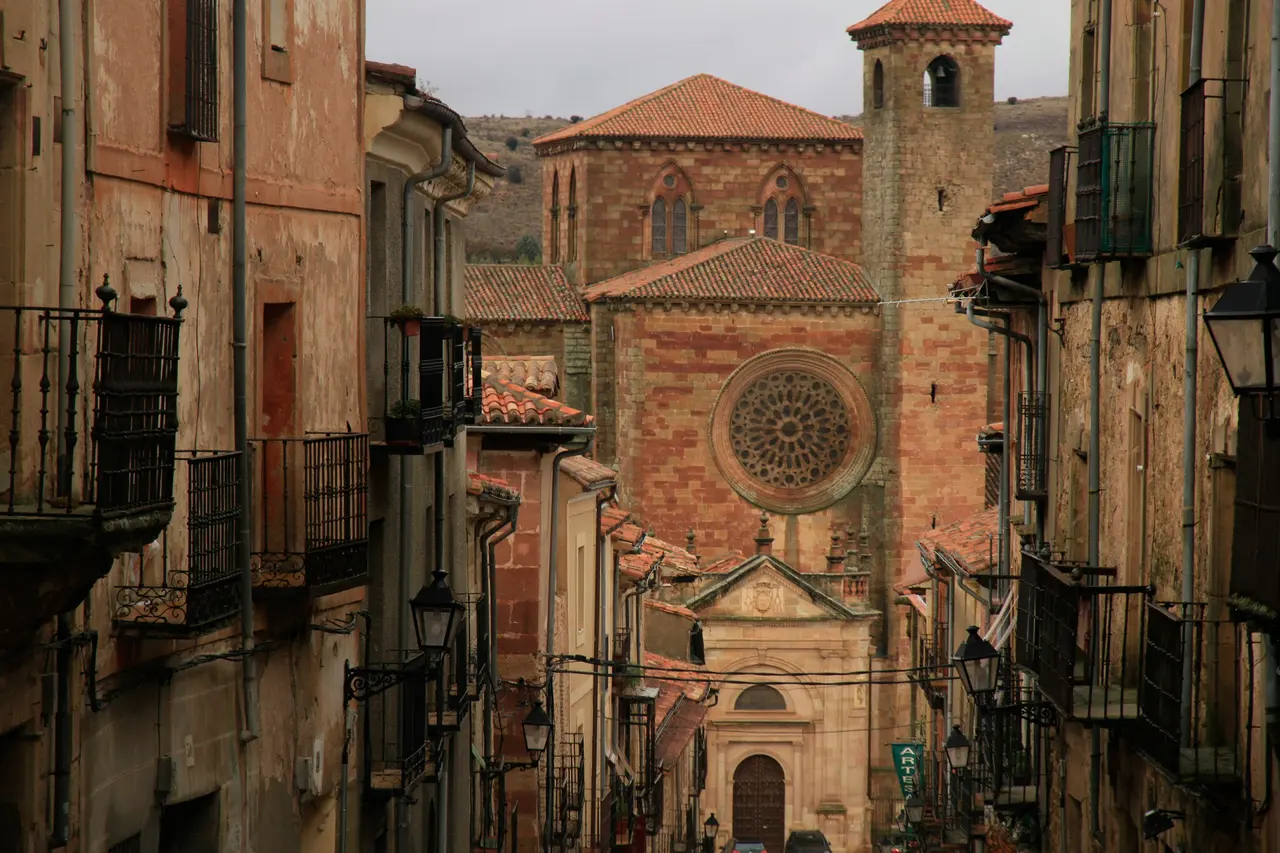
In Almagro, spend some time in Plaza Mayor and go inside the Corral de Comedias. Sigüenza is best understood on a walk from the cathedral uphill through the old town to the castle. In Alcalá del Júcar, you can start by the bridge below the white houses and climb to the castle. In each place, work out where you want to finish before you park. Seeing a square and walking to the highest point of a town take very different amounts of time.
Monuments and heritage
Toledo’s places of worship and Almadén’s mines
Toledo’s cathedral, synagogues and nearby buildings tell the city’s history at walking distance. Santa María la Blanca and the Synagogue of El Tránsito have different interiors and histories. If you want to see El Greco’s paintings in context, combine Santo Tomé with a visit that explains his work in Toledo. Leave time for one of the bridges, where the relief and the former entrances into the city become clearer.
In Cuenca, follow the lane from the cathedral to the Hanging Houses to see how the buildings were adapted to the terrain. Heritage in Almadén tells a story of industry. UNESCO recognises its mercury heritage alongside the mines of Idrija in Slovenia. A visit to the mining park helps place the workings and the surface buildings within the town’s history. Check what your ticket covers if you want to go underground or see a specific part of the site.
Castles above plains and river bends
Build a day in southern Cuenca province around Belmonte Castle. In Alarcón, look at the defences as well as the curve of the Júcar around the town. Take time on the approach before heading for the centre to understand how access was controlled. In the west of Toledo province, Oropesa’s castle combines well with a walk through town and a stop at Talavera de la Reina. If that is the area you want to explore, choose a base that saves you a return to Toledo city each night.
Museums and culture
The Museum of Spanish Abstract Art occupies part of the Hanging Houses in Cuenca. It is worth stepping inside even after seeing the buildings from the bridge. The Municipal Cutlery Museum in Albacete, based in the Casa de Hortelano, puts the craft that helped shape the city on display. Both are a good way to vary the pace of a day that otherwise involves a lot of walking.
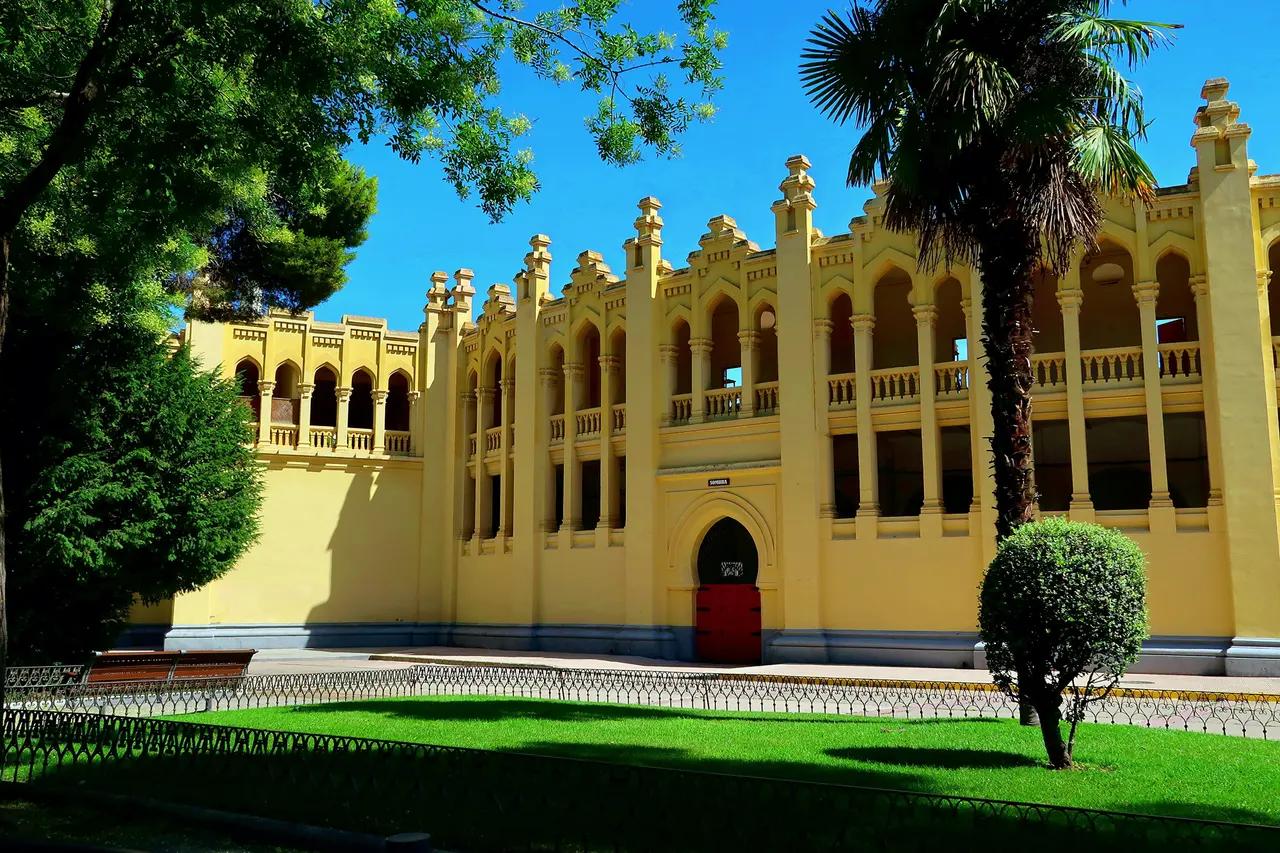
In Almagro, a look inside the Corral de Comedias makes the town’s relationship with theatre much clearer. If you book a performance, plan the rest of the day around the time you need to be there. In Guadalajara city, the Palacio del Infantado introduces the history of the Mendoza family. In Talavera, the Ruiz de Luna Museum puts the ceramic patterns found around town into context.
Charming villages
The Alcarria and northern Guadalajara
In Pastrana, start with the ducal palace and the network of streets around it. Brihuega offers both a walk through the old town and a chance to spend time in the surrounding farmland. The fields in many lavender photographs are outside town. In Atienza, look at the position of the castle from below and keep time for the climb after walking through the squares. Plan Brihuega and Pastrana as an introduction to the Alcarria. Save Atienza and Sigüenza for a day in the north.
From the Campo de Montiel to the southern hills
In Villanueva de los Infantes, walk out of the main square along streets that still preserve the stone doorways of large houses. Continue towards Ruidera if you want the second part of the day by the water. The Plaza Mayor in Alcaraz has towers and arcades around a single space, easy to compare on a short walk. For a longer mountain outing, choose Riópar and the surrounding villages and leave time for a viewpoint walk or a meal in town. If you have only half a day, stay in one valley.
Nature and protected areas
Wetlands, lakes and Mediterranean woodland
Tablas de Daimiel protects a wetland on the plains. Its boardwalks and observation points let you look at where the water lies and which birds use each part. Check conditions before travelling. The Lagunas de Ruidera are a chain of lakes in the upper Guadiana catchment on the border between Ciudad Real and Albacete provinces. Pick a few viewpoints and leave time to see how the lakes sit within the valley. Use designated places to watch the water, especially when the river is high.
Cabañeros has open ground known as the raña as well as wooded hills. A hillside walk may start far from the area used for visits to see wildlife in the open. Check the location of the trail or meeting point before choosing where to stay. A few hours at a wetland and a day in the woods make for quite different birdwatching trips. Bring binoculars so you can observe wildlife from further away.
Limestone, forests and mountain rivers
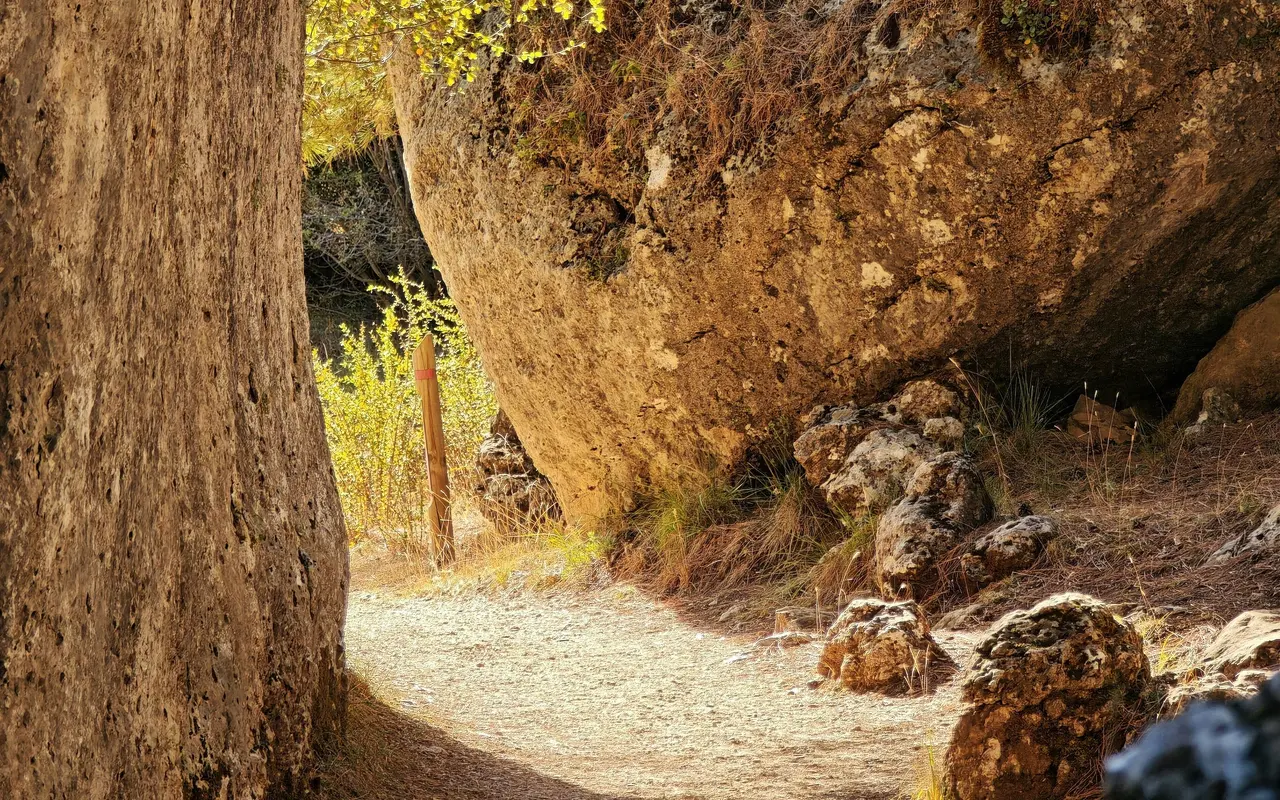
In the Serranía de Cuenca, the Ciudad Encantada illustrates how erosion shapes limestone. The source of the Cuervo has a different mix of water, woodland and slopes. An Upper Tagus outing works best when you pick one sector before setting off. A viewpoint near Zaorejas and time beside the river can fill most of a day. Save other gorges for a separate trip.
Further south, trails and viewpoints give views of the source of the Mundo in the mountains of Albacete. The regional tourism office says that vehicle access is regulated on some busy dates in 2026. Check the park’s current advice. The flow varies with conditions. It is worth planning time in the mountains whatever the waterfall is doing.
Festivals and traditions
Toledo scheduled its Corpus celebrations between late May and early June in 2026. You can follow the route of the procession to see how parts of the old town are decorated and how different it feels during the festival. Check the programme before planning around a future edition. Where you stay depends on whether you want to be close to the celebrations or leave the city easily for day trips.
Albacete held its fair in September 2026. The fairground helps you orient yourself when you arrive and can guide your choice of accommodation. In Guadalajara province, the 2026 Lavender Festival scheduled concerts for 10, 11, 17 and 18 July in the fields around Malacuera and Olmeda del Extremo. Flowering depends on the season. If you mainly want to see the landscape, check which paths lead past the fields you can visit.
What to eat
Manchego cheese with protected designation is made with milk from Manchega sheep. If you are buying some to take home, ask for a taste at different stages of ageing. Pisto is a cooked vegetable dish. Migas, gachas and atascaburras can be substantial, so consider a few shared plates. In Cuenca, look for morteruelo and ask about the local version of ajoarriero. In Toledo, marzipan suits a short stop during a walk, while carcamusas, a stew, are a better fit for a tavern lunch.
In the Alcarria, look for honey with its origin on the label. Madridejos in Toledo province pairs a museum about saffron with the story of its local agriculture. For a winery visit, pick an area that suits the rest of the trip. Valdepeñas fits a Ciudad Real itinerary and Manchuela works well if you are heading towards the Júcar and the Cabriel. Work out whether the visit includes the vineyard, the production facilities or a tasting. Arrange a ride back if you plan to drink the wine.
Sport and outdoor activities
Walking, cycling and looking at the night sky
The Sierra de Alcaraz greenway follows a former railway corridor southwest from Albacete. Choose a section for the surface, shade and ease of turning back. Check the state of any tunnels along your route and carry a light. In Cuenca, make a day of the gorges below the city or drive into the Serranía for a woodland route. Add up the climb if your route includes a riverside walk and a return to the old town.
If you book a water activity, ask about the section of the Upper Tagus, Júcar or Cabriel that the operator uses. Check the flow, what clothing you need to bring and how you get back from the finish. For stargazing, save directions to a legal place to park while there is still daylight. Check the phase of the moon and leave time to sleep in the following morning.
Routes and itineraries
Three days for one city and the windmills
Spend your first day walking between Toledo Cathedral and the Jewish Quarter. On day two, finish your main sightseeing, pick up a hire car and head for Consuegra. Stay on the plain for a visit to Campo de Criptana on the third morning or make an early return if you need to reach Madrid. For a Cuenca-based alternative, give a day each to the old town, the Serranía and Belmonte. Treat them as separate trips so that there is time for a walk and a proper meal at each stop.
Five days for towns and wetlands
Spend two nights in Toledo and move to Almagro, taking in Consuegra on the way. Set aside a day for the Campo de Calatrava and Tablas de Daimiel, depending on conditions in the wetland. On the last day, either return by the windmills or make for the Ruidera lakes if you are continuing east. To do both, add a night near the windmills or in the Campo de Montiel and change bases midway through the day.
A week through the mountains and the Júcar valley
Begin in Guadalajara province and spend a night in Sigüenza, with a gorge walk before you head for the Upper Tagus. Then base yourself in Cuenca to give the city a morning and spend a full day in the Serranía. Finish in Albacete or in one of the Júcar villages if your next stop is the Mediterranean. If the source of the Mundo is a priority, stay around Riópar and make Alcalá del Júcar part of a different trip. You will be able to start walking early without driving across the province first.
Travelling with children
Give each stop a question that the group can answer by looking around. In a windmill, work out how the sails make the machinery turn. In Cuenca, look for the part of the Hanging Houses that extends out over the gorge. At the Tablas de Daimiel, take binoculars and choose one bird to try to identify. Give the group time to stay in a place once someone finds something interesting.
On a mixed-age trip, leave the long drive for the day you change accommodation. At other times, pick a short walk near a town so anyone who has had enough can take a break without ending the outing for everyone. In a gorge, have younger walkers count the bridges or sketch the shape of the valley from the viewpoint before you go down to the river.
With a pushchair, compare the path along a river with the cobbles and slopes of the old town. Ask your accommodation about the route from the parking area as well as access to the building. In hot weather, agree in advance when to turn around and plan the most exposed walk for the morning.
Where to stay in Castilla-La Mancha
For Toledo and Cuenca, decide if you want to wake up in the old town near the main sights or stay lower down for a simpler arrival by car. Ciudad Real is handy if you plan to travel in several directions. In Almagro you can finish the day close to the theatre and Plaza Mayor. In Guadalajara province, stay in Sigüenza for the north or choose somewhere closer to the Upper Tagus for several days of walking.
In Albacete, separate the city’s transport connections from the rural stays on the Júcar or in the Sierra del Segura. If you book a room out of town, establish whether you can walk to dinner and when you can check in. A base that keeps park entrances within easy reach makes it possible to move walks to the clearest day and use the rest for museums and town visits.
See places to stay in Castilla-La Mancha (opens in a new tab)Affiliate link: if you book through it, we may earn a commission at no extra cost to you.
Practical tips and common mistakes
Save the full names of stations, viewpoints and car parks. A river or natural park covers too much territory to use as your only driving instruction. For an out-and-back hike, mark where you will turn back and allow time to reach the trail from the car. A descent at the start can mean a climb when you are tired at the end.
Check with the transport company before buying a ticket and with the monument before counting on an indoor visit. In natural areas, follow instructions on the ground and check the state of the paths. Rain can affect tracks and rivers long after the sky clears. Pick a town or a museum within reach of the same base for a day when it is harder to get outside.
With limited time, choose two contrasting visits, such as Toledo and a windmill ridge, or Cuenca and a day in the Serranía. A third stop works best on the way between them. When it takes you into another district, that district will usually reward a trip of its own.