

 Español
 English

Why visit Oviedo
Start at the cathedral if you’re deciding what to see in Oviedo. Set aside a second part of the day for the monuments on Mount Naranco. The Holy Chamber puts the medieval kingdom in context before you see the buildings it left on the hillside. Between the two, you can cross the market square, pause in the city park or choose one of the museums. The capital of Asturias is a manageable two-day cultural break without a car. A third night gives you time for the coast or for a walk out of the city.
The scenery changes in a handful of streets. In front of the cathedral, the open square makes it easy to take in the building. At El Fontán, the arcades bring you back to street level. Campo San Francisco is close by if anyone needs a break. Mount Naranco takes a separate journey, particularly if you have tickets for a specific time or are travelling with children.
When to go
Late spring and early autumn work well if you’re splitting your time between the old town and the hillside. In summer, longer days give you more scope for a walk after the museums. For a September trip during San Mateo, check where the events are based before choosing a room. Some stages are in the old town and others are around the main park.
Winters are cool and rain is possible in every season. If mist covers Naranco, plan the viewpoint for later and keep your visit to the buildings if you have confirmed access. Work around any interiors you’re particularly keen to see. The walk from square to square is easy to fit around timed visits and gives you a way to carry on exploring between showers.
Getting there and around
In 2026, Renfe listed trains from Madrid Chamartín to Oviedo. The railway station is at the upper end of Calle Uría. From there, follow Uría downhill to Plaza de la Escandalera, where the walk divides towards the park and the cathedral. The coach station is in the same part of town. If you’re staying inside the pedestrian area, check the approach with luggage before booking a transfer.
In 2026, Aena listed Alsa coaches from Asturias Airport (OVD) to Oviedo. For a late flight, check the airport departure time and the final leg to your accommodation. Leave a hire car parked while you explore the central squares. For a side trip to Gijón, compare public transport with driving before deciding whether you need a car for the whole trip.
Search for Santa María del Naranco when working out how to get to the monuments. A search for Mount Naranco may send you to the summit instead. The two early medieval buildings sit lower down. Check the meeting point if you’re joining a visit. Walking up from the old town involves a sustained climb, so a lift or local transport uphill can leave more time and energy for the monuments themselves.
What to see in Oviedo
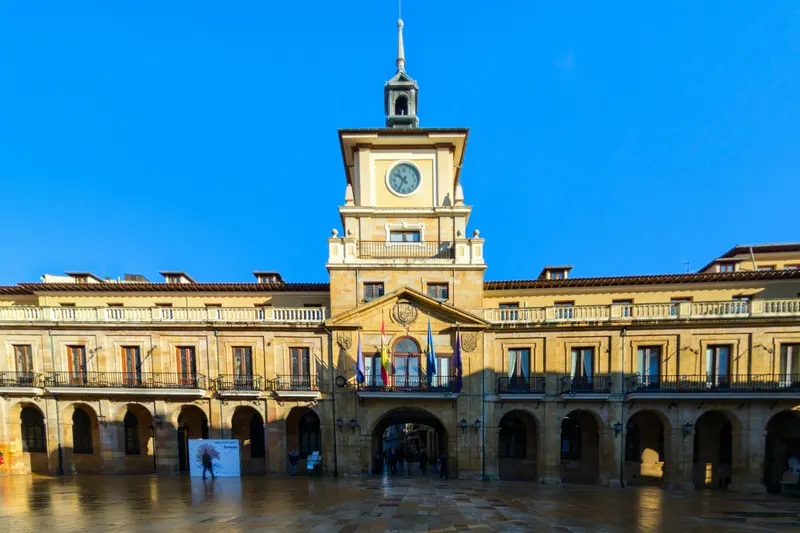
Cathedral square, Porlier and San Isidoro
Plaza de Alfonso II el Casto takes its name from Alfonso II, the Asturian king. Cross the square to see the whole front of San Salvador Cathedral, then approach the porch. The statue of Ana Ozores refers to La Regenta, a novel by the Spanish writer Clarín. Walk through the narrow streets around the cathedral and Plaza de Porlier to get a feel for the setting that inspired it.
Calle Cimadevilla leads down to Plaza de la Constitución, where the city hall stands next to San Isidoro el Real. Carry on to El Fontán or take the short detour to Trascorrales. The slope and paving can slow you down with a pushchair. Calle Rúa, where you pass the fine arts museum, gives you a different route back to the cathedral.
El Fontán and Trascorrales
El Fontán has a covered market and an arcaded square close together. Walk through the arcades towards Plaza de Daoíz y Velarde to see how the space opens up. Check the market’s opening times if you want to see the stalls in use, and make it a morning stop. The square is still worth crossing if you arrive after the market shuts.
Trascorrales is an easy detour to miss because it’s approached from narrower streets. Look for the milk seller sculpture, a reminder of the trades once carried on in these public spaces. From here you’re close to the cathedral and Calle San Vicente. For a longer sit-down or a break with children, walk over to Campo San Francisco.
La Escandalera and Campo San Francisco
Plaza de la Escandalera joins the old town to the shopping streets and park. Nearby is Teatro Campoamor, associated with the opera season and the Princess of Asturias Awards. If you’d like to see the interior while you’re here, check the programme and pick a performance that fits your dates.
Campo San Francisco is an easy addition between the station and the old town. Stay on the main paths and pause at the pond for a short visit. With more time, continue to Paseo del Bombé and leave by another gate. Allow for the walk back across the park if your next visit starts near the cathedral.
Monuments and heritage
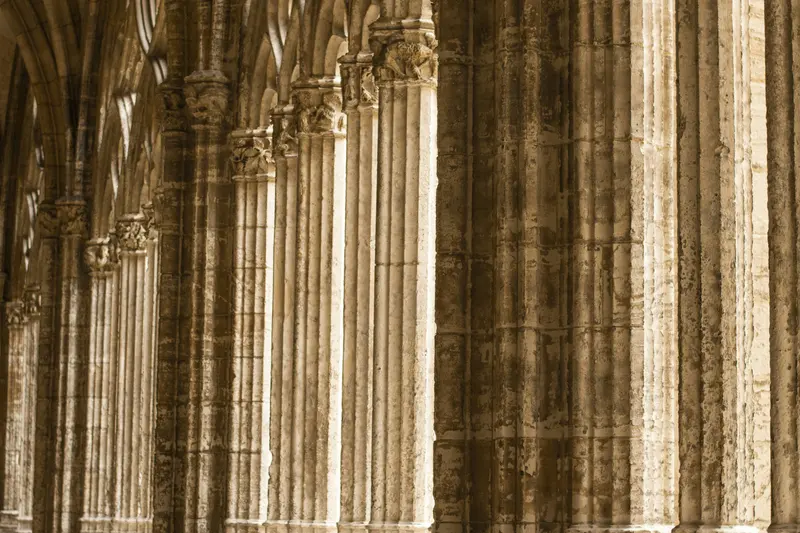
San Salvador Cathedral and the Holy Chamber
The cathedral’s Gothic tower and nave are the most visible parts of a building that developed over centuries. The Holy Chamber belongs to the UNESCO-listed group of monuments and holds metalwork including the Cross of the Angels and the Victory Cross. Check which spaces the visit you are considering covers. Seeing the chamber before you go to Naranco helps you identify what survives from the early medieval capital and what was built around it later.
The cathedral is also a starting point for the Camino Primitivo to Santiago de Compostela. If you’re walking the route, save the sightseeing for the day before you start. That gives you time to see the area surrounding the square without carrying everything you need for the trail.
Santa María del Naranco and San Miguel de Lillo
Santa María del Naranco began as a royal building under Ramiro I. Walk far enough back to see the long plan and the openings on the upper level. The lower and upper storeys are easier to relate to each other from the slope. Nearby San Miguel de Lillo was built as a church, and only part of the early structure survives. The entrance and height give you a different way to read the building.
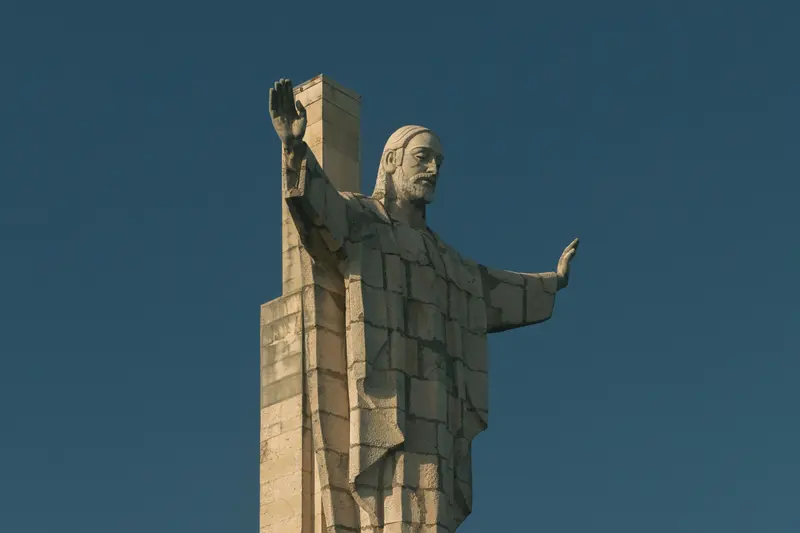
The monuments make sense on the same outing. Allow enough time for the transfer from the old town and for the walk between the two. The summit is a separate climb, around 2.1 km on foot from Santa María on the route described by Turismo Asturias. Look for the Sacred Heart statue at the top to find the viewpoint over the city. If you intend to return to the city on foot, look up the route back before setting off from the monuments.
La Foncalada and Santullano
La Foncalada is a surviving medieval water supply structure near the old town. Stop to see the little stone building in relation to its basin and channel. The fountain fits into a walk from the station or a foray into Gascona. For the wall paintings at San Julián de los Prados, known as Santullano, check how to visit the interior. Give the church its own slot if you are short of time. Both sites are in the UNESCO listing alongside the Naranco buildings.
Museums and culture
The Museum of Fine Arts of Asturias occupies several buildings next to the cathedral. Its early collections are in Palacio de Velarde and later works are divided among Casa de Oviedo-Portal and the modern extension. Pick a period if you have time for only one part. From the street, you can also compare the older fronts on Calle Rúa with the contemporary entrance that faces the square.
The Archaeological Museum of Asturias is in the former monastery of San Vicente, behind the cathedral. Choose the period you want to explore, especially if you have children who would enjoy looking closely at a few objects. Pause at the cloister to see how the museum building fits into the old town. If you want to visit both museums, leave time outdoors in between. They’re near enough to swap the order if the weather changes and you have checked both opening schedules.
Neighbourhoods and areas
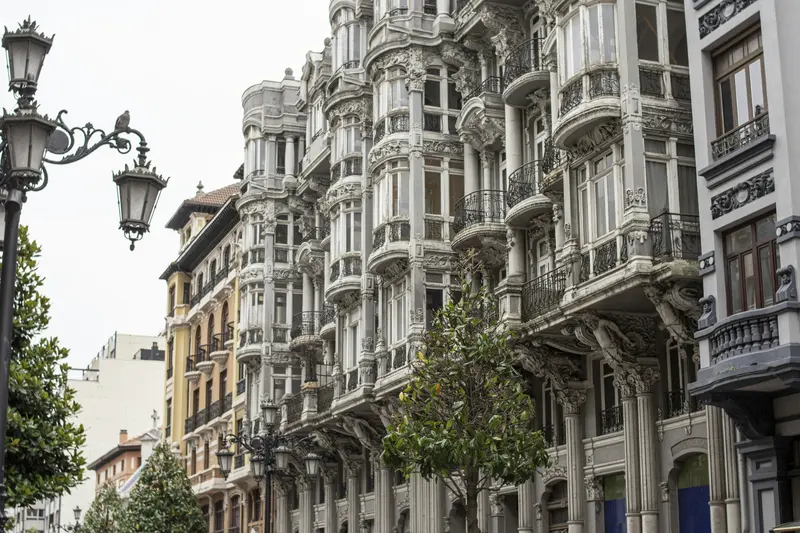
Calle Uría and the station quarter
Uría is handy for a late arrival by train or an early departure. Use the Escandalera and Campo San Francisco at its lower end to orient yourself. For a different route back after the old town, cross the park towards the shopping streets on the far side. A room near the park or theatre keeps you within walking distance of the cathedral without taking you all the way up to the station.
Gascona and the foot of Mount Naranco
Gascona is near the Foncalada and the upper edge of the old town. It works if you want to walk back after dinner. The streets nearer the cathedral make it easy to visit the museums or see the squares early in the day. Compare particular streets for access and potential noise during the festivals.
La Florida and Parque de Purificación Tomás lie near the foot of Naranco and have a different feel from the central squares. Keep this area in mind if you’ve seen the centre and want a green walk at the edge of town. Treat the lower slopes and the route up to the monuments as separate outings when planning how much to cover in a day.
Nature and protected areas
The Fuso Greenway begins in Parque de Invierno and follows an old railway. Start in the park, head towards the valley and turn back at a point that suits your group. The former station at La Manjoya is a useful turning point, about 3 km from the start according to Turismo Asturias. If you would like to continue towards Las Caldas, look at the route in advance and decide how you’ll get back.
For open views, head towards Priañes to see the bends of the River Nora. The viewpoint suits an outing by car on a clear day and can be combined with a walk nearer the valley floor. If you’re choosing between Priañes and the high ground on Mount Naranco, decide whether you want to see a river landscape or look down across the city.
Festivals and traditions
San Mateo
The September 2026 programme brought music to Plaza del Paraguas, Plaza de Feijoo and Paseo del Bombé, with shows on 21 September. Pick the venue you want and check how to approach it on foot. If you’re moving between the park and a square in the old town, allow time for the crowds around the end of an event.
La Balesquida
In 2026, Martes de Campo took place on 26 May around Campo San Francisco. It’s the best-known day of La Balesquida, associated with the distribution of the traditional bollo. Stop by the park after seeing the old town if you want a sense of the gathering. Look up the relevant year before booking a future trip, since the May 2026 date applies to that edition.
Routes and itineraries
One day. Start at the cathedral and visit the Holy Chamber or one of the nearby museums. Continue through Plaza de la Constitución and El Fontán, then cross to the park. Fit in Naranco after the break if you’ve confirmed your visit and have time for the journey back. If you have an early booking on the hillside, reverse the order and finish among the central squares.
Two days. Spend one morning in the old town and give your chosen museum enough time. In the afternoon, walk to La Foncalada and add Santullano if you’ve checked access. Start the second day at Santa María del Naranco and San Miguel de Lillo. Stay outside for a longer walk if the hillside is clear. In mist, return to the city for the museum you left for later.
A wet weekend. Choose a section of the fine arts museum and cross to San Vicente if the archaeology museum is open. Use breaks in the rain for the squares between them. Save the hill for the clearer stretch. If the weather stays wet, keep to the part of Naranco you’ve booked and drop the climb to the higher viewpoint.
Day trips
The coast and eastern Asturias
In Gijón, walk from the marina through Cimavilla and along San Lorenzo. If the Laboral cultural complex is your priority, put it first and go to the waterfront on the way back. Avilés pairs old streets such as the arcaded Calle Galiana with a walk to the estuary and Centro Niemeyer. Give either city its own day if you are adding an indoor visit.
For a day out on the eastern coast, walk through Llanes and add one beach in the municipality. If you also want to visit the Sella valley, Covadonga and the Picos de Europa, consider moving base. The five-day itinerary for eastern Asturias groups these outings so you can see how they fit together.
The Trubia valley
On the Senda del Oso, pick a section and a turning point before you set out. The former railway runs through gorges and connects several villages. Choose an out-and-back stretch if you want to walk without arranging a transfer. If you hire a bike, ask where it goes back at the end. Give this outing its own day even on a short trip, so you can complete the ride without rushing the old town afterwards.
Travelling with children
Campo San Francisco is a useful place to break up visits. From the Escandalera entrance you can reach either the old town or the shops. Inside a museum, pick a piece to find or a room to explore. If everyone still wants to walk, continue to El Fontán. Otherwise, the park is close enough to come back to.
On Naranco, plan the monuments and the longer walk separately. The buildings already make a short trip. Carry on uphill only if the weather, the paths and the group’s energy suit it. For an outing along the Fuso Greenway, pick a place to stop and be ready to turn around earlier if needed.
Where to stay in Oviedo
The cathedral area puts museums and El Fontán close to your door. Near La Escandalera or Campo San Francisco, you’re between the old town and Uría. Around the railway station, you have a shorter walk with bags and an easier start to a day trip. Check the drop-off point if you book somewhere on a pedestrian street and arrive by car.
The outskirts can work when most of the trip involves going out by road. Check parking at the accommodation and how you’ll reach the city centre in the evening. For two nights focused on Oviedo, a single central base gives you the flexibility to change the order of the parks and interiors as the weather changes.
See places to stay in Oviedo (opens in a new tab)Affiliate link: if you book through it, we may earn a commission at no extra cost to you.