

 Español
 English

Why visit Melilla
The best things to do in Melilla fit into a walk from Plaza de las Culturas. Go uphill towards the ditches and stone gates of the old fortress, or head towards Plaza de España and carry on into the Ensanche, the city’s historic expansion district. Within a few streets, the view changes from tunnels cut through rock to bay windows, patterned plasterwork and curved iron balconies. Give both parts of town your time on a first visit.
Melilla is a Spanish autonomous city on the North African coast, beside Morocco and facing the Alboran Sea. From the ramparts you can see how the citadel sits above the coves and harbour. The Ensanche tells a different part of the story through the theatres, shops and civic buildings that appeared as the city grew around the turn of the twentieth century. Its synagogue, mosque and churches give the walk a further dimension.
It is an easy city to plan around architecture and time outside. With two days, you can walk the fortress slowly, choose a museum, return to a favourite façade in better light and still spend an afternoon by the sea. If you have only a few hours before an onward journey, stay around the citadel and Plaza de España. Save the northern shore and pinewoods for a day when you can linger.
When to go
Spring and autumn for sightseeing
April and May suit a trip with plenty of walking outdoors. The 1981 to 2010 climate averages published by AEMET and the World Meteorological Organization put the average daily high at around 20°C in April and 23°C in May. October averages around 24°C in the daytime, with more rain than May. Pack a layer for the ramparts and keep a museum in mind if you have to rearrange a morning.
September works well for a mix of sightseeing and beach time, with an average high around 27°C. Walk the old town early, have lunch in the Ensanche and leave the waterfront until later. Check the local calendar before you book, especially if you want to catch a festival or will be relying on a particular museum being open.
Summer for the beach, winter for the old town
July and August are the driest months in the series and average daily highs are around 29°C. Start early for the exposed battlements, build shade into the middle of the day and return to the Art Nouveau streets later if you want to photograph the details. If the plan involves a ferry crossing, cove or dive, factor in wind and sea conditions even on a sunny day.
In January the average high is close to 17°C. Rain and shorter daylight hours will shape the visit more than cold. Put the façade walk in the brighter part of the day and use a museum or a short central loop to fill any gap left by the weather.
Getting there and around
Flying from mainland Spain
Melilla Airport (MLN) is about three kilometres from the centre, according to Melilla Tourism. Aena listed routes from Madrid, Málaga, Almería, Granada and Seville in 2026. Start your search with Madrid and Málaga if you are coming from overseas, then check schedules for the exact date. Flight listings can vary by season. The official taxi rank is at the passenger terminal.
If you are buying two separate tickets, leave enough time to collect luggage and go through the next check-in and security. Bear the return journey in mind too, especially if the international flight departs early. A taxi direct to your accommodation is convenient on arrival if you have heavy bags or are staying uphill. You can do most of the sightseeing on foot once you are settled.
Ferries from Andalusia
The 2026 offer included crossings from Andalusia: Málaga, Almería and Motril. Check the precise departure port, sailing direction and check-in deadline. If you are considering an overnight ferry, compare the cabin and seat options, and arrange somewhere to leave your bag if you arrive before hotel check-in. A daylight crossing may fit better if your plans depend on feeling rested on arrival.
Melilla’s passenger port is close to the city centre and the fortress. Leave a buffer if you have a flight or train on the mainland after disembarking. The ferry makes sense with a car if you have a use for it or are bringing bulky equipment. For a short stay focused on the central sights, factor the vehicle ticket and extra boarding time into the decision.
On foot in the centre, with a taxi for longer climbs
Plaza de España makes a good starting point. Walk towards Plaza de las Culturas for the fortress, along Avenida Juan Carlos I for the Ensanche, or towards the marina and beach for a longer promenade. The old town has slopes, steps and uneven ground even where the map suggests a short crossing. If you need step-free access or a gentler gradient, ask the tourist office about the approach to each attraction you have chosen.
Consider a taxi for Rostrogordo and make a plan for getting back before you leave. On the waterfront you can set out without fixing the length of the walk. San Lorenzo works as a turnaround point, with Los Cárabos and La Hípica farther along the seafront if you have the time.
What to see in Melilla
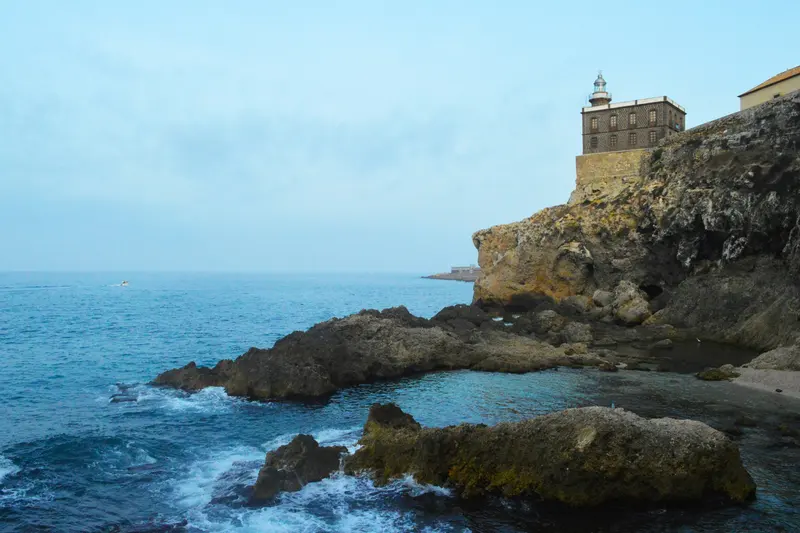
Melilla la Vieja, from the lower square to the lighthouse
Begin at Plaza de las Culturas, below the fortress. The four enclosures of Melilla la Vieja make more sense when you see how they use the headland: three project towards the sea and the fourth protects the inland side. Look for a defensive ditch and a bastion before you climb. It is easier to follow the changing levels and work out which direction each wall faced once you have seen the ground below it.
The Puerta de Santiago gate and Plaza de Armas are useful landmarks between enclosures. Continue uphill to the Peñuelas warehouses and cisterns in the first enclosure. The lighthouse and the bastions on the sea-facing end give you another view, towards the port and open coast. If you came for archaeology, spend some time at Peñuelas before walking out to the headland.
Make room for the Cuevas del Conventico. The galleries cut into the rock show how people used the space below the fortress as shelter. The link with the Trápana cove is easier to appreciate after seeing the walls and the headland from outside. Check how visits work before climbing. If a cave visit will not fit the day, there is plenty to see in the open streets and squares.
The Golden Triangle and the Art Nouveau streets
Find Casa Melul at 1 Avenida Juan Carlos I. Start at street level and work upwards, looking at where the balconies and enclosed bays sit against the ornament. Compare it with Casa Tortosa, another Enrique Nieto building, at number 9. Then walk to Plaza de Menéndez Pelayo for La Reconquista. The opposite pavement is a good place to see the floral details across the façade at once.
On Plaza de España, the Palacio de la Asamblea shows a different side of Nieto’s work. Melilla Tourism lists the building as Art Deco. Its lines and massing reward a comparison with the curving decorative work further along the avenue. If you are photographing the buildings, pick one to revisit later. Side light brings out the relief that can disappear when the sun faces the street directly.
From Parque Hernández to the marina
Take a break in Parque Hernández just off Plaza de España. This divides the walk through the Ensanche into manageable sections, particularly with children or in summer. Then head down to the waterfront to see the old mineral loading pier near the marina. It helps explain the growth of the port in a way the commercial and civic buildings inland cannot do on their own.
Carry on to San Lorenzo if you have time. The waterfront gives a different view of the city from the fortress walls: the harbour is now in the foreground and the urban coast opens to the south. On a day trip, choose between continuing along the beach and spending a little longer at the fortress. Booked indoor visits are a good reason to give the old town priority.
Monuments and heritage
Reading the fortress from the ditches
Construction at Melilla la Vieja began towards the end of the fifteenth century on the site of ancient Rusadir. The fabric you see now comes from different periods. On the land side, look for the Foso del Hornabeque and the bastions of San Pedro and San José. On the seaward side, see how the wall follows the edge of the rock. Compare the levels to work out which defences guarded the way in and which overlooked the coast.
The sixteenth-century Aljibes de las Peñuelas address a less visible part of life in a fortified town: storing a reliable supply of water. The eighteenth-century Fuerte de Victoria Grande adds a later chapter on the landward side. Together they make a good short study of the engineering of the fortress. If time is tight, keep to the cisterns and take in the views from the first enclosure.
The Route of the Temples
The Or Zaruah synagogue, the Central Mosque and the Church of the Sacred Heart are all worth locating on a walk around the centre. The Spanish tourist board also includes the Hindu temple in its introduction to the Route of the Temples. You can see the façades on a self-guided walk. For an interior, ask Melilla Tourism about visits, follow the arrangements made by each place of worship and ask before taking photographs.
Within the fortress, the Church of the Immaculate Conception belongs to an earlier period. Its scale and position make a useful comparison with the buildings of the Ensanche. If you are interested in sacred art, check the collection at Casa del Pagador and try to fit it in alongside the caves to avoid having to retrace the climb.
Museums and culture
The Peñuelas warehouses house collections of history, archaeology and ethnology. Begin with the archaeological material if you want to place Rusadir in Mediterranean history. The Sephardic and Amazigh displays add context for the Route of the Temples and for aspects of local food and culture you may already have encountered in the centre. Leave yourself time to look at the eighteenth-century warehouses as well as the objects inside them.
At the Melilla la Vieja Interpretation Centre, housed in the Torreón de las Cabras, you can orient yourself before walking the different levels of the fortifications. The Casa del Reloj, in the former Torre de la Vela, focuses on modern and contemporary art. If you only have time for one indoor visit, decide what interests you most: the ancient settlement, military architecture or art.
The Hospital del Rey, a former eighteenth-century hospital, is now a cultural venue. Look up the exhibition before planning your time around it. On a rainy morning you can choose one or two interiors in the first enclosure and save an outside stretch for a break in the weather. There is a short walk between venues, so carry a layer even if the plan is mainly indoors.
Charming villages
Melilla is a single municipality. For a small-scale walk away from the wide streets of the Ensanche, look near Plaza de las Culturas at the historic districts around Mantelete, Alcazaba and the old San Carlos and San Miguel forts. Melilla Tourism includes them in its account of the nineteenth-century city. This area shows how neighbourhoods developed beside the fortress and how their streets meet the landward defences.
Head up through the Alcazaba area from the square to see more of the walls and the Ensenada de los Galápagos. If you want to continue, make for Parque Lobera and the landward forts around Victoria Grande and Victoria Chica. Plan this section for the cool part of a hot day, then return to the easier terrain around the centre for lunch.
Nature and protected areas
Rostrogordo and the Barranco del Nano
The Rostrogordo pinewoods, north of the centre, have a network of paths through Aleppo pines and recreation areas around the old fort. A short loop suits visitors who want to spend a morning outdoors with a clear return time. Bring binoculars if you like watching birds, and pick somewhere you can stand without blocking the track. Melilla Tourism’s birdwatching guide includes short outings around the coast, the parks and the pinewoods.
Both the Barranco del Nano and the Aguadú cliffs are protected under Natura 2000. The ravine is on the western side of the pinewoods and the cliffs overlook the coast to the east. Use established viewpoints and follow the signs locally. A view from the coast side paired with a walk in the park works for half a morning. For a longer outing, check that your chosen path and return are practical before setting out.
Parks for an easy walk
Parque Lobera combines trees with stretches of the old landward defences. It works as a break after exploring the forts. Parque Forestal Juan Carlos I Rey, with an artificial lake and play areas, makes a separate outing if the children in the group need time outside. Choose between them according to the day: Lobera fits naturally into the history walk, while the forest park can fill a slower morning by itself.
Beaches in Melilla
San Lorenzo, Los Cárabos and La Hípica
San Lorenzo is the easiest sandy stop after a morning between Plaza de España and Melilla la Vieja. It sits beside the marina, with a promenade that makes the trip worthwhile even if you are keeping out of the water. Pack for a brief beach visit and decide how long to spend after checking the flags and the services available that day.
Farther south, Los Cárabos and La Hípica are on the Paseo Marítimo Mir Berlanga. Los Cárabos is a broad stretch for walking by the water. La Hípica is towards the southern end and suits a longer outing. With small children, think about where you will get shade and whether you can manage the return on foot from your chosen stretch of beach.
Galápagos cove and Horcas Coloradas
Ensenada de los Galápagos sits below the fortress walls. Seen from above, the cove shows how closely the defences follow the shape of the shore. Below, you can appreciate the height of the walls. Check the signs before including a swim in your itinerary. The beaches on the main promenade are often easier if you are carrying equipment or using a pushchair for a long beach visit.
Horcas Coloradas is on the northern coast, where reddish rock changes the look of the shore. Follow the signed promenade and plan how to get back. If it is windy or there is a swell, go for the view or use the time for a city walk. On a busy museum day choose one of the coves, so that reaching the sea does not take up most of the afternoon.
Festivals and traditions
The fair and September public holidays
The municipal programme put the 2026 Melilla Fair in honour of the Virgen de la Victoria on 29 August to 6 September. The 8 September feast of the Virgen de la Victoria and 17 September Melilla Day were separate public holidays in the city’s official calendar. Look up both the fair and the public holiday dates for the year you plan to visit. One set tells you when events are on, the other is useful when checking opening hours.
Holy Week and Muslim celebrations
In 2026, the official calendar listed 20 March for Eid al-Fitr and 27 May for Eid al-Adha. Maundy Thursday and Good Friday fell on 2 and 3 April. If you want to attend an event, check the current programme for what is public and where to go. Opening hours can change during holidays. At places of worship, arrange your visit around the community’s activities.
What to eat
Spiced skewers, fish and rice
Pinchitos morunos are small marinated meat skewers and a good dish to share at the start of a meal. The choice of meat and seasoning varies, so ask if you have a preference or a dietary restriction. In the Ensanche you can make a tapas stop before sitting down to lunch. When ordering several dishes for two people, check whether the menu offers small tapas portions or larger plates for sharing.
Fried fish, shellfish and rice dishes show the links with Andalusian cooking. The marina and waterfront are handy areas to compare menus. Ask what fish is available and whether the menu price is by weight. For a rice dish to share, check the minimum number of people and whether the kitchen can prepare it when you plan to eat.
Couscous, harira and mint tea
Couscous with vegetables or meat makes a full meal. On a cooler day, look for harira, a seasoned soup that can include pulses and meat. Try mint tea with pastries made with nuts or honey. Ask about the ingredients in spice mixtures and pastries if you have an allergy.
Base yourself in the Ensanche at lunchtime if you are linking the fortress with the Art Nouveau walk. Melilla Tourism’s directory gives you places to look up by area. If you plan to eat by the sea in the evening, check kitchen hours as well as the opening times shown for the bar. Book around the stretch of promenade you want to end on and you can go straight to dinner.
Sport and outdoor activities
Start a walk or run at San Lorenzo and follow Paseo Marítimo Mir Berlanga for as long as you like before turning back. This is an easy route to adjust to the time you have left. In summer, go early and bring water. There is little shade on open sections and a headwind can make the return leg noticeably slower.
Melilla Tourism lists the Club Ánfora for underwater activities. If you want to dive, ask about a trip suitable for your experience, what equipment is included, where you meet and when the operator would change plans. Leave enough time before an onward ferry or flight. For flying after a dive, follow the interval advised by a qualified professional.
For a quieter morning, try birdwatching in Rostrogordo or on the coast. Keep to safe viewpoints and use binoculars instead of getting close to the edge. If the wind picks up, a garden in the centre is a shorter and more sheltered outing.
Routes and itineraries
One day: the fortress and the Ensanche
Start at Plaza de las Culturas and give the morning to the ditches, Plaza de Armas and the first enclosure of Melilla la Vieja. Pick one interior that fits the day’s opening arrangements. Go down to the Ensanche for lunch and use the afternoon to link Plaza de España, Casa Melul and La Reconquista. If you have spare time, finish in Parque Hernández or walk down to the marina. Both are easy places from which to get back to the centre.
Two days: museums, temples and the waterfront
Use the second morning for a visit you left out of day one: the Peñuelas museum if you want to learn more about Rusadir, or the Route of the Temples if you have arranged to go inside. After lunch, walk from the marina to San Lorenzo and Los Cárabos. For a cove below the fortifications, put Galápagos first and check the access before committing to the rest of the afternoon.
Three days: pinewoods, northern coast or a closer look at the centre
Spend the third morning at Rostrogordo, adding an established viewpoint towards Aguadú if conditions are good. Save the afternoon for Horcas Coloradas or for the landward defences and Parque Lobera. If you are leaving later that day, stay close to the centre and use the time to compare buildings or finish the ethnology galleries. That gives you an easy route back to your bag before you head to the port or airport.
Travelling with children
Try a short walk through one ditch, one gate and up to a viewpoint in the fortress. Ask children to spot where people entered and where they stored water. On a hot day, go early and take a proper break in Parque Hernández. If you are using a pushchair, check for steps and uneven paving before choosing the way up.
At San Lorenzo you can switch from the promenade to the sand without moving far from the centre. Parque Forestal is an option when the sea is rough or the family has had enough time at the beach. If you arrive by early ferry, ask whether you can leave luggage at your accommodation before you set off uphill.
Where to stay in Melilla
The Ensanche around Plaza de España is a convenient base for a first stay. You can come back between the fortress and museums, then walk down to the waterfront later. Check the entrance and route from the taxi drop-off if anyone in the group has difficulty with steps or carrying bags. If your ferry leaves early, check the actual walk to the correct passenger terminal.
For a beach trip, look towards San Lorenzo and the seafront and see which stretch of sand your accommodation is closest to. Staying uphill in Ataque Seco, by Parque Lobera, means factoring the climb into journeys to and from the centre. The Paradores listing checked in 2026 showed the Parador de Melilla closing from 1 November 2026 to 1 April 2028. Confirm availability directly if you are considering a stay there.
See places to stay in Melilla (opens in a new tab)Affiliate link: if you book through it, we may earn a commission at no extra cost to you.
Budget guide
Compare the whole cost of reaching Melilla. Add baggage and an airport transfer to the flight, then compare the ferry fare with any seat upgrade or cabin you need. If you are travelling with a car, include the vehicle fare and parking during the stay. Add the cost of reaching the mainland airport or ferry terminal, with enough time to make your connection.
Put aside money for meals, accommodation and any guided visit or outdoor activity. Parks, façades and waterfront walks can fill much of a day at little expense. If you want to spend on one activity, think about whether you would get most out of a guide at the defensive enclosures, a cultural tour or a trip on the water. Check the cost and dates before paying for transport that you cannot easily change.
Practical tips and common mistakes
- Fix the indoor visits first. Check arrangements for the caves, museums and temples, then use the buildings, parks and promenade to fill the gaps.
- Read the gradient as well as the distance. Shoes with grip and a bottle of water make a difference on the old stone steps and sloping approaches.
- Carry the documents your transport operator requires. If Morocco is a separate stop on your trip, check the official entry and return requirements for the passport you hold and plan that leg separately.
- Leave room on your departure day. If you want one more visit, choose somewhere close to where you have left your bag when your onward connection is tight.
- Check conditions at the beach. Sunshine is a reason to walk along the coast. Use the signs, flags and conditions to decide if a swim is sensible.