Español
 English

Why visit Albacete province
The best things to do in Albacete province become clearer once you see how the roads change outside the city. In La Manchuela, the Júcar cuts through a farming plateau and you need to go down into the gorge to see why villages occupy certain slopes and bends. To the southwest, Alcaraz marks the transition from the plain to the mountains. In the Segura catchment, hills stand between villages that appear close together on a map. Towards Almansa the land opens up again, with a castle above the town.
Albacete makes a good continuation of an eastern Castilla-La Mancha trip or a destination for several days in its own right. Arrive in the capital, give its cutlery-making story a night, and go on into one of the mountain districts. If you have a weekend, a long walk in the Júcar gorge or a day exploring the source of the Mundo leaves more time than trying to do both. For a slower holiday, try staying in one village and making short drives to the surrounding trails, towns and viewpoints.
When to go
Best time for villages and river walks
Between spring and autumn, start with the activity that determines the time of day. A valley walk depends on conditions down by the river and on the surface underfoot. A castle visit also depends on whether the climb is dry and whether you have time to walk down to the car afterwards. Rain can add interest to a mountain stream and leave a trail wet for longer than expected. Keep a heritage visit in reserve so you can stay in the same part of the province.
Spring suits a trip with a mountain day and a village day. In autumn, lower light makes the shape of the Mundo valley easier to read from around Ayna or Liétor. If you want to see autumn colour by a river, choose a particular valley. Pine woods and riverside trees change in different ways depending on the elevation and the shape of the hills.
Summer heat and winter light
In summer, start early on any stretch without shade or if you want to walk up through Alcalá del Júcar. Leave the middle of the day free for lunch and time indoors. If you want to spend part of the day in the water, check conditions for the particular section of river and how you can get to it. A path alongside the water can end at the edge of a steep bank.
In winter, allow for the light on the final stretch of minor roads. When fog or ice affects the heights, start in a town and reconsider the viewpoint after lunch. If you plan to start early from a mountain base, check the route back from the village in daylight on the evening you arrive. Note how long it takes to connect to the main road. Staying in the capital or somewhere with a choice of places to eat allows you to make the day a walking day if the weather turns in the mountains. Shoes with a good grip are useful in old towns where stone paving may stay wet after rain.
Getting there and around
Arriving by rail or from an airport
Albacete-Los Llanos is listed by Renfe as a station in 2026. If you are arriving from another Spanish city, look for a connection that fits the time you can drop off your bags. You can walk through much of central Albacete and pick up a car when you leave. If you are arriving by air, compare the full journey from Madrid, Alicante and Valencia. A one-way hire changes the calculation if you plan to end the trip in a different part of Spain.
For a car-free trip, find the return before buying the outbound ticket. Measure the distance from the local stop to the square, bridge or castle as well. In a hillside town, a coach can stop at road level a fair climb from the old centre. Ask your accommodation for the name of the stop and for walking directions, especially if you are carrying a suitcase on an uneven surface.
Planning rural journeys
For La Manchuela, put the Júcar and its river crossings at the centre of the route. A viewpoint and a village can appear in the same photograph and have different approaches. In the Sierra del Segura, save precise directions to the trail access and parking. If you are staying in a hamlet, write down the municipality and full address. Similar place names can be hard to tell apart when you reach the area after dark.
Decide whether you want to have lunch before driving deeper into the mountains. Check kitchens and shops for the actual date if you are travelling on a Sunday or outside the main season. On a day when you change bases, make the demanding walk after leaving your bags or first thing the following morning. That gives you more time to enjoy the way to your accommodation.
What to see in Albacete province
Albacete city on foot
Start in Plaza del Altozano, a short walk from San Juan Bautista Cathedral. The Casa de Hortelano, home to the cutlery museum, is a useful landmark in the same area. From there, continue to Pasaje de Lodares and look at how the decorated indoor passage connects two streets. It makes a short stop on a walk across the centre, especially if you are waiting to check into your room.
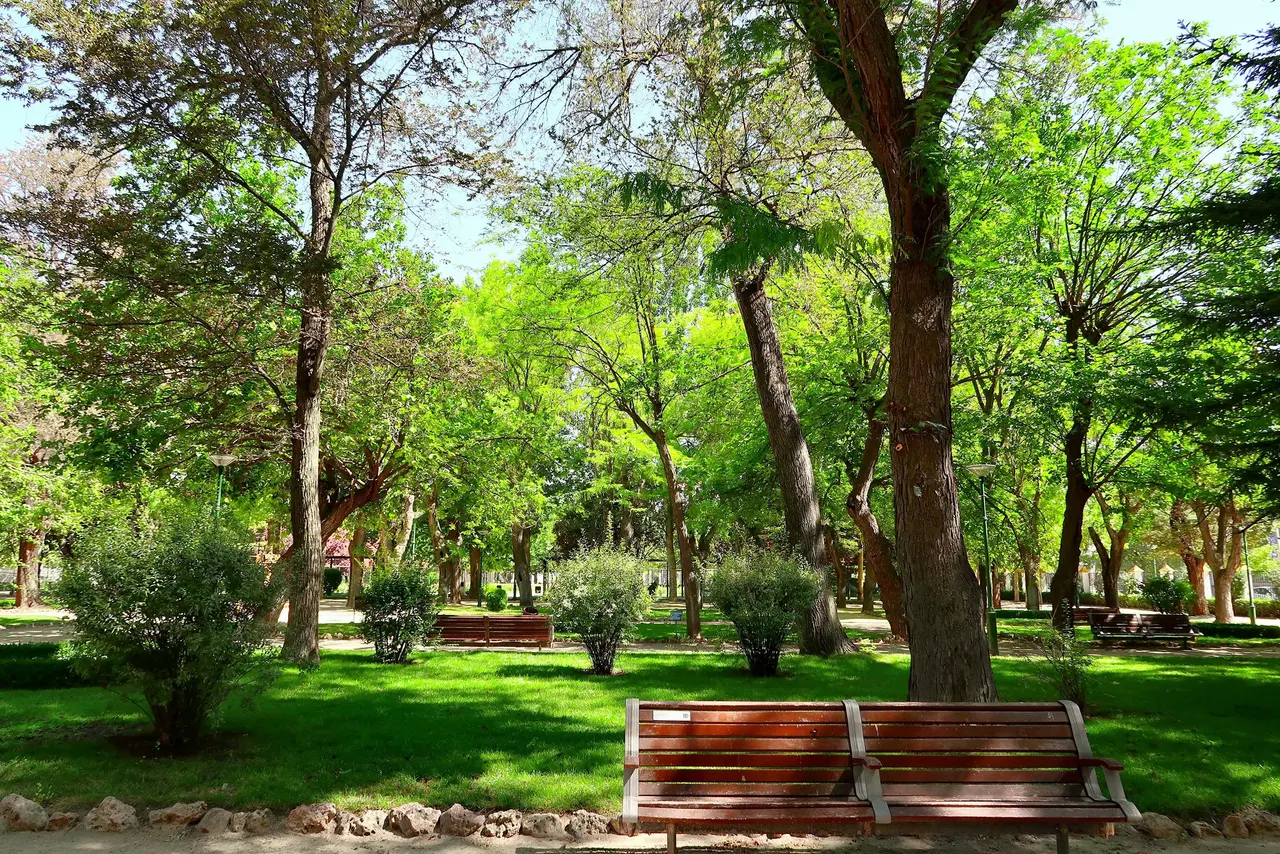
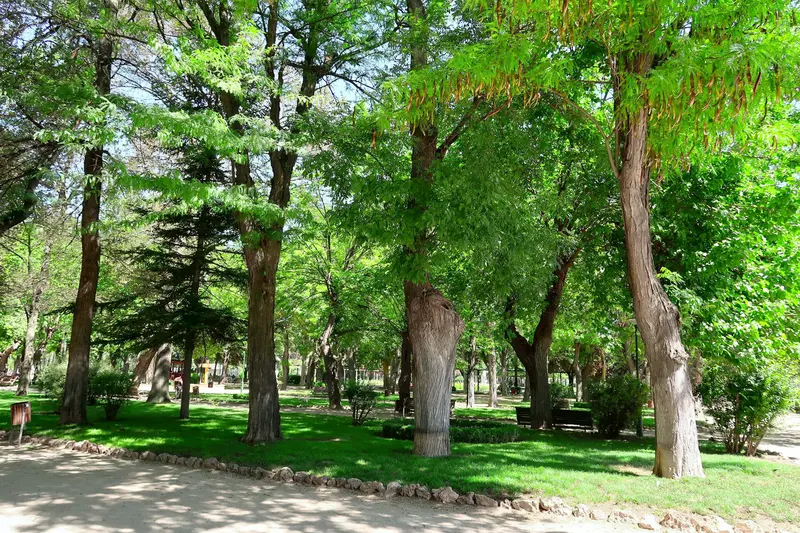
If you have the afternoon free, walk to Abelardo Sánchez Park and set aside time for the Albacete Museum inside it. The fairground and bullring occupy a different part of the city. If the fair is your reason for coming, make the fairground an outing of its own. The layout is easier to picture once you have walked in from the entrance and seen how the inner space relates to the streets around it.
Alcalá del Júcar and a view from below
In Alcalá del Júcar, start near the bridge and look up towards the castle. From below you can see how the slope has shaped the rows of houses and narrow streets between river and hilltop. Decide whether to go up through the old town first or spend time by the river. If you can do only part of the walk, choose between the village skyline and visiting the castle or cave houses. To see both, allow a break between the climb and a riverside walk.
For a wider view of the valley, continue through La Manchuela towards Jorquera. Seeing the river in a second village makes its relationship to the settlements clearer. Walk by the water in one village and save the panoramic view for the other. In hot weather, order the two stops so that you reach a place with shade as the day heats up.
Monuments and heritage
Castles at Almansa and Chinchilla
At Almansa, make your way up to the castle from the town and use the view to orient yourself. Its position explains why this corridor between the plateau and the east coast mattered. Going inside puts the silhouette in context. If you are travelling with anyone who would prefer to avoid the climb, choose a meeting place in the lower town and allow time for each person to follow their own route.
In Chinchilla de Monte-Aragón, put together a walk that takes in Plaza Mayor, the hillside streets and the outside of the castle enclosure. Look at the changes in level between streets before making it a loop. The views across the plain are part of the visit. Choose between Almansa and Chinchilla using the direction you are travelling and the amount of daylight available, as well as the distance from Albacete.
Renaissance towers and an archaeological site
In Plaza Mayor in Alcaraz, compare the towers of La Trinidad and El Tardón. Walk across the square to see how they relate to the arcaded buildings around it. The streets lead away downhill towards more open ground. On a trip into the mountains, give yourself time to notice that change after leaving the square.
South of Hellín, the archaeological site of Tolmo de Minateda occupies high ground with a view over a corridor between the hills. Keep the journey to the entrance separate from the time you intend to spend on the site and check how the visit works. Spending the morning there leaves room for a walk in Hellín later in the day.
Museums and culture
In the Municipal Cutlery Museum, look at the differences between pieces made for different tasks and the work involved in fitting a blade and shaping a handle. The Casa de Hortelano is a good stop on a day spent between the cathedral and the centre. In the Albacete Museum, give time to archaeological finds from the province before going outside into the park. The two museums give you a different sense of scale and can be split across two days if you want more time for each.
The Reales Fábricas at Riópar bring an industrial story into a landscape best known for the river. Keep time for the village and its heritage after your visit to the source of the Mundo. If one part of the day looks wet, check whether you can switch the order of the two. At Yeste, the castle is another way to balance an outing that would otherwise be spent walking in the mountains.
Charming villages
Ayna and Liétor
In Ayna, take time to look at the village from above and then go down into the streets. That helps to explain the position of the houses and the river. The locations used for the Spanish film Amanece, que no es poco add another angle to the visit. If that interests you, pick a few places to see and enjoy the setting while you are there. Some filming locations are in other villages, so put them on the map before deciding how many to include.
Liétor also overlooks the valley. You can put together a walk from the streets near the centre and the buildings used for worship. If you want to see inside the Ermita de Belén, check how to go about it. If your day includes both villages, put the visit that depends on opening times first and leave the more flexible walk until later.
Yeste, Riópar and the southwest
In Yeste, visit the old town and set aside a separate outing towards the Segura. Ask for precise directions to the section of river you want to reach. For a weekend around Riópar, combine Los Chorros with the industrial heritage of the present-day town and a walk around Riópar Viejo. That upper village makes a good visit in clear weather. Decide what you want to see before adding more stops on mountain roads.
Nature and protected areas
The source of the Mundo
The Mundo emerges from a limestone wall in the Calares del Mundo y de la Sima Natural Park. Viewpoints let you see both where the water comes out and how the slope changes below the rock face. In 2026, the regional government listed regulated vehicle access on certain busy dates. Look up the park’s advice before driving and find the walking alternative if it fits the group. The water level varies, so choose an outing that has a landscape you want to see regardless of the flow.
On the Segura side, choose a sector before looking for a route. A riverside walk is a different day from a climb onto a limestone plateau. Check the gradients and the surface, especially if the walk starts downhill. You may need to climb back after using much of your energy. On a trip with children or less experienced walkers, choose a path that lets you turn around without having to complete a whole circuit.
Other places to see water and birds
The Ruidera lakes extend into Ossa de Montiel on the Albacete side. Find the group of lakes closest to your base and mark the road you will use to return. A lake and the town used to describe its location may be in different places. Check which parts of the shore you can reach and where the rules allow water activities. If you are mainly there for the birds, bring binoculars and choose a designated place where you can watch without disturbing the shore.
Festivals and traditions
Albacete held its fair in September 2026, with the fairground at the centre of the celebrations. Walking through it during the fair and seeing it at a quieter time offer different ways of understanding its role. If you are planning for another year, check the programme and decide if you want to be close to the events or sleep somewhere that makes an early departure for the mountains simpler.
Hellín is known for its Holy Week drumming. For a future edition, check the times of the events and which parts of the centre they pass through. The drums can be heard from a distance, which gives families with small children some flexibility about where to stand. Ask about the Holy Week museum if you want to learn how the tradition is passed on.
What to eat
Gazpachos manchegos is a stew with pieces of flatbread. Ask how it is cooked and which meat is used if that affects your choice. It can make a good main meal after a walk in the hills. Try pisto with something from the pot, or ask for a smaller portion of atascaburras, which contains potato and salt cod. If you are walking afterwards, consider sharing the more substantial dishes.
At La Roda, cream-filled puff pastries called miguelitos suit a shorter stop. For wine, look for a producer in an area where you already plan to be. La Manchuela goes well with a Júcar trip and Almansa fits an onward journey to eastern Spain. Ask whether you will spend time in the vineyard or mainly see the production facilities and taste wines. Work out transport for the return before booking a tasting.
Sport and outdoor activities
Pick a section of the Sierra de Alcaraz greenway to suit where you are starting. The route follows a former railway corridor. An out-and-back ride gives you control over the length of the day. Check where there are tunnels, what the surface is like and where to get water. Bring a light for a cycle ride even if you plan to finish in daylight.
The Júcar and Cabriel valleys offer walks, viewpoints and water activities with local operators. Before booking, find out where the outing starts and ends, whether you are taken back to the starting point and what happens if conditions change. In the mountains download the trail map and store the start and finish details offline before leaving your accommodation.
Routes and itineraries
Two days in the city and on the Júcar
Start in Albacete with Altozano and the cutlery museum. Walk through Pasaje de Lodares on the way to lunch and leave the park for later. On the second day, go to Alcalá del Júcar and allow enough time to see the bridge and climb into the town. If there is daylight left, look for a viewpoint on the way towards Jorquera. Return to the city if you need to catch an early train.
Three days around Alcaraz and Riópar
Start with the square in Alcaraz and continue to a base in Riópar. Give the following morning to Los Chorros or any other trip that depends on conditions in the park. Spend the afternoon on industrial heritage or in Riópar Viejo according to the weather. On the third day, choose Ayna and Liétor if you are heading back towards Albacete, or head for Yeste to spend more time in the mountains.
Five days with a change of base
Combine a night in the city, one in La Manchuela and two in the mountains if you want to experience three different landscapes. Make the journey between the valleys part of the trip and pick a stop where you can sit down to lunch. If you arrive or leave by the east, fit Almansa into the last day. If your next destination is Murcia, Hellín and Tolmo de Minateda can work as stops on the way.
Travelling with children
In the city, put a museum together with time in the park. At Alcalá del Júcar, look up from the bridge to see how many rows of houses you can make out. Plan a walk that leaves the castle as an option if everyone still has energy. At a waterfall or viewpoint, allow time to sketch what you can see before returning to the car.
With a pushchair, check the steps and the surface before choosing a route. The difficulty of a hill street or an approach to a trail can be deceptive on a map. Build in one short stretch, a break and a place where the group can meet up before heading back.
Where to stay in Albacete province
The capital works for museums and railway connections. In La Manchuela, check whether your room is on the valley floor or above it and which bank you need for your outings. Riópar is handy for the source of the Mundo and Yeste suits a trip along the Segura. If you book rural accommodation, ask how to reach it, where to park and where you can eat in the evening.
See places to stay in Albacete province (opens in a new tab)Affiliate link: if you book through it, we may earn a commission at no extra cost to you.
Practical tips and common mistakes
Map the complete return journey, including any river crossings. Check indoor visits and trail conditions before you leave. If you are spending several days in the mountains, keep one cultural visit for when fog or bad weather moves in. On a day when you change base, give yourself time to arrive in daylight and pick one substantial stop for the journey.