

 Español
 English

Why visit Gijón
Start at Santa Catalina hill if you want to work out what to see in Gijón. San Lorenzo bay curves away to one side. On the other are the marina and the route to Poniente. Cimavilla, the old town, sits between the two. One day is enough to explore both sides of the peninsula on foot. With a second, visit the Laboral cultural complex and the botanic garden, or follow the coast east beyond the city beaches.
This is a good base in Asturias if you want a beach, a walkable centre and indoor places to go in unsettled weather. Tide and wind can change what you do on the same stretch of coast. One day you might go down to the sand, while another calls for a walk along the seawall and a visit to a museum. Cimavilla, the city centre and the outlying sights lend themselves to separate, manageable outings.
When to go
Spring and early autumn work for walks and museums. Summer gives you more daylight and a busier waterfront, but look at the sea conditions before deciding whether to swim. If you’re travelling during Semana Grande, look up the venues when choosing where to stay. You may prefer to walk back from the evening events or to sleep somewhere a few streets away.
In autumn or winter, save the driest part of the day for Santa Catalina hill or the paths towards La Providencia. The upper part of the hill is exposed, while the old streets and the arcades in Plaza Mayor offer some shelter. For a short visit, identify an indoor stop on each side of the centre. The Roman baths are on the San Lorenzo side of Cimavilla and the railway museum is west of the marina. You can take shelter without walking across town when a shower starts.
Getting there and around
In 2026, Renfe listed trains from Madrid Chamartín to Gijón. The station is on the Poniente side of the centre. If you’re staying near San Lorenzo, map the last stretch in advance when you have luggage. Look for Gijón or Xixón when searching routes. The latter is the Asturian name. If you’re heading to Oviedo for a visit, compare where the services leave from and check the return journey.
In 2026, Aena listed Alsa coaches from Asturias Airport (OVD) to Gijón. Check the last leg to your accommodation if your flight lands late. A hire car is useful for linking villages or reaching beaches beyond the centre. You can leave it parked while you walk between Poniente, Cimavilla and San Lorenzo. Use the EMTUSA city bus information to find the stops for Laboral and the botanic garden before deciding the order to visit them.
The seafront runs along Cimavilla without climbing to the top. Keep to it if you’re pushing a buggy or need to make a quick crossing between the two sides of the old town. The streets up to Santa Catalina have slopes and changes of surface. You can go up through the neighbourhood and come down towards the marina, or leave the climb for another morning and walk around the edge.
What to see in Gijón
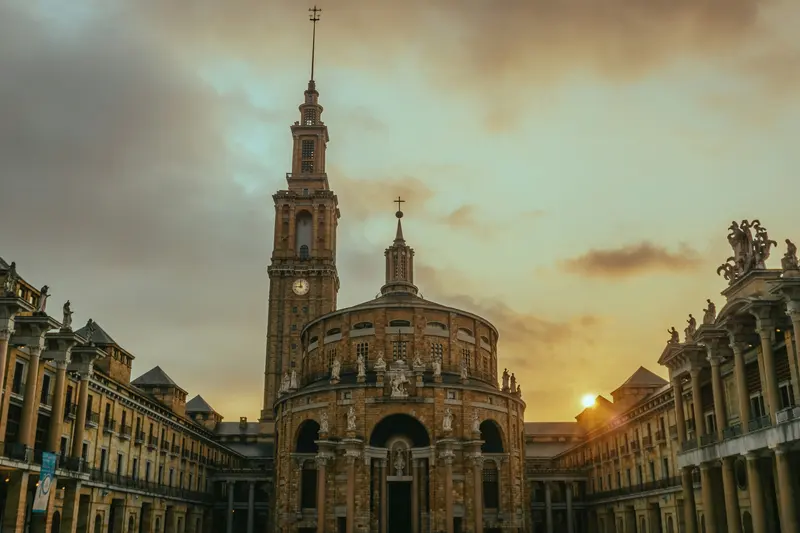
Cimavilla, Santa Catalina and Chillida’s sculpture
From Plaza Mayor, pass through Plaza del Marqués by the Revillagigedo Palace and the harbour. Walk uphill towards Santa Catalina. The tightly spaced buildings give way to an open hillside facing the sea. Eduardo Chillida’s concrete sculpture Elogio del Horizonte stands near the top. Walk around to see how its outline changes from the town side to the seaward side.
On the way down, follow the streets through the neighbourhood if you are going to Campo Valdés. For a finish beside the boats, descend towards Cuesta del Cholo and follow the quays. Both walks take in the peninsula, so choose the descent that leaves you closest to the next thing you want to see. The rest of the afternoon can go to the waterfront on either side.
Campo Valdés and the San Lorenzo seawall
Campo Valdés links the old streets to the beach. From near San Pedro church, look along the curve of the bay towards the mouth of the Piles. The paved seafront runs above the sand, with stairways down at intervals. If you pass this way again later, compare how much of the beach is exposed at the two times of day.
Use La Escalerona, one of the best-known stairways, as a turning point for a short walk. To cover the whole bay, stay on the seawall until the Piles and decide there whether to continue to El Rinconín. From that end you can look back across the water towards Cimavilla. Both routes start in the same place, so you can decide how far to walk on the day.
Laboral and the Atlantic Botanic Garden
Laboral Ciudad de la Cultura is in the Cabueñes area. Start at the courtyard to get a sense of how the church and tower fit into the much larger complex around them. Check which spaces you can visit before travelling across town. If the tower or a particular interior is your priority, look for it in the description of the visit available on your date.
The Atlantic Botanic Garden is nearby. Allow a separate stretch of time to explore it on foot, especially if you want to visit the El Tragamón oakwood. An Asturian carbayera is a stand of oaks. With a single afternoon, choose either the indoor tour at Laboral or a longer walk in the garden and see how much time remains for the other.
Monuments and heritage
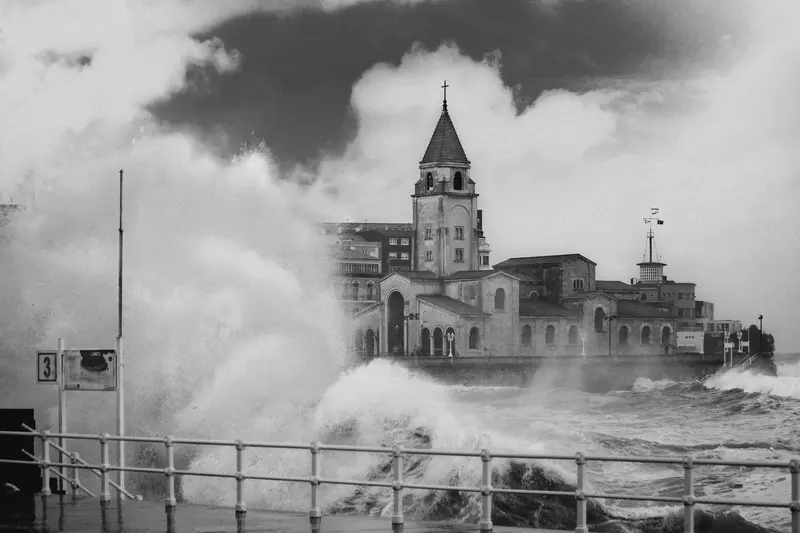
The Roman baths and Campa Torres
The remains of the Roman baths lie beneath Campo Valdés. It’s a short visit that helps explain why there was a Roman settlement at this end of the bay. After seeing how the baths were arranged, look back from the edge of the square to place them in relation to the church and the waterfront.
Campa Torres archaeological park is out on a headland west of the city. The setting helps explain why a fortified settlement occupied this stretch of coast. For another Roman site, consider the villa at Veranes in the inland part of the municipality. Both require a separate outing from the centre, so choose one if you also want to see Laboral or walk the coast.
Plaza del Marqués and the harbour
The Revillagigedo Palace and the adjacent collegiate church of San Juan Bautista look onto the old harbour area. See how the ensemble sits between the marina, Plaza Mayor and the approach to Cimavilla. From the quays towards Poniente, the harbour gives way to beach and railway land. Walk this stretch before or after the railway museum to put the exhibits into context.
Museums and culture
The Asturias Railway Museum occupies part of the old Estación del Norte, near Poniente. The track and rolling stock help explain the role of rail in the region’s industry. A short visit can focus on what the wagons carried and how people travelled. Afterwards, walk along Poniente to see the present-day waterfront.
Muséu del Pueblu d’Asturies, the museum of Asturian life, is near the Piles and El Molinón. Its collections and buildings can be combined with a walk in Isabel la Católica park. If it’s wet, choose which spaces to see and check how much ground you need to cover between them. Jovellanos’s birthplace is a more central option in Cimavilla. Pair it with the baths if you’re interested in the history of the old town.
Neighbourhoods and areas

Cimavilla and the city centre
For a short walk through Cimavilla, look for Campo de las Monjas, the square beside the former tobacco factory. Follow the change in slope towards Cuesta del Cholo, which opens out onto the harbour. If you’re coming from the shopping streets, enter through Plaza Mayor and come down towards San Pedro church or the marina.
Plaza del Parchís and Paseo de Begoña offer a walk away from the waterfront, near shops and transport. They’re useful landmarks when seafront weather sends you inland. From Begoña you can return to San Lorenzo or walk down to Plaza Mayor to make a loop through the centre.
Poniente, El Piles and the east
Poniente is west of the marina, near the aquarium and convenient for people arriving by train. El Piles, on the east side of the centre, is where the beach gives way to the approach to Isabel la Católica park and the path towards El Rinconín. Both areas are walkable from the centre. Pick the side that keeps the first stop of most days near your accommodation.
Nature and protected areas
Isabel la Católica park offers a change from the exposed waterfront. From El Piles, cross towards the ponds and continue towards the museum of Asturian life. Treat the park as a stop on your way if you’re also planning to walk further along the coast. Save the botanic garden for a separate outing to give it more time.
The La Providencia viewpoint looks back over Gijón from the east. Reach it via the Cervigón coast path from El Rinconín or keep to the area around the lookout if you’re short of time. Turismo Asturias describes a coastal route of around 10 km to La Ñora. Check where you’re starting and whether a road-based return would suit you before walking the whole route. The terrain becomes steeper and more exposed after the urban seafront. During strong winds, stay on the easier stretches around the bay.
For an inland ride, the La Camocha Greenway follows a former mining railway. Turismo Asturias combines it with the Llantones and Piles riverside paths in a loop of about 24 km. Ride just the greenway section for a shorter outing.
Beaches in Gijón
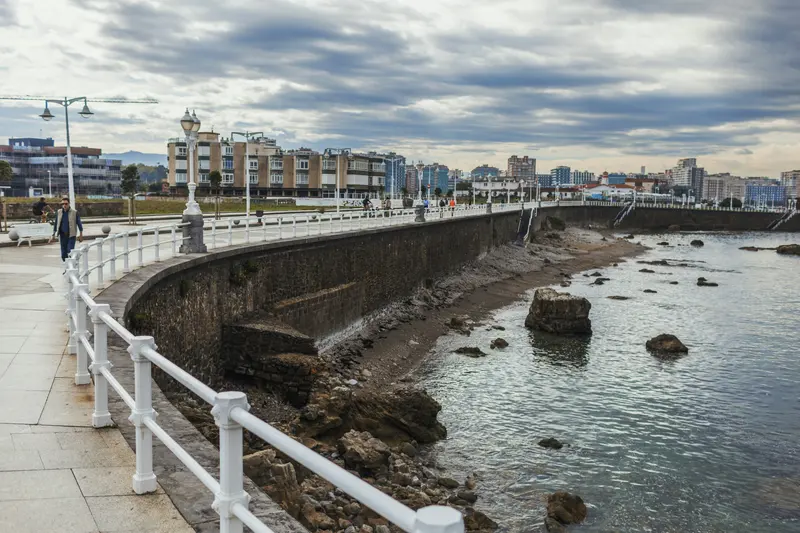
San Lorenzo, Poniente and El Arbeyal
Choose San Lorenzo if you want to walk from Cimavilla to the beach. There is less sand around high tide, so look from the seawall before carrying everything down. It’s easy to continue to another set of steps along the promenade. Read the local signs and beach flags, and check the conditions before getting into the water.
Poniente faces the harbour area and pairs easily with the aquarium or railway museum. Both are close if the weather changes. El Arbeyal is further west beside La Calzada, an option if you’re staying or walking on that side of town.
Coves towards La Ñora
Beyond El Rinconín, Peñarrubia, Serín and Estaño sit along a much steeper stretch of coast. Peñarrubia is frequented by naturists. Before heading down to a cove, look at the return climb and the time you have before dark. You can enjoy the path for its views and save the swim for an urban beach. If you go as far as La Ñora, plan your way back before setting out, because returning by the coastal path doubles the distance.
Festivals and traditions
On 15 August 2026, the Semana Grande programme included the Danza Prima at San Lorenzo and music at Paseo de Begoña and Poniente. The Danza Prima is a communal dance and one of the ways people take part in the celebrations. For a different year, check the council programme for times and venues. If you’re going as a group, agree on a meeting spot away from the busiest part of the beach.
Poniente hosted festivities for the eve of San Juan on 23 June 2026. If you’re planning a museum visit around that date in another year, check what’s happening in the area and how the events might fit with the rest of your day. The main bonfire is associated with the beach at Poniente.
Routes and itineraries
One day on foot. Start at the marina. Climb through Cimavilla to Santa Catalina and come down to Campo Valdés. Follow the seawall as far as suits the group. Choose the railway museum for an afternoon towards Poniente or Isabel la Católica park if you kept going east to the Piles.
Two days. Use the first for the peninsula and an urban beach. Put Laboral and the Atlantic Botanic Garden on the second day. If you prefer a coastal walk, swap the garden for the route to La Providencia and time it for the clearer part of the day.
A rainy day. Visit the Roman baths and Jovellanos’s birthplace in the same part of the old town. Keep the railway museum for when you return to Poniente. If the showers ease, walk along the seawall as far as La Escalerona and decide there how much further you want to go.
Day trips
Oviedo is a good cultural day out from Gijón. Begin around the cathedral and add the Naranco monuments if your transport and visit times work. In Avilés, start among the old arcaded streets and cross towards Centro Niemeyer to see how the city meets the estuary. On a clear day you could head for Cabo Peñas and add a walk in coastal Luanco if you leave enough time to reach each place.
East along the coast, Llanes makes a manageable outing if you stick to the town and one beach. Adding Covadonga in the same day means much more time travelling. If you want to explore Ribadesella, the Sella valley and the Picos de Europa, the five-day eastern Asturias itinerary shows how to group the places and where to consider staying overnight.
Travelling with children
At Poniente you can switch between the beach and the aquarium without much extra walking. San Lorenzo is another option if you pick an easy turning point along the seawall and leave the sand until the tide and sea conditions suit. The continuous waterfront is easier with a pushchair than the climb through the old town.
For a quieter outing, start with Isabel la Católica park and the area around the Piles. If everyone is happy to keep going, continue towards El Rinconín. Should the weather change, pick a museum on the side of town where you already are. For a short visit to the museum of Asturian life, choose a building or group of objects first and explore the rest if you have time.
Where to stay in Gijón
San Lorenzo is handy for starting or finishing the day by the sea. The streets between Begoña and Plaza Mayor are within reach of both the seawall and the harbour. Cimavilla suits visitors who want to stay in the older streets and are comfortable with slopes. Poniente works well for rail arrivals and a walk to the marina. For a festival trip, check the exact street and its distance from the stages.
Stay near El Piles or El Rinconín if you’re keen to start the coastal walk on foot. Allow for getting back from the centre in the evening. A rural property outside the city makes more sense when you plan to take several trips by car and want parking at the end of the day. Account for the drive each time you want to visit the waterfront.
See places to stay in Gijón (opens in a new tab)Affiliate link: if you book through it, we may earn a commission at no extra cost to you.