

 Español
 English

Why visit
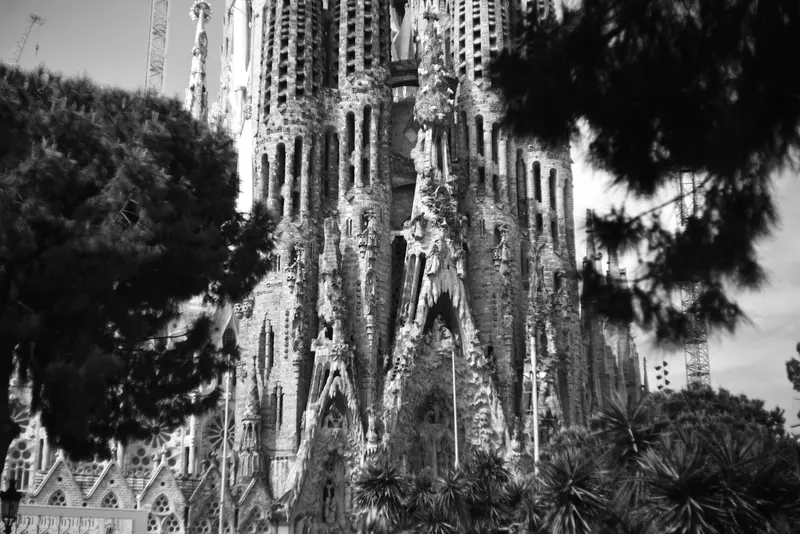
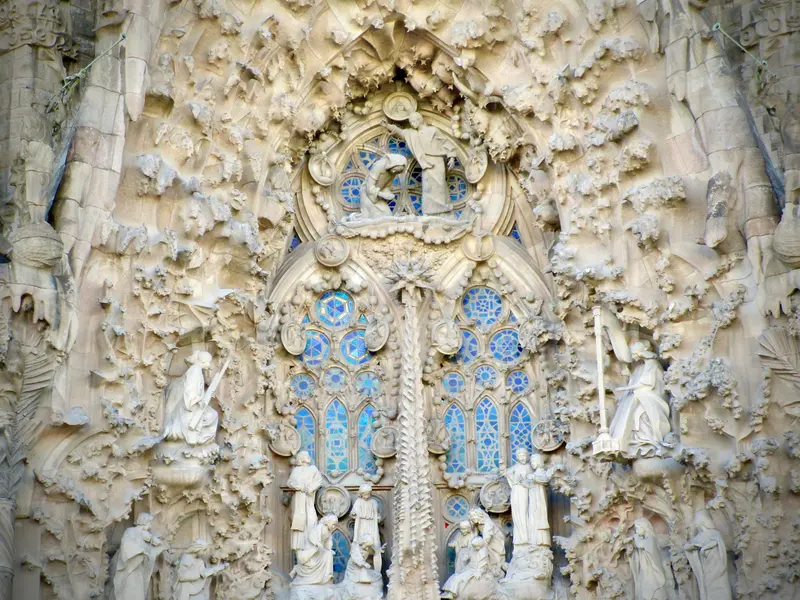
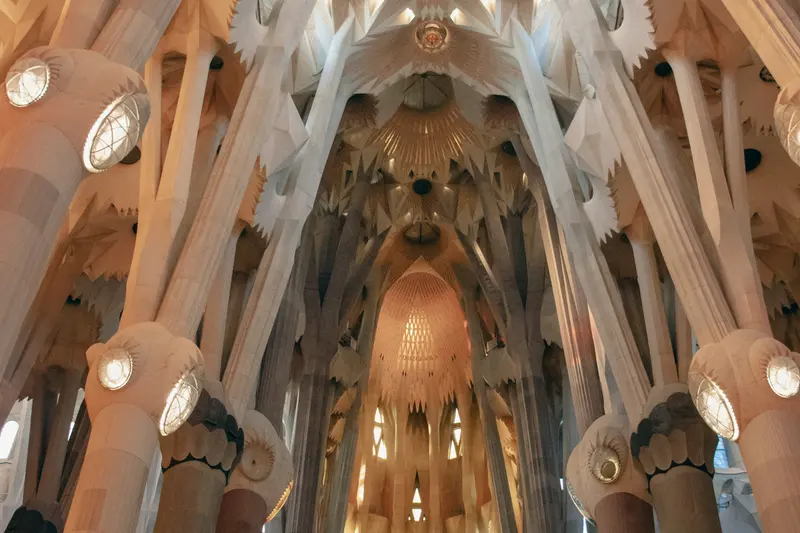
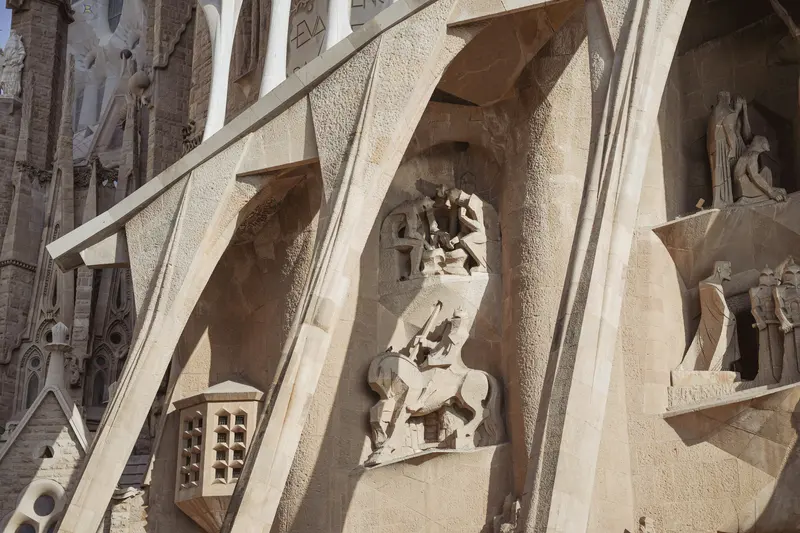
The Sagrada Família fills a block of the Eixample district in Barcelona. On Carrer de la Marina, the Nativity façade is so densely carved that the figures seem to grow out of the stone. Walk around to Carrer de Sardenya and you will see broad stretches of bare stone and the angular sculpture of the Passion façade. Inside, columns divide into branches across the ceiling and stained glass throws colour across their bases. Set aside time for all three views, especially if the basilica is your main reason for coming to this part of the city.
The standard ticket gives you the main architectural experience, including the nave and museum. Adding a tower gives you a high view of the city and a staircase descent. Decide according to what you are coming to see. If you want time to follow details in the stonework or look at the models after the nave, allow a little longer on the ground. If you are planning a second visit elsewhere on the same day, treat the basilica as the main stop for the morning or afternoon and fit the rest around its booked time.
Start across the road in Plaça de Gaudí if you want to take in the whole Nativity front. Cross Marina to pick out the smaller figures above and around the doors. After visiting, cross Sardenya to Plaça de la Sagrada Família, the square on the Passion side. Look at the bases of the towers and how the porch projects towards the pavement. The walk between the two squares takes you along ordinary residential streets and gives you a sense of the church’s place in the grid of the Eixample.
A short history
The first stone was laid in 1882, when Francisco de Paula del Villar was the architect of a Gothic Revival church. Antoni Gaudí took over in 1883, after work on the crypt had begun. His design developed into a church with three monumental façades and a group of central towers above the crossing. It became his only project in 1914. He lived to see the bell tower of Saint Barnabas on the Nativity front completed in 1925 and died the following year.
Gaudí used drawings and plaster models to work through the geometry and explain it to those who would continue the building. During the Spanish Civil War, drawings were destroyed and models smashed. The architects who resumed the project worked from surviving pieces and records. When you get to the museum, find a model that shows how two surfaces meet or how a curve is built up. Construction passed through several generations, and these objects explain how one team could pick up where another had left off.
The façade on the Passion side includes sculpture by Josep Maria Subirachs from a later stage of the building. You can compare his work with the Nativity carvings during the walk around the block. In 2005, UNESCO added the Nativity façade and crypt to the Works of Antoni Gaudí World Heritage property, alongside other sites in Catalonia. Pope Benedict XVI dedicated the church in 2010 and designated it a minor basilica.
The tower of the Virgin Mary was inaugurated in 2021 and the four Evangelist towers in 2023. The last upper piece of the cross on the tower of Jesus Christ was set in place on 20 February 2026, bringing the building to 172.5 metres. Pope Leo XIV blessed the tower on 10 June 2026, a century after Gaudí’s death. The project leaves the Glory façade on Carrer de Mallorca for the last phase of construction. Compare an older image of the basilica with the present skyline from a square and you can see how much of the silhouette arrived in just a few years.
What to see inside
The Sagrada Família nave and stained glass
When you enter from the Nativity side, move towards the edge of the nave and find a column you can see from floor to ceiling. Follow its shaft to the point where it divides. Each branch picks up a section of the roof and transfers its load. Look at a few neighbouring columns from the same spot and the ceiling begins to make sense as a continuous structure. This is where the familiar comparison with a forest comes from. You will see the effect more clearly if you step out of the stream of people moving through the entrance.
Go across the nave for a change in colour. Joan Vila-Grau designed cooler tones for the stained glass towards the Nativity front and warmer ones towards the Passion front. The lower windows carry stronger colour. Those further up let in clearer light. Look for the places where the colours land on stone, then look above them to see how the pale vaults are lit. A good way to appreciate the difference is to choose a column you can see from both sides and come back to it later in the same visit.
Look from the centre of the nave towards the altar and its suspended canopy, then take in the higher ceiling at the crossing. From one side, look towards the head of the church where the apse still shows some of the Gothic Revival elements of the early project. Compare its outline with the branching supports you have just walked past. You can read two stages of the building from the same floor without needing to know the dates of every part.
The museum and the Passion façade
In 2026 the standard ticket included the museum. The models and photographs are worth seeing after the nave, when you have a specific shape to look for. Try finding a model that explains a column or one of the vaults you saw overhead. If you are visiting with children, ask them to pick a shape inside the church and find something similar in the displays. The museum also helps make sense of how the towers fit together, something that can be difficult to see when you are looking up from a pavement.
On the Passion side, start with the lowest sculptural groups and work your way up. Shadows beneath the porch accent the gaps between figures and the planes of the carved bodies. Step back to see how the leaning columns frame the scenes. On the other side of Carrer de Sardenya there is space to see the porch and bell towers together. It is also a good place to look again if you hurried past this façade on the way in.
Tickets and opening hours
Which Sagrada Família ticket to book
In November 2026, the official adult prices were €26 with an audio guide, €30 with a guided tour, €36 with an audio guide and one tower, and €40 with a guided tour and one tower. The standard visit included the museum. The audio guide was available through the official app. Bring a charged phone and headphones if you plan to use it. The basilica suggested about an hour for a standard visit and around 90 minutes with a tower. Allow more time if you want to walk round both squares.
Book online through the official ticket site. In 2026 tickets were issued in the visitor’s name and valid for the selected time slot. Save a copy to your phone and bring official photo ID, plus proof of eligibility if you booked a discounted ticket. The visitor FAQs cover arrival times, luggage and visits with children. The basilica is a working church. It asked visitors in 2026 to dress appropriately and observe a quiet hour from 9am to 10am, when headphones were required for audio.
Nativity or Passion tower
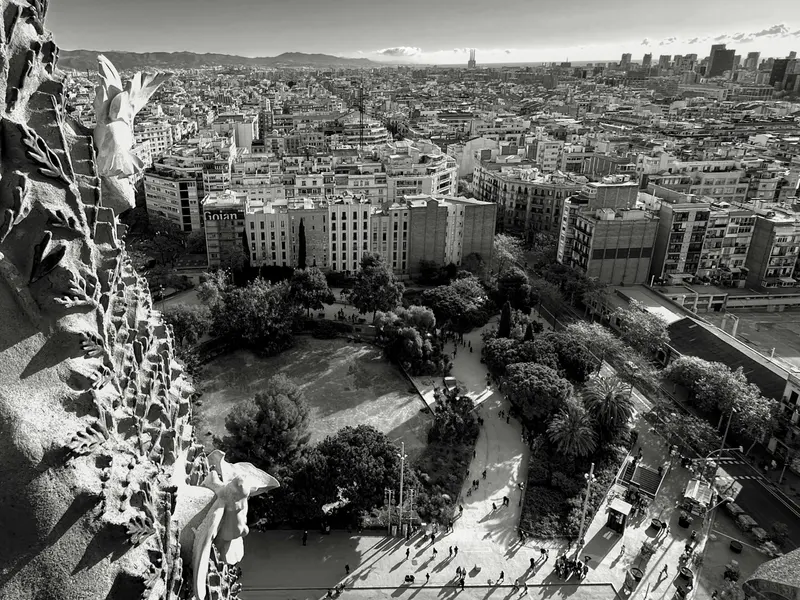
In 2026 the tower ticket offered a choice between the Nativity side, looking east across Barcelona, and the Passion side, facing the city centre. The lift took visitors up and the return was down a staircase. The towers were outside the accessible route for visitors with reduced mobility. Children under six could not go up, and children under sixteen needed an adult with them. The route can feel confined on the way down, so check the conditions before booking if anyone finds stairs or enclosed spaces difficult. Weather can close the towers. Keep time for the nave and the street-level views even if your plans change.
Basilica opening hours
The published opening hours checked in November 2026 were:
- November to February. Monday to Saturday, 9am to 6pm. Sunday, 10.30am to 6pm.
- March and October. Weekdays, 9am to 7pm. Saturday, 9am to 6pm. Sunday, 10.30am to 7pm.
- April to September. Weekdays, 9am to 8pm. Saturday, 9am to 6pm. Sunday, 10.30am to 8pm.
- Public holiday hours. 9am to 2pm on 25 and 26 December and 1 and 6 January.
Look at the booking calendar for the slots on your date. Services and special events can change the opening hours. If you also plan to visit Sant Pau, book whichever has fewer suitable openings first. Include time to find the entrance at each place, as well as the walk between them, before booking a second timed visit.
Getting there
In 2026, metro lines L2 and L5 served Sagrada Família station and the general visitor entrance was at the Nativity façade on Carrer de la Marina. The official directions show separate approaches for individual visitors and groups. Follow Marina if you are coming from the metro. If you approach along Mallorca or Sardenya, allow time to go around the block. Arrange to meet friends at a named square or street corner so everyone starts from the same side.
In 2026, visitors with disabilities or reduced mobility were directed to entrance B on Marina. If you need a wheelchair at the basilica, the official FAQs explain how to request one subject to availability. Check the lifts on your metro route if you need step-free access. If you come straight from the airport or train station, make a plan for your suitcase before heading to the church. In 2026 the basilica had no luggage storage. Tower lockers were for use during the ascent.
Best time to visit
On a clear day the morning light favours the Nativity side and the afternoon light falls towards the Passion side. Inside, notice where a patch of stained-glass colour lands on a column and look again a few minutes later. The angle of the sun changes through the year. If the windows are your main interest, spend a few minutes on both sides even on an overcast day. The colour in the lower part of the nave is easier to distinguish from the more even daylight above when there are fewer bright reflections.
In warm weather, consider doing the walk around the block in the morning and heading inside afterwards. In winter, a middle-of-the-day visit allows time in the squares while there is still good daylight. If the forecast is mixed, keep the longer walk flexible and plan it around your entry slot. Leaving one part of the day free also gives you a chance to go back to a façade, stop for lunch nearby or continue towards Sant Pau if the weather holds.
What else to see nearby
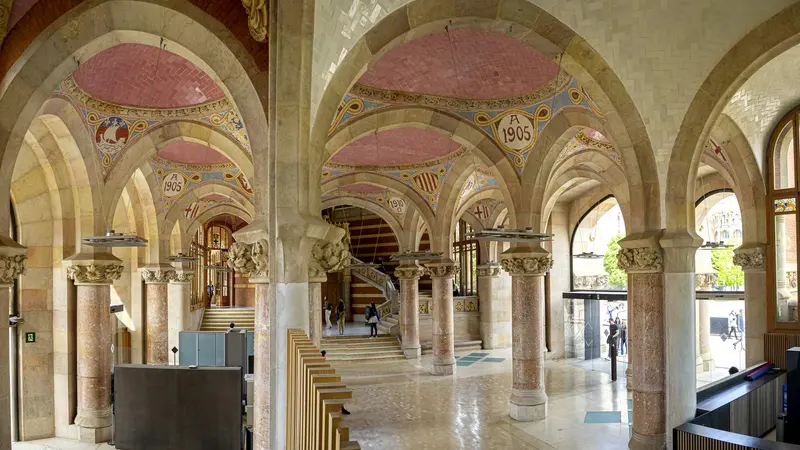
Follow Avinguda de Gaudí to the Sant Pau Art Nouveau Site, the former hospital designed by Lluís Domènech i Montaner. The avenue runs diagonally away from the basilica. At Sant Pau, separate brick pavilions and garden spaces show how another architect of the period used light and circulation for a very different purpose. Look up at the vaults of the church, then pay attention to the arrangement of the courtyards and galleries at the hospital. For a visit inside, check the official Sant Pau visitor information.
With another half-day, carry on through the Eixample towards Passeig de Gràcia. Casa Milà and Casa Batlló let you see how Gaudí dealt with the scale and layout of residential buildings. On a longer trip, read the guide to Barcelona province for the crypt at Colònia Güell in Santa Coloma de Cervelló. There you can look at the angle of the supports and how the church sits on sloping ground, with a very different view of its surroundings from the one you get in the city.
Where to stay
Look near Marina or Avinguda de Gaudí for a short walk to the basilica, especially if you are aiming for an early time slot. Check the walk to the visitor entrance and ask which way your room faces if you prefer a quieter street. Staying near the church makes it easy to return to either square later in the day and see the stonework in different light without adding another metro journey.
Around Passeig de Sant Joan, you can split your time between the basilica and walking into the centre. If most of your other plans are in the Gothic Quarter or El Born, stay there and combine the church and Sant Pau on a single outing to the Eixample. Wherever you base yourself, check the door-to-door route before choosing a morning slot, particularly if you will need to cross the city after breakfast or leave your luggage somewhere first.
Find places to stay near the Sagrada Família (opens in a new tab)Affiliate link: if you book through it, we may earn a commission at no extra cost to you.