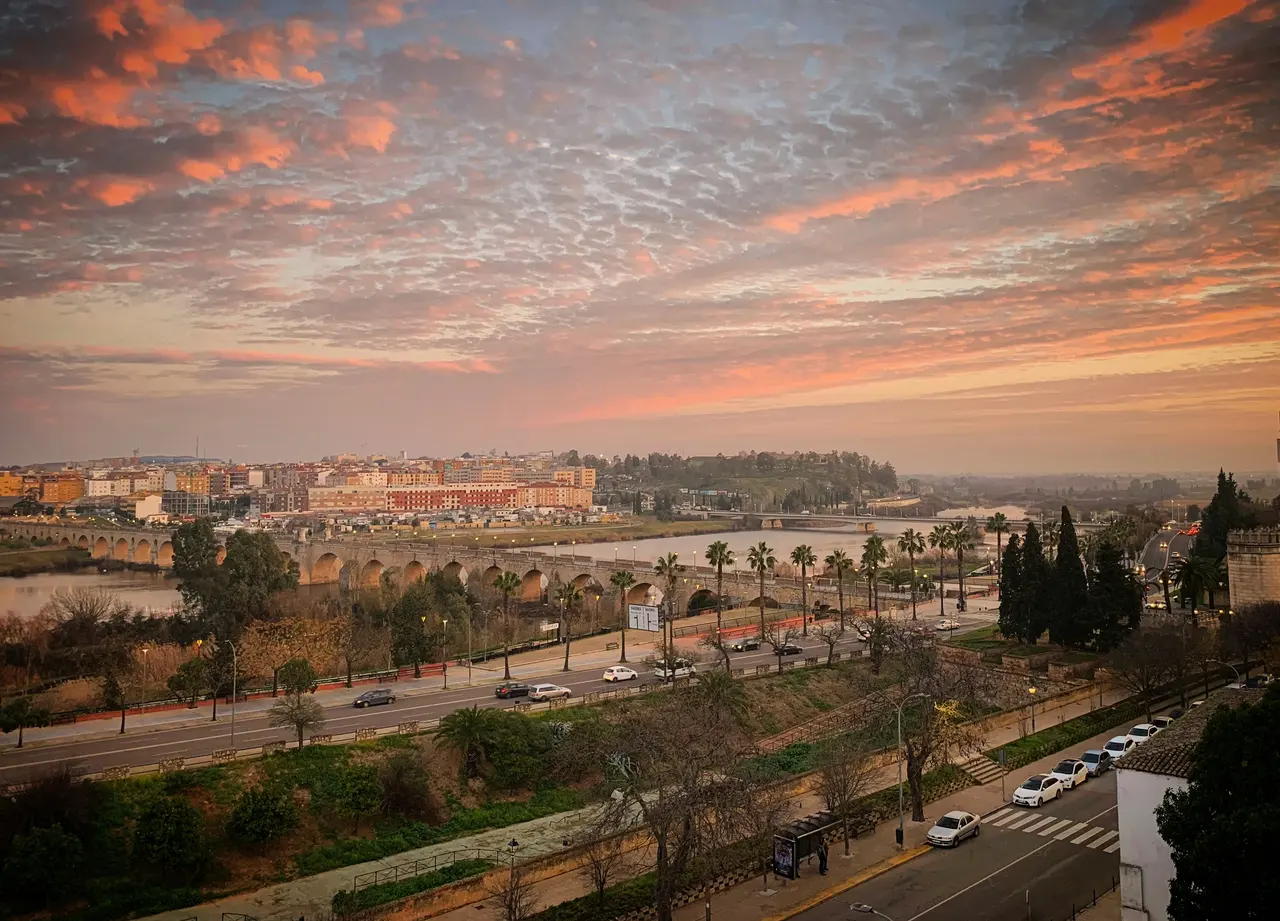
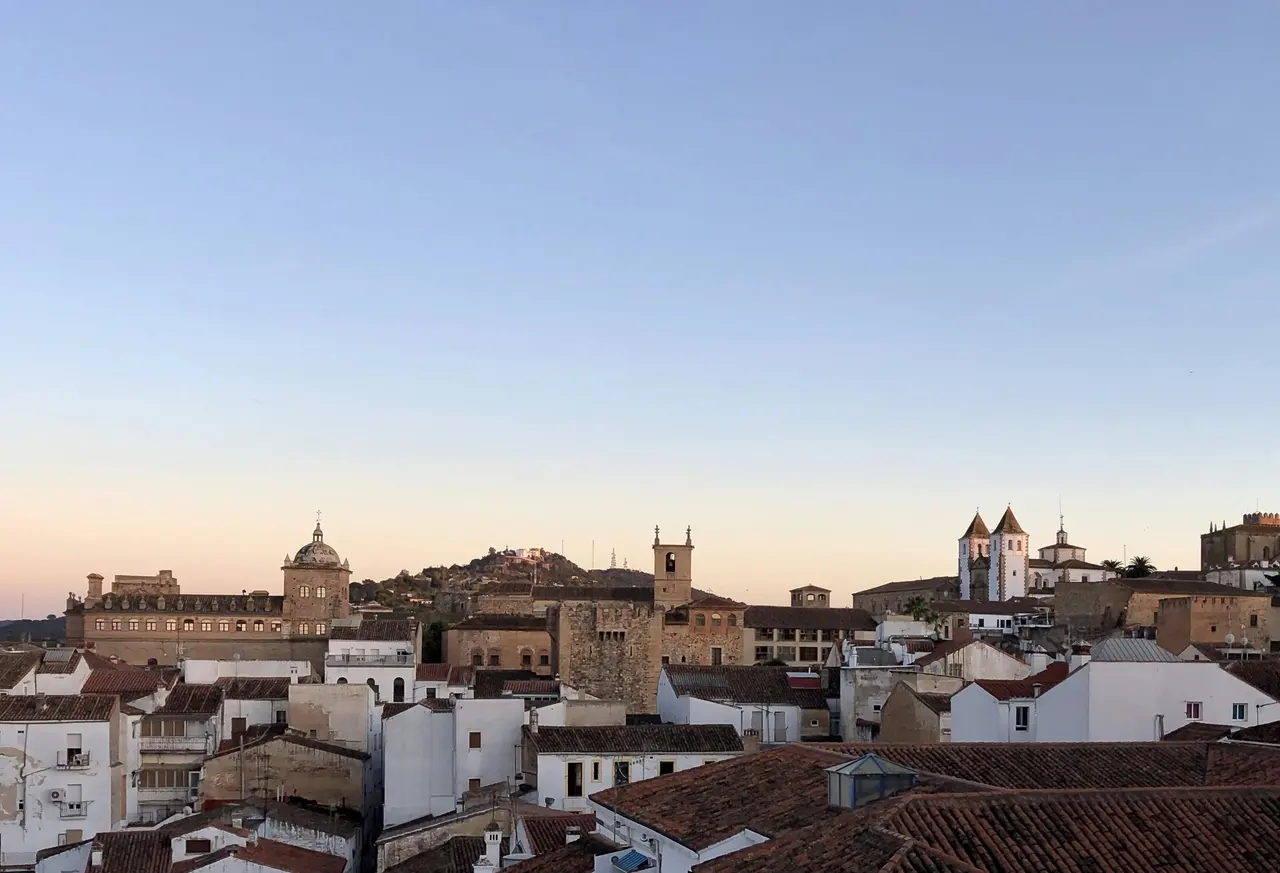
Español
 English

Why visit Extremadura
If you are deciding which things to do in Extremadura belong on a first trip, begin with Mérida for Roman archaeology, Cáceres for a city you can explore on foot, or Plasencia for a stay close to the northern valleys. In five days you can build a trip around two of those places and spend a full day outside the cities. Travelling from the cherry orchards of the Jerte to the Portuguese border calls for at least one change of base and some room in the schedule for minor roads.
Cáceres province takes in mountain passes, Guadalupe’s monastery and the section of the River Tagus that forms the border. Badajoz province follows much of the Guadiana and opens towards uplands in the south, large reservoirs in the east and the Portuguese frontier in the west. You can go from a valley full of chestnuts to open pasture dotted with evergreen oaks. Choose one of those transitions and give yourself time to see how the landscape changes along the way.
The Spanish word dehesa describes much of the countryside you will pass. Holm oaks and cork oaks grow spaced out over grazing land. You can see the shape of the hills through the trees and follow birds with binoculars as they cross the clearings. Book ahead if you want to visit a working estate. On public land, find the marked path and check where it leads before setting out.
When to go
Spring and autumn for a first trip
March to May makes a good starting point if you want a city visit and a country walk on the same itinerary. Spring shows up differently in the lowlands of the Guadiana and on the wooded slopes of La Vera. If you want to see the cherry blossom in the Jerte Valley, keep your dates flexible and consult flowering reports by village. Trees on a low terrace can be in bloom while a slope higher up is still bare. Have a plan in the same valley for the day you arrive.
In autumn, choose the part of the region that suits your dates. The deciduous woods of the Ambroz are a draw as the leaves change. The first rains give the pasture a different colour and can change the condition of rural paths. You could have lunch in Zafra and walk outside town afterwards, or reserve a city museum as a later stop on a day of viewpoints. When daylight is short, stay close to the place where you want to end the afternoon.
Summer and winter
In the southern cities and low-lying valleys, sequence your summer days around the heat. Start with the theatre, a stretch of wall or a riverside walk. Put the indoor visit and a long lunch in the middle of the day. If you are going to an evening performance, staying within walking distance makes the return easier. The mountains offer more shaded options, though an open track or a cliff-top viewpoint can still feel hot.
In winter, Mérida and Cáceres offer indoor stops alongside walks that you can shorten as conditions change. Pack for standing still outside if you are going to watch wintering birds over plains and floodplains. In the north, look at the forecast for your village and for the highest pass on your route. Visibility and road conditions can vary as you move between valleys, particularly if you leave early or expect to return after dark.
Getting there and around
Arriving from abroad and routes across the region
For 2026, Renfe lists a Madrid–Badajoz train route. Search by the station where you actually want to begin, such as Mérida or Cáceres. Look at the option of returning from your last city as well as travelling back to the first one. Over a short stay, avoiding a repeat journey can free up a morning for sightseeing.
Aena lists Badajoz Airport in its network in 2026. If you are flying from abroad, compare the full journey via Badajoz with one via Madrid. Include the time to pick up a car or get from the terminal to a railway station. On the road, the A-5 runs via the areas of Trujillo, Mérida and Badajoz. The A-66 runs north to south past Plasencia, Cáceres, Mérida and Zafra. Look at how far each overnight stop sits from those main roads before choosing where to stay.
What you can do without a car
An itinerary based on historic cities can work by train and on foot. Check the particular journeys for your dates and give each city its own block of time. In Mérida and Cáceres, it helps to drop your luggage before starting the sightseeing circuit. If you want to take a bus to a park or to a monastery away from town, find the exact stop, its walking connection to the attraction and your last practical bus back. A stop with the right town name can still be several kilometres from your destination.
A car earns its keep once you move into the countryside. Breaking the trip into shorter legs with different overnight bases leaves fewer long drives at the end of a day. On the Portuguese frontier, called La Raya in Spain, identify the bridge or border crossing in advance. The Tagus and Alqueva separate places that look close together on a map. Check which local time to use for a meal or a site visit across the border.
What to see in Extremadura
Things to do in Extremadura on a first visit
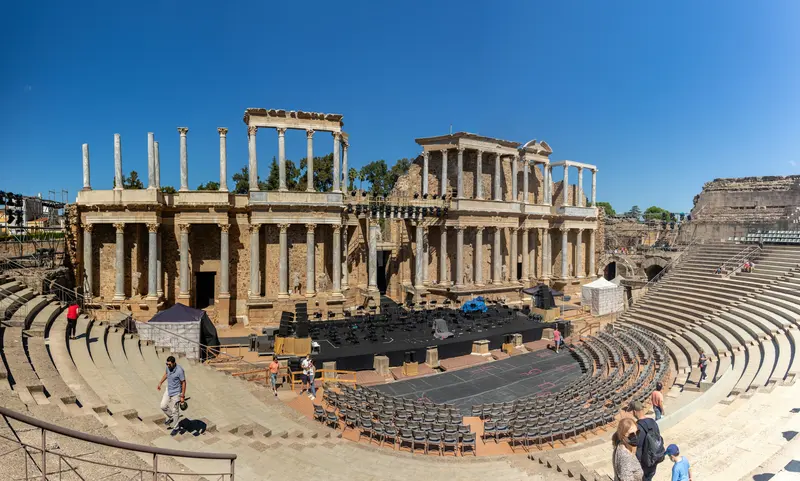
Start in Mérida if you want to see several parts of a Roman city without long transfers. Put the theatre and amphitheatre together. From the seats in the theatre, look towards the columns to see how the building directs attention towards the stage. Then walk around the edges of the amphitheatre and compare the entrances and the shape of the arena. The National Museum of Roman Art helps put the scale of those buildings in context with mosaics, sculptures and objects from everyday life.
Walk through the centre to the Temple of Diana and on to the Roman bridge over the Guadiana. The river gives you a sense of how the old city sat in the landscape. The Alcazaba on the same bank adds an Islamic chapter. The aqueduct known as Los Milagros is a separate stop and makes sense as a walk of its own if you want to follow the story of water in Augusta Emerita.
In Cáceres, walk up from Plaza Mayor through the Arco de la Estrella and on to the squares of Santa María, San Jorge and San Mateo. Up and down feel like different walks in the steep streets between tall façades. An evening loop after dinner gives you another look at the gates and towers. For the interiors, choose the one or two that fit your interest in the city, and check admission in advance.
Guadalupe is a mountain town with a monastery at the centre of its main square. Allow time for both the monastery and a walk into the residential streets of the old town, where the buildings change in scale and character. Stay in the area if the next part of your journey takes you to a viewpoint or trail in the Villuercas hills. The country roads are part of the experience and need time of their own.
Two cities worth an extra night
To get your bearings in Badajoz, link three sites on the slopes above the Guadiana. Visit the Alcazaba and Plaza Alta on the upper ground, then follow the streets down to Puerta de Palmas and the bridge. The route ties together an Islamic fortress, one of the city’s main squares and the historic entrance from across the river. Save the riverside for later if the day is hot.
Plasencia is a useful first stop in the north and has enough in its own right to fill a city day. The Old and New Cathedrals sit together and tell one building story. View them from several sides, then walk from Plaza Mayor towards one of the gates through the walls. If you have children, plan a flatter stretch in the afternoon after climbing through the centre.
Monuments and heritage
Three World Heritage sites
UNESCO lists the archaeological ensemble of Mérida, the Old Town of Cáceres and the Royal Monastery of Santa María de Guadalupe separately. Mérida’s sites are spread through a living city. In Cáceres, much of the visit takes place within and immediately around the walls. For Guadalupe, work out your monastery visit first, then fit the streets of town and a later stop around it.
The Old Town of Cáceres places defensive towers, fortified homes and palaces of different dates next to one another. The Torre de Bujaco is visible from Plaza Mayor and is a good landmark for finding the line of the wall. Inside, notice how a façade is framed by the square or passage in front of it. Stepping to the far side of a narrow street gives a better view of carvings and coats of arms.
From the Alcántara bridge to Yuste
At Alcántara, find a vantage point where you can see the Roman bridge and how far its arches rise above the Tagus. It makes a good stop on a border itinerary. Think of the town and the river as two separate visits, and check which access you will use. On a long day trip, identify the crossing you are counting on for the journey back.
The monastery in Cuacos de Yuste was the last retreat of Emperor Charles V. The monastic buildings and the rooms adapted for him can be seen as parts of the same visit. Look for the connection between his bedroom and the church. Afterwards, walk through Cuacos or another of La Vera’s villages to see how houses, fountains and small squares sit together on the slopes.
Charming villages
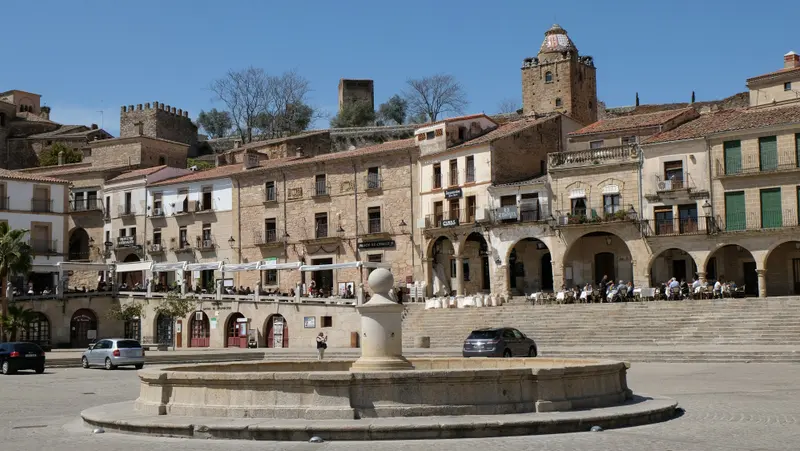
Trujillo, Zafra and Olivenza
Begin in Trujillo at Plaza Mayor. Take one sloping street up to the castle enclosure and use another for the descent. The uphill walk brings you among the stone houses above the square, then opens a view over the surrounding plain. If you stop here on the way to Guadalupe, allow enough time for the hill and a meal before taking to the road again.
The two arcaded squares of Zafra, Plaza Grande and Plaza Chica, are next to each other. Walk through the passage that connects them and continue to the former palace of the Dukes of Feria. The centre is compact enough for a brief stroll before lunch and another later in the day. It is an easy overnight stop if the next leg goes to Jerez de los Caballeros or Tentudía.
In Olivenza, the fortified layout and Portuguese influences are reasons to spend time on the frontier. Between the castle and the church of Santa María Magdalena, look at the gateways and stone carving and notice how streets meet the old enclosure. You can pair the town with part of Alqueva provided you choose your side of the reservoir and the right access road before leaving.
Village architecture in the northern valleys
At Hervás, descend from the old Jewish quarter to the River Ambroz to see how tightly the streets fit the slope. Keep it to a short loop with a pushchair or if the paving is wet. In Garganta la Olla, a slow walk takes you under overhanging upper floors and past timber-framed houses. For a day in La Vera, combine it with Yuste or a second village on the same side of the hills.
If you can spend longer in the northwest, focus on villages within one range. Follow the small channels through San Martín de Trevejo and let children trace where the water comes from and where it goes. Make it part of a stay in Sierra de Gata. In Las Hurdes, the approach to each village is part of the visit in its own right. Save unfamiliar sections of those roads for daylight.
Nature and protected areas
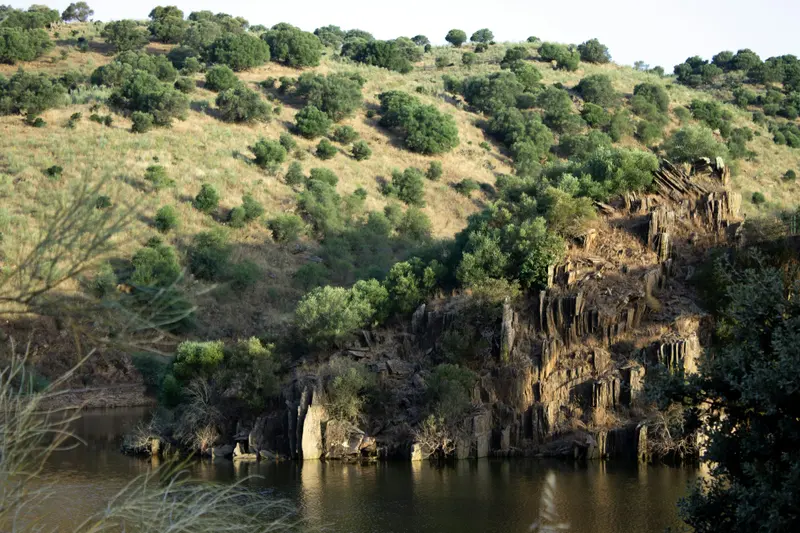
Monfragüe and the Tagus
Monfragüe National Park protects Mediterranean woodland and steep river cliffs. At the Salto del Gitano viewpoint, take time to scan the cliff and watch for movement in the air in front of it. Griffon vultures may pass at eye level or sit on ledges. With binoculars you can alternate between looking into the rock face and taking in a broader sweep of the valley.
Villarreal de San Carlos makes a useful point to ask about trails and decide how to divide the day. If you combine a viewpoint with the walk up to the castle, look at walking distance, ascent and midday exposure before setting off. The riverbanks at Monroy show another part of the wider Tagus landscape. Plan a separate outing if you are staying nearby and can see the local roads in daylight.
From the geopark to the waters of the Guadiana
In Villuercas-Ibores-Jara, parallel ridges and valleys make more sense with a simple geological map. An interpretation point can help you pick out the hard quartzite ridges above the more eroded valleys. Choose a geosite with straightforward access and, for a longer day, one with a walk. An overnight in Guadalupe makes it easier to give both sites the time they deserve.
In La Siberia, reservoirs sit among wooded slopes and can put a long drive between two villages facing each other across the water. Around Orellana and La Serena, broad views are a reason to stay out and watch the light change. Work out whether you want birdwatching from shore, a walking route or time in a designated bathing area. Each can involve a different road to the same body of water.
Festivals and traditions
Three dates to guide your planning
The city held Badajoz Carnival from 13 to 22 February 2026. The municipal programme included murgas, groups that perform songs, and comparsas, groups known for costumes and choreography in the street parades. For a future edition, decide whether you want to stay close to the action or walk back to a quieter part of the centre.
The 2026 Spring and Cherry Blossom programme in the Jerte Valley ran from 20 March to 3 May. Events were spread across several villages. Treat the programme and the flowering reports as two separate things before fixing your plans. You can pick an activity at a particular time and leave a morning in reserve to see the orchards in the best condition you can find.
The 2026 Mérida International Classical Theatre Festival ran from 3 July to 30 August. The town hall programme identifies the Roman Theatre and Teatro María Luisa as different venues. When planning for another edition, check the performance address before booking accommodation or arranging dinner. You can visit the archaeological site in daylight and return for an evening show if your performance takes place there.
What to eat
From wood pasture to the table
Start with a small plate of Iberian ham and a cheese from the area where you are staying. Acorns are part of the seasonal use of the dehesa. If you buy packaged ham, the label tells you about breed, diet and any protected designation. On an estate or curing-room visit, ask which part of the process takes place there. A stop with animals outdoors and one that shows how meat is cured tell different parts of the story.
In Casar de Cáceres, look for Torta del Casar, a soft sheep’s cheese that can be opened at the top and spooned out onto bread. In Badajoz province there is La Serena cheese, and the area around the Villuercas and Ibores has a goat’s cheese of its own. A producer’s shop or a market is a place to compare small portions. If you buy to take home, plan how to keep the cheese cool and check any restrictions that apply on your route.
Migas use day-old bread with garlic and fat, and vary in what comes with them. In cooler weather, try lamb stew or garlic soup. In La Vera, ask about the sweet and hot versions of pimentón, smoked paprika. In the Jerte, ask which cherries are being served and when they were picked. In Olivenza, look for técula-mécula, a sweet associated with the town. Allow time to sit down to lunch if that is part of the day’s plan, especially before driving between villages.
Sport and outdoor activities
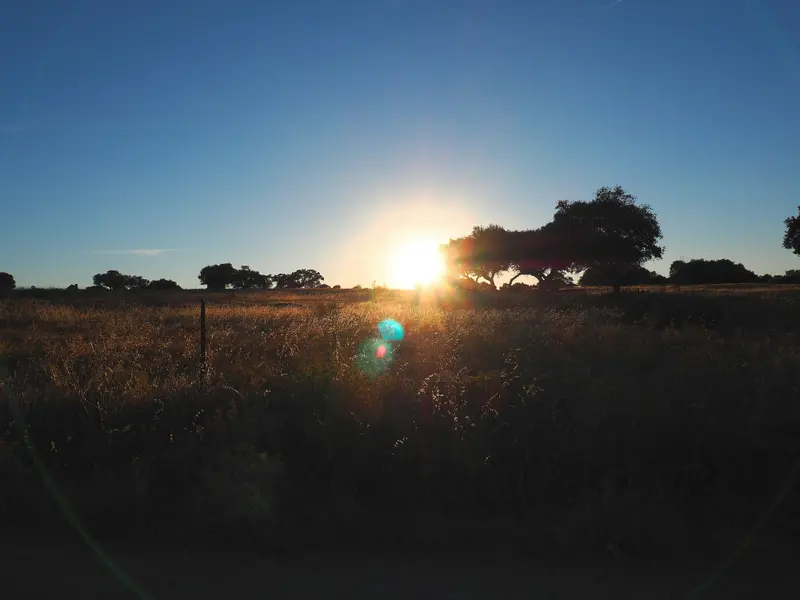
For birdwatching, choose the kind of habitat first. At Monfragüe, watch the cliffs and the air over the Tagus. On the plains, look close to the ground from a public track or viewpoint and allow enough time for the birds to settle. Photography calls for room to keep your distance. A support for binoculars helps when sharing them with a child or when watching one spot for more than a few minutes.
For walking and cycling, find the actual starting point. On a greenway, plan an out-and-back section that fits the time and energy you have. A circular route in the hills requires more attention to ascent, junctions and where to carry or refill water. Save the map offline and keep your most demanding walk for a stable forecast, especially if the trail crosses a mountain stream more than once.
At Alqueva, Alange and other reservoirs, find the walk, the designated swimming spot and the boating launch individually. If you hire a kayak, ask about the wind, buoyancy aids and getting back. For children and beginners, a short outing along a shore you can see from the launch gives you scope to shorten the journey on the water.
Routes and itineraries
Three days for the main heritage sites
Give the first day to Mérida. Visit the theatre and amphitheatre while you are fresh, then follow the central streets between the Temple of Diana and the bridge. Transfer to Cáceres the next day for a first loop through the old town. Pick the site you most want to go inside and fit your arrival around it. On the third day, return to the walled city or drive to Trujillo. You can keep one hotel for both nights if the connections work and you are travelling light.
Five days including the north
Keep Mérida and Cáceres as the first two stops, then take a day at Monfragüe on the way to a new base in Plasencia. Visit the Jerte or La Vera on day four, and spend part of day five on Plasencia’s historic centre before setting off. If you are leaving towards the north, a short stop on the Ambroz is possible. If Guadalupe is more important to you than a valley walk, use the fourth day for it and rethink the overnight stop to avoid crossing the Villuercas twice.
A week on the border and in the south
Begin in Badajoz, visit Olivenza and the Spanish side of Alqueva, then move to Zafra. From there choose a day in Jerez de los Caballeros or a trip up to Tentudía. Continue towards Mérida through Tierra de Barros if you want to visit a winery or stop in Alange. Leave two blocks for Mérida and one free day to spend longer in the area you have enjoyed most. The same route works in reverse if you are arriving from the north and travelling into Portugal next.
Travelling with children
Alternate stops that take concentration with ones that leave enough space to move around. In Mérida, use the theatre, the amphitheatre and the bridge to ask how the audience got in or how people moved across the river. In Cáceres, challenge children to spot towers from different squares and choose just one to explore in more detail. Follow the visit with a short break somewhere shaded after lunch.
In the countryside, you can keep your walk to a flat stretch, stop at an interpretation centre or try birdwatching from a viewpoint. Agree before leaving how far along the trail you will go. Reservoir levels and access can change. If you want to swim, check the conditions and whether the particular beach or swimming spot is open that day. Have something to do ashore, too.
Where to stay in Extremadura
Stay in Mérida to walk to the theatre, the centre and the Guadiana. Choose Cáceres to make several visits to the old city, with Trujillo or Los Barruecos as possibilities by car. In either city, check the route from the car park to the accommodation before arriving. A short extra walk can make a difference with luggage on a hill or across uneven paving.
Plasencia works for several different trips into the north. Book in a valley itself if you expect to walk in that same area for more than one day. On the border, Badajoz gives you a city base and Olivenza a smaller centre on foot. In the south, Zafra makes for an evening without driving after a day among nearby villages. A night in Guadalupe leaves space for both the monastery and an outing into the Villuercas.
See places to stay in Extremadura (opens in a new tab)Affiliate link: if you book through it, we may earn a commission at no extra cost to you.
Practical tips and common mistakes
- Group your days by road corridor. Mérida to Cáceres is a different sort of journey from a loop through La Vera, the Jerte and Las Hurdes. Look up the exact car park, station or viewpoint in each case.
- Confirm site access before setting the order. The theatre, monastery and a private estate will each have their own arrangements. If you book a tour, save the meeting point and the walking route to it.
- Start with the exposed part of the day. In warm weather, do the open walk first. On a walk alongside a reservoir or through open pasture, look for a point where you can turn back early.
- Check two forecasts when crossing a range. Look at the village where you start and the high point of the route. Wind, rain or mist can change both driving and walking conditions.
- Save the final directions before leaving. Download the map, note the last turns to a trail or lodging, and check local time and the return route if you cross the border.