

 Español
 English

Why visit Bilbao
Start your Bilbao itinerary with two landmarks on the map. Teatro Arriaga stands where the Casco Viejo, or old quarter, meets the water. Downstream, the Guggenheim opens onto the Abandoibarra promenade. Bridges between the two let you switch banks and see the same buildings from different angles. On a single walk you can follow the capital of the province of Bizkaia from its early commercial streets to the land once used by docks and shipyards.
Bilbao makes a city break in its own right and a good introduction to the Basque Country. Give yourself a morning at each end of the walk if you want time inside a museum as well as time in the streets. Artxanda provides a view of the neighbourhoods climbing out of the valley. Down by the water, the markets, bridges and industrial remains explain how the city fits into the valley.
When to go
Spring and early autumn suit a trip divided between museums and neighbourhoods. Save Artxanda for a clear spell so that you can pick out the curve of the estuary and the districts on the slopes. Cloudy weather still works for a walk along the water. The distance across the estuary lets you study details on the opposite bank that are easy to miss from the pavement beside them.
Long summer days give you time to follow the promenade to Euskalduna. During Aste Nagusia, the main city festival, the Arenal and the Arriaga area become event venues. Check the programme before relying on your usual walking route. In winter, make the most of daylight on the bridges and save a museum or performance for later. Your best order depends on the forecast and which interiors you want to visit.
Getting there and around
Airport, railway and coach arrivals
Bilbao Airport is in Loiu. In the airport information checked in 2026, Bizkaibus service A3247 links the terminal to the city and ends at Bilbao Intermodal. Check the intermediate stops against your accommodation. Getting off at the coach station may add an unnecessary walk with luggage if you are staying nearer the middle of the Ensanche. If you are connecting through Madrid, compare the full time to your Bilbao accommodation by rail and air.
Long-distance trains arrive at Bilbao Abando. Bilbao Intermodal, the main coach station, is near San Mamés at the other end of the centre. Abando is also a metro stop. Look for the right street entrance if you have an onward train or a suitcase. Distinct station names are useful on a map, especially when you are arranging a meeting or choosing where to leave your bags.
Along the water and across the valley
Metro stops such as San Mamés, Indautxu, Moyúa, Abando and Zazpikaleak/Casco Viejo serve different parts of the centre. Ride when it saves a long stretch and use the bridges to make short walking loops by the water. The tram can shorten a riverside itinerary, while streets heading towards Begoña or up from San Francisco can be steep or stepped. Check where the rise begins if you are pushing a buggy or using a wheelchair.
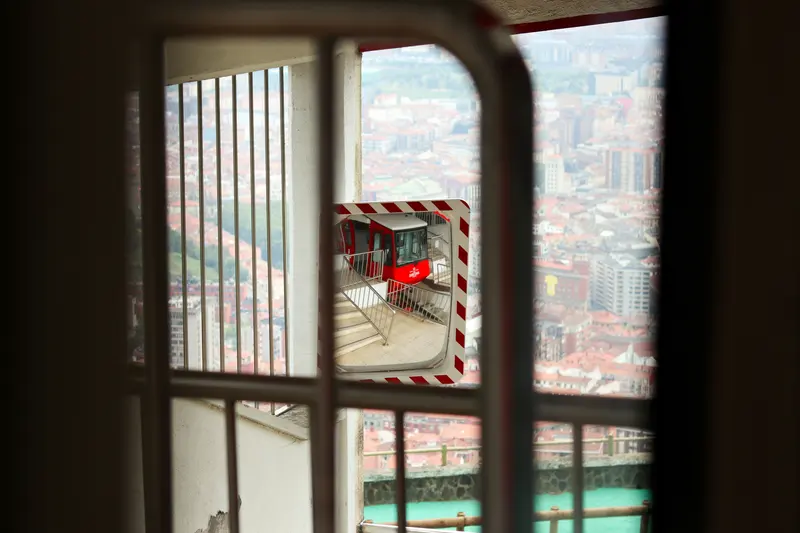
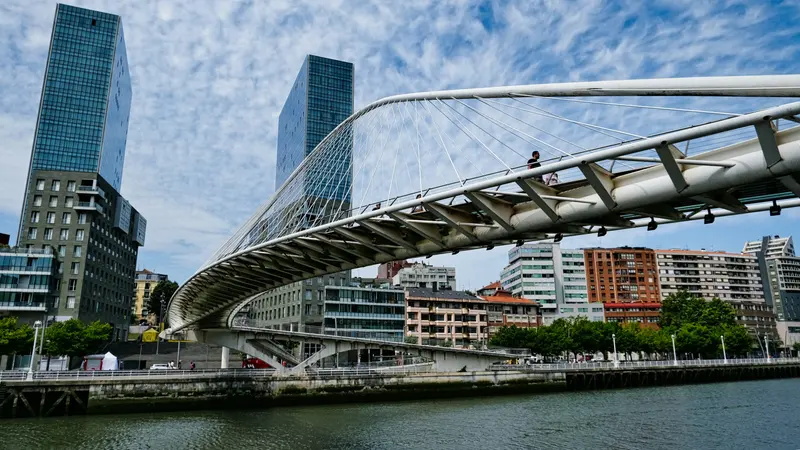
The lower station of the Artxanda funicular is in Castaños, a short way behind the Campo Volantín waterfront and close to Zubizuri bridge. On your return, you can keep to that bank as far as the City Hall and cross towards the Arenal. The change of side opens up the facades of the Ensanche on one stretch and the Arriaga on another.
What to see in Bilbao
The Seven Streets, La Ribera and the Arenal
Begin at the Arenal beside Teatro Arriaga and walk to Plaza Nueva. From the arcades, take the smaller streets to Santiago Cathedral, then carry on to La Ribera Market and San Antón bridge. To see how the market sits above the water, cross the bridge and stop on the opposite bank. Retrace your steps through a different street so that you see more of the Seven Streets, the medieval core of the quarter.
Plaza Nueva belongs to a later stage of the city’s history, which helps explain its regular shape and the sudden change in scale when you leave through an arch. Near the cathedral, the porch gives the tightly packed streets a little breathing room. Allow time between the main stops. The street pattern and the different heights of the buildings tell as much of the story as the interiors do.
The Guggenheim and Abandoibarra
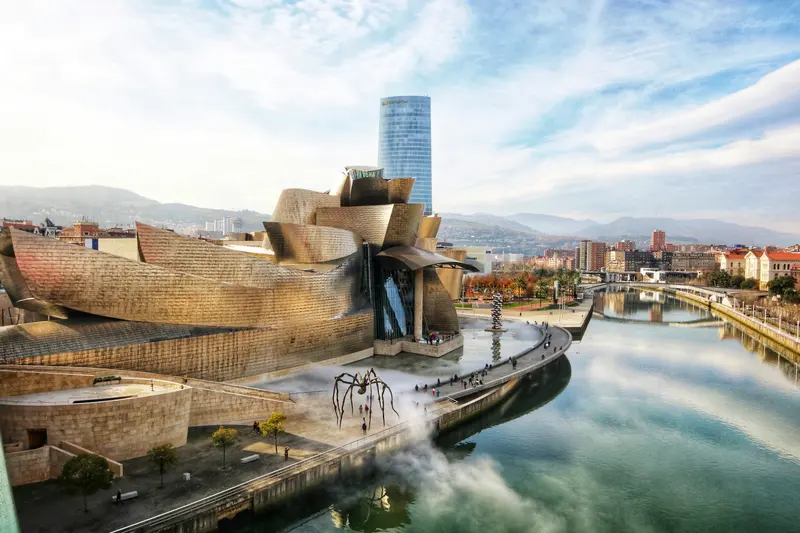
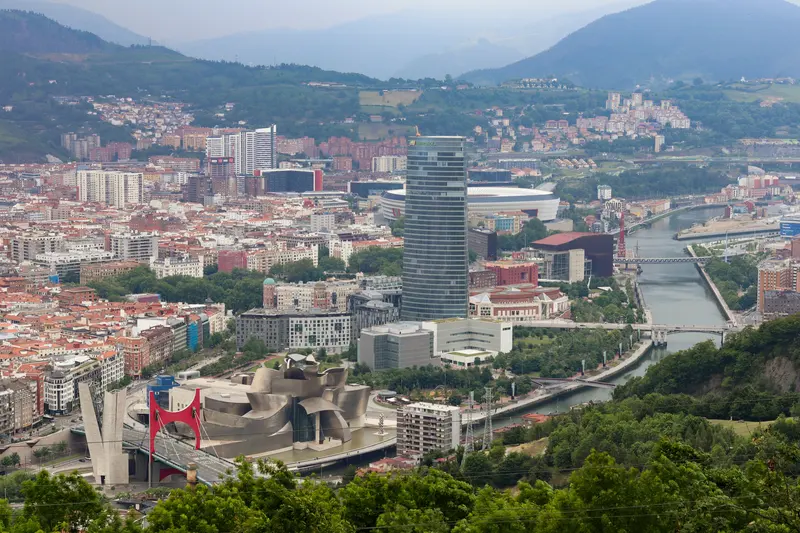
Look at the Guggenheim first from across the estuary or from a bridge. The pale stone and titanium curves make a different shape at water level, especially near La Salve bridge. Walk round to Maman, Louise Bourgeois’s spider, then go up to the avenue to find Puppy, Jeff Koons’s flower-covered dog near the entrance. The two artworks are on different levels of the same site.
Carry on downstream to the Euskalduna conference and performance venue. Beyond it, the old docks and the red Carola crane mark the former shipyard. On the way back use Doña Casilda Park to get from the broad waterfront to the streets of the Ensanche. Even if you spend most of the afternoon in the Guggenheim, the riverside walk gives the museum a setting you can see in your own time.
A second look from the opposite bank
From Abandoibarra, make time to cross the estuary at least once. On the return walk, use Zubizuri as a landmark and look back towards the Isozaki towers. Further upstream, the City Hall and the Arenal mark the transition into the older, narrower stretch of the valley. If you reach the old quarter this way, look across to Abando before you enter the lanes. You can see how much the scale of the streets changes in a short distance.
Seeing the valley from Artxanda
Look for the bend in the water near the Guggenheim, then follow it towards the densely packed Casco Viejo. The Ensanche lies on flatter ground and its street pattern is easier to read from above. If you are trying to place a neighbourhood or bridge you saw earlier, the viewpoint is useful for putting the parts together. It also explains why a short distance on a city map can involve a climb.
Monuments and heritage
The early town and its bridges
Santiago Cathedral preserves the old town’s Gothic tradition and its dedication reflects the city’s links with the pilgrimage to Santiago. Down by the market, San Antón church and its bridge appear together on Bilbao’s coat of arms. Look at the change in height between the church entrance, the street and the quay. It shows how much of the early city was organised around access to the water.
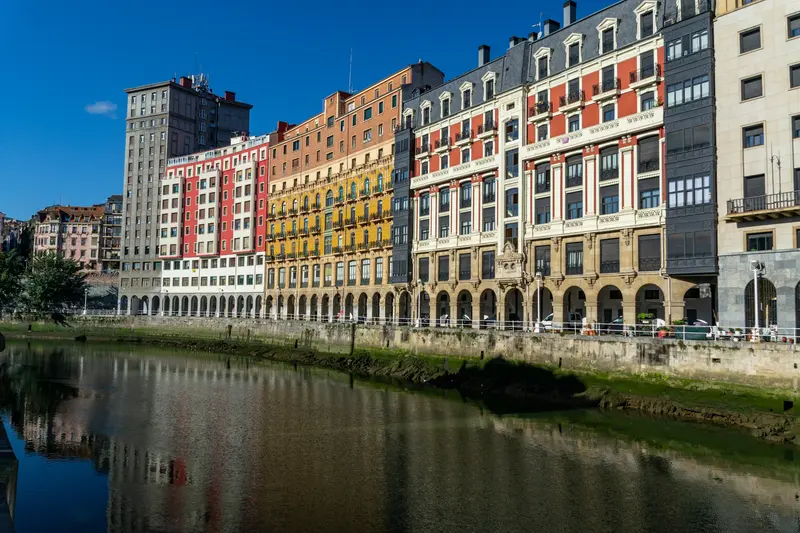
Teatro Arriaga faces the Arenal, a wide space at the entrance to the old quarter. See its facade from the bridge before moving up close. Across the water, the Sociedad Bilbaina building and the stained glass at the railway station represent another period in Bilbao’s expansion. This short crossing takes you from the old commercial quarter to a part of town shaped by the railway and the Ensanche.
The Ensanche and former industrial sites
Gran Vía and Plaza Moyúa are useful landmarks for finding your way through the Ensanche. Palacio Chávarri is easy to pick out on the square. Nearby, Azkuna Zentroa occupies a former warehouse. Inside the brick envelope, look at the columns supporting the raised volumes. The scale of the warehouse and the surrounding blocks gives a sense of the space the city acquired when it expanded beyond the old quarter.
At Euskalduna, the docks and Carola crane show the scale of the former shipyard. Follow the lower path to see the relationship between the facilities and the water. View them from above to place them beside the modern Euskalduna building and the route towards San Mamés. The two viewpoints make especially good sense together if you have visited the maritime museum.
Museums and culture
Allow time for Richard Serra’s The Matter of Time inside the Guggenheim. The shapes of the steel sculptures are easier to understand when you walk beside them and through several of them. Passages between the walls narrow and widen, and their angle changes as you move. Check exhibitions for your dates if your time in the museum is limited and you want to reserve part of it for a particular artist.
The Fine Arts Museum, near Doña Casilda Park, puts greater emphasis on painting and gives you a chance to explore Basque artists. Check what is on display when you plan to travel. Itsasmuseum takes the estuary as its subject, covering the port and shipbuilding. See the docks outside as part of the same visit. They make the objects and accounts inside easier to place in the landscape.
Azkuna Zentroa is worth seeing for the conversion itself, and its cultural programme can give you a second reason to go. If you are booking a performance, Teatro Arriaga goes well with an evening in the old quarter. Euskalduna fits more naturally at the end of a walk through Abandoibarra or a visit around San Mamés.
Neighbourhoods and areas
Casco Viejo. Start here for Plaza Nueva, the cathedral, La Ribera and San Antón. The Arenal is a straightforward meeting point if some people are arriving from the other side of the estuary. From there you can head towards the City Hall or cross to Abando.
Abando and Indautxu. Together these areas cover much of the Ensanche on a visitor’s itinerary. Use Moyúa to get your bearings between Gran Vía and the avenue entrance to the Guggenheim. Indautxu is handy for Azkuna Zentroa and the route between the park and San Mamés.
Castaños and Campo Volantín. On the other bank, the waterfront provides a broad view of Abandoibarra. The lower funicular station is behind the promenade. Decide which bridge to use on the return, especially if you want to catch the changing light as you walk back to the centre.
Bilbao La Vieja and San Francisco. Cross San Antón bridge for Marzana quay and the view back towards La Ribera. Streets climb away from the waterfront quickly. If you want to stay at water level, make this a short detour and return by another bridge towards the Arenal.
Festivals and traditions
Aste Nagusia, Bilbao’s main festival, took place from 22 to 30 August in 2026. Its opening starts with the txupin, a rocket, and introduces Marijaia, the figure who presides over the celebration. Local festival groups, or konpartsak, have a visible role by the water. The municipal programme brings together music, theatre, folk traditions and activities for children at several sites.
Use the city programme for the year you travel. Check exactly which side of a bridge an event is on, since the festival spreads across the centre. If a museum is a priority, set aside a separate part of the day for it. That gives you time in the galleries as well as some flexibility over where to join the festival.
Sport and outdoor activities
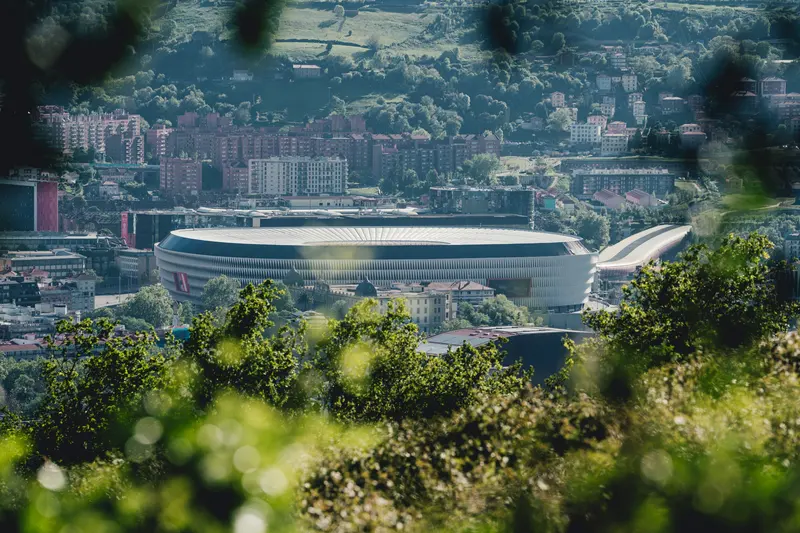
San Mamés, home of Athletic Club, stands close to the Euskalduna docks and Bilbao Intermodal. The club museum and stadium tour explain the history of the team and give you access to parts of the ground. Check the club’s fixture list before committing to the rest of your itinerary if you are hoping to watch a match. To get a sense of the setting, walk round the stadium and make your way down to the riverside. From there you can see how the ground, the former shipyard and the hills on the opposite bank fit together.
Routes and itineraries
One day in the old quarter and Abandoibarra
Start at the Arenal, go through Plaza Nueva and follow the Seven Streets towards La Ribera. Cross at San Antón to see the market across the water. Leave the afternoon for Abandoibarra. With a Guggenheim ticket, keep enough time for the waterside and avenue approaches. For an outdoor afternoon, carry on to the Carola crane and return through Doña Casilda Park.
Two days with Artxanda and the docks
Spend the first day on the old quarter and the Guggenheim. On day two, take the funicular when the sky is clear, return along Campo Volantín and cross to Abando. Spend the afternoon on the Fine Arts Museum and the park, or make it a maritime visit with the docks and Itsasmuseum. If you are staying near San Mamés, you can begin at the docks and finish in the old quarter.
Day trips
In Getxo, start at the Vizcaya Bridge in Las Arenas. You can cross the estuary to Portugalete, then come back for the beaches and the old fishing harbour in Algorta. The bridge is at one end of Getxo and the cliffs of Punta Galea are at the other. Decide how long you want to spend walking before trying to fit both into a visit.
In Bermeo, spend time by the old harbour, the Ercilla tower and La Tala. Gernika-Lumo is on the same railway corridor and makes a separate trip if you want to visit the Assembly House and look at the Urdaibai estuary. For Gaztelugatxe, check the access calendar and plan the final leg before setting out. Without a car, taking the train to one town gives you a more flexible day.
If you are using Bilbao as the base for several nights, treat the two estuary trips differently. The metro makes a half day in Getxo fairly easy to fit around a museum booking. The railway journey into Urdaibai leads away from the metropolitan area and is better with a longer window. Leave an evening free in Bilbao after that outing so that you can return when it suits your plans without rushing back for an admission time.
Travelling with children
Use the Abandoibarra promenade to join up the flower-covered dog, the spider sculpture and the shipyard docks. Doña Casilda Park makes an easy end to the walk, and the tram helps on the way back. At Artxanda, let each child pick a bridge or building to find from above, then try to spot it again from the riverbank.
If the weather turns, the maritime museum gives the walk a clear destination. Let children look for the crane and the old building slips from the riverside, then connect those features to the boats on display. For a shorter visit, choose the two outdoor sculptures around the Guggenheim and go straight from there to the park. Pick a meeting point on the same level as the path, as there are separate entrances around the museum.
Where to stay in Bilbao
Stay in the Casco Viejo to start near the cathedral and the Arenal. Ask about stairs if you are bringing luggage and check whether your room faces a busy square. Abando works well for a mixture of museum visits and departures by public transport. Indautxu and San Mamés are convenient for Bilbao Intermodal, Euskalduna and stadium visits.
If you are considering Castaños or Campo Volantín, look at which bridge connects you to your plans. A place on the waterfront can be an easy walk from the centre across the estuary. Streets further uphill may add a climb to every return. For a short break, a room within easy reach of several parts of the city gives you more freedom to change your plans with the weather.
See places to stay in Bilbao (opens in a new tab)Affiliate link: if you book through it, we may earn a commission at no extra cost to you.