Español
 English

Why visit the Balearic Islands
When choosing things to do in the Balearic Islands, think about the kind of morning you want to wake up to. In Mallorca, you can step from Palma’s stone courtyards into a landscape of terraced olive groves. Menorca makes it easy to alternate harbour walks with prehistoric sites and short stretches of coastal trail. Ibiza has a walled city and countryside villages as well as a busy nightlife scene. In Formentera, a bicycle can take you from the ferry to a salt lagoon and on to a beach in the same outing.
Choose the island before putting all the sights on a map. Palma and the Serra de Tramuntana fit a long weekend well. Menorca rewards a longer stay if you want to see both coasts, spend time in its two main towns and walk without taking on a full stage every day. Ibiza and Formentera are the easiest pair to combine. A day crossing is worthwhile when you already know where you’re going from the port and how long it will take to get back.
The islands also suit anyone who travels for architecture or archaeology. Dry-stone terraces in Mallorca, monumental prehistoric structures in Menorca and Ibiza’s fortifications tell different stories about how people shaped their surroundings. Use the cooler hours for a walk and keep a church, museum or long lunch for the middle of the day.
When to go
Best months for a trip to the Balearic Islands
May and June are good for walking, cycling and days spent in towns. Sea temperatures can still feel fresh at the start of the season. If you are coming mainly to swim, make a list of short alternatives you can reach easily from your base. A waterfront walk and somewhere to eat nearby make it easier to enjoy a windy afternoon with children.
July and August suit a beach-led trip. Save exposed streets and steeper climbs for the beginning or end of the day. A short uphill walk on hot paving can take more out of you than a longer route along a shaded promenade. For festival visits, find the event location and check the way back before fixing where you will stay.
September and October give you more room for outdoor sightseeing. Autumn weather can turn, so consult the marine forecast before booking a boat alone as the main event of the day. At Menorca Airport, AEMET’s long-term observations for 1981–2010 show more average rain in autumn than in high summer. Keep a day free to swap outings and make the decision using a forecast close to your visit.
In winter, build a trip around heritage, food and shorter walks. Palma, Maó, Ciutadella and Ibiza Town have established town centres and work well as places to spend the evening on foot. Check opening days before choosing an outlying resort area as your base. Pack a windproof layer for a walk on the coast even if it feels mild when you leave town.
Getting there and around
Flights and ferry ports
In 2026, Aena listed bus services at Palma (PMI) and Menorca (MAH) airports. Palma is the gateway to Mallorca and Menorca Airport is close to Maó. Flights for Ibiza arrive at IBZ, in the south of the island. For a trip from outside Spain, compare flights to your island before booking a route via the mainland or another island. Allow enough time for baggage collection, a terminal change if necessary and a second check-in when travelling on separate tickets.
Palma and Port d’Alcúdia are different ferry ports on Mallorca, as Maó and Ciutadella are on Menorca. The distinction matters for a car hire booking and for getting to your room. An arrival in Ciutadella can save a cross-island journey if you plan to spend most of the trip in the west. If you are heading for the north of Mallorca, check whether an Alcúdia arrival and a Palma departure fit your itinerary.
Formentera is reached by sea at La Savina. Combining it with Ibiza is straightforward if you want time in Ibiza Town too. Ibiza Airport, the ferry terminal and your accommodation all have separate locations. Leave time to travel across town or from the airport, find the correct quay and deal with any knock-on delays. If your flight home leaves little margin for the crossing from Formentera, finish the trip with a night in Ibiza.
With or without a hire car
Palma and Ibiza Town are both manageable on foot for a short break if you can drop your bags near the centre. On Mallorca, use the TIB interurban network map to see which towns are good bases for the places you want to go. In Menorca, check the airport leg, the main route from Maó to Ciutadella and the final trip to the coast separately. On Formentera, decide between a bicycle, public transport and other transfers once you know where you will sleep.
A car helps on days with several scattered stops. If you are visiting two islands, compare one short hire on each island with taking a vehicle on the ferry. Check the hire agreement and any island limits first. The Balearic government records that Formentera’s 2026 vehicle entry and circulation scheme ran from 1 June to 30 September. Check the current rules for your dates and confirm whether you need a permit for the registration number before booking the crossing.
What to see in the Balearic Islands
Mallorca from the bay to the Serra
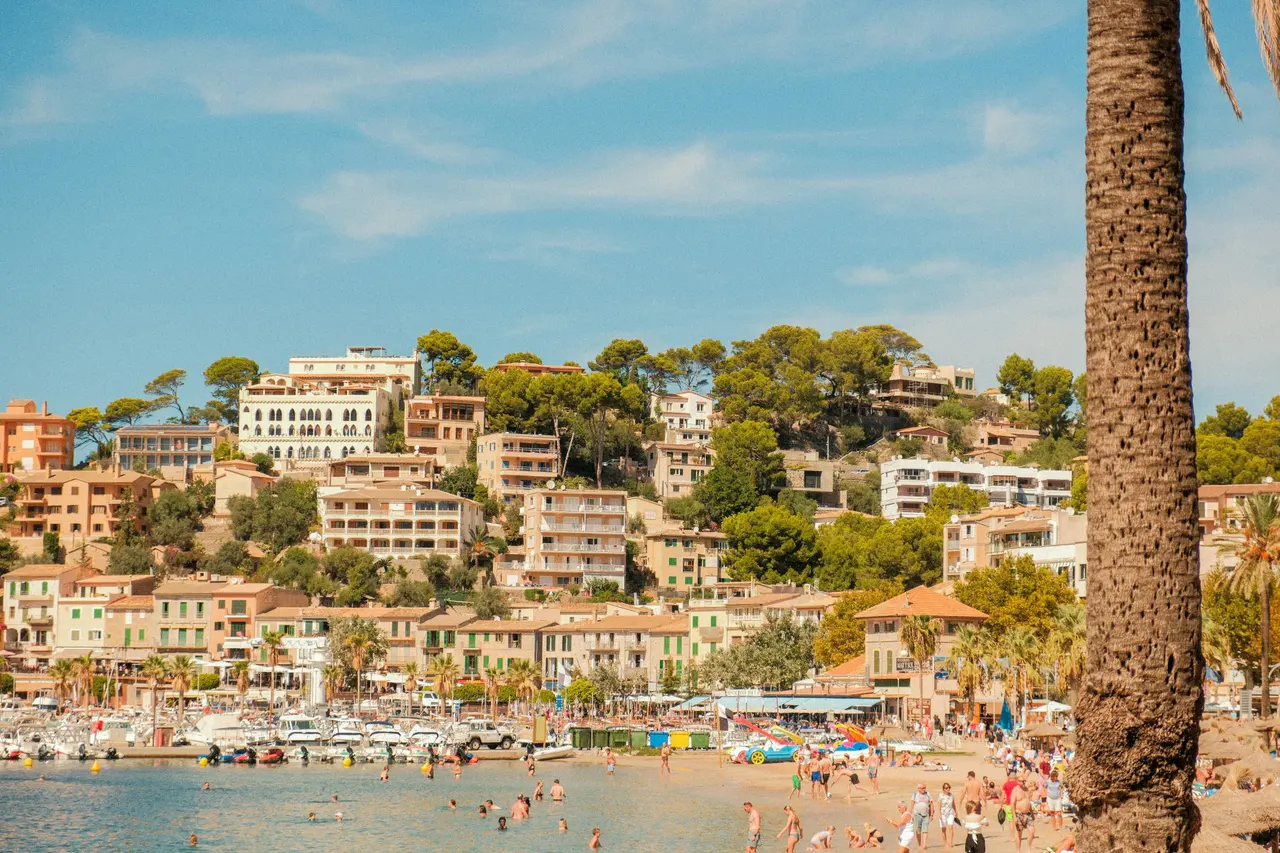
Start in Palma at the Parc de la Mar to see La Seu Cathedral and the Almudaina Palace from below. Their positions make sense from the old waterfront. Walk up into the old town and set aside time for one interior visit. With the rest of the day free, head to Es Baluard or take a longer walk around the bay.
In the Serra de Tramuntana, choose a group of nearby places for one day. In the Sóller valley, pair the town square and citrus-growing landscape with the port. Valldemossa and Deià are on the same side of the Serra, and a visit indoors followed by a proper walk in each village can easily fill a day. On the northern side of the island, Alcúdia’s walled town and the Formentor peninsula show the change from settled plains to a much steeper coast.
Menorca from one harbour to the other
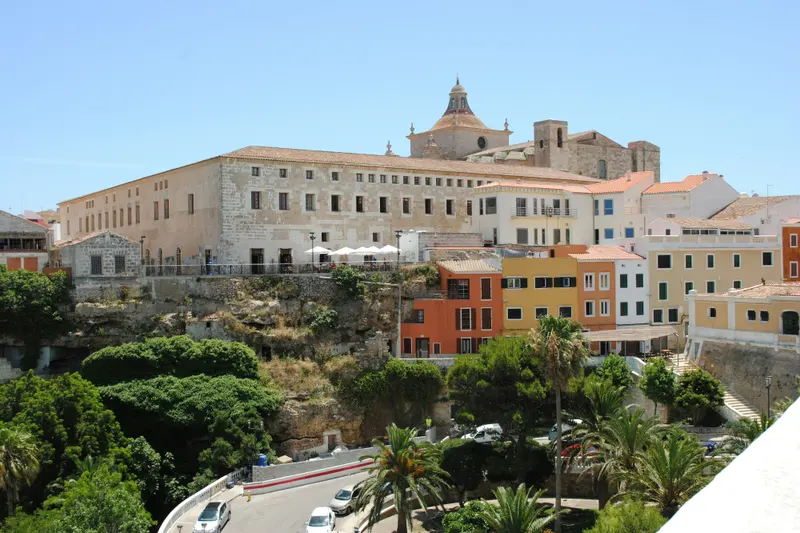
In Ciutadella, start at Plaça des Born and walk down to the harbour. The height difference changes the view within a few streets. Look around the cathedral area before following the waterfront. In Maó, use both the upper town and the quays to see the shape of the inlet. On a second day in the east, extend the harbour visit to Es Castell or head out to Es Grau.
For a break from towns, choose a prehistoric site and part of the Camí de Cavalls. Torralba d’en Salort and the Naveta des Tudons are useful examples of two different approaches to building in stone. At one you can see a large T-shaped taula. At the other, look at the shape of the collective tomb, which resembles an upturned hull.
Ibiza and Formentera at different speeds
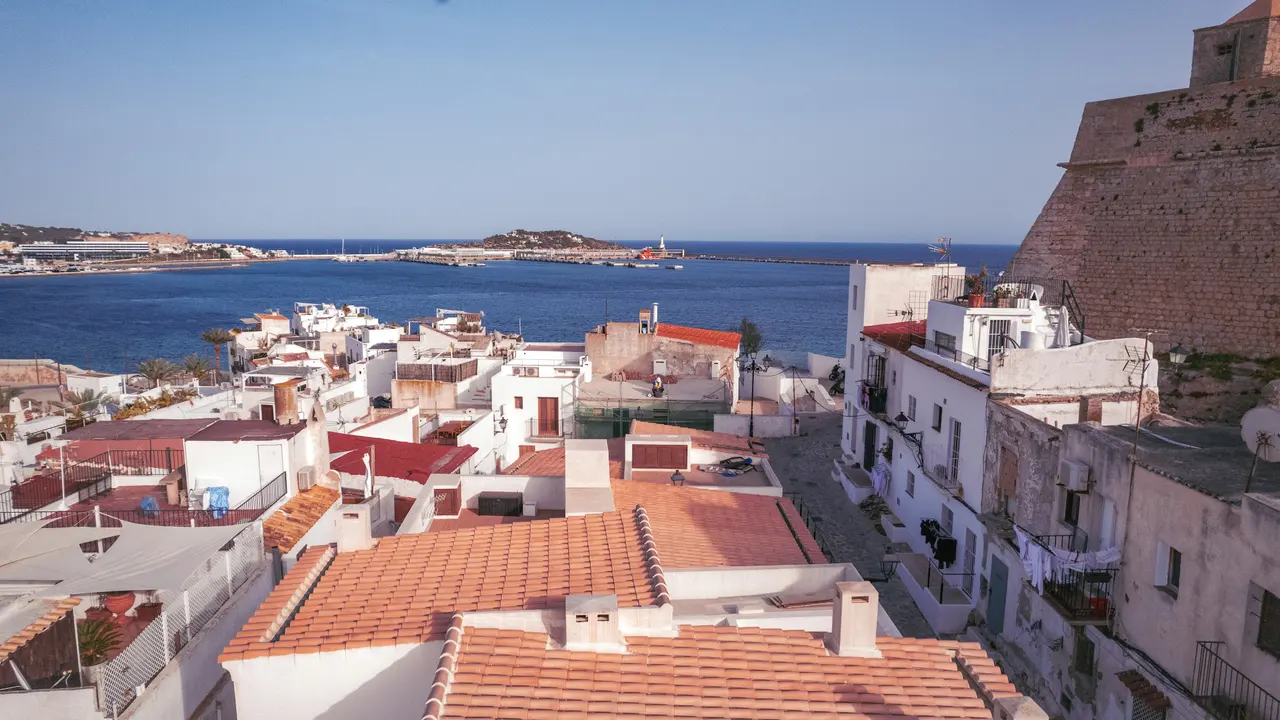
In Ibiza Town, enter Dalt Vila through Portal de ses Taules and find a bastion overlooking the port. Go back down through the streets of La Marina, an area shaped by trade and maritime arrivals. For a different period of the city’s history, allow time for the necropolis of Puig des Molins. Then spend a day in one part of the island. Try the south-west for views of the islets, Santa Eulària for a waterfront walk, or the north for a village and a cove.
For a first outing in Formentera, link La Savina with the salt pans and beaches of the north. An overnight stay makes it easier to fit in La Mola as well. The plateau ends at the lighthouse and makes a clear change from the low ground by the port. On the way, stop in Es Caló to see the fishermen’s boat shelters. A cloudy day leaves plenty to see along this route while you keep the beach for a calmer spell.
Monuments and heritage
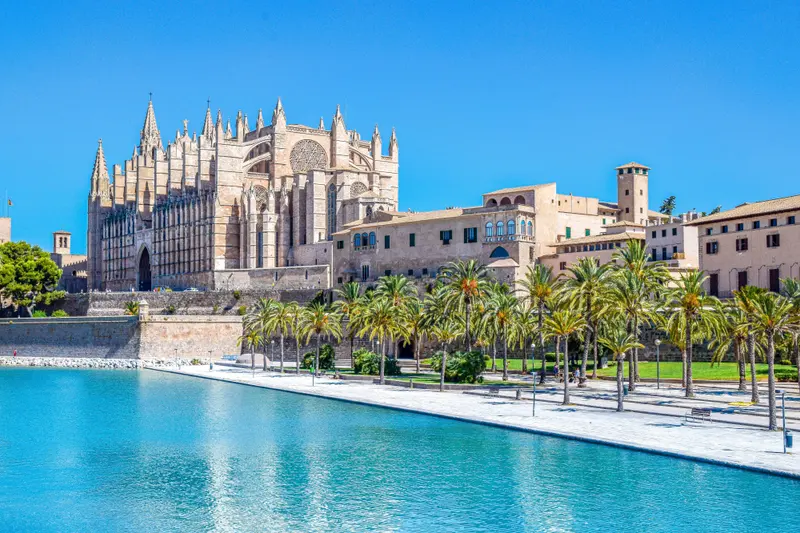
Three UNESCO sites and how to visit them
The Serra de Tramuntana is a World Heritage cultural landscape. Look at a mill, an irrigation channel or a run of terraces to see what it took to farm the slopes. At Banyalbufar, find a view where the mountain, the terraces and the sea are visible together. In Sóller, stop long enough to take in the valley before continuing to the port. The relationship between settlements and cultivated land is part of what you have come to see.
Talayotic Menorca groups sites with cyclopean architecture, built with large stone blocks. A talayot is a stone tower and a taula is a T-shaped monument found within a sacred enclosure. The Naveta des Tudons offers a different construction to compare with them. Read the entrance panel before going round so you know which structures are ancient and where modern paths divide the site.
Ibiza, Biodiversity and Culture takes in the fortifications of Dalt Vila, the Phoenician remains of Sa Caleta, the necropolis of Puig des Molins and underwater meadows. You can pair the walls and the necropolis in town to see how far back the story goes. If you add Sa Caleta, save the site and your intended beach as separate points on the map. Several places nearby are described using the same local name.
Reading the fortifications from the ground
Try to see both sides of the walls in Alcúdia and Ibiza Town. Alcúdia’s enclose a compact town on relatively level land. In Ibiza, keep an eye on the slope and the views beyond the bastions. Cabrera’s castle looks down over the entrance to a natural harbour. Each works best as a visit if you can work out what someone arriving outside would have seen and what defenders could see from inside.
Charming villages
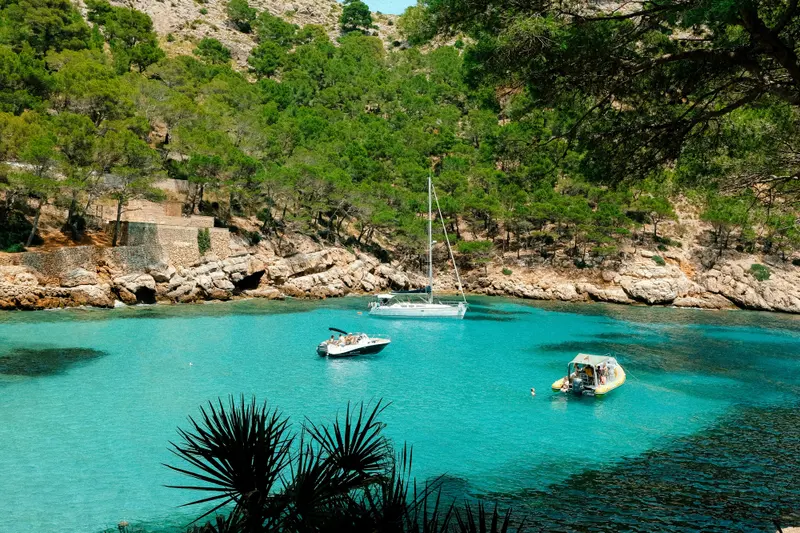
Mountain streets and working harbours
In Fornalutx, on the slopes of the Sóller valley, start with the square and climb gradually through the stone lanes. Look out over the fields from beyond the busiest streets. Cala Figuera, in south-eastern Mallorca, is a working harbour set in narrow inlets. Walk down to the water to see the boats and sheds. If you want to swim afterwards, choose a separate beach access in this part of the island.
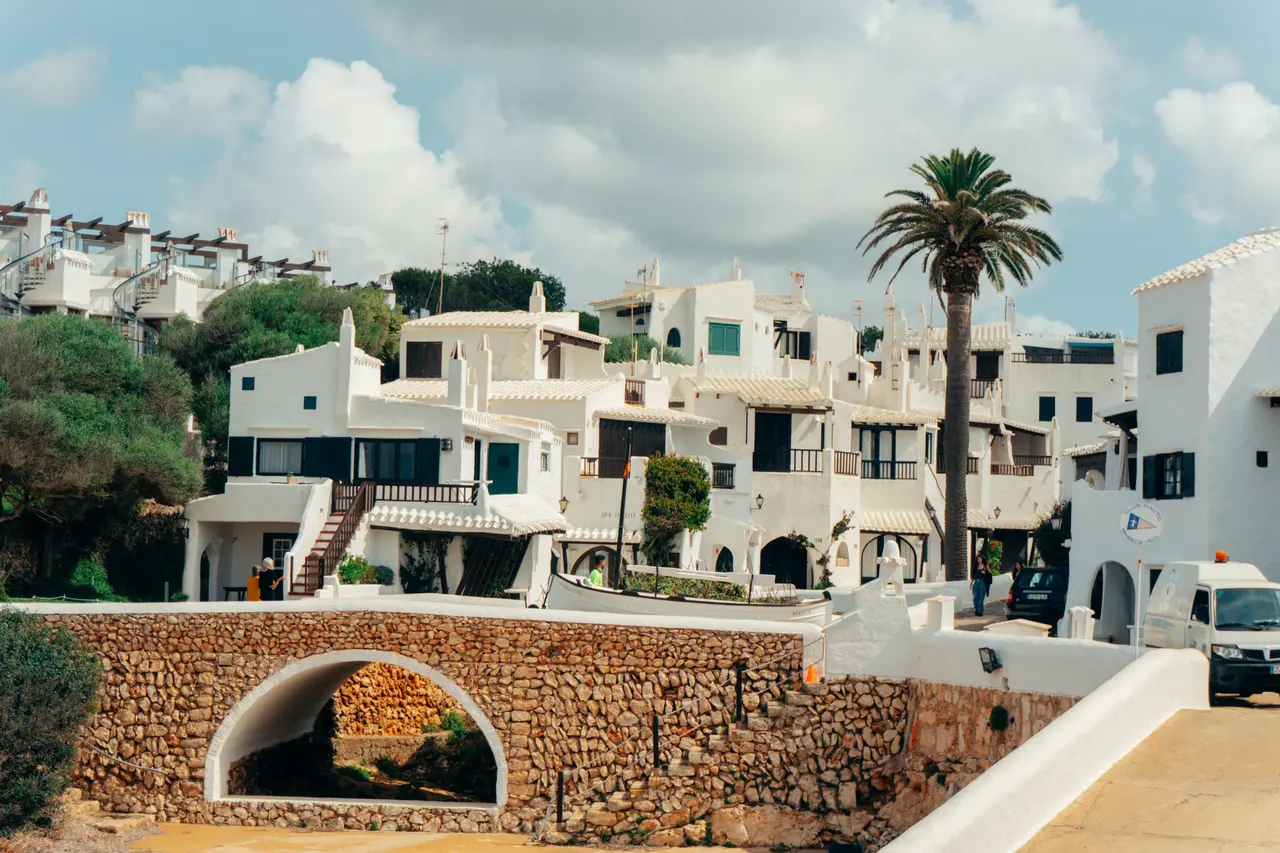
On Menorca, Fornells faces a long bay. Walk the waterfront and judge the wind there before planning to go out on the water. Es Mercadal sits below Monte Toro and is well placed for a stop between the coasts. In Binibèquer Vell, the white lanes wind through a residential development. Keep noise low and give private entrances room.
Inland Ibiza and the settlements of Formentera
In Santa Gertrudis de Fruitera, take a break in the square on an inland day. Sant Carles de Peralta fits a north-eastern route with time left for the coast. Sant Josep de sa Talaia makes more sense on a day in the south-west. Choose one as a place to have lunch and walk for a while, with the rest of the day spent in the same area.
In Formentera, try Sant Francesc Xavier for its church and square before heading towards Cala Saona or Cap de Barbaria. Sant Ferran de ses Roques sits between the routes to Es Pujols and Migjorn. El Pilar de la Mola is on higher ground in the east. From the village church, the road still has a stretch of plateau to cross before reaching the lighthouse and cliffs.
Nature and protected areas
Cabrera and two northern wetlands
The Cabrera Archipelago National Park lies off southern Mallorca. The Spanish environment ministry’s visitor guidance consulted in 2026 called for advance reservations for public boat trips. Check which harbour your boat uses, how long it stops and which walks fit in the time ashore. Bring food and water and take your rubbish back. With a private boat, consult the park about the permit and mooring arrangements for the date you plan to visit.
S’Albufera de Mallorca, near the Bay of Alcúdia, and s’Albufera des Grau in Menorca are separate wetlands. On Mallorca, spend time around the channels and bird hides. On Menorca, follow a route with views over the brackish lagoon and look for the change from wooded areas towards the coast. Binoculars are useful if you have time to stay in one place and watch the reeds and the open water.
Ses Salines and the water between two islands
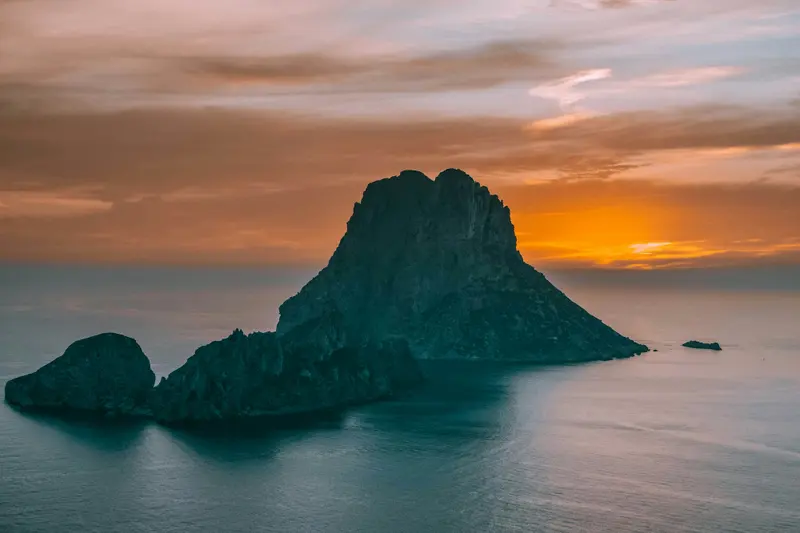
From Cala d’Hort you can see Es Vedrà, one of the western islets protected as a nature reserve. Ses Salines Natural Park spans land and sea between Ibiza and Formentera. It includes salt pans, dunes and islets as well as large areas underwater. In Ibiza, approach the pans on an allowed path. In Formentera, follow the edge of Estany Pudent and see how the ground changes on the way towards the Es Trucadors peninsula. Keep to paths and boardwalks across the dune areas.
Posidonia is a marine plant whose meadows stabilise sediment and provide shelter for many species. If you hire a boat or go out with a skipper, check the authorised mooring and anchoring zones in the park guidance, consulted in 2026. To see underwater life without a boat, choose a permitted swimming area and bring a mask when the sea is calm.
Beaches in the Balearic Islands
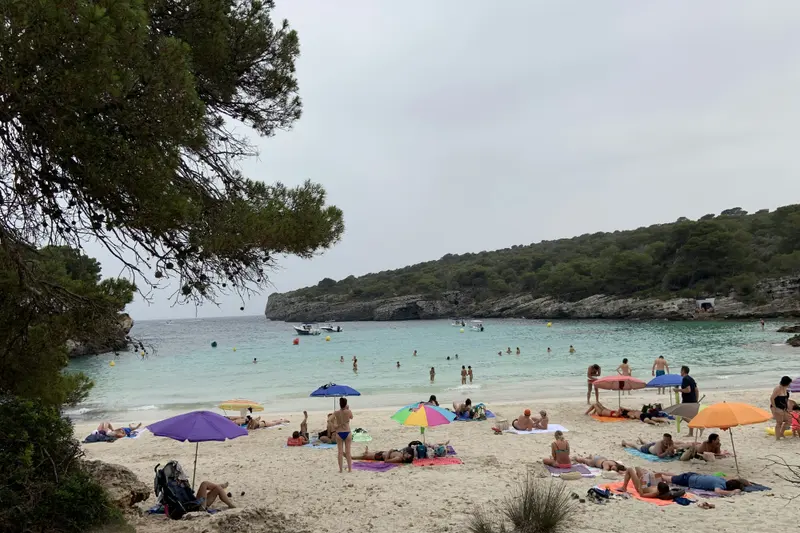
A long stretch of sand or a sheltered cove
On Mallorca, Platja de Muro lies in a wide bay and works for a day when you need room to spread out. Es Trenc, on the south coast, offers a contrast between dunes, open water and the salt-making landscape inland. On Menorca, Cala Galdana is useful for combining a swim with a section of the Camí de Cavalls. The south-west also has Cala en Turqueta. For a smaller cove like Macarella, find out what the access involves and carry only what you can comfortably take back up the path.
Talamanca is practical when the rest of the day revolves around Ibiza Town. At Platges de Comte, assess the water at beach level before deciding to swim. The current and waves may feel quite different from how they look from higher up. In Formentera, Ses Illetes and Llevant face different directions on the same strip of land. Further south, Migjorn takes in a mix of sand and rock. Agree on a particular access point if your group is travelling separately.
How to choose a beach on the day
The wind may roughen the sea on one coast while the other feels protected. Read the flags and ask lifeguards where the designated swimming area is. With children, give equal attention to what is on land. Check the walk from where you can leave a bicycle or car, the shade and any toilets. A more exposed beach with an easy approach can make a better afternoon walk than a tiny cove at the bottom of a steep slope.
Festivals and traditions
Horses, village streets and harbour traditions
In Ciutadella, the main Sant Joan celebrations in 2026 fell on 23 and 24 June. Horse riders take part in a sequence of events around the old town and the lower harbour area, including Es Pla. Consult the annual programme if there is a particular part you want to see. Keep a clear space for the horses and find an area with an easy exit if you are taking children or prefer to watch from the edge of a crowd.
In Pollença, the main day of La Patrona in 2026 was 2 August. The historical re-enactment moves through a compact town with narrow streets and sudden changes in level. If you are staying down by the sea at Port de Pollença, look up how to get to the old town and back. Check for road closures before making other bookings on the same day.
In Ibiza Town, the 2026 Festes de la Terra included a traditional dance and a tribute to maritime workers on 6 August, and the Berenada Popular on 8 August for Sant Ciriac. 25 July is recognised as Sant Jaume, Formentera’s island day, and the council issued a call for bar concessions for its 2026 celebrations. For a future edition, check the local programme for the actual time and place.
What to eat
Bakeries, markets and harbour meals
In Mallorca, look in a bakery for ensaïmada, a spiral pastry, and coca de trampó, a flatbread topped with vegetables. Pa amb oli is bread dressed with oil and served with a choice of toppings. Sobrassada is a spreadable sausage seasoned with paprika. Try a small portion on toast if you want to leave room for another course. Tumbet, made with summer vegetables and tomato, is worth looking for on a menu.
On Menorca, try a young piece of Mahón-Menorca cheese alongside a mature one. The change is evident in both texture and flavour. Fornells and other coastal towns are places to look for caldereta de llagosta, a lobster stew. Ask how many it serves and how it is priced before you order. A fish dish of the day or a market picnic with cheese and bread makes a simpler lunch if you plan to walk afterwards.
Fish, rice and cheese with mint
Ibiza’s bullit de peix is best as the main event of a meal. Fish and potatoes are commonly followed by rice cooked in the fish stock. Ask the restaurant about portions before adding other large plates. Flaó is a cheese tart with mint. Look for it in a bakery if you want to try a slice without booking a long lunch.
In Formentera, amanida pagesa brings together vegetables, dried bread and peix sec, a traditionally dried fish. It gives you a way to try the product in a lighter dish. Ask how the bread is softened and how the fish is kept if you want to buy some to take home. Lunch in Spain often starts later than in northern Europe. Check serving times in a small town before planning an outing around a meal, especially out of season.
Sport and outdoor activities
The Dry Stone Route (GR 221) follows the Serra de Tramuntana. Pick a section after checking the climb and the way back. An old path through terraces may start in shade and reach a considerably more exposed saddle. For an all-day stage, work out where you will get water and where you will sleep. On a short walk from a village, choose a turn-around point before leaving.
In Menorca, the Camí de Cavalls (GR 223) goes around the island. You can sample it by pairing a beach with an out-and-back walk. Keep the route to your bus stop or car in mind. The path can turn inland and change from sand to stone, so allow time for the return and use shoes you are comfortable walking in.
Formentera’s green routes link the port with villages and several beaches. The tourism office lists 3.3 km for the route from La Savina to Ses Illetes. Find where to leave your bike before crossing onto the sand. In Ibiza, plan a kayak or snorkelling outing around wind, waves and how to get back to shore. Ask a guide which cove the trip starts from and how a change of conditions affects the booking.
Routes and itineraries
Three days on one island
On Mallorca, spend a day in Palma, a day in Sóller and at its port, and a third in the north or on the southern coast. Let your onward travel determine which coast to choose at the end. If you are visiting in autumn, you can swap the mountain and city afternoons around the forecast. Palma gives you indoor options on a day when the sea is rough.
On Menorca, use the three days for Maó and its harbour, Ciutadella, and a stretch of the north or south coast. Fit an archaeological site into the journey between the two towns if you can store your luggage. If archaeology is your main reason for visiting, shorten the time at the coast and add a second site with different structures.
Five days in Ibiza and Formentera
Start with two or three nights in Ibiza. On the first full day, pair Dalt Vila and the harbour with Puig des Molins. Give the next to the west coast or the villages inland. Cross to Formentera while there is still time to settle in and walk along Estany Pudent. On the following day choose between Ses Illetes and Migjorn according to the conditions. A visit to La Mola shows you a much higher coast if you have another half-day.
A week with two bases in Mallorca
Start in Palma or the Sóller valley for an exploration of the west. Move north for Alcúdia, s’Albufera and Formentor if access works for your dates. On the changeover day, use an inland lunch stop to break the journey. If Cabrera is a priority, trade the northern block for a base in southern Mallorca and plan the other outings around your boat trip.
Travelling with children
Take breaks in places where a beach, market or somewhere to walk are within easy reach. The Parc de la Mar is a good accompaniment to Palma’s old town. In Ciutadella, save the steep walk back up from the harbour for a time when everyone still has the energy. On Formentera, a short green route from La Savina lets you turn back when it suits you.
Before hiring bicycles, check the sizes, seats and surface of the route. If you have a pushchair, find out where the beach boardwalk ends and how you will get into the accommodation with it. For a boat trip, check the total door-to-door time, including how early you need to be at the quay. The time on the water is only one part of the outing.
Where to stay in the Balearic Islands
In Mallorca, Palma suits a short trip or a stay without a car. Sóller or its port makes it easier to get into the mountains in the cool of the morning. The Bay of Alcúdia combines a beach with a wetland and a historic town. Think about whether you would rather wake up in a village or walk straight out to the sand.
On Menorca, Ciutadella works for the west, while Maó suits the eastern harbour and Es Grau. Stay centrally if you want to pick a coast according to the wind. In Ibiza, the main town puts Dalt Vila and the ferry within reach. Santa Eulària makes sense for an evening by the water and the west is worth considering if most of your beach plans are there.
In Formentera, La Savina simplifies arrival and getting a bike. Es Pujols has a beach right beside it, and Sant Francesc gives you a starting point for trips in different directions. Along Migjorn, check the address against the access you want. The name covers a long stretch of coast. If you want to walk to dinner at night, check the whole route from the property itself.
See places to stay in the Balearic Islands (opens in a new tab)Affiliate link: if you book through it, we may earn a commission at no extra cost to you.
Practical tips and common mistakes
Check the local name and the pin. Signs may use Maó, Eivissa, Santa Eulària and La Savina. Save the harbour or terminal address as well as the island. A generic map result for the port of Mallorca is of little use when returning a car before a sailing.
Book in the order the trip depends on. Start with your way to and from the island, then check any permit your plans depend on, then settle where to stay. For boat trips, ask about changes if the weather turns. Save confirmations and meeting points where you can find them without a signal.
Work backwards from your return. Check the beach path to the bus stop and leave time for slow walking on the way back from a headland. On a ferry day, save the longest outing for the next morning. That gives you some room if a transfer takes longer than expected.
Plan for luggage and shade. Find somewhere to leave your bags before organising a stop between checking out and boarding. For a day on the coast, fill a bottle and pack sun protection in town. The chosen viewpoint may be well away from anywhere to buy supplies.