Español
 English

Why visit Guadalajara province
If you are deciding what to see in Guadalajara province, start with four areas of Castilla-La Mancha: the Alcarria around Brihuega and Pastrana, the slate villages of the Sierra Norte, Sigüenza and the Río Dulce Gorge, or Molina de Aragón and the Upper Tagus. Guadalajara city, on the Henares, is the simplest starting point from Madrid. It gives you time to see a Mendoza family palace before heading into the countryside.
Brihuega sits between the farmland of the plateau and the Tajuña valley. In Sigüenza, the climb from the cathedral to the castle makes sense of the town’s layout. In the Upper Tagus, pair a canyon viewpoint with time beside the river or one of its tributaries. Each of these outings works best from a different base. Stay near the place you most want to see early in the morning and work the other stops around it.
With two nights you can mix historic buildings with a short walk. If traditional architecture is the reason for your trip, spend a full day in two villages on the same side of the Ocejón, with time to explore them on foot. For a trip across the north and east, split your stay and leave one day flexible so you can move a forest or gorge walk around the weather.
When to go
Spring and autumn for towns and trails
Spring suits a trip that combines Sigüenza’s old town with the Río Dulce. After rain, paths by the water can still be muddy when the streets above them are dry. In autumn at Tejera Negra, look for the difference in colour between the beeches and the oaks. If autumn foliage is the main reason for going, keep your dates flexible. Wind and early frost can change the appearance of the woods within days.
In winter, plan a few indoor visits and time short walks so the return is in daylight. Higher ground around Molina and in the Sierra Norte can be much colder than the Henares valley. Check the forecast for the village where the walk starts. Even on the same afternoon, a sunny square and a shaded stretch of hillside can feel quite different.
Summer in the Alcarria and the canyons
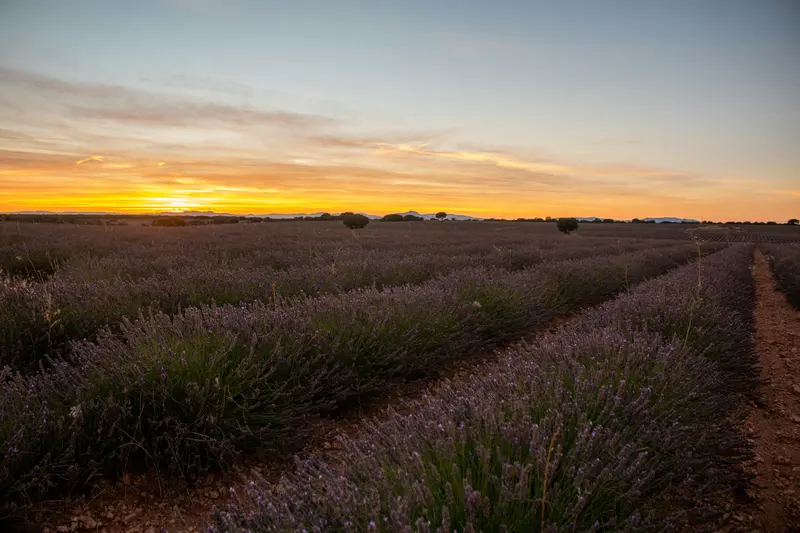
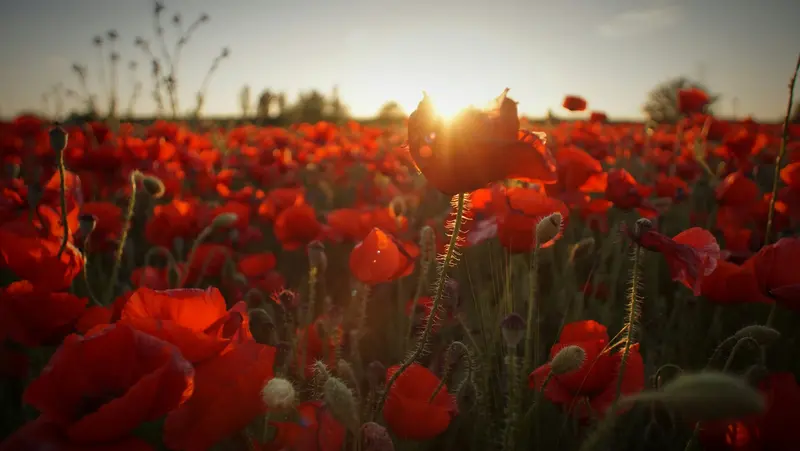
July is the usual month to look for flowering lavender around Brihuega. Check conditions before travelling, as the fields flower and are harvested at different times. If you want to see the old town too, start there and save the fields for the cooler part of the day. For photography, find a permitted viewpoint first so you have somewhere to park without blocking a farm track.
Upper Tagus trails can go from shade on the valley floor to a long, exposed slope within a single walk. Set out early if your route includes a climb and carry water from your accommodation. For summer trips, look up local access and fire notices for your dates and the exact part of the park. An indoor visit in Molina is an easy alternative if conditions change.
Getting there and around
From Madrid-Barajas Airport and by rail
In 2026, Aena lists Cercanías suburban trains from Terminal 4 at Madrid-Barajas to Madrid stations including Chamartín and Atocha. Renfe serves Guadalajara on its suburban network and Guadalajara-Yebes on high-speed services. These are separate stations. Compare the full journey to your accommodation, including the final transfer. If your flight arrives at another terminal, allow time to reach T4.
For Sigüenza, search Renfe for your travel date and check the return before booking a timed visit. Look at any service notices and transfers listed for that journey. From Sigüenza station you can walk towards the Alameda park, then the cathedral and the castle. The return to the station is downhill, which can help if you are carrying bags or keeping the walk manageable for your group.
Driving between the different areas
The A-2 is the main road in from Madrid. It takes you towards Torija before the turn for Brihuega. Around the Ocejón and the Upper Tagus, plan in driving time. Places on opposite sides of a gorge can look close together on a map, with the road taking a much longer route. Save the name of the trailhead car park and the village it belongs to.
Public transport is easiest around Guadalajara city or for a trip built around a particular connection to Sigüenza. If you plan to hire a car for the rural part, you can make the town visits first. Ask your host where to enter and park in hillside villages. In some places, leaving the car at the edge of the old town makes both your arrival and the following morning’s departure easier.
What to see in Guadalajara province
What to see in Guadalajara province on a first visit
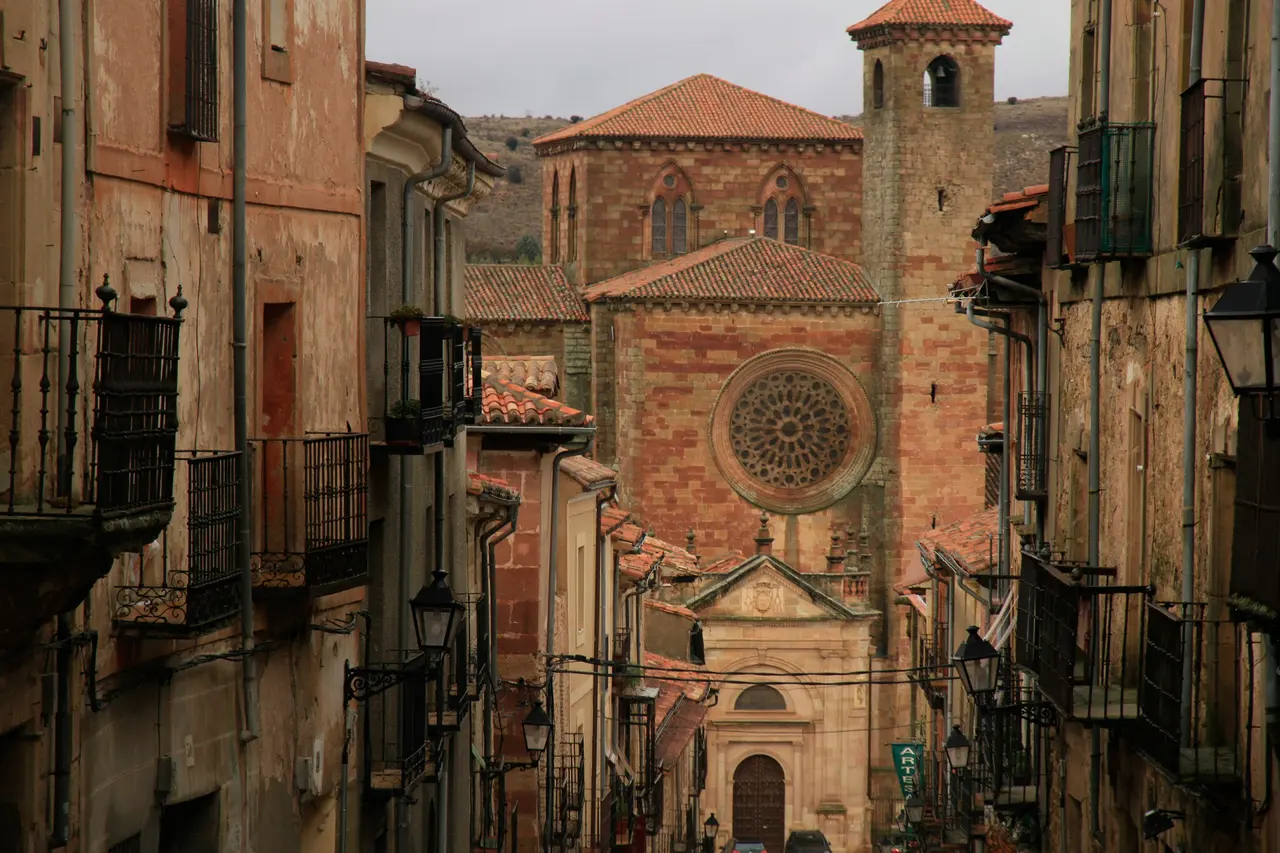
Start in Sigüenza at Plaza Mayor and the Cathedral of Santa María. The Doncel is a tomb sculpture that shows a young knight reading. Look at the book and at the angle of his body as he leans on his elbow. From the square, climb through the medieval streets past San Vicente to the castle, now a parador, part of Spain’s network of hotels. Find a different way down if you have time to see more of the rooftops and lanes.
In Guadalajara city, make the Palacio del Infantado your first stop. Go up close to see the stonework, then cross the square to take in the entire façade. Continue across the old town to the co-cathedral of Santa María. A morning gives you time for the palace museum and the walk, with the afternoon free for a first stop in the Alcarria.
Two outings that combine town and countryside
In Brihuega, join Plaza del Coso, the area around the castle of Piedra Bermeja and the old Royal Cloth Factory in one walk. Each tells a different part of the town’s story, from the marketplace and defences to the textile industry. Look for gaps in the streets with views towards the Tajuña. Give yourself a morning in the town, then decide whether to go out to the fields later in the day.
In Molina de Aragón, look at the castle from the river Gallo and its bridge before seeing it from higher up. The lower view shows the size of the fortified enclosure and where the town grew below it. From Molina, choose a nearby part of the Upper Tagus, such as the Gallo gorge around Corduente. If you want a proper walk and have one day, leave another sector of the park for a return trip.
Monuments and heritage
Two palaces, two families
Compare the diamond points on the Palacio del Infantado with the figures carved around the Patio de los Leones. The courtyard galleries give you time to look at repeating designs and see how the building is arranged. With children, ask everyone to pick out something on the façade and spot it again from further away.
In Pastrana, stand in Plaza de la Hora to see the Ducal Palace before exploring the narrower streets. The Princess of Éboli is part of the palace’s story. At the collegiate church, the tapestry collection gives you a different reason to linger. Start with the main scenes and work down to the small figures, ships and buildings. The palace and the church make useful endpoints for a walk.
Castles and Romanesque doorways
In Atienza, start at the squares and climb towards the castle later. Partway up, you can see how the streets fit around the hill. The stone houses and Romanesque churches give you plenty to look at if wind keeps you off the exposed upper ground. If you also visit Jadraque, look at the approach to each castle from its own town. In Jadraque, the shape of the hill is part of the view.
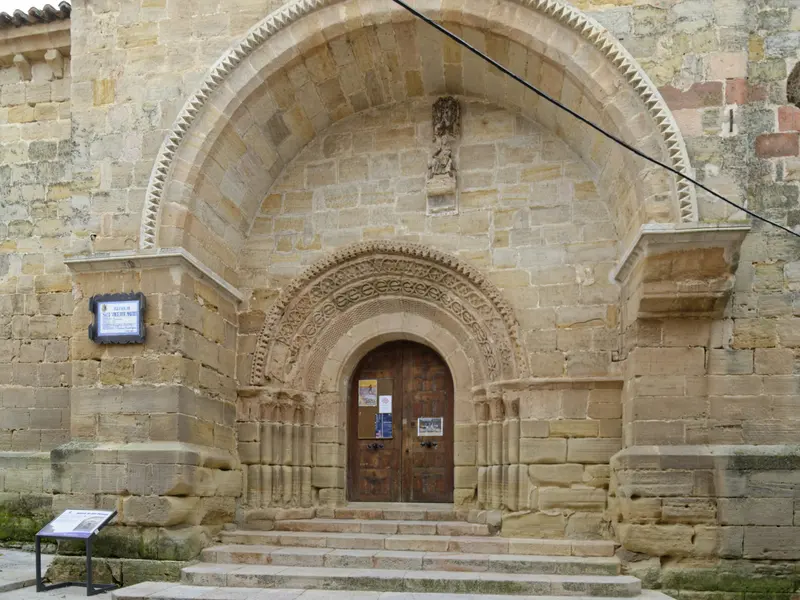
In Sigüenza, seek out the stone arch of San Vicente Mártir on the walk from the cathedral towards the castle. Get close enough to see how deeply the carved arches are set back from the street. Allow one further stop if you want to see Romanesque architecture in the surrounding villages. The outside of a church may be the part you can see when you arrive without an appointment.
Museums and culture
The Museum of Guadalajara, inside the Palacio del Infantado, gives you a way to spend more time in the building and learn about the province. Save it for the warmest part of the day or for a wet morning. In Sigüenza, the diocesan museum of historic religious art complements the cathedral visit. You can look closely at works of a kind that are often high up or behind rails in a church.
The provincial visitor interpretation centre in Torija Castle makes a good first stop. It puts the slate villages, the Upper Tagus landscapes and the Camino del Cid, a route associated with the medieval warrior, into context. If you only have time for one indoor family outing, consider the castle and leave the rest of the morning for Brihuega. Check the centre’s opening before making a special trip.
Charming villages
Slate at the foot of the Ocejón
In Campillo de Ranas and Majaelrayo, look at the way flat pieces of dark slate are set into the walls and laid on the roofs. Walk far enough to see where the houses give way to field walls and enclosures. Visiting two villages slowly gives you a better idea of how they were built. Tamajón helps you orient yourself for a day on this side of the mountain.
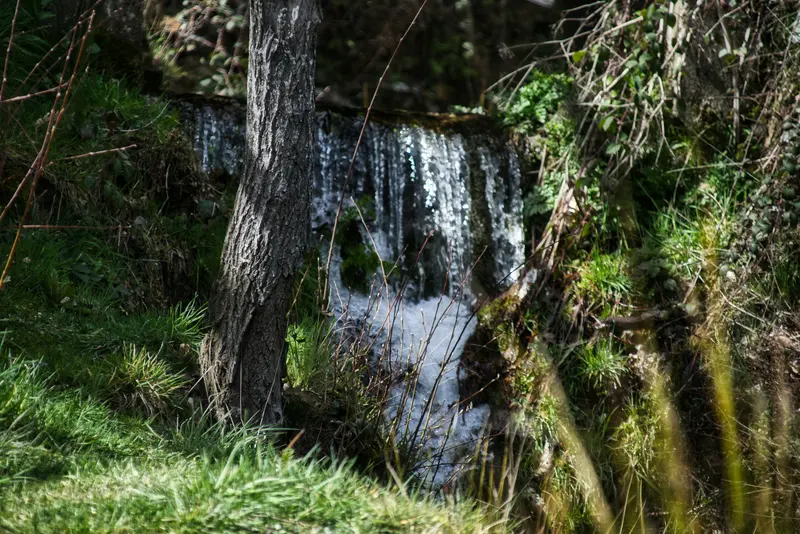
Valverde de los Arroyos lies on another slope of the Ocejón. Spend time around the square and, if the path is in good condition, walk towards the Chorreras de Despeñalagua waterfall. The short distance between Valverde and Majaelrayo on a map can disguise a longer drive around the mountain. With children, choose one side and allow plenty of daylight for the walk back to the car.
The Alcarria and the approach to the Upper Tagus
From the plain you can see the hill at Hita before you reach the town. Walk up through the Puerta de Santa María to get your bearings and look back towards the valley. The medieval festival uses these streets and spaces, which are worth exploring on a quiet day too. Pair Hita with Torija for fortifications or Brihuega if you are following the Tajuña valley.
On a second trip to the Alcarria, stop in Cifuentes between Brihuega and the Tagus. Take time for the square and the views below the castle before heading for the valley. Further east, Corduente gives access to the pines and red sandstone of the Gallo gorge. You can stay close to the shrine of the Virgen de la Hoz or set aside a morning for the trail and viewpoint.
Nature and protected areas
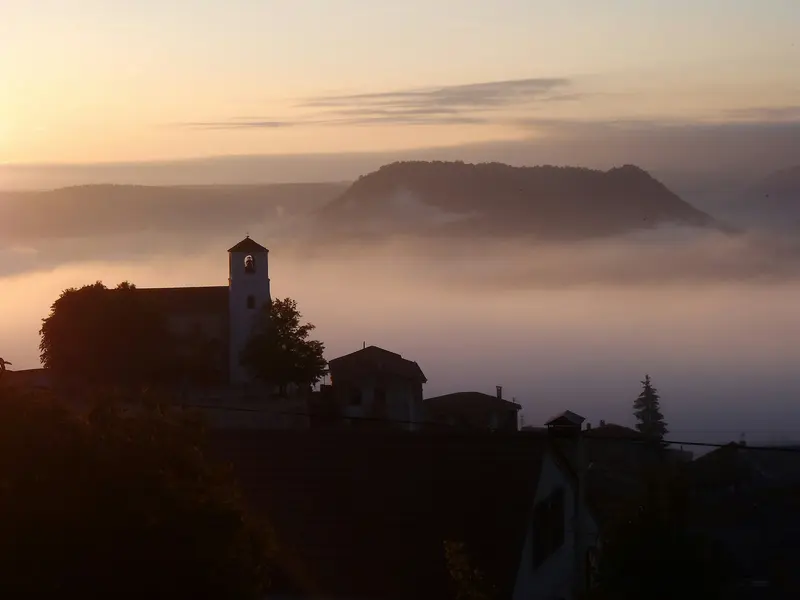
Río Dulce: from the road to the river
From the road near Pelegrina, see how the Río Dulce curves between limestone cliffs. Then go down to the village to look at the same landscape from the valley floor. From below, the scale is easier to judge. Marked routes start at different villages, including Pelegrina, La Cabrera and Aragosa. Check the departure point so you can get back to the place you left the car.
The Gollorío viewpoint trail climbs away from the water towards the cliffs. For an easier outing, choose a low stretch and set a place to turn back. Take binoculars if you want to watch vultures. A broad spot away from the edge gives you space to stop and lets you see the birds against the rock face.
Sierra Norte: the beech woods of Tejera Negra
The Tejera Negra beech forest is in Cantalojas, within the Sierra Norte Natural Park. The Carretas and Robledal trails start at different points. The regional park guidance checked in 2026 required a booking for the inner car park serving Carretas during Easter week and on weekends and public holidays in October and November. Check the calendar and distinguish that car park from the visitor centre. Your starting point changes the amount of walking involved.
In the woods, compare the cool valley floor with the hillside, and notice how quickly the temperature changes when you come back into the open. Bring a warm layer and keep the park map with your route marked. In autumn and winter, work back from sunset to decide when you need to return, with time for any slippery or slow stretches.
The Upper Tagus and the Gallo gorge
Start at the Zaorejas viewpoint for an overview of the Tagus canyon. Nearby Peñalén gives you another view into the valley, from a village above the river. The geology trail from Puente de San Pedro to the viewpoint explains the canyon and the tufa deposits left by mineral-rich water. Choose whether to visit the viewpoint by road or give the trail its own outing, taking local access conditions into account.
Near Virgen de la Hoz, the Gallo runs below reddish cliffs by the shrine. The regional park authority describes El Rodenal, a 9 km circular walk from the Corduente visitor centre to the gorge. If you are continuing to Cuenca, plan the drive as its own leg and choose ahead of time which sector you will walk in. The Gallo and the Tagus are worth separate mornings if you want to compare the rock, vegetation and views.
Festivals and traditions

Atienza’s Caballada and Hita’s Medieval Festival
Atienza’s Caballada takes place on Pentecost Sunday. In 2026, it was scheduled for 24 May. Members of the local brotherhood and other riders go down to the shrine of the Virgen de la Estrella. The date moves with Easter, so check it before booking. Ask the tourist office where to watch the riders pass and make time to see the town’s squares on foot.
For 2026, the town council scheduled the Hita Medieval Festival for 3 to 5 July. The programme used several spaces around the village. For another edition, decide which events matter most when planning your arrival. You can spend a short time at the market, while a performance or tournament gives you a specific time and place to work around.
Lavender flowering and concerts around Brihuega
For 2026, Castilla-La Mancha Tourism announced Lavender Festival concerts in the fields around Malacuera and Olmeda del Extremo on 10, 11, 17 and 18 July. The flowering and harvest follow their own timetable. Check field conditions and permitted viewpoints independently of concert access. If you book an event, check which site it uses. Keep to the permitted paths around the fields.
What to eat
Look for Miel de la Alcarria, the region’s protected honey. If you find both rosemary and spike lavender honey, compare their aromas. Peñalver and Pastrana are useful stops to learn how beekeepers work with the local vegetation. If you plan to fly home with a jar, check your baggage rules before buying it.
Cabrito asado, or roast kid goat, is a speciality in Jadraque. The town also has a celebration for migas, a dish made with crumbs of bread, and you can look for it on local menus. If you are planning a sit-down lunch, arrange timed visits around it and leave a short walk for afterwards. Carry food and water for a longer Upper Tagus walk and plan to eat a fuller meal back in town.
Sport and outdoor activities
Walking and mountain biking
For a walk up the Ocejón, choose a trailhead before booking a room. Majaelrayo and Valverde de los Arroyos offer different approaches. Check both the climb and the distance, and leave time and energy for the descent. If the forecast is windy or stormy, keep a lower village walk in mind. Download a map before leaving mobile coverage.
For mountain biking, look through the Rural Bike Conecta network and the waymarked trails in the Upper Tagus. The park describes a circular route from Corduente through the Virgen de la Hoz gorge, with side trips to viewpoints. Review the climbs back to the plateau and decide which branches to include. If hiring a bike, tell the operator which surfaces you expect to ride.
An evening under the stars
The official Cielos de Guadalajara guide maps stargazing viewpoints in the Sierra Norte and around Molina. Choose a site and visit it in daylight first. An open area away from direct lights makes it easier for your eyes to adjust. Bring warmer clothing than you needed in the afternoon. Check the phase of the moon if you want to see fainter stars, and park so you can leave without shining headlights at other visitors.
Routes and itineraries
Two days in the Alcarria or around Sigüenza
Alcarria. Spend the first day in Guadalajara city and Torija, reaching Brihuega with enough time for a walk. Give the following morning to Pastrana, using Plaza de la Hora and the collegiate church as anchors. If you are travelling for the lavender, move the town visits around the afternoon light and that year’s access information. The walk through Brihuega works in other seasons too.
Sigüenza and the Río Dulce. Start with the cathedral, Plaza Mayor and the climb towards the castle. The next morning, go to the viewpoint above Pelegrina, then down to the village for a walk. You can return to Sigüenza for lunch and finish the day in the Alameda or with an indoor visit. This leaves the cooler morning for the gorge and keeps the driving short.
Four or five days across the north and east
Give the first day to the slate villages and the second to Atienza and Sigüenza. On day three, go out to the Río Dulce in the morning, then move on to Molina de Aragón. Spend the fourth day around Corduente and the Virgen de la Hoz, or near Zaorejas if you would rather see the main Tagus canyon. Use a fifth day for the remaining area or for a walk around Poveda. Tejera Negra can replace the first day if a forest walk is your priority. Add a night in the Sierra Norte if you want to do both.
Travelling with children
At Torija Castle, use the maps in the interpretation centre to pick out places for the next few days together. In Sigüenza, break up the uphill walk with stops and finish in the Alameda when the group wants level ground. Looking for the arches in the square or finding doorways on the way to the castle gives children a reason to look closely.
In the natural parks, choose a walk you can cut short and account for the climb as well as the distance. At the Río Dulce you can combine birdwatching with a short stretch by the water. At viewpoints, look for space to wait away from the edge. One walk with time built in for breaks can be easier than several short stops with a drive between each one.
Where to stay in Guadalajara province
Stay in Guadalajara city for a late arrival, a trip by suburban rail or a first day of urban sightseeing. Brihuega suits the central Alcarria, with Pastrana or Cifuentes on separate days. For the Ocejón, choose an address on the same side of the mountain as your planned walk. Ask about late arrival and parking before you book accommodation on a narrow village street.
In Sigüenza, staying by the cathedral puts you close to the old town sights, while the lower streets are easier with bags from the station. Molina de Aragón gives you an evening walk in town after a day in the Upper Tagus. Poveda de la Sierra or Peralejos de las Truchas may save driving time if your trails begin in those parts of the park. Compare the address with the actual starting points on your itinerary.
See places to stay in Guadalajara province (opens in a new tab)Affiliate link: if you book through it, we may earn a commission at no extra cost to you.
Practical tips and common mistakes
- Check which Guadalajara station your ticket names, especially if someone is meeting you. For Sigüenza, read the service alerts for your travel date.
- Navigate to the named trailhead, car park or visitor centre in the Upper Tagus. The park has several widely separated approaches.
- At Tejera Negra, confirm the separate arrangements for your walk and parking. Keep the starting point and any booking confirmation available offline.
- Plan food and fuel before driving into the countryside. Fill your bottles and take an extra warm layer if you are heading to higher ground.
- Pick somewhere to park that leaves space for others to pass. Keep entrances and farm tracks clear around fields and in village streets.