

 Español
 English

Why visit Logroño
Start with the point where the Camino de Santiago meets the Ebro. The French Way comes into the capital of La Rioja over the Stone Bridge and crosses an old town marked by churches, cellars and the remains of its defensive walls. Portales and Plaza del Mercado form a second route slightly to the south, with La Redonda co-cathedral halfway along. You can walk out along one and back along the other, crossing between them wherever a side street catches your eye.
Wine is part of the city’s history, and some of it is literally beneath your feet. The underground cellars of Ruavieja were used for storage, and the remains of nearby presses show what happened before the wine went below ground. These are useful stops if you want to understand the connection between the city and vineyards even on a trip centred on the Camino or the river.
Allow a day for the market square, the Revellín and a riverside circuit. A second night gives you room for the Museum of La Rioja, the House of Sciences and a longer walk towards La Grajera. If your visit also takes in monasteries or the winery district of western Rioja, give that part of the trip a separate day. That way you can still see the old town at the beginning or end of the day, when the river and the stone façades look different.
When to go
Spring and early autumn lend themselves to a day split between the old town and the Ebro. In spring, keep La Grajera for the clearest day. If you want to visit a winery in harvest season, check which experiences it offers at that time. Work in the vineyards and public visits follow different schedules.
In the heat of summer, spend the middle of the day in the churches, at the museum or at an exhibition. Parts of Portales are covered by arcades and there are trees beside the Ebro. The bridges and the paths further out towards the reservoir offer less shade. If you have a weekend, start the longer walk early and return to the old town afterwards.
In winter, alternate short outdoor stretches with the museum, the market or the House of Sciences. If mist hides the far side of the valley, go ahead with the church walk and come back to the river once you can make out the old-town skyline. The two plans are close enough to swap around without travelling across the city.
Getting there and around
Both the railway and coach stations are south of the old town. From there, walk towards Vara de Rey, El Espolón and the historic centre. Check the service in each direction for your travel date. If you are connecting between separate tickets, check the station name and leave time to find the right platform or coach bay.
Pilgrims entering from the east cross the Puente de Piedra, the Stone Bridge. You can think of the urban Camino in two parts. The first crosses the old town via Ruavieja and Barriocepo as far as the Revellín gate. Beyond the gate, the route makes its way through the west of the city towards La Grajera. Once you are in the old streets, most detours to a square or a church are short.
Walk between the main sights. Portales puts you within easy reach of the market square, the river and El Espolón. If you arrive by car, think about where your walk ends before deciding where to leave it. A circuit using both Ebro bridges lets you return through the old town without doubling back along the river.
What to see in Logroño
Plaza del Mercado, Portales and San Bartolomé
Begin in Plaza del Mercado, opposite the co-cathedral. From across the square you can see how the pair of towers frames the entrance. Change your angle before going inside, then find the passage back to Portales. The square gives you a sense of the scale of the buildings that is hard to get from the narrow streets around it.
Walk on to San Bartolomé. Stop far enough back to take in the whole carved stone portal before looking closely at the individual figures. From there you can return to Portales or head towards Santa María de Palacio. Its spire is easier to pick out from across the river, where you see it above the roofline alongside the other towers of the old town.
Take Portales back towards El Espolón. With its gardens and equestrian statue of Espartero, the square marks the transition between the close-set streets of the old town and the wider streets to the south. It makes a natural end to a short city walk or a place to pause before visiting a museum or going down to the water.
Ruavieja and the western gate
From the Stone Bridge, follow the French Way up towards Ruavieja. In a few streets you pass the area around the pilgrim hostel, the Calado de San Gregorio cellar and Espacio Lagares. Look at the way narrow house fronts alternate with larger buildings opening onto the junctions. Here you can see how the different uses of a street grew up around the same route through town.
Follow Barriocepo to Santiago el Real. Next to the church are the pilgrim fountain and an oversize Game of the Goose laid into the pavement, with references to the pilgrimage. Continue to the Revellín gate, where the close streets give way to an open space beside the former walls. Pass the old Escuelas Trevijano if you are looping back to Portales.
Two crossings of the Ebro
Cross the Stone Bridge towards the House of Sciences. The towers of the old town stand across the water behind the riverside trees. The Iron Bridge, or Puente de Hierro, provides another way back and makes this a circuit in either direction. You can add a stretch of the river park on the return. If you have time for just one crossing, walk far enough to turn around from the opposite bank and see the full outline of the city.
Monuments and heritage
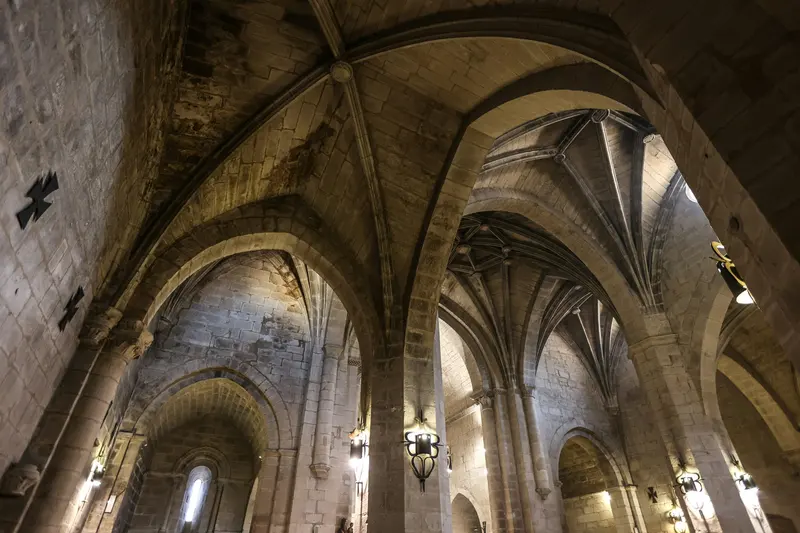
Four churches on two routes through the old town
At Santa María de la Redonda, take a few steps back to make sense of the twin towers. Inside, see how the light changes from the nave to the choir and chapels. Outside San Bartolomé, look at the figures placed up the sides and over the top of the doorway. The two churches are close enough to visit together and their stone entrances reward looking from different distances.
The pointed spire of Santa María de Palacio gives the eastern end of the old town a landmark that you can see from the river. The position of Santiago el Real, near the pilgrim fountain and on the route towards the gate, makes sense when you approach along the Camino. Visit the churches on the Portales side first, then follow Ruavieja and Barriocepo to those on the river side.
The Revellín defences
The gate and the rounded tower are the most readily visible remains of Logroño’s defences. Look for the shields above the gateway, then walk around the tower to see how it projects from the line of the wall. The city’s memory of the 1521 siege is closely associated with this site. If the interior is open, go in to get a better sense of the thickness of the stonework. The regional parliament, in the former convent of La Merced nearby, is another landmark to look for from the street.
Museums and culture
The Museum of La Rioja, in the Espartero Palace on Plaza de San Agustín, puts the region’s history in order. Pick the archaeology rooms if you want to know more about settlement in the valley, or focus on the art after a visit to the churches. Back outside, spend a moment looking at the palace itself from the square. It is easy to miss the overall shape of the façade when you approach from the side streets.
The House of Sciences occupies the former municipal slaughterhouse on the far bank of the Ebro. It makes a very different museum visit, with exhibitions inside and things to explore in the garden. If you are travelling in a group, companions who would rather stay by the river can meet you outside and continue together towards the Iron Bridge.
For a closer look at wine production, place the Centre for Rioja Wine Culture, Espacio Lagares and the Calado de San Gregorio on the same map. The presses give you a view of production above ground, while the cellar shows the scale of the space once used under the street. The cultural centre helps place both within the way the wine trade developed in Logroño.
Neighbourhoods and areas
Portales is the main reference point for a walk between the market square and the Revellín. The streets around Laurel and San Juan are separate pocket-sized areas off the central streets, with much of their activity concentrated towards the evening. Walk the full length of Portales first if you want to get your bearings, then turn into the smaller lanes and return by another route.
On the Camino side of the old town, Ruavieja and Barriocepo run closer to the Ebro. This is where pilgrim accommodation, religious buildings and old cellars meet within a few blocks. If you want to walk from east to west without threading the whole network of streets, use the river park and come back up at the site you want to see next.
El Espolón and the streets to its south give you a sense of the city beyond its historic core. Walk from the gardens towards Gran Vía or follow Vara de Rey towards the stations. As you approach the old town in the other direction, notice how the streets narrow. When choosing a place to stay, the distinction matters most when you are arriving with luggage or leaving early by train or coach.
Nature and protected areas
The Ebro park fits into almost any city visit. Go down from the Revellín, follow the old-town bank and pick a bridge to cross. You alternate between shade and open views, with the skyline behind the trees in several places. Further east, La Ribera park extends the walk along the Ebro. You can turn around at any point and keep the river in sight all the way back.
La Grajera, on the western edge of Logroño, has a reservoir and park that feel quite different from the city’s riverbanks. The water and the vegetation attract birds. Find a quiet spot off the main line of the path if you want to spend time watching them. The city’s environmental education centre helps explain the habitat and lists activities when they are scheduled.
Festivals and traditions
San Bernabé recalls the siege of 1521. The city’s 2026 celebrations ran from 6 to 12 June, with historical and cultural events at different sites. For a future edition, look for events in the Revellín area to connect the celebrations with the places they commemorate. If you have several days, you can visit the monuments at a quieter time and return for the main events.
San Mateo is associated with Rioja’s grape harvest. In 2026, the main programme ran from 19 to 25 September. Events were held across the city. If you are coming to see the grape treading or an event in a particular district, use the programme for your year to choose a place to stay or meet friends. A visit to a wine town on a separate day gives you the rural side of the harvest.
Sport and outdoor activities
Use the two banks and bridges for a run or short walk through town. Extend it eastwards into La Ribera for more time by the water, or follow the Camino west to La Grajera for a longer walk or bike ride. The municipal walking guide also describes routes around El Cortijo and towards Fuenmayor. Give those a morning of their own rather than trying to do them after a full round of the sights.
Routes and itineraries
One day, from El Espolón to the river
Begin at El Espolón and take Portales to Plaza del Mercado. Visit La Redonda and San Bartolomé, then head towards Santa María de Palacio and Ruavieja. Follow the Camino as far as Santiago el Real and the Revellín. If you want to visit the Museum of La Rioja, go back towards Plaza de San Agustín before dropping to the river. Finish with the loop across the Stone and Iron bridges, giving yourself a different view of the towers you saw in the morning.
Two days, with a walk to La Grajera
On your second day, pick up the Camino again as it leads west from the Revellín towards the reservoir. Spend the afternoon in the House of Sciences or visit one of the sites that explains the old town’s wine heritage. If you only saw the Ebro from the city side on day one, cross again to see how the light changes across the buildings. You can spend part of the day out of town without adding another car or coach journey.
Day trips
In Haro, divide the day between the Barrio de la Estación and the old town. The cluster of large wineries beside the railway shows how wine reached markets beyond Rioja. Up in the old town, walk from Plaza de la Paz to the church of Santo Tomás and the Torreón. If you have visited a cellar in Ruavieja, compare how the street-level wineries of Logroño and the railway district of Haro were laid out.
In Santo Domingo de la Calzada, start at the cathedral, the former pilgrim hospital and the separate bell tower, then follow Calle Mayor and find the sections of surviving wall. It is a particularly natural next stop if you followed the French Way through Logroño. You can see how another place along the same route developed around the needs of people on the road.
For a day of monastic architecture, head to San Millán de la Cogolla. The UNESCO-listed monasteries of Yuso and Suso sit at different levels, with Yuso by the village and Suso higher up the hillside. In November 2026, Suso was under restoration, with exceptional visits through the Abierto por restauraci?n scheme. Plan your trip around Yuso and check whether you can add Suso on your dates. For a separate trip, go to Nájera for Santa María la Real and a walk by the Najerilla river.
Travelling with children
Give children a detail to find in each part of the walk: the twin towers in the market square, the Game of the Goose in front of Santiago and the gate at the Revellín. Then cross to the House of Sciences for a change of scene. The two bridges let you return to the same part of town by a different route. If everyone wants more time outside, extend the walk into the park and leave a museum for another day.
Where to stay in Logroño
Around Portales, the co-cathedral, museum and old streets are all close. For the river walks, look on the Ruavieja and Ebro side and check which bridge is closest. The character of the streets changes over a short distance, so look at the particular street if quiet in the evening matters to you.
El Espolón and Vara de Rey sit between the sights and the stations. This is a useful base if you want to combine the city with a day trip that starts by train or coach. On the Camino, choose between sleeping nearer the Stone Bridge where you arrive and staying further west for an early departure towards La Grajera.
Find accommodation in Logroño (opens in a new tab)Affiliate link: if you book through it, we may earn a commission at no extra cost to you.