Español
 English

Why visit the Community of Madrid
The best things to do in the Community of Madrid range from a morning with Velázquez in the capital to a walk in the Guadarrama mountains. The community is the region around the city, and in Madrid its boundaries are also those of the province. Give yourself at least one day outside the capital. A Renaissance university, a monastery in the foothills and a palace beside the Tagus all reward a visit with time to walk beyond the main entrance and sit down for lunch.
Think in terms of a direction for each day. Alcalá de Henares lies east of the city in the Henares corridor. Aranjuez, Chinchón and Colmenar de Oreja are south or south-east, where rivers water broad agricultural valleys known as the vegas. San Lorenzo de El Escorial sits on the slopes of Mount Abantos to the west. Go north for the valleys of the Guadarrama and the wooded Sierra del Rincón. Day trips are easier to enjoy when you pick one of those sectors and leave room to linger.
On a first visit, give the city two days and choose one outing to suit the group. Pair the Prado with El Escorial if your trip is about painting and architecture. Pick Aranjuez if you want a royal visit with plenty of room outdoors. If walking is your main reason for coming, stay in the mountains for the nights when you want to be out early. Build the capital into the beginning or end of that trip.
When to go
The best season for the city and the mountains
April, May and early June are good for mixing outdoor sightseeing with museums and gardens. Madrid celebrates its patron saint in May. If your dates coincide with San Isidro, think of the festival as a separate outing. Go to the Pradera for the festivities and book your main museum or monument for a different part of the day.
In July and August, plan around the midday heat in the city and the river valleys. Begin in the squares or gardens, spend the hottest part of the day indoors and go out again later. At Aranjuez, check the distance from the garden gate to the part you most want to see. A visit with time for a coffee and a short walk is easier to fit in if you choose the route before you arrive.
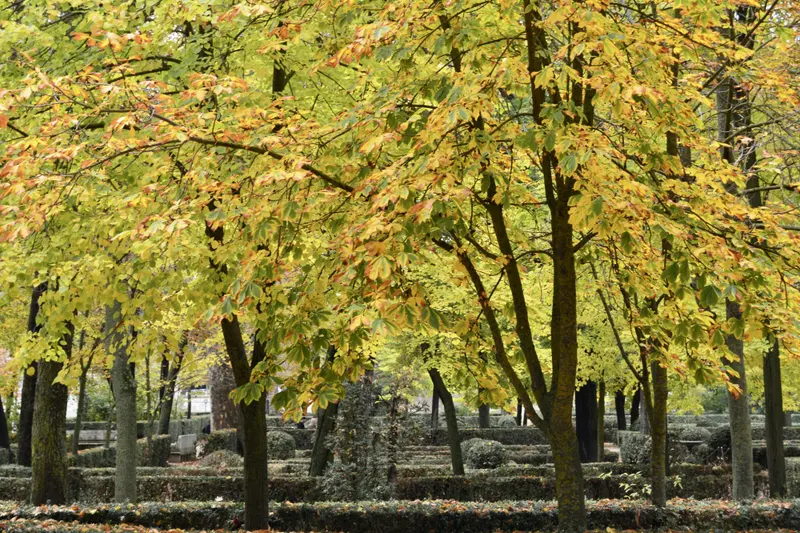
September and October suit a trip that gives the city and the countryside equal time. If autumn colour matters to you, allow a day in the Lozoya valley and another for the Sierra del Rincón. Foliage changes at different times with altitude and weather. Book around access to a place such as the Hayedo de Montejo, then see what stage the trees have reached. Leave time to get off the trails before daylight fades.
In winter, the old towns and museums provide reliable ways to spend the shorter days. Check a separate mountain forecast if you want to walk above the valleys. Sunshine in central Madrid tells you little about wind, visibility or ice at Cotos. Choose a lower walk when conditions in the mountains are poor and keep the more demanding route for another trip.
Getting there and around
Arriving at Barajas, Atocha or Chamartín
At Adolfo Suárez Madrid-Barajas Airport (MAD), the best transfer depends on your terminal and where you are going. In 2026, Aena listed Metro line 8 at the airport stations for T1-T2-T3 and T4, with trains towards Nuevos Ministerios. Aena also listed Cercanías suburban trains from T4 to Chamartín and Atocha. If you are heading straight to a long-distance train, look for the station on your rail ticket before picking a route out of the airport.
Allow for the transfer to T4 if your flight arrives elsewhere and you want to use Cercanías. Some Metro tickets also required an airport supplement in 2026, so check what your fare includes when you buy it. With heavy luggage, consider the walk at the other end of the journey and how many times you will need to change. If you are separating a flight booking from a train booking, give yourself enough time for baggage collection and travel across the city.
By local train, bus or hire car
In the city, use the Metro to reach the first stop of a walk. Group the old centre, the art museums and the riverfront into separate outings. For trips outside the city, the 2026 Cercanías network included Alcalá de Henares, Aranjuez, El Escorial and Cercedilla. Check engineering notices and your last convenient return before you leave. At Alcalá, look for the station for the old town. In Aranjuez, allow for the walk from the station to the Royal Palace.
Train maps label El Escorial, the town on the lower slope. The monastery is in San Lorenzo de El Escorial, further uphill. Check the onward bus or walk if anyone in your group will struggle with the climb. Buses to rural towns and mountain starting points can require more planning. Check where the stop is, how far it lies from the site and whether you have a second way back if you miss the service you had in mind.
A hire car is worthwhile for moving between the smaller villages in the south or crossing from one mountain valley to another. For an opening stretch in the city, consider collecting the car on your way out. Put the name of the trailhead or visitor centre into your map and keep a second route handy. A town, its visitor centre and the car park for a popular trail may be a considerable distance apart.
What to see in the Community of Madrid
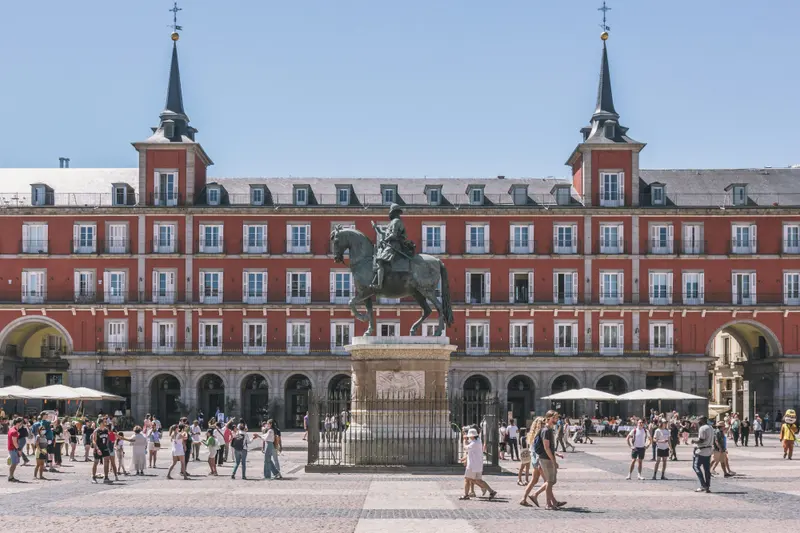
Things to do in central Madrid on a first visit
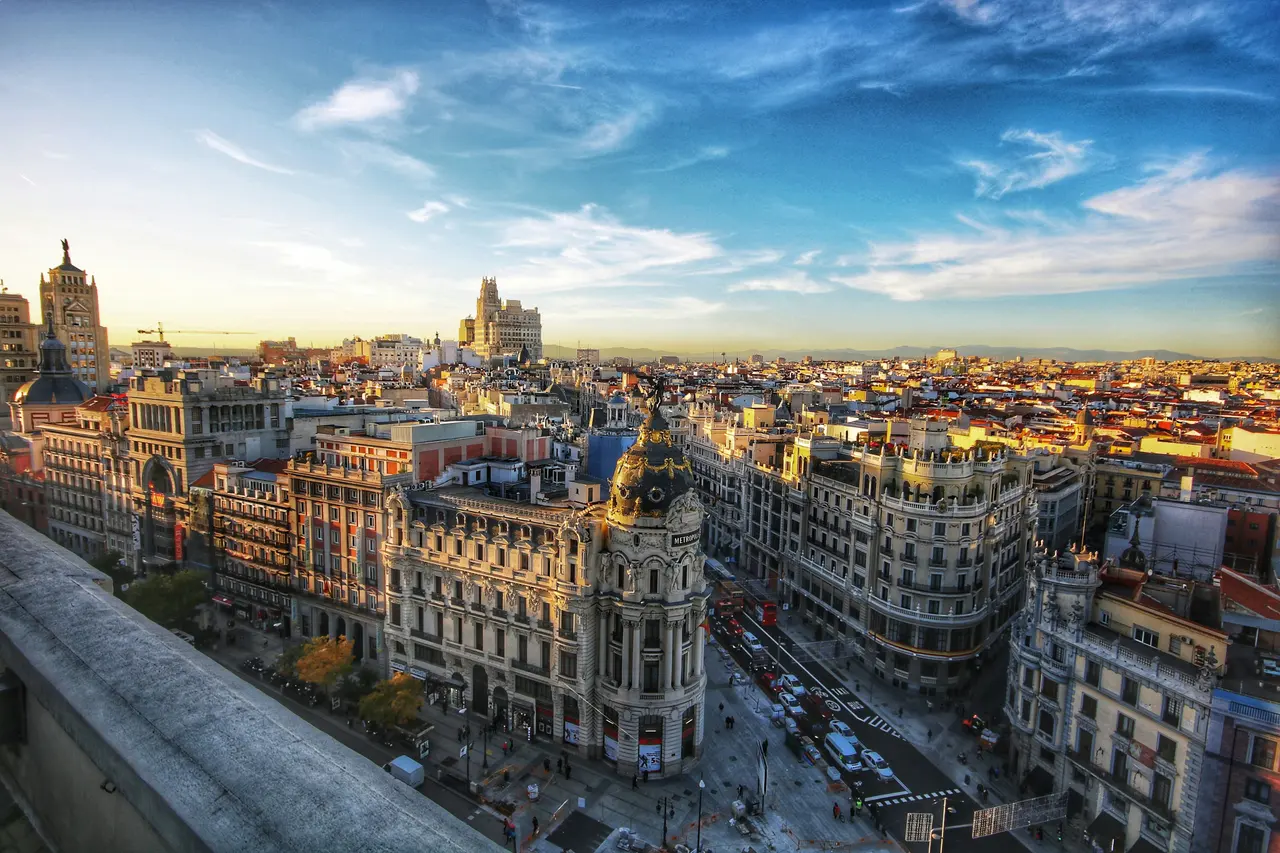
Start at Puerta del Sol and look for the clock used for Spain’s New Year’s Eve countdown. Walk on to Plaza Mayor through one of its side arches. The view opens up around the bronze figure of Philip III, with the arcades providing a shady way around the square. Continue towards Plaza de la Villa to see how quickly the grand square gives way to smaller streets in the old Habsburg quarter.
Head up to Plaza de Oriente for the view from the Teatro Real towards the Royal Palace. The square by the Almudena Cathedral gives you a second angle on the palace. If you have booked an interior visit, leave an interval afterwards for the walk you feel like taking. You can go north via Plaza de España towards the Temple of Debod, or make a longer descent towards the Manzanares river.
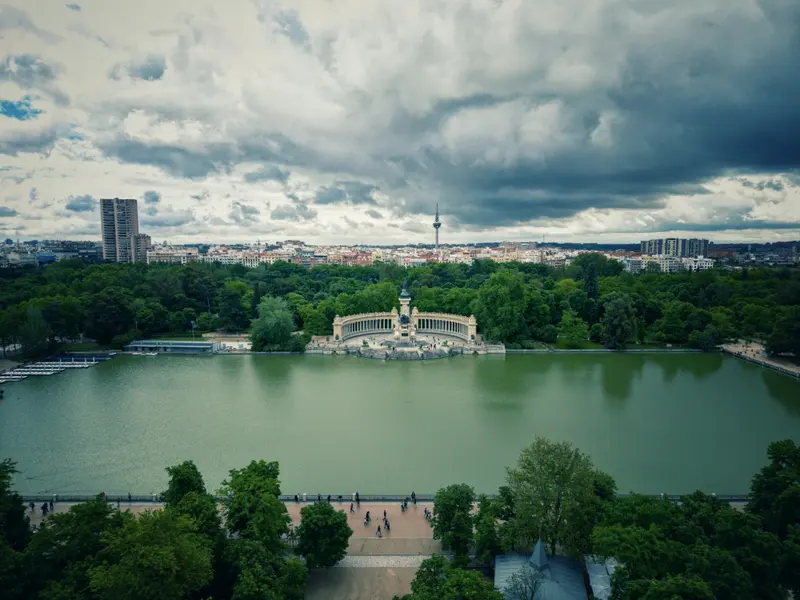
For a second walk, begin near Atocha and follow the Paseo del Prado towards Cibeles. At Neptuno, turn up towards the Jerónimos district or carry on through the trees. In El Retiro, go to the main boating lake to see the monument to Alfonso XII. The Paseo del Prado, the Jerónimos district and the park are part of Madrid’s Landscape of Light, inscribed on the World Heritage List in 2021. A walk puts the art collections, gardens and scientific institutions into the context of the city that grew around them.
Beyond the city: Alcalá, El Escorial and Aranjuez
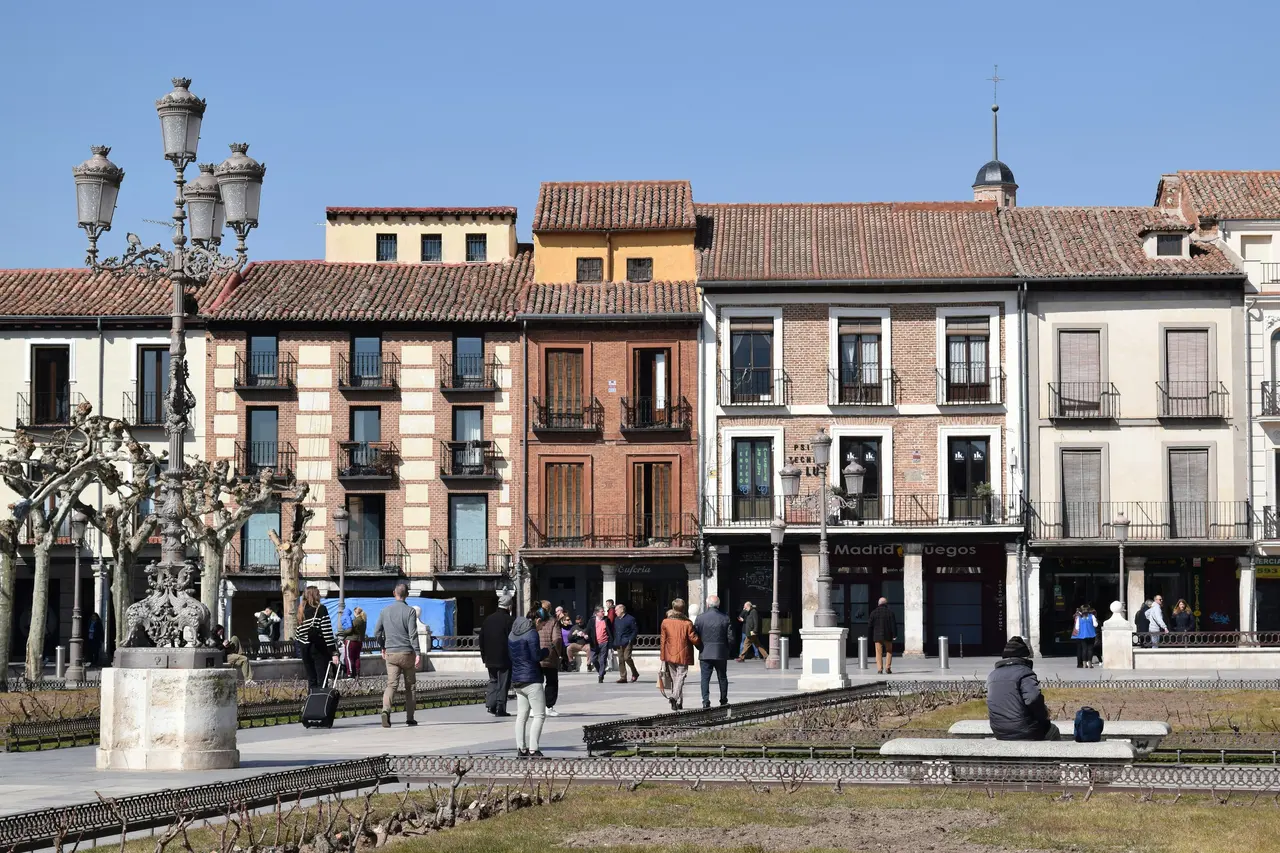
At Alcalá de Henares, start around Plaza de Cervantes and the Colegio Mayor de San Ildefonso. Look up at the university façade, then walk west along Calle Mayor beneath its covered pavements. The birthplace of Cervantes is on that route. If you want to explore the excavated Roman settlement of Complutum, give it a separate part of your day. It lies beyond the cluster of sights around the university.
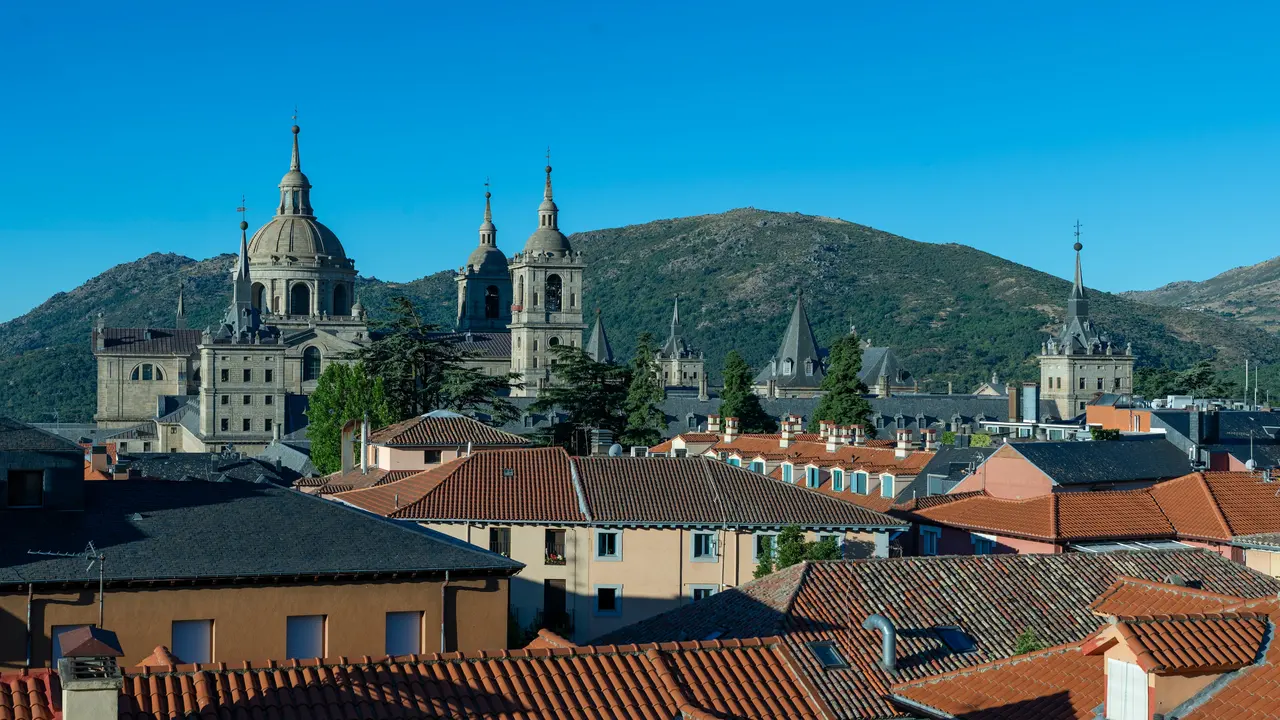
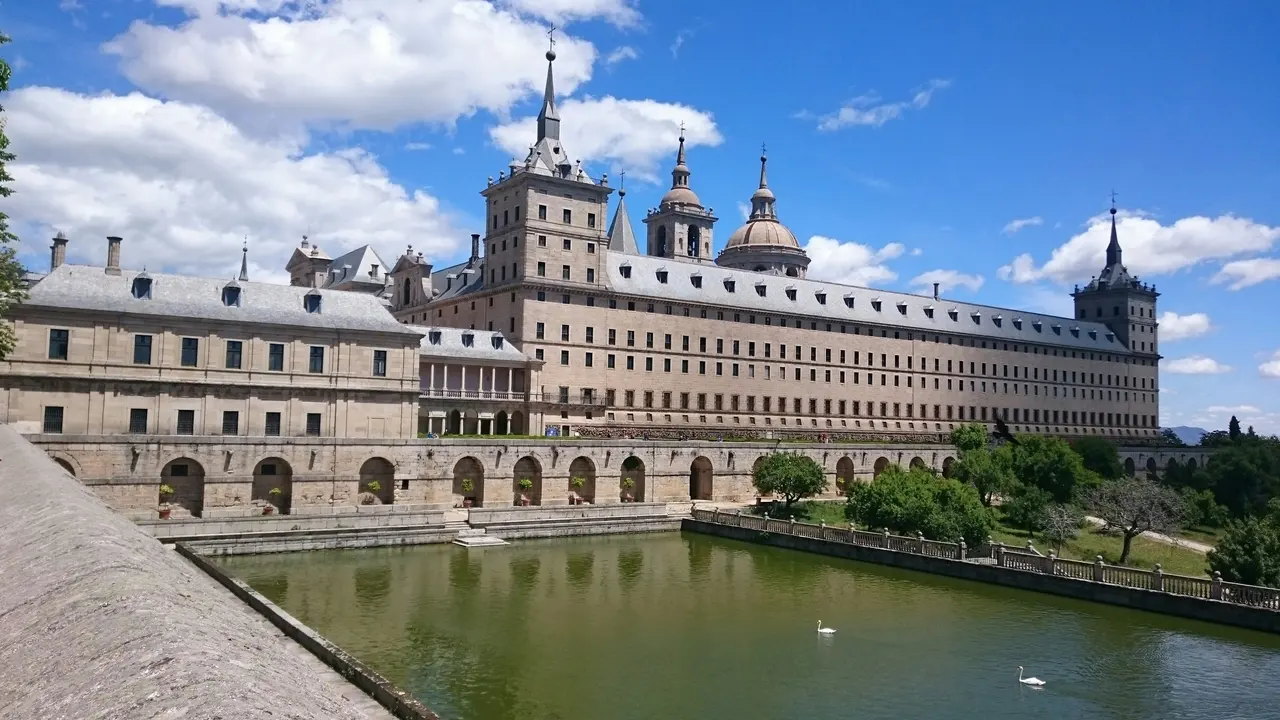
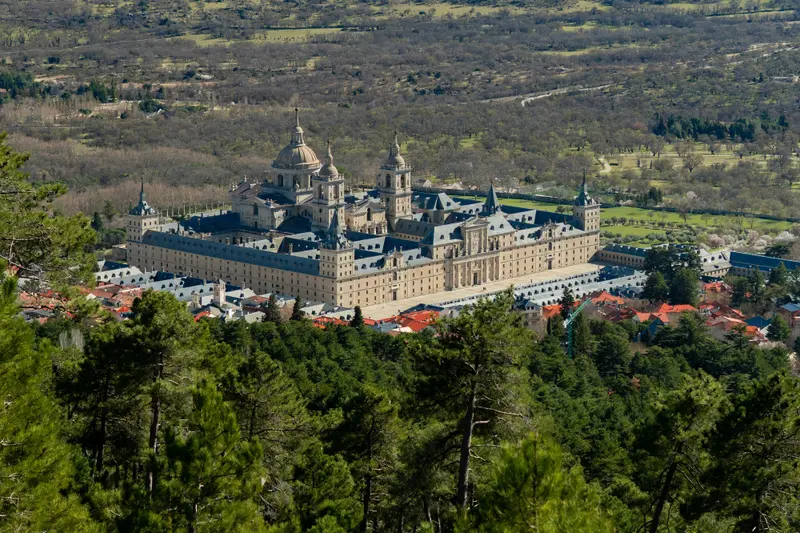
At San Lorenzo de El Escorial, walk along the broad paved approach to take in the scale of the monastery. The 16th-century building contains a royal residence and a library as well as religious spaces. Stop for lunch in town afterwards, or leave time for a walk in the woods around the Silla de Felipe II viewpoint. Starting with the visit to the monastery leaves that second decision free until you know how the weather looks.
In Aranjuez, use the palace as a starting point and decide which garden you want to explore. The Jardín de la Isla fits a visit to the immediate palace grounds and the Tagus. The Jardín del Príncipe gives you room for a longer walk. Leave space in the day for the streets of Aranjuez as well. The whole site makes more sense when you can see the palace, avenues, gardens and river from several points on foot.
Monuments and heritage
Three ways to see the Royal Sites
In Madrid, the Royal Palace suits a visit focused on the life of the court and the rooms in which it was received. The Royal Collections Gallery nearby lets you follow the story through objects and artworks. These are substantial visits in their own right. If both interest you, give yourself a break between them and work out the approach to each entrance. A walk around the palace exterior suits a shorter stop.
If you would like someone to explain how the rooms were used, compare guided tours of the Royal Palace and check whether admission is included.
At El Escorial, pay attention to how the library, the basilica and the royal apartments sit within the same vast stone building. The open space around the complex makes the design easier to read from outside. At Aranjuez, follow a change in scenery from the formal spaces by the palace to the riverside and the broad planted avenues. Allow time for a pause at a junction or bridge, where the links between the separate parts of the estate become visible.
University façades, walls and a castle
The University of Alcalá and the old town share a World Heritage listing. The architecture is on public streets as well as inside the university precincts. Take a slow walk around the edge of Plaza de Cervantes and follow the arcades along Calle Mayor. At Buitrago del Lozoya, begin outside the walls, where you can see how the bend in the river shaped the town’s defences.
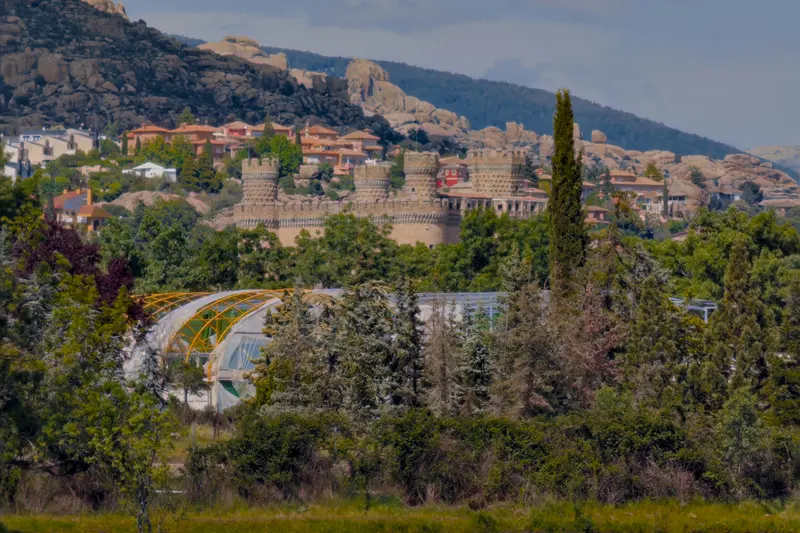
The castle of the Mendoza family at Manzanares el Real overlooks the area around the Santillana reservoir. See the exterior on a day in the village or before a walk in La Pedriza. If seeing the inside is important to you, check its status with the tourist office before planning your day around it.
Museums and culture
Choosing between the Prado, Reina Sofía and Thyssen
Choose one major museum per day on a short visit. At the Prado, a route around Velázquez and Goya gives you a way into the Spanish collections. At the Reina Sofía, spend time with Picasso’s Guernica and look at the surrounding works to see where it fits. The Thyssen-Bornemisza suits a visit that takes in several schools of painting. If your group splits up, agree where to meet afterwards on the Paseo del Prado or in the Literary Quarter, the Barrio de las Letras.
For a shorter visit in the same area, consider the Naval Museum or the Royal Botanical Garden. Look at the museum’s notices if you have come to see a particular work. Exhibitions can have their own entry arrangements and a gallery may lend out a favourite painting. When you book, leave some unscheduled time to sit outdoors or browse the streets nearby.
Theatres and the old slaughterhouses
The Teatro Real and the theatres on Gran Vía make good anchors for an evening in the city. Work out how you will get back before choosing a performance. The former slaughterhouse buildings at Matadero Madrid have a different setting by the river. Check the programme for particular exhibitions, films and events, then combine one activity with part of the Madrid Río walk.
Charming villages
Chinchón and Colmenar de Oreja
Come down into Chinchón’s Plaza Mayor to see the wooden balconies, then go up towards the church for a view of the square and the slope of the town. Take time to notice how the galleries fit around the open ground. Colmenar de Oreja has an arcaded square of its own and the Zacatín area gives you a route away from it. These stops work well together if you are driving across Las Vegas. Have lunch in one and leave enough of the afternoon to walk around the other.
Buitrago, Patones and Rascafría
In Buitrago del Lozoya, find a public vantage point outside the walls before exploring the streets towards Santa María del Castillo. The river bend helps explain the shape of the old centre. Patones de Arriba is built into a slope, with dark slate walls and narrow streets. Check which end of the village you are heading to. Patones de Abajo is a separate lower settlement and the approach can add an uphill walk.
Rascafría combines a village centre, the monastery of El Paular and walks in the Lozoya valley. Allow time for a walk between stops and look at the route from the village towards the monastery. If you would like to see more mountain architecture, save a second day for smaller settlements in the valley or in the Sierra del Rincón.
In Manzanares el Real, start with the town square and the Puente del Real bridge, then look for a view of the castle. Leave a break between the town walk and a hike in La Pedriza if you are doing both. The village makes a short outing in its own right when the weather closes in over the granite slopes.
Nature and protected areas
Peñalara, La Pedriza and the Lozoya valley
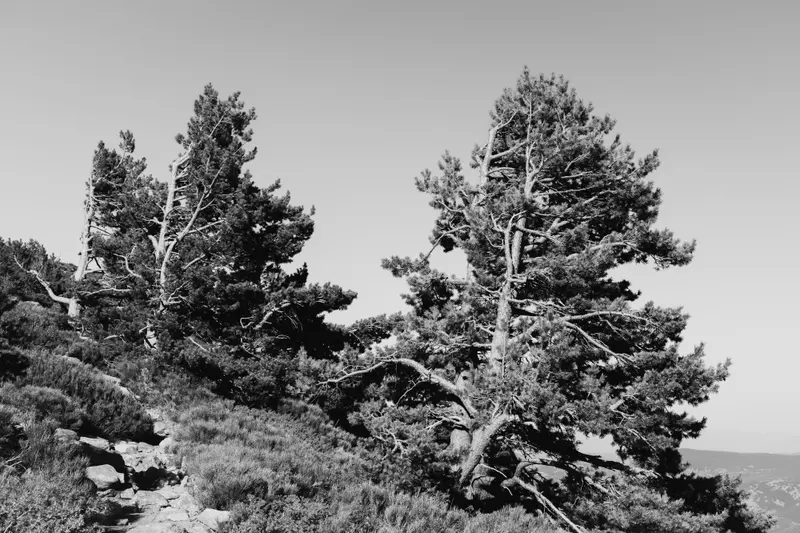
At Puerto de los Cotos, trails lead towards Peñalara and its glacial landforms. A walk to a viewpoint is a different undertaking from following the route high onto the ridge. In 2026 the park published limits on vehicles at Cotos and on visitor numbers at Peñalara. Check access before taking the road uphill. Ask the visitor centre for options that suit the conditions and the walking experience of your group.
La Pedriza is a landscape of granite walls and rounded boulders above Manzanares el Real. Start with a lower path if your main interest is seeing the formations. In 2026 the road entrance to Canto Cochino was regulated for private cars. Check the rules before setting off. If you need to start on foot from further down, include the approach in the length of the walk and choose a suitable turn-around point.
For an easier outing, base the day around Rascafría or a short walk from Lozoya. For a woodland visit, the Hayedo de Montejo offers guided walks through a protected beech forest. In 2026, visitors needed a pass and had to call at the information centre in Montejo de la Sierra. Check current instructions before committing to the rest of the day’s plan.
Festivals and traditions
On 15 May 2026, the city celebrated San Isidro. The traditional pilgrimage and picnic take place at the Pradera de San Isidro in Carabanchel. Look for a performance of the chotis, a traditional dance, and the stalls selling the saint’s ring-shaped pastries. Goya’s painting of the Pradera in the Prado gives you an idea of how long the picnic has been part of city life. Check the programme for the year you are visiting if you want to combine the two.
The August verbenas, or street festivals, honour San Cayetano, San Lorenzo and the Virgen de la Paloma in the central district. 15 August 2026 was the principal religious day for La Paloma. If you want music or dancing, find the square or venue on the programme first. You can then make a walk through La Latina or Lavapiés around the event. Ask about street closures if you are arriving with luggage during the festivities.
In Alcalá de Henares, the Mercado Cervantino filled the old town from 8 to 12 October 2026. Craft and food stalls and street performances change the way you move through the centre. If the fair is the reason for your trip, use the event map to pick a meeting point away from the busiest stretch of Calle Mayor. For a quieter look at the university courtyards, plan the heritage visit on another day.
What to eat
Cocido, squid sandwiches and seasonal pastries
Order cocido madrileño when you have time for a leisurely lunch. The chickpea stew comes with vegetables, meats and broth. A traditional service in vuelcos may bring the soup first and the other elements in successive courses. Ask how it is served before choosing starters, especially if you plan to share. For a quicker lunch by Plaza Mayor, look for a bocadillo de calamares, a bread roll filled with fried squid.
A neighbourhood tavern is a place to try dishes such as callos, a tripe stew, or huevos rotos, broken fried eggs over potatoes. A market is handy for bread, fruit and supplies for a day outdoors. In May, bakeries sell the pastries associated with San Isidro. Rosquillas tontas are plain, while listas have a glaze. You may see the Santa Clara variety alongside them.
Valley produce and regional wine
Around Aranjuez, ask for local strawberries and asparagus in season. In Chinchón, look out for anise spirit and garlic. Colmenar de Oreja is a useful stop if your outing follows the Vinos de Madrid wine designation. Ask a winery when it receives visitors before setting off and plan the journey home if you intend to taste. If travelling with children or mixing a tasting with sightseeing, set aside time to walk around the town and eat there.
Sport and outdoor activities
From Cercedilla, consider the pine woods of the Fuenfría valley. Pick a route whose ascent suits the group and check the approach from the village or railway station. If it has rained, ask about the condition of the paths before choosing a steep section. Keep a map available offline and leave time to walk back to the station, especially in winter when it gets dark early.
The Tajuña Greenway is a cycling option in the south-east, along parts of an old railway. The route from Arganda del Rey rises before descending to Morata de Tajuña. Choose a shorter section between valley towns if riding with children or if you want frequent stops. Decide whether you will cycle back the way you came and carry water. If you are bringing a bike on public transport, check what is allowed for the service you plan to use.
In the capital, Madrid Río works for a walk or a cycle in short stages. Choose a bridge near the place you want to see, since activities and sights lie on both sides of the Manzanares. The stretch from the Segovia Bridge area towards Matadero makes a useful point-to-point outing. Choose a route with an easy exit to city transport if you need to shorten it.
Routes and itineraries
Three days based in Madrid
Day 1. Walk from Sol to Plaza Mayor and the Royal Palace. End around Plaza de España or return through La Latina for food. Day 2. Make the Prado or another art museum your main stop, with a walk through El Retiro afterwards. Day 3. Take a trip outside the city. Choose Alcalá for a walk through the university town, Aranjuez for gardens, or El Escorial to spend time at the monastery and around the town.
Five days for the city, villages and hills
Keep the first two city walks and add one heritage day. Spend day four in the Lozoya valley or walking from Cercedilla. Swap the outdoor day with a museum or a palace visit if rain is forecast. On day five, pick a different sector from the one you have visited. You might pair Aranjuez with a stop on the way across Las Vegas if driving, or spend a full day in Alcalá and go back by train for dinner in the city.
A week with two bases
Spend three or four nights in Madrid and the rest in the hills. If you are moving to Cercedilla, use the journey to see El Escorial. For a stay in the Lozoya valley, consider Buitrago for the break between bases. Having two mountain days lets you pick the better forecast for a higher walk and spend the other in the valley. For your last day, work back from the time of your flight or onward train. Allow enough time to return a car or make a connection before adding another stop.
Travelling with children
Give a museum visit a small purpose. At the Prado you can pick three pictures in advance and look together for a detail in each. In El Retiro, use the boating lake as the focus and choose a short route nearby. Madrid Río gives children outdoor space on a day with a late train or after a visit at Matadero.
Aranjuez suits a morning in one garden followed by a meal in town. In the mountains, keep a second, shorter route available. Check the surface and slope if you are using a pushchair. You may have more room on a valley path than in the steep centre of a village. In summer, look for shade before committing to a long approach between the station and a garden or trail.
Where to stay in the Community of Madrid
Sol, Ópera or the Barrio de las Letras. Stay centrally if you want to walk to dinner or return between visits. Choose the street and room carefully if you need quiet at night. For a trip mainly involving museums, factor in the walk to the Paseo del Prado. If an onward train is important, check which station your ticket actually uses.
Near your rail route. Atocha and Chamartín can suit a short stop before a long-distance journey. For regional day trips, pick a base that gives you a straightforward ride to the platforms for your particular line. A night in Alcalá or Aranjuez buys time in the old town or beside the river before visitors start to arrive for the day.
In the mountains. Cercedilla suits walks around Fuenfría. Rascafría and the other villages along the Lozoya make more sense if most of your outings are in or above that valley. Before booking, check transport to the trailhead and think about where you will eat at the end of the day. The most convenient village is the one closest to the outings you plan to do more than once.
See places to stay in the Community of Madrid (opens in a new tab)Affiliate link: if you book through it, we may earn a commission at no extra cost to you.
Practical tips and common mistakes
Save the exact station, terminal or gate. Madrid has several arrival points and El Escorial and San Lorenzo have different stops. Save the entrance information with the ticket and check how you will reach it on foot.
Leave space between timed entries. An art collection or a royal site can take up much of a morning. Put a walk between two reservations so you can keep it short if the first visit runs long. For Montejo and Cotos, begin with access and use that to set the rest of the day.
Plan meals alongside visits. Lunch in Spain often starts later than visitors from northern Europe expect, and dinner runs later too. For a rural day, check serving times for the place you choose. If you are in a group and want to eat before travelling back, book where you plan to finish the walk. Tipping is discretionary.
Check the mountain forecast separately. Look at the conditions at your starting and finishing altitudes. Work out when the sun sets and how much uphill walking still lies between you and your return transport. Make the decision to shorten a route while there is time to finish comfortably.