

 Español
 English

Why visit Belmonte
Start on San Cristóbal hill and look across the rooftops for the collegiate church. The castle gives you a clear view of the two heights around which Belmonte grew, the streets that lead down into the centre and the fields beyond the houses. Explore the streets on foot afterwards. In a day you can see Juan Pacheco’s fortress, the church of San Bartolomé and some of the gates that once controlled access to the town.
Belmonte is in south-western Cuenca province, in the plains of Castilla-La Mancha. Consider staying the night if you want to see the castle and the town at different times of day. The castle deserves time for the walk along its walls and for looking out from the towers. Around the collegiate church the details are smaller, from the carving in the choir stalls to the houses and gates along the way back down. A full day is enough for both if you keep time for the walk between them.
When to go
Spring and early autumn bring more comfortable conditions for a day that involves climbing two hills. Early light can make it easier to pick out the outline of the castle from town. Later in the day, walk back up towards the castle and look in the other direction, across the rooftops and out over the fields. The two sides of town give you different views within the same outing.
In summer, see the outer walls or windmills early and plan an indoor visit when the sun is high. The wind can be noticeable up on the ramparts and beside the windmills in winter. On a short winter day, use the daylight for the hills and leave some time around the centre afterwards. If a castle event or the August festival is the reason for your visit, plan the walks around the event you want to see.
Getting there and around
The N-420 is a main approach by road, including from Mota del Cuervo. From the A-3 corridor you can come in from the north via the Montalbo and Villaescusa de Haro area. The castle is on Calle Eugenia de Montijo, on San Cristóbal hill. Follow the streets in the old town to the collegiate church on the other side of the centre.
You can visit the centre, the church and the castle on foot. Decide how much of the uphill walk you want to include. The streets can be narrow and the paving uneven, and reaching the hill from the town adds a climb to the castle visit itself. For a shorter walk, see the area around the church on foot and visit the outside of the castle separately. If you aim to end the day at the windmills, leave them as a separate stop too.
What to see in Belmonte
The castle on San Cristóbal hill
As you approach the castle, look at the outer wall and the different angles from which the towers overlook the ground below. Inside, a triangular courtyard ties the spaces together. Its shape is clear from ground level. After climbing, look down from above to see how the rooms, walls and passages fit around it. On the ramparts you can turn from an enclosed view of the courtyard to the open plain within a few steps.
The castle had domestic spaces as well as military ones. Notice the changes in ceiling decoration and how the rooms are lit through thick stone walls. Reconstructions of large siege machines are on display in the grounds. Compare their size to the walls and ditch before continuing through the site. This is a particularly useful stop for anyone curious about what the walls had to withstand.
The collegiate church and town gates
The collegiate church of San Bartolomé sits at the top of the old town. Near it is the former palace of Infante Don Juan Manuel, restored as accommodation. From the high ground you can walk down towards the centre and look for the gates that survive in the town walls. Puerta de Chinchilla and Puerta del Almudí mark points where routes used to cross the boundary of the walled town.
The windmills and the plain
Molino El Puntal and the area around the windmills offer another view of Belmonte. Look back at the town and locate the old centre and the castle, then look out across the farmland. If you started at the castle, try this as the last stop of the afternoon. On a windy day you can spend longer in the sheltered streets near the church.
Monuments and heritage
Juan Pacheco, Marquess of Villena, commissioned the castle in the 15th century. Its triangular central arrangement and the towers of its outer profile are easy to see as you follow the visitor route. Its current appearance also owes something to the work sponsored by Eugénie de Montijo in the 19th century. Look at the building with both periods in mind, from the original idea of a fortified home to the later effort to restore it.
The church of San Bartolomé also benefited from Pacheco’s patronage. The architecture is Gothic, with furnishings from later periods. Take time to look closely at the carved choir stalls. They were carved for Cuenca cathedral and moved to Belmonte in the 18th century. Outside, the space in front of the church helps you see how the palace and nearby houses share high ground in the old town, directly opposite the castle hill.
Museums and culture
The collegiate church displays religious art associated with the building. The museum gives you a closer view of some of the objects connected with worship and decoration. Spend part of your visit looking again at the stalls, the altarpieces or the tombs. Their details bring out the different skills involved in furnishing a church of this scale.
The castle’s interpretation covers life in the fortress, the work associated with Eugénie de Montijo and the design of the defences. Pause in the courtyard afterwards to connect the exhibition with the building around you. Outside, you can see siege machinery on a scale that is hard to convey in a display case. The wall walk has views of the town that those defences once helped protect.
Neighbourhoods and areas
The area around the collegiate church holds several of the town’s main monuments close together. Start in the space outside the church, look across to the former palace and follow a street down towards Plaza del Pilar. Around the square you can choose a route towards the town gates or set off up the opposite side. Planning the walk in that order saves a second climb to the same spot.
San Cristóbal hill forms a separate area around the castle. From town you can keep the towers in sight during the approach. From the top you can pick out the line of the walls and get your bearings for the return. Treat the windmills as their own walk if you want time to linger at both the castle and the collegiate church.
Festivals and traditions
The local tourist office announced the San Bartolomé celebrations in August 2026. The feast takes its name from the saint to whom the collegiate church is dedicated. Religious events and evening festivities can take place in different parts of town, so check where the event you want to attend is being held before choosing a base. In September, the local calendar includes El Ofrecimiento in honour of the Virgen de Gracia, with events organised around the religious brotherhood. Check the programme for the year you will be there.
Routes and itineraries
With half a day, start at the castle and take a walk downhill from the collegiate church to the centre afterwards. Allow a full day to visit both interiors and explore more of the walled town. Start at the castle, go on to the church and then follow the gates as you walk down through the streets. Finish at the windmills or return to the foot of the castle to see the countryside in different light.
If you stay overnight, do the town first. Follow the walls and find the gates on the afternoon you arrive. Visit the castle the next morning and look for the streets you walked the day before. That leaves the afternoon for the windmills of Mota del Cuervo or the Roman site at Segóbriga, depending on the direction you are travelling next.
Day trips
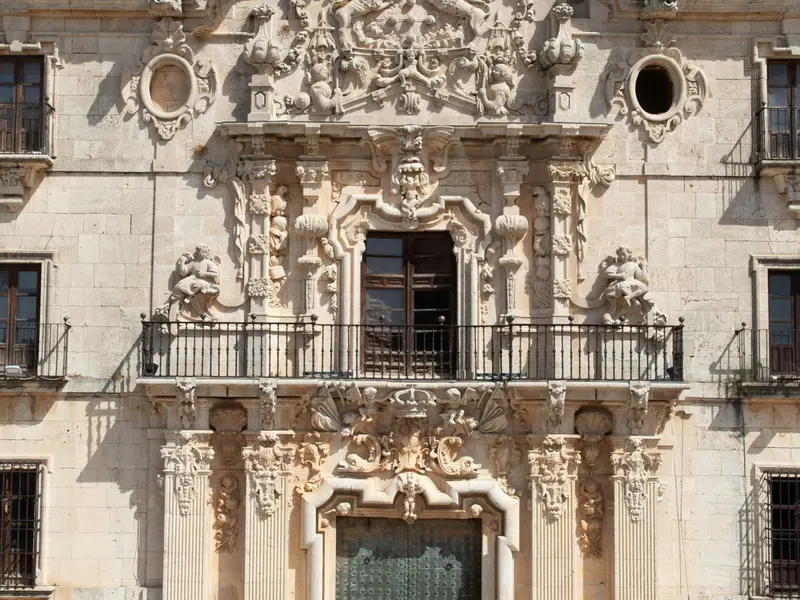
Mota del Cuervo has another windmill hill with views across La Mancha. For more church architecture, head to Villaescusa de Haro and see the Chapel of the Assumption in the church of San Pedro. Segóbriga takes you further back in time with the surviving public buildings of a Roman town. Uclés and its monastery lie in the same direction and can be added if you have time for a second substantial visit.
Alarcón and Cuenca take you from the plain to the gorges of the Júcar. In Alarcón you can combine a castle, contemporary murals and a riverside walk. Give Cuenca a day of its own for the Hanging Houses, San Pablo bridge and Plaza Mayor.
Where to stay in Belmonte
Staying near the collegiate church lets you start the day at the top of the old town and walk down to the centre and gates. A place closer to the square makes it easier to return on foot after the evening festivities, and leaves you free to tackle the two hills at different times. For a trip with several stops in the surrounding villages, look at the route back to the main road as well as the walking distance to the old town. An overnight stay gives you time to see the streets in the evening and get up to the castle before leaving the next day.
See places to stay in Belmonte (opens in a new tab)Affiliate link: if you book through it, we may earn a commission at no extra cost to you.