

 Español
 English

Why visit Campo de Criptana
Start at the windmills and come down into Campo de Criptana through the Albaicín. From the ridge you can see the plain where the grain was grown. Below are whitewashed houses and rooms dug into the hillside. In the lower town, a former granary offers a third piece of the story. Give the three places a day together and you can trace the work that linked the wind, the fields and the town.
Campo de Criptana is in the north-east of Ciudad Real province, in Castilla-La Mancha. The windmills are associated with the giants of Don Quixote. The view from the streets below goes some way towards explaining why. Add an interior visit to see how the machinery worked, or visit the mill dedicated to the actor and singer Sara Montiel to learn about another part of the town’s history.
When to go
Spring and early autumn suit the climb and a long walk between the mills. The slope can be breezy even when the streets below feel sheltered. If you have a reservation for a mill visit, make that the anchor for your morning and use the paths above the town to fill the time on either side.
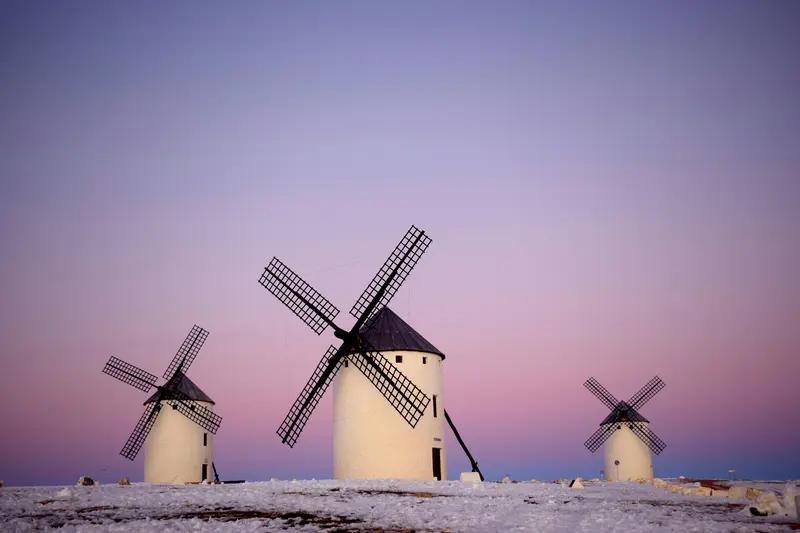
In summer, use the early shade in the Albaicín before heading out onto the open ridge. If you are staying overnight, try a second look at the mills towards sunset. In winter, use the brighter part of the day for the hill. If the ground is slippery, keep to established paths between the towers and walk back through the streets.
Getting there and around
The railway station is listed as Campo Criptana by Adif. Check journey options from Madrid for your date and leave time to walk between the station, the town and the ridge. Alcázar de San Juan is another rail hub in the area. If you are mixing the two stations, check how you will travel between them before booking your tickets.
For a car visit, decide where the walk should finish. You can begin at the mills and descend into town, or leave the car lower down and make the climb part of the day. If you are travelling with someone who finds steep streets difficult, consider separate stops in the upper and lower town. Ask about access to individual mills, since machinery can be reached by stairs in a tight space.
What to see in Campo de Criptana
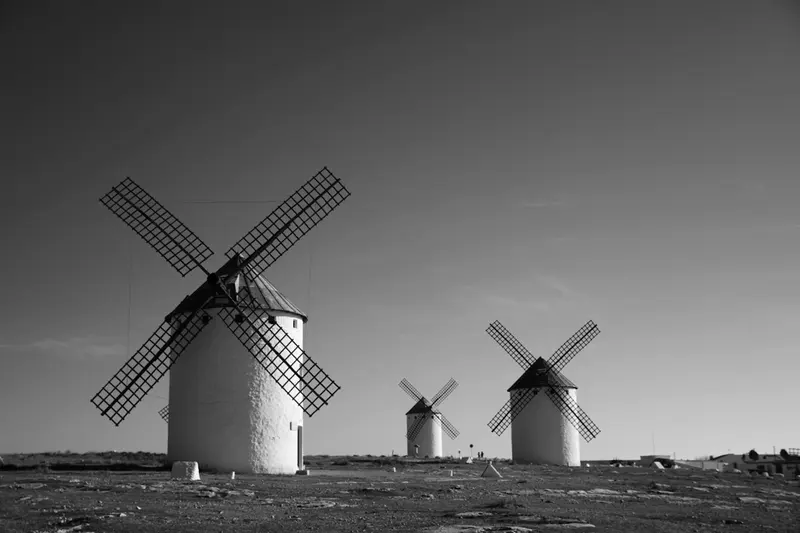
The Sierra de los Molinos
Start at Poyatos mill, where there is a tourism information point. Follow the line of towers and move far enough along the path for the sails to appear separately against the sky. Look at the sizes of the windows and doors, then step back to see the full span of the sails. Find out at Poyatos which mills you can visit from the inside.
From the Albaicín to the old granary
Walk down through the Albaicín, where blue paint runs along the base of white walls and some doors open into cave houses. Ask about the visit to the Pastora Marcela cave house. Then continue to the Pósito Real, the old grain store. The walk between the two makes it easier to see the windmills as part of a town that had to grow, store and process its grain.
Monuments and heritage
The Infanto, Burleta and Sardinero mills date from the sixteenth century. Infanto and Burleta are on the main ridge. Sardinero stands apart on Cerro de la Paz and makes a useful second stop if you want to see how the mills were spread over the high ground. The historic site designation covers the group and its setting.
Inside a working mill, look for the pieces that transfer the movement of the sails to the millstones above. Flour travelled down from the grinding floor for collection. The small openings near the top helped millers check the wind direction. See if you can follow the grain’s journey from the stones to the floor below before heading back outside.
Museums and culture
Culebro mill contains a small museum devoted to Sara Montiel, who was born in the town. It offers a way into her career in film and music even if her name is new to you. Quimera mill has a display on the local Holy Week traditions. Ask which exhibitions can be seen on the same visit before planning a route around specific buildings.
In the lower town, the municipal museum in the Pósito Real puts the mills within the history of work and everyday life in La Mancha. See it after the ridge if you want to follow the grain into town. It also works as a first stop on a windy day when you would prefer to leave the exposed walk until later.
Neighbourhoods and areas
On the descent through the Albaicín, take some of the shorter side streets to see how the houses fit into the slope. Some doorways sit close to the ground on one side and high above the road on the other. The streets are residential and are best enjoyed on an unhurried walk through to the lower centre.
Around Plaza Mayor, you can pause before crossing to the Cerro de la Paz. Look for Sardinero mill there and compare its position above the houses with the line of mills on the main ridge. If you parked on the Sierra de los Molinos, leave time to retrace the climb. If you arrived by train, you can finish the walk in the lower part of town.
Nature and protected areas
Laguna de Salicor is a seasonal salt lake north of Campo de Criptana. The amount of water changes the scene considerably. In a dry period you can see the shape of the basin, while at wetter times it can be worth bringing binoculars for the birds. Check the approach before driving out and use public routes around the surrounding farmland.
Festivals and traditions
Campo de Criptana’s Holy Week has regional tourist interest status. Processions use the streets of the centre, and the local programme is the place to look for routes during the week. Quimera mill is an alternative if you want to see part of that tradition outside the procession dates.
Traditional milling demonstrations are part of the council’s tourism plan for 2025–2030. Check with the tourist office for your trip. Find out which historic mill will be used, whether a place needs to be booked and what happens if the wind changes. On other days, an interior visit can show you the same parts of the machine while it is still.
The 2026 fair in honour of the Cristo de Villajos ran from 23 to 28 August. The shrine associated with the celebration stands outside town. If you visit it at another time of year, look at how the open farmland around the shrine contrasts with the built-up slope below the windmills.
Routes and itineraries
One morning. Start at Poyatos, walk along the mills and come down into the Albaicín. Finish by Plaza Mayor. If you booked an interior visit, keep that time free and save the second hill for a longer stay.
A full day. Visit a mill and the Albaicín first. Later, choose between the Pósito Real and the Sara Montiel collection, or fit both in if the visits line up. Finish by Sardinero or return to the ridge for different light across the plain. Then follow the route back to your station or car.
Day trips
Alcázar de San Juan. Look around the town centre and go up to Cerro de San Antón. If you have already seen the inside of a mill at Campo de Criptana, use the visit to compare the position of the towers and the view over the surrounding fields.
El Toboso. Follow the literary connections of the area through the Casa de Dulcinea and the Museo Cervantino. Give the village time on foot between interiors. Farther west, the windmills and castle of Consuegra make a separate day out if you are touring by car.
Where to stay in Campo de Criptana
Stay between Plaza Mayor and the foot of the hill for a day split between the mills and the lower town. In the Albaicín, check the gradient on the final approach to your room and whether you can stop nearby with luggage. From the upper streets you can get to the mills first and walk down through the town later.
For a rail trip, look at the walk from the station to where you plan to stay. Alcázar de San Juan can work as a base if you have several onward rail journeys. A night in Campo de Criptana gives you a chance to walk up to the ridge in different light and gives the museums more room in your day.
See places to stay in Campo de Criptana (opens in a new tab)Affiliate link: if you book through it, we may earn a commission at no extra cost to you.