Español
 English

Why visit Galicia
The best things to do in Galicia depend on where you want to wake up. Sleep in Santiago de Compostela to walk into the cathedral square before it fills. Pick a town in the Rías Baixas for an evening beside a fishing harbour. Stay in Ribeira Sacra to take your time over the river gorges and winding vineyard roads. A week can accommodate all three if you plan the nights carefully.
Use the four provinces to get your bearings. A Coruña contains Santiago, the port city of A Coruña and the Costa da Morte. Lugo has a north coast that ends at the Ribadeo estuary, a walled provincial capital and mountains in the east. Inland Ourense gives you hot springs and several wine regions. Pontevedra takes in much of the Rías Baixas and reaches the Miño on the Portuguese border.
A ría is an arm of the sea that follows a former river valley. The village straight across the water may be a considerable drive away. Choose a stretch of shoreline with a town you would enjoy in the evenings. Think about where you will embark if you want an island trip. Save the journey around the head of an estuary for a day when it gets you to your next base.
When to go
The best time to visit Galicia for your plans
May, June and September work well for a mix of walking, towns and leisurely meals. Start with anything that depends on a timed boat or limited entry, then leave room to swap a walking day with one you can spend indoors. If a front is moving in, a couple of flexible days will do more for the trip than adding a long drive in search of sunshine.
July and August are the obvious months to prioritise beaches. The longer days leave room for an evening walk after a morning on the sand. Look up the beach itself when you check the forecast. The direction it faces affects how it feels on a windy day, and the tide can change how much space there is on neighbouring stretches of shore. If you want to stay near a sailing point, book with that port in mind.
In autumn, look at wine country as well as the cities. Vineyards on opposing slopes of the Sil or Miño catch the light differently. Give yourself the time to see the river at more than one hour of the day, perhaps around a winery appointment or a village visit. It is easier to appreciate the views if you are free to stop for longer at one place.
In winter, choose a town or city with enough to do from your doorstep. An arcade in Santiago can be comfortable on a wet day, while a headland can feel very exposed. Visit the farthest place first and save a walk near your accommodation for the end of the afternoon. Check the mountain forecast separately. Snow on a high pass can alter plans made on a mild morning by the sea.
Getting there and around
Flights, trains and onward journeys
In 2026, Aena lists airports at Santiago de Compostela (SCQ), A Coruña (LCG) and Vigo (VGO). Santiago makes a convenient first base for a trip that will head either north or south. If you are concentrating on the southern rías, compare the whole journey from Vigo and Santiago, including the transfer from the terminal. Check how you will get to your accommodation if the flight arrives late.
Coming by rail, start by searching for your overnight town. A linear trip with more than one base can save backtracking. Before booking a combination of flights and trains, note the full station names and leave time to transfer with luggage. A train to a place with a familiar provincial name may still leave you far from your first coastal walk or rural stay.
When to hire a car
With light luggage you can build an entire visit around city centres. Santiago and Pontevedra are good for walks through old streets and squares. A Coruña offers a longer outing by the sea. A hire car earns its keep on days spent visiting isolated viewpoints, small ports and beaches. If you start in a walkable city, collect the car when you are ready to leave. This also gives you time to settle in after an international flight.
On a day between bases, pick a short visit you can enjoy with a predictable finish. Find out where you can drop your bags if your next accommodation is on a pedestrian street. Coastal side roads take time, especially when you have to find parking at the end of one. When catching a boat, allow for the walk from the car park to the quay and time to find the correct boarding point.
What to see in Galicia
Things to do in Galicia on a first visit
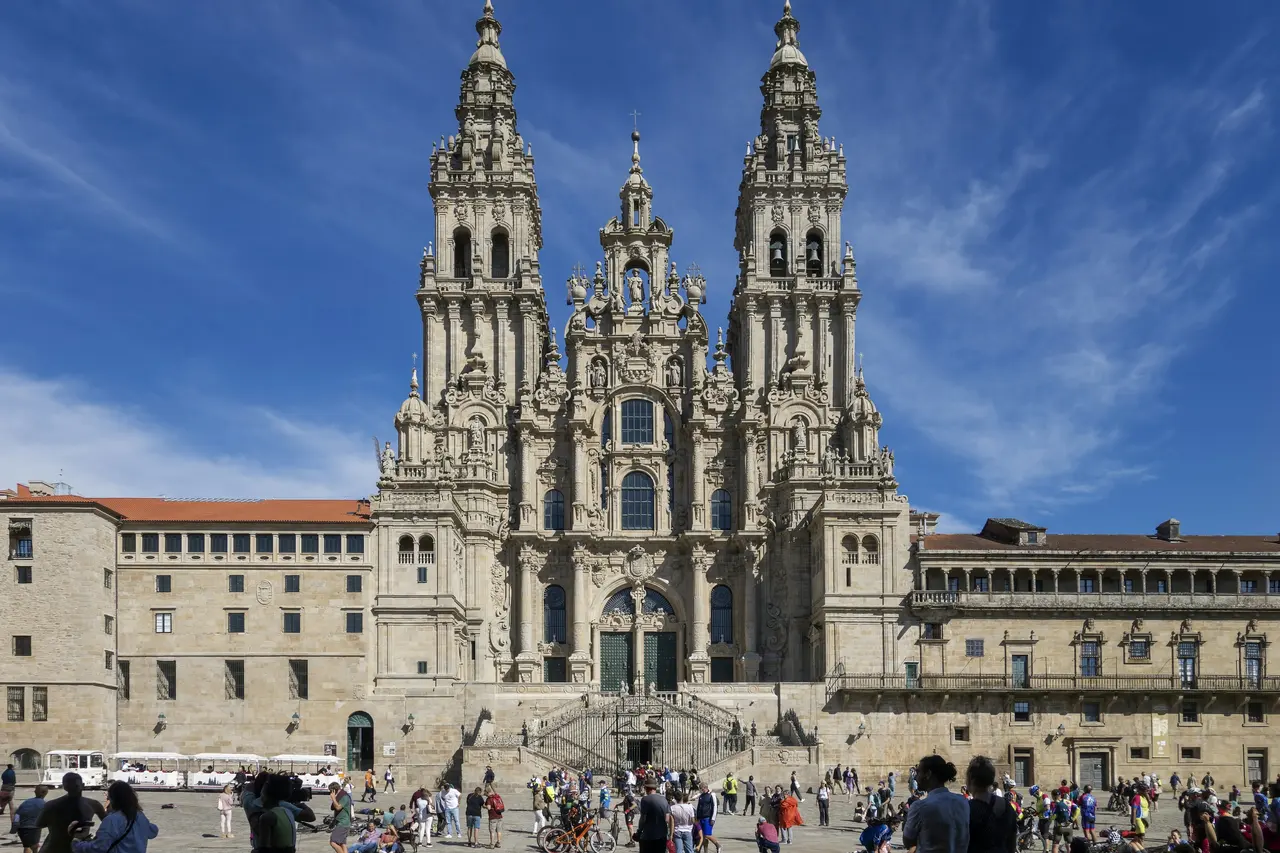
Begin in Santiago de Compostela. Walk from Obradoiro square around the cathedral to Praterías and A Quintana, then take the smaller streets between the arcades. The food market and the Alameda park give two different ways to get to know the city beyond the cathedral. If the architecture is a priority, leave a separate block of time for the interior. You can compare guided visits to Santiago Cathedral before settling on a time.
Choose a second city for the sort of day you want. In A Coruña, the harbour galleries and the Tower of Hercules give you two ends of a walk with the sea nearby. In Lugo, follow the Roman wall above the old town and try a different gateway on the way down. Pontevedra has a series of squares to explore around A Ferraría. In Vigo, see the harbour and islands from Monte do Castro before returning to the centre. Ourense has a walk from the hot springs of As Burgas in town down to the Miño.
Northern estuaries, the Costa da Morte and the Rías Baixas
The northern coastline changes character repeatedly. Around Ferrol, Cedeira and Ortigueira there are estuaries and high ground overlooking the open water. Further east, A Mariña Lucense links beaches and ports with the Ribadeo estuary. On a day trip, pick a town and a viewpoint around the same inlet. Leave time to follow a harbour path or sit by the water after lunch.
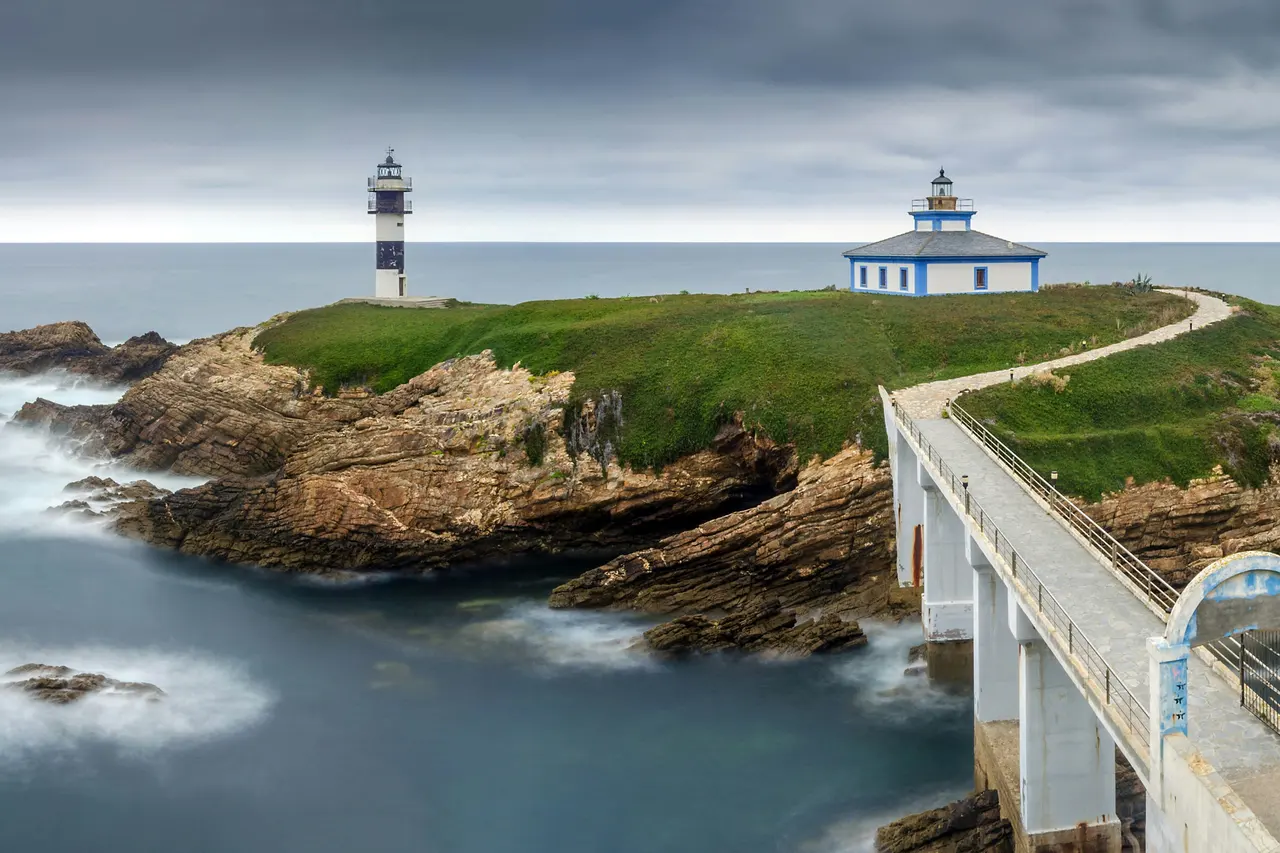
The Costa da Morte works best in short stretches. Camariñas and the lighthouse at Cabo Vilán make a natural pair, with a working harbour at one end and exposed rock at the other. Muxía has a shrine by the shore. At Fisterra, the lighthouse stands at the end of a peninsula. Spend a day in one sector and keep a more sheltered stop in mind if rain or wind cuts short a walk at the cape.
In the Rías Baixas, go to Arousa to see mussel rafts and eat by the water. On the next estuary south, combine Pontevedra with Combarro and the north shore. Vigo gives you a city-centre base with a view towards Cíes. Baiona and A Guarda take you towards the mouth of the Miño. An extra afternoon in one estuary often gives you more time by the sea than an extra afternoon driving to another.
The two sides of Ribeira Sacra
Ribeira Sacra crosses the provincial boundary between Lugo and Ourense, taking in stretches of the Miño and Sil. Monforte de Lemos is a starting point for the Lugo side. Parada de Sil and Nogueira de Ramuín give a different perspective from the south. Write down the river and bank for each viewpoint. Sites facing one another may be connected by a bridge some distance away.
Set aside a day for a monastery, a viewpoint and a stop in the valley. From above, look for the long bends and narrow strips of vineyards. A boat trip gives you a view looking back up the slopes. Check the departure point and whether the boat is operating on your date. If rain or mist affects long views, bring the monastery visit forward or choose a walk at valley level.
Monuments and heritage
How the Camino routes fit together
The French Way enters Galicia at O Cebreiro and passes places such as Triacastela, Portomarín and Melide. The Original Way approaches from Asturias and reaches Santiago via Lugo. The Portuguese Way approaches from the south and has a coastal variant. On the English Way, start with a port such as Ferrol to see how sea travel shaped the pilgrimage. A short walk combined with a bridge, monastery or village makes a manageable introduction.
A separate route leads beyond Santiago to Fisterra and Muxía. You can explore the two independently of a longer walk. If you do follow a stage, look for the official route and check the endpoint before setting off. Some roads and paths have similar place names and lead to different sides of a hill. Decide how you will move your bags and whether you need transport at the end of the day.
Roman sites, hillforts and granaries
The Tower of Hercules and the Roman walls of Lugo show the importance of very different locations. In A Coruña, look out from the headland to understand the position of the lighthouse at the harbour entrance. In Lugo, go up one access point and come down by another. From the wall you can trace the relationship between the old street plan and the modern city beyond it.
In the south, visit the hillfort at Santa Trega, overlooking the Miño estuary. Allow time to walk around the excavated structures as well as to look across to Portugal. In villages, look for the raised chambers called hórreos. Their supports lift stored crops above the ground. When you see several together, look around for the fields, lanes and houses that would have been part of the same working landscape.
Charming villages
Stone lanes, sea walls and mountain houses
At Combarro, follow the waterfront to see how the granaries and lanes are arranged around the changing level of the water. At Cambados, visit Fefiñáns square and then walk towards the waterside district of Santo Tomé. Walking both parts gives you a sense of the differences between a formal stone square and streets beside the shore, with room to stop for a meal in between.
On the north coast, Viveiro gives you an old town and an estuary within one visit. At Ribadeo, look for the houses built by people who returned from the Americas before following the lanes towards the port. Between them, Mondoñedo is inland and tied to the Northern Way. Each is somewhere you can stop for a warm drink if you need to postpone a coastal outing.
Inland, pair the old streets of Allariz with the banks of the Arnoia. In Ribadavia, give the town its own time before heading out among the vineyards. At O Cebreiro, the stone-walled, thatched pallozas tell you something about life in the eastern mountains. Bring an extra layer if stopping at the pass after a morning somewhere lower and warmer.
Nature and protected areas
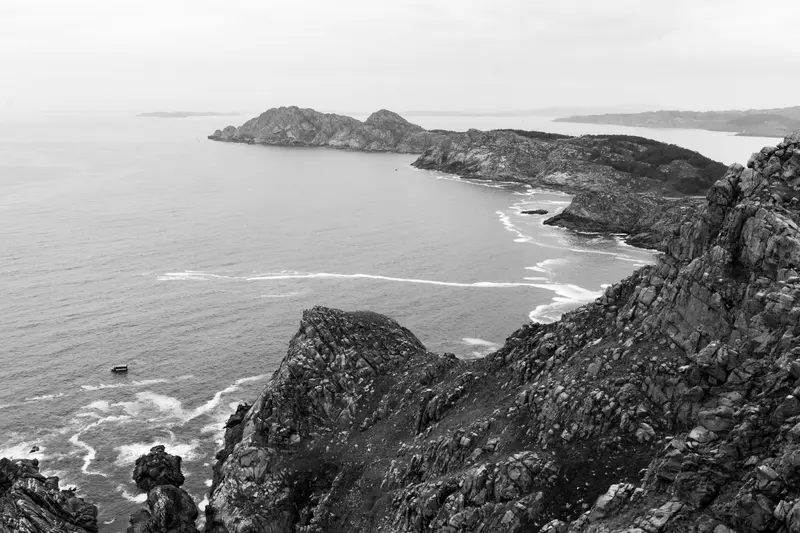
Galicia’s Atlantic Islands
The national park includes Cíes, Ons, Sálvora and Cortegada. On Cíes you can visit Rodas beach and head uphill on paths towards the lighthouses. On Ons, combine time near the small settlement with a walk along the cliffs. Sálvora and Cortegada have different routes and access arrangements. Pick the island according to the sort of walk you want and the boat you can actually catch.
In 2026, the Xunta’s guidance for regular passenger boats required visitors to obtain authorisation under the arrangements for their travel date. Check that the sailing and permission are both confirmed. Leave time to get back to the quay and carry water, food and a light rain layer. Stick to marked trails, especially near cliffs and dunes, and take your rubbish back with you.
Atlantic woodland, mountains and wetlands
The Fragas do Eume, near Pontedeume, offer a walk alongside a river and under an Atlantic forest canopy. The hills of Os Ancares and O Courel offer a quite different day. The elevation affects temperatures, daylight and the condition of paths. Choose a particular valley or pass and have a return plan before starting the walk.
For birdwatching, try a sheltered place overlooking a stretch of tidal water or a wetland in A Terra Chá and stay long enough to see what changes. Bring binoculars so you can watch from a distance. If you are going with a dog, check the conditions for the particular reserve or path. Keep away from places where birds are settling and feeding, even if a strip of mud seems easy to cross.
Beaches in Galicia
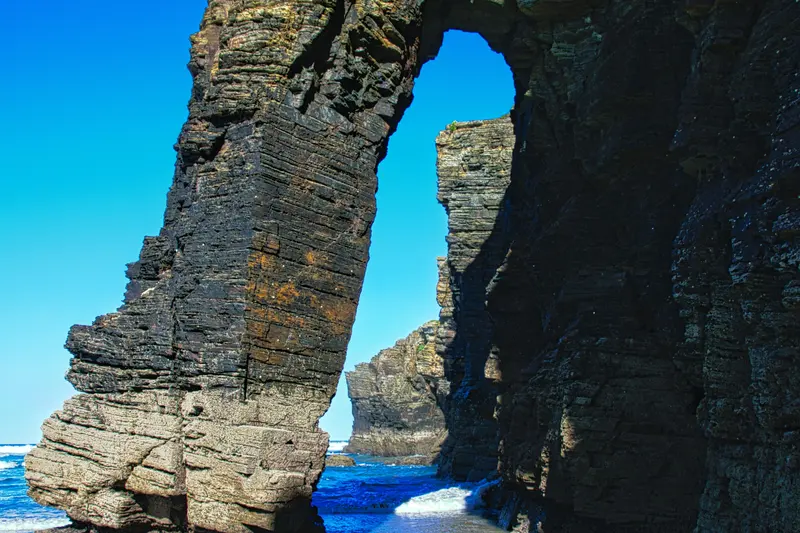
City sand, estuaries and open ocean
For a beach you can reach from the city, start with Riazor in A Coruña or Samil in Vigo. You can spend time on the sand and still have an evening in town. Check the sea and wind on arrival. If you are carrying a picnic and beach gear, look for a spot that makes the return easy and gives you some options if the weather changes.
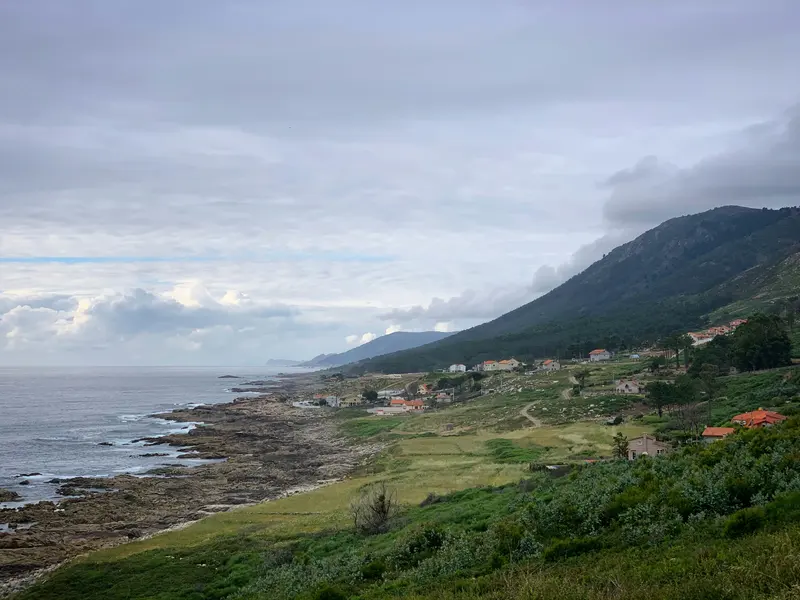
In the Rías Baixas, A Lanzada offers a long walk on an exposed shore. Compare it with a more sheltered beach inside the estuary if swimming is the main plan. On the Costa da Morte, visit Carnota to see the wide beach in the context of the low ground behind it. Use the boardwalks and watch the wind before planning a full afternoon on the sand.
Getting the timing right at As Catedrais
At As Catedrais, near Ribadeo, a falling tide reveals cliffs shaped into passages and arches. In 2026, the Xunta required free authorisation at Easter and from 1 July to 30 September. Check the tide time for the day you can travel, then look at authorisation. Follow on-site instructions and pay attention to sea conditions even when you have a booking. You need time to turn back before the incoming water cuts off any part of your route.
Keep an alternative nearby, such as a walk in Ribadeo or a stop further along A Mariña. From above the shore, use the designated viewing paths. Decide whether to descend after you have seen the conditions in person. Photographing the cliffs from the top can still be worth the trip if it is too rough to reach the sand.
Festivals and traditions
In Santiago, 25 July 2026 was the central day of the celebration of St James. Religious events and a cultural programme bring extra activity to the city centre. Look up your year’s schedule and identify the squares hosting the events you want to see. If you are staying in the old town, ask how to reach the accommodation with a bag on busy days.
Lugo held San Froilán from 4 to 12 October 2026, with events in the streets, music and activities for children. It is an occasion to see the wall and cathedral alongside a working festival, perhaps with a long octopus lunch in between. Read the schedule for the sites as well as the times and allow for people walking between venues.
The Festa da Vieira in Cambados ran from 16 to 19 July 2026. The Feira do Viño do Rosal ran from 17 to 19 July 2026. A scallop festival and a wine fair bring attention to different sorts of local work. If your trip revolves around one of these events, leave time for a meal and a walk through the town. Make arrangements for the journey back if you plan to taste wine.
What to eat
Fish, shellfish and market lunches
At a coastal market, ask what fish has come in and how people prepare it locally. The rafts you can see on Arousa explain why mussels feature so often around the estuary. Supplies vary from one market to another. If somebody offers shellfish by weight, ask how much the portion weighs and how it is prepared before you order. For a table of several people, shared plates give you an idea of portion size as you go.
Polbo á feira is octopus with oil, salt and paprika. Try it at a fair or a specialist restaurant and look for other preparations if you head to the ports. Empanada is a filled pie sold in slices at many bakeries. Ask about the filling. It may be fish, shellfish or meat. It travels well if you want to have a picnic between stops away from the towns.
What to look for inland
On a cool day, lunch might be caldo galego, a soup with greens, or lacón con grelos, pork with turnip tops. In the afternoon, plan around a proper break and remember that meal times can be later than at home. Tarta de Santiago is an almond cake, and filloas are thin pancakes associated with Carnival. Ask what a bakery or kitchen makes itself.
For Galician wine, get to know the areas as well as the grape names. Rías Baixas is associated with Albariño, Ribeira Sacra with Mencía and river terraces, and Valdeorras with Godello. Ribeiro is a useful focus for a wine trip around Ribadavia. Buy cheese towards the end of a driving day if you can keep it cool, and ask what will travel well if you are taking it to your next base.
Sport and outdoor activities
For a coast walk, start with a section with a manageable end point. On the Costa da Morte, trails near the lighthouses can cross sand, grass and exposed rock in a single outing. On Camino stages, check where you can fill a bottle or get food between villages. Download a map for either type of walk and set a time to turn round if you are returning to the same start.
For surfing, choose a school or beach according to conditions and ability. A lesson helps newcomers get started on a suitable part of the shore. Kayaking inside an estuary requires a look at wind and current even when the water seems calm from the quay. Work out the return distance and give yourself extra time to get back. Adopt the same approach in a mountain valley, with an offline map and a shorter route in reserve.
Routes and itineraries
Three days from one base
Spend day one in Santiago and day two in A Coruña or Pontevedra. Use the third day to walk a little of the Camino or visit a nearby estuary with a return arranged. If one day looks consistently wet, use that day for the most flexible city itinerary. A single hotel works well when you plan to spend just one day in each of two other places.
Five days with two bases
Try two nights in Santiago and three near an estuary. On the north or west coast, choose between a day in A Coruña and outings to a port and lighthouse on the Costa da Morte. In the south, share the time between a small town, a beach and an island if the boat works. Mark the farthest two points on a map before picking a base. Moving a few streets nearer the waterfront can make each evening easier.
A week divided between coast and country
Start in Santiago, continue to the Rías Baixas or A Mariña, then finish near Ribeira Sacra. Give each part at least one clear day and use days between bases for short stops. If the gorge is the focus, plan distinct days on different banks. A final city visit can work around your departure if there is time to leave the luggage and take a specific walk before going to the airport or station.
Travelling with children
A small harbour, a market and a beach nearby make a good day with plenty of variety. Look for the supports of a raised granary, pick out coloured boats from the sea wall, or count gateways during a section of the walk around Lugo. For an island visit, work out the distance from the quay to your lunch stop. On the coast, check whether the path has any narrow parts and choose a shorter walk if needed.
Have a museum or market visit available for wet weather. That is much easier if you can get back to your base without circling an entire estuary. For a pushchair, ask about cobbles, steps and access at the quay. Being within walking distance of dinner is also helpful after a day when everybody has already spent plenty of time outside.
Where to stay in Galicia
Santiago or a coastal city. Santiago combines a walkable old town with the option to head on to several parts of Galicia. A Coruña suits a visit with plenty of time by the sea. Pontevedra puts its own old centre and estuary within reach, while Vigo is better placed for the far south. Ask about bag drop-off if you book in a pedestrian area.
A harbour or a small town. If you want to eat by the seafront most evenings, look at the walk from the accommodation. If the beach matters more, check how you get down to the sand with a bag. For a boat trip, look for accommodation near the actual quay you will be using. A small move on the map can make for a much easier morning.
River country. Ourense and Monforte de Lemos are convenient for town facilities and separate outings into Ribeira Sacra. A village stay puts the landscape outside your door. Check whether you will pass a place to eat on your way back and how long the drive takes from the last viewpoint. If crossing the river more than once, look for a base on a practical route to the bridge.
See places to stay in Galicia (opens in a new tab)Affiliate link: if you book through it, we may earn a commission at no extra cost to you.
Practical tips and common mistakes
Plan around banks and peninsulas. Estuaries, reservoirs and mountains can set the pace of the trip. Make a shortlist in each area and group nearby visits. Save the location of the car park or start of the path as well as the name of a monument.
Check tides, access and transport separately. Low tide affects the hours you can see the rock formations. A permit answers a different question, and a boat ticket tells you when you need to be on the quay. In the colder months, check what will run on your day of travel before committing to a remote base.
Carry a dry layer and shoes with grip. A café terrace and a headland can feel like different seasons on the same morning. Put spare clothing in a dry bag if you will be near the water. Save maps and basic instructions before setting off to the wilder stretches.