Español
 English

Why visit Aragon
The things to do in Aragon fall into a few rewarding journeys. For architecture, follow brick and glazed tiles from the Ebro through Zaragoza to Teruel, stopping at small churches along the way. For landscapes, go from the sheer red towers of Riglos to the limestone gorges of Guara and the wooded floor of Ordesa. The river itself suggests a different trip, through market gardens and old riverside settlements towards the eastern edge of the region. Give each journey a few days and let it guide your choice of base.
Zaragoza province gives you the regional capital, the Cinco Villas district and long stretches of the Ebro. In Huesca province, fortress walls above the plain give way to steep valleys and waterfalls. In Teruel province, the roads lead into several quite distinct districts. Albarracín and Matarraña both reward an overnight stay, when you can walk out for dinner or go back to a favourite viewpoint without a long drive afterwards.
This is an easy region to shape around one interest. A weekend in Zaragoza or Teruel can concentrate on the layers of a compact city. A walking trip can be based in one valley, with short outings and one whole day on foot. Families can alternate indoor visits with time by a river or in a village square. For a trip built around food, look for the vegetable markets of the Ebro, then move on to an area of vineyards, olive groves or upland pastures. The countryside makes more sense once you have seen what arrives at the table.
When to go
Spring and autumn along the Ebro and in the hills
Spring favours long afternoons on foot in the towns along the Ebro. Keep one indoor visit for a damp or chilly spell and spend the brighter hours outside. Further north, the same week can bring melting snow, mud and stronger flows in mountain streams. If you are coming up from Zaragoza, have a second plan for the mountain days. Jaca and the churches at Santa Cruz de la Serós can fill a day when a higher walk would depend too much on cloud or snow conditions.
In autumn, plan around the earlier evening in places where it matters most. Spend a morning in a wooded valley and leave a short town walk for later. The plains around Gallocanta offer wide skies and the chance to watch birds in a very different landscape. Take a windproof layer if you will be standing by a hide for some time. For a visit to Zaragoza during the Fiestas del Pilar, check the council calendar before booking and allow for crowds near the main square and procession routes.
Early summer starts and lower winter walks
In summer, plan time outdoors before the streets and exposed tracks heat up. You can pause for lunch or see a museum in the middle of the day in Zaragoza or Teruel. In the mountains, check the forecast at the height of your planned walk. The weather on the valley floor can give a misleading impression of conditions on an exposed slope. An early start is especially helpful when the walk has long stretches without shade.
In winter, build a trip around the conditions you want. Zaragoza has indoor sights for days when the local wind, the cierzo, makes riverside walks less appealing. A ski holiday in Huesca or Teruel depends on the approach road, the state of the runs and where you can hire equipment. For a quieter winter weekend, pick a historic town with places to eat nearby and allow enough daylight for the drive there and back.
Getting there and around
By train and air via Zaragoza
Zaragoza-Delicias is the easiest rail gateway from Madrid or Catalonia. In 2026, Renfe lists routes from Madrid to Zaragoza and from Zaragoza to Barcelona. Search for the leg that matches your point of arrival. Allow for the onward journey from Delicias station to the old town or your hotel. If you want a city break followed by a few rural days, you can arrange to pick up a hire car when you are ready to leave Zaragoza. Check one-way arrangements if you are ending the trip elsewhere.
Zaragoza has its own airport. In 2026 the airport operator Aena lists a bus connection into Zaragoza with a stop at Delicias railway station. Look at the whole arrival day before deciding whether to fly there or continue by rail after a flight into Madrid or Barcelona. Include the transfer from the airport to the station, time for baggage and a buffer between separately booked tickets. A late flight is often easiest with a first night in the city where you land, especially if your next stop is a rural village.
Between valleys and villages
The regional government’s bus network map is a starting point for trips away from the main railway. Check the named stop, the day of service and the timetable for the return direction. Rural services may leave you in a village some distance from the trailhead. If you want a few car-free days in one valley, a booked lift from the nearest station can open up places where you can eat and try several walks from your accommodation.
If driving, link places on the same approach road. Huesca is a natural waypoint from Zaragoza for many central Pyrenean journeys. Drives across Teruel province can themselves take up a useful part of a day, especially when you make time for a village along the route. Zoom in to find the bridge, pass or final junction before committing to two stops on the strength of the straight-line distance. Keep a note of the parking location for each stop, especially where the old town is largely on foot.
What to see in Aragon
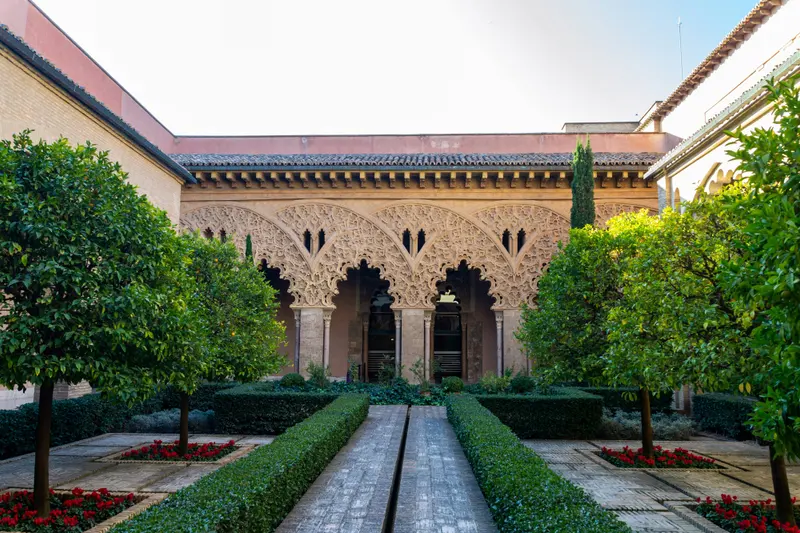
Zaragoza from Puente de Piedra to the Aljafería
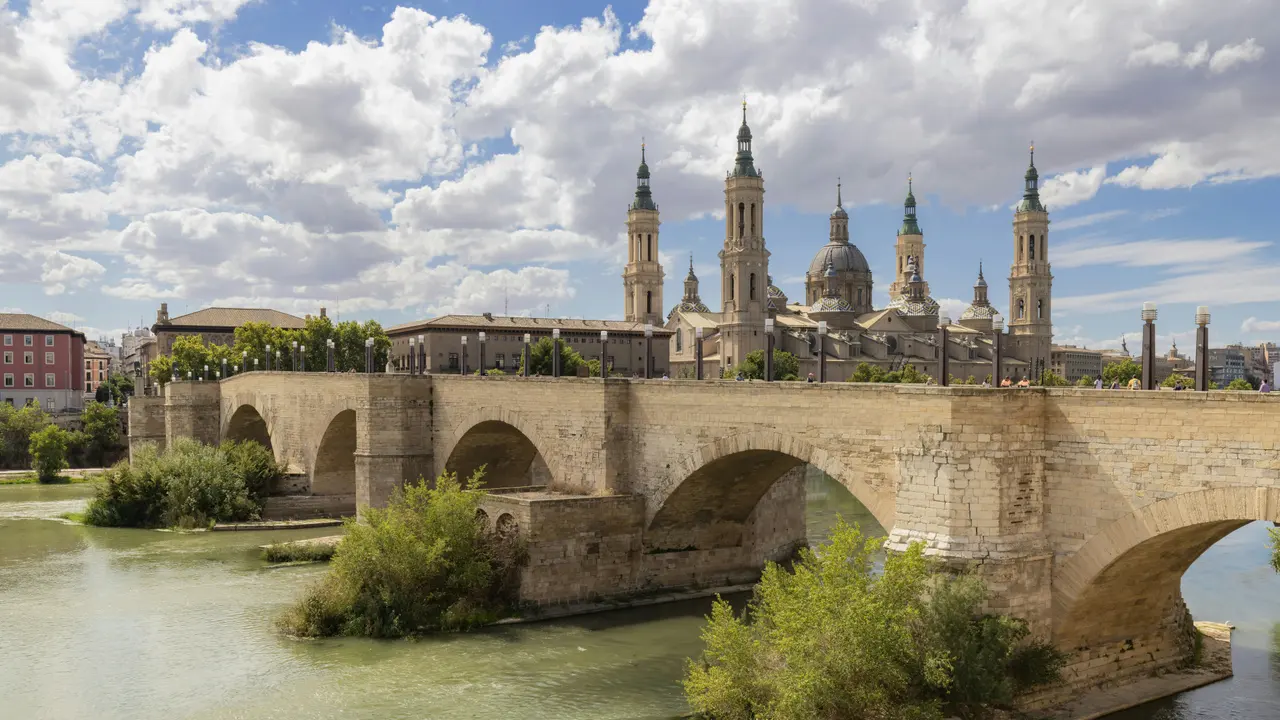
Start opposite the Basilica of El Pilar on the Ebro. Puente de Piedra brings the river, the stone arches and the basilica’s roofline into the same view. Cross to the square, then head towards La Seo, Zaragoza’s cathedral, and look at the outside wall of its side chapel. Brick, stone and patterned tiles register differently as you walk round the corner. Before leaving the city centre, look for the sites associated with Roman Caesaraugusta. Seeing where the river and old settlement meet is part of the value of the walk.
The palace of the Aljafería sits away from that riverside group. Inside the walls, take your time moving from the open courtyard to its shaded rooms. The dimensions and detail feel different from the broad square around El Pilar. Check the palace’s visitor information for your date before you arrange the day around it. With an afternoon and a following morning, see the riverside landmarks on foot and keep the palace with its own visit time for the next day. To hear how the different parts of the city developed, look for guided walks in Zaragoza.
The central Pyrenees around Torla and Aínsa
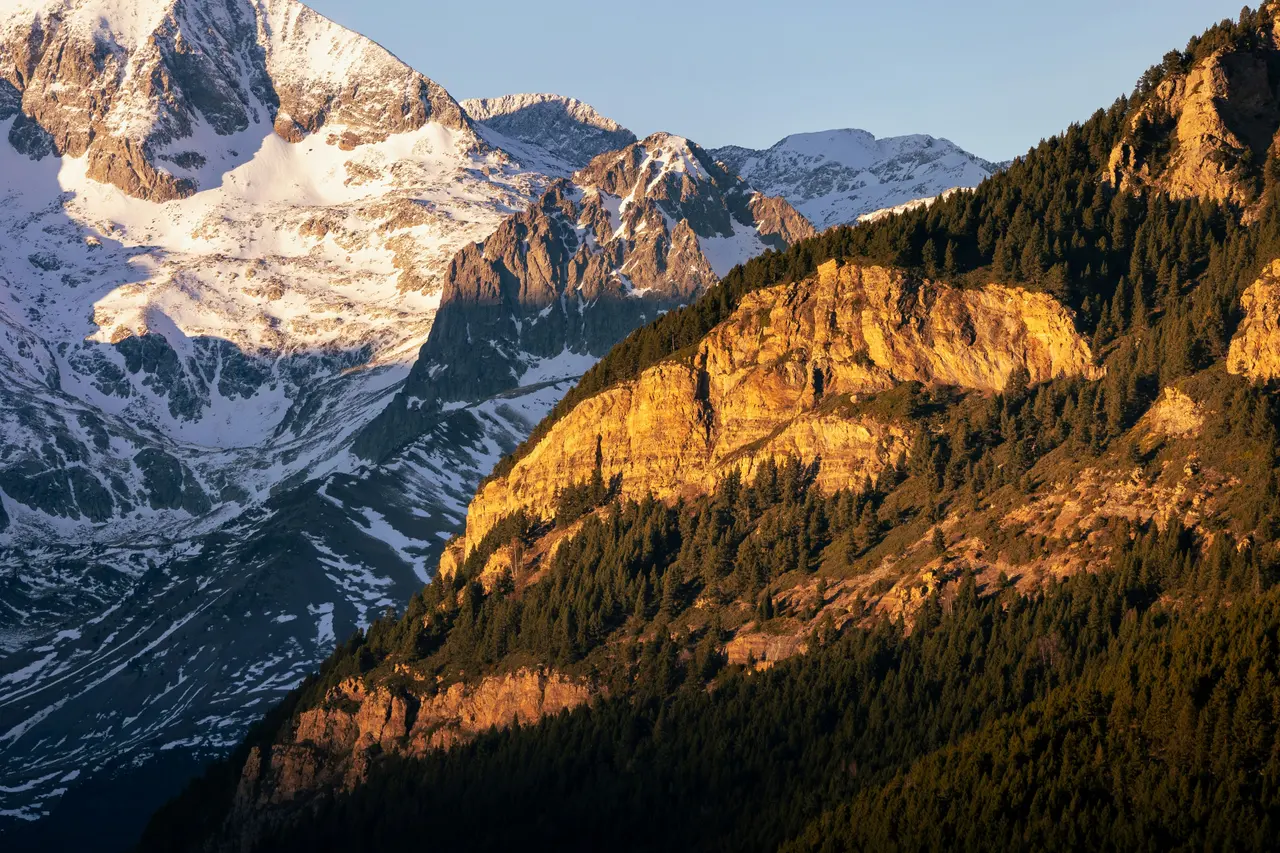
Torla-Ordesa is the approach to the Arazas valley. From the meadow at Pradera de Ordesa, the valley walk leads past trees, rock walls and successive cascades. Pick one point at which you can turn round, then see how the day goes. Allow time beside the water and at junctions. Check park notices for access to the meadow before leaving your accommodation, particularly if the walk depends on the timing of a transfer.
Aínsa is useful if you want to see several parts of Sobrarbe. The upper square leads towards the castle, with views that help place the rivers and the surrounding country. Escuaín, Añisclo and Pineta are separate outings. Work out which trail or viewpoint you want before selecting an entrance, and base yourself nearest to the sector where you are most likely to start early. A late afternoon in Aínsa can then be a welcome contrast to a morning around waterfalls or a gorge.
Teruel and the bend in the Guadalaviar
In Teruel city, start by the Escalinata staircase and walk up towards the tower of El Salvador and Plaza del Torico. Continue to the cathedral and San Pedro. Seen from street level, the bands of ornament show how brick and glazed pieces work together. Leave enough time to see at least one interior if you are here for the architecture. The wooden structures and the decoration you see inside tell a different part of the story from the towers.
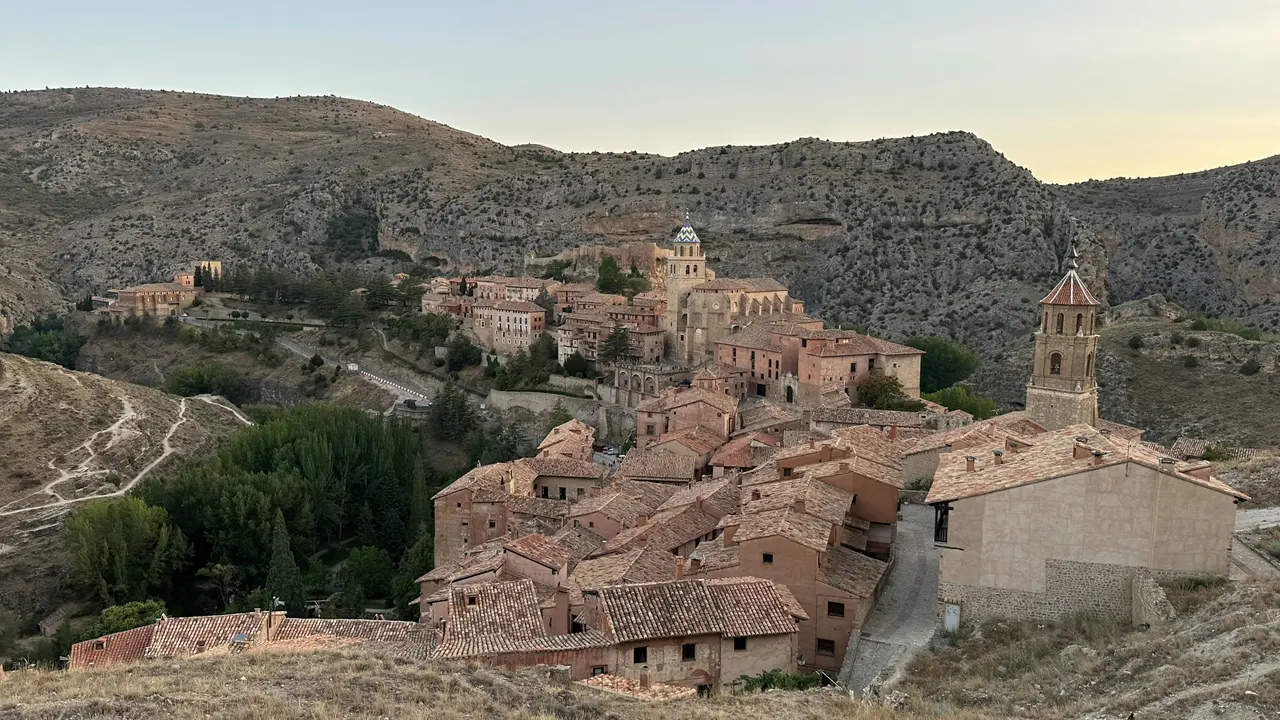
At Albarracín, the Guadalaviar curves around the historic town and the walls climb the slope behind it. Walk through the old streets, then try a route by the river to see the hill town from another level. The nearby Pinares de Rodeno protected landscape adds red sandstone and pinewoods. Check where you will park for the town and for the protected area separately. A night in the district leaves time to see both and make the woodland outing in better light.
Monuments and heritage
Loarre and a Romanesque monastery under a rock
Loarre Castle stands where the plain gives way to the foothills. Look from the lower approach to see the outline of the defences, then notice how a church and living quarters fit into the same slope. Take a minute to look back over the country from inside the complex. The view explains the castle’s position. On the same day, a walk below the cliffs at Riglos or a pause in a nearby village adds another view of the foothills.
Near Jaca, make sure you have the old and new monasteries of San Juan de la Peña marked separately. The overhang at the old monastery determines how parts of it are built. Look for the thickness of the supports and the carved capitals in the cloister. The churches of Santa Cruz de la Serós and Jaca Cathedral make good companions to that visit. Compare the approach to a building set into a rock shelf, one facing a village and one at the heart of a substantial town.
Mudéjar brickwork from the Ebro to the Jiloca
The UNESCO listing brings together examples of Mudéjar building from different places and periods. In Zaragoza, compare La Seo with the Aljafería. In Teruel, walk from the tower of San Martín to El Salvador. Churches in the Calatayud area offer further examples in smaller settlements. They differ in their history and use, so identify what is normally visible from outside and check access for any interior you especially want to see.
A themed half-day can focus on two or three buildings and a detail common to all of them. Look at the placement of the bell openings, the shadow thrown by a course of raised brick or the way glazed pieces look at different angles. Across a narrow street you can take in the whole tower, then return to its base to see the individual pieces. Try more than one approach to a building if the light is important to you.
Museums and culture
In Zaragoza, the sites grouped under Caesaraugusta reveal pieces of Roman Zaragoza below the modern street level. In Fuendetodos, the village where Goya was born adds a smaller-scale visit connected with the painter. Check what is open on the day before combining the two sides of a trip around art. A visit based on printmaking can be very different from a day mainly about the village and landscape.
Dinópolis in Teruel makes palaeontology approachable through specimens, reconstructions and family activities. Check whether the attraction you want is at the main site in Teruel or at a satellite site elsewhere in the province. In Huesca, the provincial museum fits a walk around the cathedral. Local visitor centres can also make a useful first stop in a district, particularly if you want help putting the landscape, settlements and routes into context.
Charming villages
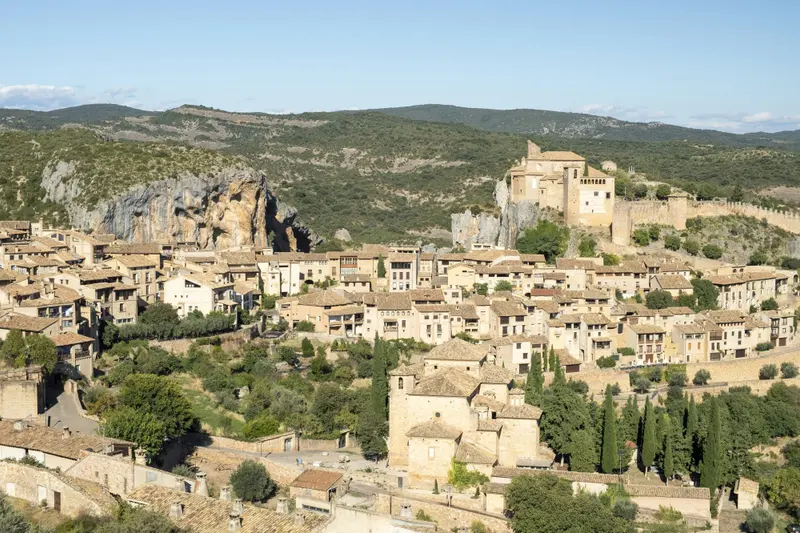
River crossings in Alquézar and Valderrobres
Look at Alquézar from the approaches before you go into the streets. From a distance, you see where the collegiate church sits in relation to the gorge of the Vero. Walk through the village first if the heritage is your priority. Treat the walkways as a separate outing and check the conditions of access. The climb inside the village already provides a chance to see the ravine from above.
In Valderrobres, cross the bridge into the historic streets and follow the slope to the castle and church. Come down to see how the buildings step upwards from the river. Beceite brings you closer to the hills and ravines of the Ports. In La Fresneda, give yourself time to go beyond the square and look along the covered passages. Together the villages offer a picture of how farmed land, slopes and water shape the eastern edge of Teruel province.
Stone streets in Cinco Villas and the south
In Sos del Rey Católico, narrow streets open out to views of the fields. Uncastillo gives the same journey a Romanesque focus, with church doorways and buildings fitted to the slope. See each on foot and allow one for the morning and one for the afternoon. A second day can take you further into the Cinco Villas district.
In the south, learn the difference between Mora de Rubielos, with its castle and former collegiate church, and Rubielos de Mora, where a walk between gates and squares sets the pace of a visit. For another day of upland scenery, combine Cantavieja and Mirambel in the Maestrazgo. The first makes good use of its high position. The other draws the eye to gateways and enclosed spaces. Give the road between them a place in the day and leave time to park outside older streets.
Nature and protected areas
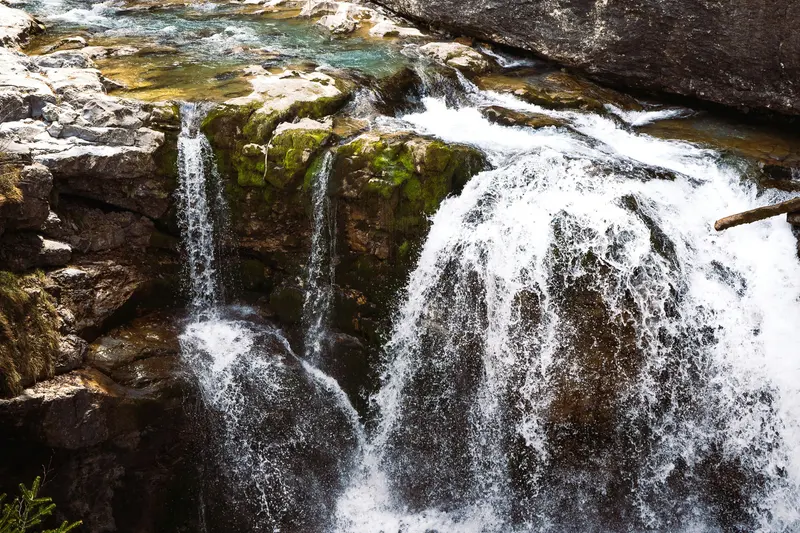
Ordesa, Añisclo, Escuaín and Pineta
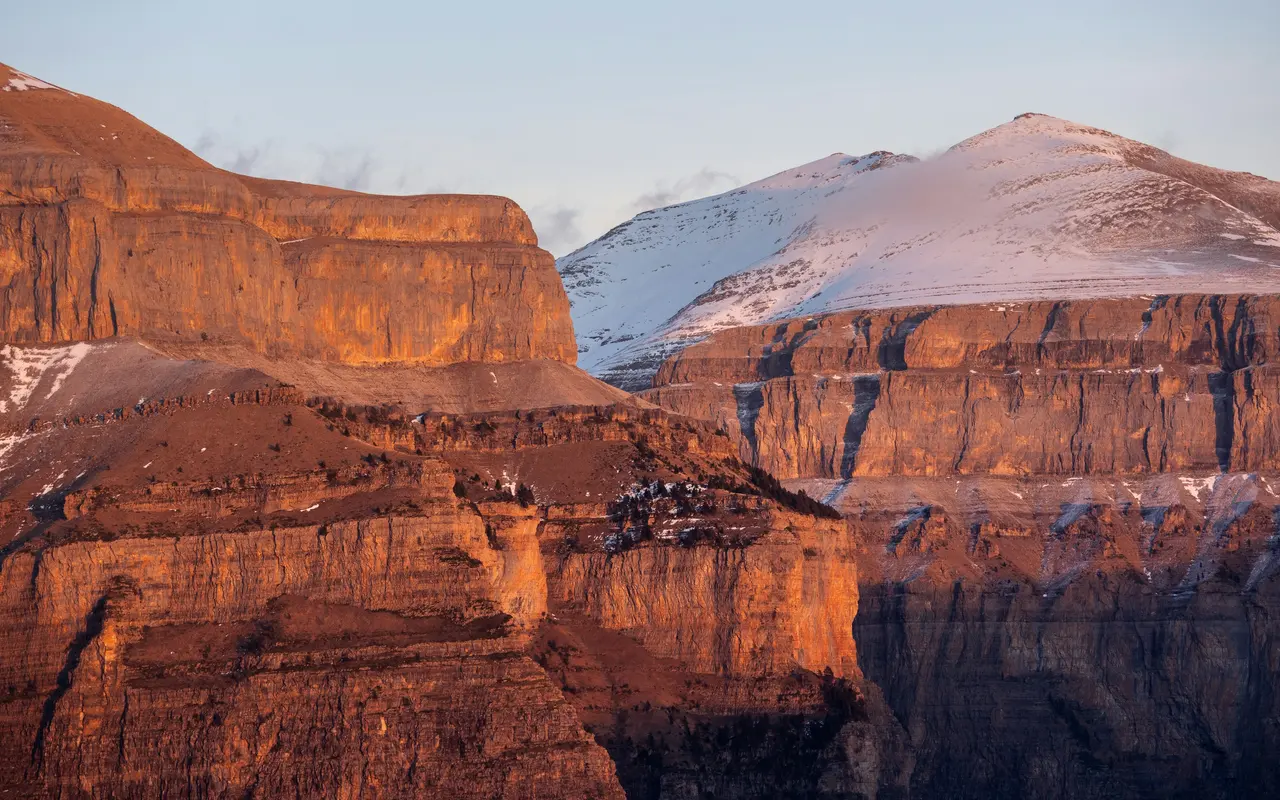
Ordesa and Monte Perdido is a national park with four separate sectors. Pick the river valley or gorge you want, then find the right entrance on the park’s official maps. Torla is the approach to the Ordesa valley, and Bielsa is the starting point for the road into Pineta. Añisclo and Escuaín need their own access checks. Save the correct starting point offline. A bus stop, car park and trailhead can all have similar names even when they are some way apart.
In Ordesa you tend to hear the water before the cascades come into view. Pineta has walls high enough to appreciate from the valley floor. Escuaín lets you look down into its gorge from viewpoints. On a first trip with limited time, use these differences to decide where to go. Longer and higher outings call for extra preparation, equipment that suits the terrain and a weather window.
Guara, Moncayo and the lagoon at Gallocanta
Guara has limestone ravines and cliffs within Mediterranean scrub and woodland. For a birdwatching stop, use a designated viewpoint and leave yourself time to follow movement across the cliffs. The shade and heat of an exposed track can determine whether you go out before or after seeing a village. A park information centre or the official area map can help distinguish valleys that look similar when seen from the road.
Use Tarazona or the monastery of Veruela to anchor a visit to the Moncayo. You can see how the slopes are wooded at different heights even on a short outing. Further south, Gallocanta is about distance, water and open sky. Search for the points set aside for viewing, and adjust your choice to the wind and light. Bring binoculars so you can stay far enough away to let the birds settle.
Festivals and traditions
Zaragoza held its Fiestas del Pilar from 10 to 18 October 2026, according to the city council. In the 12 October flower offering, participants travelled on foot from the area of Paseo de la Independencia towards Plaza del Pilar. You can watch people arrive along the streets or go to the square to see how the flowers build into a display. The council programme distinguishes these kinds of public event from activities in other parts of town.
For a future trip, look up the festival programme for that year before choosing where to stay. Allow time on foot around the route if you want to watch a procession, and have a separate day for the city sights where you particularly want space or a fixed entry. You can also put the rural part of the trip in the middle of the festival and use Zaragoza for a night at either end.
The jota is a form of song and dance associated with Aragon. A concert, an outdoor show and a performance during a smaller festival can give you quite different introductions. Ask locally about music if you are travelling outside a city festival. Check the municipality as well as the event name, since celebrations for the same patron can be held in several villages.
What to eat
From the market gardens and the oven
Look for borraja, or borage, in a market or on a menu. You can try it with potatoes to appreciate its texture. Ask about the local vegetables in season before choosing a restaurant around one dish. Ternasco is young Aragonese lamb. It can come from the oven with potatoes, and it is worth checking the size of the serving when you order for the table.
In central Zaragoza, tapas let you try several small dishes in an evening. A longer lunch suits a roast or a dish you want to share. In rural places it helps to pick up food before driving to the trailhead and check when you will next find an open shop. In Spain lunch and dinner may start later than you expect, especially if you travel with children. Make a plan for the gap between getting back to your accommodation and eating.
Ham, oil, fruit and wines with a place of origin
The name of the product can point to your next stop. Teruel ham, Bajo Aragón olive oil, Calanda peaches and black truffles link different landscapes in the south. Peaches and truffles are reasons to travel in different seasons. If buying food to bring home, think about whether it needs to stay cool and how you will pack glass bottles or jars.
For wine, look at Somontano around Barbastro, Campo de Borja near the Moncayo foothills, and Cariñena or Calatayud further south and west. Each makes sense as its own itinerary with one base. Decide what you want to learn about a wine before booking a visit. A short tasting and a tour through the vineyards involve different amounts of time, and if you are driving it helps to agree on the arrangements before the visit.
Sport and outdoor activities
For an introduction to a Pyrenean valley, pick a walk that starts close to where you are staying. Compare the gradient, surface, weather and time for the whole return journey before trying something longer. A path that climbs from open pasture into a gorge can change character within a short distance. Read the route description with the map and note where you can turn back.
Guara is known for canyoning, and Riglos for climbing. Ask a qualified guide to match a first outing to the conditions and the least experienced member of the group. Both landscapes are also enjoyable from waymarked paths on foot. For cycling, the Via Verde de Ojos Negros follows an old railway corridor in the south. Choose the part you want to ride and arrange collection if you have hired bikes to go one way. Ask about lights where a route has tunnels.
Zaragoza offers a lower-commitment ride by the Ebro if you want to spend a morning outside. Make it as long as suits the weather and your plans for the afternoon. For a winter trip in the mountains, check current resort and road information before you decide on the day for skiing, especially if you are travelling with beginners or need to rent equipment.
Routes and itineraries
Three days in Zaragoza and around
Use Zaragoza as a single base. Spend the first day on El Pilar, La Seo and both banks. See the Aljafería on the second morning and use the afternoon for Roman sites or the old streets. On day three, choose Fuendetodos and Belchite for a drive with a historical focus, or Tarazona and Veruela for architecture. For a car-free outing, arrange the outward and return journey before choosing the other visits.
Five days with a mountain or southern base
After two days in Zaragoza, head for Jaca and use a day for Loarre or San Juan de la Peña. For the next two days, consider Canfranc and a walk in the same valley. If Ordesa is your main reason for coming, go directly to Torla or Broto and pick the walking day from the forecast. For a southern version of the trip, choose Teruel city, Albarracín and a day in the Rodeno pinewoods.
A week across the region
Allow two days for Zaragoza, two for a single area in Huesca province and three for the south, with transfers included. Pick one break on the drive from the Pyrenees to Teruel. In the south, stay near Albarracín or in Matarraña for part of the trip, depending on which attracts you more. With an extra night you can give both districts some time and use Alcañiz or Valderrobres as the last base on a journey east.
Travelling with children
Pair one indoor visit with a walk or a space to run around. In Zaragoza, try to pick out the towers from the far bank of the Ebro after looking at them in the square. In Teruel, allow a day for Dinópolis and plan a short walk in town whenever the group still has energy. A hunt for a green tile, a figure or a pattern in the bricks makes a good way to look at the city.
In Huesca province, choose a turning point the children can picture, such as a bridge, clearing or first waterfall. That makes it easier to shorten an outing if anyone gets tired. For evenings, look for accommodation with somewhere to play or an easy village walk from the door. Reaching a square or riverside without moving the car gives the day a natural end.
Where to stay in Aragon
Zaragoza for rail travel. The central area puts evening meals and the historic streets within walking distance. Staying near Delicias makes sense if you are leaving on a particularly early train. In the old town, ask where you can drop your bags and park if coming by car.
One Huesca valley for several days outside. Jaca suits the Aragón valley and San Juan de la Peña. Torla and Broto put the Arazas closer. Aínsa gives you access to separate parts of Sobrarbe, with some driving between them. For Benasque or Tena, consider moving closer to the walks before the morning you plan to set out early.
Teruel city, Albarracín or Matarraña. Teruel city works for its own sights and trips towards Gúdar and Javalambre. Albarracín is the better fit if you want early views of the town and time among the pinewoods. Look at Alcañiz and Valderrobres for the east. Check dinner arrangements where you expect to be after the last stop of the day.
See places to stay in Aragon (opens in a new tab)Affiliate link: if you book through it, we may earn a commission at no extra cost to you.
Practical tips and common mistakes
Save the exact place. On the map, mark the parking area, station, viewpoint or monument entrance as well as the town. The same name can mean a city, province, valley or river. Download the map in advance for outings away from main roads.
Plan what happens at the far end. For a one-way ride or walk, confirm how you will return. For an out-and-back outing, budget for the distance in both directions. Keep a shorter, nearby alternative in mind if rain, heat or a change of access cuts into the day.
Leave a gap in each day’s plan. A stop at a market, a closer look at a cloister or a riverside stroll often makes sense once you arrive. Driving from one district to another also uses part of the day. For each base, choose the places you want enough time to explore on foot and plan the final drive with daylight in mind.