

 Español
 English

Why visit Zaragoza
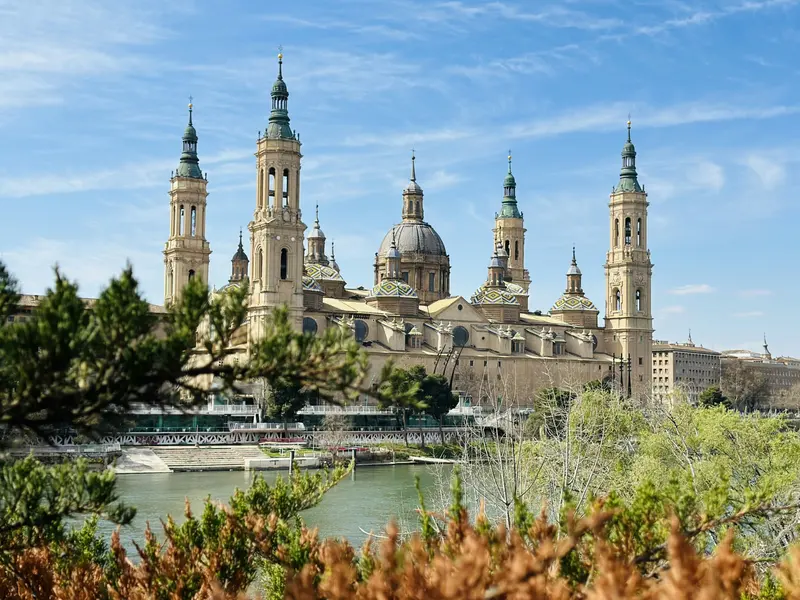
Start with the Ebro if you are deciding what to see in Zaragoza. From the stone bridge, or Puente de Piedra, you can see how the domes of El Pilar sit above the waterfront. Walk back through the long plaza and you pass a Renaissance exchange, a second cathedral and the entrance to an underground Roman forum. That short walk gives you an idea of how the city grew, and how much of its story is still visible from the street.
The capital of Zaragoza province makes an easy first stop in Aragon. It fits naturally into a rail trip across Spain, but the cathedral square is only the first part of a weekend here. Give the Aljafería palace a visit of its own and leave enough daylight to see the river from both sides. With a third day you can look beyond the city to the towns around the Moncayo or the hill villages of Cinco Villas.
Zaragoza works especially well if people in your group want different things from the same trip. A Goya fresco and a Roman river port are a short walk apart. Somebody who prefers to spend the afternoon outside can catch up with the rest of the group by the bridge. For an introduction to the brick-and-ceramic architecture known as Mudéjar, start with La Seo and follow the thread into the nearby streets.
When to go
Spring and autumn
Spring and early autumn let you spend much of the day outside. The cierzo, the wind channelled along the Ebro valley, is more noticeable on the bridge and in exposed squares. If the crossing feels uncomfortable, look back at the basilica from the nearer end of the bridge, then head into the old town. On a still day, carry on to the Balcón de San Lázaro on the north bank to see the bridge and cathedral in the same view.
October has a different character around the Fiestas del Pilar. For a festival trip, choose the events you want to see and mark where they take place. For a sightseeing trip during the same week, build in time to get across the centre and put one of your main visits outside the cathedral precinct. The Aljafería and a Roman museum give you two separate points around which to organise the day.
Summer and winter
In summer, cross the Ebro in the morning or later in the afternoon. The bridge, cathedral square and stretches of the Expo grounds offer little shelter from the midday sun. Keep one indoor visit in reserve, particularly if you want to make a longer walk through Parque del Agua. A smaller outing can be as simple as walking across the bridge and returning to the sheltered streets behind the riverfront.
In winter, the short distances between the Lonja and the cathedrals make it easy to switch between an indoor visit and a walk. Keep the more exposed parks for good visibility. At Parque Grande, the view along the fountains and up towards the monument to Alfonso I gives the park a clear layout. You can get a sense of the place from the lower path if you prefer to skip the climb.
Getting there and around
Arriving by train or plane
Look for Zaragoza-Delicias when booking a long-distance train from Madrid or Barcelona. The station is west of the historic centre. Allow for the last leg if you have luggage, especially if your accommodation is near the bridge or La Seo at the far side of the old town. Zaragoza Airport is outside the centre. Check the airport operator’s ground transport advice for the date you are flying.
In the old town, Calle Alfonso I makes a good landmark. It runs from the basilica square towards the Coso. The cathedral precinct, Roman sites and the east end of the riverfront are close enough to cover on foot. The tram is useful if you also want to spend time towards the south. For an Expo visit, use the particular building or entrance in your directions. The area covers a large bend in the Ebro and walking between its far ends takes part of an afternoon.
When a car helps
A car comes into its own on provincial excursions, especially if you intend to visit two places on the same day. If you are combining rail and driving, consider collecting the car when you leave the city. If you arrive by road and plan to spend the first day around El Pilar, check where you can leave the car and walk from there. For the Aljafería, planning around the palace entrance makes more sense than measuring the distance to its nearest outside wall.
What to see in Zaragoza
El Pilar, the Lonja and La Seo
Approach El Pilar up Calle Alfonso I if you want to see the street frame part of the basilica before the square opens out. Inside, look for the alabaster high altarpiece, the Holy Chapel and Goya’s Regina Martyrum dome. Try viewing the fresco from a couple of positions. Its figures are arranged for a curved surface and the composition looks different as you cross the floor.
Walk past La Lonja, the former exchange, to La Seo, formally the Cathedral of San Salvador. The side wall on Plaza de San Bruno belongs to the Parroquieta chapel and shows brickwork and ceramics that can be difficult to pick out from the main square. Walk around to see the relationship between the two façades. Inside, the chapels and alabaster altarpiece give a different impression of a building people often recognise from a photograph of its exterior.
The view across the Ebro
From the east end of the cathedral square, cross the Puente de Piedra and look back. The domes and towers align differently as you move along the bridge. Continue past the end of the crossing if you want enough distance to take in the trees and riverbank with the full skyline. The short walk towards the Balcón de San Lázaro helps you see how the bridge connects the old centre with the Arrabal neighbourhood.
Roman walls and the Central Market
At the other end of the Plaza del Pilar, look for the Roman walls, the Torreón de la Zuda and the Mercado Central. Walk out far enough to see the length of the surviving wall and then look at the market from the side. From here you can go straight into San Pablo or take the Coso and turn towards Calle San Jorge for the Roman theatre. Both are good continuations after the large square, with closer views and a greater sense of the way the streets fit together.
Monuments and heritage
A palace inside a fortress
From outside, the Aljafería is a circuit of walls and towers. The Patio de Santa Isabel inside gives you the scale of the eleventh-century Islamic palace. Look down the axis of the courtyard before walking towards the arches. The patterns once seen across a garden or a pool look much finer close up. Allow time to compare the court with the rooms built for later Christian rulers, where the ceilings give you another material to look at.
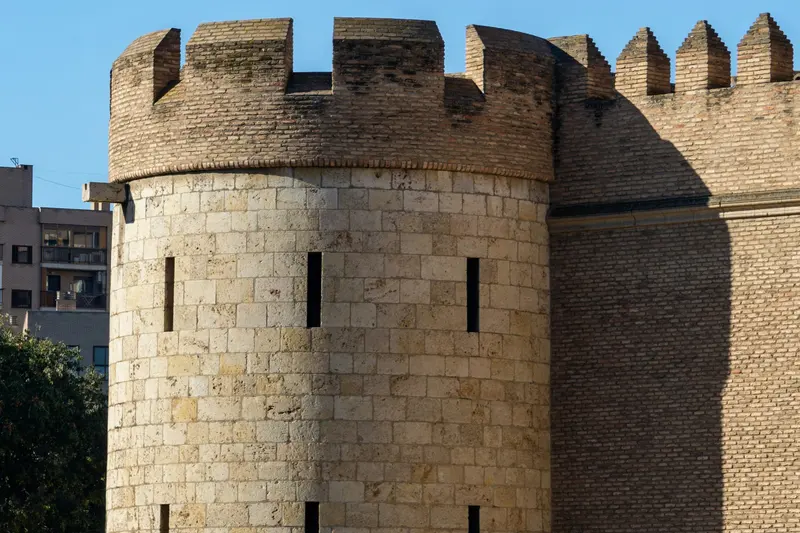
The palace also houses Aragon’s parliament. Check the official visit arrangements for your date and leave an unhurried window around it. If you are interested in how one building changed over the centuries, keep its outside plan in mind as you go from the courtyard to the later rooms. The wall you see from the street encloses buildings with several quite different functions.
Understanding Mudéjar architecture
The UNESCO listing for the Mudéjar Architecture of Aragon includes specific elements of the Aljafería and La Seo, as well as the church of San Pablo. At La Seo, look at the Parroquieta wall from Plaza de San Bruno. A few steps back help the repeated brick motifs come into focus, while a closer look shows the ceramic inserts. At San Pablo, see whether you can find a sightline down a neighbouring street that takes in the octagonal tower from base to top.
The tower of La Magdalena makes another good comparison in the eastern part of the old town. Look for where the bands of ornament change as the tower rises. Its position close to surrounding streets makes the view more dependent on where you stand than the open space at La Seo. These exterior stops work on the same walk, leaving you free to choose one church interior to explore in more depth.
Museums and culture
Four ways into Caesaraugusta
The Roman sites all belong to ancient Caesaraugusta. The forum and the river port are near La Seo. The public baths and theatre are further into the old town. Start at the forum for a sense of the Roman city’s public life or at the river port if you want to understand its position on a trading route. The theatre makes it easier to picture an event with a large audience. Follow the route between the two ends and imagine the services and shops that once filled the space between them.
You can enjoy just one or two of these museums. A port-and-theatre pairing lets you compare a commercial building with a public venue, while a forum-and-baths pairing puts civic life next to a more everyday activity. Keep the sites separate on your map. The entrances are set into modern streets and the walk between them is part of understanding what belonged where.
Sculpture, contemporary art and origami
The Pablo Gargallo Museum is in the Palacio de Argillo on Plaza de San Felipe. Move around one of the sculptures slowly. Openings between the sheets of metal change as you walk, and a surface that looked solid can disappear or reveal another edge. The IAACC Pablo Serrano, a separate contemporary art institution, is farther from the cathedral area. Check its exhibitions to decide whether to give it a quick visit or a whole afternoon.
At the Origami Museum in the Centro de Historias, look at a finished piece and trace how the folds might have produced its shape. It’s a particularly good indoor stop around La Magdalena, and a change of pace after big buildings and stonework. Leave time to walk past the neighbourhood church afterwards, when you can see a very different use of repeated pattern on its brick tower.
Neighbourhoods and areas
The historic centre has several distinct pockets. El Tubo is a set of narrow streets close to the broad shopping axes. Plaza de San Felipe gives you more room to see the palaces and facades around it. From the covered market, find the streets into San Pablo if you want to look beyond the main cathedral route. A short loop around its church works well before or after visiting one of the nearby monuments.
La Magdalena has its own church square and sits at the end of a route from the Roman theatre or Plaza de San Bruno. On the north bank, the Arrabal offers one of the easiest ways to see how the city meets the river. Start by crossing the stone bridge and decide on the other side whether to follow the waterfront or return to the old town.
La Almozara and Ranillas are useful names to recognise for a trip to the Expo side of the city. The distances are longer and the river creates wider perspectives than you get in the old streets. Choose one piece of architecture as a fixed point and add a stretch of the water’s edge. South of the centre, the streets around Paseo de Sagasta are better placed for Parque Grande and give you a different kind of city walk.
Nature and protected areas
Parque Grande José Antonio Labordeta is the garden walk to choose if you are already heading south. Follow the main series of fountains and climb towards the monument to Alfonso I for a view back. You can also keep to the bottom and take a shorter circuit, with less climbing for an afternoon when you have already spent hours standing in museums.
Parque del Agua Luis Buñuel occupies part of the Ranillas bend in the Ebro. The paths through trees and water give a sense of the river’s scale away from the cathedral square. Put it on the same afternoon as the Expo buildings if you are happy to make a longer walk. If you have a short window, pick a park entrance near the part you want to explore and return the same way.
Festivals and traditions
In 2026, the Fiestas del Pilar ran from 10 to 18 October, with the Ofrenda de Flores on 12 October. During the flower offering, groups in traditional dress bring flowers to the structure assembled in the square. For a future edition, check the city programme and think about where you want to join the spectators. The festival takes place across the city, so a quieter part of the day can include an event elsewhere or a walk on the opposite bank.
Holy Week processions give the historic streets a different character. Drums and bass drums are a prominent part of the sound. Choose a spot with room to stand and a clear view if you want to watch a procession pass in full. If a child in your group finds loud sounds uncomfortable, you can stay farther back or watch from a turning from which it is easy to leave.
Routes and itineraries
One day
Start on the Plaza del Pilar, walk round La Seo to see the Mudéjar wall and cross the stone bridge. Return via the Roman walls or choose a single Roman museum. Give the Aljafería the other half of the day if its visit arrangements suit your date. With just a morning in town, the forum and theatre are easier to combine with the cathedral square and keep the walk compact.
Two or three days
On day one, start with the cathedrals and use the afternoon for the Roman sites or San Pablo. On day two, visit the Aljafería and choose either the Expo riverfront or a return to the old town to see Pablo Gargallo and La Magdalena. The choice is mainly between a long walk outside and a shorter circuit with time in a museum. With a third day, pick one of the day trips below and keep the city parks for a spare morning.
Day trips
Head towards Tarazona and Veruela Abbey for a cathedral town and a Cistercian monastery on the same trip. Start with whichever interior visit is most important to you. In Tarazona, climb to the upper town if you also want a view over the Queiles. At Veruela, give yourself time for the cloister and a look at the buildings from inside the enclosure.
In Cinco Villas, spend a day in Sos del Rey Católico. Walk through one of the gates and use the stepped lanes to reach the church and castle quarter. Leave time for the Palacio de Sada if you are interested in Ferdinand of Aragon. Save nearby Uncastillo for a longer trip if you want to compare two historic centres at walking pace.
For Goya, consider Fuendetodos, his birthplace, where the print collection shows a different side of his work from the frescoes in Zaragoza. Belchite deals with a separate subject, the memory of the Spanish Civil War. Check the official arrangements for visiting the Pueblo Viejo before setting out, then decide how much of the day to give each place.
Travelling with children
Choose one Roman museum, such as the theatre, and ask children to look for the best seat in the house. They can compare the different places that would have had a view of the stage. Follow the visit with a short riverside walk and count how many of the basilica’s towers you can see from the far end of the bridge.
At the Zaragoza Aquarium in the Expo area, the displays focus on river ecosystems. It pairs well with a short section of Parque del Agua. Choose a nearby path so that you can turn round when everyone has had enough, especially on a day with another long walk or a train to catch.
Where to stay in Zaragoza
Stay in the historic centre if you want to walk back from El Pilar, the Roman sites or the Gargallo museum. The Coso and Plaza de España area gives you a base between the old town and the tram route south. For the Pilar festival, check the address against the locations of events you care about, particularly if you plan to come back late or leave early.
Delicias is useful before a morning train, while La Almozara may suit a visit with more time at the palace or near the Expo. If you are renting a car to explore the province, compare parking and the direction of your next trip. On a car-free weekend, weigh up how much you will actually use the railway station against the convenience of stepping straight into the old town each morning.
See places to stay in Zaragoza (opens in a new tab)Affiliate link: if you book through it, we may earn a commission at no extra cost to you.