

 Español
 English

Why visit Mérida
In Mérida you can walk from the seats of a Roman theatre to the bridge that carried people over the Guadiana, passing fragments of civic buildings and later houses on the way. The archaeology makes sense in that order. The theatre shows how a crowd was arranged, the forum shows where public life took place, and the river crossing explains why the city occupied this patch of ground. The archaeological sites are separated by streets that are still part of everyday life.
Mérida is the capital of Extremadura and lies in Badajoz province. The Roman city, Augusta Emerita, was the capital of Lusitania. UNESCO inscribed the archaeological ensemble in 1993. The protected sites include works of engineering and sites beyond the centre, so a visit centred entirely on the theatre leaves several pieces of the story for another day.
Give the theatre, amphitheatre and riverside a day if you can. A second day allows time for the aqueducts, the circus and a domestic or religious site as well as the museum. Travellers interested in water engineering can follow two quite different courses, the Albarregas past Los Milagros and the Guadiana past the Roman bridge and the Alcazaba.
When to go
Spring suits a trip with long stretches outdoors. Look for the theatre’s stonework when there is light across the stage. A museum visit nearby makes a natural break if the weather changes. Archaeological surfaces vary from paving to packed earth, and wet weather can slow a group down between one part of a site and the next.
Summer heat is most noticeable on the exposed seating, at the circus and in parts of the amphitheatre. Make the main outdoor visit early and give an indoor stop its own time. If you are coming for a performance, keep a daylight visit to the theatre as well. From your evening seat you get the performance perspective. During the day you can spend more time tracing entrances, steps and the different levels of the auditorium.
Early autumn makes it easier to spend an afternoon on the river and fit the aqueducts into the same trip. In winter, choose an outdoor circuit while the light is strong and spend the end of a shorter day in the centre. The sites with outdoor views benefit most from an early place in the itinerary.
Getting there and around
Getting to Mérida from abroad
The A-5 is the road corridor from central Spain towards Portugal. The A-66 runs north and south through the regions around Cáceres and Zafra. For a trip with a hire car, think about where you will return it before deciding the order of the cities. A loop can combine the two corridors and include an archaeological site outside Mérida on the way between bases.
For a trip centred on the city, compare a connection from Madrid with the whole journey via the airport near Badajoz. The airport is a separate stop outside Badajoz itself. Allow for getting from the terminal to your next form of transport. Aena listed it in 2026, and Renfe documented regional services between Mérida and Zafra in 2026. Search for your exact dates and for the two legs of any connection before committing to an arrival time.
Linking the archaeological sites
The railway station is on the Santa Eulalia side of the centre. Use street names or monument entrances when planning the walk to your accommodation, especially if you have luggage. A room near Plaza de España suits a first outing towards the temple and the river. The theatre and museum make a useful starting pair if you are staying nearer Calle José Ramón Mélida.
Distances within each group of monuments are modest, but counting each stop as a quick photo can make for an overfull day. The circus and aqueducts deserve a separate block. The surfaces also change from site to site. Ask the Consorcio about your particular route if someone needs to avoid steps or uneven ancient paving. A usable approach to a monument and full access to its upper levels are two different questions to put to the operator.
What to see in Mérida
Roman Theatre and Amphitheatre
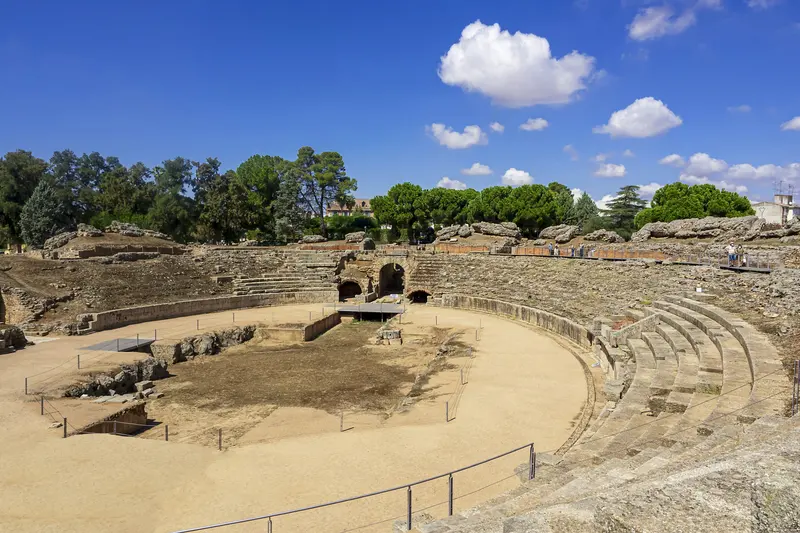
Start at the theatre, where the rows of seats turn towards a stage framed with columns. Compare the view from high in the auditorium with the view back towards the seating from below where the visiting route allows it. The arrangement makes the function of each part of the building much easier to picture than a plan on its own. It also gives you something specific to compare at the next stop.
The amphitheatre sits beside it. Here the spectators surrounded an arena rather than facing a stage together. Look for the entrances and for the relationship between the floor of the arena and the passageways. Together the two sites show how the shape of a Roman building depended on the kind of spectacle people came to see. Save an unobstructed view of the full arena before heading back towards the museum.
Temple of Diana and the forum
The traditional name of the Temple of Diana is the one you will see on maps. The temple is associated with the imperial cult. Walk around it to see how the later Palace of the Corbos was fitted between the ancient elements. Look at the columns from a side street as well as from the front. The change in angle brings both the building’s original outline and the later reuse into view.
The forum portico is another fragment set among present-day streets. From there, find your way to Plaza de España, where the arcades and the co-cathedral of Santa María belong to a later chapter. The Arch of Trajan is an easy add-on in this part of the city. Approach it along the street to see how tightly the old opening is embedded in the modern blocks.
Roman Circus and aqueducts
The best way to read the circus is to look along its main axis. Follow the long shape of the track and pick out the central division around which the chariots raced. Give the site enough time to walk part of its perimeter. Seen from one corner it can look like an open piece of ground, yet from a different angle the organisation of the space is clear.
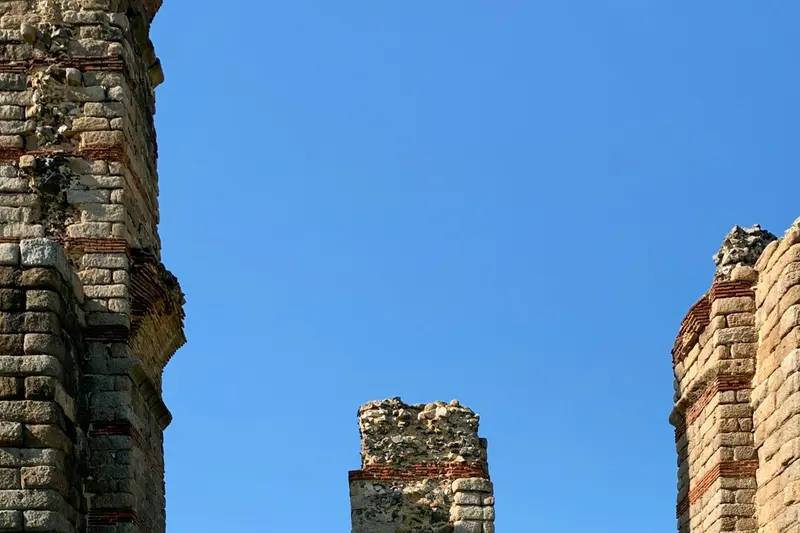
The remains of the San Lázaro aqueduct are near the circus. For a separate walk, go towards the Albarregas and the Aqueduct of Los Milagros. Here the broad piers and their bands of masonry become easier to see as you approach from the lower ground. Try looking along the line of arches as well as across it. The view makes sense of the height of the structure above the valley.
Monuments and heritage
The Roman bridge and the Alcazaba
At the Guadiana, begin near the bridge and look at the arches from the bank before crossing it. From the deck you can see where the crossing leads. From the side you get a clearer view of the piers and their relationship to the current. Take a short walk away from the bridge axis if you want to fit the near end of the crossing and the fortification into one view.
The Alcazaba dates from the emirate and forms part of the World Heritage ensemble. Its location explains how a later city could defend the same crossing that the Romans had used. Inside, the cistern offers a different way to think about the fortress. It shows the importance of access to water within the enclosure. Compare the position of the cistern with the river and the walls after you have seen all three.
Houses, burial grounds and Santa Eulalia
At Morería, the archaeological area under a present-day administrative building includes remains of streets and dwellings. The layers show how a city can use the same ground in successive periods. Ask the Consorcio about visiting arrangements before setting aside a narrow slot. This part of the itinerary is easy to combine with the riverbank, where a later stop can remain flexible.
The House of the Mithraeum gives you a sense of rooms and courtyards in a Roman residence. Nearby Los Columbarios shifts the subject to burial outside the ancient city. Reserve a separate visit for the basilica and crypt of Santa Eulalia if you want to understand the development of Christian worship around a funerary site. Together these places take the trip beyond public buildings and the history of spectacle.
Museums and culture
National Museum of Roman Art
The museum by Rafael Moneo deserves a distinct stop even though it is close to the theatre. Its brick arches line up across the galleries so that you can see through successive spaces. Parts of the ancient city remain within the building. The modern architecture helps give them a different setting from the houses and streets you encounter outdoors.
Pick a subject if you have limited time. The mosaics let you imagine the interiors of grand homes. Many were floors, even when you find them displayed on walls. The inscriptions tell shorter stories about individual inhabitants. Looking at a name and how it was carved brings the scale of the trip right down after the theatre or the circus. Look for the characters and gestures on sculptures if you want to compare ways the Roman city represented people in public.
Museo Abierto de Mérida
The MAM combines visitor information with an exhibition on life in Roman Mérida. The city describes material on chariot races and music. For families, one such subject gives children something to look for when they arrive at a site where little remains above ground. If you have begun with the circus itself, bring its scale to mind when following the explanation indoors.
Neighbourhoods and areas
Calle José Ramón Mélida is the reference point for the theatre and museum. A cluster of big visits here means you can spend a morning in the area without planning another transfer. The streets towards the temple and Plaza de España are good for a slower walk, with Roman fragments appearing among the buildings. Calle Santa Eulalia gives you another axis through the centre if you want to link the town’s civic spaces and the basilica area.
The Guadiana riverfront suits a longer break from the streets. Choose the bridge where you intend to finish before following the bank, particularly if you want to return to a particular part of town afterwards. Along the Albarregas, you can see Los Milagros from lower ground. The two riverside walks each explain a different aspect of the ancient city.
Nature and protected areas
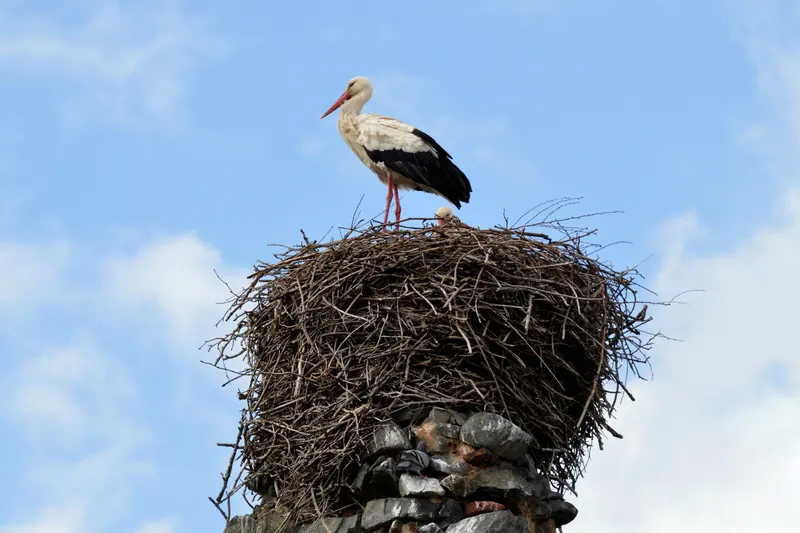
At Los Milagros you can see how the high points of a structure built to move water have become places for storks to build their nests. Look from the lower path along the Albarregas. The nests stand out against the sky even when the birds are away from them. Allow time to stop here if you are coming from the station side of town before continuing along the valley towards the main streets.
For a longer riverside break, look at the paths near the Roman bridge, the Isla del Molino and the Siete Sillas area. You can follow the water from the city side or cross to see the line of the old walls from further back. The distance looks shorter on a map than it feels when you are stopping to watch birds or take photographs. Choose a turning point that still gives you daylight to enjoy the view on the way back.
Festivals and traditions
The International Classical Theatre Festival uses the Roman Theatre for performances. Its 72nd edition ran from 3 July to 30 August 2026. A performance gives the theatre a different rhythm, from arriving with the crowd to looking towards the stage after dark. If that is the main reason for the trip, choose the performance first and set aside daylight to explore the site when you can go at your own pace.
Emerita Lvdica uses several parts of the city for Roman-themed events and re-enactment. The 2026 municipal programme named venues including the Temple of Diana, Roman Circus and Los Milagros. On a future visit, look at the locations for the events you want before picking several from the same day. There is enough ground between sites to make one cluster a better fit for a short outing.
Routes and itineraries
One day from the theatre to the Guadiana
Start with the theatre and amphitheatre, then choose how long to spend in the National Museum of Roman Art. Aim for a walk through the central streets afterwards, passing the Temple of Diana and Plaza de España before the descent to the river. End near the Alcazaba and Roman bridge. If you want generous time for both the museum and the fortifications, start with the one you care about most and keep the last riverside stretch adjustable.
Two days for the sites beyond the centre
Use a second morning for Santa Eulalia, the circus and San Lázaro. Finish by Los Milagros if the waterworks are a priority. For a different afternoon, go to the House of the Mithraeum and Los Columbarios. Plot the entrance-dependent stops first, leaving a walk through streets or along the water between them. With a third morning you can cross the Roman bridge and look back at the old crossing from the far bank, a good view after seeing the walls from inside.
Day trips
Alange
The Roman baths at Alange belong to the UNESCO ensemble. The site extends the theme of water from urban supply and crossings to bathing. Near the reservoir and below the hill, the spa provides a specific focus for the trip. Ask the operator how to visit the historic site on your date, then decide how much of the remaining time you want to spend in the village or out in the landscape.
Medellín
At Medellín, the Roman theatre sits on a hillside below a castle. The location is the first point of comparison with Mérida. Leave time to look out across the Guadiana floodplain and see how the theatre relates to the slope. Decide before leaving whether the castle or the theatre matters more to your group, so you have time for that site and the view even on a short visit.
Where to stay in Mérida
Plaza de España and the streets towards the Temple of Diana suit a stay on foot. They let you set out in either direction and return to your room between visits. Check how you will reach the door if you are arriving with cases or picking up a car later. On a family trip, an address near the centre makes it easier for different parts of the group to return at different times.
The theatre and museum area is convenient if city archaeology or an evening performance is the focus. For a road trip, compare central access arrangements with an address on an easier approach. If you stay across the Guadiana, look at your actual walking route back after an evening out. The bridge you use matters more than the straight-line distance from your room to the Alcazaba.
See places to stay in Mérida (opens in a new tab)Affiliate link: if you book through it, we may earn a commission at no extra cost to you.