

 Español
 English

Why visit Madrid
For a first trip to Madrid, start with the Habsburg quarter west of Puerta del Sol and the Prado and Retiro district to the east. The literary quarter lies between them and makes a good walk of its own. With three days, allow a whole morning for the museum you most want to see and spend another part of the trip by the Manzanares.
Madrid sits at the centre of the Community of Madrid. The feel of the capital changes within a short walk. You can see court paintings in the Prado, follow the slope below the Royal Palace and finish in a neighbourhood park. On a return visit, spend time in Delicias, Conde Duque and by the river to see how the city has found new uses for a railway station, military barracks and an old slaughterhouse.
When to go
April and May, and late September through October, suit a trip that alternates galleries with parks. Spring is a chance to see the rose garden in El Retiro in bloom, depending on the weather. In autumn, walk down the Cuesta de Moyano and follow the trees along the Paseo del Prado. For morning light in the park, enter from the Puerta de Alcalá and make for the lake.
In summer, the open squares between Sol and the Royal Palace can get very hot. Walk that part early and spend the hottest hours in a museum or another indoor venue. In winter, use the shorter daylight for views from the ridge above the river and leave the well-lit streets of the centre for later. If a festival is the reason for the trip, check its programme and base your route on the neighbourhoods hosting the events you want to see.
Getting there and around
Check the full station name on long-distance rail tickets. Madrid-Puerta de Atocha-Almudena Grandes is by the Prado district and the Reina Sofía. Madrid Chamartín-Clara Campoamor serves the north of the city. At Atocha, follow the signs for your particular service, as the long-distance station, local rail platforms and Metro serve different journeys.
In its 2026 airport information, Aena lists one Metro stop for terminals T1, T2 and T3 and another for T4. Local Cercanías trains serve T4. Check which stop works for your accommodation and where you would have to change, especially with luggage or a train connection. If you arrive by road, plan around your destination within the city and the direction from which you approach it.
On foot, Sol links Plaza Mayor to the Barrio de las Letras. Gran Vía runs north of those streets. West of the palace the ground drops sharply, as you can see on the way down towards Campo del Moro. For the longer journeys, such as between Madrid Río and the Prado, or between the centre and the Paseo de la Castellana, use public transport. If you need lifts or are travelling with a pushchair, check the station entrance as well as the line.
What to see in Madrid
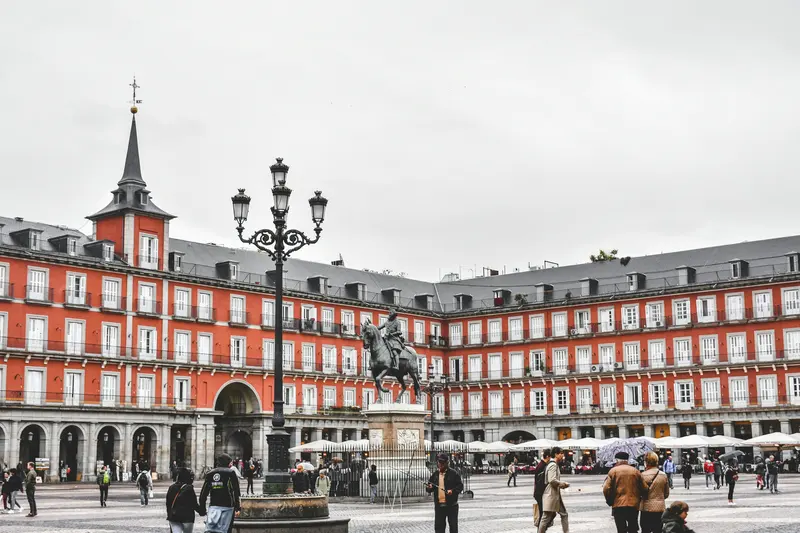
From Puerta del Sol to Plaza de la Villa
Look for the kilometre zero plaque outside the Real Casa de Correos at Puerta del Sol. The clock above it marks the New Year countdown. The nearby bear and strawberry tree statue represents the emblem of Madrid. Leave Sol by Calle Mayor or Calle de Postas and enter Plaza Mayor through one of the arches to see the enclosed square open up around you.
From the statue of Philip III, look across to the painted façade of the Casa de la Panadería. The steps at the Arco de Cuchilleros show how much the ground drops on one side of the square. Continue to Plaza de la Villa for the Lujanes tower and the Casa de la Villa. The buildings are packed closely enough to make the scale of the older city plain before you visit the wider twentieth-century streets.
Gran Vía, Cibeles and Alcalá
At the eastern end of Gran Vía, the junction with Calle de Alcalá offers a view of the dome of the Metrópolis building and the slope down to Cibeles. Walk towards Callao for the cinema and theatre fronts. Return to Sol by Calle de la Montera or continue towards Plaza de España, where high-rise buildings frame the monument to Cervantes.
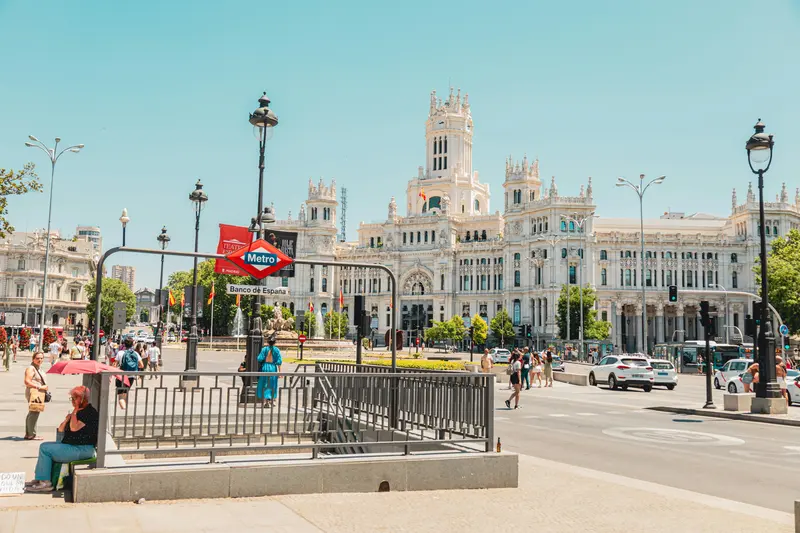
To reach El Retiro, return to Calle de Alcalá and head past the fountain at Cibeles. Look at the Palacio de Cibeles and the Bank of Spain from different corners of the junction. Continue uphill to the Puerta de Alcalá, which stands in Plaza de la Independencia. Enter the park there for the main lake and leave by the Prado side if the museums are your next stop.
The ridge and the Temple of Debod
From Plaza de España, head up into Parque del Oeste near the Temple of Debod. The monument came from Egypt after the campaign to save temples threatened by the Aswan dam. Walk around the outside and look west from the edge of the park to find Casa de Campo and, on a clear day, the mountains. If you come for evening light, allow time to follow the ridge back towards Plaza de Oriente while you can still see the views.
Monuments and heritage
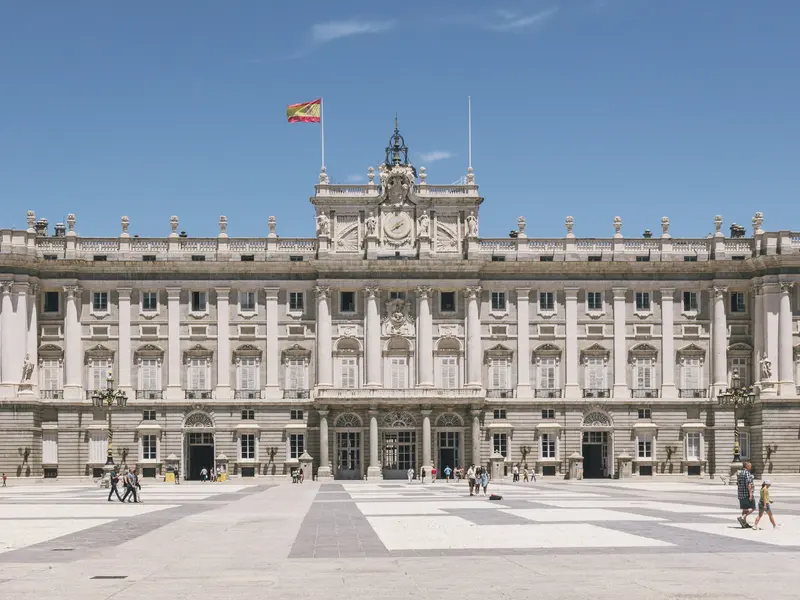
The Royal Palace, Almudena and Campo del Moro
The Royal Palace stands on the site of the former Alcázar, which burned in 1734. Approach through Plaza de Oriente from Ópera and continue to the space between the palace and the Almudena Cathedral. This puts the royal and religious buildings in view together before you explore the edge of the ridge. If you want to go inside, compare the guided tours of the Royal Palace and check which rooms and entrance arrangements are included.
Cuesta de la Vega gives a clear view of the drop from the cathedral towards the Manzanares. Campo del Moro sits much lower than Plaza de Oriente. Check the entrance on Paseo de la Virgen del Puerto if you want to see the palace from the gardens. The Gallery of the Royal Collections sits against the ridge and offers another way to understand the relationship between the palace and its setting.
The Landscape of Light
The Paseo del Prado and Buen Retiro form the Landscape of Light, inscribed as a World Heritage Site in 2021. Follow the fountains, trees and public institutions along the avenue to appreciate how it combines art, science and green space. Start at Cibeles, walk south to Neptune and look towards Atocha. The Royal Botanical Garden and the area around the Royal Observatory offer two different examples of how the city made room to study the natural world.
Museums and culture
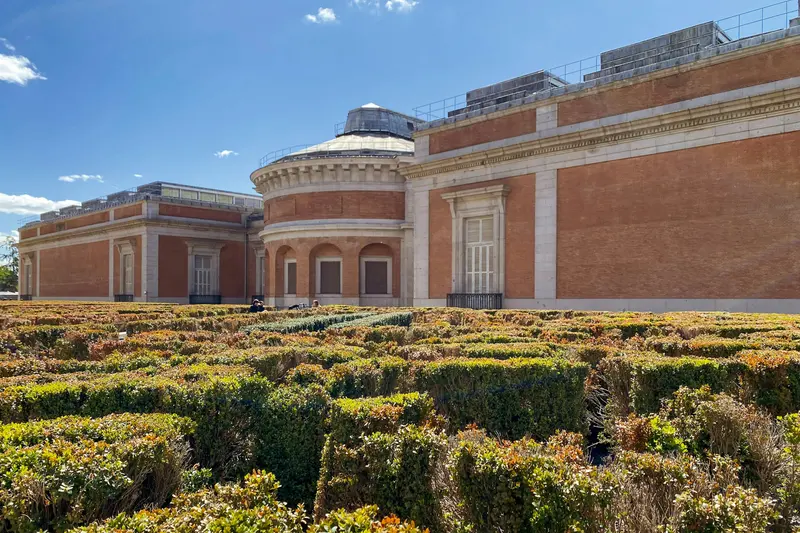
Three museums on the Prado axis
At the Prado, choose a theme for your first visit. A route through Spanish painting could put Velázquez’s Las meninas and the Goya rooms at its centre. A different route could compare Titian and Bosch and concentrate on the Italian and Flemish collections. Check the floor plan first so you can spend your time with the paintings and keep some rooms in reserve for a return trip.
At the Reina Sofía, give Guernica time and continue into the surrounding rooms to see how the collection relates Spanish art to twentieth-century public life. The Thyssen-Bornemisza is a good choice for moving between European schools or exploring North American painting. Break for a walk between two collections. El Retiro and the literary quarter are both close enough to add an outdoor interlude.
Railway halls, workshops and stages
The Railway Museum in Delicias occupies a former station. Its long roof and platforms help show how the locomotives would have been used. From Delicias, continue towards Matadero Madrid, where the former city slaughterhouse now hosts cultural events. The two visits fit together if you want to spend time on the industries and infrastructure that shaped the south of Madrid.
The Teatro Real faces the palace at the other end of Plaza de Oriente. Look at the bills for the theatres on Gran Vía or the cultural programme at Conde Duque for other kinds of performances. If you are going to an evening show, accommodation near the theatre may make it easier to walk back afterwards.
For a smaller gallery between the Prado and the palace, consider the San Fernando Royal Academy of Fine Arts near Sol. Its collection gives a different context to Spanish painting, and its position on Calle de Alcalá makes it possible to keep the second half of the day around Cibeles or Plaza Mayor. This is an option for a return visit if your first trip was built around the three museums on the Prado axis.
Neighbourhoods and areas
Barrio de las Letras. From Sol, walk towards Plaza de Santa Ana and look for lines of verse set into Calle de las Huertas. The Lope de Vega House Museum is on Calle de Cervantes. Continue east towards the Prado rather than retracing your steps to Sol. This works equally well in the other direction if you are coming from Atocha.
La Latina and Lavapiés. Walk from Plaza de la Paja past San Andrés and down to Ribera de Curtidores, one of the main streets of the Rastro market. Further east, the streets around Plaza de Lavapiés and Calle de Argumosa link the neighbourhood to the Reina Sofía. Approaching the museum on foot from this side takes you through streets with a different scale from the large avenues around Atocha.
Malasaña, Conde Duque and Chueca. Cross Gran Vía on San Bernardo or Fuencarral to reach the neighbourhoods to its north. The old barracks at Conde Duque mark the western end of the walk. Plaza del Dos de Mayo helps you find your bearings in Malasaña. Further east, look for Plaza de Chueca between Hortaleza and Barquillo. Starting near Cibeles makes it easy to reverse this walk and end at Plaza de España.
Nature and protected areas
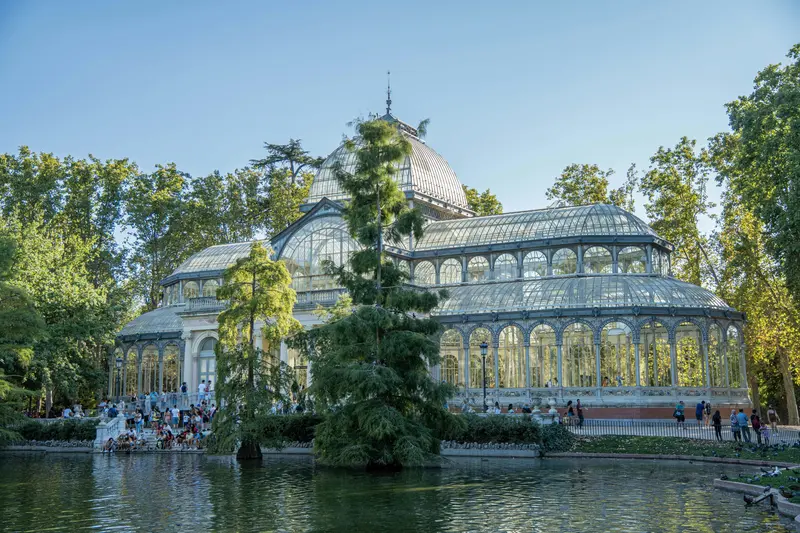
El Retiro is large enough to choose a different route each time. Start at the lake and the Alfonso XII monument for a clear point of reference. From there, walk towards the Palacio de Velázquez and the grounds around the Crystal Palace, where water and trees shape the paths. The gardens of Cecilio Rodríguez and the rose garden lie further south. Pick an exit to suit your next stop, whether that is Cibeles, the Prado or Atocha.
Madrid Río follows the Manzanares below the historic centre. Between the Segovia and Toledo bridges you can compare older river crossings and see the Royal Palace from below. The southern stretch leads to the footbridges at Arganzuela and Matadero. Allow a separate outing for Casa de Campo if you want longer paths and hills. For a short stay, pick a section near a convenient park entrance so your walk fits the time available.
Festivals and traditions
The San Isidro festivities centre on the patron saint and the meadow that bears his name across the Manzanares. The city’s 2026 programme focused on 15 May. The celebrations include the chotis dance and the traditional chulapo and chulapa outfits. On another day you can visit the San Isidro Museum in Plaza de San Andrés to put the traditions into historical context.
In August 2026, the municipal programme brought together the street festivities of San Cayetano, San Lorenzo and the Virgen de la Paloma. For a future edition, check the date and square for the events you want to see. The Rastro has a different rhythm and is tied to the streets around Cascorro and Ribera de Curtidores, where the market is part of the history of the neighbourhood.
Sport and outdoor activities
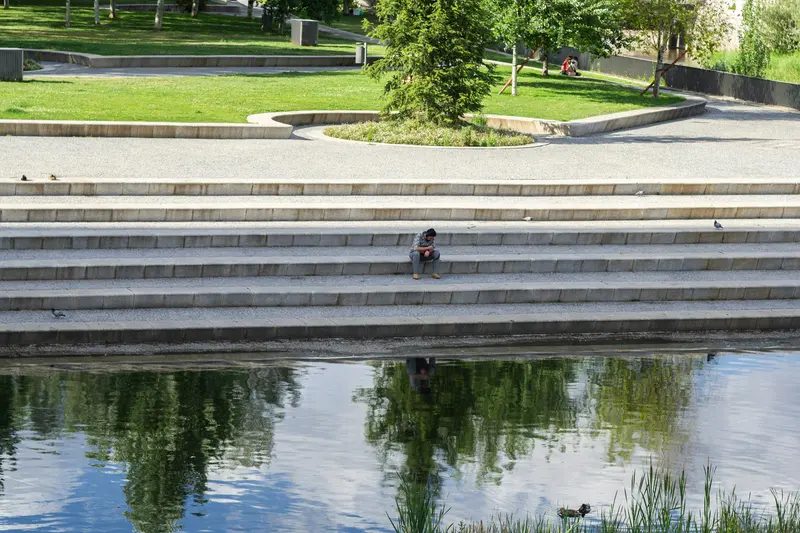
Set aside a morning to walk or cycle along the Manzanares. Wide paths alternate with more crowded stretches near footbridges and play areas. The Segovia Bridge and Matadero make useful points at which to split the walk. In Casa de Campo, start at the lake or the Puerta del Rey if you want to get your bearings before following the steeper routes further into the park.
Routes and itineraries
One day in old Madrid and around the Prado
Start at Sol and walk via Plaza Mayor and Plaza de la Villa to the Royal Palace. If the palace interior is important to you, give it the morning and decide which squares to see before or after your entry time. Spend the afternoon in the literary quarter and finish near Neptune or in El Retiro. For a day built around the Prado instead, start at the museum and finish outside the palace and the cathedral.
Two or three days in the centre and along the river
On the second day, put your main museum first and leave time for El Retiro and the Puerta de Alcalá. From Cibeles, walk up Gran Vía to Callao and either turn towards Malasaña or continue to Plaza de España. On a third day, head down from the ridge to the river, with Matadero or the Railway Museum for an afternoon focused on the city’s industrial history.
For a second look at the centre after dark, the same itinerary can become a shorter walk. Start at Plaza de Oriente, continue through Ópera to Sol and turn onto Calle de Alcalá. From there, the junction at the Metrópolis building is a convenient place to decide whether to follow Gran Vía or finish at Cibeles. Leave the park and river routes for daylight, when it is easier to see how they relate to the surrounding streets.
Day trips
Alcalá de Henares works well as an excursion centred on the historic city and university. From the station, walk to Plaza de Cervantes. Allow the morning for the Colegio Mayor de San Ildefonso and Calle Mayor, and plan separate time for the trip to the Roman site of Complutum.
In San Lorenzo de El Escorial, pair the monastery with a walk through the town and a stretch of the woods at La Herrería. Check whether your service takes you to San Lorenzo itself or to El Escorial railway station in the neighbouring town. For a different royal site, spend a day in Aranjuez and divide your time between its gardens, the palace and the nearby squares.
Travelling with children
The main lake in El Retiro, the space around the Alfonso XII monument and the paths towards the rose garden let you adjust the length of a walk as you go. In changeable weather, the Railway Museum has engines and platforms under one roof. Along the Manzanares, use the bridges to make short trips between play areas and leave the rest of the river for another day.
Where to stay in Madrid
Sol and Ópera are well placed for walking to the old town, Gran Vía and the palace. Check the street if you need an early night. Barrio de las Letras is closer to the Prado and Atocha and has small squares and pedestrian routes. Near El Retiro and Los Jerónimos you can make easy trips into the park and spend a different morning at each museum.
If your train leaves from Chamartín or most of your plans are in the north, look for somewhere near a useful transport stop in Castellana or Chamartín. For several rail day trips, work out which station each one uses before choosing a base. Families and travellers with a suitcase may find the walk from the station entrance to the accommodation just as important as the journey itself.
See places to stay in Madrid (opens in a new tab)Affiliate link: if you book through it, we may earn a commission at no extra cost to you.