Español
 English

Why visit Toledo province
There are enough things to do in Toledo province to turn a day trip from Madrid into a short road trip. Start with the old city on its hill above the Tagus. Then choose a direction. Follow the river west for clay cliffs, pottery workshops and a Gothic bridge. Head south-east for the white windmills of La Mancha, or south towards the ravines and footpaths of the Montes de Toledo. Each makes a better day out when given room for a walk and a stop for lunch.
This part of Castilla-La Mancha works well for travellers who want a mix of buildings and open country. The great church in Toledo and the small early medieval church at Melque give you two very different interiors. The sheltered galleries around Tembleque’s square make a good second stop after the exposed ridge at Consuegra. In the west, Talavera’s ceramics and Lagartera’s embroidery are reasons to stay overnight and see more than the main monuments.
When to go
Spring and autumn make it easier to fit city streets and an outdoor walk into the same trip. In spring, check rain and the condition of dirt approaches if you are planning a countryside day. For autumn travel, the saffron harvest is a reason to look at the programme in Consuegra and Madridejos. Build around an event or a visit that you can confirm, then add the ridge or the museum at a time that suits the rest of your day.
Spain’s weather agency, AEMET, records hot summer afternoons and cold winter mornings in Toledo city. In July or August, put the open hill at Consuegra or the Burujón viewpoints early in your day. Keep a museum, a church interior or a long lunch for later. Take an extra layer for Cerro Calderico if the forecast is windy. The crest is exposed even when the streets below feel sheltered.
Getting there and around
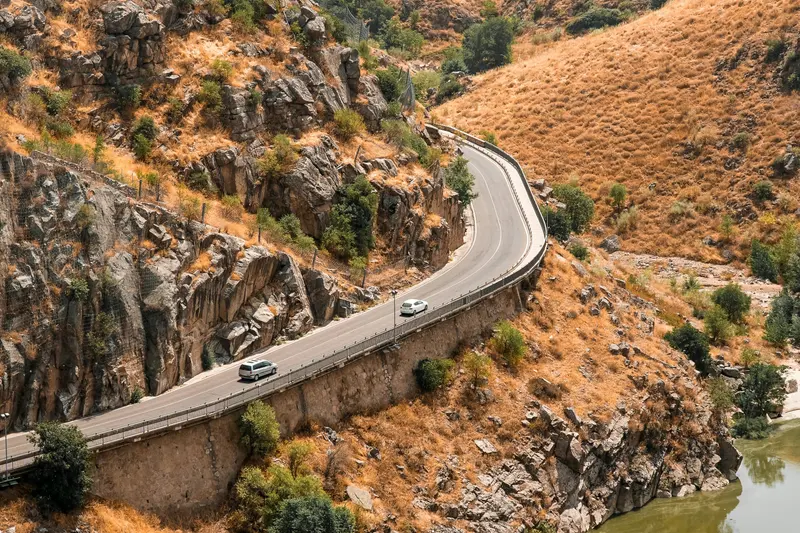
In 2026, Renfe lists an Avant service from Madrid to Toledo and sells a separate Madrid to Talavera de la Reina journey. Choose the railway gateway that matches the places you want to see. Check the station named on your ticket, especially if you are flying into Madrid-Barajas and crossing the city to catch your train. In Toledo, the railway station is across the Tagus from the old town. A short-looking route on a map can include a substantial climb with luggage.
For the old city, leave the car outside the historic streets or ask your accommodation where guests can park. The approaches can involve stairs and steep stretches. If you want to end the day at the Mirador del Valle, make a separate plan for getting to the viewpoint and back. Allow time for the return to the station or your hotel after the view, especially on a day trip with a booked train.
A hire car is useful once you start putting villages and natural sites on the same itinerary. Treat the western Tagus and the windmill country as two drives. For Melque or a hike near Los Navalucillos, save the exact site entrance or trailhead before you go. A route to the centre of the nearest village will leave you with another leg of the journey.
For bus travel, check both directions and map the stop against the attraction. Reaching Consuegra and reaching its windmill ridge are two separate parts of the day. With a short gap between arrival and departure, choose either the ridge or a walk around the town and its square. If you need a taxi at the end of a walk, make your return arrangement while you still have reception and a reliable pick-up point.
What to see in Toledo province
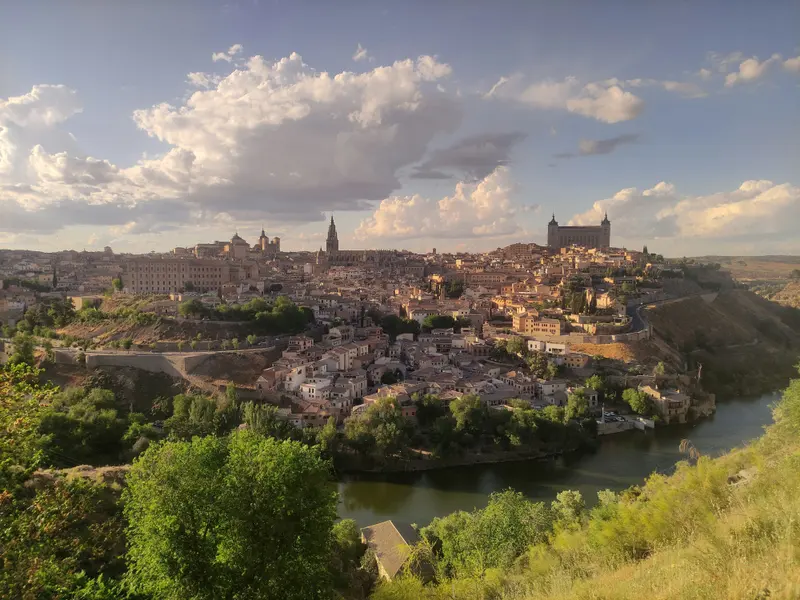
Things to do in Toledo province on a first day in the city
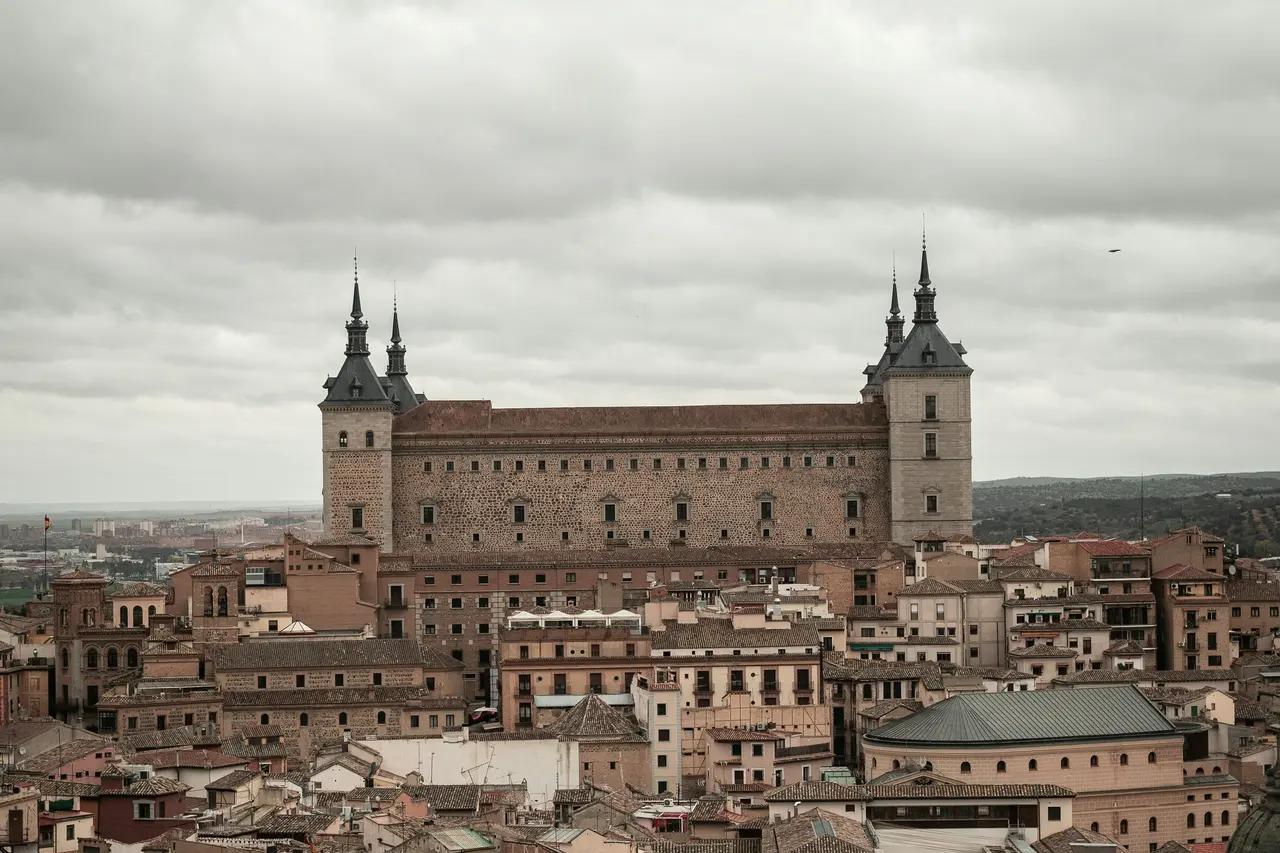
Toledo’s historic city is a UNESCO World Heritage Site. For an easy way to get your bearings, start at Zocodover, near the Alcázar, and work downhill towards the cathedral. Continue through the Jewish Quarter, with Santo Tomé and San Juan de los Reyes as useful landmarks. The San Martín Bridge makes a logical finish at the western edge. If you are coming from the railway station, consider arriving over the Alcántara Bridge to see the fortified approach before the climb.
Pick two interiors if this is your only day in town. The cathedral rewards time spent on the scale and decoration of the building. At Santo Tomé, you can see El Greco’s painting commonly called the Burial of the Count of Orgaz in the church it was made for. The Synagogue of El Tránsito and Santa María la Blanca each deserve some time of their own if the Jewish Quarter is your main interest. When comparing guided tours of Toledo, look at which stops involve going inside.
Save a view of the whole city for the end of your visit. Across the Tagus at the Mirador del Valle, pick out the Alcázar and cathedral and try to trace the walk you have just made. A viewpoint visit gives the hill, the bridges and the river bend a clarity that is hard to get from the close streets of the old quarter. If you are returning to Madrid that evening, keep a margin between this last stop and your train.
Consuegra and the windmills of La Mancha
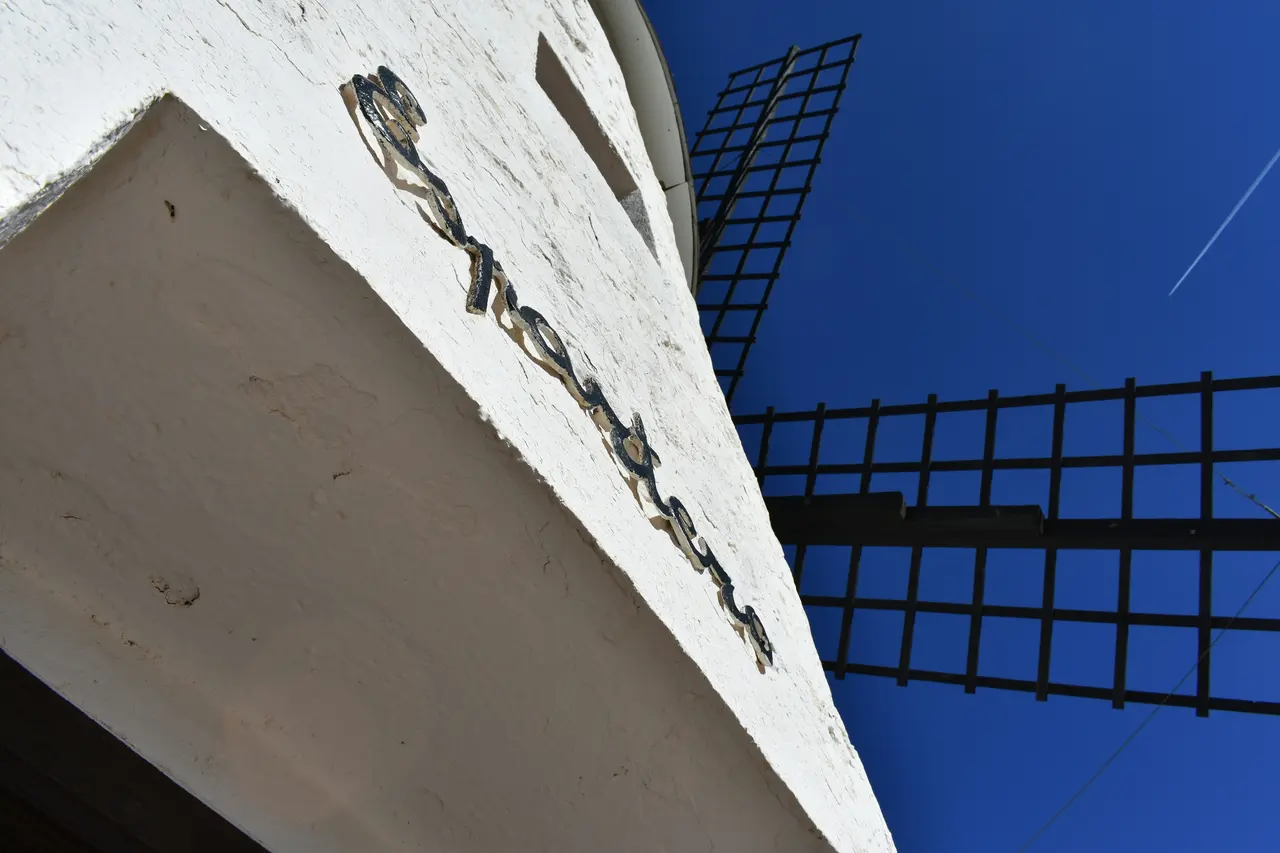
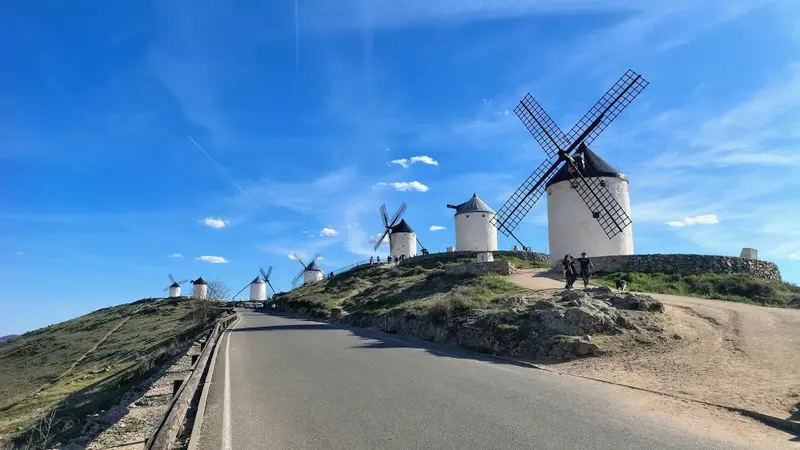
Cerro Calderico is a long ridge with twelve windmills and a medieval castle. Walk back along the ridge after reaching the end that interests you most. In one direction, the mills stand out against the plain. In the other, it is easier to see the relation between the different buildings and the town below. Anyone interested in the machinery should check which interior can be visited and whether a demonstration is planned for that day.
Plaza de España makes a useful stop when you come down into Consuegra. For a fuller day, choose Tembleque to see a very different kind of architecture or Madridejos to learn about saffron. In hot weather, do the exposed part first and save a shaded or indoor stop until later. For a trip that continues across the plain to Campo de Criptana, see our Ciudad Real guide.
Talavera de la Reina and the western Tagus
In Talavera, start in the Ruiz de Luna Ceramics Museum and then look at tilework around the Prado gardens and the Basilica of Nuestra Señora del Prado. Seeing the museum first makes it easier to pick out how a pattern or a colour works at different scales, from a single vessel to the tiled surface of a building. Use the riverside to round off the day, or save it for the morning if you are booking time with a potter.
At El Puente del Arzobispo, the Gothic bridge and former riverside mills give the town a second point of interest alongside its ceramics. UNESCO’s inscription covers the craft processes of this town and Talavera, together with those of Puebla and Tlaxcala in Mexico. In a workshop or shop, ask how a piece was painted and fired, and whether it can be packed for your onward trip. Seeing both towns gives you two settings in which to learn about the same living craft.
Monuments and heritage
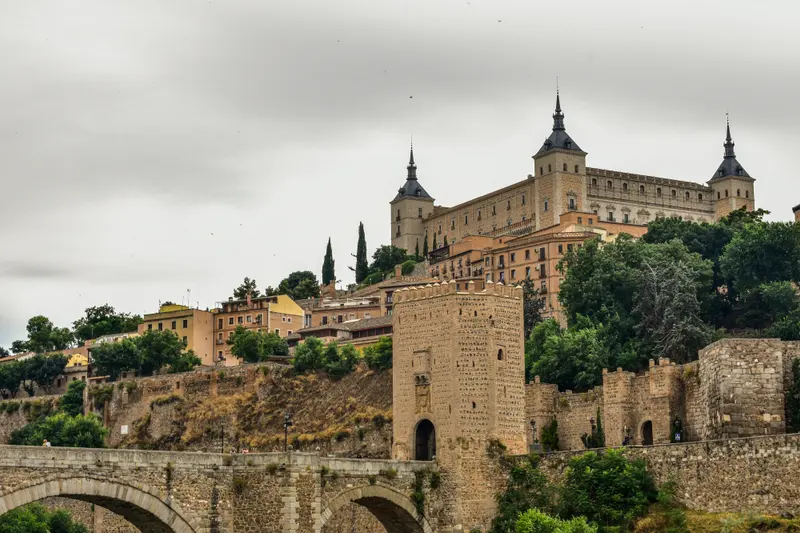
The Alcántara and San Martín bridges mark two different ways into the old city. From Alcántara, look up towards the defences and the Alcázar. At San Martín, notice the towers controlling the crossing before climbing up to San Juan de los Reyes. If your transport makes it convenient, use one bridge on the way in and the other on the way out. It gives the central part of the walk a clear direction.
Beyond the city, Santa María de Melque near San Martín de Montalbán offers a much smaller setting in which to study early medieval architecture. Walk around the exterior before looking closely at the arches and thick walls inside. Pair it with the Castrejón cliffs for a day in the central Tagus country. Check the monument’s visiting arrangements and the conditions at the cliffs separately, then put the more time-sensitive stop first.
In the north, the archaeological park at Carranque preserves fine mosaics from a Roman villa. Look at how the images and borders vary by room and how the floors fit the plan of the house. The site makes sense as a first or last stop on a drive from Madrid through La Sagra. Give it a separate visit from the buildings south of the Tagus if you want enough time to see and understand both.
Oropesa Castle looks out over the plain towards the Sierra de Gredos. See how it sits in the landscape before looking around the structure itself. Orgaz offers a different setting, with its castle in the built-up part of the town. If you see both, pay attention to the position of each castle and to the shape of the streets immediately around it. The contrast is easy to see even on a short visit.
Museums and culture
At the Ruiz de Luna Museum in Talavera, pick one simple object, such as a plate or jug, and look for variations on it as you go. That gives you a way to notice changes in shape and colour across the collection. For a visit to a working pottery, ask what you can actually watch. The throwing, painting and firing are different stages, and a workshop may be dealing with only one of them while you are there.
The Saffron and Ethnography Museum in Madridejos puts the everyday work behind the spice into context. The flowers are harvested, the red stigmas separated by hand and the threads dried. Pair the museum with the windmills on Cerro Calderico for a day about two sorts of work on the Manchegan plain. If you are hoping to see a working saffron field in autumn, check what the local programme offers for your dates.
In Toledo city, the Sephardic Museum is inside the Synagogue of El Tránsito, while the Museum of the Councils and Visigothic Culture occupies the church of San Román. Choose the one that fits your walk and interests. At El Tránsito the decoration of the main hall deserves a pause. In San Román, give the building some time as well as its exhibits. These are manageable stops between longer visits such as the cathedral.
Charming villages
Tembleque and Orgaz
Cross Tembleque’s Plaza Mayor before settling into the shade of its arcades. The wooden galleries overlook the space from several sides, a reminder of the role it played in public festivities. Try leaving the square and coming back through another entrance. If you have already been to Consuegra that morning, this is a chance to see how the same open country looks from inside a town built around a large square.
In Orgaz, the castle and the church of Santo Tomás Apóstol give a walk through the town two clear points to aim for. It makes a good stop on a day heading south from the provincial capital. Decide beforehand whether an interior visit is important to you. If you have booked something elsewhere in the afternoon, a walk through the streets around the castle still leaves time for an unhurried stop.
Oropesa and Lagartera
Spend a morning at the castle and in the streets around it in Oropesa, then go to Lagartera for embroidery. Ask what the different pieces were used for and how clothes, household linen and items made for display differ. If your main interest is seeing work in progress, find out which workshops or exhibitions welcome visitors and arrange the stop before leaving. The two towns make a good pair for a short trip to the Campana de Oropesa district.
Nature and protected areas
The cliffs at Burujón
The Barrancas de Castrejón y Calaña natural monument is on the north side of the Castrejón reservoir, across land belonging to Burujón, Albarreal de Tajo and La Puebla de Montalbán. The views change as you move along the clay escarpment above the water. The regional tourist board describes a 4.4 km route and suggests allowing about two hours. For a shorter outing, walk between a few viewpoints and double back rather than trying to reach the end.
Find the official trail access on a map and check conditions for the date of your visit. Bring water, keep to viewpoints and marked paths, and take extra care on wet clay. When the sun is low, the sharper shadows make the folds in the cliffs easier to distinguish. Leave enough daylight for the walk back, especially if you are stopping to watch birds at the reservoir.
Cabañeros from Los Navalucillos
Cabañeros National Park spans Toledo and Ciudad Real. In the Toledo sector, the Los Navalucillos information hut is the reference point for walks towards El Chorro, Chorrera Chica and Rocigalgo. A walk as far as El Chorro gives you an outing in the ravine with an earlier turning point. If you continue towards the summit of Rocigalgo, allow for the extra height and the time you will spend descending later.
Check the park’s visitor guide for the trail and the state of its approach. Time spent on the drive between the village and the start is part of the day, and the flow at the waterfall depends on conditions. The open grassy plain known as the raña is in a different part of the park. If you want to see both settings, allow two days and identify which visitor centre or information point serves each outing.
Festivals and traditions
The city of Toledo’s programme for Corpus Christi in 2026 listed the main procession on 4 June. Check future dates and routes on the council’s programme before booking. Take a walk along some of the route to see the decorations in the old town. If you plan to watch the procession, choose a place with a straightforward route back to your accommodation or to the station once the streets are crowded.
Consuegra’s Saffron Rose Festival ran from 23 to 26 October 2026. A useful thing to look for is the monda, in which the red threads are removed from the flower. Allow separate time for the windmills and check the arrangements for getting up to the ridge if your visit coincides with a future festival. Madridejos’s museum gives you another way to learn about the harvest and preparation if you are there outside the festival.
What to eat
In Toledo city, look for carcamusas, a tomato-based pork stew that can include peas. Order it to share if you are also trying a game dish such as pickled partridge. Toledo’s marzipan is made with almonds and sugar, and it is easy to try a small piece or buy a box to take away. If you are travelling for several days, ask how to store it and check the ingredients if you have an allergy.
In Consuegra or Madridejos, try pisto, a cooked vegetable dish, or ask about migas, made with crumbs, and the thick porridge known as gachas. If you are buying saffron, check where it was produced and how much is in the pack. A museum visit explains what happens between picking the flower and buying the dried threads. At a meal, you can ask which dishes actually use the spice.
Sport and outdoor activities
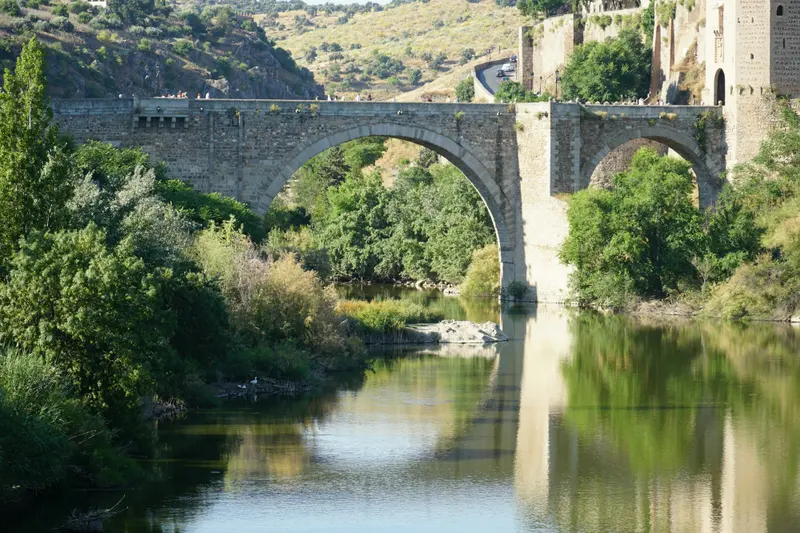
In Toledo, try a stretch of the riverside path for a change from the cobbles and slopes of the old town. Pick a bridge to aim for or use as a turning point. If you are travelling with children or anyone who wants to limit the climbing, include the uphill leg back to the old town when you plan the route. A small pair of binoculars makes it easier to watch the birds from the riverbank.
To the west, La Jara Greenway uses a former railway formation that starts at Calera y Chozas. Tunnels and viaducts are part of the route. Check the section you intend to ride, carry lights for the tunnels and plan where you can refill your water. An out-and-back ride makes it easy to decide how much time you spend there. Set your own turning point before depending on a lift from farther along the path.
Routes and itineraries
Two days in the old city and La Mancha
Day 1. Walk through Toledo between the cathedral and the Jewish Quarter, then choose a bridge or the Mirador del Valle to finish. If you are leaving by car the following day, settle when and where you will collect it before making evening plans. A night in the historic quarter gives you time for a quieter stroll once some of the day visitors have left.
Day 2. Go early to Consuegra for the castle and windmills. Add either the saffron museum at Madridejos or the arcaded square at Tembleque. If you are heading back to Madrid to return a hire car, include the drop-off and connection to your hotel or flight in your timings. For a longer trip into La Mancha, sleep near the windmills and continue towards Ciudad Real the next day.
Four days with the western Tagus
Use the suggested first two days and give day 3 to the Burujón cliffs. Add Santa María de Melque if you are interested in its architecture and can fit the visit comfortably into the day. Move west afterwards. Sleeping in Talavera keeps you close to your first museum stop the following morning and saves a return across the same ground.
On day 4, pair Talavera and El Puente del Arzobispo for ceramics, or base the day on the castle in Oropesa and the embroidery of Lagartera. If a hike in Cabañeros appeals more than the cliffs, swap day 3 for Los Navalucillos and choose a place to stay with the trailhead drive in mind. Either version gives you time to walk in one setting and to understand the buildings and crafts of another district.
Where to stay in Toledo province
Stay in Toledo’s old town if you want to walk between sights and return to your room for a break. Check the route from the station or car park with luggage, as distances on the map give little indication of the slope. For several days of driving, consider somewhere with easy access to the road out. That can save time each morning and still allow a separate evening in the historic centre.
Consuegra or Madridejos are convenient for choosing when to visit the mills as the weather changes. Talavera suits a trip with a museum visit, some time by the river and drives west. Oropesa suits a slower stay focused on the castle and Lagartera. For a full day on a Cabañeros trail, work out the drive from Los Navalucillos to the start before selecting your base. Check where and when you will eat after coming back if you are staying near the park.
See places to stay in Toledo province (opens in a new tab)Affiliate link: if you book through it, we may earn a commission at no extra cost to you.
Practical tips and common mistakes
Look up the exact location for each visit. Toledo is both a city and a province, and a general search for Cabañeros can send you to a visitor centre in a different sector. Save the location of the site entrance as well as the town or station. In Consuegra, allow time for the windmill ridge and the town separately. In the capital, distinguish the walk through the historic streets from the trip to a viewpoint across the river.
Use the site operator’s information for opening times, event programmes and access to trails. Allow time to have pottery wrapped if you intend to take it home on a train or flight. In Toledo city, build in a break between the longer climbs. On a first visit, two well-chosen interiors and a walk that ends in daylight make better use of the day than several bookings with little room between them.