

 Español
 English

Why visit Alcúdia
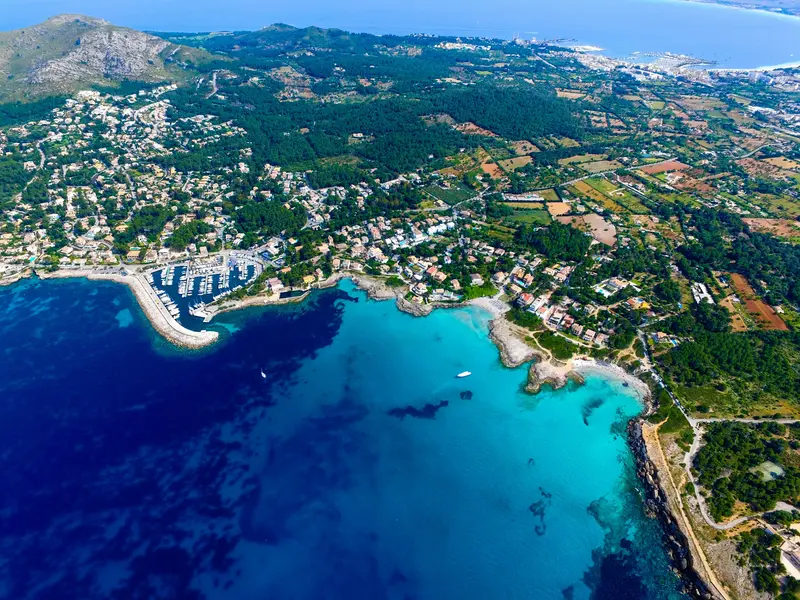
If you are looking for things to do in Alcúdia, start between the medieval walls and the Roman ruins of Pollentia. You can walk from a town marked by gates and towers to an open archaeological site where low walls trace Roman streets and buildings. South of both is Port d’Alcúdia, where boats and a long sandy beach take over from the stone lanes. The municipality reaches around the peninsula to the rocky coast at Alcanada and the shores of the Bay of Pollença.
Alcúdia lies in northern Mallorca, in the Balearic Islands. The old town sits inland near the narrow part of the peninsula. On the wall walk, look beyond the roofs to see the land opening towards the two bays. Down by the port, follow the waterfront to appreciate the length of the beach and why this area is a different sort of place to stay.
For a single morning, give the old town and Pollentia most of the time. For several nights, set aside a beach day and another for a wetland or a museum. Staying on the coast lets you swim before the day gets busy. Staying within the walls gives you a chance to see the same streets at a quieter hour. Choose your base for the part of the trip you will repeat most often.
When to go
In spring, Pollentia and a walk along the coast can fit in the same day. Much of the archaeological visit is outdoors and the theatre is a longer walk than the remains by the entrance. Early autumn also suits afternoons by the sea. Check the wind for the exact shore you plan to visit. One side of the peninsula can feel quite different from the other.
In summer, spend the early morning at Pollentia or on the walls and leave swimming for later. Along the port promenade it is easy to change your turning point when the heat builds. At Coll Baix, the walk back is steeper and takes more commitment. If you travel mainly to swim, staying near a beach with several access points makes it easier to go when the conditions suit.
In winter, look at the old town, archaeology and wetland walks. Plan outdoor visits around daylight and check site opening dates before organising the museum and ruins on different days. If the weather changes after you arrive, a visit close to Sant Jaume lets you move between an interior and the streets without committing to another journey across town.
Getting there and around
From Palma de Mallorca Airport, look up the name of the stop closest to your accommodation. In 2026, Aena listed the A32 airport service through Alcúdia. The TIB interurban network also serves the north from Estació Intermodal in Palma. Compare the connections for your travel date and check where you will get off. A bus serving the bay may stop near the old town, the port or a beach area well to the south.
If coming by sea, check the terminal on your ticket. Port d’Alcúdia and the old town are separate places, so make a plan for the last leg if you are travelling with luggage. Once you are there, it is straightforward to walk within the walls and on to Pollentia. For the beach, check the access point and the length of the walk back. The sand continues well beyond the section nearest the harbour.
Drivers can look for parking outside the old walls and explore the centre on foot. The entrance to the Roman site is close to the old town and its museum. For Sa Bassa Blanca or La Victòria, look up the final part of the journey on its own. An approach to a trailhead on the peninsula calls for more planning than a transfer between the main settlements, especially if someone needs to collect you later.
What to see in Alcúdia
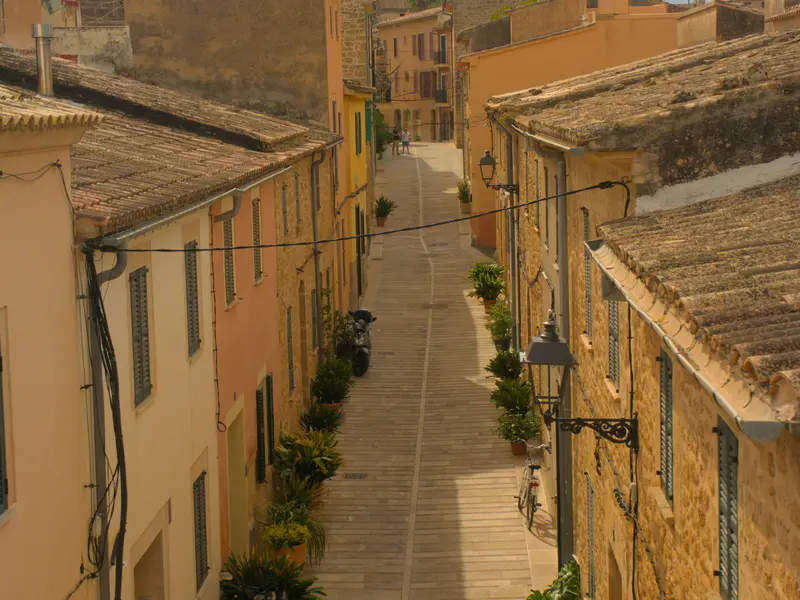
What to see in Alcúdia old town
Begin at the Porta del Moll, also called the Porta de Xara. The twin towers frame the passage that linked the centre to the port. Once through, take Carrer Major as a line through town and try some of the lanes off it. The width of a crossing and the shape of a doorway make more sense when you can compare them with the broader approaches from outside the wall.
The Porta de Mallorca, also known as the Sant Sebastià gate, stands at the west end. Between the two gates, find the church of Sant Jaume and an accessible stretch of the Camí de Ronda, the wall walk. From above you can see courtyards and roofs that are hidden from street level. Walk a short section outside the walls afterwards to see how far the towers project and how close the lanes run to the inside edge.
The waterfront at Port d’Alcúdia
Start by the harbour basin and work your way towards the sand. Around the boats you can make a short circuit. Once you set out along the beach there is scope for a much longer walk. If you have come from the old town, choose a turning point before following the coast south. As you get further from the docks, look back to see the end of the peninsula and how the shore curves round the bay.
Monuments and heritage
The Roman town of Pollentia
The entrance to the Pol·lèntia archaeological site is opposite Sant Jaume, outside the medieval walls. In Sa Portella you can see the shape of the residential quarter. The forum served the public life of the Roman town. The theatre sits apart and has seating cut into rock. Set aside time to move between all three areas and look at the plans and panels as you go.
Near the first walls, it can be hard to imagine the size of the Roman settlement. In the residential area, look at how the remains divide once you step back from a single room. At the forum, use the open ground to consider how people would have reached and crossed it. At the theatre, the rows of stone seats give you the most immediately recognisable detail. Back at the medieval walls, compare the visible boundary and close streets with the layout you have just seen.
Walls, bastions and Sant Jaume
The medieval towers and the later bastions represent different points in the town’s defensive history. The towers project from the older walls. The Renaissance work creates larger angular features in parts of the perimeter. A stretch at ground level just outside the town shows how much room these structures take up. Sant Jaume sits on the edge of the centre, between the Roman site and the streets within the enclosure. Use it as a meeting point if your group is splitting up.
Museums and culture
See excavated objects at the Museu Monogràfic de Pol·lèntia, in Carrer de Sant Jaume. A visit before the ruins gives you details to look for as you move across the site. If you go afterwards, it gives the objects a setting you can picture. The museum and the ruins are separate spaces. Leave time to walk between them, even if you visit the same morning.
Museu Sa Bassa Blanca lies outside town on Camí del Coll Baix. The foundation brings art, architecture and outdoor sculpture together. See which parts of the premises interest you and check their admission arrangements for your dates. Time spent getting there and walking round the grounds makes this a visit to plan on its own, rather than a stop squeezed in at the end of a long beach day.
Biblioteca Can Torró is on Carrer Serra within the old town. If you are looking for an exhibition or local event in the evening, check the municipal listings. You can see the building on the same walk as the gates and spend more time there if the programme suits you.
Neighbourhoods and areas
The old town sits within the walls and suits visits focused on Pollentia, the museum and the lanes. Port d’Alcúdia has the harbour and beach promenade. The coast farther south has more of the character of a beach resort. Before booking, check which part of the promenade you will be on and how you could return from the old town in the evening.
Alcanada, east of the harbour, has pines and a gravel beach with a view across to an islet and lighthouse. Mal Pas and Bonaire are on the Bay of Pollença side. They put you closer to smaller beaches on that shore. Two places can appear close together on a map and face quite different wind and water conditions. For a stay near a cove, use the nearest beach by name when comparing locations.
Nature and protected areas
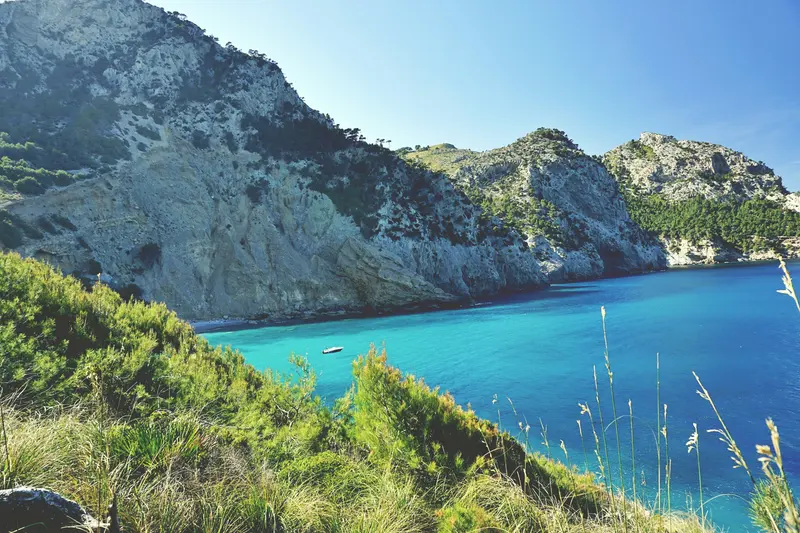
Start near the hermitage of La Victòria for walks on the peninsula. Talaia d’Alcúdia gives a high view of both bays, with an uphill section to allow for. Coll Baix is a different outing, where much of the effort comes on your return from the water. Choose one in the morning and leave time to retrace the route. The paths serve different stretches of coast.
The wetlands of s’Albufereta are by the Bay of Pollença. Reeds, channels and pools reward a slow walk with stops, especially if you bring binoculars. Use the routes published by the reserve. The larger s’Albufera de Mallorca Natural Park is by the Bay of Alcúdia near Platja de Muro. Search by the full name when planning the journey. The two wetlands have separate entrances and face opposite sides of the peninsula.
Beaches in Alcúdia
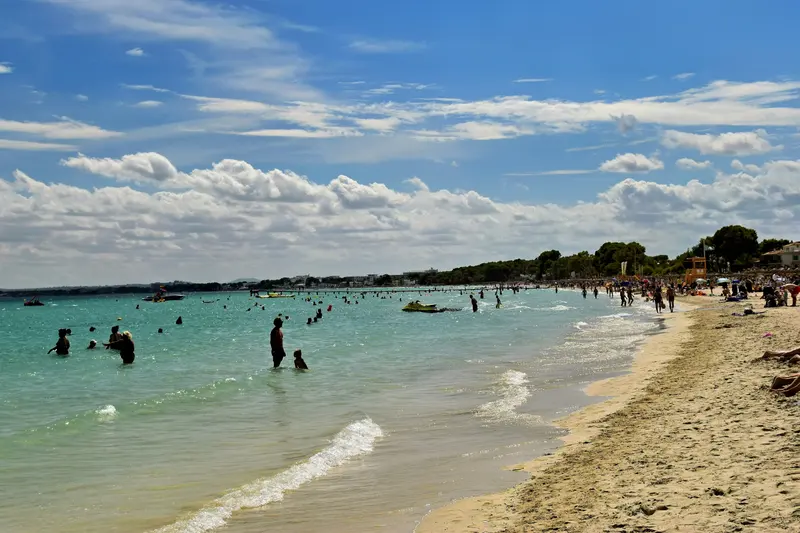
Platja d’Alcúdia has a long sandy shore beside the promenade. For a short stop after the old town, choose an entrance close to the port or your return transport. For half a day at the beach, head to a stretch that suits the walk or the facilities you need. Platja de Muro continues along the same bay and has its own access points. If meeting someone, agree on an exact location by the beach.
In the Mal Pas area, Sant Joan and Sant Pere are shorter beaches facing the Bay of Pollença. Alcanada gives you gravel, pines and a view of the lighthouse beyond the shore. Let the wind decide which side of the peninsula to try. The water can change considerably between two beaches that are close by road.
Coll Baix sits at the bottom of a steep approach. Think of it as a walk to the coast with a climb back, and choose it when that is the outing you actually want. For a swim with an easy exit or a group carrying a lot of beach equipment, the long sandy beach near the port is a more straightforward option.
Festivals and traditions
The Festes de Sant Jaume centre on the old town. In 2026, the council opened the celebrations with a procession and an address on 17 July and scheduled events through 25 July. The giants and musicians walked through the historic streets before the opening address. Check the calendar for the year of your visit and decide whether to watch from a square or follow a section through town.
The Triennal del Sant Crist honours an image kept in the church of Sant Jaume. The council records the traditional procession on 26 July at three-year intervals. Check whether it falls in the year you intend to visit. On other dates, the church still gives you a point of reference close to the museum and the path to Pollentia.
Routes and itineraries
One day with walls and Roman remains
Start at Porta del Moll, cross towards Sant Jaume and visit Pollentia while the day is cooler. Return for the museum and a stretch along the walls. If you have only half a day, save the port for later. With the afternoon free, go to the promenade and choose a beach access that makes the return convenient.
Two days between the peninsula and the bay
Use the second morning for La Victòria or s’Albufereta. The first takes you higher. The second is best at the pace of watching for birds. In the afternoon, try a beach on whichever side has better conditions. Work out the last transfer before choosing your second stop, particularly if you are using the bus and want to avoid returning to the same junction twice.
Three days with a museum or a longer walk
With another day, combine Sa Bassa Blanca and a stop at Alcanada. If Coll Baix is high on your list, let that walk set the pace and skip a second timed booking. The distance on a map tells you little about the last bit on foot. Use the morning when you can, especially if you need time for the climb after swimming.
Day trips
In Pollença, go up to Calvari to see how the town sits at the foot of the hills. Port de Pollença is separate. Visit both if you have time to move between the centre and the seafront. South of Alcúdia, visit s’Albufera via Pont dels Anglesos for canals and bird hides. Check the park notices for your travel date before planning around this entrance.
For a day of architecture and museums, go to Palma. Walk from Plaça d’Espanya to Parc de la Mar and choose either La Seu or the Almudaina for a longer visit. The slope above the old waterfront gives you a different view of city walls from the tight enclosure at Alcúdia. If you are returning north the same evening, leave time to reach the station from the lower part of the city.
Travelling with children
Try one gate and a stretch of the old walls, with a shorter walk just outside if the steps are too much. At Pollentia, the theatre gives children something easy to recognise at the end of the path. The walk between the sections takes time in the heat. Leaving the museum for another half-day is one way to keep the outdoor part manageable.
At the port beach, it is easy to go back and forth between sand and promenade. For smaller coves, consider the walk down and back before deciding where to spend the afternoon. Some stretches of the peninsula take longer to reach than you might expect when looking at the short distance to the sea.
Where to stay in Alcúdia
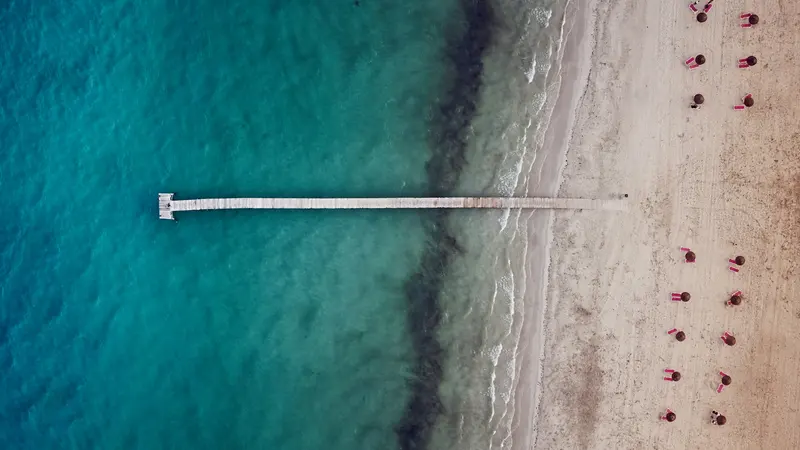
The walled town suits mornings at Pollentia and evenings on foot among the stone lanes. Check the walk from an outside parking spot if you are bringing a car. Port d’Alcúdia makes the promenade and the beach part of each day and is a convenient choice if swimming matters more than being near an old-town square.
Towards Platja de Muro, check whether a property is in Alcúdia or farther round the bay. Look at the exact address in Alcanada or Mal Pas if your priority is a smaller beach. Where you stay changes the walk you will make most often, whether it is to the sea, back from dinner or to a bus stop for the trip to the old town.
See places to stay in Alcúdia (opens in a new tab)Affiliate link: if you book through it, we may earn a commission at no extra cost to you.