

 Español
 English

Why visit Santa Eulària des Riu
The hilltop church and the river give Santa Eulària des Riu two different places to start a visit. From Puig de Missa you can look over the town and the coast. Below, the walk by the river reaches the sea close to the town beach. With one morning you can see the church and old bridge, then keep the afternoon free for the water or another stop along the east coast.
The town lies on the island of Ibiza in the Balearic Islands. You may also see it called Santa Eulalia. The name covers a wider municipality that includes Es Canar, Sant Carles and other settlements. Check which one appears in a booking address. Staying in town makes it easy to walk to the river and harbour, while a base by a cove puts a different beach on your doorstep.
When to go
Spring and September are good months to build a day around the church, museum and waterfront. In spring, expect more opportunities for walking than for long swims if the water is still cool. In autumn, keep time for an indoor visit if there is rain or an onshore wind. The river still works as a short outing when you want to stay close to town.
In hot weather, get to Puig de Missa early and save the level seafront for later. If you have one full beach day, decide in the morning whether to stay near the centre or travel along the coast. There is enough to do on foot in town if sea conditions make a longer journey less appealing.
Getting there and around
In 2026, airport operator Aena listed the AERO4 from Ibiza Airport (IBZ) towards the resort areas of Santa Eulària and Cala Nova. Check the dates, stops and journey times for your trip, particularly outside summer. If you arrive by sea in Ibiza Town, leave time to get from the ferry terminal to the departure point for the bus or transfer.
Walk between Passeig de s’Alamera, the seafront and the river mouth once you are in town. Allow separately for the climb to Puig de Missa if some of your group prefer a flat route. For Cala Llonga or Es Canar, find the stop and return service before deciding to spend the whole afternoon on the coast. Drivers can group beaches that lie in the same direction.
What to see in Santa Eulària des Riu
Puig de Missa and Can Planetes
Start at the church of Puig de Missa, where you can see the hill’s position in relation to the town and the sea. Use that view to get your bearings before descending towards Can Planetes, a former watermill now used to interpret the river. The mill makes it easier to see how a stretch of water influenced nearby work and gardens.
Pont Vell and the river mouth
From Pont Vell, the old bridge, follow the water towards the coast. Look for references to the fameliars underneath the bridge. These creatures from local folklore give children a reason to pay attention to the route. At the mouth, pause where the river and beach meet. The riverside section also makes a standalone outing for anyone who wants to skip the hill.
Monuments and heritage
The fortified church at Puig de Missa is easy to recognise by its white walls and position above the streets. Walk around the outside to see how the approaches adapt to the slope. Later, look back from lower down and use the church as a landmark. Allow time for the nearby ethnographic museum if its opening hours fit your visit.
At S’Argamassa, parts of a Roman aqueduct survive near the shore. It carried fresh water from an inland source to an installation by the coast. Pair the remains with Cala Pada or Es Canar if you are already travelling along that stretch. Use both the beach and the remains to orient yourself before choosing where to get off the bus or leave the car.
Museums and culture
Can Ros, the island’s ethnographic museum, occupies a rural house near the church. The building is part of the visit: look at how the rooms relate to one another before concentrating on individual objects. Later, when you pass farmhouses away from town, you have a reference for how people used their interiors. At Can Planetes, the focus shifts to the flow of water and the work of the mill.
In the village of Jesús, the church and its altarpiece make a separate cultural outing. Consider it on the same day as a journey towards Ibiza Town. In the other direction, the square and church of Sant Carles make a useful first stop if you are continuing to a market or to the north-eastern beaches.
Neighbourhoods and areas
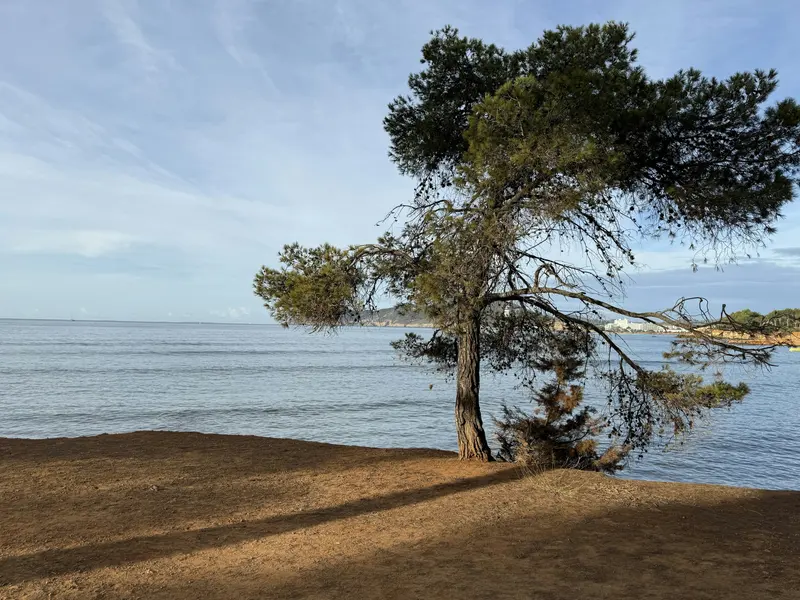
The town centre and waterfront meet around Passeig de s’Alamera, between the seafront and the streets that lead inland. Choose the walk towards the river for an outing without the hill. Es Canar has a separate resort centre and beach arranged around its own bay. It is close enough for a day trip, but staying there gives you a different set of walks from your room.
Sant Carles de Peralta is an inland village, useful as a landmark for finding Las Dalias. Set time aside for the village itself if the market is your main reason for coming. Punta Arabí, the market near Es Canar, is a separate venue. Check the calendar for the one you intend to visit before choosing which direction to travel.
Beaches in Santa Eulària des Riu
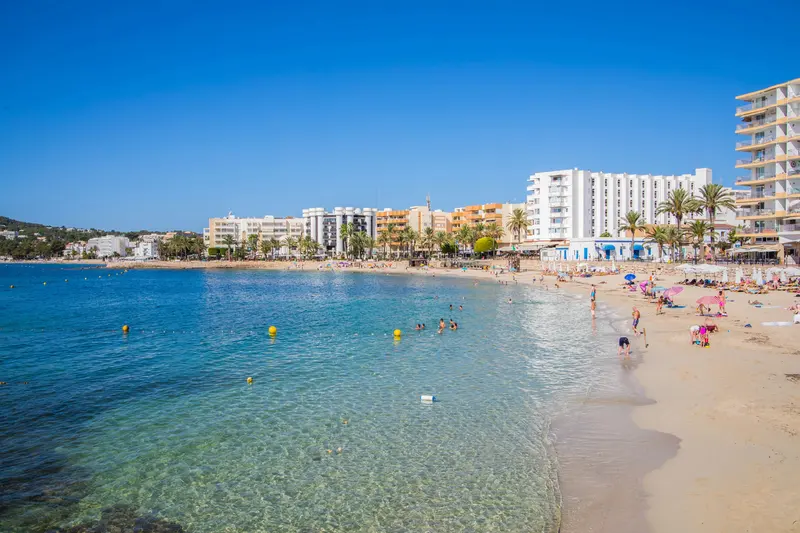
The town beach and Platja des Riu are easiest to combine with a walk to the river mouth. Choose them when you want to add a swim after the museums or spend time on the promenade. Further north, Cala Pada and S’Argamassa pair well with a visit to the remains of the Roman aqueduct.
Es Canar is a separate beach base, with Cala Nova to the north. At Cala Nova, choose between walking and swimming according to sea conditions. South of town, Cala Llonga lies in a bay between hills. Make it the focus of a day if you want several hours on the beach with one outward journey.
Festivals and traditions
The Balearic calendar listed the feast of Santa Eulària on 12 February 2026. The town also holds the Festes de Maig around the first Sunday in May, which fell on 3 May in 2026. Check your year’s programme for events and addresses. A date on the calendar and the location of a particular performance are different pieces of information.
When a festival includes ball pagès, watch the musicians as well as the dancers. A visit to Can Ros in another season gives you context for aspects of rural life and dress you might see during a performance.
Routes and itineraries
Half a day on foot. Climb to Puig de Missa and visit Can Ros if it is open. Go down towards Can Planetes and Pont Vell, then follow the river to the sea. Return along the seafront to the centre.
A full day between town and shore. Follow the historic route in the morning and keep the town beach for the afternoon. If the aqueduct interests you, travel north to S’Argamassa and Cala Pada instead. A second day gives you time to pair Es Canar with Cala Nova or to make a separate excursion to Cala Llonga.
Day trips
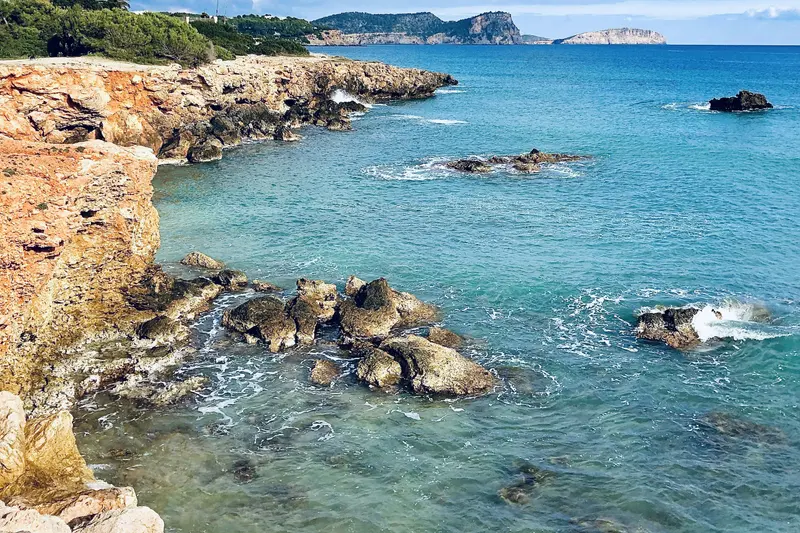
For archaeology and Renaissance walls, choose a day in Ibiza Town and split it between Dalt Vila and Puig des Molins. For the opposite coast, Sant Antoni de Portmany offers a bay walk and sunset views. Check how you will return before planning to stay there into the evening.
Within the municipality, combine Es Canar with Sant Carles for a day of coast and countryside. Pick in advance where you want the longer stop. If a market visit drives the itinerary, arrange the village and beach around its calendar.
Travelling with children
Use the stretch from Pont Vell to the river mouth for a walk with natural stopping points. Look for the fameliars at the bridge and then see how the water meets the beach. If some of the group want to climb the hill, everyone else can follow the flatter route towards the promenade. Save Cala Llonga for a full beach day if you are bringing a lot of equipment. In town, an afternoon by the water can be broken up with a walk or a short return to your room.
Where to stay in Santa Eulària des Riu
The centre and seafront are the easiest choices for days built around the river, church and town beach. Es Canar works for travellers who want a base by the north-eastern shore. Cala Llonga suits a trip centred on one bay. For a stay inland near Sant Carles, check how often you expect to travel to the beach or to the main town before settling on an address.
See places to stay in Santa Eulària des Riu (opens in a new tab)Affiliate link: if you book through it, we may earn a commission at no extra cost to you.