Español
 English

Why visit Mallorca
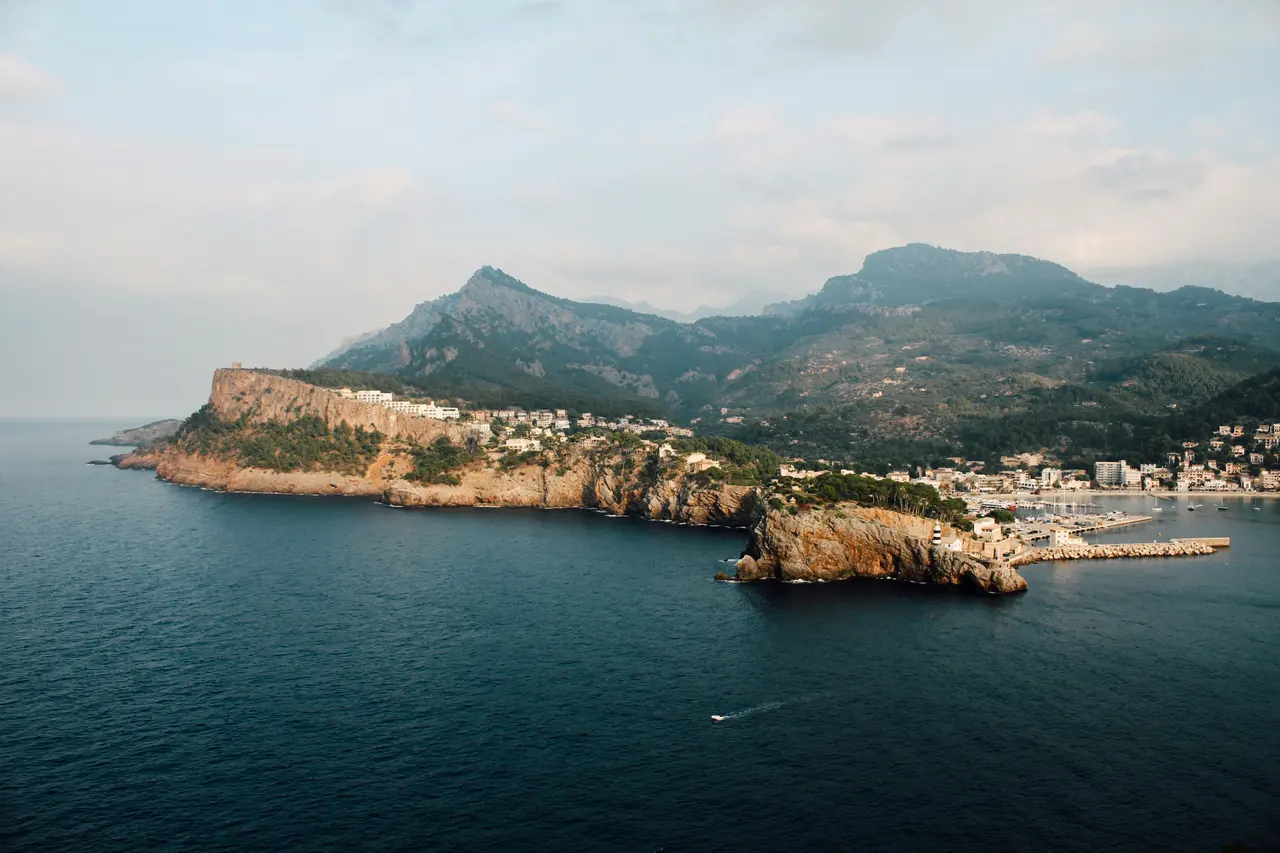
When choosing things to do in Mallorca, think in terms of four landscapes. Palma faces a broad bay. The Serra de Tramuntana follows the west coast through ravines and terraced slopes. Around the northern bays, Alcúdia and Pollença give you walled streets and walks by the water, while Formentor sticks out into the open sea. The south and east have salt pans and coves. Between them lies the Pla, a farmed plain with small towns and views towards the hills.
Mallorca is one of the Balearic Islands where you can fit both a city and a mountain outing into a long weekend. Spend the first morning round Palma’s cathedral quarter. Then decide whether to walk in the Sóller valley or use a full day for the coast. With a week, change base once and choose the north or south-east for the second part. If a hike or a boat trip is central to the holiday, give it a flexible day and put visits you can move around it.
When to go
Choose a season for the way you want to travel
Try spring or autumn for walks in the Serra de Tramuntana. Look up the forecast for the highest point of your route as well as the valley where you are staying. Bring something windproof and plan to arrive back in daylight, especially if you have to reach a bus stop or drive back along a winding road.
July and August suit a holiday built around swimming. Use the first part of the day for the cathedral or the walled streets of Alcúdia. If your chosen cove means a walk across exposed ground, get there before the heat builds up. Staying close to a beach makes a short afternoon swim possible and saves you from needing a parking space every time you go.
September can work well for beaches and heritage in the same trip. Swap a walk for Palma, a winery or one of the visitor caves in the east if you get steady rain. In winter, Palma and the larger towns make it easier to organise meals and walks if seasonal businesses are closed. Carry a light layer for the wind coming across the bay and for damp days on the coast.
Getting there and around
Airports, ferries and the trip to Sóller
PMI is east of Palma. In 2026, Aena listed urban bus A1 from the terminal to the city. Save the accommodation address before you leave the airport. Platja de Palma is a separate area from Palma’s old town, and a booking with Palma in the description might be in either. If you arrive by ferry, find the actual terminal and the onward transfer. Port d’Alcúdia is a convenient alternative gateway if you will be spending most of the trip in the north.
For a stay in Palma with a day in the west, compare the bus to Sóller with the historic railway. Sóller is inland from Port de Sóller. If you want to take the train and the tram to the port, check both timetables, work out the time between them and look at the last return before setting out. With luggage, check whether you will have to reverse the journey or can finish at a room in the valley.
Where a car helps and when to take the bus
A hire car is handy for villages in the south-east and coves well away from the main bus routes. Consider picking it up as you leave Palma. Check parking at your accommodation first. On the Ma-10, a modest distance may involve numerous bends and several slow approaches to towns. Decide where to spend the most time before attempting Valldemossa, Deià and Sóller on one outing.
At Formentor, the 2026 DGT scheme restricted some vehicles on the Ma-2210 from 15 May to 18 October, normally between 10 am and 10 pm. The TIB 334 bus served the Es Colomer viewpoint, the beach and the lighthouse during the 2026 scheme. Look up the rules and stops for your own dates. If the lighthouse is on your list, make sure you know when you can get back from the far end of the peninsula.
What to see in Mallorca
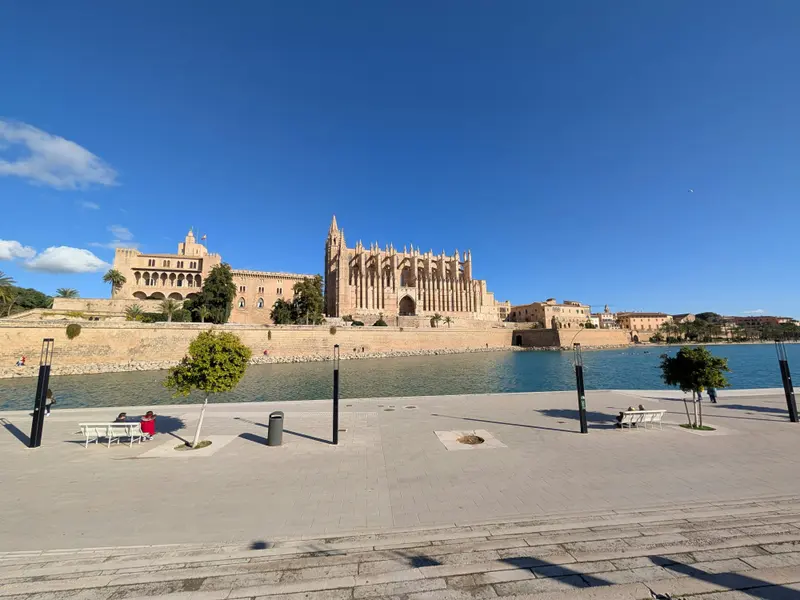
Palma from the old waterfront
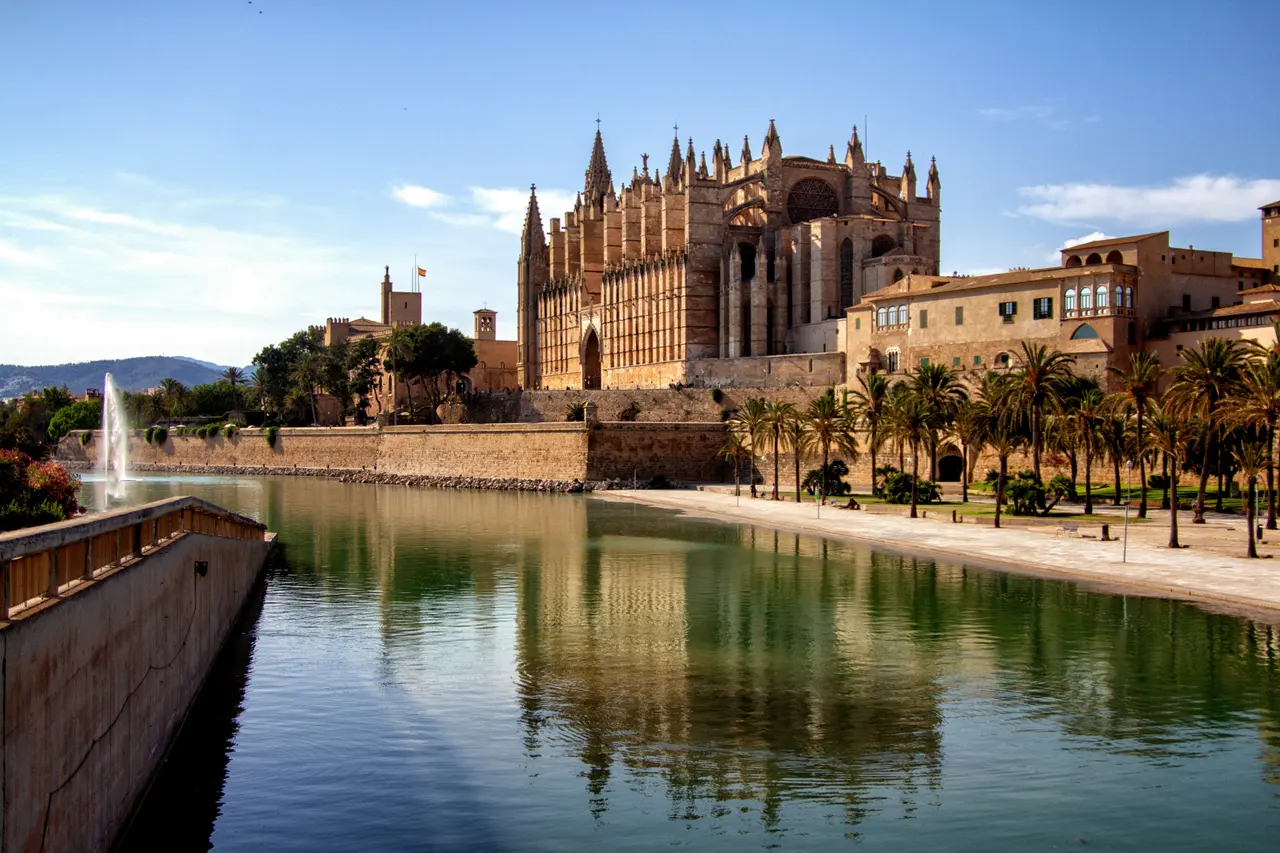
Find La Seu and the Almudaina Palace from the Parc de la Mar before walking up into the old town. Above the park, the cathedral square and streets around Cort give you two different views of city life. Leave a morning if you want to go into both the cathedral and palace, and check each admission separately. You can compare visits to Palma Cathedral to find one that gives you the architectural context you want.
On a second day, choose Bellver Castle or Es Baluard. Bellver helps you place the slopes, the old town and the entire bay on your mental map. Es Baluard combines contemporary art with a view from the former defences. Each deserves time to look around. Choose one if you already have lunch booked or are travelling across town later that day.
From the Serra to the northern bays
In Valldemossa, walk uphill from the lower streets to the charterhouse and find a view into the valley. In Deià, the church marks the upper end of the village. Visiting the cove means another walk down towards the sea. In Sóller, give yourself the morning to see the square, the streets and the edge of the town where the orchards begin. The port opens out around a bay. Split the three villages over two days if you want proper time in each.
In the north, explore Alcúdia’s walled old town and keep the location of the port in mind. At Pollença, climb towards Calvari to look over the rooftops and plain. Port de Pollença gives you a walk at sea level and a practical starting point for Formentor. The Es Colomer viewpoint and the lighthouse are separate stops. The former takes in the steep coastline, while the latter puts you at the tip of the peninsula.
East towards Artà
In Artà, use the climb to the Santuari de Sant Salvador to get your bearings. The view up there helps you place the town in the surrounding country. For another part of the day, choose between the Caves of Artà, near Canyamel, or the Drach Caves, at Portocristo, according to the coast you want to visit. Check access separately. If you have a timed visit, start the day’s planning with that and pick a beach nearby.
Monuments and heritage
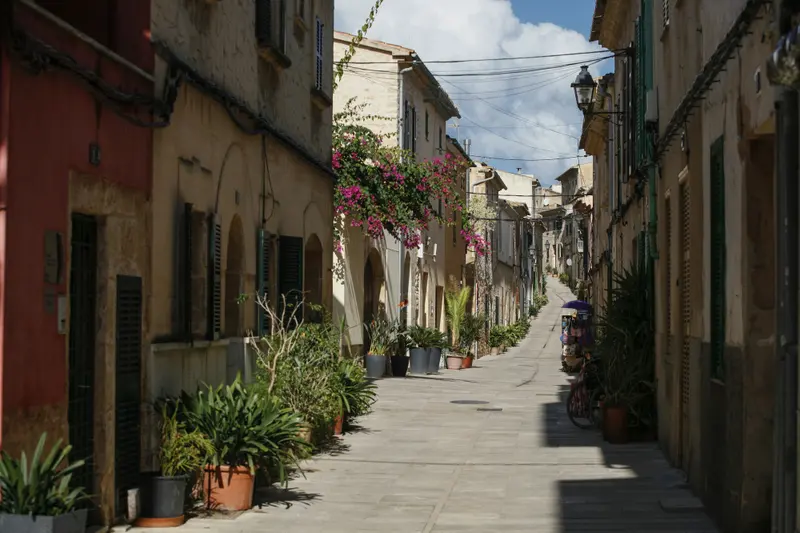
A palace, a Roman town and a landscape of stone
La Seu and the Almudaina occupy the high ground above Palma’s former harbour edge. Walk beside the water to see how prominent the buildings are, then look for the doorways and courtyard entrances in the lanes behind them. In the cathedral, notice the light and the different periods represented in the interior. In the palace, the courtyard and rooms help explain why the same location worked as an official residence.
Outside Alcúdia’s walls, Pollentia preserves remains of the earlier Roman town. Give yourself time to work out which part of the archaeological site you are standing in and how to get to the theatre. The surviving features cover more ground than a quick walk to the nearest gate. Visiting the Roman remains and the later walled streets on the same day makes their different layouts easy to compare.
The Serra de Tramuntana is a UNESCO cultural landscape. In Banyalbufar, try to follow the terrace lines from the village towards the sea. Near Valldemossa and Sóller, look at where the orchards sit in relation to the houses and how narrow a path needs to be to reach them. Field walls, terraces and waterways work together. View the farms from public paths and keep clear of private entrances.
Charming villages
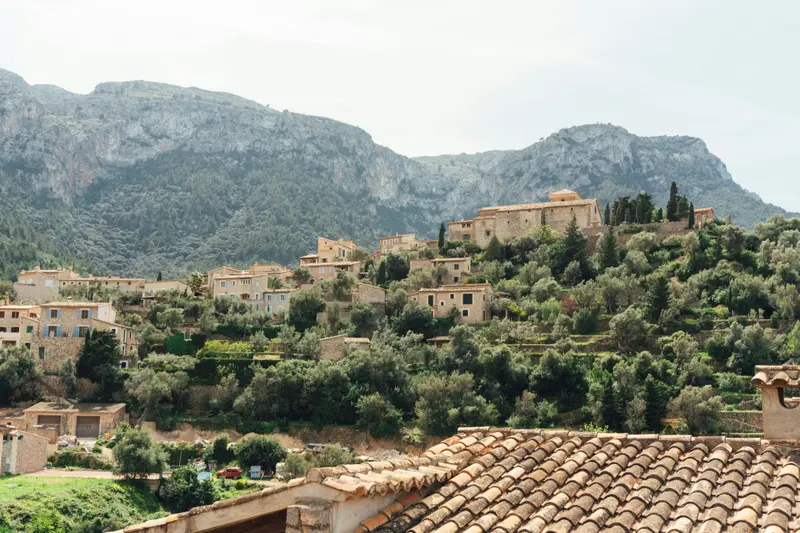
Stone streets on the slopes
At Fornalutx, visit the square and choose a steep lane up towards the view over the Sóller valley. Taking the lanes in a loop avoids seeing the same spot on the way back. Travellers who find slopes difficult can start in the square, try one stretch and head back before it gets too steep. Notice which streets the sun reaches in the part of the day you visit.
Banyalbufar sits on a narrow stretch of the west coast with mountain above and sea below. Take time to see both the terraces and what the village looks like at street level. Estellencs, further along the same coast, makes a stop of its own if you want to see the shore. Estimate the whole walk back up from the water before starting down, and make sure you have parked where you are allowed to leave the car.
Market streets, boats and vineyards
In Santanyí, start in the streets around the church and choose between Mondragó and Cala Figuera afterwards. Cala Figuera’s quays follow two narrow arms of water with boat shelters and fishing craft. Follow the waterfront on foot if you want to see how the village works. For a swim, choose a separate beach access and use the harbour as an afternoon stop.
Inland, Sineu lets you spend part of the trip away from the bays. If the market is the point of the visit, confirm when it is on before setting out. Binissalem works for a different kind of inland day, with a village walk in wine country. Arrange a driver or a transfer in advance if you want to join a tasting.
Nature and protected areas
Fresh water, dunes and pinewoods
At s’Albufera de Mallorca, go to the information centre first and choose a route. The Balearic government’s guidance consulted in 2026 asked visitors to obtain a permit at the centre. Check that the area and your chosen trails are open. Bring binoculars for the hides and allow a few quiet minutes beside open water before moving on to the next one.
At Mondragó, pinewoods and low cliffs lie a short walk from dunes and coves. Choose a route that begins near the beach where you plan to end up. With half a day, link ses Fonts de n’Alis and s’Amarador, or pick a short coastal walk if the conditions make swimming unappealing. Stick to marked paths and boardwalks where they cross protected ground.
The Cabrera archipelago from the south
The Cabrera Archipelago National Park revolves around a sea crossing. The environment ministry’s visitor guidance consulted in 2026 called for reservations for the public boat. Ask which port your trip uses and what time and access you have ashore. The harbour and the castle make a good initial walk. Any swimming stop offered on the boat should depend on conditions and the crew’s instructions.
Bring food and water for the time you will be away and a bag to take rubbish back to Mallorca. Sleeping on the south coast can save an early drive from the Serra on the day of your trip. If the sailing is cancelled, a walk or lunch in Colònia de Sant Jordi stays within reach. Santanyí gives you another plan for a day when going out to sea is impractical.
Beaches in Mallorca
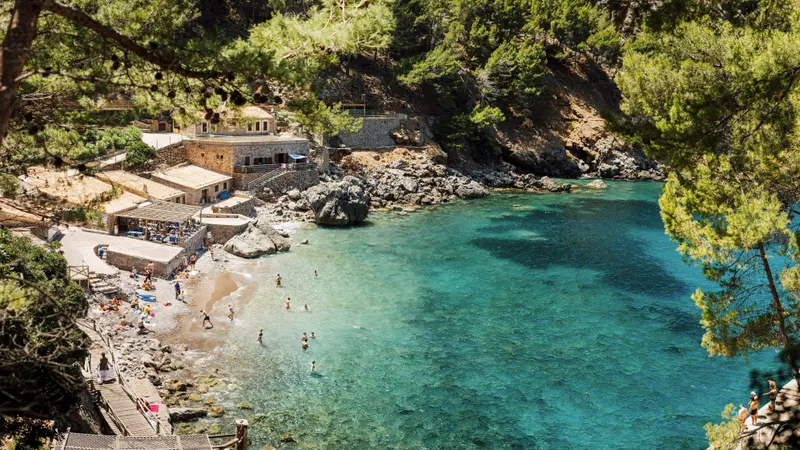
Long beaches in the north
Platja de Muro lies on the Bay of Alcúdia. Pick an access point based on where you are staying, how much you need to carry and the services you want. If you are combining the beach with s’Albufera, give the wetland the cooler part of a morning and use another day for longer on the sand. At Port de Pollença, the seafront makes it easy to break up a swim with a walk or lunch in town.
Southern dunes and eastern coves
Es Trenc has dunes and salt-making country behind it. Choose where to approach before setting out and agree on a place to meet on the beach as well as the car park. Use the boardwalks to cross the dunes. On a windy day go for the landscape and decide about swimming once you reach the water. Colònia de Sant Jordi has coastal walks nearby if you decide to change plans.
Cala Santanyí and the beaches of Mondragó sit in smaller inlets. Check how much space and shade there are, and look at the sea before swimming. If you are visiting with children, find out where you can enter the beach with your equipment and choose one with lifeguards on duty. On the Tramuntana coast, Sa Calobra needs time for the drive and for the walk towards the mouth of Torrent de Pareis.
Festivals and traditions
La Patrona in Pollença
The local programme for La Patrona in 2026 placed the main celebration and historical re-enactment on 2 August. Check the year’s programme for the route and transport instructions. Choose where you want to stand based on how you will leave when the event ends. If you are staying by the sea, work out how to get back to Port de Pollença independently of your plans for the daytime.
Sant Antoni and the island’s stonework
Pollença’s 2026 Sant Antoni programme featured events on 16 and 17 January, with bonfires and gatherings in the town and the port. The two centres are in different places. Check which one hosts the event you want and how you will get back to your room. On another date, look for examples of traditional dry-stone building on a walk in the Serra. Walls mark boundaries and hold up the earth in the terraces. Both types are visible along some paths between villages.
What to eat
The bakery, the market and a long lunch
Start at a bakery for a spiral ensaïmada to share or a slice of coca de trampó, a flatbread with a vegetable topping. Pa amb oli is bread with oil and can be ordered with cheese, meat or fish toppings. Sobrassada is a soft, paprika-seasoned sausage. Try a little first if you are deciding which strength to buy at a stall.
On a menu, tumbet layers summer vegetables and tomato. Frit mallorquí comes in different forms, so ask what the kitchen puts into its version. Look for bottles from Binissalem or Pla i Llevant when trying Mallorcan wine. If you book a winery tour, check how far the cellar is from the village and how long the visit lasts. In smaller towns, ask when lunch is served before expecting to eat at the same time as you do at home.
Sport and outdoor activities
The GR 221 Dry Stone Route has linked stages and variants across the Serra. Check which one you are on using the Consell map. From Sóller, you can plan a short valley walk or choose an onward stage to a different town. Use the official distance and climb to judge the outing. Make sure you can actually get back if your endpoint is in another valley. A short distance on the map may need a considerably longer road transfer.
For cycling, routes through the centre of Mallorca feel different from the climbs and bends of the Ma-10. Choose a route that matches your experience and find safe stops in advance. Take lights and water. For a paddle, compare conditions in Port de Sóller or another bay with those on the open coast. Ask a school which trips work for new paddlers if the wind picks up.
Routes and itineraries

Three days in Palma and the west
Give the first day to Palma from Parc de la Mar to the old streets above it. On day two, link Valldemossa and Deià if you are driving or choose Sóller and its port for an outing without the car. Use the third for Bellver or one more stop in the valley. Switch the mountain and city days if rain makes the city’s indoor options more useful.
Five days including the north
After two nights in Palma or Sóller, move to the Alcúdia area. Stop for lunch inland on the way and walk around the walled town after leaving your bags. Give one day to s’Albufera and the bay and another to Pollença and Formentor, subject to access. In summer, staying at the same beach for an entire afternoon can leave more time in the water than trying to see several places by car.
A week with the south-east
Split the week between the west and the south or east. From the second base, allow a day for Mondragó’s paths, another for Santanyí and Cala Figuera and one for Cabrera if the boat is a priority. Add a visitor cave on the transfer day if you can store your luggage. Keep one part of the week free so you can choose your beach according to the wind.
Travelling with children
Combine one major indoor visit in Palma with a walk around the Parc de la Mar. In the Bay of Alcúdia, choose somewhere you can reach the sand without finding a parking space in the middle of the day. For a wetland outing, give children one specific thing to look for, such as an animal in the reeds or a bird on open water.
With a pushchair, check the surface and slope of village routes. The promenade in Port de Sóller is an easier outing than a climb to the church in Deià. For a boat trip, consider the full trip from your room to the departure point and back. At a beach with dunes, see how far it is from the end of the boardwalk to the water.
Where to stay in Mallorca
Palma gives you heritage sites, markets and a base for outings without a car. The old town puts the main sights close together, while being near a station or departure stop is useful for longer day trips. Pick Port de Sóller to walk beside the bay in the evening before heading into the hills. Stay in Sóller or elsewhere in the valley if you want to wake up near the walking routes and can get to dinner easily.
The Bay of Alcúdia works for beach days mixed with visits to Pollença and s’Albufera. Alcúdia old town suits anyone who wants to walk to dinner and historical sites. In the south-east, Santanyí gives you a choice of nearby outings. Colònia de Sant Jordi makes sense when Cabrera is high on your list. Look at where a property sits in relation to the village, harbour and road before assuming you can leave the car behind in the evening.
See places to stay in Mallorca (opens in a new tab)Affiliate link: if you book through it, we may earn a commission at no extra cost to you.
Practical tips and common mistakes
Check each place name against the map. Sóller and Port de Sóller are distinct, as are Pollença and Port de Pollença. More than one place goes by Cala Figuera. Save the actual beach access and where you left the car.
Measure mountain journeys in hours. Two villages with an interior visit can fill most of a day. Save a cove with a walk down to the water for another afternoon and plan to finish near somewhere to get food and water.
Check which part of the plan needs a reservation. A boat ticket to Cabrera and access to the road at Formentor are separate matters. Find the times, return options and any permissions your trip depends on before combining them with another booking.