Español
 English

Why visit Formentera
When choosing things to do in Formentera, think about three different days. From La Savina, the northern belt of salt pans and dunes is within reach almost as soon as you step off the boat. In the middle of the island, Sant Francesc Xavier and Sant Ferran give you routes out to different shores. The road east climbs to the plateau of La Mola, while Cap de Barbaria is an open, drier landscape in the south-west. The short distances leave room for one main outing and a good walk without making each morning about getting somewhere else.
Among the Balearic Islands, Formentera is particularly easy to pair with Ibiza. With one day, stay in the corridor between the port and Ses Illetes, or pick a section of coast you can reach and leave with time to spare. With two or three nights, give one morning to the salt pans, one to La Mola and another to the south or west coast. You can also try a bicycle on level ground before deciding whether to ride uphill, into the wind or along an uneven track.
When to go
Pick a season for time outdoors
Spring and early summer give you more comfortable hours for the Camí de sa Pujada, a walk across the La Mola plateau or an outing near the lagoons. Treat a swim early in the season as something to decide on the day. A village visit and a waterfront walk both fit if the water is still cool or wind is kicking up waves.
July and August are good for a beach break. Even a flat ride can be tiring in the heat when there is little shade. Set out early to pedal and leave the afternoon for a beach near your room. Allow time for a long lunch or a rest at midday. If you want to watch the sun go down somewhere without lights, use a route you know and bring suitable lighting for the way back.
September and October can give you both swimming and inland walks, depending on conditions. Wind helps decide which shore to use and may affect ferry sailings. Outside the summer season, check which accommodation, visitor sites and services are available. A winter trip works for villages and lagoons if you bring a windproof layer, consult the marine forecast and have time between connections.
Getting there and around
Taking the ferry to La Savina
Formentera is reached by sea. The terminal at La Savina is used for the crossing from Ibiza. If you fly to IBZ, find the onward transfer to the harbour in Ibiza Town and allow time to collect bags. Leave room for queues, travel between the terminals and changes to sailings when you have bought separate tickets. With an early flight home, consider staying on Ibiza the night before you leave.
For a day trip, choose the return sailing first. Find the quay on your ticket and see when the operator wants you there. On arrival, sort out where to leave anything you will not carry all day, where you will collect and return a bike and how far you are from the start of your route. In a strong wind or with children, a nearby beach may make for a better day than trying to reach both lighthouses.
Bikes, buses and motor vehicles
A bicycle is practical between La Savina, the salt pans and some of the inland settlements. Check the surface of your green route and make time for the return. A sandy or stony track can feel very different from a road on a town bike. La Mola involves a climb on the approach. Check brakes, lights and somewhere to leave the bike if you have panniers or are carrying a child.
With a bus, check the arrival and return journeys and how long you will be walking from the stop. If you have much to carry, a transfer to the accommodation can settle the first day before you hire a bike. Work out the link between your village and beach before booking dinner away from the place you are staying.
The Balearic government records that the 2026 formentera.eco scheme limited the entry and circulation of vehicles from 1 June to 30 September. For another season, check the dates and find out whether you need an authorisation for your registration number. A ferry space and an island vehicle permit are separate things to confirm. Ask the hire company whether the booking allows you to take the vehicle on a ferry. For a short stay near the port, check whether walking or cycling fits your plans more easily.
What to see in Formentera
From La Savina to Es Trucadors
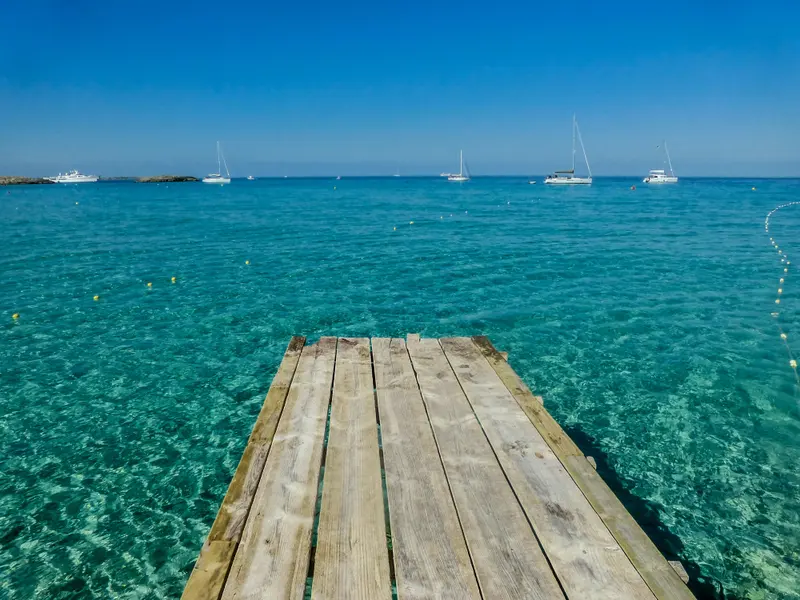
At La Savina, locate the ferry terminal, the edge of Estany des Peix and the ways towards Estany Pudent. With a bike, you can move from the quays into the dunes on the green route to Ses Illetes. Pause to look at how the path sits between expanses of water and sand. If it is windy, make the onshore walk your starting point and judge whether you want to swim when you reach a suitable beach.
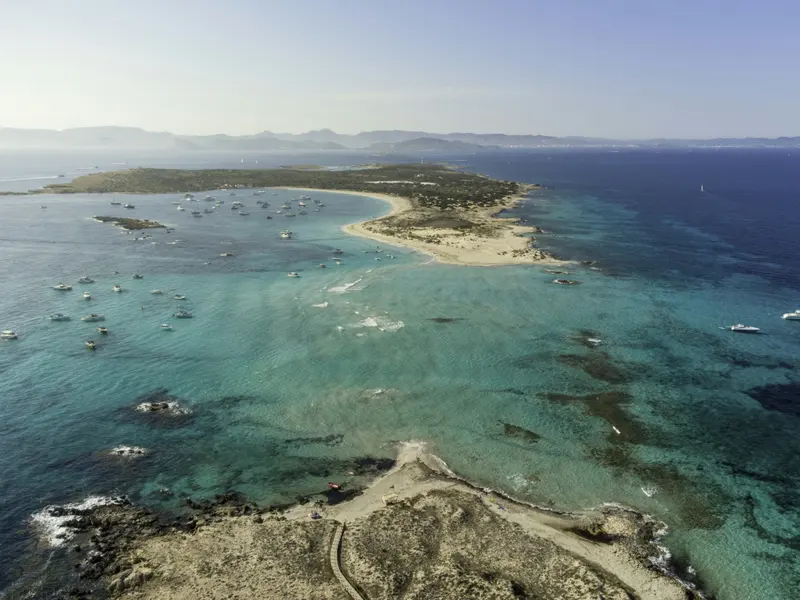
On Es Trucadors, look at the two shores of a narrow peninsula. The view towards s’Espalmador shows how the islets sit between Formentera and Ibiza. Consult the park about allowed access before making plans beyond the end of the road. The distance you see from the sand gives little indication of currents or boat traffic. If you want a trip from the neighbouring island, you can compare boat outings to Formentera from Ibiza.
La Mola and Es Caló at different heights
In El Pilar de la Mola, stop in the village before continuing to the lighthouse. Allow time for both the farmed plateau and the cliffs. Stay well back from edges at viewpoints. On a bike, the flat ground above and the climb to reach it are two different rides. If you prefer the flatter section, start from the village and plan the onward or return transport before leaving.
In Es Caló de Sant Agustí, look for the boat shelters, then walk towards Ses Platgetes or find the old path up to La Mola. A short walk shows why a small harbour feels different from the open shore beside it. For the climb, check where the trail actually begins and keep energy for the return. You can make the beach a separate outing if your main interest that day is the historic path.
Cala Saona and Cap de Barbaria
From Sant Francesc, one road leads west towards Cala Saona and another south towards Cap de Barbaria. At Cala Saona, take time to see the beach and the two rocky flanks. The tourist office’s guide consulted in 2026 described seasonal controls on motor access towards the cape. Check the gate arrangements, walking access and provisions for visitors with reduced mobility before setting out. Bring drinking water and allow for a walk back to where you left your transport.
Monuments and heritage
Lighthouses, windmills and coastal defences
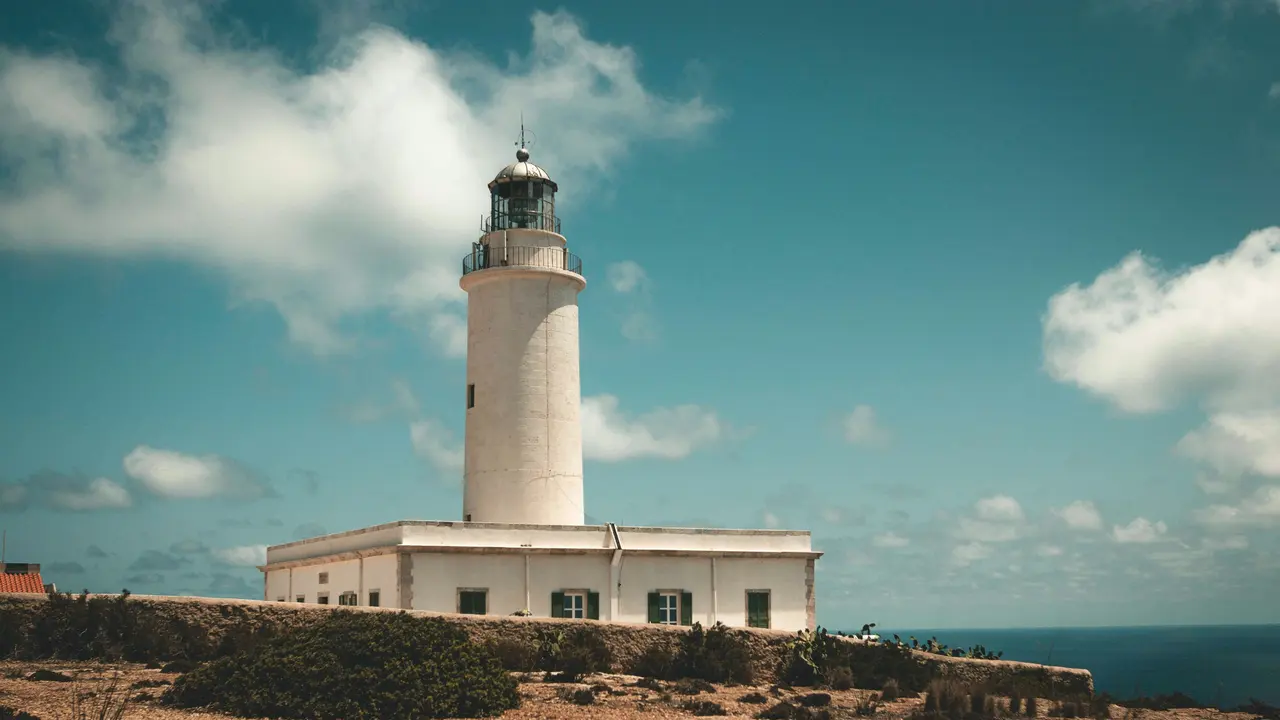
The La Mola lighthouse entered service in 1861. It occupies one end of the plateau and shows why a light was needed to mark land for people approaching by sea. If you can visit the exhibition, pair it with an exterior walk. The Cap de Barbaria lighthouse, at another end of the island, is surrounded by more open, drier ground. Give each visit time if you want to understand how their locations differ.
The Molí Vell de la Mola uses the wind for a different purpose. A green route from El Pilar passes the mill towards Punta Roja. Decide where to turn back if you are also going to the lighthouse that day. In Sant Francesc Xavier, take in the proportions and plain exterior of the church from the square. You could compare it with a coastal tower if you have time to take the designated approach and view the tower in its surroundings.
The island before the lighthouses
The archaeological sites near Cap de Barbaria show how the south-west was used long before the lighthouse was built. At Cap de Barbaria III, look at the outline of the remains and the ground around them before heading towards the coast. A short visit with the heritage map helps you tell older remains from the more recent field walls. Stay outside marked boundaries and leave the stones in place.
Charming villages
Sant Francesc Xavier and Sant Ferran
In Sant Francesc Xavier, use the church square to get your bearings. Walk a few lanes before heading for Cala Saona or the south-west. On a car-free stay, this is a good time to buy supplies, eat and pick up an onward connection. Check the stop you need on the way back too, especially if you want to have dinner in town and return to a room on the coast.
Sant Ferran de ses Roques is near the turn-offs for Es Pujols and Migjorn. Take a walk near the square and make time to eat before continuing to the sand. The tourism office lists 1.8 km for the green route from Sant Francesc to Sant Ferran. Add the walk to the start and the time you need to get from the end to your next stop.
Es Pujols, Es Caló and El Pilar
Es Pujols offers a beach and a promenade. It works for a walk or a break while others are swimming. Es Caló shows how boat shelters fit among the small landing areas and rocky shoreline. El Pilar has a more rural setting above the surrounding coast. If a particular market or exhibition is the reason for your visit, check the annual programme. A walk in the village and a short trail fit one outing, while the lighthouse can fill another part of the day.
Nature and protected areas
Two different lagoons
Estany Pudent is part of the Ses Salines wetland system. Camí des Brolls comes close to one shore and is a good way to look for birds without leaving the path. Bring binoculars and spend a few minutes in a single spot. The position of the sun affects what you can see across the water. On a windy day, choose a place to rest without moving into sensitive vegetation.
Estany des Peix lies west of La Savina and opens to the sea through a narrow entrance. From land, note the size of the boats and where the lagoon becomes coast. Around Can Marroig and Punta de sa Pedrera, the terrain includes paths, rock and stretches best enjoyed from the shore. Check the official map before planning a loop so you know your chosen paths connect and are open.
Dunes, seagrass and islets
At Es Trucadors, boardwalks lead through sand and plants. Follow them even when a direct line looks shorter. Underwater, Posidonia seagrass forms a habitat and helps stabilise the seabed. Park regulations consulted in 2026 specify conditions for buoy fields and for anchoring. Ask your boat operator where it is permitted to stop. The park’s rules consulted in 2026 also prohibited mud bathing in the lagoon on s’Espalmador.
Beaches in Formentera
Ses Illetes and Llevant
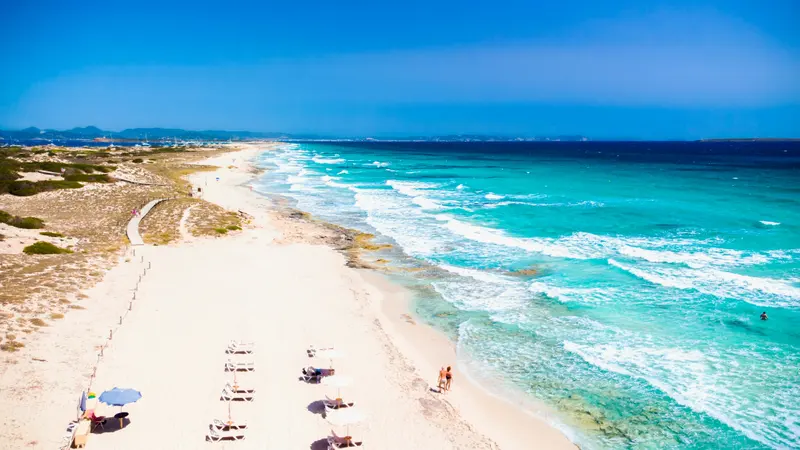
Ses Illetes faces west along Es Trucadors, while Llevant is on the eastern side. Look at the wind and water before choosing where to spend the afternoon. Different parts of the coast can respond differently on the same day. The official routes are 3.3 km from La Savina to Ses Illetes and 4.6 km from Es Pujols to Ses Illetes. Assess the surface, sun and return before setting out with children or much to carry.
Migjorn, Cala Saona and Es Pujols
Migjorn is a sweep of coast around 5 km long according to the tourist office. Es Ca Marí, Es Arenals and Es Copinar have different access points. Choose one by looking at its shore, the walk from your transport and the conditions on the day. Send the exact spot to friends before they set out. Combine a swim at a designated beach with a walk where one stretch of coast links to the next.
Cala Saona is a west-facing beach between rocky shores. For sunset, save an easy route out and leave enough light to find your way. Es Pujols works when you want a promenade and a settlement close to the beach. With children, look for somewhere to take a break, an easy approach and lifeguards on duty. Follow the flags and the advice given at the beach.
Festivals and traditions
Formentera’s island day
Sant Jaume, on 25 July, is the island day, according to the Consell Insular. The council issued a call for bar concessions for the 2026 edition. Consult the programme for the year you go and find the events in Sant Francesc before fixing the return to your accommodation. When you see a traditional dance, notice the rhythm, the instruments and how the group uses the square.
The council’s general calendar also lists Our Lady of the Pillar on 12 October in La Mola and Sant Francesc Xavier on 3 December in Sant Francesc. Check the programme for any individual event. In winter, a village celebration can give you something to build the day around. If you head to the coast afterwards, keep enough light for the transfer and walk back.
What to eat
Dried fish, a local salad and something from the bakery
Amanida pagesa combines dry bread, vegetables and peix sec, preserved by drying. The salad gives you a way to try the fish without ordering a whole fish dish. Ask how the bread is prepared and which vegetables come with the version on the menu. If you buy the fish to take home, ask how to store it during the journey and what to do after opening it.
For a longer lunch by the coast, ask about the fish of the day or whether a rice dish will serve your whole group. To try more things, share a salad before ordering a main. In bakeries look out for orelletes, thin fried pastries, or ask which island speciality has come out of the kitchen. Check serving times before setting out, especially for a meal late in the day in a small settlement.
Sport and outdoor activities
The green routes include coast, farm tracks and climbs. For a first ride, try La Savina to Ses Illetes or a stretch of Camí des Brolls. For a change of scenery, the route from El Pilar to La Mola lighthouse covers 2.8 km. The official description gives 12.3 km for the Pla de la Mola loop. Add the return to any distances for one-way routes, or plan where you will leave the route to take transport back.
For the walk between Es Caló and La Mola, consult the Camí de sa Pujada route information. Start at a time that suits the climb and shade. With a kayak or paddleboard, choose an outing where you can get back to the same access and consider the effect of wind on the return leg. If booking a guide, check the duration, equipment, departure point and arrangements in case conditions change. Leave room for people getting in and out of the water and keep your gear off the dunes.
Routes and itineraries
One day from Ibiza, in a single area
On arrival at La Savina, collect a bicycle or go on foot towards Ses Illetes. Decide how far to go once you see the wind and shade. Eat near the main route or the port so you can get back with time to spare. If you prefer heritage, choose Sant Francesc and a short outing towards Cala Saona instead. Set time aside for catching the ferry and keep the two lighthouses for a longer stay.
Three days for lagoons and lighthouses
Use the first day for the port, the salt pans and the north. Give the second to Es Caló and La Mola, with a walk up or a short circuit across the plateau. On the third day, go to Sant Francesc and choose Cala Saona or Cap de Barbaria depending on the wind and what you want to do. If you have time on departure day, stay near La Savina and keep your bags and the quay within easy reach.
Five days to explore more of the coast
Give Migjorn a full day, choosing an access with somewhere to eat within reach. On the other day, combine Sant Ferran or Es Pujols with a green route. For more time in the landscape, take a lagoon walk early or late in the day and return to a beach you know. Going back to the same cove gives you a chance to see how different it feels in another wind.
Travelling with children
Consider Es Pujols, Cala Saona or one particular access along Migjorn for an initial swim. Check lifeguards, flags and the walk from the place you will leave your things. If you are going by bike, try the child seat, look for loose sand on the route and begin with a short stretch. Break up the day somewhere under cover when the sun is strongest.
For a birdwatching outing, bring binoculars and choose a lookout you can reach easily. At a lighthouse, explain where it is safe to walk and agree a stopping point before you get close to the cliffs. If you are returning by ferry, leave time to return equipment and get everyone to the quay together.
Where to stay in Formentera
La Savina makes it easy to get from the ferry to a room and start exploring the north. Es Pujols works for a beach and evening walks. Sant Francesc has places to eat and routes to several parts of the island. In Sant Ferran, check the walk from the bus and how you will get back from Migjorn.
Along Migjorn, settle on a section of coast first. A room near Es Ca Marí gives you quite different access from a room near Es Copinar. La Mola puts you among fields on higher ground, so think about how you will make the longer trips back down to the coast. For a short stay without a car, choose a place that makes the first outing and the last return easy to organise.
See places to stay in Formentera (opens in a new tab)Affiliate link: if you book through it, we may earn a commission at no extra cost to you.
Practical tips and common mistakes
Work out the journey door to door. From Ibiza, include the journey between the airport and port, the time before the boat and arrival in La Savina. Allow a generous gap before any return flight booked on a separate ticket.
Put wind and shade into the day’s plan. A few kilometres in direct sun, into the wind or on sand can take longer than you think. Carry water and adjust your pace after you see the surface.
Save the exact access. Make a note of your stretch of Migjorn, the park entrance or the parking place at the gate. If you are bringing a car, consult formentera.eco and the ferry company for the rules that apply in your year.