

 Español
 English

Why visit Ciutadella
Start at Plaça des Born if you are working out what to see in Ciutadella. The square sits above a tight inlet, with the old town on one side and a drop to the quays on the other. From the railing you can see how ships once approached a city largely concealed behind its waterfront. A short walk towards the cathedral takes you into streets so narrow that you can lose sight of the sea almost at once.
Ciutadella lies at the western end of Menorca, in the Balearic Islands. It was the island’s capital before the seat of government moved to Maó. Spend one day on its old streets and harbour and another in the countryside if you can. The burial chamber at Naveta des Tudons, the cut stone of the s’Hostal quarries and the beaches all offer quite different reasons to spend another night in the west.
When to go
Spring gives you enough daylight to save the harbour for the end of the day and arrange a museum or church visit earlier. It is also a good season to try one of the exposed sections of the Camí de Cavalls. The north wind, locally called the tramuntana, can feel a long way from the mild air in a sunny square. If it picks up, Can Saura and the lanes around the cathedral make a worthwhile alternative to an open coastal walk.
In summer, use the morning for sites with little shade. The paths at Punta Nati and the stone in the quarries can be bright and hot well before lunch. Look up the opening days of indoor sites before planning to spend the hottest part of your day inside. In early autumn, you can still build a day around a walk and a swim if sea conditions suit the cove you have picked.
Winter is a good time to spend longer on the town itself and keep a short walk in reserve. Check opening before travelling out of town for a particular site. After rain the worn stone paving can be slippery. On a clear afternoon from Sant Nicolau, allow time to look out across the water before heading back for dusk.
Getting there and around
Ferry arrival or a transfer from the airport
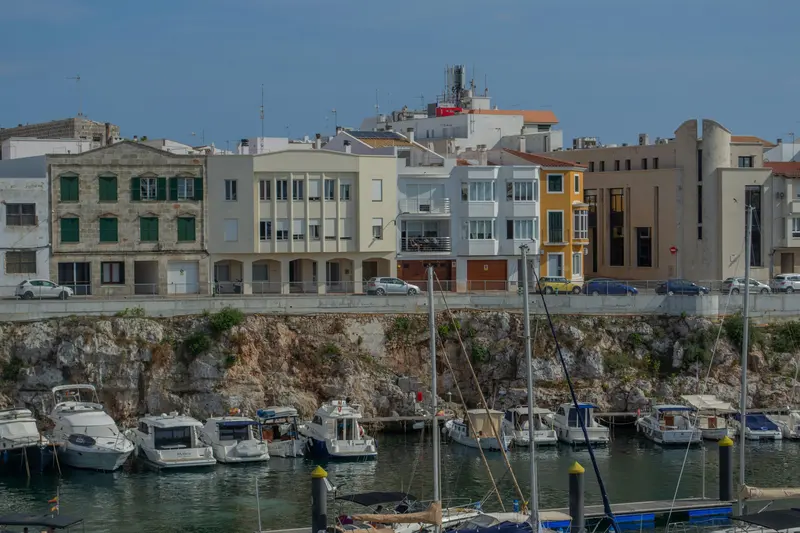
The passenger terminal and the historic harbour are two different places. Son Blanc, the commercial ferry port, is south of the old town. The timber masts and moored boats photographed below the Born are in the old harbour. Read the terminal on the ticket, especially if you expect to go straight from the boat to your accommodation on foot.
Menorca Airport, shown as MAH on flight bookings, is near the opposite end of the island. The road to Ciutadella crosses through the central corridor. If using public transport, check the airport transfer and the onward service from Maó together and save the arrival stop as well as the departure stop. Travellers with a flight in one direction and a ferry in the other should make separate plans for their arrival and departure days.
From the upper town to the shore
In the old town, the useful question is how much climbing your group wants to do. Look for the approach to the harbour before descending and decide whether to come back the same way. At quay level the walk is gentler and you can turn back whenever you like. If you have hired a car, ask where you can unload, particularly if your room is in the narrow streets near the cathedral.
For a day out by bus, choose the cove before checking the service. Some stops serve an estate or a nearby beach rather than the exact entrance you had in mind. A short stretch of coastline on a map can take longer on foot when the path climbs around a headland. Work out the return from the final beach if you are planning a one-way walk.
What to see in Ciutadella
The Born, Ses Voltes and the cathedral
The obelisk in Plaça des Born commemorates the Ottoman attack of 1558. The town hall and Teatre des Born stand on one side of this broad square, with lanes to the old town on the other. Cross to the harbour edge first and look down the inlet. The view helps to place the upper buildings when you see them again from the foot of the cliff.
Head towards Plaça de la Catedral. The streets change width repeatedly and the tiny spaces between them often give you a much better look at a doorway or balcony. Find Ses Voltes, the arcades along Carrer de Josep Maria Quadrado, and walk a little way beneath them. Double back down a side lane. The stones and shopfronts will look different coming from the opposite direction, and you can keep the cathedral in mind as a landmark if you lose your bearings.
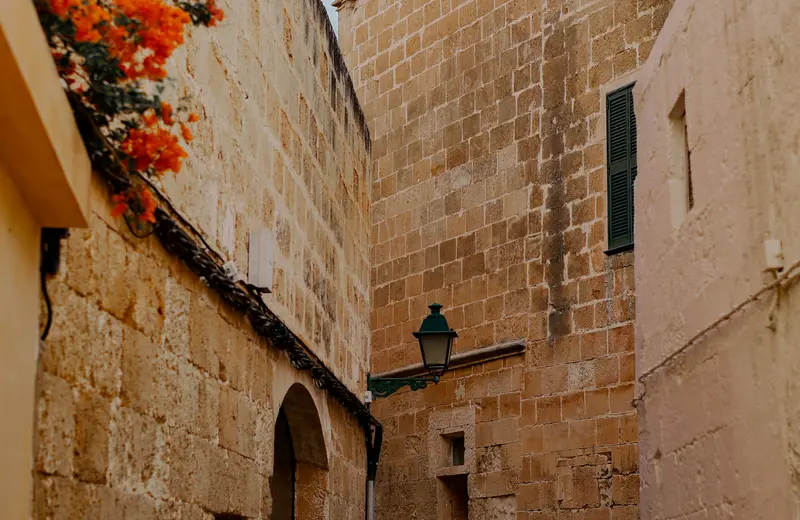
Plaça de la Llibertat and the market lie on the other side of the cathedral from the Born. Notice how the market building opens up the street around it. From here the lanes around Santa Clara offer a longer route through the old town. You could see both ends of the centre rather quickly. Slow down for the places where several streets meet, where the different angles reveal details at roof level and the way larger houses fitted into the medieval street plan.
The old harbour and Camí de Baix
Descend to the quays and follow the Camí de Baix towards Castell de Sant Nicolau. The middle of the inlet is busy with small craft. Closer to the mouth, the two banks begin to part and the view opens up. On a clear day you can sometimes see Mallorca from this end. Look back in the other direction before you leave. The old town is now a small part of a much wider stretch of water.
If you have only an afternoon, walk out along the near bank and come back the same way with time to climb towards the Born. A longer visit lets you make the two levels separate walks. You can also begin beside Sant Nicolau and finish at the obelisk, a good sequence if you want to read the city through its defences.
Monuments and heritage
The cathedral, town houses and harbour defences
Ciutadella’s Gothic cathedral was built on the site of a mosque. First see it from the street, where buildings close in around the cathedral and the scale can be difficult to judge. If the doors are open to visitors, stand beneath the nave for a moment before looking at the smaller details. The open interior comes as a surprise after the surrounding lanes.
The houses around the Born and the cathedral show the importance of the former capital. Look up at the entrances, balconies and stonework from the street, and check the calendar if you have a particular house in mind. The harbour’s Castell de Sant Nicolau tells a different part of the story. Its position at the mouth reveals what had to be watched. You can understand that relationship from outside even if the building is closed.

Naveta des Tudons and Son Catlar
Naveta des Tudons, inland along the main road, is a prehistoric burial structure. Its silhouette suggests a hull turned upside down. Walk around the viewing area and compare the profile from the long side with the view from the entrance end. It is a useful place to learn the difference between a naveta and a talayot, a different form of prehistoric stone structure. The scale and fit of the blocks are clearer from more than one angle.
At Son Catlar, the substantial perimeter wall brings the size of a settlement into view. Follow the route around the remains and look for the relationship between what is inside and the land outside. Both places belong to the prehistoric sites of Talayotic Menorca, inscribed by UNESCO in 2023. Allow for their different locations if combining them. The naveta is on the inland corridor, while the approach to Son Catlar takes you towards the southern countryside.
Museums and culture
The municipal museum is housed in Can Saura, a large historic house in the old town. Give yourself time to see how the rooms are arranged as well as what is on display. Its account of the city’s past makes good preparation for a visit to a prehistoric site. If you have already been to the naveta, the objects in the cases let you see the island on a more human scale after a morning spent looking at walls and large blocks.
Líthica, in the former s’Hostal quarries, uses the shapes left by the extraction of marès limestone. The maze is easy to recognise, but leave time to look at the cuts in the faces of the quarry and the changes of height further along the route. Plan for the climb back as well as the descent. Between the walls the light can change from deep shade to strong reflection in a few steps.
Teatre des Born stands by the square of the same name. Check its programme if you have an evening in town and are interested in a performance. On a day with a fixed evening booking, do the harbour walk earlier so you have time to climb back. A visit to the theatre puts a different set of people and rhythms in the square you saw in the morning.
Neighbourhoods and areas
In the historic centre, the Born is the wide point of entry, the cathedral helps you reorient yourself and the market anchors the eastern lanes. The quays form another approach to the same town, with long stretches of waterfront instead of the small spaces of the streets. If choosing a room, identify where it sits in relation to the harbour and the parts of town you want to walk to at night.
Cala en Blanes and Cala en Brut are on the coast north-west of the centre. South of town, sa Caleta and Cala Santandria offer ways down to the water from residential streets. Cala Blanca lies further south. Each serves a different kind of trip. If you want to spend evenings on foot in the old town, check the route back from these coastal areas at the time you would make the journey.
Cala en Bosch and Son Xoriguer offer a base near the shore and access to the paths beyond the urban area. They can make a beach holiday simpler, especially if one person wants to walk while others stay near the water. On a day spent in the centre, look up where to finish before an evening journey back south.
Nature and protected areas
At Punta Nati, dry-stone walls divide low, open ground on the approach to the lighthouse. You can see how much stone was cleared from the fields and how little shelter there is from the wind. Keep to the signposted route. Set back from the coastal edge, you can see where the platform of rock drops into the sea. Cracks and uneven ground closer to the edge make a poor place to stop, particularly in gusts or fading light.
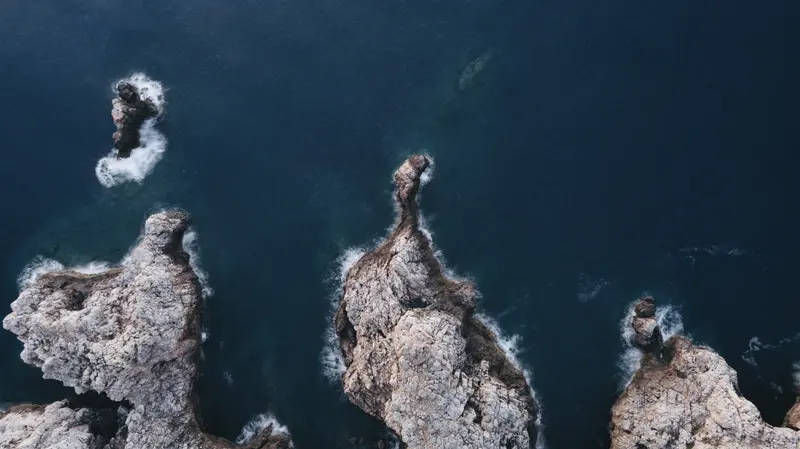
Algaiarens, in the area known as La Vall, lets you see dunes and coastal vegetation behind the sand. Notice the changing ground on the way in, using marked paths through the dunes. Even on a day too windy for a swim the walk shows how different this shore is from the landscape around the southern coves. On a short trip, go for one north-coast outing and give yourself room to choose the day for it.
Beaches in Ciutadella
Close to town
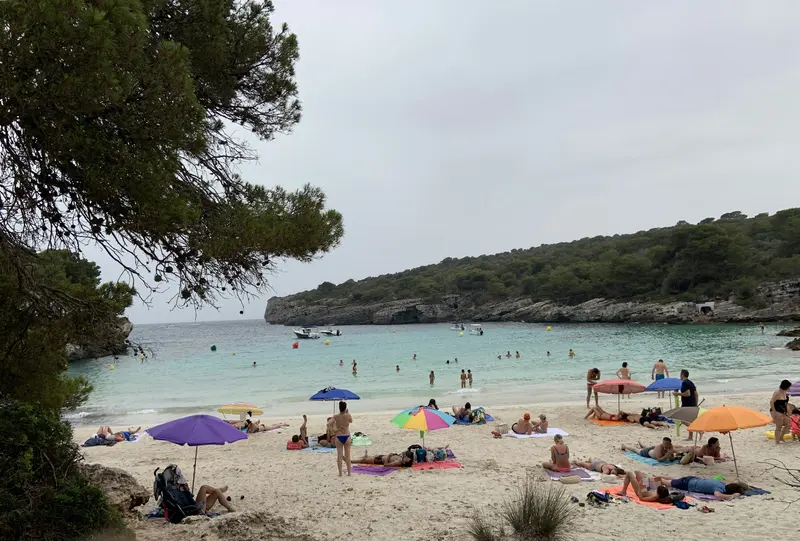
Cala Santandria has a sandy beach at the inland end of a narrow inlet. It is a sensible option if a day in town also needs some beach time. Sa Caleta has another small inlet nearby. The surrounding streets can take you to different points on the water, so pick the way down from wherever your bus stops or wherever you are staying.
At Cala en Brut, the appeal is the rock and clear water. People enter from platforms and there is a different kind of footing from a gently sloping beach. Assess the swell before going down. For a group looking for sand and gradual access, Santandria and Cala Blanca are more straightforward choices.
Macarella, Macarelleta and the south coast
Macarella and Macarelleta lie around two turns in the same stretch of coast. The path between them climbs and descends. If walking from Cala Galdana, count the journey back as well as the time you will spend there, and decide in advance which beach is your goal. Check the island council’s access and transport information for your dates. Seasonal arrangements can determine where you start, especially if your plan involves a car.
Cala en Turqueta and Son Saura are separate beach outings from town. Look at the route from the end of the road to the shore when deciding between them. Take what you will need between transport and the sand, especially if leaving in the heat of the day. If the weather favours the north shore, the open sands at Algaiarens make a change from the rocky headlands and wooded backdrop of the south.
Festivals and traditions
In 2026, the main days of Sant Joan were 23 and 24 June. Horseback processions use several parts of Ciutadella, with different vantage points at the Born and Es Pla down near the harbour. Check the current year’s programme if you want to see a particular event. Choose a position with room to leave and give horses, riders and organisers plenty of space.
The obelisk introduces a different strand of the city’s public memory. A visit to Can Saura can help put the 1558 attack and the local commemoration into the context of the streets you have just walked. Even outside the festivals, the way people use the Born makes it a useful place to start piecing together the city’s history.
Sport and outdoor activities
The Camí de Cavalls, signed as GR 223, reaches Ciutadella from Punta Nati and heads south again towards Cap d’Artrutx. A short trial walk is a better way to see how you feel about the surface and wind than committing straight away to a complete stage. Choose the point where you will rejoin transport before you start out on a linear section. A short return walk leaves you more flexibility on a hot day.
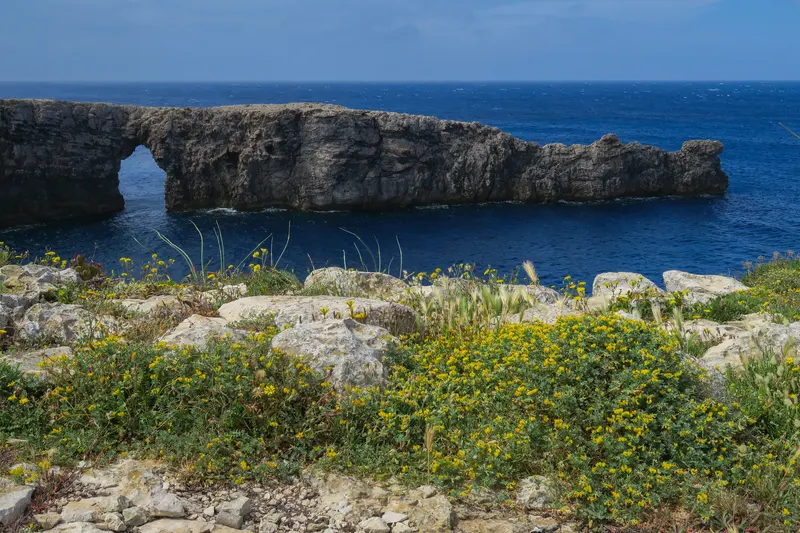
The south coast offers one route for walking and another for seeing the same landscape from the sea. If comparing boat trips along the coast from Ciutadella, look at the departure point and how long the boat spends away from the harbour. For a walk between coves, footwear that grips on rock will also help where the ground changes from sand to stone.
Routes and itineraries
One day. See the Born first, then the cathedral, Ses Voltes and the market. If you want a museum, fit Can Saura into this part of the day. Drop to the harbour after lunch and give yourself enough time to walk towards Sant Nicolau and back up to one of the squares. If you have arrived at lunchtime, keep the two levels and save the museum for another day.
Two days. Use the second day for the landscape outside town. The naveta and Líthica make a good combination if you are interested in what people did with the island’s limestone in different eras. If you have come for a beach rather than a second cultural visit, choose one cove and include a short walk once you know how the access works that day.
A long weekend. Keep a third day for the north coast or Son Catlar. At Cala Morell you can see the entrance to the inlet and walk near the prehistoric burial caves in the same outing. If you want to spend more time in the open landscape, choose Punta Nati in daylight and make a short out-and-back walk from the inland approach.
Day trips
Visit Maó to compare the harbour on the other end of the island. Ciutadella wraps around a narrow inlet, while Maó overlooks a much longer reach of water with islands and more than one settlement. Start high in the old town and select one plan at water level. To visit Illa del Rei, make the boat timetable the anchor for this part of your day.
In Fornells, go up to the tower from the waterfront to see how the northern bay opens to the sea. Cala Tirant suits a second stop if the conditions are right. The inland streets of Es Mercadal make a different kind of outing on the way back if you would like to spend longer on dry land.
Cala Morell is in the same municipality and still feels like a trip out of town. Start with the caves carved for burial, then look at the shape of the inlet. Leave enough time for the climb back from the coast. Pick the approach according to whether you will walk to the water or just view it from above.
Travelling with children
Use the obelisk, the arcades and the boats as landmarks on a short route through town. If using a pushchair, choose the way up from the harbour before going down. At quay level you can add part of Camí de Baix a little at a time. At the naveta you can ask children to look for the boat shape from two sides, a quick way to make the scale clearer.
For a beach afternoon, stay close to town if you think you may only want a short swim. At the quarries, find out how much climbing you are signing up for before adding a museum on the same day. Give children time to see how the shadows on the stone change as you pass from one part to another.
Where to stay in Ciutadella
Pick the old town if you want the Born, the market and the cathedral on foot. Find the exact street before booking, especially if you plan to come back uphill from the harbour after dinner. Accommodation on the edge of the centre can make a difference when you arrive by car and still leave most of the same streets within easy reach.
Compare Cala Blanca and Santandria for a holiday with beach time and some city visits. Cala en Bosch and Son Xoriguer make a good base for walks further along the coast. If you are catching a ferry from Son Blanc, check how you will get to the terminal from the part of the island where you are sleeping on your last night.
See places to stay in Ciutadella (opens in a new tab)Affiliate link: if you book through it, we may earn a commission at no extra cost to you.