Español
 English

Why visit Lugo province
The things to do in Lugo province make three very different days. On the Cantabrian coast, check the sea and choose a harbour with somewhere to eat. In Lugo city, explore the Roman wall from more than one gateway. In the south, vineyards and high lookouts give you different ways to see the rivers. Head further east to see houses built for mountain weather and paths between high villages.
This part of Galicia contains several trips that only loosely connect. Ribadeo and Viveiro sit near opposite ends of A Mariña, a chain of ports, beaches and headlands. Lugo gives you access to the Miño and the open ground of A Terra Chá. Monforte de Lemos, Sarria and the mountain villages offer different ways into the interior. Pick a base according to the first and last part of the day, when the location matters most.
When to go
A season for coast walks and inland visits
In June and September, spend one day on the coast, another in a town and another on a trail. For As Catedrais, start with a daylight low tide that gives you time to travel. Keep the most flexible urban outing for a wetter day. On a summer trip, work out where you will eat after a beach session. A rural beach may be some way from the next town, which can make a long day with children.
Autumn gives you a chance to see the foliage in the east and the vines on the river terraces. Choose a walk with an easy return and remember that darkness can reach the floor of a gorge while there is still light at the top. In winter, check for both coastal rain and snow on higher roads. For the least promising part of the day, look for a museum, lunch in Lugo or a short route among the squares of Mondoñedo.
Getting there and around
Choose an entry point for the trip you want
From the north-east, Ribadeo is across the estuary from Asturias. Start there to follow the coast towards Foz, Burela or Viveiro. For the wall, wetland country and the Original Way, start with a first day on foot in Lugo city. Monforte suits the viewpoints and river trips around the Miño and Sil. When comparing arrival airports, look at the whole journey to your accommodation rather than the distance shown on the map.
Without a car, start by arranging the journeys between towns. Check the full names of bus or railway stops and what the walk is like when you arrive. A rural address may use the name of a parish that includes several settlements. For a nature park, small harbour or mountain village, work out the local connection as well as the intercity leg.
Allow time for inland roads
Choose a single bank, valley or slope for each outing by car. From Monforte to a village in O Courel, your route may differ according to whether you want to carry on to Sarria or return via Doade. Download a map and save the specific viewpoints and junctions. Follow parking signs before turning into narrow village streets and leave access clear for people who work on the land.
What to see in Lugo province
A Mariña from the Ribadeo estuary to Viveiro
In Ribadeo, start near Plaza de España and look for the houses that emigrants built after returning from the Americas. Visit the waterfront or continue towards Illa Pancha to see the mouth of the estuary. Allow a separate block for As Catedrais, where the time of your visit may depend on the tide. If that dictates an early start, leave the town centre for afterwards.
At Foz, see how the shore changes between the estuary and open sea. The hillfort at Fazouro makes a short archaeology stop beside the water. Near Burela, the industrial and pottery heritage at Sargadelos complements a day with time on the shore. If you are starting at the other end in Viveiro, give the town, the estuary and O Vicedo their own time before trying to reach farther east.
Lugo and the upper Miño
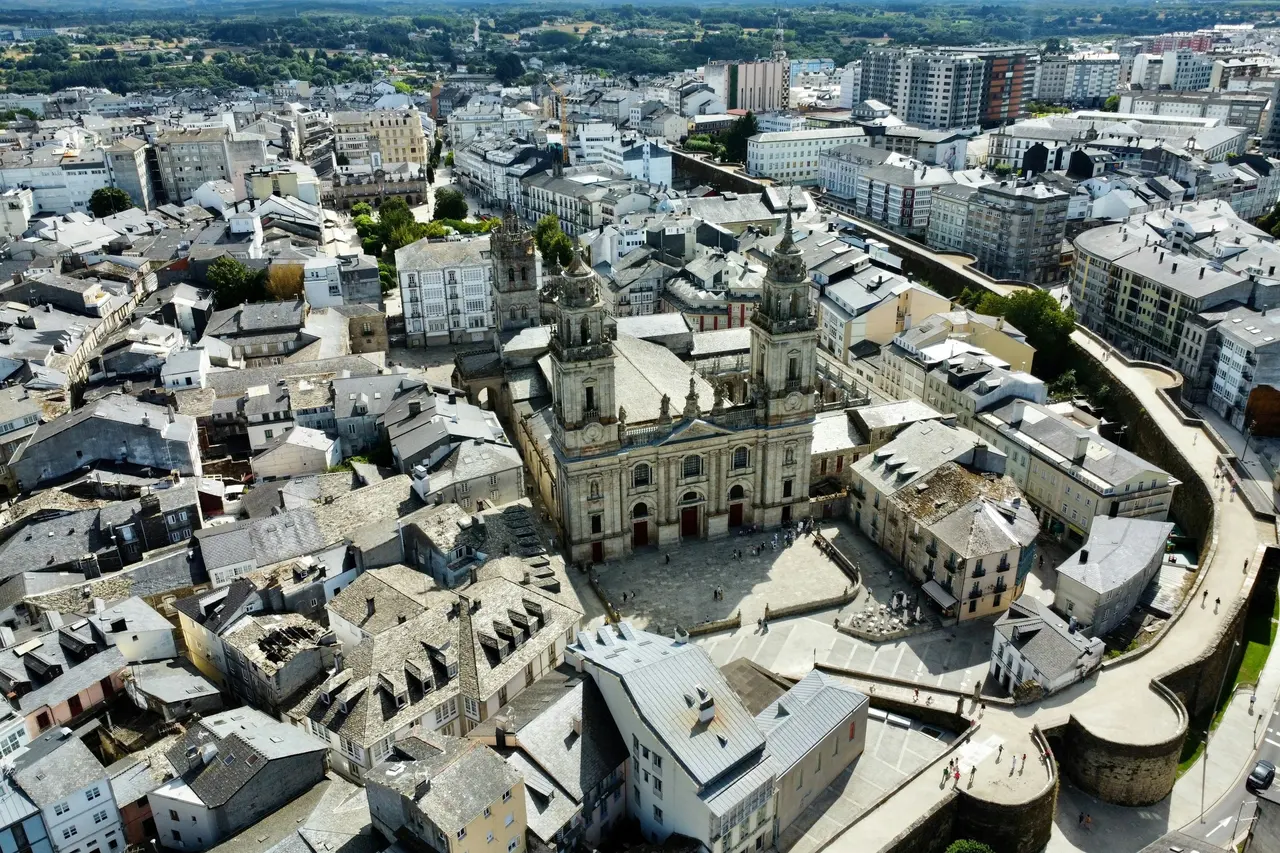
The Roman wall of Lugo helps you find your way round the city. Go up near a gate and spend time comparing the streets inside and outside the circuit. Come down for the cathedral, Praza de Santa María or Praza do Campo. From the top you can see where modern streets approach the towers and where they turn away. Follow an inner street afterwards to see how the old layout works at ground level.
For a second outing, go to the Miño or A Terra Chá. The river path gives you a different landscape within reach of the city. North of Lugo, the flat ground of A Terra Chá opens out to a low horizon and stretches of wetland. Take the time to settle at Cospeito lagoon if birdwatching is the main purpose of the visit.
Monforte and the Lugo side of Ribeira Sacra
At Monforte de Lemos, climb to the San Vicente do Pino complex to understand the layout of the valley before walking around the lower town. From there, try the Doade side of the Sil. Vineyard slopes, viewpoints and boarding points each need a different amount of time. For a boat trip, identify the quay first and build the other stops around it.
On the Miño, combine Belesar with a viewpoint over the bend at Cabo do Mundo. From the lower road you see the river at close quarters, while looking down from the slope shows the shape of the terraces. Check where you can park and allow time for any final stretch on foot. If you plan to continue into Ourense province, set aside another day and find the bridge that suits your route.
When choosing between the two rivers, think about what you want to remember of the area. On the Sil, you can look across steep slopes, then see how much work goes into reaching the vines from the road. On the Mi?o, the bends and the relationship between small settlements and the river give the outing a different shape. Mark a place to eat or take a break on the same bank before committing to a long drive.
Monuments and heritage
Roman walls and pilgrimage routes
The Lugo wall is a World Heritage Site and still encloses the old town. On a short visit, start near Porta de Santiago to pair a stretch of the wall with the cathedral. If you are interested in the town itself, leave time to walk from an inner square to another gate. The wall is easier to understand when you see where it fits into everyday routes across town.
On the French Way, Samos monastery sits in the Oribio valley. The pallozas in O Cebreiro belong to a tradition of building in the mountains. At Portomarín, the Church of San Nicolao was relocated after the Belesar reservoir was built. Look at the relationship between town and water today before continuing to Sarria or Palas de Rei.
The Original Way passes A Fonsagrada and Lugo city. The Northern Way enters Galicia at Ribadeo and passes Mondoñedo. On the Winter Way, Monforte and Belesar provide a route across a different part of the province. Choose one for the day. A village, a junction of paths and a landscape stop tell you much more about why a route followed that line than ticking off several distant towns.
Coastal heritage and pottery
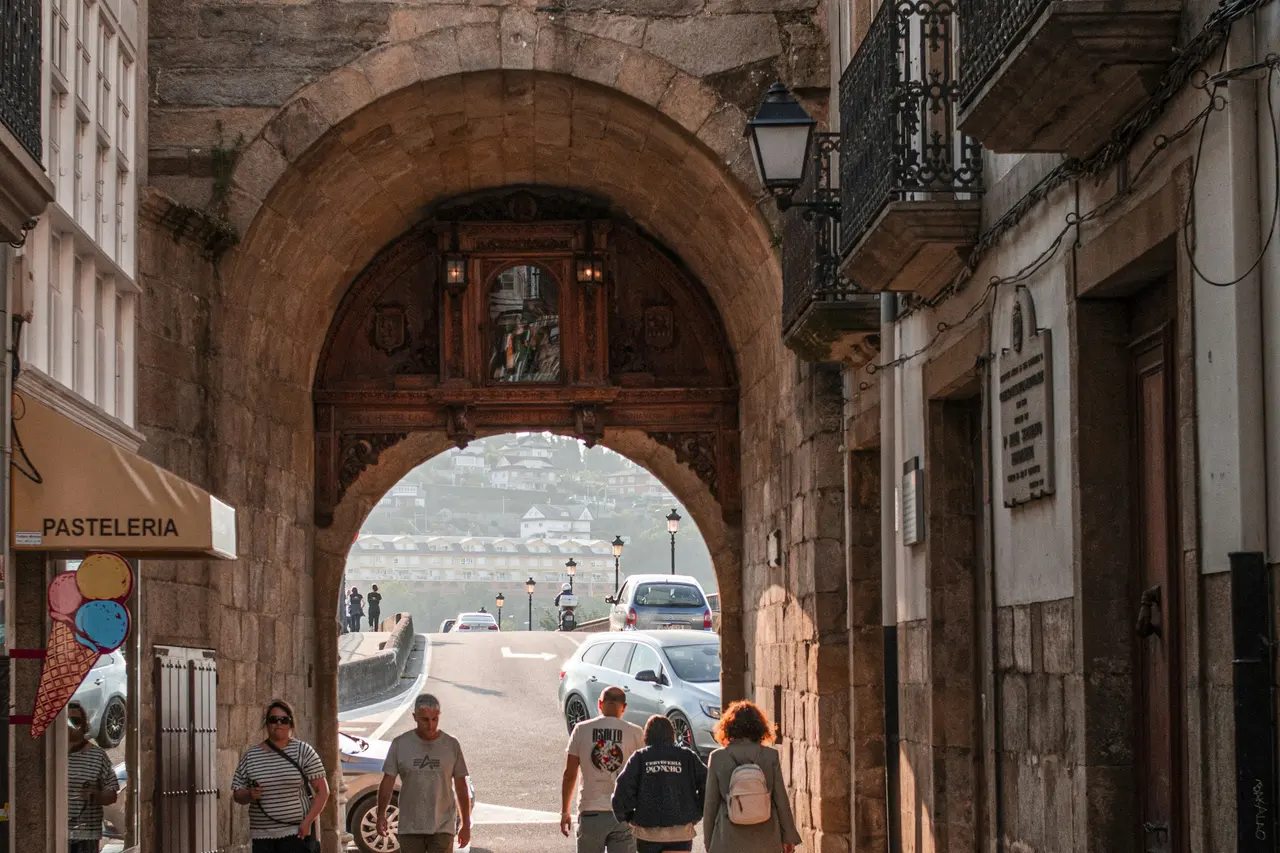
In Viveiro, the gate of Carlos V and the streets climbing from the estuary give you a way into the history of the walled town. Inland, the cathedral of Mondoñedo gives scale to the streets round it. At Sargadelos, look at the traditional ceramics in the context of the historic industrial site. A cathedral town and a manufacturing centre tell two stories about how the valleys inland from A Mariña supported settlement.
Charming villages
Mondoñedo and the area around A Mariña
In Mondoñedo, walk from the cathedral square down towards Os Muíños. The changes in slope give you an idea of where people built and worked. Treat it as a full stop in its own right when you travel between coastal towns. On a showery morning, it can be easier to adapt a walk there than to wait for visibility at a headland.
Rinlo is a small village worth exploring slowly from the harbour. Look for the seaward paths and find the trailhead if you intend to walk along the coast. Pair the village with Ribadeo or As Catedrais, taking the tide into account. Leave a break for lunch before going on to Foz.
O Courel, Os Ancares and the French Way
Around Folgoso do Courel, choose the part of the valley that suits you. At Seceda, look at the way slate houses and narrow paths fit into the hillside. In Piornedo, in Os Ancares, look at how the round, thatched pallozas were built. Take the view from public ground and check availability first if you want to go inside a house museum.
At O Cebreiro, the thatched houses and church are within a short walk of one another. Take a moment to look down from the high ground and notice the difference in temperature after driving up from the valley. If going towards Triacastela, follow the pilgrimage route on a map to see where it takes a different line from the road.
Nature and protected areas
O Courel and Os Ancares
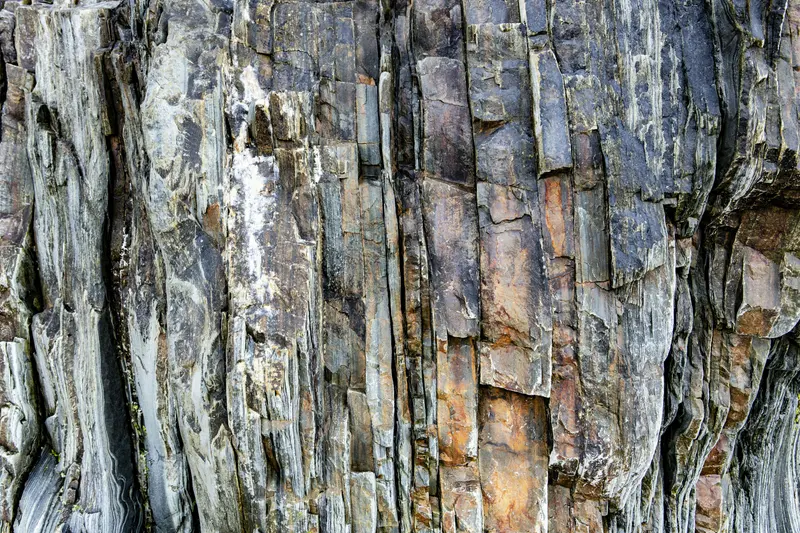
In O Courel, choose an outing for the least experienced person in the group. Vegetation in the Devesa da Rogueira changes as the trail climbs. The rock fold at Campodola-Leixazós shows the structure of the hills at a scale that is difficult to recognise underneath trees. Combine a geological viewpoint with a short walk if you have only half a day.
In Os Ancares, plan the drive and the walk separately. A high village visit and a ridge walk require different conditions. In fog or towards dusk, spend some time on lower ground and come back to the viewpoints if conditions improve. Take water and use the time needed for a safe descent to decide where to turn around.
A Terra Chá and the Eo estuary
At Cospeito lagoon, take binoculars and let your eyes adjust to the reeds and open water. The lagoon is one of the wetlands in the Terras do Miño area. On the Ribadeo estuary, tides change how much foreshore is visible and where birds gather. Give feeding birds room and look for a place to stand on a designated path. Both outings fit alongside a town visit without much extra planning.
Beaches in Lugo province
Picking a time for As Catedrais
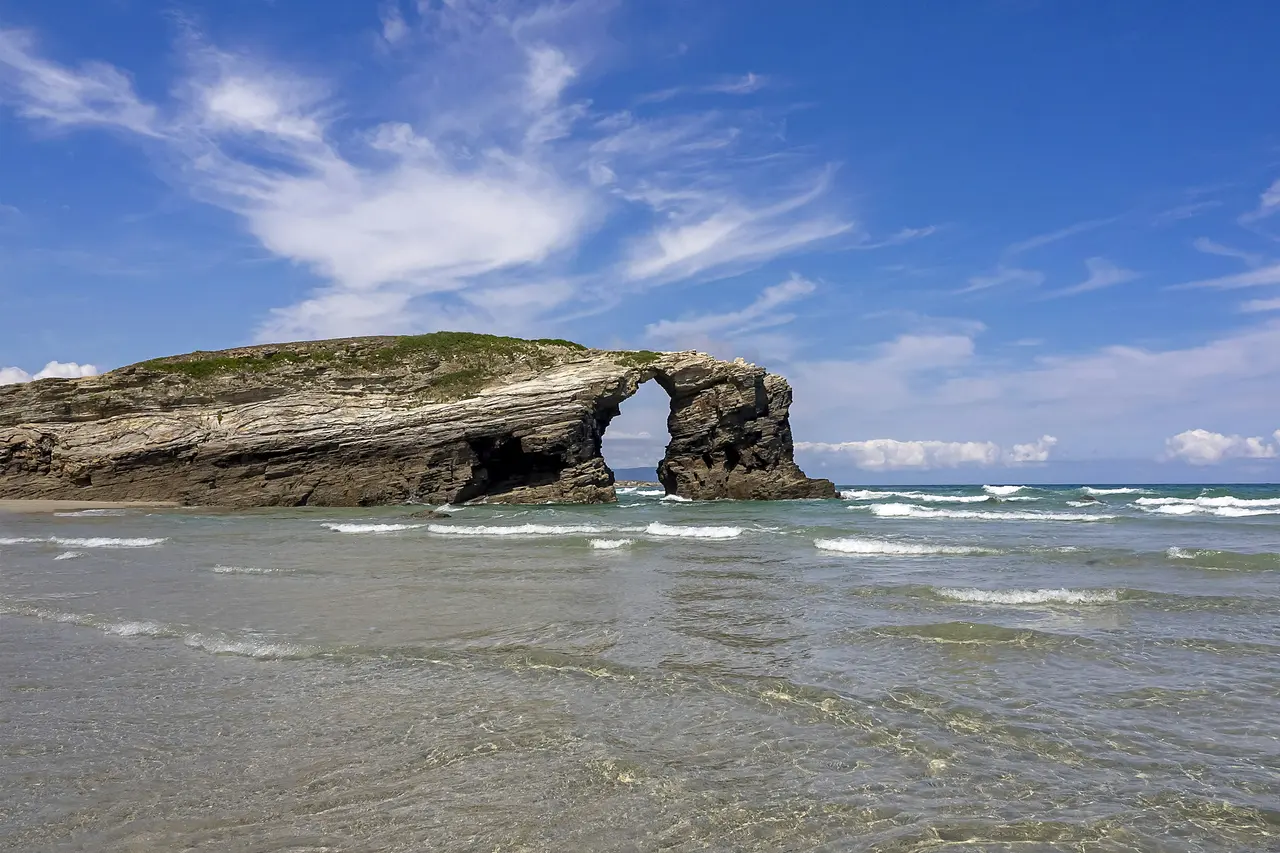
The passages and arches at As Catedrais come into view as the water drops. In 2026, the Xunta required free authorisation at Easter and between 1 July and 30 September. Find a low tide you can reach comfortably before asking for permission. Look at the sea conditions and follow the instructions at the site. Turn back with time to spare and leave closed sections alone.
If you cannot get down, look out from the designated paths and continue to Rinlo or Ribadeo. Think of As Catedrais as a visit to the rock formations. For a longer beach session, choose a wider stretch where everyone in the group can reach the sand comfortably.
A Rapadoira, Covas and Xilloi
A Rapadoira has sand near the town of Foz. At Covas, close to Viveiro, you can walk towards town for food or to rest after the beach. Xilloi, at O Vicedo, fits into a day at the western end of A Mariña. Choose according to the wind and sea on your day. A morning on one beach gives you more time outdoors than a series of stops at different car parks.
Festivals and traditions
The city council dates for Arde Lucus in 2026 were 18 to 21 June. Historical groups stage scenes from Roman and local Iron Age life in the streets. Pick an area according to the schedule for the year of your visit. Walk part of the wall at a quieter time so there is space in the day to enjoy the events.
San Froilán ran from 4 to 12 October 2026. The programme included street performances, music and activities for children. Octopus is a traditional festival meal. If you are coming with a family, check the venues and the duration of events in advance. Leave time between them for getting across the busier old-town streets.
What to eat
In Celeiro and Burela, look for hake or ask about the fish of the day. What a kitchen offers will vary according to the season and its suppliers. Make lunch the main stop on a coastal day and arrange a walk before or after. In Mondoñedo, ask a bakery for tarta de Mondoñedo, a local cake, and take a portion with you if you will be out in the hills that afternoon.
In Lugo, try polbo á feira, octopus dressed with oil, salt and paprika. In the mountains, look for stews, meats and chestnuts in season. Compare cheeses from San Simón da Costa and O Cebreiro and ask how to keep them if you buy some for later. In Ribeira Sacra, a glass of local wine goes well with a day spent looking at the banks and terraces where the grapes grow.
Sport and outdoor activities
The Cantabrian natural trail offers separate sections for walking or cycling. Turismo de Galicia describes about 16 km between Ribadeo and As Catedrais in its guide to cycling routes. Check the surface, the route back and the abilities of anyone riding with you. For a shorter outing, choose a section near the estuary and return the same way.
At O Fuciño do Porco, near O Vicedo, the boardwalk and steps on the headland are as much a feature as the sea views. Check access and conditions for your date. If anyone in the group dislikes heights or exposed sections, choose a harbour walk in Viveiro or O Vicedo. For an inland outing, consider a section of the Camino or a mountain walk and plan the return according to the terrain.
To sample the Camino on foot, Sarria and Portomar?n offer useful starting points for a short outing. Follow a signed section out of town and turn back after a place you have marked in advance. Walking in both directions changes the views and saves having to arrange a transfer for a short visit. Around the higher villages, choose the route after checking daylight and the condition of the paths. A few kilometres are enough to see the change from a built-up area to fields and lanes.
Routes and itineraries
Three days on the coast of A Mariña
Use the first day for Ribadeo and As Catedrais, depending on the tide. On day two, visit Mondoñedo and Foz or choose a nearby stretch of shore with time for both. On day three, see Viveiro and the area around O Vicedo if conditions are suitable. With one base, save the farthest outing for the day with the fewest time constraints.
The wall, the Camino and the gorges in five days
Spend two nights in Lugo and explore both the old town and the Miño. Break the drive south at Sarria or Samos. Use the remaining days for Monforte, a trip towards Doade and the Sil, and a visit to the Miño around Belesar. For O Courel, swap one river day for the hills and choose your access route before the trip.
A weekend in the eastern mountains
Choose Os Ancares or O Courel and pair a village with a walk and a viewpoint. Save the climb or the mountain pass for the morning with the best visibility. If your route starts or ends near O Cebreiro, use it as the final stop in daylight. Keep a short valley walk available in case mist hides the higher views.
Travelling with children
Try a short section of Lugo’s wall and come down through a different gate. At A Mariña, spend the morning by the sea near a town with places to eat. In Ribeira Sacra, one viewpoint, a short walk and time with a snack are usually enough for one outing. Check for steep steps and the edge of a cliff path before bringing young children to exposed stretches.
Where to stay in Lugo province
Lugo city. A practical base to explore on foot before taking trips to A Terra Chá or villages on the Original Way. Staying inside the wall puts squares and restaurants nearby. Ask where to leave a car if your accommodation is in the old centre.
Ribadeo, Foz or Viveiro. Choose Ribadeo for As Catedrais or the estuary. Foz combines the coast with outings towards Mondoñedo. Viveiro works for western A Mariña. For a car-free beach day, check the walking route from the accommodation to the sand.
Monforte, Sarria or a mountain village. Choose Monforte for the gorges and Sarria for the French Way. In Os Ancares or O Courel, sleeping in the valley reduces driving. Find out where you can eat if you are staying in a small village.
See places to stay in Lugo province (opens in a new tab)Affiliate link: if you book through it, we may earn a commission at no extra cost to you.
Practical tips and common mistakes
Start with anything timed. A low tide, a boat or a timed entry can determine the rest of the day. Fit easy stops around them, and keep an alternative in the same area.
Add the municipality to a search. Similar names turn up in different parishes. Save the exact viewpoint, quay or trailhead and check the location before you head out.
Pack for both coast and mountains. Carry layers and walking shoes, even on a trip that starts at the beach. Between bases, leave time to come down from high ground before dark.