Español
 English

Why visit Pontevedra province
The things to do in Pontevedra province make more sense when you choose an estuary and one side of it. On Arousa, the harbours of the Salnés area put Cambados, A Illa de Arousa and O Grove within reach. Around Pontevedra, combine an old town, the raised granaries of Combarro and time on the shore. On the Vigo estuary, the city waterfront, the far shore and a boat trip each make a day of their own. The choice of shore affects how much time you spend getting to the water.
This part of Galicia also offers a trip inland and along the Portuguese border. Tui looks over the Miño, O Rosal combines villages and vineyards, and from A Guarda you can see where the river reaches the Atlantic. With a week, use a move between bases to get closer to the lower Miño. Then you can finish a riverside walk or a village dinner without another long drive back to O Salnés.
When to go
The best time for the beaches and islands
In June and September, spend two or three days by the water and use others for walking or city sightseeing. Choose a sailing day and give yourself room to change plans when conditions deteriorate. A calm-looking morning inside a ría can be windy on the islands. Keep a walk in Vigo, Baiona or Pontevedra as an option, depending on where you expected to catch the boat.
In July and August, choose your accommodation early if you want to walk to a particular beach. The way a beach faces affects wind and comfort. Choose between an open beach for a walk and a more sheltered one after checking conditions. If the main concern is shade, take a mid-day break in town or have a longer lunch before going back to the shore.
Autumn works for harbours, old towns and vineyards. In winter, stay somewhere with sights you can visit around showers. Save the exposed headlands for days with good visibility. On a short day, a walk through the squares of Pontevedra and part of the shore can work when the journey between them is simple. Leave a late afternoon for the town where you are staying if driving far would cut short both visits.
Getting there and around
Flights, trains and local journeys
In 2026, Aena listed Vigo Airport (VGO). Compare the whole journey from Santiago as well if going to O Salnés or if the flight options suit you better. Decide where to collect a hire car and allow time to get from the terminal to an accommodation or station. For a late arrival, a first night in the city can be simpler than continuing to the end of a peninsula.
If arriving by train, check the station on the ticket. Vigo has more than one, and the arrival point affects the walk to the old town, docks and accommodation. For a trip taking in Vigo, Pontevedra and a coastal village, arrange the longest journeys first, then decide which days you can do on foot. Good connections between cities tell you little about the final section to a beach, especially outside the summer.
Headlands and crossings
Mark both sides of each ría on the map before choosing where to stay. From Bueu to Sanxenxo, for example, a drive takes you around water that looks quite narrow from above. Switching shores for a short visit can take up the best hours of the day. A stop during a move between bases can work much better, because you are already travelling towards that point.
For trips by boat, check the boarding point, how long it takes to get there with bags and the last suitable return. Build summer island visits around confirmed sailing times. If travelling without a car, resolve onward transport before visiting a town across the water. A shorter walk that starts near a harbour is easier to adjust than a long one with a single possible connection at the end.
What to see in Pontevedra province

The squares of Pontevedra and the shore of the ría
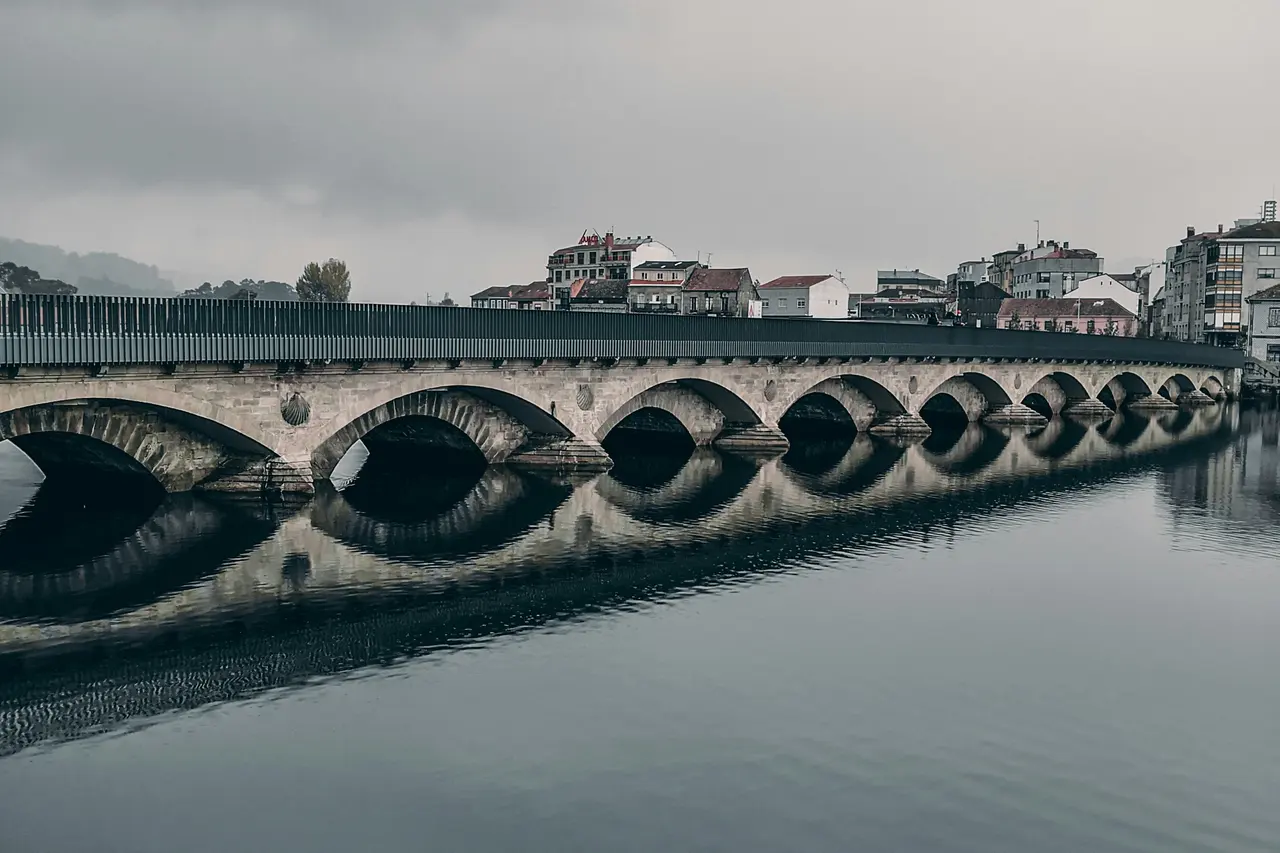
In Pontevedra, begin around Praza da Ferraría and the Peregrina church. Use the squares at A Leña and A Verdura to plot a loop through the old streets. Continue towards Ponte do Burgo to bring the river and the estuary into the walk. For a full day, give yourself time for a heritage visit indoors before following the shore.
On the northern bank, Combarro has raised granaries beside the water and lanes between granite houses. Some approaches are close to sea level. Look at the tide to see how the buildings are positioned in relation to the shore. You can combine the village with Poio, or follow the coast towards Sanxenxo if you are staying farther west.
O Salnés, O Grove and A Illa de Arousa
At Cambados, start around the buildings at Fefiñáns and head towards Santo Tomé on the waterfront. If you are visiting a winery, fit the walks around the appointment. On A Illa de Arousa, combine the harbour with a section of the natural area at Carreirón. Pick which side of the island to visit in light of the wind and where you would like to end up for a meal or a walk.
O Grove offers a fishing harbour, views towards mussel rafts and access to A Toxa. For a look at the open coast, head to San Vicente do Mar or A Lanzada. If shellfish is your main interest, allow time in the port and at lunch. At the shore, look for the changing amount of ground exposed between the buildings and the deeper water.
Vigo and the last stretch of the Miño
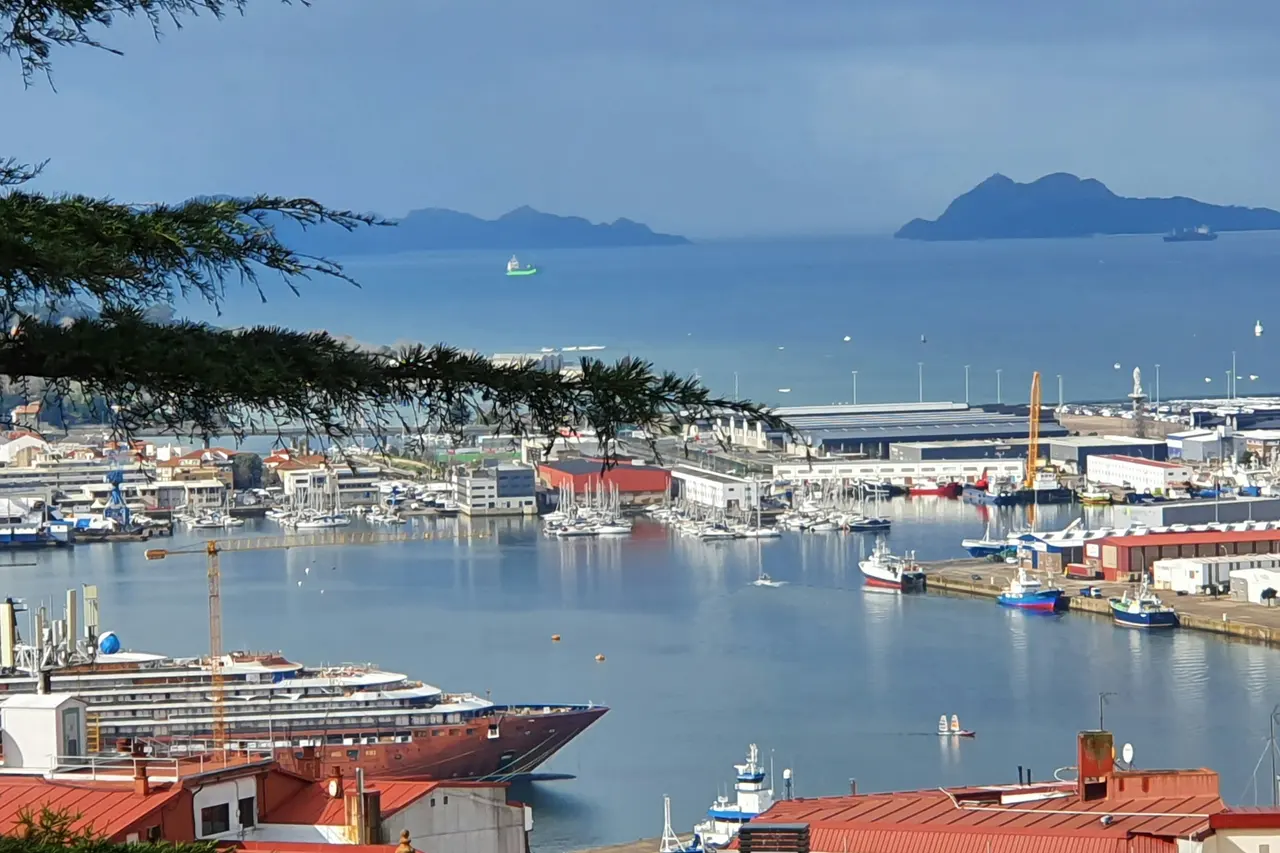
In Vigo, begin with the harbour and Casco Vello, or go up to Monte do Castro when the sky clears. From there, get your bearings around the ría before heading back down into town. Walk through the centre to see how the street pattern fits the slope. If you are going to the islands the next morning, find the correct quay on your first afternoon.
Farther south, choose Baiona and Oia or the lower Miño for a full day. From Baiona you can follow the edge of the Monterreal peninsula and return to the port. Oia’s monastery faces the Atlantic. At A Guarda, see the hillfort and the mouth of the river from Santa Trega before going back down to the harbour. Allow time for Tui’s old town if including it on the same journey and keep any other stop short.
Monuments and heritage
The Portuguese Way and Santa Trega
From Tui Cathedral, walk towards the Miño and return to the old town by a different lane. The setting shows why the place mattered for the border and why pilgrims have come through it from Portugal. The Portuguese Way carries on towards Pontevedra. On its coastal variant, the landscape changes around A Guarda and Oia.
At Santa Trega, look at the excavated house plans on the slope. From higher up you can see both sides of the mouth of the Miño. With children, set aside time to look around the remains and treat the views as a different stop. Finish at the harbour before dark, where you can still see the mountain and water in relation to each other.
Granaries, manor houses and fortifications
In Combarro, look at the granary supports, the houses behind them and how little ground separates them from water. In Cambados, cross Fefiñáns slowly enough to see how the buildings frame the square. At Santo Tomé, the tower of San Sadurniño links the history of the town to the tidal shore. Check the approach before setting out towards the tower itself.
At Monterreal in Baiona, the outline of the walls shows how the site was defended and how it overlooked the approaches to the port. The Torres de Oeste at Catoira tell another story at the mouth of the Ulla. Find the head of each estuary on a map before you visit. Look back out to the water from the site to see what the tower or wall was positioned to watch.
Charming villages
Combarro, Bueu and Cangas
Allow a half-day in Combarro to move between lanes, shore views and a stop for food. Bueu has a working port and waterfront that make a good starting point for the Morrazo peninsula. Cangas looks across the water towards Vigo. If arriving from the other side, check how to get from the quay to the centre and then to any beach you want to see.
Cambados, Baiona and Oia
In Cambados, spend some time among the buildings of Fefiñáns and follow the shore near Santo Tomé. On a short afternoon, choose a walk you can finish somewhere you would like to have dinner. Baiona links its harbour, stone streets and peninsula on foot. In Oia, use the monastery and seafront for a shorter stop before continuing south. The coastal drive works well if you know which town you want to save the most time for.
Nature and protected areas
Cíes and Ons on foot
Cíes and Ons belong to Galicia’s Atlantic Islands National Park. On Cíes, see Rodas beach and views from the lighthouse paths. On Ons, spend time by the village, the more sheltered shore or the cliff paths. From the quay, work out which route gives you room to stop and turn back. Trying to get to every end of an island leaves little time on each path.
Under the Xunta’s 2026 guidance, visitors using regular passenger boats needed authorisation under the arrangements for the date. Check both directions of the sailing, as well as your authorisation. If comparing trips to the Cíes Islands, check the inclusions, where they board and how authorisation is handled. Stick to the marked paths and take any rubbish back.
Wetlands and hill country beside Arousa and the Miño
At O Grove, combine open coast with the tidal land around the Umia–O Grove wetlands. Watch from the same point for a while and leave space around resting birds. At Carreirón, follow one marked path through the change from woodland to sand and shore rather than cutting across the dunes.
On the lower Miño, a stop near Tomiño or O Rosal gives you a view from close to river level before going on towards its mouth. Compare this with the view down from Santa Trega. Near Tui, Monte Aloia offers woods and inland views. Look at the forecast for the hill separately if you have just come from the coast. Choose an outing that leaves time to come back down comfortably.
Beaches in Pontevedra province
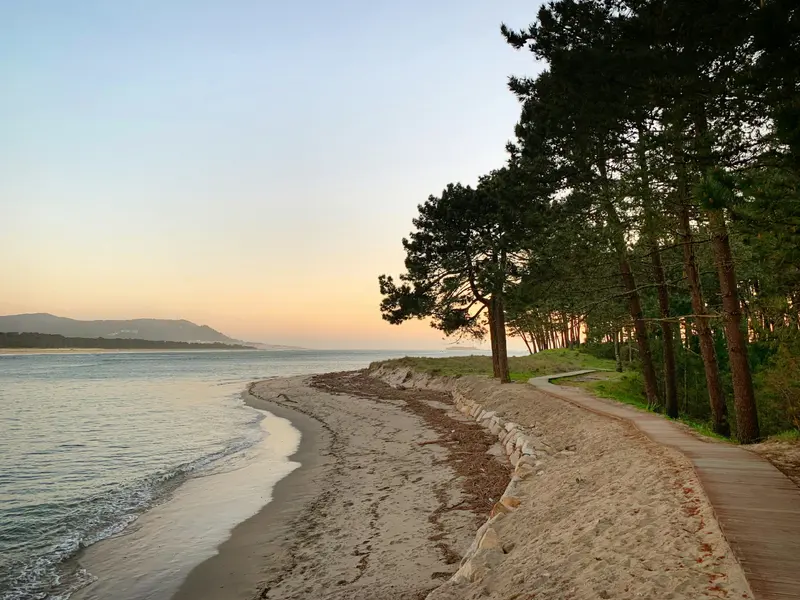
A Lanzada and beaches inside the estuaries
A Lanzada, between Sanxenxo and O Grove, faces open water. Walking along the sand and swimming have different requirements when there is a swell. If you want to get in the water, check the flag at the beach and consider a more sheltered shore. Silgar lets you walk straight into central Sanxenxo for food or a rest. For a less built-up setting, explore the coast near San Vicente do Mar.
From Samil to the mouth of the Miño
Samil, in Vigo, has views towards the Cíes Islands. Patos, in Nigrán, is a place to watch surfers and see the way the Atlantic reaches this coast. Near the centre of Baiona, beaches are within reach of the harbour. At Camposancos, near A Guarda, the influence of the river changes the shoreline. Choose a specific stretch after looking at the wind, access and any flags or other signs on the day.
Festivals and traditions

The Festa da Vieira in Cambados ran from 16 to 19 July 2026. The Feira do Viño do Rosal was held from 17 to 19 July 2026. In Cambados, the scallop links the festival to the work of the port. In O Rosal, the wine fair gives you a reason to see the vineyards as well. For a future visit, check dates and where to leave the car or how to get back from the town afterwards.
In O Grove, the Festa do Marisco brings seafood to the square at O Corgo in autumn. During Entroido, towns have their own parades and local characters. In Pontevedra, there is a mock funeral for the parrot Ravachol, while Cobres has its madamas and galáns. Read the programme for the year and choose which tradition you want to see before booking your accommodation.
What to eat
On Arousa, look for mussels and ask which clams, scallops or razor clams are available that day. Look at the rafts and harbours to understand where part of the local catch and farmed seafood comes from. In O Grove or Cambados, ask how the kitchen prepares a dish and whether the price is by weight or by portion. Order one or two ways of preparing it before deciding how much more to share.
In Bueu or Cangas, ask about local fish and look for a slice of empanada if you need lunch to take away. The banks of the Miño have their own links with farming and the river. If visiting a winery, distinguish O Salnés from O Rosal within the Rías Baixas wine region. Leave time to eat nearby and decide how to get back if everyone wants to taste the wine.
Sport and outdoor activities
The Padre Sarmiento route follows the Pontevedra and Arousa estuaries through places including Poio, Sanxenxo, O Grove and Cambados. Choose a section with a convenient endpoint, then find out where it follows town streets, coastal paths or sand. For a cycling outing, check which part is suitable to ride and where you will share space with people on foot.
On the Portuguese Coastal Way, find a place to finish with services for the evening. The section from A Guarda towards Oia brings sea views into the walk. For surfing or paddling, choose according to skill and conditions on the day. Check wind and swell at the start and the time needed for the return. A route inside the ría can still involve currents, boat traffic and exposed sections.
Routes and itineraries
Three days from Pontevedra
On day one, walk through the old town and to the Lérez. On day two, visit Combarro and follow the Poio side of the ría towards Sanxenxo. For day three, choose Cambados and O Grove for port towns and food or Ons if you can confirm both the boat and access. Keep a shorter coastal outing in mind in case the island visit has to change.
Five days between Arousa and Vigo
Spend two nights in O Salnés and three in Vigo or Baiona. On Arousa, plan visits to Cambados and A Illa de Arousa and pick a stretch of coast near O Grove. In the south, give one day to Vigo and another to the islands or the waterfront at Baiona. Stop in Pontevedra during the move between bases if there is time for eating and a walk you have already planned.
A weekend on the lower Miño
Start in Tui with the old town and the shore. On day two, travel via O Rosal to A Guarda. At Santa Trega, give priority to either the archaeological site or the viewpoints if you have a short afternoon. Finish with a night near the port, or continue to Baiona the following day and make Oia a stop on the way.
A day on the Morrazo peninsula
Start in Cangas and walk around the harbour before following the shore. Continue towards the open coast if visibility is good. If you plan to visit Bueu as well, allow for the road across the peninsula and choose where to spend the afternoon on the sand. The two towns face different estuaries and work well together as a trip around the peninsula. For an easy day from Vigo, stay in Cangas and confirm your return before walking farther. One unhurried stretch of shore is enough to make the outing worthwhile.
Travelling with children
Choose a harbour walk and a beach you can get to without another journey. In Pontevedra you can vary the distance between squares and take regular breaks. On A Toxa, you can pair a walk with the Grobits playground. In Cíes, look at how much time you have before the boat before starting the climb to a viewpoint. Keep a last rest stop near the quay and carry enough water for the walk back.
Where to stay in Pontevedra province
Pontevedra or Poio. The city suits walks through the old streets and outings to its estuary. Poio puts the north shore nearer. Check how you will reach the centre or the beach you want to spend the most time around.
O Salnés and O Grove. Cambados is practical for towns and wineries. In O Grove and Sanxenxo, choose between a working harbour, a beach you can reach on foot and the road to open coastal stretches. A stay on A Illa de Arousa makes sense if you are spending enough time on the island to explore it in sections.
Vigo, Baiona or A Guarda. Vigo suits a city break with a day around its estuary. Baiona works for walks by the sea and outings towards Oia. A Guarda puts the Miño and Santa Trega nearby. Try Tui for heritage, the riverside and a starting point for the Camino by the Portuguese border.
See places to stay in Pontevedra province (opens in a new tab)Affiliate link: if you book through it, we may earn a commission at no extra cost to you.
Practical tips and common mistakes
Note which shore you need. Save the port and municipality as well as the name of the beach. Two docks visible from a single hillside can require quite different journeys.
Check the last section on foot. Look up the approach, where you can park and how far you can comfortably carry a bag, food and beach gear. If starting a walk at a beach, make sure your route back is possible at higher water too.
Allow time to catch a boat. Limit sightseeing on a transfer day to a stop you can predict. On the islands, start your walk back with time in hand and keep the return ticket with your authorisation.