Español
 English

Why visit Cáceres province
When choosing what to see in Cáceres province, think of two different trips. One links the stone cities and towns of Cáceres, Trujillo and Guadalupe. The other begins in Plasencia and takes in the valleys that best suit the season. From the city you can reach cherry orchards, wooded slopes or the villages of La Vera. Over a short break, choose one of those combinations and leave time for a single outing into the countryside. With more days, add the international stretch of the Tagus or the hills of Sierra de Gata and Las Hurdes.
The province occupies the north of Extremadura. The Tagus crosses the central area and shapes many routes towards Portugal. In the east, the ridges of the Villuercas take time to explore and Guadalupe is a good place from which to start. North of Plasencia each valley has its own approach. Travelling one area at a time can give you the best part of the morning for walking and the evening for a town square.
The trip works for people who like architecture, birds or an unhurried day among small towns. Pick the place you want to see in the best light. It could be a square in Cáceres, the cliffs at Salto del Gitano or the slope of a gorge. Build the day around that stop and fit the indoor visits, lunch and the journey back around it.
When to go
Spring in the valleys and autumn in the Ambroz
Allow flexibility for cherry blossom in the Jerte Valley. It moves through different elevations and depends on the weather leading up to spring. Check flowering reports by village before arranging the last part of the trip. If you come outside bloom, spend the morning around the houses of Cabezuela del Valle or find an accessible viewpoint over the valley. The orchards and terraces shape the landscape in every season.
In autumn, Hervás and the Ambroz Valley suit a trip based on woodlands and small towns. Start with a short outing before committing to a half-day walk. Check the path and the available daylight after rain. To combine woods and heritage, set aside time for Cáparra or Granadilla alongside a walk in the part of the day with the best forecast. Autumn also gives you room to enjoy Trujillo or Cáceres, with a long lunch and a second walk around the squares.
Summer heat and winter at higher elevations
Plan on early or late visits to Cáceres old town and the open parts of Monfragüe in summer. In the valleys, look up shaded walks and designated swimming places separately. A pool you spot from a path may have polished rock, a strong current or a difficult approach. If swimming is part of the day, find one specific place and choose a village to visit if conditions call for a change.
In winter, Plasencia, Cáceres and Trujillo let you shorten a walk if rain or colder weather comes in. For a mountain pass early or late in the day, check the forecast for the highest part and for your destination. Allow more light for viewpoints and hills than you need for a town walk. If you are taking binoculars to Monfragüe, pack for the time you will spend standing still.
Getting there and around
The A-66 links the areas around Cáceres and Plasencia with routes north and south through Spain. Use the A-5 to reach Trujillo from Madrid or continue towards Mérida. Once you leave those roads, find the entrance to the valley you need. Plasencia gives you a point of reference for the Jerte and La Vera. Hervás lies along the Ambroz corridor. Plan the Villuercas villages and the west around separate trips.
Renfe’s 2026 information lists Cáceres and Plasencia on routes in Extremadura. Search by station and find out how far it is from your first stop. For Plasencia, decide when you want to spend time in the old town and when you hope to go to the countryside before committing to transport. A train may be enough for the city break, with another connection needed to reach the beginning of a trail.
With a car, save the exact point for the view, gorge or geosite you are visiting. If you are travelling without one, use a town base and confirm both directions of any journey before adding a second stop. A fast road between two large towns can be followed by a slow final section to your accommodation. If you will drive the last part after dinner, confirm the host’s directions and save a map offline.
What to see in Cáceres province
What to see in Cáceres province on a first visit
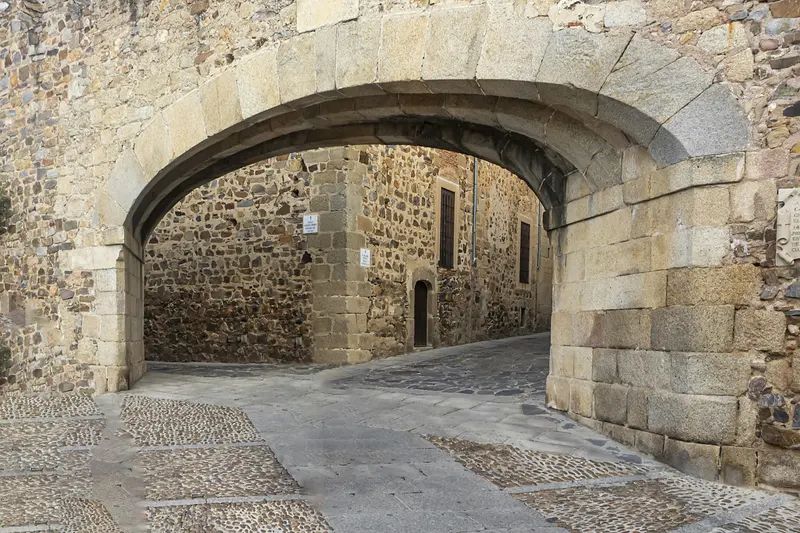
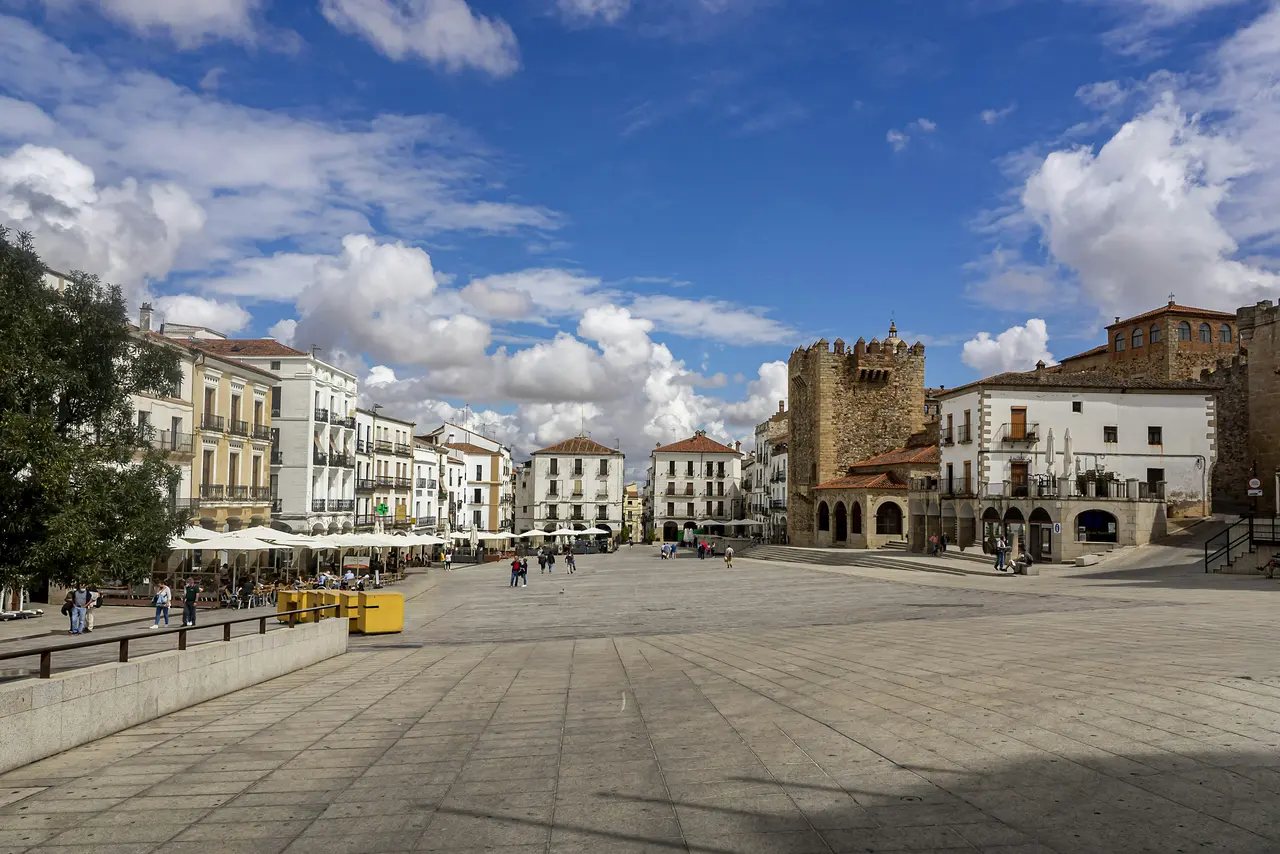
In the city of Cáceres, Plaza Mayor and the Arco de la Estrella are a good way into the walled centre. Go on to Santa María and San Jorge and choose an interior that fits what you want to see. Split the day into a first loop to get your bearings and a second one to look more closely at the towers and palaces. Look back at the façades from across the street and see how the light falls differently in each square.
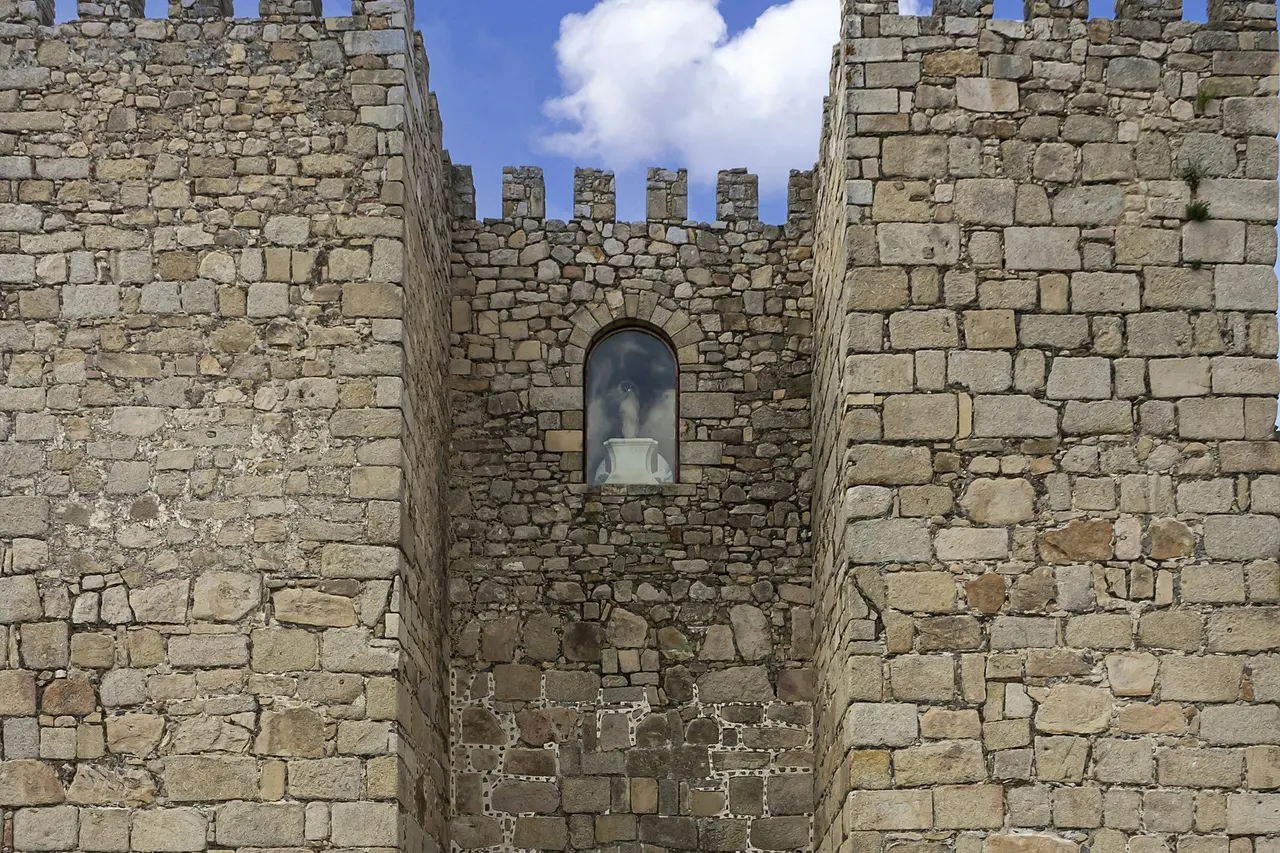
In Trujillo, the link between Plaza Mayor, the palaces and the castle is clear on the walk uphill. The first section passes close to carved coats of arms and old doorways before opening above the plains. If you are continuing to Guadalupe, give the second place a morning of its own. The castle and the monastery reward different kinds of visits, and an overnight gives you time for both.
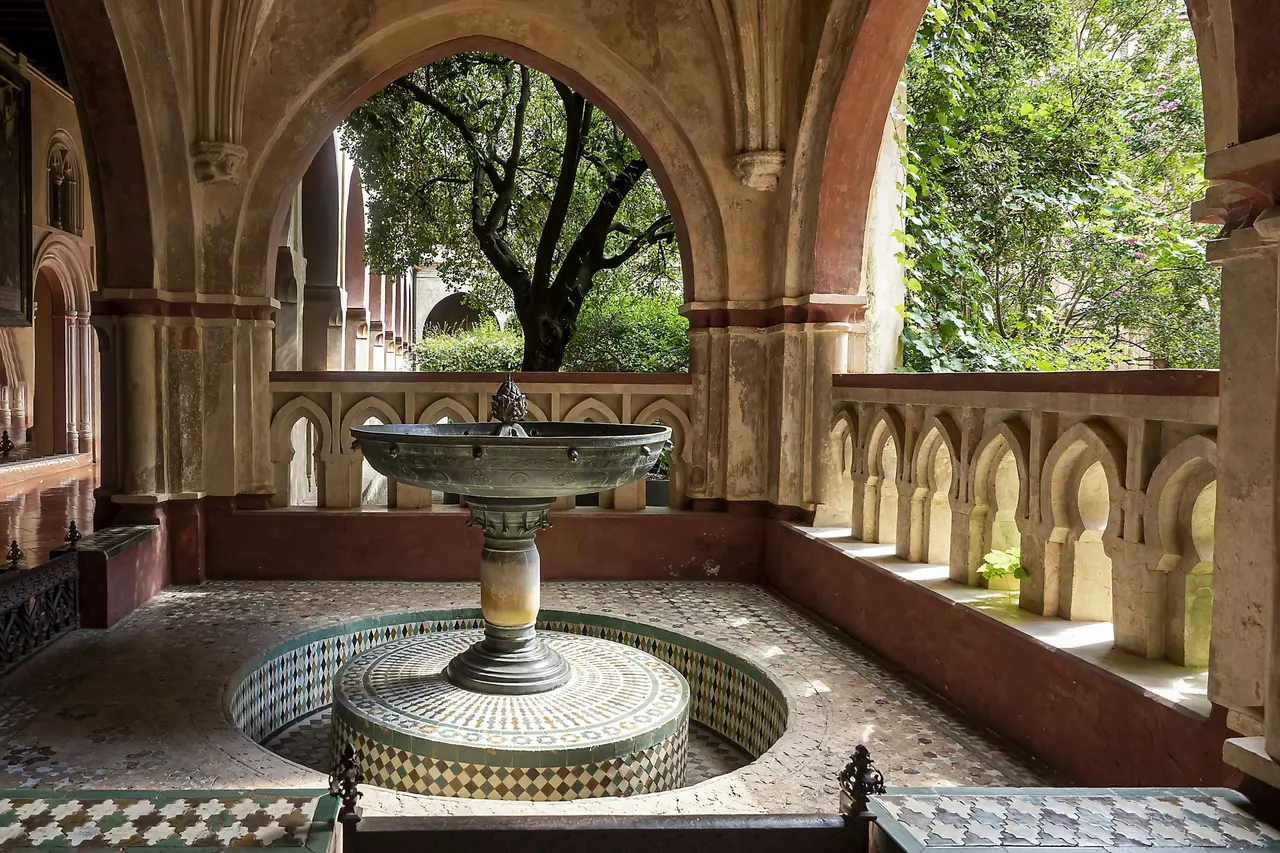
In Guadalupe, put the Royal Monastery of Santa María first. The religious complex brings together architecture and collections, and the streets outside show buildings at a more domestic scale. Walk around the main square and through the streets above it. If your trip includes the geopark, staying in Guadalupe makes it easier to see how the town sits in the surrounding hills.
In Plasencia, start with the two cathedrals and Plaza Mayor. View the Old and New Cathedrals from more than one angle to see how two separate stages of construction meet. Walk towards one of the gates to get a sense of the shape of the town. If this will be your main base, spend an afternoon here before using the other days for trips north.
Monuments and heritage
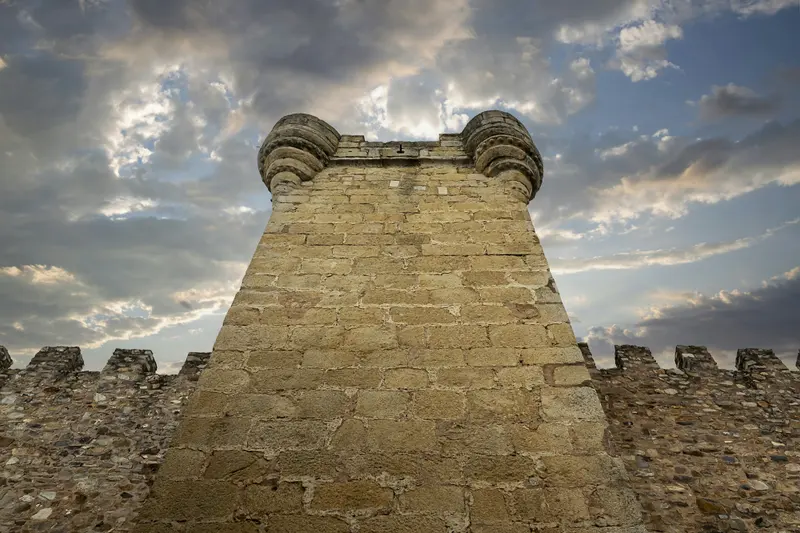
World Heritage, an imperial retreat and Roman crossings
UNESCO lists the Old Town of Cáceres and the Royal Monastery of Santa María de Guadalupe as two World Heritage properties. Cáceres reveals itself on several walks between fortified houses, towers and palaces. Much of a visit to Guadalupe happens within the monastery grounds. For both, decide which interiors you want to see before choosing your arrival time and lunch stop.
Yuste Monastery is where Emperor Charles V spent his last retirement. At Cuacos de Yuste, notice how close his rooms were to the church and how their purpose differs from that of the monastic buildings. Follow the monastery with some time in Cuacos or a nearby La Vera village to see how the streets and buildings fit the landscape away from the complex.
At Alcántara, find a point where you can see the height of the Roman bridge above the Tagus, allowing time for this separately from the old town. At Cáparra, the four-sided arch marks the route of a Roman road through the settlement. Allow enough time to look at the layout and its relationship with the Vía de la Plata. Confirm access during your stay before linking either stop with other sites.
Charming villages
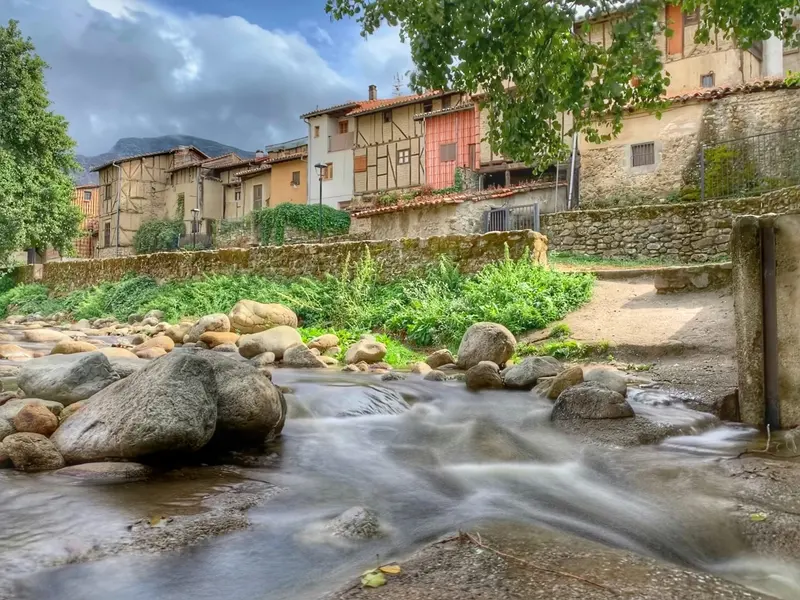
The Ambroz, La Vera and the western hills
Walk down through the old Jewish quarter in Hervás to the River Ambroz. On the way you can see the frame of the houses and how close the passages are between the blocks. Nearby Baños de Montemayor shows a different side of the Ambroz corridor, with thermal waters and a historic route through the valley. The two pair well if you decide which part you want to walk through in each town.
In Garganta la Olla and Valverde de la Vera, look at the upper floors that overhang the streets and at the materials used in the façades. You can follow the way rainwater is channelled as another means of understanding the architecture. Allow time between parking and reaching the centre. A short detour in La Vera can mean bends and a narrow entrance. Put Yuste into the same outing or visit it on a separate morning.
Robledillo de Gata sits on different levels in a narrow valley. Pause where you can see the water and the houses together to make sense of the layout. In the same range, San Martín de Trevejo works for a walk following the little water channels and a meal in town. If you want to go to Las Hurdes, give it a separate day and check the roads into the valleys you want to see.
Granadilla, on the Gabriel y Galán reservoir, is a chance to see the outline of a walled town in a setting changed by water. Check the visiting arrangements and the entrance you will use. At Coria, the cathedral and walls are landmarks for a walk through the old town above the Alagón. Travelling towards Sierra de Gata, choose which of those stops fits your route and keep the place where you want to spend the evening for last.
Nature and protected areas
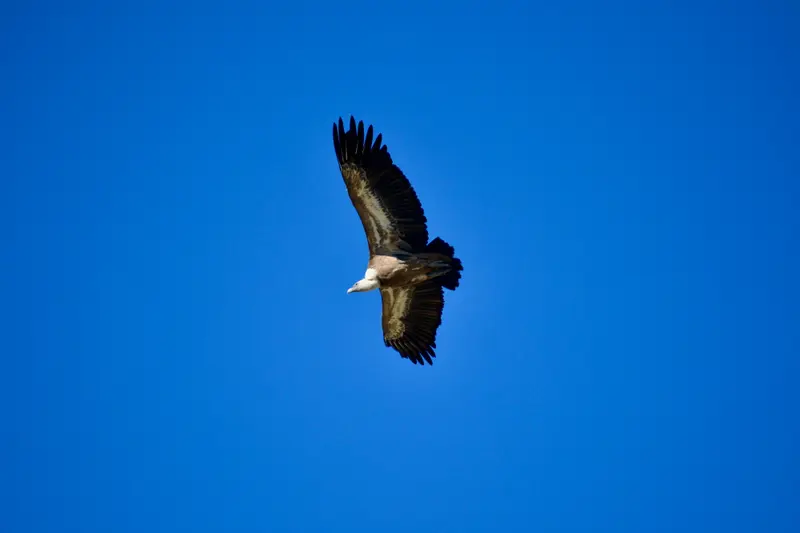
Monfragüe, Los Barruecos and the border stretch of the Tagus
At Monfragüe National Park, begin at Salto del Gitano for a view of birds that use the cliffs. With binoculars, scan the ledges before looking for birds in higher flight. Villarreal de San Carlos is a place to plan another viewpoint or a route on foot. For the walk up to the castle, compare the exposure and gradient with the conditions on the day.
Near Malpartida de Cáceres, Los Barruecos brings granite boulders and pools together. On a short loop you can watch the apparent shapes of the rocks change with the light and your angle. The Museo Vostell offers a way to look at landscape and contemporary art in the same outing. If you plan to do both, check museum access and choose the outdoor route that fits the time you have.
In Tajo Internacional, the river and frontier make for a different trip from the national park. To see the water from varying heights, give the viewpoints at Alcántara and along the border a day of their own. Look up crossings, which bank you need and how much daylight you will have. Two longer stops can give you more time to see the landscape than a string of brief stops separated by hours on the road.
The Jerte and Villuercas-Ibores-Jara
The Garganta de los Infiernos combines mountain paths and pools sculpted by running water. For Los Pilones, find a published trailhead and check conditions first. Include the return journey when planning your walking time. You can see the pools from the trail. If you are with walkers of different speeds, agree a time to turn back and leave some time for the village.
In Villuercas-Ibores-Jara, compare the parallel ridges and valleys from more than one place. The Risco de la Villuerca gives a broad view of the terrain, and a geosite partway up a hill can show its shapes more closely. Decide according to visibility and road conditions. From Guadalupe, plan a short interpretation stop first and a walk the next day, with enough room to switch the order if mist closes in.
Festivals and traditions
In Piornal, Jarramplas took place on 19 and 20 January 2026, according to the provincial council. A masked figure with ribbons and a drum is pelted with turnips as part of a traditional celebration of Saint Sebastian. For a future edition, check the route and find a place to watch where you can give the procession room to pass.
The 2026 Spring and Cherry Blossom programme ran from 20 March to 3 May across villages in the Jerte Valley. When planning for a future edition, check which village hosts the activity you want. The event you have chosen and the part of the valley with the best blossom might be some way apart. Leave time to make one trip between them.
Cáceres City Council scheduled WOMAD for 7–10 May 2026, with concerts on stages around the old town. For a later edition, find the actual square or venue listed for your performance. If you also want to see the monuments, put the indoor visits in the morning and leave time to return to your accommodation before the music starts.
What to eat
In the centre of the province, Casar de Cáceres gives its name to Torta del Casar. This soft sheep’s cheese can be spooned from the centre onto bread. The Ibores area is associated with a goat’s cheese. If you want to compare them, ask for small portions and find out how they are served. To buy some, make the cheese shop or market a late stop if the product needs to stay cool on the way home.
In La Vera, look for pimentón and ask about the sweet, bittersweet and hot varieties. You will notice the smoked aroma differently in a dish such as migas than when you open a jar. In the Jerte, cherries connect the orchard to the table. Ask about the variety and whether you are tasting in-season fruit or a preserve you can buy at another time of year.
Lamb stew, migas and garlic soup are options for a sit-down meal after a walk. When travelling between villages, stop to eat where you know when the kitchen is open. If you will be walking in a nature reserve afterwards, take water and something for the return. Around the border or in the hills, another stop may be farther by road than you think.
Sport and outdoor activities
For birdwatching, combine a viewpoint at the Monfragüe cliffs with time on the plains near Trujillo. The cliff faces are a place to watch birds in flight. On the plains, scan open areas from public paths and keep your distance. A local guide can help choose the habitat for your season. Ask how long you will be on foot and what equipment you will need.
For walking, choose between a valley-floor route and a climb with a view of the terrain. The path to Monfragüe Castle, a walk to Los Pilones and a route in the Ambroz have different surfaces and conditions. Choose what suits your group. After rain, allow for slippery rock close to water and consider a turnaround point before the most exposed section.
For cycling, a greenway such as the Vía de la Plata through the Ambroz allows you to ride out and back without a transfer. Locate the entrance and check the condition of your stretch. On a road ride through the valleys, work out the effort of climbing to a pass as well as the distance on the lower ground. Save a place where you can cut the ride short if the forecast changes.
Routes and itineraries
A weekend in Cáceres and Trujillo
Start with the walled centre of Cáceres. Go through Arco de la Estrella, cross Santa María and take a different street back. For day two, choose Trujillo for stone streets and a walk up to a castle. For open country, try Los Barruecos and the museum instead. Two nights in Cáceres give you an evening in Plaza Mayor after your outing.
Four days for Monfragüe and one valley
Begin in Plasencia with the cathedrals and a walk around the gates, then give Monfragüe the second day. Choose the Jerte Valley or La Vera for day three according to your dates and the sort of walk you prefer. Spend a final morning in Hervás if you are leaving to the north, or another day within your chosen valley. Change base if you want two early starts in the same area.
Five days for Guadalupe and the frontier
Pick Cáceres or Trujillo for the first day, then allow two days for Guadalupe and the geopark. Return west with an overnight stop if you are finishing in Alcántara or visiting the border stretch of the Tagus. If you are especially interested in the river, shorten the first city visit and spend a morning and an afternoon on the frontier.
Where to stay in Cáceres province
Cáceres works well for sightseeing on foot before driving to Los Barruecos or Trujillo. In Trujillo, check how you will manage luggage if your accommodation is high up and whether it suits a departure towards Guadalupe. Plasencia is convenient if you want to take several trips into the north and come back to a city for dinner. Ask about access and parking if you will move the car every day.
If you have two long outings in one valley, choose somewhere close to the paths you will use. Try Hervás for the Ambroz, a Jerte village for the blossom or La Vera for Yuste and the gorges. Guadalupe puts you close to the monastery and geopark. On the border, choose accommodation after you have decided which bank to explore and which crossing to use, especially if you are continuing into Portugal.
See places to stay in Cáceres province (opens in a new tab)Affiliate link: if you book through it, we may earn a commission at no extra cost to you.
Practical tips and common mistakes
- Start in the right valley. The Jerte, La Vera and the Ambroz look close on a map. The pass or detour between them can take a large part of the morning.
- Check blossom, events and swimming individually. Use a different source for each, and make a last check if the day’s trip depends on one of them.
- Think about slopes in old towns. Work out how to reach your lodging or indoor visit if you have luggage, a pushchair or limited mobility.
- Save your exact stops offline. A trailhead, viewpoint and a suitable turnaround point make better directions than the general name of a park or geopark.