

 Español
 English

Why visit Guadalupe
Start in Plaza de Santa María if you are planning what to see in Guadalupe. Look across the fountain at the Royal Monastery, then follow a street down into the Puebla, the old settlement around it. Within a short walk, towers and ceremonial entrances give way to houses with timber balconies, stone gateways and covered pavements. Allow time for both halves of the visit.
Guadalupe lies in the east of Cáceres province in Extremadura. UNESCO inscribed the monastery in 1993. The Puebla grew around the pilgrimage site and its buildings. If you are exploring the geopark as well, see how the town fits into the slope before heading to a higher viewpoint where you can read the shape of the hills.
When to go
Spring and autumn suit a visit split between the town and the hills. When clouds cover the ridges, explore the monastery first. Save a high viewpoint for the clearest part of the day. In winter the square and the top of the ridge can have very different weather, so make separate decisions about each.
In summer, walk through the Puebla early and arrange an indoor visit for the hottest part of the day. An overnight stop leaves a whole morning for the geopark. Around the September celebrations, find the dates and venues for the year in which you plan to travel. A pilgrim’s visit on a feast day and a quiet walk around the monuments each offer a different experience.
Getting there and around
Guadalupe is reached by road. If coming from the city of Cáceres or Trujillo, include time for the roads through the hills before booking a visit with a set start time. For an international arrival via Madrid, compare the whole journey from the airport, including any transfer to a hire car or a coach departure. Check the return before relying on public transport for a day trip.
The square, monastery and old streets are within walking distance once you arrive. Use Calle Mayor as a link between the higher and lower parts of the Puebla. For the Ermita del Humilladero, plan a separate trip. Spain’s national tourism office places it about four kilometres from town. If staying in the centre, ask how to get your luggage to the door, particularly when a route passes over sloping cobbles.
What to see in Guadalupe
Things to do in Guadalupe around Plaza de Santa María
Take in the monastery frontage from across the square, then walk to the Tres Caños fountain. From here you can see how people move between the arcades and the monastery doors. Find the former Hospital of San Juan Bautista on the other side. In a short visit, leave time to see the square again after coming out of the monastery, when you can match the town buildings with what you saw inside.
Calle Mayor and the Puebla gateways
Follow Calle Mayor from the square towards the smaller houses below. Find Arco de Sevilla and Arco de Chorro Gordo on the town map and use them as landmarks for a short walk. Look for timber balconies and for pavements tucked under the upper floors of buildings. If you are travelling with companions, the fountain makes a straightforward place to meet after taking different streets back.
Monuments and heritage
The Royal Monastery of Santa María de Guadalupe brings together buildings from several periods. Look for the small Mudéjar pavilion in the cloister garden and view it through the arches before looking at its details. Check which spaces your visit covers. Religious services and visits to the historic buildings follow different arrangements.
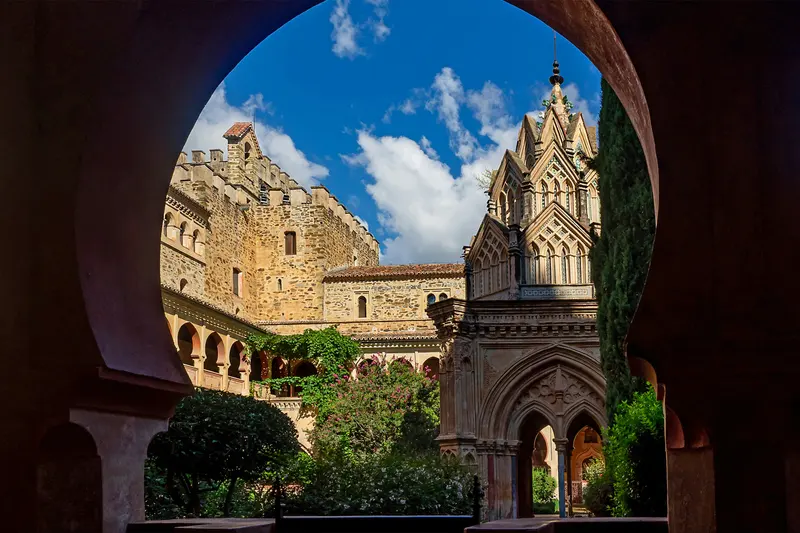
The former Hospital of San Juan Bautista and the Colegio de Infantes now form part of the Parador opposite the monastery. Their position gives a sense of the care and teaching connected with the shrine. At Las Altamiras, the Ermita del Humilladero marks a point where pilgrims could pause within sight of the monastery. Compare the scale of the chapel and the landscape around it with the closely packed buildings near the square.
Museums and culture
The monastery collections include embroidered vestments, choir books and paintings. The fabrics are worth seeing at a pace that allows you to pick out individual designs. The large lettering in the choir books makes more sense when you imagine several singers reading the same page. Look for how the paintings by Zurbarán relate to the rooms of the monastery and confirm which collections are included in your visit.
The local tourism office has a learning guide to the monastery. Pick out the pavilion and an architectural feature to look for before you go in. Afterwards, look at the entrance and surrounding buildings again from the square. A few details that you can recognise on your own often make the second walk around the square more rewarding.
Neighbourhoods and areas
Around the square and above the monastery. This is the most convenient place for a short walk before an indoor visit. Look at the way steps and side streets negotiate the different levels within sight of the monastery.
The lower Puebla. Walk down Calle Mayor and make a loop through the residential streets. Look at the height of the balconies and the spacing of the arcade columns. If you want to limit the uphill walk back to the centre, pick one gateway and return from there.
Nature and protected areas
The Villuercas-Ibores-Jara UNESCO Global Geopark has parallel ridges and valleys. Risco de la Villuerca is a point from which to see those patterns if visibility is good. Check the geopark notes and road conditions before going high. Closer to the Puebla, the viewpoint near El Humilladero looks towards the monastery. If cloud blocks the view, choose one of the geopark’s interpretation centres and leave the ascent for another day.
Festivals and traditions
On 8 September 2026, Extremadura Day, the monastery basilica held a mass for the feast of the region’s patron saint. The pilgrimage also brings people in on different walking routes. For another year, look up both the religious programme and town information about access. Outside the celebrations, visit the Humilladero area to see how pilgrims could stop when the shrine first came into view.
Routes and itineraries
One day. Start with the monastery and Plaza de Santa María. Walk down Calle Mayor, pass through a Puebla gateway and return through another street if the slope suits. Add El Humilladero when the view is clear and time allows.
Two days. Spend day one around the monastery and the old town. Set aside day two for a viewpoint and an interpretation stop in the geopark. If the highest ground is in cloud, allow more time at the centre and come back for a last walk around the square in the evening.
Day trips
Cañamero and Logrosán. The first has a geopark reception centre. Logrosán offers a look at mining history at Costanaza. Choose one to pair with a stop in the hills or set aside a day to see both. Check the visiting arrangements before planning the drive between them.
Trujillo. Start in Plaza Mayor, then climb to the castle to see the town open into plains. Give yourself enough time for both the square and the hill. Visiting on separate days brings out the contrast between the castle above Trujillo and the monastery in its valley.
Travelling with children
Keep the first walk short, with a search for towers, windows and shapes in the fountain. Give the cloister its own stretch of time if it is part of your visit. See whether children can spot the pavilion from under the arches. On the next day, choose between a viewpoint and an indoor explanation of the landscape according to the weather and how far everyone wants to walk.
Where to stay in Guadalupe
Near Plaza de Santa María. Stay here to get to the monastery easily and take an evening walk after dinner. Ask where you can drop off luggage, especially when festivities bring more people to the square.
In the Puebla or outside town. In the old streets, look at the slope between your room and the square. Outside town, check the time you will need to get back from a day in the hills if you intend to spend the evening in Guadalupe.
See places to stay in Guadalupe (opens in a new tab)Affiliate link: if you book through it, we may earn a commission at no extra cost to you.