

 Español
 English

Why visit Salou
Start on Passeig Jaume I to get a sense of what to see in Salou. Llevant Beach runs alongside the centre. You can go back and forth between the sand and the town during the day. East of there, the shoreline soon changes shape. Between Capellans and Cap Salou, the Camí de Ronda coastal path passes headlands, exposed viewpoints and smaller coves. You can experience both landscapes in one day by choosing a manageable stretch of the path.
Salou sits on the Costa Daurada in Tarragona province, on the coast of Catalonia. It makes a base for a trip with beach time and a separate day at PortAventura World. It also works for a walking break between the town and the shore. If walking is your main reason to go, the headland offers enough variety for a morning after a shorter outing along the main promenade.
When to go
In spring and early autumn, you can fit a coastal walk and a look at the villas along Jaume I into the same day. If you are saving the sunniest day for a cove, look at the wind and sea conditions too. The pine-backed stretch is still worth walking when the water is rough. In winter, use Jaume I as your starting point and choose an indoor stop from the cultural programme if the weather calls for one.
In summer, staying near the stretch of sand you expect to use most saves repeat journeys. Walk towards the headland in the cooler part of the day and allow time to retrace the route. If PortAventura is the main reason for your trip, check the park calendar before dividing up your stay.
Getting there and around
Reus and Barcelona-El Prat are two airports to consider for the Costa Daurada. The distance from the airport is only one part of the transfer. Look up the journey to your actual accommodation, especially if you land late or are staying on the headland. In 2026, Adif listed Salou–Port Aventura as a separate station from Tarragona. Check the map before booking a train. The station that serves the theme park lies inland from the seafront.
The promenade links Llevant, the harbour and Ponent on foot. For the eastern end of town, decide which way to tackle the sections with steps and slopes. If people in your group walk at different speeds, agree on where to meet by a beach with street access. Before leaving for the theme park or another town along the coast, check the location of the stop and the service back.
What to see in Salou
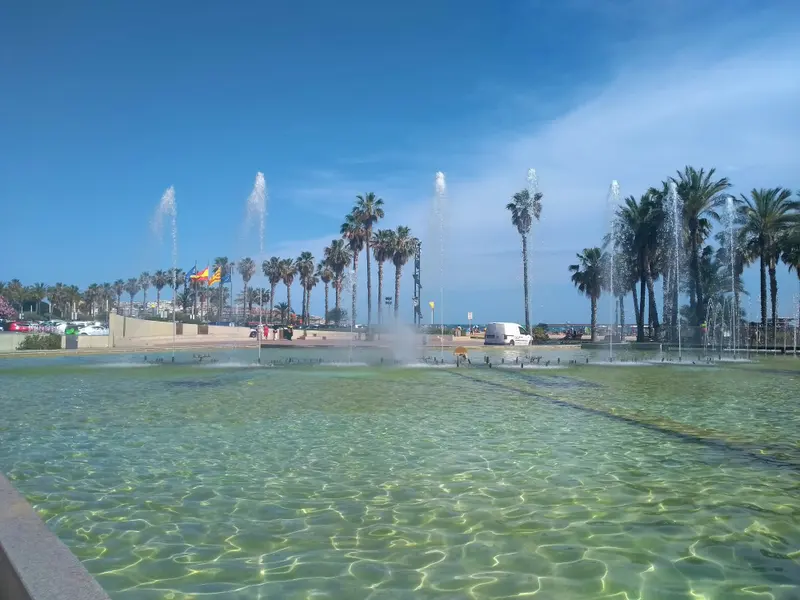
What to see along the Salou seafront
Start by the Font Lluminosa at one end of Passeig Jaume I and walk between the palm trees and Llevant Beach. Look for the monument to Jaume I and use the line of the beach to stay oriented. The villas on the town side show a different stage in Salou’s growth. Look at them from across the road as well as up close. The way the buildings stand apart is as much part of the streetscape as the decoration on the façades.
At the eastern end of the promenade you can carry on to Capellans for a first look at the Camí de Ronda. To the west, the route to the harbour and Ponent is easier to break into shorter walks. Pick a direction when you get to the promenade. If you have just arrived, a short walk by the sand and a return along the inland streets give you enough of a sense of the area to plan the following day.
Monuments and heritage

Torre Vella recalls the old coastal defences. The tower dates to the sixteenth century and forms part of a cultural centre today. Take in its position and shape before going inside if visits are available. It makes a different stop from the seafront holiday villas, and you can see the two parts of town on separate walks.
Xalet Bonet, also called Voramar, is an example of the architecture built for holidays by the sea. Look at its tower and the exterior decoration from the street. This is a walk to see the exteriors, so check separately if you are planning to enter a specific building. The monument to Jaume I on the promenade refers to the 1229 expedition that departed from this coast for Mallorca. The town commemorates that episode in its annual festival.
Museums and culture
Torre Vella is one of the places to look for exhibitions. Check the town’s programme and the venue for the exhibition that interests you. The municipality also documents an enamel museum and collection associated with the tower. If you see the pieces, take a close look at their colour and surface after seeing the rougher stonework of the fortifications outside.
The Masia Catalana recalls the form of a traditional Catalan farmhouse in an area that later grew as a holiday resort. Check what is on and whether you can go inside on your dates if you want to see more than the setting. Make it part of a walk towards Capellans or the municipal park, according to where you intend to finish.
Neighbourhoods and areas

Llevant and Passeig Jaume I. This is a simple area from which to get your bearings because the beach and promenade share the same frontage. A street a block inland can feel different while still being close to the sand. Notice which part of the promenade your route from the accommodation reaches.
The harbour and Ponent. The promenade continues west from here. Use the harbour as a reference point if you want to walk around town in one direction and on to the beach in the other. At the eastern end, Capellans and Cap Salou have smaller beaches, more changes in level and rocky viewpoints. The headland works best if you want the walk itself to be part of the day.
Nature and protected areas
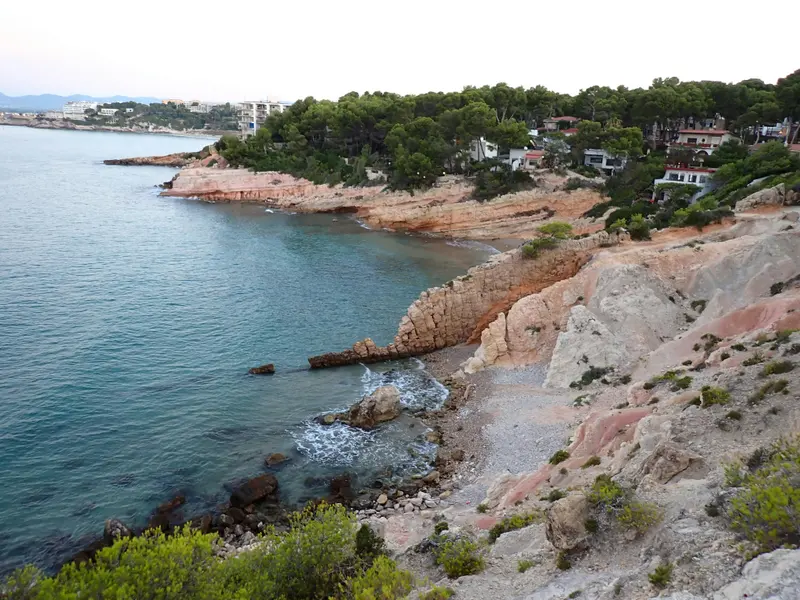
Walking the coast towards Cap Salou
The municipal coastal route runs out towards the headland. You can split it between the part from the centre to the first beaches and an independent outing near the lighthouse. From the points, you can look back at the coves and see how the rocky shore divides one beach from the next. Sections with railings give way to more uneven ground. Check the access at each end and allow time for stops before making plans for the return.
Beaches in Salou
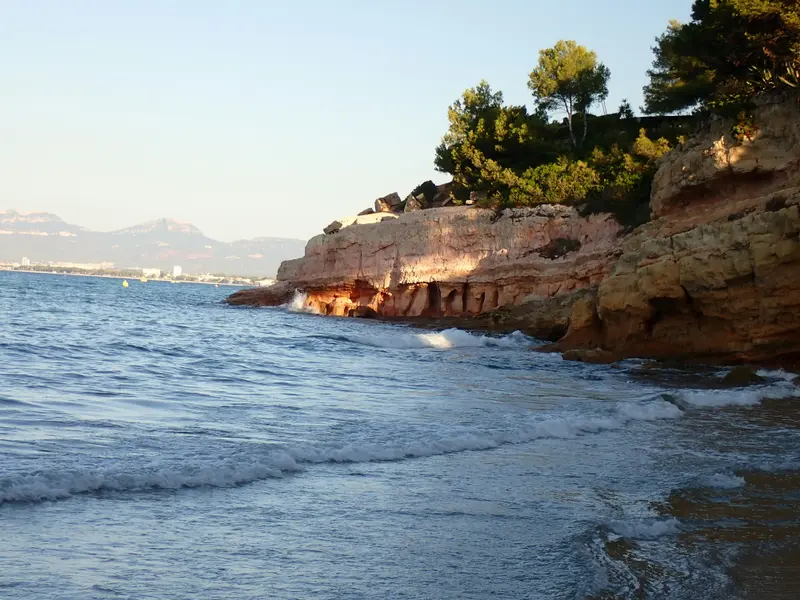
Llevant and Ponent. Llevant runs alongside Jaume I and is easy to reach from the centre. Ponent lies beyond the harbour on the way towards Cambrils. If you are pushing a buggy or carrying bags, choose an access point before deciding which end to visit.
Capellans, Llarga and Cala Crancs. Capellans is a sheltered-looking bay with a descent from the streets behind it. The pines are more visible around Llarga. Cala Crancs lies further round the headland. Short distances on a map can hide steps or a climb, so pick a single cove for a long beach stop and use the paths above the others for viewpoints if your group would rather keep walking.
Festivals and traditions
Cós Blanc forms part of the winter festivities. In its 2026 programme, the town listed a route along Passeig Jaume I and through central streets. Groups parade through the town with confetti. Look up the meeting places and the route for your year and think about where you will leave the promenade if you want to go back before the end.
The Festa del Rei Jaume I commemorates the 1229 expedition with historical re-enactments, street events and activities in town and along the seafront. It connects the monument you see on an ordinary day with the streets used in the festivities. Check the edition for the year you visit before planning around an individual event.
Routes and itineraries
One day, the centre and Capellans. Walk along Jaume I and stop to see the villas. Follow the coast to Capellans, then retrace the route if you have already found a good place for a break. In the afternoon, choose the harbour or Torre Vella according to whether you want more time outside or an exhibition visit.
Two days with the headland. Save the town for day one and spend day two around one access to Cap Salou and one cove. If your group wants to go to PortAventura, give it a day of its own and leave the promenade for your arrival or departure. That way, each day has a clear endpoint and space for a longer stop.
Day trips

PortAventura World. Plan the journey to the park separately from the route to the beach. Check which park you are visiting and which entrance or station will put you closest. For another day on the Costa Daurada, choose the Roman remains of Tarragona or the Vila and fishing port in Cambrils. The two involve different journeys even if you set out from the same promenade.
Reus. Plan an outing around Plaça del Mercadal. Casa Navàs and the Gaudí Centre offer two ways into the architecture of the town. Decide which you want to visit before adding more buildings to the walk. From Salou, treat it as an urban trip with its own outward and return journeys.
Where to stay in Salou
Passeig Jaume I and Llevant. Stay close to the promenade to divide a day between the beach and your room. Look up how you get to the beach from the front door and how busy your street may be at night.
Ponent and the harbour. A good base for a walk west along the shore with the town centre still in reach. Cap Salou suits a stay based around small coves and viewpoints, with fewer afternoons in town. Before choosing a place on the headland, check how far it sits up from the beach you intend to use.
See places to stay in Salou (opens in a new tab)Affiliate link: if you book through it, we may earn a commission at no extra cost to you.