

 Español
 English

Why visit Astorga
To see what makes Astorga worth a stop, stand between Santa María Cathedral and the Episcopal Palace that Antoni Gaudí designed. In a few steps you can move from the cathedral’s Baroque stone entrance to a building with round towers and a moat. Inside both, the character of the rooms and the way light enters tell a different story from the view in the square. Give yourself time to walk around the buildings before deciding which one to visit first.
The city stands at a crossroads in León province, in western Castile and León. The French Way of the Camino passes through Astorga on its way towards Maragatería, and the Vía de la Plata is another historic route associated with the city. Below the current streets are remains of Roman Asturica Augusta. A day here can take you from a Roman mosaic or vaulted gallery to a view over the plain from beside the city wall.
The centre is small enough to visit on foot. The palace and cathedral make one group, and Plaza Mayor and the Roman Museum another. The train station and the Chocolate Museum extend that circuit slightly. For a short stop, pick two interior visits and let the walk link them. If you have a second day, spend part of it in the stone villages of Maragatería or by the old Camino bridge at Hospital de Órbigo.
When to go
Spring and early autumn are good for moving between the monuments and the streets. The cathedral square and the edge of the wall are more exposed than the narrow streets of the centre. In summer, leave those open stretches for the cooler hours. Save a museum or one of the main buildings for later and come back outside when the light has moved across the square. If you are visiting both the palace and the cathedral in a morning, allow a short walk between them.
In winter, pick the visits where you want to spend the longest indoors. The palace, cathedral, Roman Museum and Chocolate Museum cover quite different periods. Choose between them according to where you want to start and finish. If you have come for a festival, keep an eye on the locations of events. A square that is an easy passage between two museums on an ordinary afternoon may turn into a gathering place during the celebrations.
Getting there and around
Astorga has a railway station and a bus station. Check onward connections and your return journey if you are coming from León or continuing towards Ponferrada. The A-6 is the main road reference for a trip across this part of the province. When working out how much time you have in the city, include the walk from the station or car park to the first sight.
Up from the station and around the centre
The railway station sits below the old town. Check the route for your particular address if you will be carrying bags uphill. From the bus station, choose the approach according to whether you want to start near the monuments or Plaza Mayor. Once in the centre, the cathedral square and Plaza Mayor give you two reliable landmarks. Walk between them early on and you will have an outline for the rest of the day.
Treat a trip to Castrillo de los Polvazares and the other villages as a separate outing. A hire car gives you flexibility to add a second stop. If you are using public transport, check how you will make the return journey before leaving. Pilgrims walking into and out of Astorga have a different decision to make. Choose your overnight stop and main visit so they fit the length and direction of the day’s stage.
What to see in Astorga
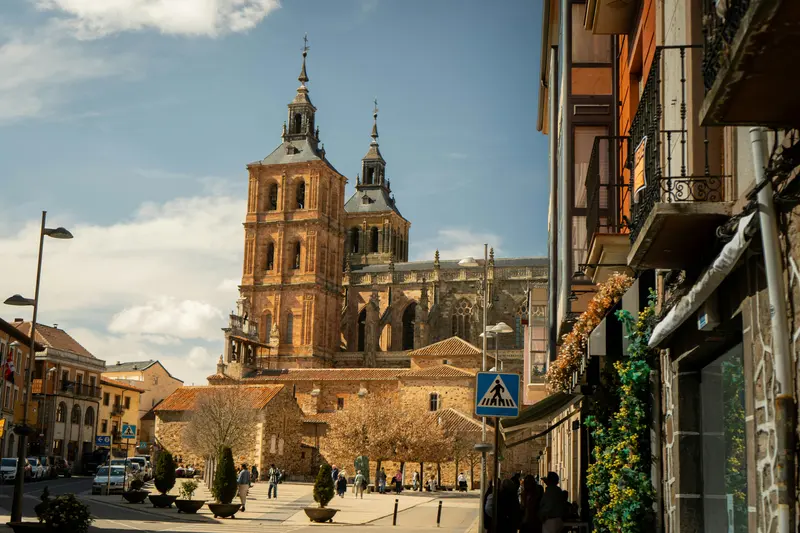
Things to do in Astorga from the cathedral to Plaza Mayor
At the cathedral square, look first at the way the towers of Santa María and the roofline of the palace sit together. Spend time inside one before moving on to the other. After each visit, look at the outside again. The doorways, tall openings and roof shapes make better sense after you have seen which rooms and naves sit behind them. A pause outside also helps you see where the two buildings differ in scale.
Follow the streets towards Plaza Mayor. The arcades frame the Baroque town hall. Look up at the clock and the figures in local dress, then walk across to the streets by San Bartolomé. The Roman Museum and the archaeology under the centre add another layer to a square that stands over part of the ancient forum. If you have booked a guided visit, use the walk to locate the museum entrance before you need to return.
Around the edge of the old town
From Plaza Mayor, head towards the Jardín de la Sinagoga and the wall. The ground falls away here, and the city looks different once you can see past the next street. Follow the edge for a stretch and cut back inside towards one of the squares. It is an easy way to understand why the walk from lower down involves a climb and why so many Roman remains are studied beneath the upper streets.
On the way back to the cathedral, try a parallel street to see the everyday buildings around the monumental area. Shops, balconies and small squares make up much of the walk between the main sights. Santa Marta and San Bartolomé are useful landmarks for short detours. Both give a sense of how closely churches and secular buildings sit together in this part of Astorga.
Monuments and heritage
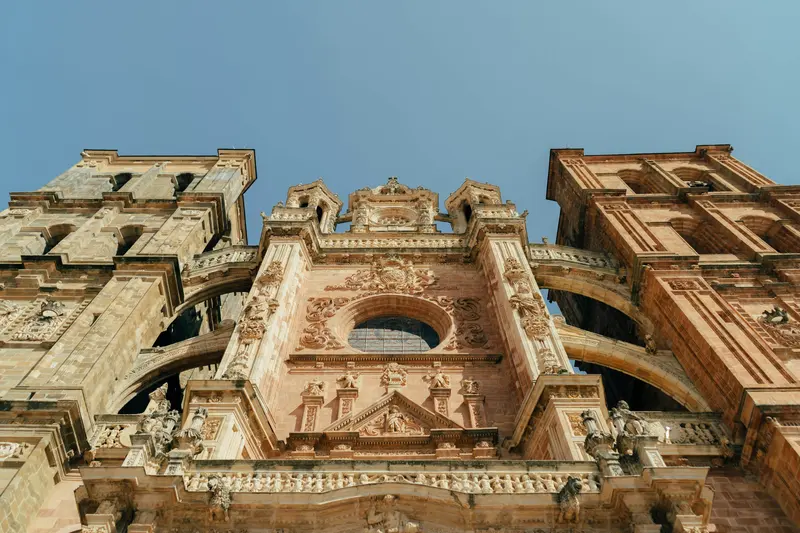
Gaudí’s palace and Santa María Cathedral
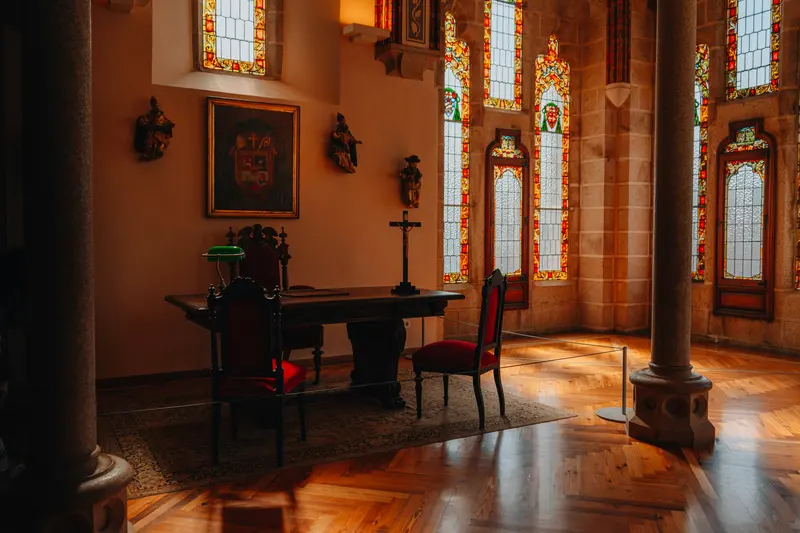
Walk around the palace far enough to compare the entrance arches with the towers along the sides. Looking across the garden and down towards the moat makes the outline easier to understand. Inside, look at how the windows, columns and vaulted ceilings guide the eye. The chapel rewards a few minutes of its own. Travellers who have already seen Casa Botines will recognise some of Gaudí’s interests while seeing them applied to an episcopal residence with a very different setting.
Stay in one of the rooms long enough to see which parts of it receive light through the stained glass. Once you step outside, look for the same window from the other side. Details that appeared to belong to the façade alone can help explain how Gaudí laid out stairs, passages and places to pause inside.
At Santa María, start with the carved scenes on the main front. Inside, take time over Gaspar Becerra’s high altarpiece and step back to see where it sits within the Gothic space. If the Cathedral Museum is also on your list, treat it as a visit in its own right. The museum calls for closer inspection of smaller objects than the ones that first stand out in the nave.
The Roman Route beneath the streets
The municipal Roman Route starts at the Roman Museum. The stops connect the original camp with the later city and its structures for bathing and daily life. The house with the mosaic of a bear and birds gives a sense of the domestic scale. The Ergástula, the long vaulted gallery associated with the forum, shows how much of Asturica Augusta lies below the ground people cross today.
In 2026, Astorga’s tourist office asked visitors to check availability and book in advance with the Roman Museum because places were limited. Confirm the arrangements for your date. If you prefer to visit without a set time, look at the streets near the museum, the city wall and the position of Plaza Mayor. You can still connect the story in the museum with the shape of the streets above.
Museums and culture
At the Roman Museum, coins, pottery and excavated objects give a more personal scale to the structures on the guided route. You can visit before heading underground if you want a basic idea of the forum and the defences, or go afterwards to spend time with the objects associated with places you have just seen. The museum is close to Plaza Mayor, so either order works on foot.
The Chocolate Museum is about a local industry. Compare the equipment used to work the chocolate and make different shapes with the packaging that buyers saw. Material connected with the Sierra printing company shows how local workers designed and produced labels and advertising. Machines, moulds and wrappers tell related parts of the same story. It makes a second museum option for a day focused on how people lived and worked in the city.
The Museo de los Caminos occupies Gaudí’s palace and displays religious art linked to the diocese. Set aside some time for the objects if you have been concentrating on the building’s windows and vaults. Where a piece stands within a room can change the way you notice its size and details. On a one-day visit, choose which collection you want to look at closely and which you will save for another time.
Neighbourhoods and areas
The monumental centre and the way out towards Rectivía
To orient yourself, try walking from Plaza Mayor to the city wall before returning through the shopping streets. It takes you from a space enclosed by arcades to a clear view out beyond the old town. That change is a useful introduction to the raised ground on which the city developed, especially if you arrived by bus and came straight to the monuments.
The area around the cathedral and palace leads into the streets around Plaza Mayor, where shops share the old street pattern with the market square. It is easy to make several journeys between the two areas in a day. Vary the return path by going near the Roman Museum or by the wall if you have already walked the main streets.
San Pedro de Rectivía is a parish church on the way out. Its stained glass depicts the Stations of the Cross, a different use of the medium from the windows in the cathedral and palace. If the church is open when you pass, it offers a short visit between the old town and the edge of the city.
Rectivía is a landmark towards the western edge of town for those following the Camino into Maragatería. Carry on in that direction to see the change from the dense old streets to the edge of the city. From the railway side, the difference in height is clearer. Choose the approach that suits where you want to start your visits. This is especially useful if you will only walk uphill into the old town once.
Festivals and traditions
The Astures y Romanos festival turns parts of the town into settings for historical re-enactments. Astorga tourism marked its 40th anniversary in 2026. For any edition, look at how the camp and events are spread across the city. A visit to the Roman Museum on the same trip gives you a chance to compare the artefacts on display and the ways their period is interpreted during the celebrations.
Plaza Mayor is also a setting for Holy Week and the carnival celebration called Sábado de Piñata. Use the programme for your year to choose where to watch and to work out how it will fit with the museums. The arcades and the town hall make the square worth a second visit when it is being used for more ordinary purposes, especially if the first time you see it is during a crowded event.
Routes and itineraries
One day from Gaudí to Asturica Augusta
Start in the cathedral square and spend the first part of the day at the palace and cathedral. Cross the centre to Plaza Mayor and San Bartolomé. If your Roman Route booking is in the morning, reverse the order and leave one monument for the afternoon. Use the Jardín de la Sinagoga and the wall to finish with an outdoor view. This loop covers several different periods without spreading the visits across the wider municipality.
Two days with Maragatería
Use the first day for the main monuments and the Roman remains. On the second, start with Castrillo de los Polvazares and return for the Chocolate Museum, or follow a short stretch of the Camino before a museum visit. If Astorga is a stop on a pilgrimage, choose one visit you most want to see on the day you sleep here. Fit the squares and wall into the time left before or after it.
Day trips
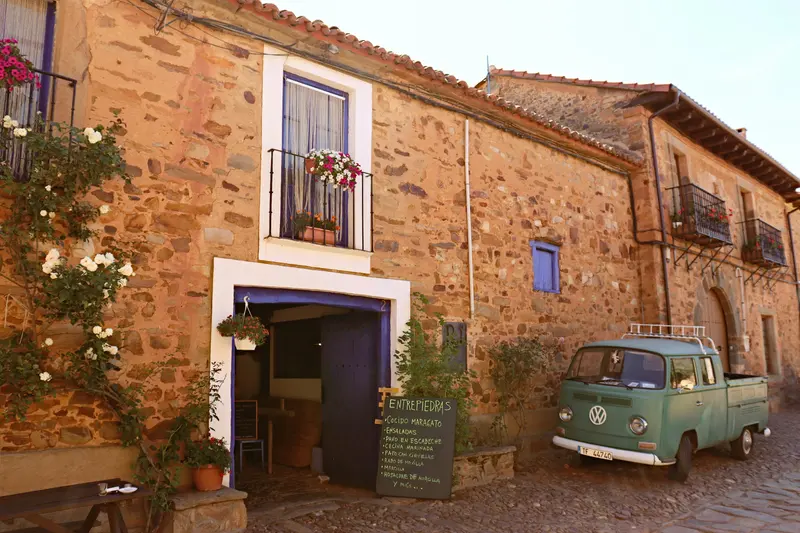
Castrillo de los Polvazares and Santiago Millas
Castrillo de los Polvazares belongs to the municipality of Astorga. Walk along Calle Real to see the broad doorways and stone houses associated with the old muleteers. Try a side street to get another view of how the houses and their entrances fit together. The Muleteers’ Museum in Santiago Millas provides a way to connect the buildings with the work that helped shape them.
If you visit two villages in Maragatería, give them a different purpose. In Castrillo you can read the width of the old thresholds and the shape of the streets. In Santiago Millas, use the museum to find out what muleteers carried and how their work fitted the buildings you have just seen.
Hospital de Órbigo or Rabanal del Camino
For a trip east, cross the Paso Honroso bridge at Hospital de Órbigo and look for a view of its arches from the bank. Continue into the village to see how the bridge connects the approaches on the Camino. Rabanal del Camino offers an outing in the other direction, where the road gains height further into Maragatería. Choose the village that fits the next stage of your trip and give it time for a walk.
Travelling with children
The town hall clock, the animals in the mosaic and the palace towers are three things children can look for during a short walk. Pick one before you leave and let the next landmark lead you towards a square. If you plan to do the Roman Route, ask about the underground sections and how the visit works with younger children. The wall and the edge of the old town offer a chance to be outdoors between indoor visits.
Where to stay in Astorga
Between Plaza Mayor and the cathedral you can reach most sights on foot. If you are catching an early train, look at the walk down to the station as well as the climb you will make with your bags on arrival. If you are following the Camino, check where you rejoin the route in the morning from the accommodation you are considering.
For several days by car, compare the edge of town with a village in Maragatería. In Astorga, you can get an early start at the main monuments. A village stay suits a trip with several walks or outings towards Rabanal. During a festival, check which part of the celebrations you want to watch and where you would be walking from before booking.
See places to stay in Astorga (opens in a new tab)Affiliate link: if you book through it, we may earn a commission at no extra cost to you.