Español
 English

Why visit Lanzarote
Start with two decisions about what to see in Lanzarote. Give the volcanic west a day of its own, then put the northern sites on a different day. Timanfaya and La Geria show what happens when bare lava flows give way to land people have learnt to farm. At Jameos del Agua and Mirador del Río, César Manrique worked with two very different features of the north, a collapsed section of a lava tube and a cliff above the sea.
Among the Canary Islands, Lanzarote suits travellers who want a beach base and a few substantial trips inland. Choose the south for coves and seafront walks, or spend time on the broad sand at Famara to see the west coast under its cliffs. Inland, white houses give way to fields of black volcanic gravel. The local word for this gravel, picón, is worth knowing when you visit a vineyard.
La Graciosa deserves its own day. The ferry crosses the El Río strait and lands at Caleta de Sebo, a village of sandy streets facing Lanzarote’s Famara cliffs. Work out whether you have time for the harbour and a nearby beach or a longer walk. On an island without much shade, a quick glance at the map can give you a misleading sense of how far you will want to go.
When to go
Spring and autumn work well if you want to alternate time outside with visits to museums and villages. Walk through the lava fields in the cooler part of the day. Pack a light layer for viewpoints, where the wind can feel quite different from the conditions at breakfast by the sea. In winter, use sheltered days for the exposed coast and save the historic streets of Arrecife or Teguise for poor visibility.
For a summer holiday, choose a base you can walk back to after a morning on the beach. Wind can cool the shoreline while the ground stays hot inland. Keep the longest walk, the beach and any indoor visit as separate decisions. It is easier to adjust the plan when you know which of the three matters most to the group.
Leave a spare date for La Graciosa. Check ferry updates as well as wind forecasts for the crossing and the island itself. If staying overnight there, allow a comfortable gap between your return boat and any flight on a separate booking. Book rooms and plan the transfer to Órzola early if travelling in August or during a festival.
Getting there and around
Flights, buses and two different ports
César Manrique-Lanzarote Airport (ACE) is close to Arrecife. The 2026 airport and bus operator information lists services to the capital and route 161 towards Puerto del Carmen and Playa Blanca. Match the timetable to your landing time and check where the bus stops in relation to your accommodation. Allow time for bags or rental car collection, especially if you plan to go straight to a ferry.
Intercity lists route 9 between Arrecife and Órzola in 2026. Líneas Romero gives about 25 minutes for the onward crossing from Órzola to Caleta de Sebo. Check the return before setting off if you plan to cross for the day. At the other end of Lanzarote, Playa Blanca has the ferry to Corralejo on Fuerteventura, confirmed in the operator’s 2026 information. Search by the port name as well as the name of the island when arranging either crossing.
Getting around with or without a car
Arrecife is helpful for changing buses and gives you somewhere to explore on foot between excursions. Puerto del Carmen suits a holiday that revolves around walks and time on the beach. When planning a bus day to the north, work backwards from the return service and check the walking route around each stop. Especially outside villages, two nearby points may be connected by a road with little room to walk.
By car, give the western, northern and southern stops different days. Use a timed ticket as the fixed point and decide on flexible stops around it. For Papagayo, ask about access and check whether your car hire agreement covers the approach. If crossing to La Graciosa, plan the first leg to Órzola and your travel on the island as two separate journeys.
What to see in Lanzarote
What to see in Lanzarote on your first trip
At Timanfaya, the Fire Mountains visit includes a bus through a landscape of cones and craters. The island’s Centres for Art, Culture and Tourism, known as CACT, require timed online tickets in 2026. Allow time to get from the main road to the entrance. The Mancha Blanca visitor centre is in a separate location and helps explain how the lava flows formed. Its raised walkway passes over lava from the 1730 to 1736 eruptions. Without a car, compare guided trips to Timanfaya and check whether they include the ticket, a pick-up and enough time for any extra stops.
Carry on to La Geria. Look for the vines tucked down in hollows in the black gravel, with low walls sheltering them from the wind. A winery visit gives you time to see how the vines sit in the terrain before you taste any wine. Pull in at a designated stopping point or winery entrance for the view. The roads through the vineyards have little room to stop.
Inside the La Corona lava tube and above the strait
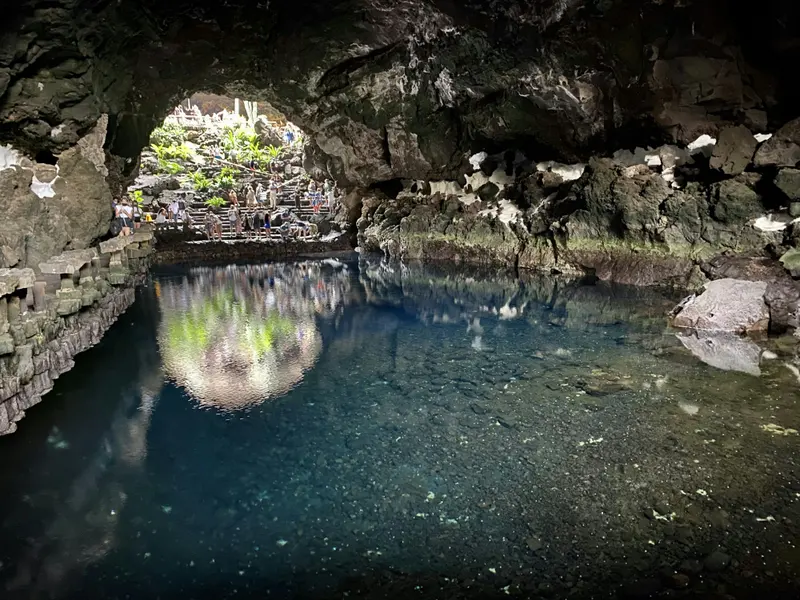
At Jameos del Agua, stairs and paths take you through a section of the lava tube to a natural pool. Look at the way the design moves between enclosed rock and open light. Cueva de los Verdes explores another part of the same volcanic system underground. CACT also requires a timed ticket booked online for the cave in 2026. Check the tour conditions if you are unsure about steps, uneven ground or enclosed spaces.
The Mirador del Río is built into the cliff above the channel. Its main outlook is across to La Graciosa. If cloud comes down, begin with Haría and decide whether to visit the viewpoint later. A different stop on the way south is the Cactus Garden at Guatiza, set in an old volcanic gravel quarry. The plantings follow the terraces, so the view changes as you work your way around the garden.
Monuments and heritage
In the Villa de Teguise, start at Plaza de la Constitución. From the square, walk past the church of Nuestra Señora de Guadalupe and the Palacio Spínola and explore the neighbouring streets. Balconies and doorways are good details to look for in the former capital, particularly where stone frames stand out against white walls. The old town and the resort of Costa Teguise are separate places. Check which one your directions refer to.
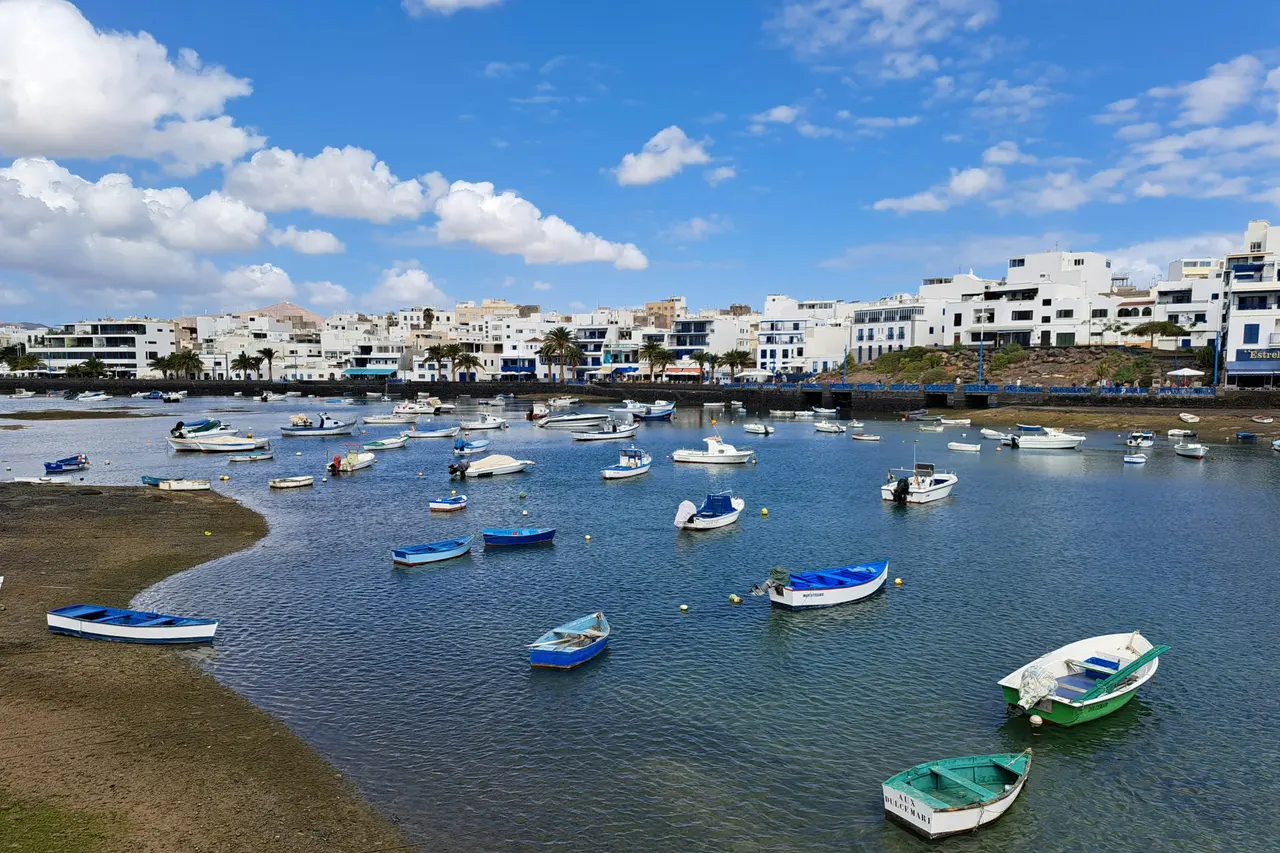
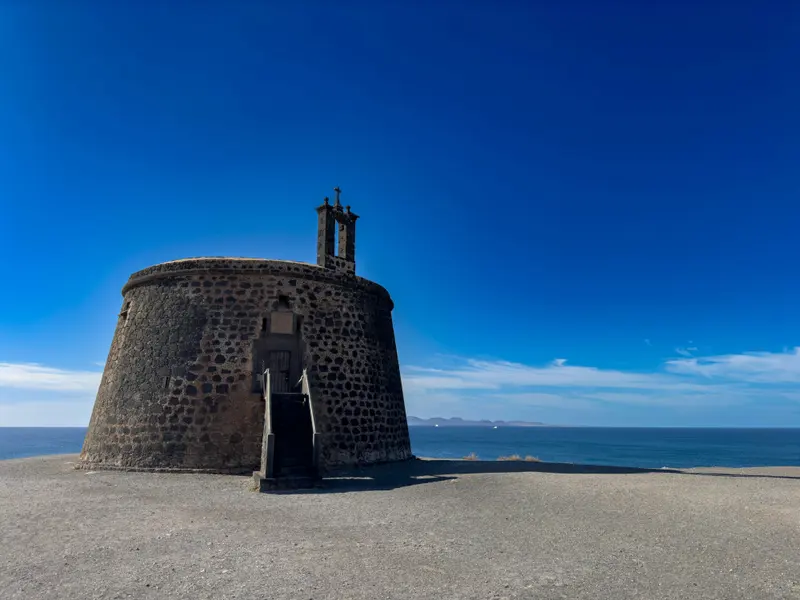
In Arrecife, walk from the Charco de San Ginés lagoon past the church of the same name and out towards the Puente de las Bolas and the castle of San Gabriel. The route shows how the older streets sit between the harbour and the open coast. The castle of San José, by the port, is another stop. On the south coast, the Torre del Águila, also known as the castle of Las Coloradas, sits near Playa Blanca. You can see it from outside on a walk from the Marina Rubicón area.
Museums and culture
The César Manrique Foundation has two homes to visit. At Tahíche, the rooms extend into bubbles left in the lava, showing how the ground shaped the layout of the house. At Haría, the house in the palm grove and the studio give a sense of where Manrique spent his later years. If you have time for one, choose Tahíche for the building or Haría if you want to see the studio and walk around the village.
The International Museum of Contemporary Art in Arrecife occupies the castle of San José. Give yourself enough time to look out over the port and see how the galleries fit into the old walls. Near San Bartolomé, the Casa Museo del Campesino introduces rural architecture and farming traditions. See it on the way to La Geria if you want to put the working landscape into context.
Charming villages
At Haría, begin with a view across the valley from the higher road if time and visibility allow. Walk around the square and church before continuing to the coast. In Arrieta, La Garita Beach is by the village. At Punta Mujeres, look for the natural pools as you walk along the water. Their conditions change with the swell and tide, even along the same stretch of shore.
Yaiza is a convenient break after a morning in Timanfaya. Head to El Golfo to eat by the west coast and watch the waves meet the black rocks. For a view across the south from inland, choose Femés. Pick one detour if you have already booked a long visit that day. It is worth leaving enough time to stop in a village, especially if you want to eat there as well.
In Caleta de Sebo, the fishing boats, shoreline and sandy streets are close together. Stock up on water before heading away from the harbour and leave time to return to the village for a meal. If you stay on La Graciosa, take a first walk before the day visitors arrive and look across the channel as the light reaches the cliffs of Lanzarote.
Nature and protected areas
Timanfaya National Park protects some of the historical lava flows of western Lanzarote. Look for the difference between the cones, the ends of the flows and areas strewn with loose material. The park rules consulted in 2026 restrict travel to authorised roads and trails. Follow the signs and leave volcanic rocks where you find them.
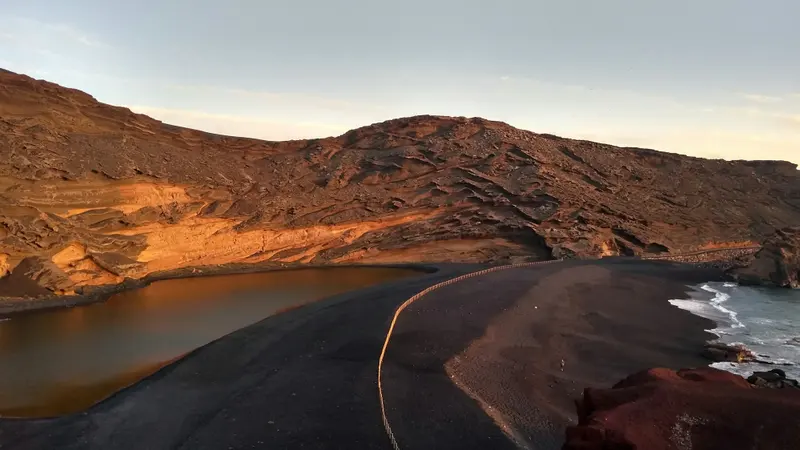
Los Volcanes Natural Park surrounds part of Timanfaya and opens up other volcanic landscapes on foot. At El Golfo, the Charco de los Clicos lies inside a crater cut open by the sea. From the viewpoint you can see the lagoon, the black beach and the slopes behind it. It is also a place to observe the swell from above. At the Janubio salt pans, farther south, look at how salt production fits into the same stretch of coast.
Farther north, Chinijo Archipelago includes La Graciosa and the smaller islands you can see from the cliffs. Keep to marked tracks on La Graciosa and give the dune vegetation room. On a longer walk, allow for the same heat and a possible headwind on the way back. Once you leave the village, the lack of shade may become the main factor in how far you go.
Beaches in Lanzarote
Papagayo and the beaches by the southern resorts
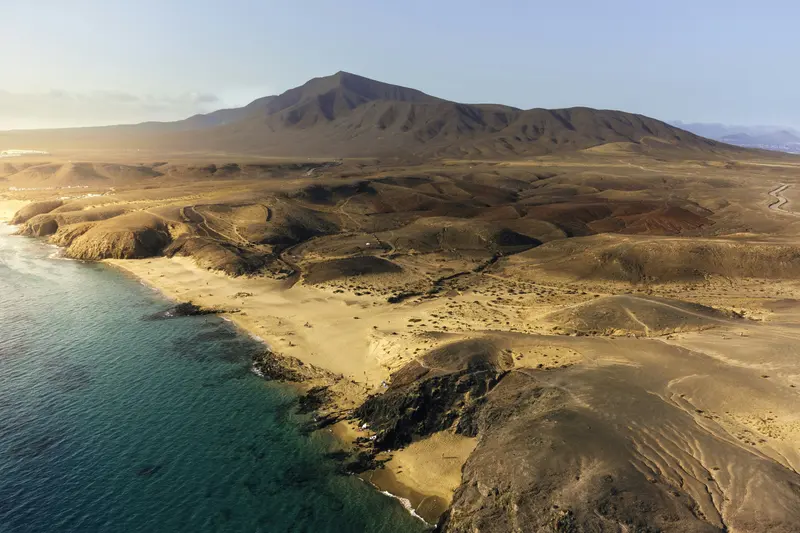
Papagayo is the name of a cove and is also commonly used for the cluster of beaches around the point at Los Ajaches. Playa Mujeres has a longer shore for walking. Papagayo cove itself has headlands on either side and a clear view of the changing colour of the water from above. Bring water and sun protection and check the access arrangements for your visit. For a paved approach and a meal near the beach, look at Playa Dorada or Playa Flamingo in Playa Blanca.
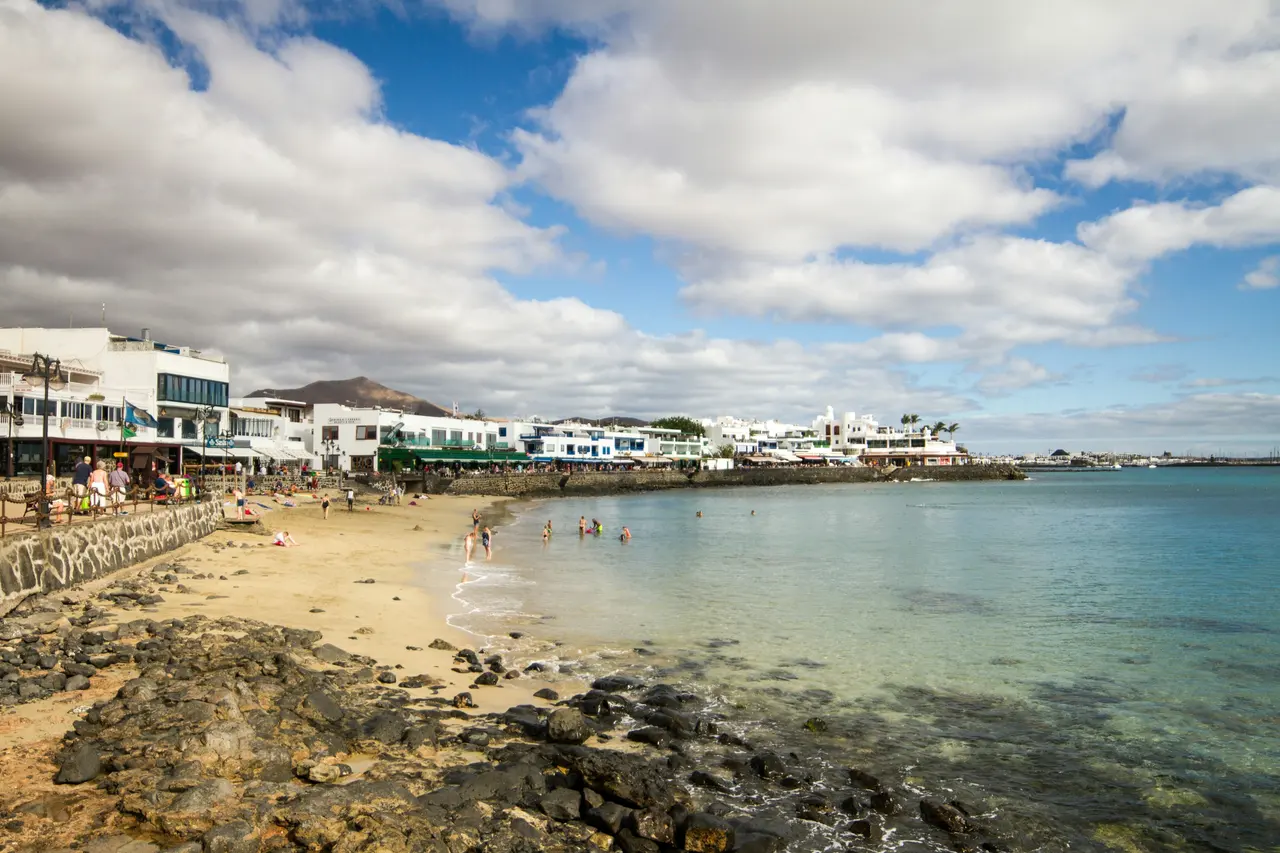
In Puerto del Carmen, Playa Grande is on the seafront promenade and Playa Chica makes a smaller stop. At Costa Teguise, Las Cucharas has the resort close at hand. On a family day, check the wind and flags from the sand before settling down. A forecast for the island as a whole can tell you little about how an individual cove feels.
Famara and La Graciosa
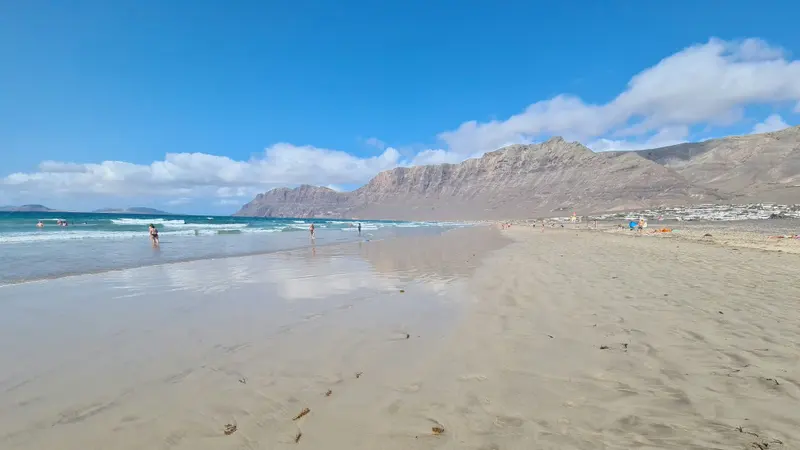
Famara is a broad beach below the cliffs. In the late afternoon, take a walk on the sand and see which parts of the rock still catch the light. This is an exposed Atlantic beach with breaking waves and currents. If you are taking a surf lesson, arrange a meeting point with the school and let the instructor decide when and where to enter.
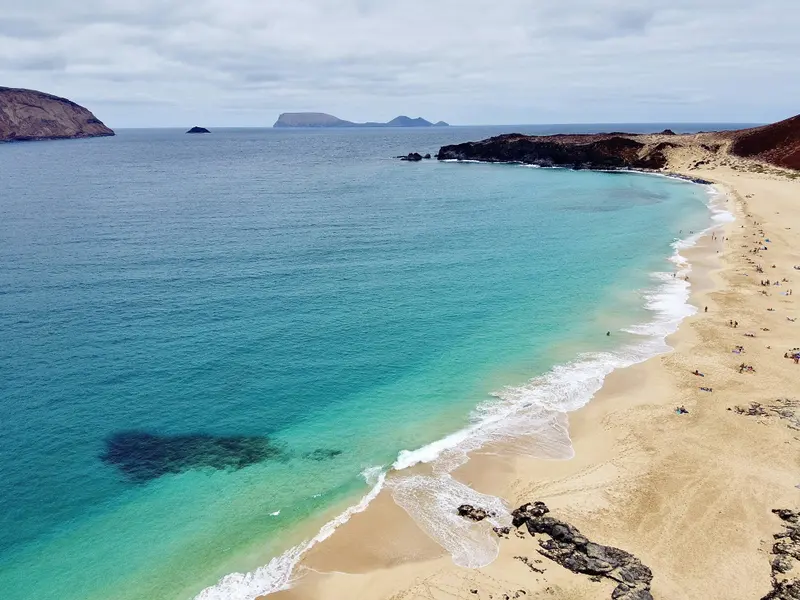
On La Graciosa, El Salado and La Francesa are reached by following the coast south from Caleta de Sebo. La Cocina, beneath Montaña Amarilla, takes more time to reach. Las Conchas is on the north side and exposed to swell and strong currents. Go there for the shoreline and choose a suitable beach for swimming based on the conditions at the time.
Festivals and traditions
The Nuestra Señora de Los Dolores pilgrimage ends at the chapel in Mancha Blanca. The council set the 2026 pilgrimage for 12 September and issued a special traffic plan. People make their way towards the chapel with groups and decorated carts. When planning for a future edition, look up the year’s programme and transport arrangements first. The closures may also affect a day trip through Tinajo or La Geria.
Teguise council invited applications for stalls at La Graciosa’s Fiestas del Carmen in July 2026. The festival is part of the fishing village’s calendar, and Caleta de Sebo is where to base yourself for it. If you want to take part, check the programme and plan your ferry back. If you would prefer a quieter visit, use the same listings to choose when to cross.
What to eat
Try papas arrugadas, small potatoes with wrinkled, salted skins, served with mojo. Sancocho canario is based on salted fish, with sides such as potato, sweet potato and mojo. Gofio, made from toasted grain, can be kneaded into a dough or stirred into stock and served as escaldón. By the coast, ask which fish is on the menu and whether there are limpets. In Caleta de Sebo, time lunch for the end of your walk so you can eat near the harbour.
Goat’s cheese and Malvasía Volcánica wine give the meal an inland connection. If you visit a La Geria winery, walk round the vines first if the visit includes access to the vineyard. Ask whether the tasting needs a booking and agree who will drive. Bring something to eat on a longer outing. Some stretches of coast and lava trail are well beyond the nearest shop.
Sport and outdoor activities
The El Cuervo trail gives you a first experience of walking into a volcanic cone on a defined route. Caldera Blanca, near Mancha Blanca, is a longer walk across lava, with a climb if you continue to the rim. Canary Islands tourism describes a route of about ten kilometres from the chapel. Check the route profile before setting off, wear closed shoes and turn round if the wind makes the approach to the rim uncomfortable.
A surf lesson at Famara is a way to get an introduction to reading the waves and finding the right point to enter the water. Playa Chica, in Puerto del Carmen, is a starting point for diving. Ask about the site, the level required and the kit included. On La Graciosa, hiring a bike makes a longer outing possible if you are used to sand and rough surfaces. Ask the hire shop which stretches are rideable and allow time to return the bike before your ferry.
Routes and itineraries
Three days. Spend the first on the Fire Mountains and La Geria, with a stop at Mancha Blanca for more on the park. On day two, combine a La Corona lava tube site with Haría and the Mirador del Río when visibility looks good. Take day three in the south and choose either a Papagayo cove or a longer paved walk in Playa Blanca, depending on the wind and your group.
Five days. Give La Graciosa a full day. Look up your return ferry before committing to a walk to a more distant beach. On the other extra day, pair Teguise with Tahíche or Arrecife with the museum at the castle of San José. Walkers based in the south can swap that day for El Cuervo followed by an afternoon in Yaiza or El Golfo.
One week. Keep one day available to move a walk or the crossing to La Graciosa. Split the west into two outings for time at the visitor centre, the salt pans and the wineries. In the north, you can give one half-day to Manrique and the other to the villages and the shore. To include Fuerteventura, leave from Playa Blanca and plan enough time for Corralejo and the trip back before the last sailing.
A full day on La Graciosa
Choose a direction when you arrive. Heading south, you can walk from Caleta de Sebo to El Salado or La Francesa and decide there whether you have enough time and water to carry on to La Cocina. Heading north to Las Conchas, use the marked tracks and calculate your return before leaving the village. Back at the harbour, leave time to eat and return any hire bike before boarding.
Travelling with children
Alternate a fixed visit with a flexible one. The bus on the Fire Mountains route gives children a chance to see the cones without a long walk. The Cactus Garden has terraces and stairs. If bringing a pushchair, ask the centre about its accessible route. At Cueva de los Verdes, think about how the children will feel in a darker space and whether they can comfortably stay with a guided group.
For a beach day, look for lifeguards on duty, an easy exit and somewhere to eat close by. On La Graciosa, a walk close to the harbour leaves the option of turning back if the wind picks up. Choose one beach if you are travelling at a child’s pace. For a change from sand, the streets around Arrecife’s Charco de San Ginés are easy to explore in short sections.
Where to stay in Lanzarote
Arrecife and Costa Teguise. Arrecife suits a holiday planned around buses or time in the capital. Check the distance from your room to the interchange and to the stops for the routes you will use. Costa Teguise is more convenient when you want a walk to the beach and separate outings to explore the north.
Puerto del Carmen and Playa Blanca. Puerto del Carmen has a long promenade and sits between the capital and the south. Playa Blanca works well for a few days exploring the southern shore or taking the ferry to Corralejo. In both resorts, choose the part of the promenade you are most likely to use and check the location of your accommodation against it.
The villages and La Graciosa. Teguise, Yaiza and Haría work as driving bases with quieter village evenings. Check the distance to shops and somewhere to eat when you get back. A night in Caleta de Sebo gives you a chance to see the harbour before and after the day visitors. Check the route from the pier to your room and pack luggage you can carry across sandy streets.
See places to stay in Lanzarote (opens in a new tab)Affiliate link: if you book through it, we may earn a commission at no extra cost to you.
Practical tips and common mistakes
- Check the port. Órzola is in the north for the crossing to La Graciosa. Playa Blanca is in the south for Corralejo.
- Book each timed visit separately. Under the 2026 arrangements, the Fire Mountains and Cueva de los Verdes each require a reservation with a date and time.
- Pack for the ground as well as the weather. Closed shoes make lava trails more comfortable. On beaches and dunes, follow marked approaches and carry out what you bring in.
- Allow time for the final leg. Collecting a car, returning a hire bike and walking back to the dock all take time. Missing a boat on La Graciosa affects the rest of the journey back to your room.