

 Español
 English

Why visit Arrecife
If you are deciding what to see in Arrecife, start at Charco de San Ginés. The tidal lagoon reaches into the streets of Lanzarote’s capital. Small boats sit in front of low houses and the parish church is just behind the waterfront. From there, step out onto the Atlantic promenade and head towards a castle on an islet, or follow the coast towards the working port. For a look at city life by the water in the Canary Islands, much of it is within walking distance.
Allow time for two stretches of shore. In the centre, San Gabriel Castle and El Reducto Beach fit into one walk. Farther north, the docks of Puerto de Naos and San José Castle show another side of the city’s maritime history. Between the two walks, there is a history museum, a contemporary art collection and a venue for temporary exhibitions in the former island council building. Pick whichever fits your interests and leave time to look at the streets along the way.
When to go
Spring and autumn suit a long town walk, with a stop by the beach if the wind is light. In summer, cross the stone bridge and walk the exposed sections early, then head indoors to see an exhibition when the sun is higher. The streets give some shelter. Conditions can feel quite different when you step out onto an islet, even if the air was still a few streets back.
Winter leaves plenty of choice between indoor stops and the seafront. Pick a good day for the longer walk and keep the museum visit flexible. August is the month to look out for the San Ginés festivities. Before arranging to stay near a particular event, check its venue. Celebrations take place in small squares as well as along longer stretches of the waterfront.
Getting there and around
In 2026, airport operator Aena listed bus 22 from César Manrique-Lanzarote Airport (ACE) to Arrecife on working days from Monday to Friday and bus 23 at weekends via Playa Honda. Check your travel date and the drop-off point. With luggage, it is worth comparing the stop with your accommodation address. On signs you may see the word guagua, the Canarian term for a bus.
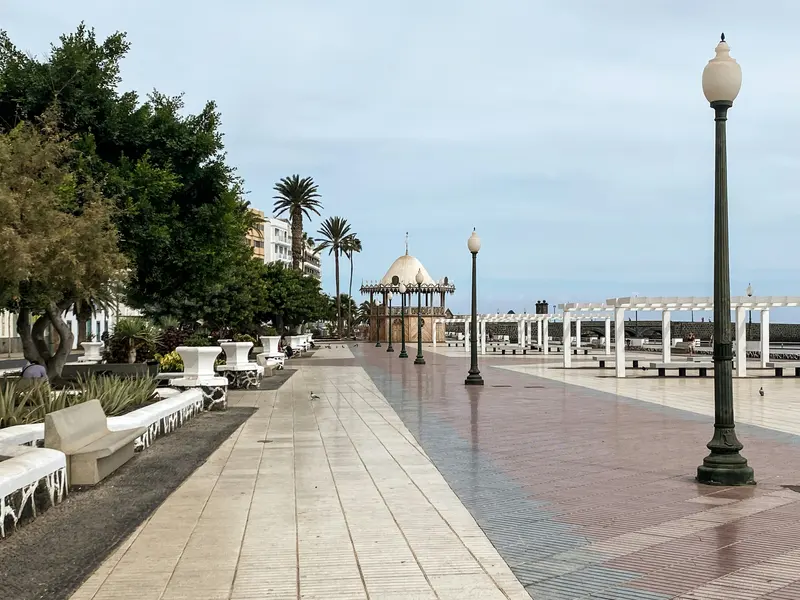
On foot, the sea makes a useful point of reference. From the lagoon, find the church and head down to the waterfront road for the San Gabriel crossing. The road then skirts the old town towards El Reducto. You can turn inland to Calle Real along the way. There are benches and squares where you can break up the walk. On your return, take the shopping streets to see a different side of the centre.
Make San José a separate leg. Marina Lanzarote, Puerto de Naos and the commercial port lie beyond the main sightseeing stretch. Locate the castle that houses the MIAC before you work out the walk. If visiting on a cruise, check the berth with your operator. How far you have to walk to the lagoon depends on where you come ashore.
What to see in Arrecife
Both sides of Charco de San Ginés
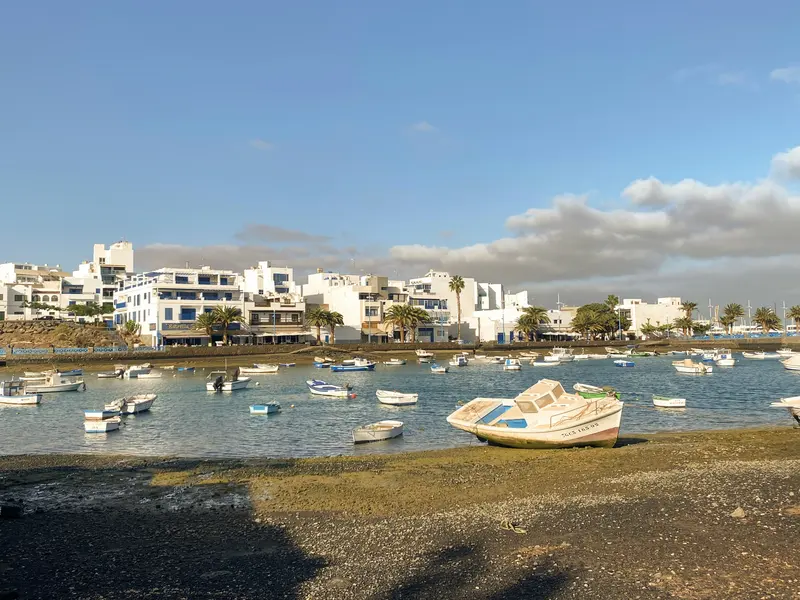
Start by the church of San Ginés and follow the older streets down to the water. From this side you can see the small boats moored in the lagoon and how the houses follow the shape of the inlet. Follow the water round to the other bank. Look back to see the houses, boats and church tower together, then pick out the opening where the lagoon meets the sea.
The water level changes with the tide. At low water you can see the shallows around the moorings. As the tide comes up, the reflections reach farther towards the edge of the walk. If you are staying nearby, pass through at different times of day. If you only have a morning, walk the bank first and then make a short circuit of the streets behind the church. Seeing the lagoon from both sides shows how closely it sits within the old town.
Puente de las Bolas, San Gabriel Castle and the seafront
The stone spheres on the bridge pillars give the Puente de las Bolas its name. On the way out to the castle, look back before you reach the walls. The crossing gives you a clear view of the edge of the city and the shallow, rocky stretch just offshore. Check opening details if you plan to go to the museum. The approach gives you a sense of why the fort faces the old harbour entrance.
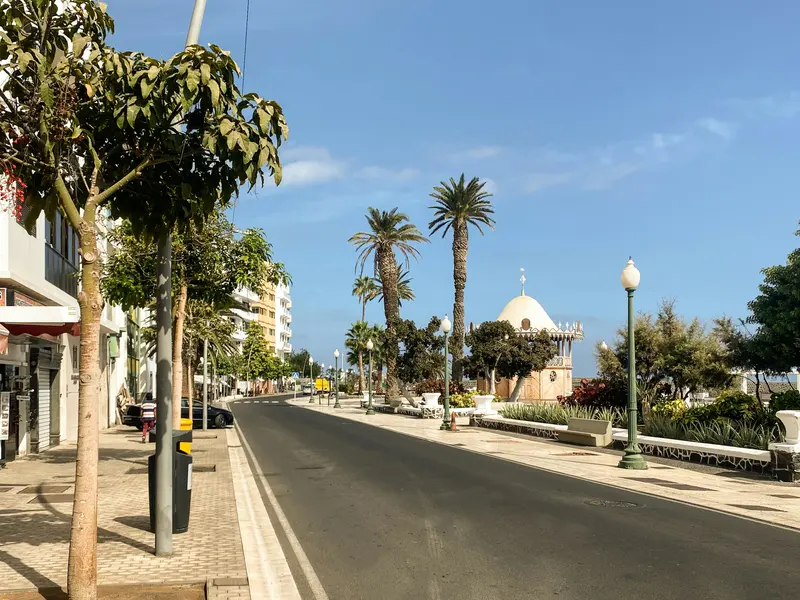
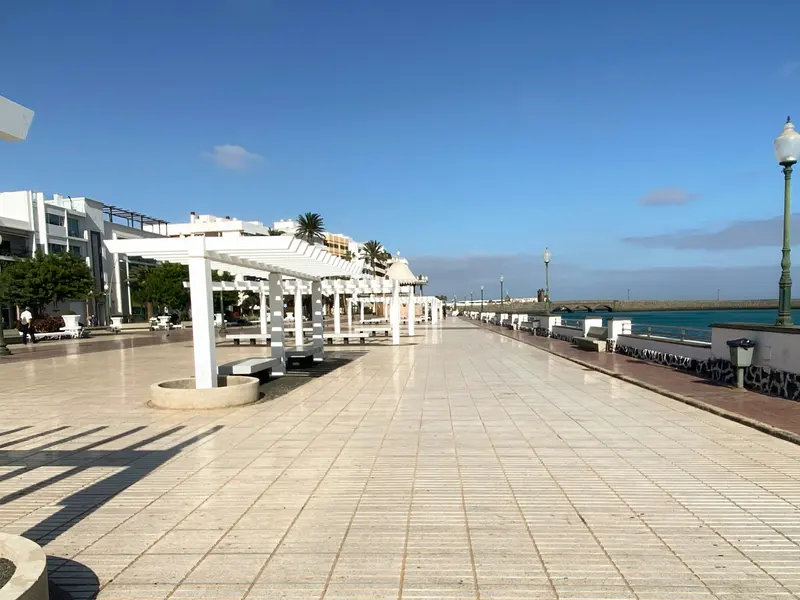
Back on land, Parque José Ramírez Cerdá links San Gabriel with the walk towards El Reducto. From the park you can return to the older streets or follow the waterfront. On a windy day, shorten the open stretch and come back via Calle Real. With longer to explore, continue towards the footbridge to Fermina and look along El Reducto’s curve.
Islote de Fermina
Fermina is beside the El Reducto end of the promenade. César Manrique worked on a scheme for a leisure space here. Look at the outline of the little island from the mainland and then look back from across the bridge. The paths and low walls sit close to the rocks, so you can see how the design fits the shape of the shoreline. On a clear day the beach, town and open water fit into a single view.
The Centres for Art, Culture and Tourism listed access by footbridge in 2026. Look up opening details for your date if you want to see the space from inside. If you are passing after closing time, the promenade still gives a good view of where the islet sits in relation to the beach.
Monuments and heritage
San Ginés, the old market and Casa de los Arroyo
Find Plaza de Las Palmas for the church of San Ginés. The square gives you room to look at the façade and tower. From there it is easy to see how close the parish church stood to the early harbour community. Continue round the block towards the Recova. The former market gives another view of the city, with the focus on the places where people met and traded near the port.
The Casa de los Arroyo preserves a historic domestic façade by the waterfront. The town council associates the building with the centre named for Blas Cabrera, the physicist born in Arrecife. Take a moment to see the arrangement of the windows and doors from the street. Then look for the Casa de la Cultura Agustín de la Hoz, another building worth pausing at when following the old waterfront.
Two forts on different parts of the harbour
San Gabriel defended the old harbour. Viewed together, the stone bridge, the islet and the fort form a continuous approach between land and sea. San José was built towards the end of the 18th century, under Charles III, to strengthen the defences of the wider port. Its walls look out over a different set of docks. After visiting both, you can put the older streets and the later port works in their proper places on a map.
Museums and culture
International Museum of Contemporary Art
San José Castle has housed the MIAC since 1976. The galleries bring together work by Canarian, Spanish and international artists. Take a look at the collection, then pause where you can see across the port. The changing floor levels and thick walls are details you might miss when you are looking at the artwork. The view outside helps put those features in context.
The visitor information published by the Centres for Art, Culture and Tourism and consulted in 2026 describes stairs and uneven surfaces at the castle. Check which areas you can reach if you have particular access needs. With the castle away from the main part of the old town, give it a slot of its own. You can combine it with a look at the marina and then leave the central streets for another outing.
La Casa Amarilla and the city history museum
La Casa Amarilla is on Calle León y Castillo, in the former island council building. Look for the tiled façade. Temporary exhibitions deal with the island’s history and collective memory. Check the exhibition for your dates and fit it around the neighbouring streets. You can make it your first indoor stop before the church or leave it for the return from San Gabriel.
The History Museum of Arrecife occupies San Gabriel Castle. Check the council’s current information before you make plans around entering the building. If you have time for two visits in the old town, pair the city history displays with an exhibition at La Casa Amarilla. If you have more time and want to see contemporary art, set aside another part of the day for San José.
Neighbourhoods and areas
The old town lies between Plaza de Las Palmas, Calle Real and the seafront. This is a good area for alternating between short walks and stops at historic buildings. Use León y Castillo to orient yourself if you wander into the side streets. The edge of Charco de San Ginés is a more precise reference than a general label such as “city centre” if what you want is to step straight out to the waterfront.
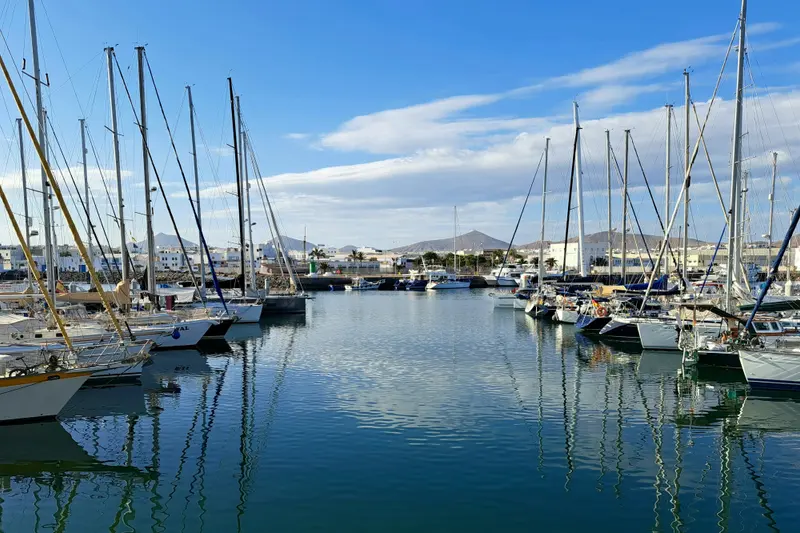
El Reducto sits on a more open part of the coast, with the sand in front of the promenade and city streets behind it. Use it for days divided between the beach and town. In the other direction, Puerto de Naos and Marina Lanzarote make for a walk past berths and docks. Check where each area sits on the coast before deciding on a starting point. The parts of town that look close across the bay can involve a longer walk around the water.
Beaches in Arrecife
El Reducto
The city beach is southwest of the old town. From the promenade you can see much of the curve of sand before you choose where to go down. The shore has sandy stretches and areas of rocky seabed. Look at the tide, flags and beach signs before deciding whether to get into the water.
One advantage of El Reducto is how easily you can adjust a beach stop. If you have an hour, pick a stretch of sand and return to town along the promenade. If the tide is low or the shore is windy, go as far as the islet or make a longer walk back towards the old town. With a full day in Arrecife, keep the afternoon flexible and fit the beach around the conditions.
Festivals and traditions
The festivities for San Ginés, the city’s patron saint, take place in August. In 2026 the town council announced the opening address for 14 August. The programme included habaneras, traditional music and theatre. Venues included the lagoon, Plaza de Las Palmas, Parque José Ramírez Cerdá and the beach. It is an opportunity to see how the city uses the same spaces that you can explore on an ordinary walk.
For future visits, check the programme for that year. You could visit the church and lagoon in the morning and come back for a specific performance in the evening. Look up the venue for each event. The beach, the park and the Recova are all within the wider town centre, but leaving midway through one performance can make the evening feel rushed.
Routes and itineraries
One morning. Start on the church side of the lagoon. Follow the water round, then cross the square towards San Gabriel Castle. Return along the seafront and turn up Calle Real for La Casa Amarilla. If you want to see an exhibition, make that your indoor stop before going back to the promenade. You can finish almost anywhere along this route and return later.
One full day. After the old town, head along the water to El Reducto and cross over to Fermina if open. If the contemporary art collection is a priority, allow for travel to San José and shorten the beach stop. To give both enough time, take a day and a half and explore the port on its own.
Day trips
Villa de Teguise and Tahíche
The former island capital is a good place to spend more time on historic architecture. Start at Plaza de la Constitución and compare the whitewashed streets around it with Arrecife’s harbour district. The César Manrique Foundation in Tahíche offers a different view of the island in a house built around lava formations. If combining both stops by bus, check travel in both directions before deciding on the order. The historic Villa de Teguise and the coastal resort of Costa Teguise are separate places.

A day on the southeast coast
At Puerto del Carmen, combine the old harbour at La Tiñosa with a section of Avenida de las Playas and return from a stop close to your chosen beach. Give Playa Blanca another day if you want to walk between the centre, Playa Dorada and Marina Rubicón. In 2026, Intercity listed connections from Arrecife to both places. Work out the service you need and check the last return before heading out for an afternoon.
Travelling with children
Make the lagoon a short loop from the square by the church. From the opposite bank, see whether the children can find the bell tower again between the houses, then look for boats of different sizes and colours. For a view out to sea, head over to the Puente de las Bolas and let them compare the stone pillars with the walls of the castle. You can stop at the start of the bridge, turn back to the park and still fit this walk into a morning with younger children.
For a beach day, split your time between a stretch of sand at El Reducto and a walk as far as the bridge to Fermina. With a buggy, use the waterfront road to reach the most convenient point on the promenade and check how you get down to the sand. If the MIAC is on your list, check the steps and uneven surfaces at the castle before leaving. Giving that outing its own slot keeps the walk around the old town manageable even on a day when you also want to see the port.
Where to stay in Arrecife
Around the lagoon and the old town. Choose this area to be close to the church, exhibitions and walks out towards the old port. Check which streets face the busier terraces or festival venues if you want a quiet room. If you plan to travel out of town by bus on several mornings, compare the walk from your accommodation to the station or interchange for each route.
Around El Reducto and the promenade. Stay here if you want a stretch of sand near your room or like to start your day with a long walk along the water. The promenade takes you back to the old town. For a one-night stay before a flight, check the airport connection first. The most useful stop might be a few blocks inland.
See places to stay in Arrecife (opens in a new tab)Affiliate link: if you book through it, we may earn a commission at no extra cost to you.