Español
 English

Why visit La Gomera
If you are deciding what to see in La Gomera, start in the hills and work your way down to the sea. In the centre of this island in the Canary Islands, clouds catch in the trees of Garajonay. Far below, ravines reach the Atlantic at harbours and dark-sand beaches. Between the two are palm groves, terraces and villages, often with enough of a view to see where the cultivated ground gives way to rock.
It is a good island for a group with different appetites for walking. A morning in San Sebastián, a short forest circuit and an afternoon around the harbour at Vueltas can all be enjoyable on foot. If you are here for longer trails, give one day to a route that changes altitude and another to the dense forest. On the first you can see how the ground changes underfoot, from the park’s damp soil to dry, open slopes. The second gives you time to stop and notice what grows under the canopy.
Use driving routes as well as the map when choosing where to stay. Two villages can look close together yet be divided by a ridge that takes time to cross. Think about which road you would repeat each morning and where you would like to eat in the evening. If you arrive by ferry, you can make San Sebastián your first stop and keep your first complete morning for the hills.
When to go
Spring and autumn work well for trips that split the day between walking and the coast. In summer, use the early part of the day for exposed ascents in the west or south. In winter, it can be mild by the harbour and wet enough for a waterproof in Garajonay on the same morning. Pack for the highest point you expect to visit, including the time you will spend standing still at viewpoints.
Trade winds bring moisture to the north-facing slopes. A light mist can be a pleasant part of seeing the forest, especially for a short circuit with clear waymarking. If visibility deteriorates or there are warnings, save the longer trails and high viewpoints for a different day. A morning in the capital, on the waterfront at Valle Gran Rey or in a museum can fill the gap, depending on where you are staying.
Check sea conditions on the day you intend to swim. A sunny afternoon can still bring swell at an open beach, particularly where the land offers little shelter. If a boat trip is one of the main reasons for your visit, book it early in your stay. That leaves you room to move it to another day if conditions change and gives you time for a different part of the island in the meantime.
Getting there and around
Ferry from Los Cristianos or an inter-island flight
In 2026 the island’s tourism board lists the sea route from Los Cristianos, in southern Tenerife, to San Sebastián de La Gomera. If you fly into Tenerife South, allow time for baggage reclaim, the journey to the port and ferry check-in. Flying into Tenerife North adds a cross-island journey if you are continuing by ferry. Check the name of the port on your ticket, especially if you also plan to visit Santa Cruz de Tenerife.
Aena’s 2026 schedule shows flights to La Gomera Airport (GMZ) from Tenerife North and Gran Canaria. The airport is in the south of La Gomera, near Playa de Santiago. Compare the location of the airport and ferry port with your accommodation and allow time between bookings if you hold separate tickets. The regional airport codes are worth checking before purchase. If you are thinking of bringing a hire car by ferry, ask the company whether your contract allows it to leave the island where you collected it.
Local buses, driving and one-way walks
Local buses are called guaguas. They make a stay based in San Sebastián or Valle Gran Rey possible without a car. In 2026, Aena lists bus connections between the airport and both towns. For a visit to Garajonay, use the bus access information from the Canary Islands government and pin the stop for the return leg. A stop named after a village or part of the park can still be some distance from the trailhead.
With a hire car, group stops on the same side of the island. Find out where you can park in the villages beforehand and pull off only at designated spots on the mountain roads. For a one-way walk, decide how you will reach the start and leave the finish before setting out. A descent from forest to sea can work well with a bus or taxi at one end. If you double back uphill, allow for more time, water and daylight than you needed on the way down.
What to see in La Gomera
Garajonay and Roque de Agando
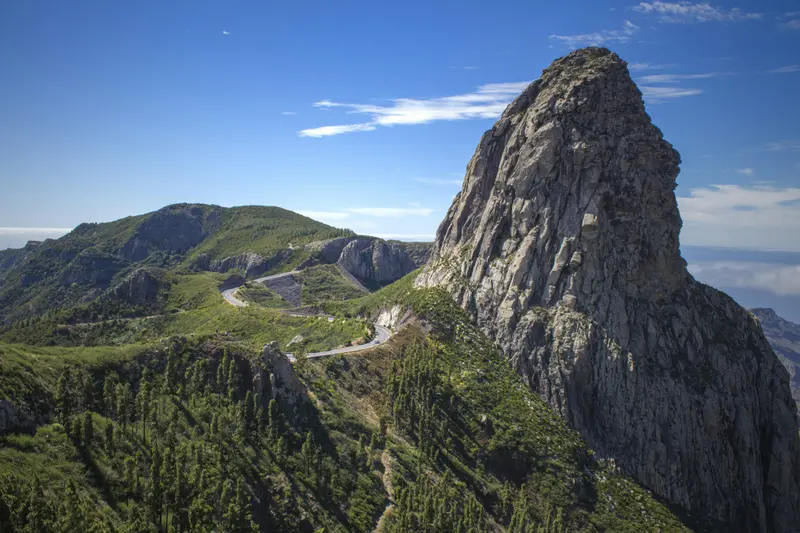
For a first day in the island’s interior, pair a walk in Garajonay with the rock formations at Los Roques. Use the designated viewpoints beside the road to see the steep outline of Agando and compare it with the other pinnacles across the ravines. Low cloud can hide the view before you get there. If the road and trails are open, this may be a good occasion for a short forest circuit.
The visitor centre at Juego de Bolas is in La Palmita. Use it to understand the park’s different woods and work out which part you want to explore. Laguna Grande is a separate stop with a recreation area and marked walks. You can combine the two if you have time for the drive between them. On a short day, start at the centre if you want an introduction to the landscape. Start from Laguna Grande if a walk is the priority.
Valle Gran Rey from the terraces to the harbour
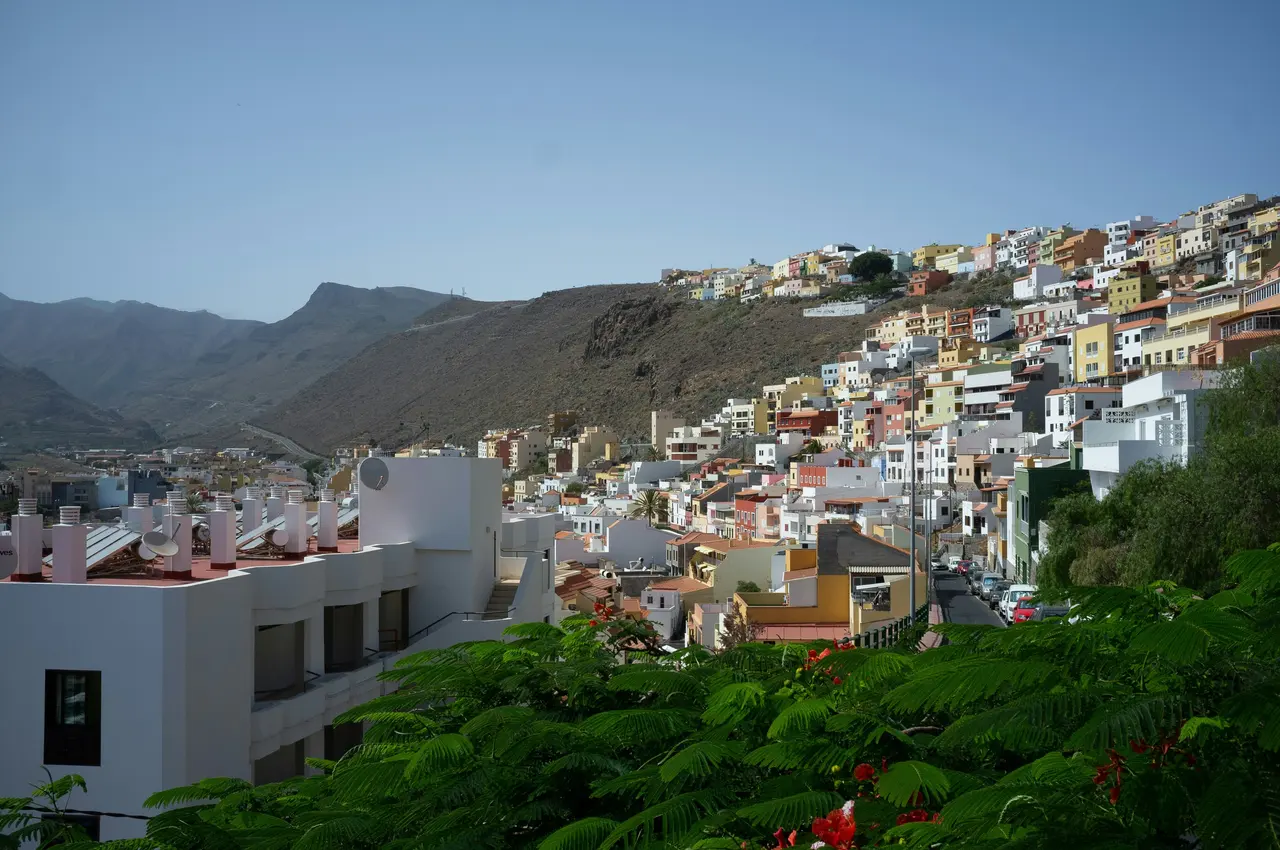
Look into Valle Gran Rey from higher up before heading to the sea. From El Palmarejo viewpoint you can see the retaining walls and how the buildings are spread along the sides of the ravine. Farther downhill, La Calera has sloping streets above a series of settlements on the coast. Park in a designated area and explore the waterfront on foot.
You can divide an afternoon between La Playa, La Puntilla and Vueltas, taking in the coast, the Charco del Conde and the harbour. Pick your finishing point before you descend from the inland road. It matters if you have to get back to a bus, board a boat or manage the last part of the walk with tired children. Down on the waterfront, a short return walk still gives you a view of the valley opening out behind the buildings.
Abrante and the northern coast
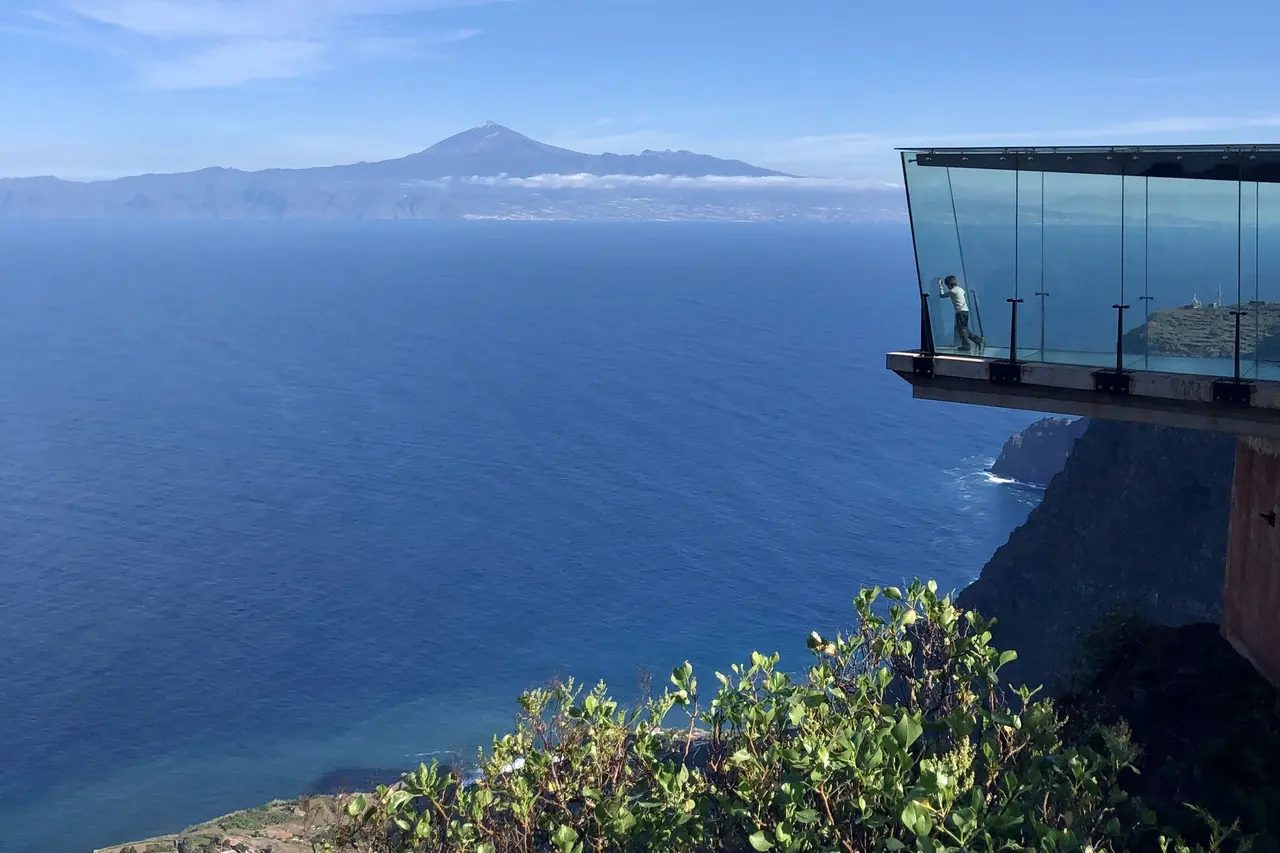
The viewpoint at Abrante looks down on Agulo, with Tenerife and the summit of Teide across the water on a clear day. The view is easier to make sense of if you afterwards visit the village and look back at the escarpment above it. Check access before driving up. If cloud hides the view, you can use the time for a walk in Agulo or for another stop in the neighbouring valley of Hermigua.
Monuments and heritage
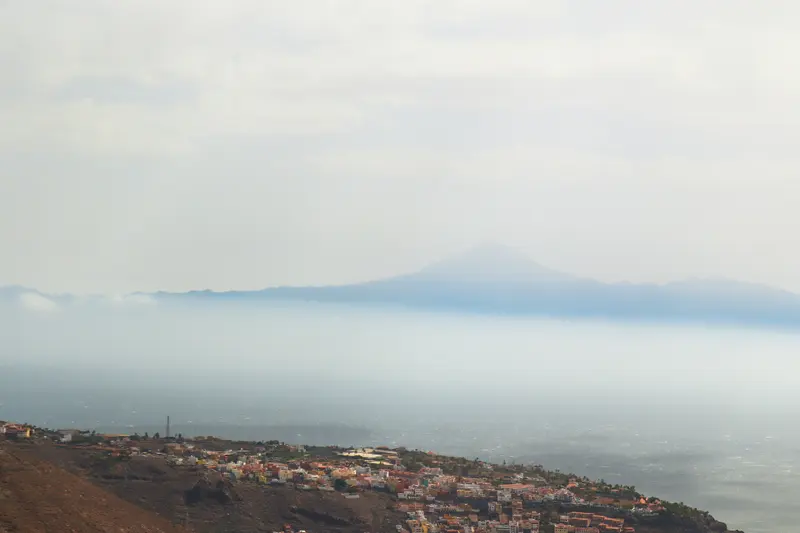
Start in the park around the Torre del Conde, at the head of the harbour in San Sebastián. Walk on to the church of Nuestra Señora de la Asunción and the Calle Real. It is a short route that takes in the fortification, the church and the main street of the old settlement. Come back via the waterfront to see how the old centre fits around the present-day port.
The Casa de Colón introduces the island’s place in Atlantic voyages. If the house is closed, the Calle Real still gives you an idea of how the town grew inland from the sea. The well at the Casa de la Aguada is traditionally associated with the water collected for Columbus’s ships. Read the story alongside the wider maritime history of the harbour and the buildings that served the town.
The old loading pier, or pescante, at Hermigua shows how a different stretch of coast was used. Look for the surviving pillars from an authorised spot. Then turn inland to see the cultivated floor of the valley and consider what it took to move produce between the fields and ships off this shore. It is a different kind of landmark from the churches and tower in San Sebastián.
Museums and culture
The island’s archaeological museum in San Sebastián provides context on the Indigenous community that lived here before the Castilian conquest. The ethnographic museum in Hermigua takes everyday objects and rural work as its starting point. Choose between them according to the part of the island you plan to visit that day and check opening times before you leave.
At Las Loceras in El Cercado you can learn how clay vessels were shaped by hand without a wheel. Look at the shape of each vessel and think about the work it was made for. In Alojera, the Casa de la Miel de Palma follows the process of collecting and cooking the sap used for palm syrup. The two visits sit naturally in different days, with room to see more of the villages where those skills are kept in use.
Charming villages
Hermigua and Agulo
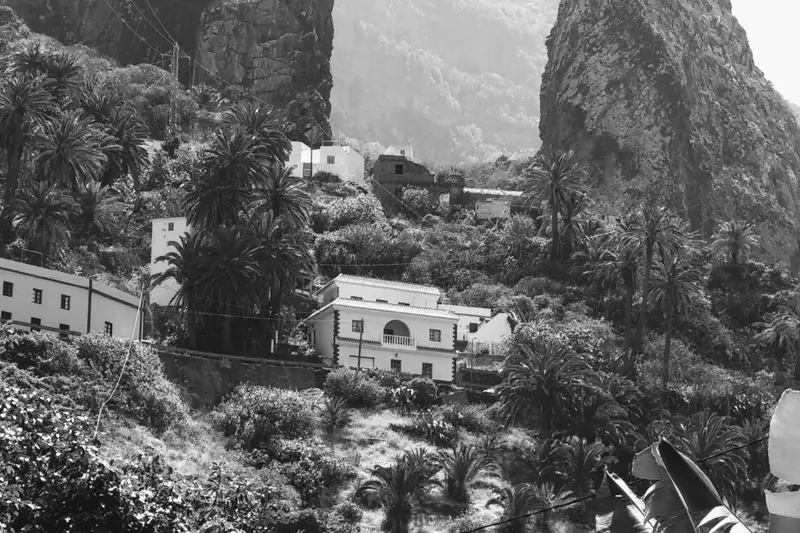
Begin around Santo Domingo in Hermigua and follow the valley as it opens towards the sea. Look for the twin Roques de San Pedro in the upper part. Lower down, the banana plants and houses sit on some of the most readily cultivated ground near the watercourse. If you arrive from the forest, compare the damp slopes higher up with the layout and cover of the fields nearer the sea.
In Agulo, walk around San Marcos and through the streets that lead towards the edge of the village. Nearby Lepe makes a smaller follow-up stop on the same side of the island. If Agulo and Hermigua share a morning, give each enough time for a walk. If you also want to visit Juego de Bolas and Abrante, choose where to linger and keep the rest of the stops short.
Vallehermoso, Chipude and El Cercado
Roque Cano stands above Vallehermoso. Start in the village and look at where the valley opens out and where the landscape becomes drier. Alojera works as a second stop if you want to learn about palm syrup. Check the route before you add the villages of the interior to the same day.
Chipude and El Cercado offer a closer look at upland La Gomera. Over Chipude, La Fortaleza has a broad, flat-topped profile above a landscape of hills and small fields. Continue to El Cercado for its pottery. If you want to walk as well, choose between finding a view of La Fortaleza from the village and following a marked trail near the protected monument. Set aside more of the day for the second option.
Nature and protected areas
Cloud forest from Laguna Grande to El Cedro
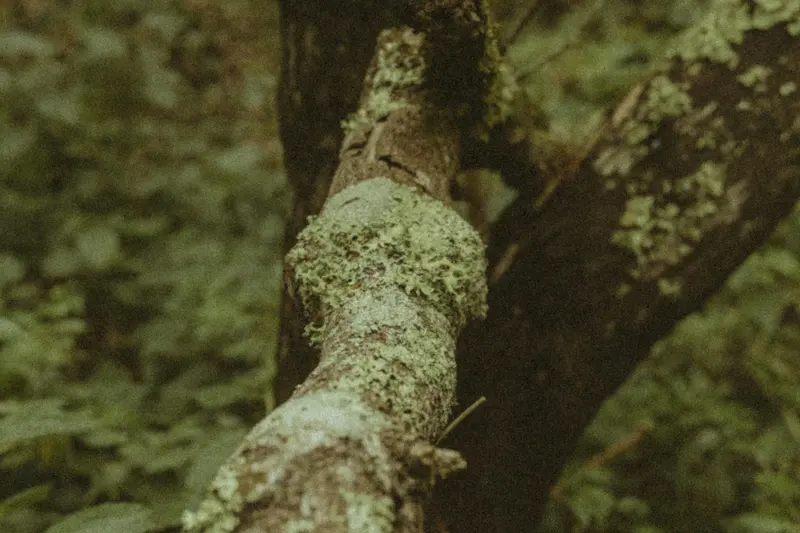
Garajonay has been a World Heritage Site since 1986. Moist air supports ferns and mosses underneath the evergreen canopy. Conditions vary across the park. On Laguna Grande I, the national parks authority identifies stands of wax myrtle and tree heath, with patches of heath typical of the ridges. Around El Cedro the wet laurel forest has a different feel. Seeing both makes it easier to understand the effect of exposure on the trees.
The path from Contadero descends into the El Cedro woodland. If you plan to retrace it, leave energy for the uphill return. Roots and stones can slow progress when wet. With less time, choose a shorter marked circuit. The park’s access page gives the approach information consulted in 2026. Check current notices as well before setting off.
Los Órganos and the coast of Vallehermoso
On the Vallehermoso coast, erosion has exposed volcanic columns in the cliff at Los Órganos. To see their vertical shape from the water, look for a trip that names the monument and confirm where to board. Sea conditions determine whether a boat can reach this coast.
There are other ways to see how steeply the north meets the sea. Try the centre of Vallehermoso and a viewpoint where you can trace the shift from palm trees to exposed rock. A day with rough seas can suit this kind of drive, provided the roads and viewpoints you want to use are open.
Beaches in La Gomera
Vueltas and Charco del Conde
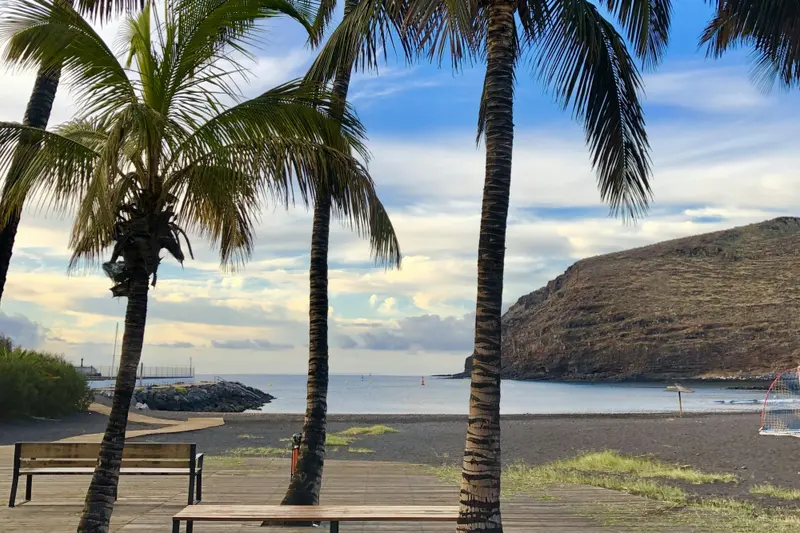
Vueltas has dark sand and some shelter from the harbour breakwater, with village shops close by. Look at the approach and the conditions from shore before taking children into the water. Farther along the promenade, the sea enters the Charco del Conde between rocks. Conditions can vary with the tide. Playa del Inglés is more exposed and works well as a place to see on a coastal walk. Pay attention to the signs and the swell.
San Sebastián and Playa de Santiago
The town beach in San Sebastián is easily reached on foot from the Calle Real. This gives you a way to spend time between seeing the old town and sailing, provided you allow time to get to the terminal. Playa de La Cueva lies on the other side of the port area. Check the approach and get a look at the water before deciding where to stop.
In Playa de Santiago, see the seafront and harbour and find somewhere for a meal. Take shoes you are comfortable wearing on pebbles. This part of the coast is an easy place to spend your first afternoon after a flight to the island. If you stay here, you can go out to dinner on foot and visit the upland part of Alajeró on a separate day.
Festivals and traditions
The Jornadas Colombinas in San Sebastián look at Atlantic voyages and the islands’ relationship with the Americas. The official programme for the 65th edition ran from 2 to 18 September 2026. Check the island council’s calendar for the edition you plan to attend. The events are spread across several days, so choose one before you commit to your ferry or your journey back to another part of the island.
The image of the Virgin of Guadalupe is associated with the chapel at Puntallana. In the celebrations held every five years, it is carried to San Sebastián by sea. The tourism calendar consulted in 2026 lists the next Bajada for October 2028. Use the published programme for that edition to plan for the actual procession. At celebrations in the villages, listen for the combination of chácaras, a type of castanet, and drums accompanying songs and dancing.
Silbo Gomero turns speech into whistles that carry across the ravines. UNESCO inscribed it as intangible cultural heritage in 2009. Ask locally about opportunities to hear it explained or demonstrated. Once you have looked from one side of a valley towards the houses on the other, it is easier to appreciate why this form of communication was so useful here.
What to eat
Try almogrote as something to share. Mature cheese gives substance to a spread that typically includes garlic, pepper and oil. Order it with bread before a fish dish by the harbour. If you buy a jar, ask how strong it is and whether it needs to be kept cold during the rest of your journey.
The local name miel de palma refers to syrup made by reducing the sap of a Canary Island palm. Try it with a dessert or cheese. Alojera is a good stop if you want to know where it comes from before choosing a bottle. Look for galletas gomeras in shops and bakeries. They travel well in a bag for a break on a walk.
By the water, ask what fish is available and whether it comes with papas arrugadas, the small salted potatoes, and mojo sauce. Inland, a watercress stew is another local dish to look for. If you are staying in a small village, find out what is open in the evening and, if necessary, buy food before you drive up. Allow time for a proper lunch in the villages if you plan to eat near the route instead.
Sport and outdoor activities
A summit circuit or a descent to the sea
Alto de Garajonay reaches 1,487 metres. A circuit from Laguna Grande returns you to the same starting point and takes you through woods with different exposure. For a full day out, browse the June 2026 island trail map. Compare elevation change, surface and transport access before making a shortlist. Check notices before you choose the route on the day.
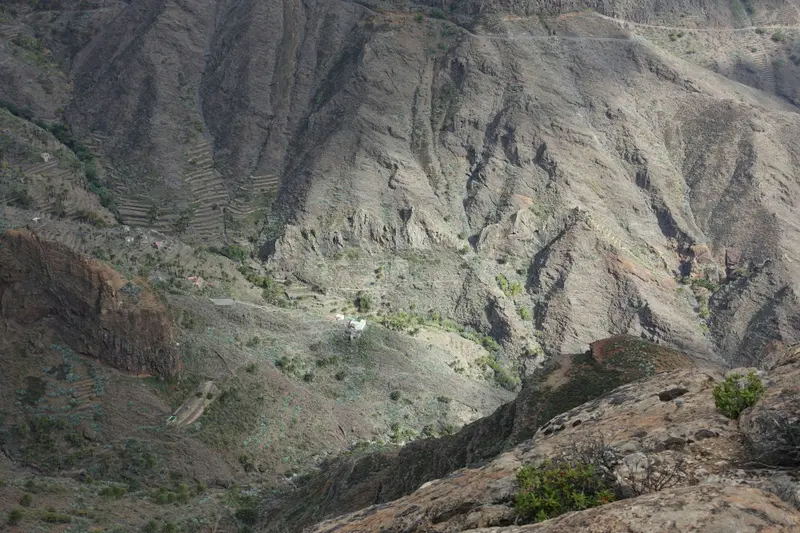
From Arure, the way down towards Valle Gran Rey passes the area around Mirador del Santo and the ridge of La Mérica before reaching La Calera. The descent involves stretches of exposed, uneven ground. Make plans for your return by road. If others in your group prefer to avoid the descent, arrange to meet in La Calera and walk down to the harbour together.
Boat trips and time on the water
Look for cetacean-watching trips in Vueltas and check the operator’s authorisation, itinerary and policy for changes due to sea conditions. A trip to Los Órganos has a particular stretch of coast as its focus. On a wildlife trip, sightings depend on the animals and on conditions at sea. For kayaking or diving, ask a local centre to match the location and water entry to your experience.
Routes and itineraries
What to see in La Gomera in three days
Spend the first day in San Sebastián. If you arrive early enough, combine the Torre del Conde, the Calle Real and a walk along the waterfront. For day two, pick one Garajonay circuit and leave time for the rock pinnacles at Los Roques. On day three, look down into Valle Gran Rey before finishing at Vueltas. If you are sailing that day, shorten the coastal walk so you can get to the port in good time.
Five days with the north and the upland villages
Add a day for Hermigua and Agulo. If it is clear in the morning, go to Abrante and then drop down to the villages. For the fifth day, visit Chipude and El Cercado. Leave enough time for a short walk and a look at the pottery. If you plan to spend several nights in the west, you can do this on the day you change accommodation and need to cross the interior anyway.
A week with a long walk and time at sea
Give a full morning to a high trail or to the Arure descent, with transport accounted for. For the other extra day, choose Vallehermoso and Alojera or go out on a boat. Take your cue from the forecast when deciding which comes first. If you have already seen the north and west, use the final afternoon in Playa de Santiago or at the beach in San Sebastián, according to which side of the island you are leaving from.
Travelling with children
Juego de Bolas and Laguna Grande offer two ways into Garajonay. At the centre you can put names to some of the things you will see later outside. For a first walk, Laguna Grande I is a 900-metre circuit with information boards, according to the national park trail guide consulted in 2026. Take a change of clothes for the journey back and check trail surfaces before choosing between a pushchair and a carrier.
In San Sebastián, break up the old town walk with some time on the seafront. Along the Valle Gran Rey promenade, pick a section with somewhere to stop for a snack. If you want to swim, assess the swell from shore and have somewhere to walk or play if conditions change. On a day based around a boat or a viewpoint, one longer stop can give children more time to explore than several brief stops in the car.
Where to stay in La Gomera
San Sebastián. It is a convenient base for the ferry, buses and an old town you can explore on foot. Check the walking route between the ferry terminal, the bus station and your front door. A room up the hillside means a climb at the end of a day out, especially with luggage.
Valle Gran Rey or Playa de Santiago. In Valle Gran Rey, staying near the waterfront makes it easy to walk between La Playa, La Puntilla and Vueltas. A room in La Calera adds a slope on the way back. Playa de Santiago works well for a trip centred on the south and the airport. Check how you will get back from the north or the national park if you plan to make that journey more than once.
Hermigua, Agulo or Vallehermoso. These villages suit early starts in the north. If you book a rural place, ask about parking and the final stretch to the door. For several nights, check where you will eat and shop and which road you will take if you arrive in the evening or in fog.
See places to stay in La Gomera (opens in a new tab)Affiliate link: if you book through it, we may earn a commission at no extra cost to you.
Practical tips and common mistakes
- Match the airport and port names to your tickets. Pin each Tenerife terminal you will use and allow time for the full transfer. Los Cristianos and Santa Cruz are in different parts of the island.
- Read the elevation profile on walking days. Work out where the climb comes and which end of the trail will have transport. For a pickup, agree on the name and location of the meeting point.
- Pack water and a dry layer before heading uphill. The forest can be cool at the same hour as people are eating outdoors below. On open slopes, find out where you can refill before setting out.
- Save the route offline. Keep a map, the bus stop location and the access notices handy before leaving your base. Stay on marked paths and use designated places to pull in by the road.
- Keep a lower-altitude option handy. A museum, a harbour stroll or a walk across a village gives you something to do when fog covers the ridges. It is easier to move the forest outing when the fallback is close to your base.