Español
 English

Why visit Álava province
When choosing things to do in Álava province, put Vitoria-Gasteiz in the middle of the plain and arrange your days around it. To the south, the Sierra de Cantabria separates the city from the vines and villages of Rioja Alavesa. To the west, the salt water of Añana and the steep terrain of Valderejo make two outings worth separate mornings. To the east, woodland and a former railway help you find your way into the hills.
Álava shows you the inland side of the Basque Country. You can walk up a medieval hill and spend the afternoon in a bird hide close to town. One day in the villages might take you from a painted Gothic doorway to salt pans that were built to make use of gravity and the sun. A city base makes much of the province easy to visit. A night in a village makes sense for two consecutive days in the same valley, or when you’d like to walk home after dinner. Set the appointments for the visits that depend on opening or tour times and keep the shorter walks flexible.
When to go
In spring, combine the wetlands on the plain with squares and architecture. Paths can hold water after rain. A short route to a hide at Salburua gives you a chance to see what is about without committing to a long walk. In the south, a viewpoint beside Laguardia’s walls gives you a look across the vines even when field paths are muddy. Save the higher paths for a day with decent visibility.
In summer, put outdoor walks early and use the middle of the day for an indoor visit. At the Ullíbarri-Gamboa reservoir, pick the part of the shoreline that interests you and decide where to turn round when you see how hot it feels. In Rioja Alavesa, switch between shaded village streets and exposed paths among the vineyards. A long lunch in the shade can give you more of the area than adding a third village in the hottest part of the day.
Autumn works for vineyard colour and the woods at Izki. Grape harvest dates vary between growers. If you want to see winemaking in progress, ask a producer what a visit involves during your particular week and fit a village walk around it. In winter, Vitoria-Gasteiz works for museums and short walks. On a bright cold day, consider the Salt Valley or an outing at one of the wetlands on the plain.
Getting there and around
Vitoria-Gasteiz and the plain
In 2026, airport operator Aena listed a bus between Vitoria Airport and the city. Check how it fits with your flight before choosing the route. From Bilbao, compare the full trip to Vitoria-Gasteiz if you arrive by air or want a day in Bizkaia first. With a first night in the city, you can arrange a hire car for the part of the trip that needs one.
Mark the railway station and coach station separately in Vitoria-Gasteiz. The one you arrive at affects the transfer to the medieval centre and any onward journey by bus. Once you have checked in, walk around the centre and identify the stops you need for subsequent days. Without a car, keep each rural day to a single corridor and find the return journey before paying for a tour.
Local buses, driving and trailheads
The 2026 Álavabus visitor information included routes towards Rioja Alavesa and other areas. Use the operator’s journey planner for the day of the week and the specific stop you need. A winery on the main road and a cellar underneath the walled village can involve different last legs despite having the same town name. If you travel between Logroño and Rioja Alavesa, compare that approach with the road or bus journey from Vitoria-Gasteiz.
A car makes it easier to link salt pans, villages and viewpoints around Añana, or to combine Montaña Alavesa with part of the greenway. Look for the actual entrance to the sight you want. At a park or reservoir, save the car park or visitor centre for the right sector. Work out the route back if your walk starts on one side of a ridge and finishes on the other. If you are heading into Gipuzkoa, choose a brief en-route stop on your moving day if you want time to settle into the next base.
What to see in Álava province
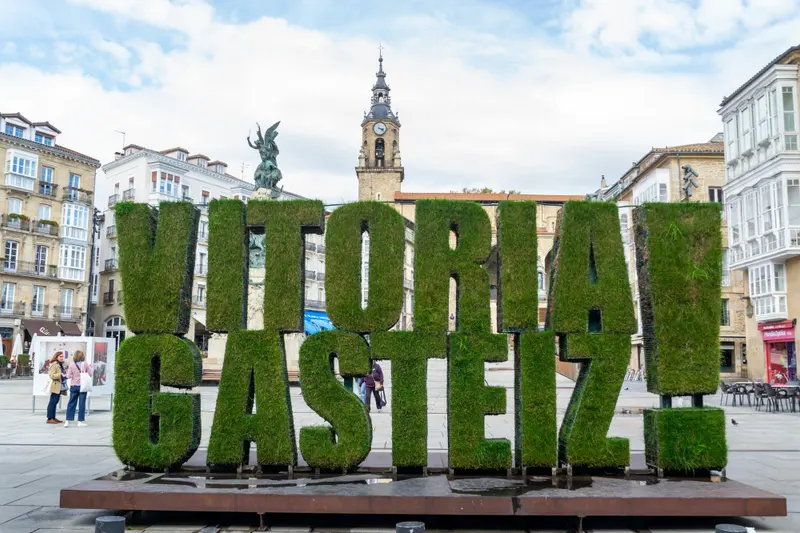
Things to do in Álava province starting in Vitoria-Gasteiz
Start in Plaza de la Virgen Blanca and climb one of the sloping streets into the medieval quarter. Streets curve round the hill and reveal a different layer of the town at each height. Keep going to Santa María Cathedral to see where it stands at the northern end. If you book an interior visit, save the meeting place and time before choosing a walking route. A tour that deals with the restoration helps explain how the structure and its approaches changed over the years.
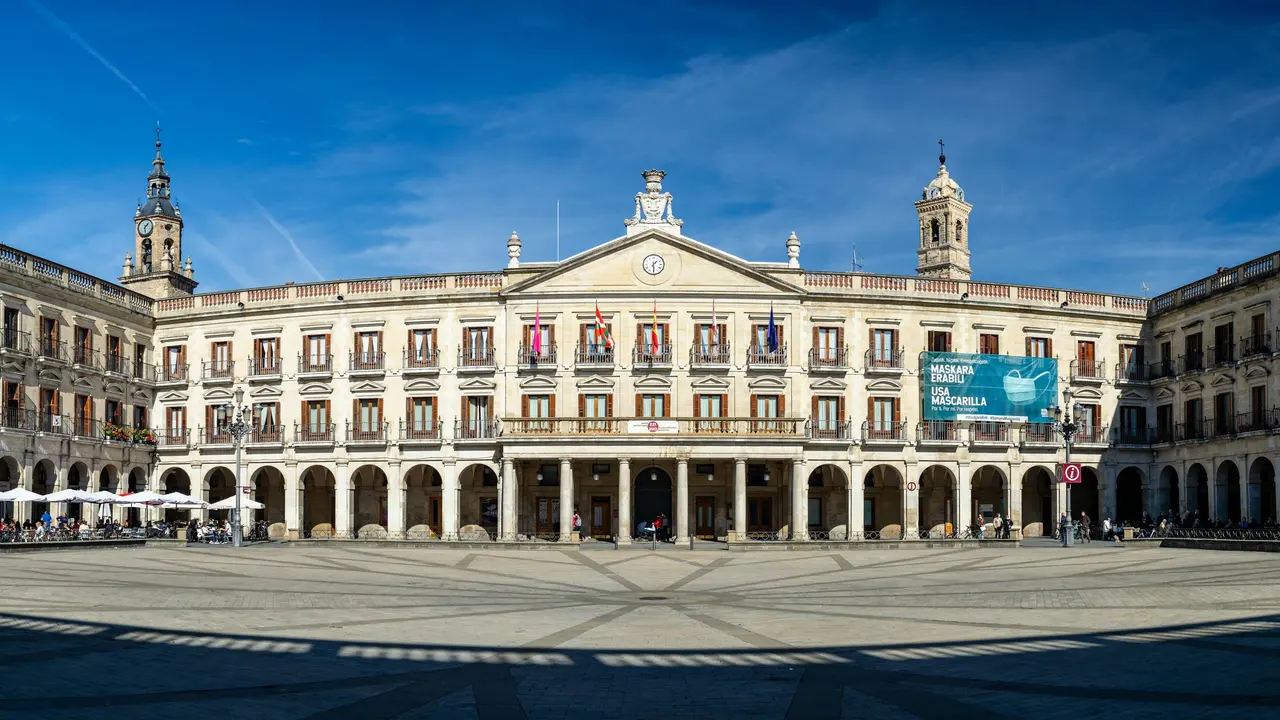
Then go down to Plaza de España and the Ensanche. The street plan in the lower part of the city is more regular than on the hill. With time left, walk to the Cathedral of María Inmaculada, also called the New Cathedral, and Florida Park. The two cathedrals are in different parts of the city and are very different in date and construction. The park makes a pause between your walk and an indoor visit.
The Añana salt pans and Rioja Alavesa
At the Salt Valley in Añana, a system of channels carries brine to terraces. A visit with the foundation explains how gradients and evaporation make the system work. From the village, look at the shape of the valley before you enter so you can see where your route fits. If you want a short or relatively level visit, ask the operator what suits your group. Complete the day nearby so you can spend enough time learning how the valley functions.
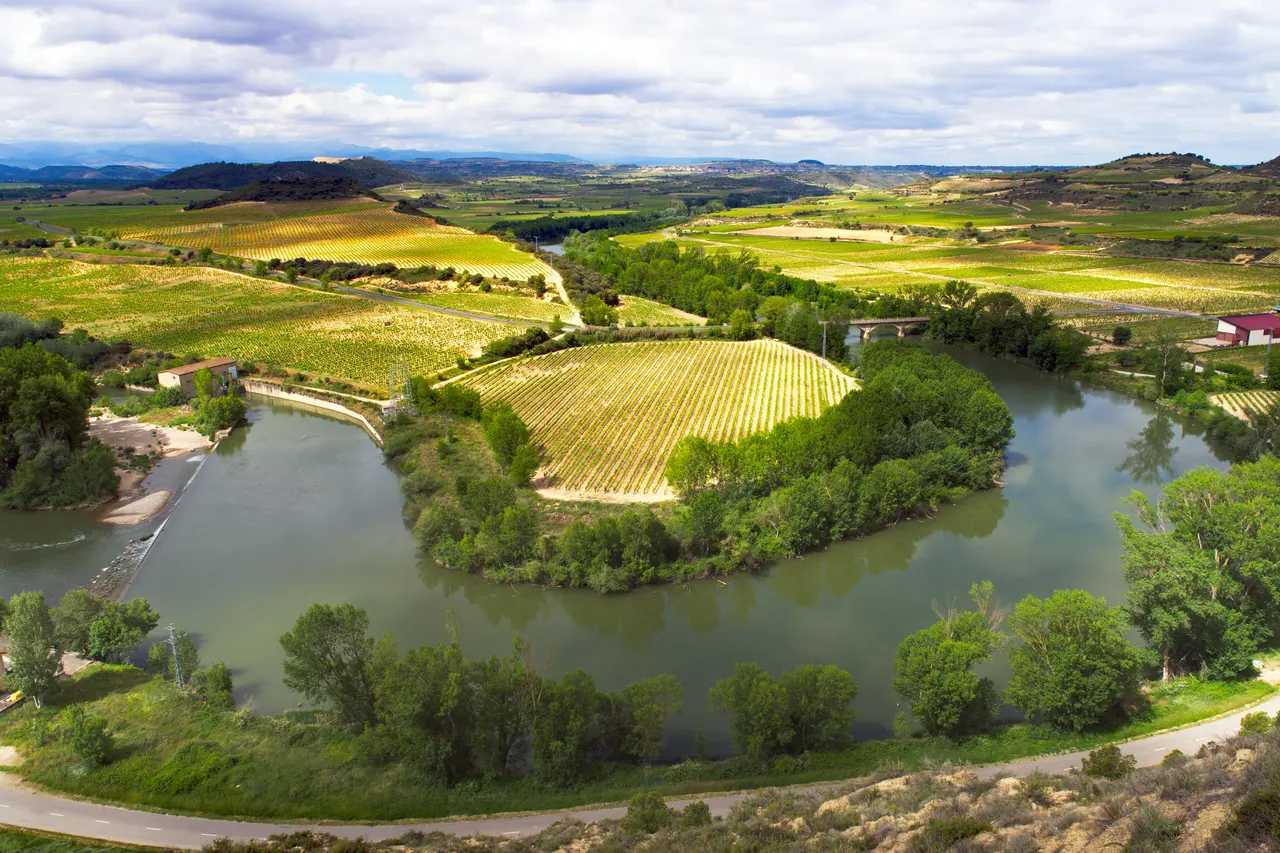
In Rioja Alavesa, start at Laguardia to see the walls and the relationship between the streets and the cellars dug below them. Elciego places the old centre and San Andrés church next to modern winery architecture. In Labastida, get a view from the upper village as well as a look across the fields from below. Pick two of the villages and fit lunch near the one where you have booked a tour.
Western valleys and the Montaña Alavesa
At Valderejo, look at how the land separates pasture, woodland and gorge. Lalastra makes a good starting point. If you want to walk in the Purón gorge, check the exact route and its condition before driving out. Have a shorter option in the same area if you arrive in poor light or rain.
At Izki, in the south-east, you can set out for a forest walk from the village of Korres. Antoñana offers a walled settlement close to the greenway. Put the place you most want to see first. Stepping off the path to look at a woodland landscape calls for a different amount of time from a circuit of a small old town. Keep the second stop nearby so you still have choices if mud or fog changes the day.
Monuments and heritage

At Santa María de los Reyes in Laguardia, a Gothic doorway retains its painted decoration. If that’s what you want to see, check the arrangements and use the walk along the walls to fill any waiting time. Beneath the lanes, excavated wine cellars tell the story of a second built level. Seeing one gives a sense of how the village developed without trying to cover every side street.
The Varona tower at Villanañe offers a close look at the relationship between housing and defence. See how the tower sits in the wider landscape before you go inside. In the Ayala valley, Quejana brings together buildings associated with the Ayala family that served as a residence, a place of worship and a memorial. Pick one valley for a heritage day and fit a short nearby walk around the visit.
On the eastern plain, Agurain, also known as Salvatierra, has another historic centre. Pair it with a short stretch of the inland Camino de Santiago to see how people once moved between the settlements. The route enters Álava through the San Adrián tunnel, a natural passage before the path reaches the plain. Give the pass its own outing if you want time to enjoy the climb and look for traces of the old road.
West of the city, Iruña-Veleia preserves parts of a Roman town between Trespuentes and Víllodas. Use the south gate to get your bearings and look for the remains of the market. Some of the finds are in Bibat, so you can see both the site and a selection of the things excavated there on the same trip.
Museums and culture
Artium Museoa gives you a morning of contemporary art. Near the old town, Bibat brings together collections of archaeology and playing cards. Choose by the kind of story you want to follow. Excavated objects place the city among centuries of settlement, while the cards trace design, printing and familiar games. Combine one collection with the medieval streets if you have half a day.
Ataria, by the Salburua wetlands, gives an introduction to the landscape and its inhabitants. If birdwatching is your main reason to go, leave enough time to reach and use a hide. On a day of showers, split the visit between interpretation and a short walk. Other nature centres in the province can help you choose an appropriate distance and surface before starting a route. Look at where the path actually begins, especially when using local transport or travelling with a group.
Charming villages
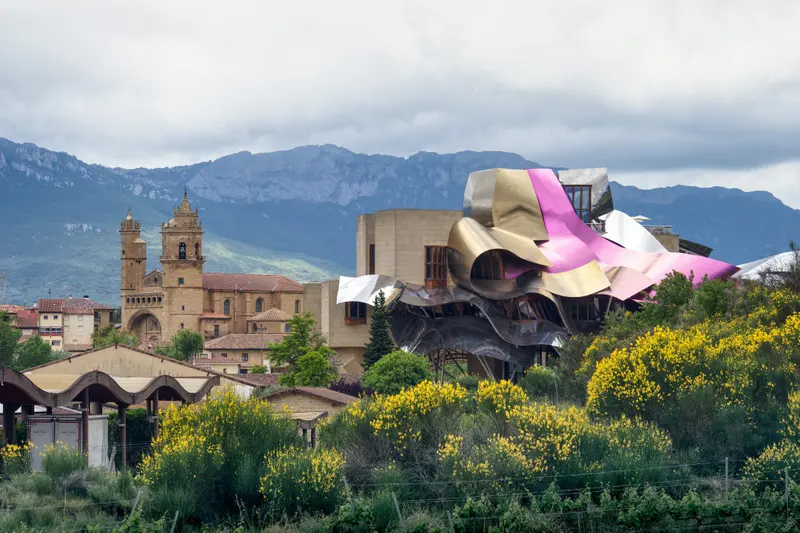
Laguardia, Elciego and Labastida share a vineyard landscape, but the streets have different shapes. In Laguardia, go along the edge before entering the lanes. In Elciego, see how the village sits around the church and the valley. In Labastida, take a street up towards the foot of the hills. Leave time for a walk between tastings. A circuit of a few streets and a viewpoint can tell you a great deal about what makes each place distinct.
In Montaña Alavesa, Antoñana has a compact historic centre above the valley close to the former railway. Maeztu is useful for connecting walks and access to Izki. If you’re interested in journeys through the hills, choose a section of greenway and use a village as your turnaround point. In the far north, Artziniega introduces the countryside of Ayala. Its small centre pairs with Quejana for a day of heritage that stays within one area.
On the Llanada, Agurain offers a useful contrast with the Rioja Alavesa villages. Walk through the old centre and then step out to see the breadth of the plain. It makes a good second stop after an outdoor walk rather than a reason to travel back across the province late in the day. Keep distinctive local names on your map so you can find the right return stop or car park.
Nature and protected areas
At Salburua, pick one lagoon and wait at a single observation point. Give binoculars time to help you find movement near the reed beds. The Ullíbarri-Gamboa reservoir offers wider shores and a different scale of walk. Decide which part of the shore you want to follow. If your group walks at different speeds, agree a meeting point close to where you started so no one has to complete the whole route.
The main lagoons at Salburua are Arcaute and Betoño. Ataria’s route maps help you choose a circuit by surface and distance. At the reservoir, try Mendixur if you want a focused birdwatching outing. For a longer cycle ride around the shoreline, choose a different starting point according to the section you want to ride.
In Valderejo, the River Purón and its gorge feel very different from the plain around Vitoria. Check which route you can use from Lalastra and decide whether your priority is distance or time spent observing the place. At Izki, woodland and open slopes give you a choice of terrain. Stay in one area long enough to notice individual trees, tracks or birds. Around Laguardia, the lagoons offer a nature stop on a wine trip within the same comarca, or district.
Gorbeia and Aizkorri-Aratz both have approaches from Álava. Identify the side of the mountain, the elevation and the conditions before picking a route above the trees. Cloud can hang over the ridges after visibility improves in town. A lower walk that returns the way it came gives you room to shorten a day if the weather worsens. If you are visiting from across the regional border, check that the place name in your navigation app refers to the same approach as the walking map.
Festivals and traditions
The main La Blanca programme in Vitoria-Gasteiz ran from 4 to 9 August 2026. Celedón’s descent draws a large crowd to Plaza de la Virgen Blanca. If you travel for the festival, choose an event and decide where you want to see it before booking. There are quieter spaces in the city where you can have a break between events and return to the squares later.
San Prudencio was a provincial holiday on 28 April 2026. In Rioja Alavesa, the Grape Harvest Festival moves among the villages, with Kripan the host in 2026. The festival programme and work at any one vineyard follow different calendars. Check the edition for the year you visit, and ask individual producers what a winery visit includes during their harvest.
What to eat
In Rioja Alavesa, look for patatas a la riojana, a potato dish traditionally made with chorizo, or ask what stew or meat dish is on the day’s menu. Find out which village your wine comes from. If you visit a winery, ask how the plot and production method shape the wine. One well-chosen visit leaves enough time to walk around the village afterwards. From a room in the centre, arrange transport if the cellar you want is outside town.
In Vitoria-Gasteiz, the bars in the centre are handy for a short lunch. For a longer meal, try seasonal dishes or a local pudding such as goxua, made in layers that may include cream, sponge and custard. The Añana salt valley gives you another local product to understand in context. If you buy some, ask how the different textures are used at the table. In Ayala, Álava txakoli comes from a very different wine landscape from the district south of the Sierra de Cantabria.
Sport and outdoor activities
The Vasco-Navarro Greenway follows a former railway in sections. Near Antoñana, decide how far to go before turning for the same starting point. For a longer ride, check the surface, onward connections and places to fill a water bottle. Vitoria-Gasteiz’s Green Belt gives you a separate cycle outing. You can start in the centre and come back through parkland or wetlands.
At Ullíbarri-Gamboa, adapt a shoreline route to a novice walker or to a group of cyclists. Before joining two areas, check the condition of the paths between them. In Izki and Valderejo, match the walk to the available daylight. For a more demanding outing on Gorbeia, take account of exposure, surface and height gain as well as distance. Keep a marked valley route as an alternative for the same day.
At Lagrán, the visitor centre for the Wine and Fish Route explains the old trade road between the interior and the coast. Use it as an introduction and then choose one manageable stage to walk. If you want to see the Sierra de Toloño, check which tracks join the route and where the climb begins.
Routes and itineraries
Three days from Vitoria-Gasteiz
Use one day for the medieval quarter and the Ensanche. On the second, head for Salburua or the reservoir for nature, or Añana for the salt pans. On the third, go down to Rioja Alavesa and split the day between Laguardia and another village. A scheduled visit to the Salt Valley or a winery helps organise the day when the rest of your stops are close by.
Five days with two areas inland
Add one day for Izki and Antoñana and one for Valderejo or Ayala. Consider staying south of the ridgeline if you will spend consecutive days among the wine villages and in Montaña Alavesa. If Cantabria is your next stop, use the final day for a western outing or Ayala so you are already heading in that direction. Keep one flexible afternoon in Vitoria-Gasteiz if spring weather interrupts an outdoor day.
Without a car, give Vitoria-Gasteiz more time and pick two day trips with confirmed return journeys. Look for a stretch of greenway with a bus stop near each end, or spend a full day in one Rioja Alavesa village. If return services are infrequent, plan lunch close to the stop you will use.
Travelling with children
At Salburua, pack binoculars and choose a short list of things to look for, from birds to tracks near the water. At Añana, ask for a visit that suits the interests and mobility of the group. A greenway near a village leaves room to go back early. In Vitoria-Gasteiz, the squares and parks make natural breaks during a walk round the hill. With a pushchair, save a gentler street for the descent. If everyone wants a different length of walk, agree on a place near the start where you can meet.
Where to stay in Álava province
Vitoria-Gasteiz makes it easy to combine walks, transport and meals out. The Ensanche works for getting to the old town and moving around with bags. For a wine trip, try Laguardia, Elciego or Labastida and check whether you can walk home after dinner. Añana, Ayala and Montaña Alavesa have villages that work for two consecutive days in the same area. Check your evening meal options and the route to the first stop the next morning.
See places to stay in Álava (opens in a new tab)Affiliate link: if you book through it, we may earn a commission at no extra cost to you.
Practical tips and common mistakes
- Distinguish Rioja Alavesa from La Rioja. Rioja Alavesa is part of Álava. Save the village and address from your booking before following a suggested driving route.
- Check which cathedral you are visiting. In Vitoria-Gasteiz, Santa María and María Inmaculada are separate buildings. Save the meeting point on your reservation.
- Find the right side of the park. Gorbeia, Izki and Valderejo each have more than one approach. Save the exact start and a shorter option.
- Plan transport after a tasting. Choose a room within walking distance, arrange a transfer or agree on a designated driver before confirming the visit.