

 Español
 English

Why visit Cádiz
Start looking for things to do in Cádiz with one walk: from the cathedral to La Caleta. Campo del Sur takes you outside the maze of short streets, so you can see the dome above the rooftops and the wall above the Atlantic. Around the bend the city opens onto a beach between two fortifications. On the way back, cut through La Viña and head towards the market to see the same district from inside.
The capital of Cádiz province sits at the end of a narrow strip of land that separates the Bay of Cádiz from the Atlantic. It makes an easy walking break in Andalusia, with archaeology and a swim inside the same town. The train station, Plaza de San Juan de Dios and El Pópulo are on the bay side of the old town. Follow the Atlantic side south beyond the land wall and you reach the longer beaches.
With two days you can do justice to both waterfronts. Spend the first crossing the old town between the bay and La Caleta. Use the second for a museum and a seafront walk beyond Puerta de Tierra. Carnival works differently: the location of a performance and the time people gather matter more than the distance between the sights on your map.
When to go
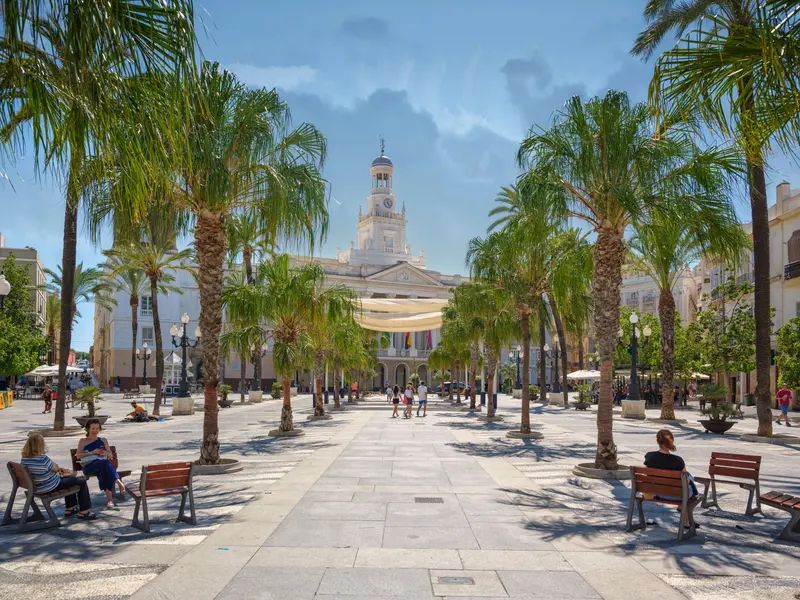
Spring and early autumn suit a trip built around walking. You can spend the middle of the day indoors and follow the outer walls later. The old town alternates narrow lanes with open squares, which makes it easy to adjust a route for shade or wind. A cooler afternoon can still be a good time to see the cathedral and stroll along the Alameda.
In summer, give street walks and beach time separate parts of the day. La Victoria has room to walk by the water and step back onto the promenade when you need a break. La Caleta is shorter and surrounded by buildings, so it works as a stop between visits. On a windy day look at how sea conditions differ on the bay side and the Atlantic side. A sunny forecast gives you little information about the surf.
In winter it pays to plan outdoor visits around daylight. Campo del Sur faces the Atlantic and feels exposed in rough weather. The Museum of Cádiz and the Roman theatre are both close to central streets and make convenient alternatives. If you are coming for Carnival in February 2027, think about what you want your walk back to your room to be like after the evening events.
Getting there and around
The train and coach stations stand near the port, at the edge of the old town. Walk towards Plaza de San Juan de Dios when you leave the station. From there you can begin a day visit without a transfer. Look for the station simply named Cádiz for the old town. Other stops on the urban stretch of railway put you closer to newer neighbourhoods and the longer Atlantic beaches.
In 2026, airport operator Aena listed rail connections from Jerez de la Frontera Airport onto the bay rail corridor. Check which departures suit your flight, especially if you land late. The airport station, the station in Jerez itself and Cádiz are three separate stops. When comparing flights, allow time to get from the terminal to your actual accommodation, including any waits between services and the walk with luggage.
Puerta de Tierra marks the point where the old town gives way to the newer city. Head towards the Atlantic side for Santa María del Mar. As you move south, the main avenue and the seafront follow different lines. In 2026 the city’s tourism office listed bus 1 along the former, between Plaza de España and Cortadura. Use the avenue as your reference when looking for a bus back after walking south along the beach.
If you are driving, work out where to leave the car for the day. The sets of one-way streets and pedestrian squares make a poor route between the market, the cathedral and La Caleta. Ask about the nearest point for dropping off bags. The address on the booking can face a square while the easiest approach by car is around the back of the block.
What to see in Cádiz
San Juan de Dios, El Pópulo and the cathedral
Plaza de San Juan de Dios opens out from the port towards the town hall. Enter El Pópulo through its namesake arch and look at how quickly the scale changes from square to lane. Find Plaza de Fray Félix and the Church of Santa Cruz, the old cathedral. The Roman theatre is close by, partly under the surrounding buildings. Step back out into the open space of the new cathedral square to compare the two churches within a single walk.
For a view of the dome beside the sea, go around the cathedral along Campo del Sur. In El Pópulo you see the buildings in short bursts between arches. From the seafront the dome and houses form a skyline, with the sea defences directly below them. If you only have a morning, this stretch will give you more of the character of the old town than an extra excursion down to the long beaches.
La Caleta, Santa Catalina and Genovés Park
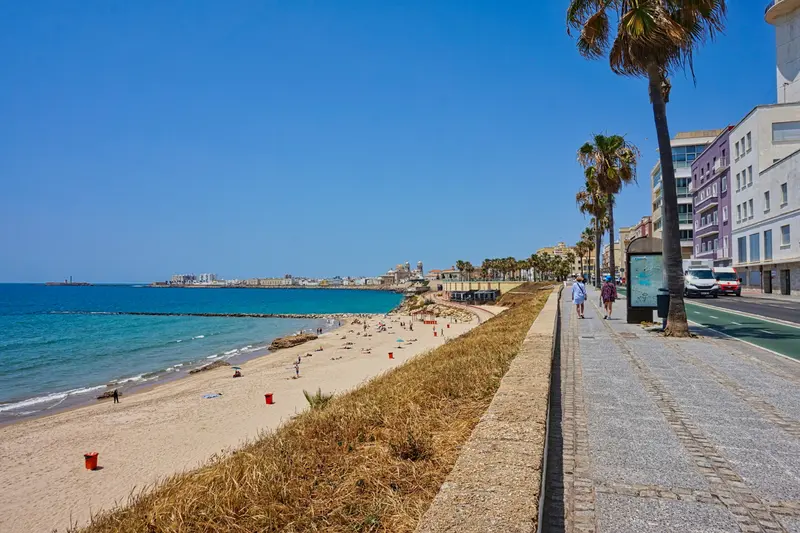
Follow the shore to the western tip of the old town. La Caleta lies between Santa Catalina Castle and the approach to San Sebastián Castle. The former Balneario de la Palma bathhouse stands out on the beach. From the sand you can see its two wings framing the water. From the avenue the whole curve of the bay comes into view.
Beyond Santa Catalina, walk towards the shaded paths of Parque Genovés. You can continue to the Alameda and Plaza de España or turn towards the Falla Theatre and loop back through the streets. If you want to finish near the train station, the first option goes around the edge of the old town without retracing Campo del Sur. Take the second if you would rather add some of the smaller squares.
Tavira Tower, the market and the old town squares
Tavira Tower is a few streets from the central market and Plaza de las Flores. It is one of the city’s old lookout towers. Its camera obscura projects a view of the streets and rooftops, letting you see buildings hidden from ground level. Leave enough time for the projection if that is what interests you. At street level you can put together a walk between Plaza de las Flores, Plaza de San Antonio and Plaza de Mina.
Look up occasionally as you cross the old town. The watchtowers above the houses stand out from open squares or at the end of a straight street. Between the courtyards, lookout towers and port, the pattern of the buildings shows how homes and trade could share a fairly small strip of land.
Monuments and heritage
Roman Gades and the new cathedral
The Roman theatre was built in the first century BC for the city of Gades. Begin with the interpretation centre to see which part of the seating survives and where later buildings cover it. When you come out through El Pópulo, look again at the street plan. Within a few blocks you have seen parts of the Roman city, the later neighbourhood and the old cathedral at Santa Cruz.
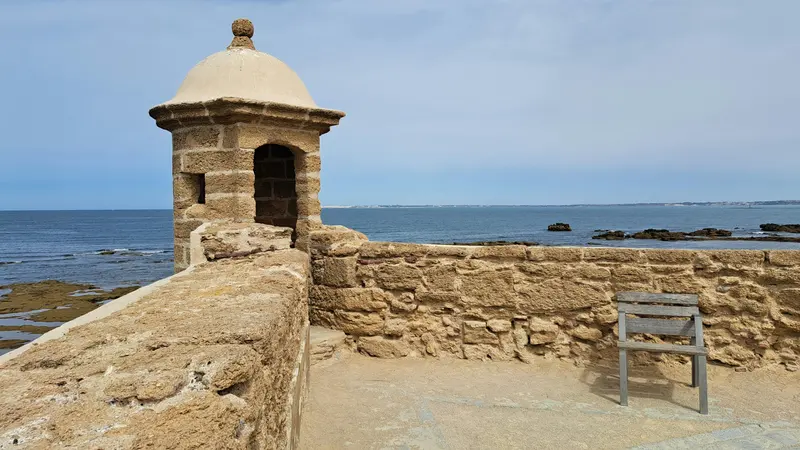
At the new cathedral, look for changes in the stonework at close range. Further away the dome becomes the feature you can use to navigate. The square gives you the front of the church, while Campo del Sur lets you take in its length along the coast. At Puerta de Tierra, compare the landward entrance to the fortifications facing the water. This was the approach to defend from the strip of land to the south.
The city and the Constitution of 1812
The San Felipe Neri Oratory hosted the assembly that drew up the Constitution of 1812, nicknamed La Pepa. Inside, the oval plan and altarpiece show the building’s religious purpose. On the square, the plaques on the front recall its political role. The adjoining interpretation centre sets the meeting in the years of the Peninsular War.
Continue to Plaza de España for the monument to the assembly, known as the Cortes. The square is also a useful landmark between the part of the city facing the bay and the Alameda. Visit both places in one outing to see where the assembly met and how a later generation chose to remember it in public.
Museums and culture
The Museum of Cádiz and the Gadir site
The Museum of Cádiz stands on Plaza de Mina and houses archaeology and fine art. Make time for the Phoenician sarcophagi if you are tracing the city’s ancient past. At the Gadir site on Calle San Miguel, remains of the Phoenician settlement lie below the puppet theatre building. The museum gives you objects to examine closely. The excavated site shows how buildings and streets fitted together. Add the Roman theatre for a comparison with a later stage of the city’s history.
The Casa del Carnaval and the Falla Theatre
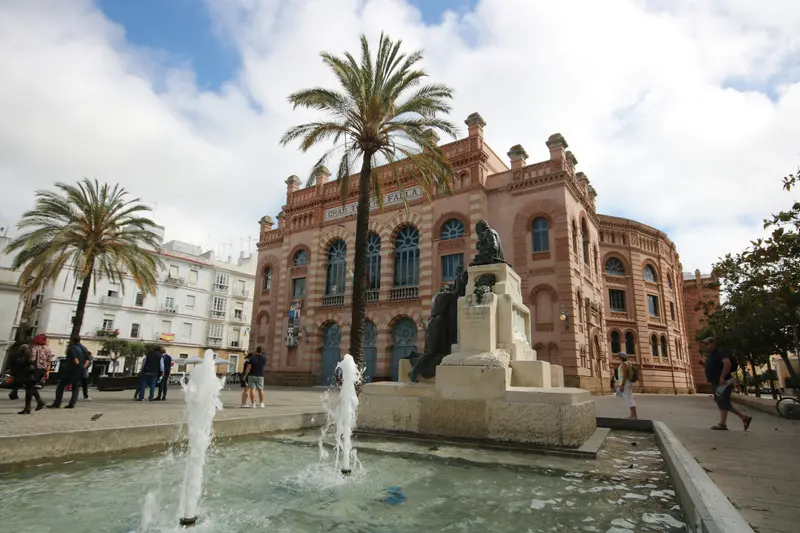
The Casa del Carnaval occupies the former palace of the Marquises of Recaño near Tavira Tower. It gives visitors a way into the songs, groups and traditions behind their performances. Follow it with a walk to the red-brick Gran Teatro Falla, where the official competition takes place. The two locations are close enough to pair on a day when no street performances are planned.
Neighbourhoods and areas
El Pópulo. Start at the town hall and leave by the cathedral or south wall. The area fits between the two cathedrals and the harbour side of town. If your group wants to explore separately for a while, the cathedral square is an easier meeting place than the smaller lanes.
La Viña. Come from La Caleta, walk along Calle Virgen de la Palma and follow the side streets towards the market. Early in the day it makes a short circuit from the shore. At Carnival time local clubs and informal gatherings take on a larger role. Look at how the open beach avenue gives way to smaller streets as you walk back towards the centre.
Santa María and the newer city. Santa María is between El Pópulo and Puerta de Tierra. Use the wall as a landmark before continuing into the more open streets to the south. The avenues and the long promenade are useful if you want a flat walk covering some distance without returning to the same squares repeatedly.
Beaches in Cádiz
La Caleta and Santa María del Mar
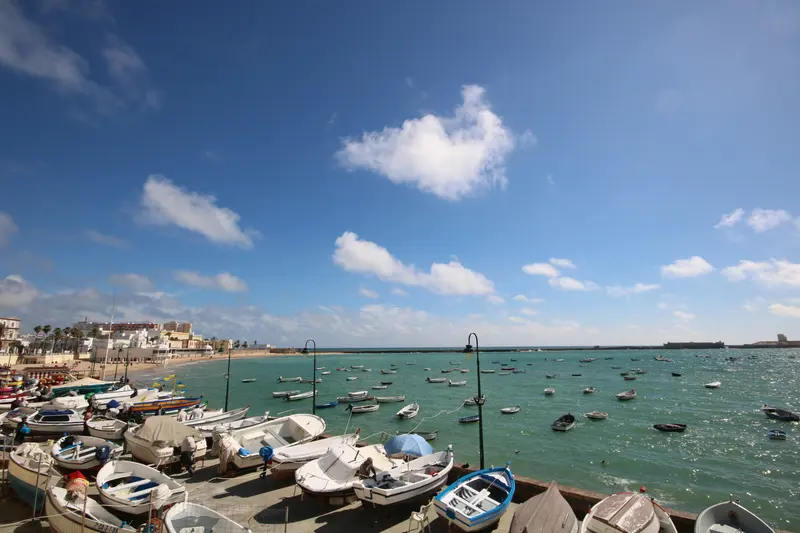
La Caleta is the beach you can fit into an old town visit in almost any weather. See it from the promenade first if you are stopping briefly. The bathhouse and the two fortifications give you a sequence of views as you change position. If watching the sunset, find a spot along the avenue well before you need to leave, especially if you have someone in the group who prefers to avoid crossing the sand.
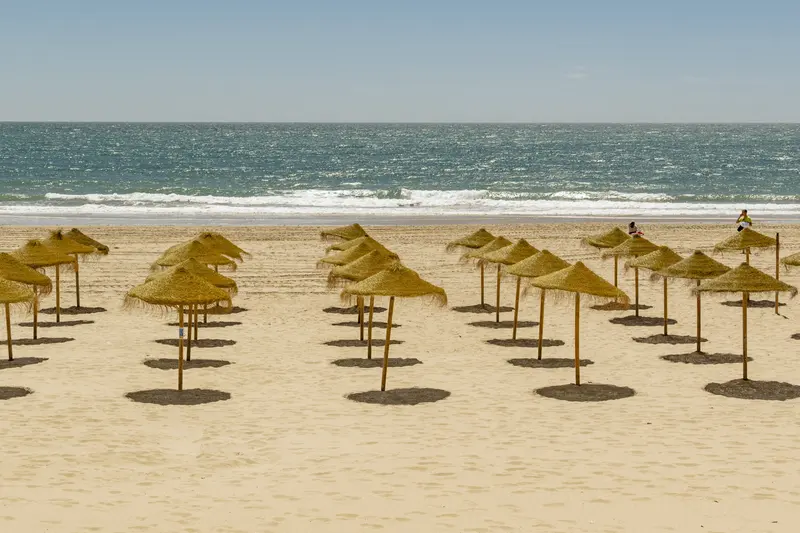
Santa María del Mar sits below the promenade, between breakwaters and just beyond Puerta de Tierra. The top of the promenade has a view back towards the cathedral and Campo del Sur. It is the first shore stop on the way to La Victoria. Look for your preferred way down and back up, particularly when walking with a pushchair or when you want to spend the rest of the afternoon further along the seafront.
La Victoria and Cortadura
The city’s tourism office puts La Victoria at about 2.8 kilometres long, between Santa María del Mar and Cortadura. Pick an access point and locate a stop for the return before setting out. That way you can use a part of the beach that suits your day without walking the full length in the sun. The solid promenade makes a parallel route if you want to switch between beach and pavement.
At Cortadura, the shoreline opens out as you leave the denser blocks lining the seafront. Carry on this way if you want a longer walk and the weather suits it. Check the sea and any flag at the beach where you intend to swim. When the rising tide leaves less room on the sand, it is straightforward to turn back through the La Victoria promenade.
Festivals and traditions
The council has announced 4 to 14 February 2027 for Cádiz Carnival. The competition at the Falla Theatre and performances outdoors are two different experiences. Both revolve around songs and groups, but in the streets you also have to find a place to stand and leave room for people to pass. If you speak little Spanish, you can still follow the rhythm, costumes and audience reactions.
The central market, Plaza de las Flores, La Viña and Plaza de San Antonio each make a different kind of setting. Check the programme for your year when deciding which performances to see. Pick one or two areas in a day and allow time to move on foot. For a family outing, look at how easily you can reach the edge of the square before stopping among the crowd.
Routes and itineraries
One day, from bay to ocean. Start at Plaza de San Juan de Dios. Spend the morning around El Pópulo, the Roman theatre and the cathedral, then take Campo del Sur to La Caleta. Return past Santa Catalina and Genovés Park via the Alameda, with a final stop at Plaza de Mina. If you fit in Tavira Tower, shorten the return along the walls.
Two days with beach time. Spend the first in the old town. On day two, follow the promenade from Puerta de Tierra to Santa María del Mar and La Victoria. Return by bus from the avenue if you want to cover more of the promenade on the way out. You can also start the second day with the museum and save the coast for whenever the weather looks more settled.
Wind or passing showers. Put Gadir, Tavira Tower and San Felipe Neri together. They have indoor stops and the streets between them are short. Keep Campo del Sur or the Alameda for a break in the weather. Pick a square inside the old town as a meeting point if some of your group want to spend longer in a museum.
Day trips
Jerez de la Frontera
See the Alcázar and cathedral, then make time for either a sherry cellar or a walk through Santiago and San Miguel. Jerez railway station is outside the main cluster of monuments, so allow for the walk. Renfe confirmed the bay commuter rail corridor in 2026. Look up a return that suits your plans before starting a late-afternoon visit.
El Puerto de Santa María
Use the Guadalete river as a reference point and walk to San Marcos Castle and the squares around the Priory Church. The beaches and town centre make different outings. If you want to do both, pick a specific stretch of beach before you plan the return to Cádiz, especially if you start by the river and finish on the coast.
Travelling with children
Genovés Park and La Caleta make a good pair when you need a shaded walk and time on the beach. In El Pópulo, give children the job of spotting the arches and finding the old cathedral before they see the new one. For a longer beach day use La Victoria, where you can trade sand for promenade without retracing the entire walk. Check which access point suits a pushchair and judge the water at beach level.
Where to stay in Cádiz
Old town and station. Around Plaza de San Juan de Dios you have a shorter walk with luggage and can put the first sights on the way to your room. Plaza de Mina and San Antonio work for evenings in the centre and walks towards the Alameda. Check the street immediately around the property if you are arriving by car or expect to return late.
La Viña and La Caleta. Stay here if you want to begin or finish the day at the water. During Carnival in 2027, check which way the room faces and how you will get back from the station. You may find it faster to walk round the seafront than to cut through a crowded square.
Santa María del Mar and La Victoria. Choose these areas if most mornings are for the beach and you plan to go into the old town once or twice. Santa María del Mar is nearer Puerta de Tierra. La Victoria offers a longer promenade. Compare the walk to the water with the walk to the stop you would use to reach the centre.
See places to stay in Cádiz (opens in a new tab)Affiliate link: if you book through it, we may earn a commission at no extra cost to you.