

 Español
 English

Why visit Olite
Start in Plaza de los Teobaldos if you are deciding what to see in Olite. The old palace and the church of Santa María la Real face the same square, with towers from the later royal residence rising next to them. Go inside the palace to see how stairs, courtyards and living quarters fit together. Then follow the streets away from the squares to see the town that grew around the court.
You may see Erriberri, the Basque name for Olite, on signs in Navarre. This is a small town in the central belt, on a useful route between Pamplona and Tudela. Leave time to walk as far as San Pedro if you stop between the two cities. The streets at that end of the old town feel different from the open space beneath the royal towers.
When to go
Spring and autumn suit a day divided between the exposed tower walks and the streets of the old town. In summer, go up into the palace towers earlier and use the later afternoon for a walk. If a theatre performance or the Medieval Festival is the reason for the trip, plan around the event and book the palace separately.
In winter, use the brighter hours to look at the front of Santa María la Real and walk Rúa Mayor. Check what is open inside the palace after wind or rain. Standing in either of the main squares still gives you a good view of how the towers and lower buildings fit together.
Getting there and around
Tafalla is a useful reference point on a road trip from the north. The town council’s visitor information lists the N-121 approach. Without a car, use the journey planner for your date to check services to Olite or Tafalla and work out the final leg before setting off. You can cover the historic centre on foot, even if you later need a vehicle to continue into the countryside.
From a signed parking area, walk towards Plaza de Carlos III el Noble. It is easy to miss the Chapitel gateway when heading straight to the palace. Enter through the gateway and leave by San Pedro if you want to see more of the old streets. If you are staying in the centre, check the walking route with bags before trying to drive to the door.
What to see in Olite
Inside the New Palace
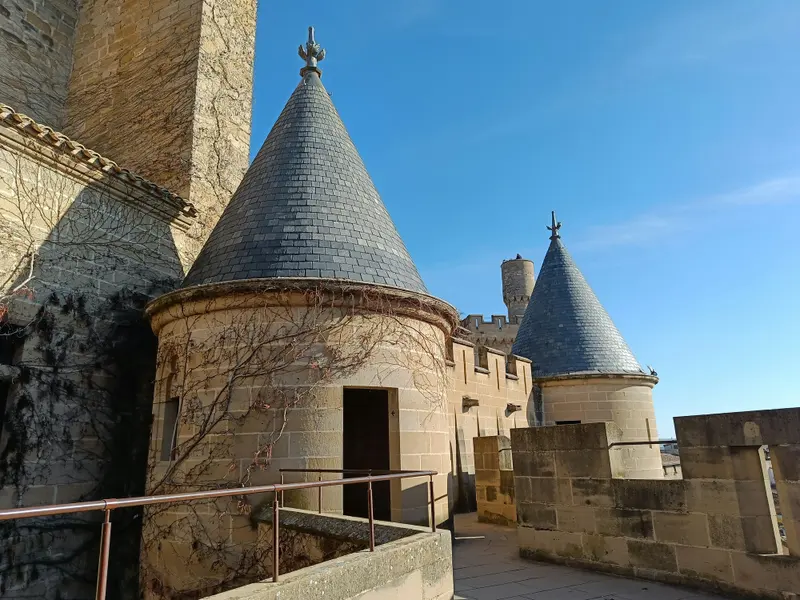
The New Palace is the part you can tour. Get a sense of the plan from the courtyard level before choosing which towers to climb. In the royal quarters, watch how daylight changes between the window recesses and the passages. Outside the rooms, the Orange Tree Courtyard shows how open spaces were set alongside the living quarters.
The Four Winds Tower is a place to look out over the buildings and the fields. The stacked shapes of the Three Crowns Tower stand out from nearby turrets. Along the lower part of the visit, take a look at the old ice well with its rounded cover. It is an example of the work that kept the palace running, easily missed if you focus entirely on the towers and state rooms.
From Teobaldos to San Pedro
Cross Plaza de los Teobaldos for a view of the church next to the Old Palace. Continue into Plaza de Carlos III el Noble and find the Chapitel, a stone gateway where the approach to the square narrows. Turn towards Rúa Mayor and carry on to San Pedro. Look for coats of arms, projecting roofs and the widths of doorways along the street. This part of the walk is worthwhile in its own right if you have to leave before the palace opens.
Monuments and heritage
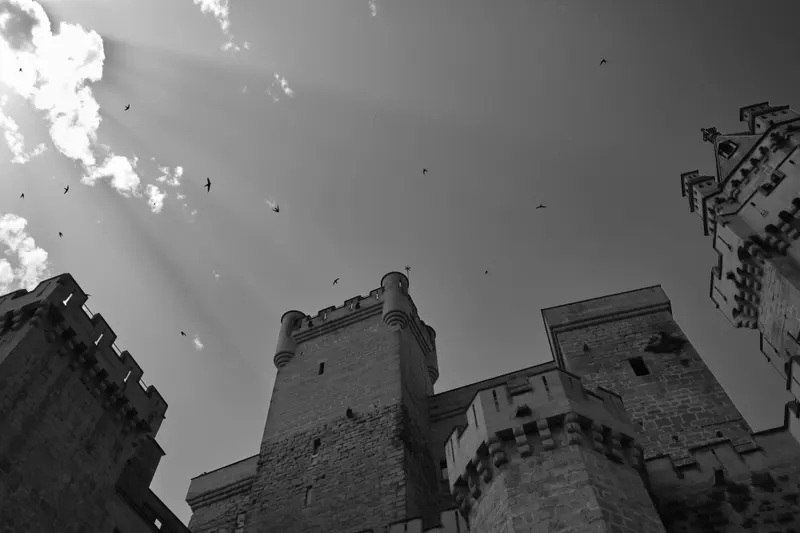
The Old Palace now houses a Parador, part of Spain’s network of hotels in notable buildings. The adjoining New Palace took shape as a royal residence under Charles III of Navarre. The castle was designated a national monument in 1925. Restoration is also part of its history, so allow time to see the differences between the stonework, rooflines and upper sections as you walk round.
At Santa María la Real, look closely at the Gothic doorway from the entrance court, then step back to see how it fits into the front of the church. At the other end of the walk, San Pedro marks the Rúa Mayor axis with its tower. The two exteriors show how much the church architecture changes across just a few streets. You can visit both even if you plan to go inside only one historic building.
Museums and culture
At the Enozentrum, exhibitions put the vineyards of central Navarre into context. It fits after the palace if you are curious about the landscape you could see from the towers. Check with the tourist office before planning around it. The official town map also marks the medieval galleries beneath Plaza de Carlos III el Noble. Ask what is open during your visit if you want to see what survives below the square as well as above it.
Neighbourhoods and areas

The route between the two main squares is the quickest way into the palace area. Set aside a separate walk along Rúa Mayor towards San Pedro. In those streets the palace comes into view between the buildings, while the town’s residential side is clearer. The route gives you time to notice the height and shape of the houses beyond the most photographed sights.
Outside the old centre, the streets open up towards the farmland. A short walk around the edge works towards the end of the day when you have finished any timed visits. If you have a fixed appointment at the palace, start there and leave the surrounding lanes until you can explore without following the clock.
Festivals and traditions
The Medieval Festival brings a market and performances into the streets and squares. The council published rules for the market at the 32nd edition in 2026. Check the event map for the year you plan to come if you are arriving by car or using a pushchair. On a quieter day, revisit the same squares for a closer look at the doors and façades without the stalls.
Olite’s Theatre Festival held its 27th edition in 2026. Look for performances at La Cava, the space beside the Royal Palace. The programme uses several venues, so take the time to find where a performance is happening before you set out from your accommodation.
Routes and itineraries
Morning in the palace, afternoon in town
Begin at Teobaldos to see how the two parts of the palace fit together. Allow for stairs and pauses in the courtyards during the visit. On the way out, walk past the entrance of Santa María and through the Chapitel. Children can look for different tower shapes, coats of arms and the rounded lid of the ice well as a way to break up the stops.
In the afternoon, walk Rúa Mayor and add the Enozentrum if it interests you. With a half day, choose one building to go inside and keep the rest as a walk you can shorten. With a night in Olite, see the main square again when it empties and leave for Ujué or Pitillas after breakfast.
Day trips
Ujué/Uxue is built on a slope below its fortified church. Walk uphill slowly and notice how the streets and houses adjust to the ground. Artajona is another option, with the walls of El Cerco and a fortified church. Both trips make sense after the palace. They put the emphasis on the relationship between defence and terrain, while the royal rooms at Olite help explain the life of a court.
At the Pitillas lagoon, you can spend part of the day birdwatching in an open landscape. Check the latest visitor information for the nature reserve before driving over. It adds a different sort of stop to a journey of churches and old towns across central Navarre.
Where to stay in Olite
The old town puts you within a short walk of the palace in the morning and the main squares after a performance. Look up the exact entrance and the route from where you will leave your car. Travellers heading to Tafalla, Ujué or the Ribera the next day may find the edge of the old town easier for an early departure. Between Teobaldos and Rúa Mayor, dinner and the main sights are close enough to leave the car where it is.
Find accommodation in Olite (opens in a new tab)Affiliate link: if you book through it, we may earn a commission at no extra cost to you.