

 Español
 English

Why visit Cartagena
For a first look at the things to do in Cartagena, visit the Roman Theatre and walk down through Plaza del Ayuntamiento to the waterfront. Within a few streets you move from tiers of seats cut into a hillside to a sheltered bay framed by hills. That short route helps explain both the older city and the seaport that came after it. From the water, you can choose to continue the Roman story at the Molinete or go to the castle for a wider view of the harbour.
Cartagena is in the south-east of the Region of Murcia. The municipality also includes Cabo de Palos, Calblanque and settlements facing the Mar Menor lagoon. Reaching those places takes time away from the historical centre, so on a two-day trip you could give the port and archaeology one full day and the coast another. If the appeal is the city itself, spend the second day on a different part of its history, with the forum, the naval collections or the Civil War shelter.
When to go
Spring and autumn suit walks from the old town to the harbour and up the hills above it. The Molinete and Concepción are easier to enjoy when you can pause outdoors and make out the hills surrounding the bay. In autumn, keep the exposed part of the afternoon flexible so you can adjust to wind and daylight. A museum or timed site can anchor the rest of the day.
In summer, a day for the archaeological sites and a day for the coast each give you a clear reason to start early. Plan the walk past the open Roman remains and the dunes at separate times, rather than rushing from one end of the municipality to the other. The harbour can be a useful short outing towards evening after a beach day. In winter you can plan the castle or port for the part of the day with the best light and visit an indoor collection around it.
Holy Week and the Carthaginians and Romans festival change the way the centre is used. If you come for either one, choose a parade or event and build the rest of your day around it. For an ordinary museum visit during festival time, check how you will reach the entrance and where you will walk afterwards. A procession may affect the route back to your accommodation even if you are visiting at the other end of the centre.
Getting there and around
Cartagena’s coach and railway stations are east of the old town. Walk towards Plaza de la Merced to reach the central streets. That approach gives you a sense of how close the excavations, shopping streets and harbour are to one another. When arriving with luggage, check your drop-off arrangements before any timed admission. The ticket entrance to the Roman Theatre, for example, is via the museum on Plaza del Ayuntamiento.
In 2026, Renfe announced a replacement bus plan for works on the route between Murcia and Cartagena. Check your actual journey, particularly if you need to change at Murcia del Carmen for a long-distance train. If flying, the regional airport is at Corvera and Aena listed bus services there in 2026. Read the destination on the airport service before assuming it brings you straight to Cartagena. Compare the final transfer when deciding whether to fly to Murcia or Alicante.
Once in town, use Calle Mayor and the harbour as your main walking line. The route gets steeper where the streets approach the hills. The museum inside the Civil War shelter and the castle sit at different levels, so consider them as separate access points if anyone in your group has limited mobility. For the coast, look up the specific return journey. Even within the same municipality, Cala Cortina, Cabo de Palos and the Mar Menor shore call for different routes.
What to see in Cartagena
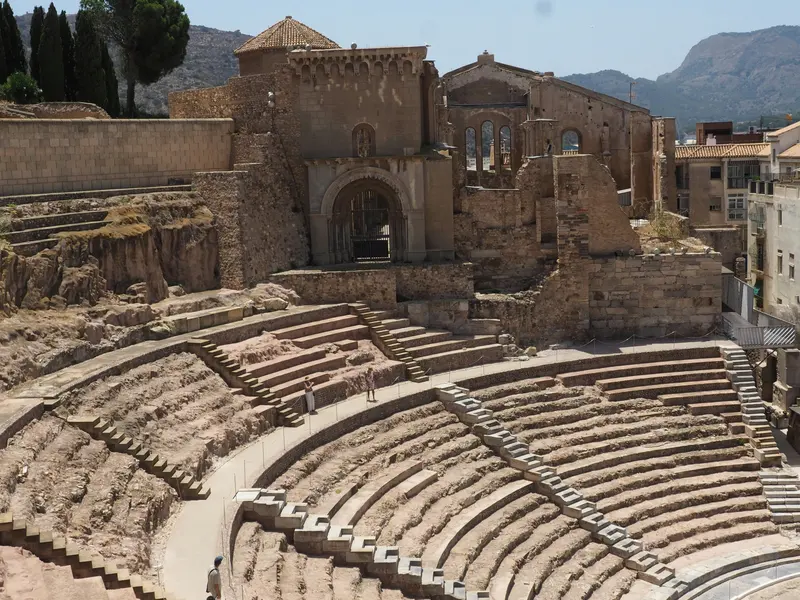
The Roman Theatre and Calle Mayor
Go to Plaza del Ayuntamiento to enter the theatre museum. The first part of the visit explains the recovery of the site and uses objects, inscriptions and models to show how the theatre worked. Pay attention to the reconstruction of the stage building. When you step into the open air, you can compare that interpretation to the scale of the stonework and seating in front of you.
After the theatre, walk up Calle Mayor. The city hall and the Gran Hotel near Plaza de San Sebastián provide markers for the walk. Look at the entrances and then up at the balconies and projecting windows. Some of the details are easiest to pick out from across the street. If you continue to the Molinete, use a different set of streets on the way back to the port so you take in more of the old town in the same walking distance.
The Molinete and a view from the castle
The Molinete Roman Forum Museum presents streets and rooms from a wider urban site. Find the position of the complex on the slope and then choose a few spaces to look at closely. The baths and the sanctuary of Isis, for example, show distinct uses of space in the town. Focusing on how people moved through the rooms gives you a different impression of Roman Cartagena from the scale of the theatre.
The Concepción Castle is a place to read the shape of the bay. From above, the working port, hills and modern streets can be placed in relation to the centre. Choose your way up before you set off. If visibility is good early on, make it your first stop. If you have already walked round the theatre and waterfront, use it at the end of the day to see where those visits fit.
Monuments and heritage
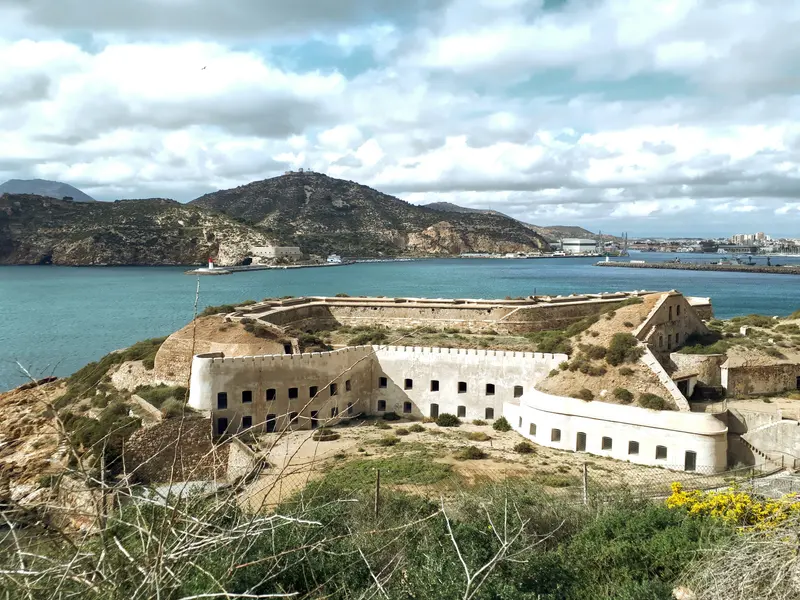
Cartagena preserves traces of Punic and Roman settlement alongside later harbour defences and urban architecture. Pick one period to explore in depth if you have half a day. The Punic Wall is tied to the Carthaginian city, the theatre explains the public scale of the Roman one, and the Concepción site puts the focus on control of the bay. One main visit and a short walk past another site can be a more rewarding introduction than three quick stops in succession.
The Roman Theatre and amphitheatre were different buildings in different parts of town. The theatre opens towards the area near the city hall. The amphitheatre site is near the former bullring. You can look for guided archaeology visits in Cartagena if you would like the excavation explained on site. Mark both places on a map if you are trying to picture the layout of the Roman city. Ask the site operator about visiting the amphitheatre, since public access depends on the programme and work at the site.
The city hall and the façades along Calle Mayor show the prosperity of a much later port. Look at the corners and rooflines as well as the entrances. The buildings face into the narrow streets at a scale quite different from the ruins on the hillside. It is possible to see both on the same walking loop, with a break between the Roman site and the later streets to look at each on its own terms.
Museums and culture
ARQVA and underwater archaeology
The National Museum of Underwater Archaeology stands on the waterfront. It displays objects recovered from water and explains the investigation and conservation of shipwreck material. The story complements the walks through the standing remains. At the forum, you can see how a street or room was used. At ARQVA, think about what the cargo, material and place of recovery can tell archaeologists about a ship and the people who travelled on it.
The Naval Museum and Civil War shelter
The Naval Museum follows the history of maritime service, shipbuilding and navigation. If you want to see the Isaac Peral submarine, check its location within the museum visit before choosing your route. The ship and the naval collections answer different questions from those displayed at ARQVA. Choose the one you want to spend time in, or give them separate parts of the day if these are the main reason for your visit.
The Civil War Shelter Museum preserves galleries used for protection during air raids. The site’s position in the hill is part of what there is to see. This part of twentieth-century Cartagena is hard to imagine from the open harbour streets alone. It pairs with the castle if you want to stay near the same hill, with the order depending on walking conditions and the visibility over the bay.
Neighbourhoods and areas
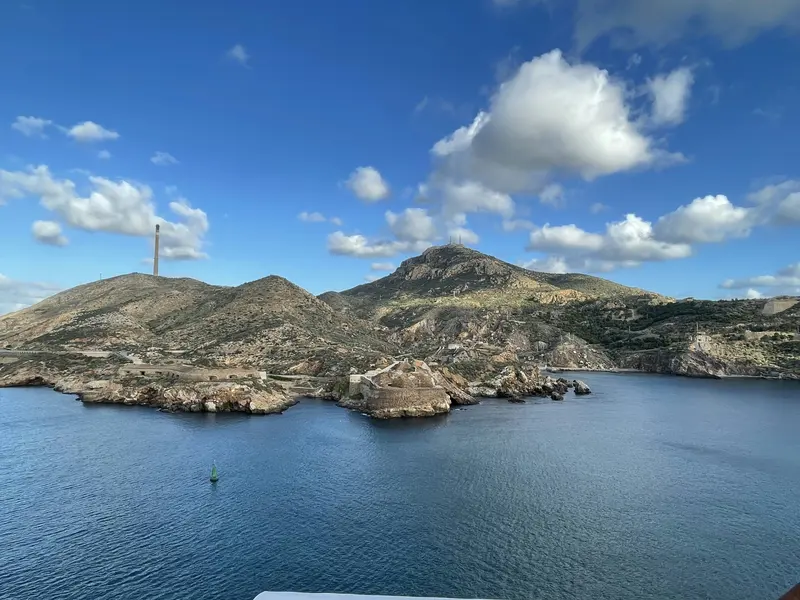
The old town between Plaza del Ayuntamiento, Calle Mayor and Molinete contains most of the central monuments. You can stay within walking distance of the water for much of the day. Plaza de la Merced is a separate orientation point closer to the stations. Arrive from that side to see the centre as a route across town rather than following Calle Mayor out and back.
Along the central harbour, start near the city hall and walk towards ARQVA. There is room to look across the bay towards the hills with fewer changes of street than in the old town. Santa Lucía lies further to the east. If you would like to continue in that direction, check the route and choose a turning point. Extending the walk towards the coast is a different outing from a short circuit around the main waterfront.
Cabo de Palos has its own harbour and lighthouse. Los Urrutias and Mar de Cristal overlook the Mar Menor. When choosing between these areas, consider which days start on foot from your accommodation. A night by the lagoon makes sense for a different morning from a night near the Roman Theatre, even though both addresses may be listed under Cartagena.
Nature and protected areas
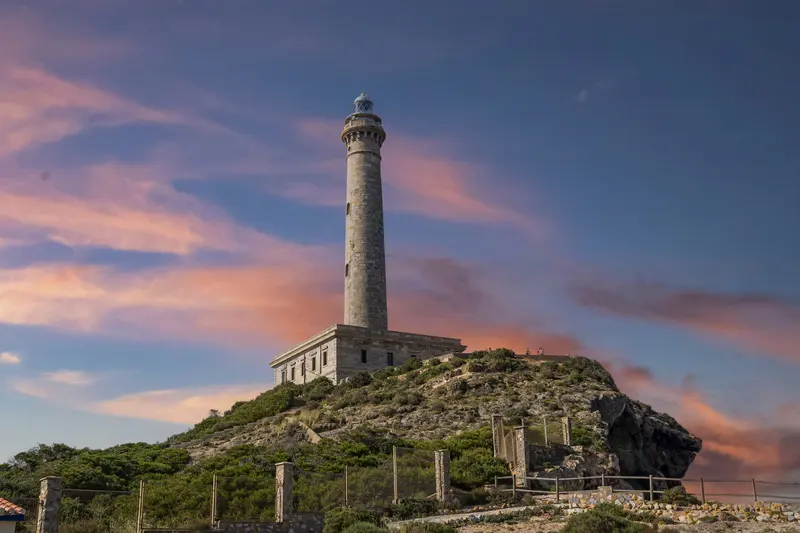
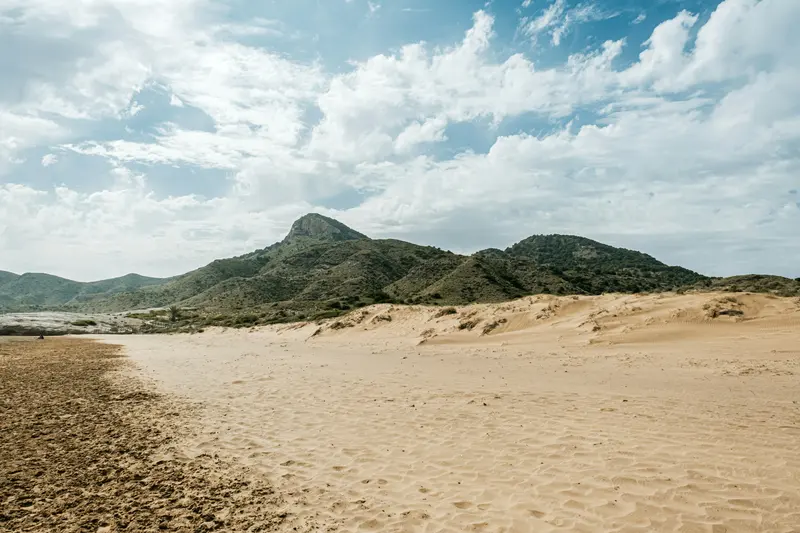
Calblanque, Monte de las Cenizas and Peña del Águila form a regional park of dunes, open beaches and dry hills. Decide whether you are there for time on the sand or for a walk towards higher ground. These plans have different starting points and take different amounts of time. Murcia Natural manages access to the beaches during periods of high demand. Check the conditions for your date before setting off.
The Cabo de Palos and Islas Hormigas marine reserve protects the underwater environment around the headland. To get a sense of the coastline from land, walk near the lighthouse and visit one of the nearby coves. A diving visit is a separate outing. Check the day’s conditions and the authorised operator’s arrangements before fixing it in the itinerary. From land, good visibility is enough to make the rocky headland worth the trip.
Beaches in Cartagena
Cala Cortina near town
Cala Cortina offers a Mediterranean beach outing from the city. It lies east of the central waterfront, beyond Santa Lucía. Check the route there and back and decide how much of it you would like to walk in the heat. If some of your group prefer another museum, keeping the beach as a separate afternoon outing gives everyone an option without changing the day’s main archaeological visit.
Calblanque, Cabo de Palos and the Mar Menor
Calblanque’s beaches lie among protected dunes and along an open stretch of sea. Use the designated approaches and check which part of the coast your access point serves. Around Cabo de Palos the shore is rockier and the coves have a smaller scale. Allow time for the village and lighthouse on the same day if your interest is as much in the land as in swimming.
Mar de Cristal and Los Urrutias face the Mar Menor lagoon. Search for the beach by its settlement name, since references to Cartagena’s coast can describe either the lagoon or the Mediterranean. Check the water conditions and local beach information before you swim. Staying on one shore for the day is often enough if you have children or want time to use the beach after exploring the village.
Festivals and traditions
During Holy Week, processions follow routes around Calle Mayor, the city hall and other central streets. Their lighting, pace and organisation are easiest to see when you wait in one place. The 2026 calendar ran from 27 March to 5 April, with traffic restrictions set out in a city notice. Check the arrangements for the edition you will attend, especially if your accommodation is inside the affected area or you need to reach a station.
The Carthaginians and Romans festival stages scenes from ancient history alongside parades. In 2026, the celebrations took place from 18 to 27 September. Check the location for the specific gathering you want to see. Some events take place at the camp, some by the port and others along a city route. Make time for the theatre or Punic Wall separately if you want the archaeological evidence as well as the re-enactment.
Routes and itineraries
One day for Roman Cartagena and the port
Begin at the theatre and take your time in Plaza del Ayuntamiento. Walk up Calle Mayor. From there, continue to the Molinete if you want to spend more time on Roman archaeology. For two different periods in the same day, go back towards the port and choose either ARQVA or the Naval Museum as the second interior. You can end on the waterfront without adding another walk up the hill.
Two days with the Mediterranean coast
Give the city a day, with the theatre, forum and time for the castle or harbour. On your second day, pick Cabo de Palos or Calblanque. For Cabo de Palos, split the morning between the lighthouse and village harbour. At Calblanque, concentrate on one beach sector and plan the return around the access in use. Cala Cortina lets a family shorten the journey if it wants to leave some time for the city later.
Day trips
In Murcia, start with the cathedral and the Real Casino and walk down to the Segura. The historical sights are close together, so a day trip works even if you take time over lunch or one museum. Choose either Santa Clara for Islamic remains or the Salzillo Museum for sculpture. Check the transport back to Cartagena before choosing an admission time.
Lorca has a hilltop castle, a synagogue site and museums dedicated to processional embroidery. On a day by car, make the fortress the main visit and spend the afternoon around Plaza de España. La Unión offers a closer change of scene, with mining heritage on the edge of the urban area. It fits a trip that has already spent several days around the harbour or on the coast.
Travelling with children
The Roman Theatre visit moves from interior galleries to the open tiers of seats. Give children a feature to look for on both sides of that change. They could choose one stage element in the display and point out where it stood once outside. Families who have already spent much of the morning indoors can go straight to the harbour afterwards and leave the forum for another day.
ARQVA pairs with a waterfront walk where the group can talk about what people find on a wreck. The castle provides a different question: where do ships enter the bay, and from which hills could they be seen? If you add a beach, choose the distance according to how much time your group has and how easily you can get back from it in the evening.
Where to stay in Cartagena
Stay near Plaza del Ayuntamiento or Calle Mayor to reach the theatre, central shops and waterfront on foot. Accommodation near the stations helps if you are including other towns and want to be able to walk into central Cartagena afterwards. Check the last stretch of the approach if the street lies on the Molinete or Concepción side of the centre. The slope can matter more than the distance on a map.
Cabo de Palos and the Cartagena side of the Mar Menor suit trips with several days at the coast. Check which shore you will be facing and how long it takes to reach the city. A place that lets you walk to the sea each morning is well suited to a different rhythm from a room next to the Roman Theatre. Choose by where you want most days to begin.
See places to stay in Cartagena (opens in a new tab)Affiliate link: if you book through it, we may earn a commission at no extra cost to you.