

 Español
 English

Why visit Alcalá de Henares
Start in Plaza de Cervantes and walk to the façade of the Colegio Mayor de San Ildefonso. Within a few steps you move from the town square to the entrance of a university built on its own plan. Continue along Calle Mayor to the cathedral and keep a separate part of the day for Complutum. The route makes it easier to distinguish the Renaissance university, the medieval town and the earlier Roman settlement.
Alcalá lies in the eastern part of the Community of Madrid, in the Henares corridor. The trip from Madrid suits a day visit, while an overnight stay makes time for the museums, the Roman site and the riverside. Travellers drawn by Cervantes will find places connected with his life, as well as streets and a theatre that help explain the world in which he wrote.
When to go
Spring and early autumn work well for a day divided between arcaded streets and either Complutum or the hills above the Henares. In summer, schedule the Roman site early and make use of the middle of the day for indoor visits. The wide Plaza de Cervantes is exposed to the sun. The arcades along Calle Mayor let you stay in the shade for more of the walk.
In winter, prioritise the indoor visit you most want to make and use a clear spell for the walls or the exposed Roman ruins. Decide how long you want to spend in the city based on whether you want to attend a performance at the Corral de Comedias or explore the archaeological sites in detail. During the Cervantes festival, the market changes how you move through the old town. Choose an ordinary weekend if your main focus is façades, courtyards and museum displays.
Getting there and around
In its 2026 network information, Renfe shows Alcalá de Henares on the Madrid Cercanías commuter network. Use the station named Alcalá de Henares for the old town and check where the service is heading before you board. From the station, walk towards the centre along Paseo de la Estación, with Plaza de Cervantes as your first point of reference. Compare the walk and the local bus if you are going straight to a visit west of the old town.
By road, the A-2 follows the Henares corridor. Choose a place to leave the car based on your first stop. The university and cathedral are close together, while Complutum takes an additional journey. Calle Mayor links Plaza de Cervantes with Plaza de los Santos Niños. Turn north to find the Archbishop’s Palace. Some stretches of the arcades are narrow and uneven, which matters if you are walking with a pushchair or using a wheelchair.
If you are arriving from overseas, plan the airport and Alcalá journeys around your terminal and luggage. Going via the capital or travelling directly from Barajas can mean different connections depending on where you are staying. Check the onward trip separately from the distance shown on the map.
What to see in Alcalá de Henares
From Plaza de Cervantes to the university
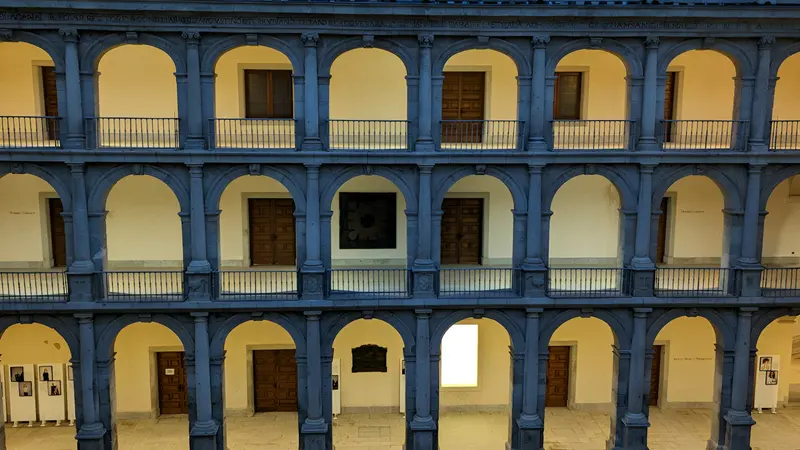
Start by finding the statue and the bandstand in Plaza de Cervantes. Cross to Plaza de San Diego for a straight view of the Renaissance façade of the Colegio Mayor de San Ildefonso. Look at the arrangement of its carved decoration around and above the entrance. The space in front of the college gives you room to take in the full height of the building before you enter.
The courtyards inside the college show how the university used separate spaces for different purposes. The Paraninfo, or ceremonial hall, shows how architecture could frame academic occasions. The Chapel of San Ildefonso houses the cenotaph of Cardinal Cisneros. Check which parts of the college your visit includes and organise the rest of the morning around the college entrance.
Calle Mayor, the Cervantes house and the cathedral
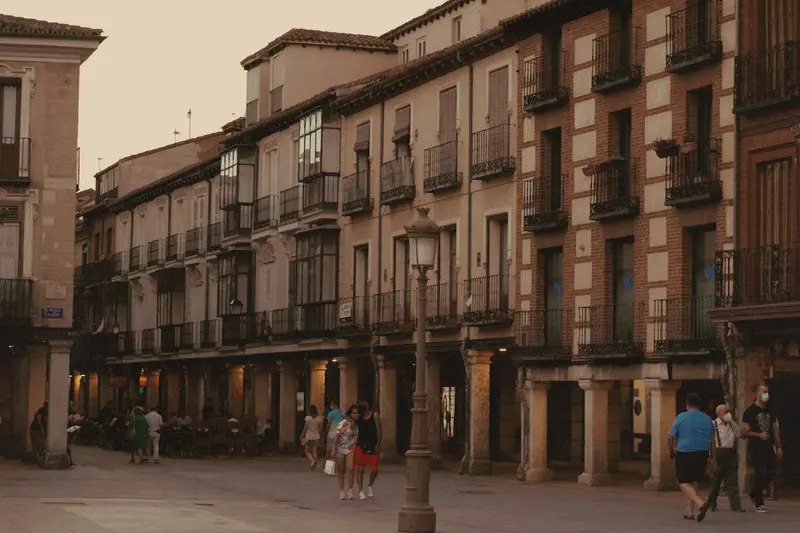
Leave Plaza de Cervantes along Calle Mayor towards the cathedral. Notice how the height, width and materials of the arcades change as you go. The figures of Don Quixote and Sancho Panza identify the museum of Cervantes’ birthplace. Inside, look at the rooms arranged around the courtyard. The furnishings and book displays put the domestic life of the period and the circulation of the author’s work in context.
At the western end of Calle Mayor, the cathedral stands on Plaza de los Santos Niños, in the older Christian centre. Look at its tower from the square and walk around the block to see how the church sits among the lower buildings. For a loop through the old town, continue to Plaza de Palacio and the walls instead of following Calle Mayor back to the university.
Complutum and the Roman houses
Keep a separate part of the day for Complutum, west of the old town. The forum and the remains of public buildings help explain the organisation of a Roman city. Start at a plan of the site so you can relate the lines of the walls and differences in the paving to what you see on the ground. Check the arrangements for the House of the Griffins or the House of Hippolytus individually if you want to add either stop.
Allow time to see how the visit changes between the open site and its covered exhibits. A house can only be understood in relation to the surrounding blocks, while the forum sits within a network of streets and public services. Take a moment at the interpretation panels to follow one street alignment across the site. If you have already visited the old town, this is a way to compare the plan of Roman Alcalá with that of the later university.
Monuments and heritage
A city planned around a university
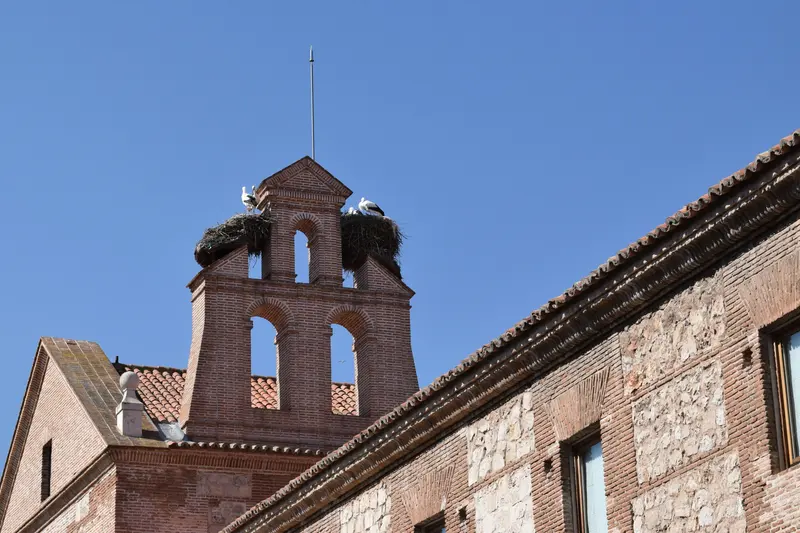
The University and Historic Precinct of Alcalá de Henares have been on the World Heritage List since 1998. Step away from the college façade to look at the blocks arranged around it. The university founded under Cardinal Cisneros provided places to teach, live and hold ceremonies. Plaza de San Diego and the buildings of Calle de los Colegios show how that layout worked beyond the most visited courtyard.
The former College of San Pedro y San Pablo and the San Ildefonso complex show a range of scales within the same system. Back in Plaza de Cervantes, the tower of Santa María marks the site of a former church. The area around the Capilla del Oidor preserves the memory of Cervantes’ baptism. You can pair it with the house museum to connect two different places connected with the writer’s life.
The Archbishop’s Palace and the Madrid Gate
Open Plaza de Palacio feels different after the narrow streets around the cathedral. Look at the outside of the Archbishop’s Palace, then follow the walls. Their towers and curtains of masonry help you picture the edge of the medieval settlement and the purpose of its fortified enclosure. The Puerta de Madrid marks another historic route into the city. On the return, look for the brick front of the convent at Plaza de las Bernardas.
Museums and culture
Archaeology in a former convent
The Archaeological and Palaeontological Museum of the Community of Madrid occupies the former Convent of Madre de Dios by Plaza de las Bernardas. Finds from across the region provide context for a visit to Complutum. See the ruins first to identify the kinds of spaces where the finds were used, or start inside if the day is hot. If palaeontology is one of your interests, allow for the displays that cover the years long before the Roman settlement.
The Cervantes Birthplace Museum offers a different scale of visit. Use the furniture and objects to see how the house is presented, then spend time with the books to follow the reach of the writer’s work. Readers who know Don Quixote in translation may find it helpful to link the editions on display with the square and the historic area around it.
The Corral de Comedias
The theatre on Plaza de Cervantes has served different audiences as a performance space and a cinema. Inside, look at the distance between the stage and the courtyard and where the upper levels face. These details help explain how successive ways of staging performances shaped one building. If you book a show, put the university earlier in the day and use the theatre as the last stop of your walk.
On Plaza de San Diego, the ground floor of the Cisneros building houses the University of Alcalá’s Museum of Ibero-American Art. If it fits your visit, look up the building and the museum’s calendar in advance. Its modern and contemporary artworks give you a way to see what the university collects now and to spend time with a different kind of collection from the finds at the archaeology museum.
Neighbourhoods and areas
The university quarter. Walk through Plaza de San Diego and along Calle de los Colegios to compare the façades and positions of the old colleges. Return to Plaza de Cervantes by a different street to see how the university meets the town centre. This part of the city makes a useful first reference point when arriving by rail.
Calle Mayor and the cathedral. Much of the Cervantes route follows this arcaded street. Around Santos Niños the scale shifts towards smaller streets around the church. Detour through Plaza de Palacio and Plaza de las Bernardas to add the religious precinct and the archaeological museum without leaving the central walk.
The west and the river. Beyond Puerta de Madrid, the city opens out towards the Roman site. Allow separate time for this outing if you have two booked visits in the centre. To the south, the Henares and the access points for Los Cerros give you another option, with open land and uphill paths that feel distinct from the streets of the old town.
Nature and protected areas
Los Cerros park lies across the Henares from the historic centre. From the slopes you can see the river and the flat land on which the city grew. The higher paths offer less cover from the sun. Start with a marked route that returns to your point of entry, and check the condition of the paths if there has been heavy rain or intense heat.
Set aside different parts of the day if you want to combine the hills with Complutum. For a shorter outing, follow part of the riverside and return to the centre by the same access point. That works after a morning in the museums and leaves the longer walk into the hills for a day with more time.
The landscape around the river gives useful context for the different settlements. In the historic city, the quickest way to find your bearings is to look for a square, tower or monumental doorway. South of the centre, the Henares and the slopes are the landmarks. If you have just a couple of hours after lunch, use a short out-and-back walk and keep the longer routes for a separate morning.
Festivals and traditions
The Cervantes festival stages events related to Spain’s Golden Age around the centre. In 2026, the city scheduled the Cervantes Market for 8 to 12 October. The stalls and performers change the way people use the squares and arcades. If you plan to go to a future edition, locate the event you want to see in that year’s programme before picking a route through the centre.
Holy Week processions use the same streets in a different way. Their routes between churches and squares give some context to the religious buildings. Dates change with the calendar. If your stay coincides with Holy Week, use the city programme to find out which church a procession starts from and which streets it follows.
Routes and itineraries
One day in the old town
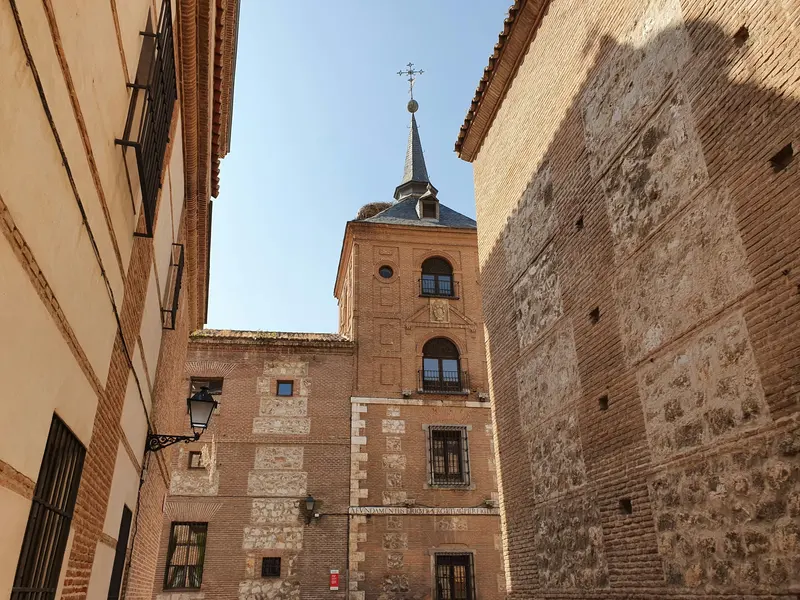
Start with Plaza de San Diego and the college. Continue through Plaza de Cervantes to the house museum on Calle Mayor. From the cathedral, walk to Plaza de Palacio, follow part of the wall and continue to the archaeological museum at Las Bernardas. Make time for the museum if archaeology is your priority, and keep the Corral for a show or a return visit. You can loop back through Plaza de los Santos Niños before picking up the route to the station.
Two days between the town and the Henares
Use the first day for the university quarter and the streets between the cathedral and the walls. On the second day, visit Complutum and choose how much time to give its forum, the traces of Roman domestic painting and the House of Hippolytus. Follow part of the Henares or pick a short climb in Los Cerros to finish the day outside. If you have timed visits, leave enough time to travel between them.
To see a quieter part of the university quarter, use Calle de los Colegios on the way back from the college. Leave a few minutes to walk through the streets behind the main square and see where the public space gives way to courtyards and college buildings. This also gives you an alternative route back into the centre on a busy afternoon.
Day trips
The capital is a straightforward choice for more Golden Age art and history. The Prado and the literary quarter complement the university and Cervantes house. In the other direction, Guadalajara province follows the Henares corridor. Its capital has the Palacio del Infantado and a historic centre you can explore on foot. Check the return journey before planning an additional visit.
San Lorenzo de El Escorial gives you a comparison between a university town and a royal site planned around a monastery. The two places are on different sides of the region. Set aside a different day for each if you want to go inside the main buildings.
Travelling with children
Try a short stop at Plaza de Cervantes followed by a walk under the arcades. In the house museum you can use the courtyard to work out how a home of the period was arranged. If you pair the archaeology museum with Complutum, pick something to spot in both places, such as a pattern of Roman streets or a section of mosaic. On a hot day, spend less time in the open parts of the site and leave another visit for indoors.
Build the order of your stops around the people you are travelling with. A theatre tour or the full university visit asks more sustained attention than a market square or the walk along Calle Mayor. Save one indoor visit for after an open-air stop so the day changes pace. With older children, give each person a different detail to look for on the college frontage or in the Roman remains.
Where to stay in Alcalá de Henares
Around Plaza de Cervantes and Calle Mayor you can walk home after a performance or spread the old town visits over different parts of the day. Some lanes are narrow, so check where a taxi or car can drop you. This is particularly useful with heavy luggage or if you want a step-free approach.
Accommodation by Paseo de la Estación is convenient for an early start by train or a late return from Madrid. If coming by car along the A-2, compare the ease of reaching the property with the time needed to get into the old town afterwards. A convenient address for the motorway can mean a longer journey to the plazas.
See places to stay in Alcalá de Henares (opens in a new tab)Affiliate link: if you book through it, we may earn a commission at no extra cost to you.