

 Español
 English

Why visit Vielha
If you’re deciding what to see in Vielha, make Sant Miquèu church your first landmark. Explore the Cap dera Vila old quarter, then walk down to the water and find where the Nere flows into the Garona. The confluence explains how the town sits at the foot of the slopes. It also makes it easier to get your bearings when the old lanes open onto the main roads.
Vielha is the chief town of the Val d’Aran, in the north of the province of Lleida in Catalonia. Use it as an introduction to the valley before deciding how far up the mountains you want to go. A morning of church and museum visits leaves the afternoon free for the riverside or a nearby village. Two or three nights give you a choice of days for the hills.
When to go
Late spring and the start of autumn suit a mix of valley walks and indoor visits. Low cloud may rule out a higher trail while leaving plenty to do by the river, in the church or in the museum. Look up the outlook for the height of your intended route as well as for the town itself.
In winter, Vielha works as a base for combining time in town with trips to the snow. Work out each journey around the road conditions and the activity you intend to do. In summer, do the longest part of an outdoor day in the morning and return to the old streets when you have finished walking.
Getting there and around
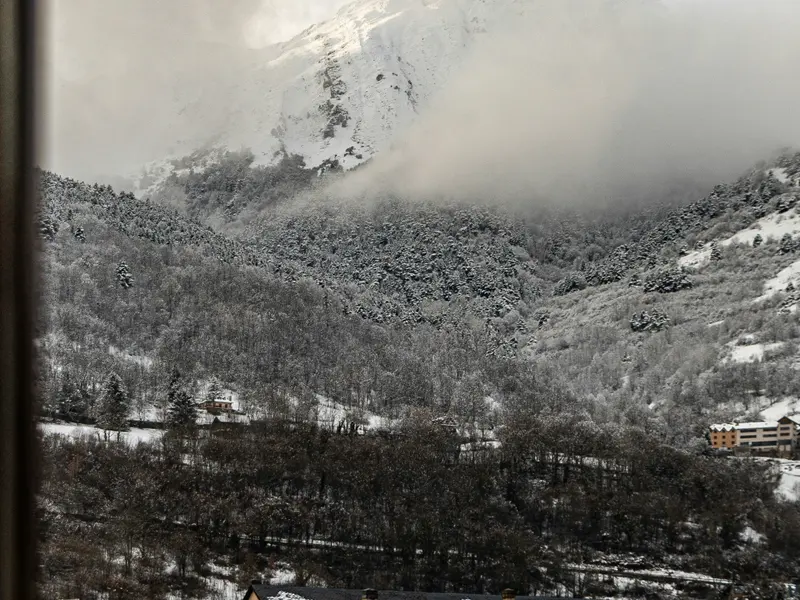
From the south, the N-230 runs through the Vielha tunnel and then descends into town. From France, the same road approaches along the Garona valley. The C-28 goes through Naut Aran and over the Port de la Bonaigua towards the Pallars. Check the condition of the pass before committing to a route across it.
If you are flying to Spain and travelling without a car, establish the last connection to Vielha before comparing arrival airports. Once you are in town, most of the central sights are within walking distance. For a day trip, check the return journey separately, especially when you want to end a walk in a different village. Keep the old quarter for an afternoon when most of the day is already taken up by travel.
What to see in Vielha
Sant Miquèu and the Cap dera Vila
Begin at Sant Miquèu. Look up at its tower from the square and take a closer look at the doorway before entering. Afterwards, turn into the narrower streets of the Cap dera Vila. Carrèr Major and the area around the Tor deth Generau Martinhon bring together stone houses and grander buildings that are worth taking in slowly.
The Nere and the Garona
Find the confluence and look along both rivers before choosing a direction. The Nere leads the eye towards the hills south of town. The Garona follows the valley floor. From the bridges you can look back at the buildings in relation to the river, then make a circuit by returning towards Sant Miquèu.
Monuments and heritage
Sant Miquèu holds the Christ of Mijaran, the surviving fragment of a Romanesque wooden figure. Its scale gives an idea of the effect the whole sculpture would have had inside a church. Look at the head and expression before moving on to the other works. The name points towards Mijaran and the sanctuary of Santa Maria, another place to visit.
The Tor deth Generau Martinhon is a seventeenth-century house on Carrèr Major. Before stepping into the museum, take a moment to see how the façade and the scale of the building fit into this narrow street. On the same walk, look for the house called Çò de Rodès and compare its position among the other façades.
Museums and culture
The Musèu dera Val d’Aran occupies the grand house in the Cap dera Vila. The displays introduce the valley’s history through art, objects used at work and things people kept in their homes. It is a good first stop if the rest of your trip will take you past pastures and smaller settlements whose history is easier to understand with this background.
Aranese, an Occitan variety spoken in the valley, appears in the names of streets and many of the places you will visit. Look for words such as carrèr, glèisa and musèu as you walk between signs. Saving the full place name makes it easier to recognise destinations when directions and maps use the local form.
Plaça d’Aran is home to the Conselh Generau d’Aran, the valley’s governing council, and a monument to Aranese language and culture. Include the square if you want to see what makes Vielha a capital. For a different strand of local history, look for the Fábrica dera Lan. The old mill’s position by the Nere helps explain the connection between water and the processing of wool.
Neighbourhoods and areas
The Cap dera Vila is handy for walking to the historic sights. Pas d’Arró is on the road through town. If you stay around that road, check the walk from your particular address to the old quarter and riverside. It is the route you are likely to repeat most often if your trip combines time in town with trips farther up the valley.
Casau is a separate village in the same municipality. Its position on a slope gives a different view of the valley floor. Staying there works if you want quiet surroundings and plan to visit central Vielha during the day. Check the climb back and the last stretch to your accommodation before choosing between it and a riverside base.
Nature and protected areas
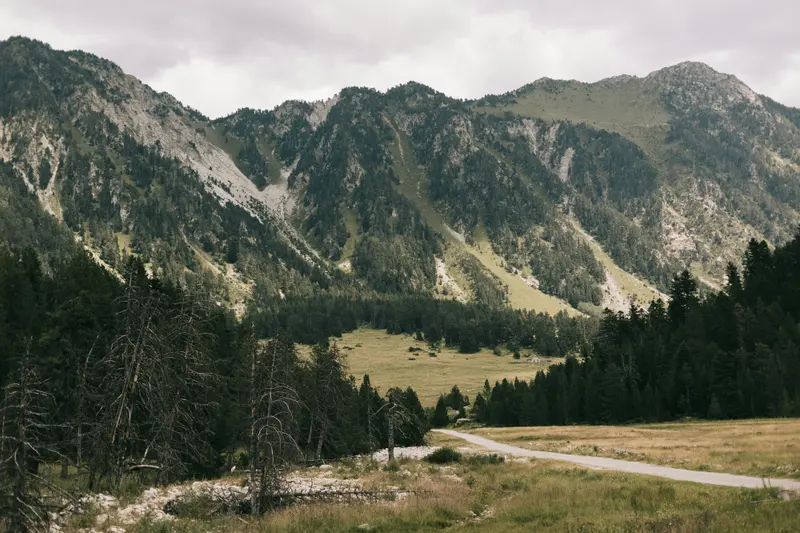
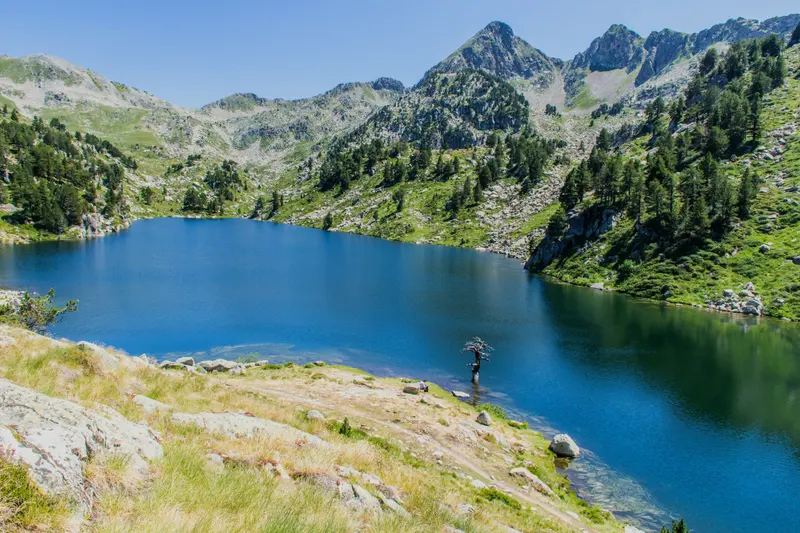
Bassa d’Oles and the Varicauba woods offer a change from Vielha’s riverside paths. The municipal route combines water and forest, so follow the circuit if you want more than a lap of the shore. After rain or snowfall, check how to reach the starting point and which paths suit the conditions.
The Camin Reiau links many of the villages in the valley. For a first outing, choose a stretch with an obvious start and finish. If you plan to walk one way, arrange your return in advance. An out-and-back walk gives you more freedom to pause in a village or turn round when the weather changes.
Festivals and traditions
The Catalan heritage inventory records 8 September as the fixed date for the Processon de Mijaran and the beginning of Vielha’s Hèsta Major. In 2026 it fell on a Tuesday. The procession goes from Sant Miquèu towards the sanctuary, linking the old centre with Mijaran. Check the programme for the year you are there to see how the route and other events are organised.
Routes and itineraries
A day in the town
Use the morning for Sant Miquèu, Carrèr Major and the museum. In the afternoon, go to the river confluence and choose whether to walk towards Mijaran or circle back across the bridges. If you have only a few hours, keep the sequence of church, lanes and riverside. Together they show how the town grew around the confluence.
Two days with walks at different heights
Choose the clearer day for Casau and Bassa d’Oles. If you want to set off from the town on foot, use the municipal walking information to choose your route and find the right start. Keep the other day for the historic quarter and a walk on the valley floor. The two days are easy to swap if mist settles on the slopes.
Day trips
In Naut Aran, Arties and Salardú make good stops for comparing village layouts and churches. Start with the village whose church you most want to see and allow enough time to walk through the streets around it. The road towards Beret suits a separate day in the mountains.
Head down the valley in the direction of France for Bossòst and Les. Pick one village for a riverside walk and combine it with a heritage stop. If you have only one day to explore the rest of the valley, choose one direction out of Vielha and give yourself plenty of time for the walk.
For another day of architecture, compare the church of Santa Maria in Arties with Sant Andrèu in Salardú. Give yourself time for some of the streets and the approach to each village as well as the church. Seeing the buildings in their setting makes it easier to appreciate the transition between the floor of the valley and the slopes.
Where to stay in Vielha
For a first short visit, central Vielha puts the church, museum and riverside within walking distance. A place near Pas d’Arró is convenient for leaving by road. Look at the approach to your accommodation if you are arriving with luggage or expect to be out in the evening on foot.
Casau offers a hillside stay within the same municipality. Think about the last leg of your outings and how you will get back each evening. If you intend to spend much of the trip on an activity towards Naut Aran, compare the daily journeys with those from a base closer to where the activity begins.
See places to stay in Vielha (opens in a new tab)Affiliate link: if you book through it, we may earn a commission at no extra cost to you.