

 Español
 English

Why visit Sitges
If you are deciding what to see in Sitges, start above the steps of Sant Bartomeu i Santa Tecla. Turn one way to see the curve of the town beaches and the promenade. Turn the other and the old streets lie behind the church, with white walls, balconies and gaps where you can glimpse the sea. Use a morning for those streets and a visit to Cau Ferrat. An overnight stay leaves time for a longer walk towards Terramar or the coast at Garraf.
Sitges is in the Garraf district, south of the city of Barcelona, in Barcelona province and on the coast of Catalonia. A beach break and a visit focused on the town’s art can follow much the same route. The former home of Santiago Rusiñol stands in the old quarter by the sea. Inside, the art collection and the view together show why the spot suited a painter interested in both the town and the world beyond it.
When to go
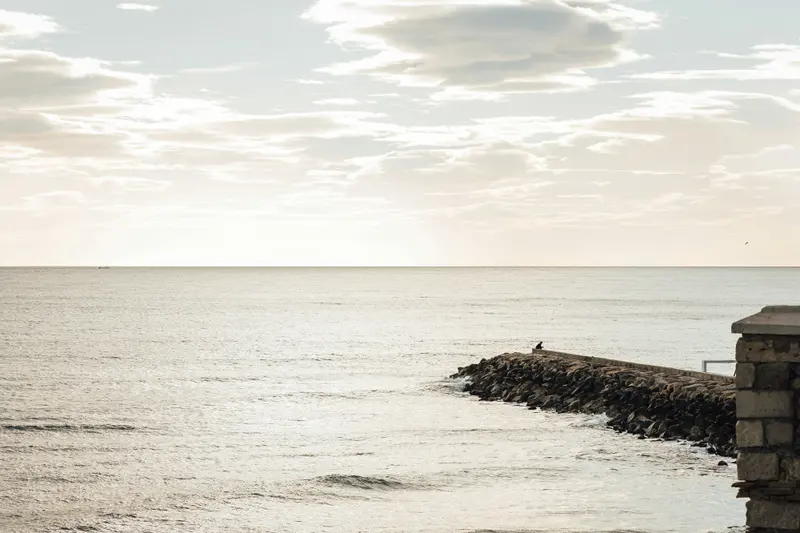
Spring and early autumn work well for a mix of museums, walks and time on the beaches. For photographs of the older streets, an overnight stay lets you go back to the Baluard early. In winter, use the brighter part of the day for the waterfront. If the wind picks up, turn behind the church into the old quarter, where the lanes are more sheltered.
In summer, fit a visit indoors around the time you want to spend by the water. The longest walk can wait until later in the afternoon. During a major festival the route through town can feel completely different. Check whether the event falls during your stay, especially if you want time to see the buildings and collections around the church.
Getting there and around
In 2026, Sitges tourism listed the R2 Sud Rodalies service for journeys from Barcelona and Vilanova i la Geltrú. From the airport, check the connection on your date. The airport and Sitges are on different rail services, with a change possible at El Prat de Llobregat. Check your flight terminal and service alerts as well as the route on a map.
From Sitges station, head downhill towards Cap de la Vila and the sea. The main promenade makes the walk west easy to follow. If you are heading towards Aiguadolç, the shape of the headland makes the path less direct. Allow time to go around the little bays. Close to the church there are steps and slopes between the upper streets and the waterfront, so choose the easiest approach if you have luggage or a pushchair.
What to see in Sitges
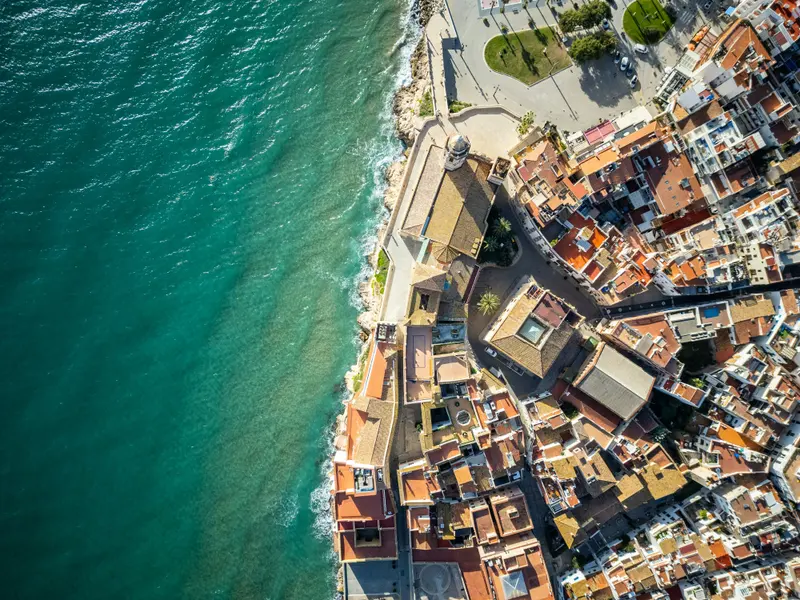
What to see between the Baluard and Racó de la Calma
The Baluard is the open space beside the waterfront church. Look back over the succession of town beaches, then turn into the streets behind it for Racó de la Calma, Maricel and Cau Ferrat. Take the short walk before you enter one of the museums. The bridges above the street and the glimpses of the Mediterranean make it easier to understand how the buildings fit together.
Sant Sebastià and Cap de la Vila
Round the headland to Sant Sebastià to see the church and the houses from another angle. Go back through the streets behind the seafront to Cap de la Vila, a meeting point for the routes towards the sea and the railway station. It makes a useful circuit when you have little time. You see the approaches to the church, a beach and the centre of town without retracing your steps.
Monuments and heritage

The position of Sant Bartomeu i Santa Tecla gives the seafront its shape. Walk up to the church from the Ribera, then use the narrow old streets behind it to reach Sant Sebastià. Look back from one of the beaches to see how the towers mark the headland. The church is as useful a point of reference on a walk as it is a building to see up close.
American collector Charles Deering and the artist Miquel Utrillo were behind the creation of the Maricel complex. The palace and the Museu de Maricel are different visits. Pick the palace if you are interested in how the rooms and galleries fit together. The museum makes sense if you want time with the artworks and to look at the sea from inside the building. Compare the scale of the whitewashed houses in the old quarter with the larger residences as you reach the western seafront.
Museums and culture
Cau Ferrat and Museu de Maricel
Cau Ferrat was the home and workshop of Santiago Rusiñol. Look at the wrought iron that gave it its name as well as the paintings and ceramics he brought together. The arrangement of objects tells you something about how he wanted the place to feel. The El Greco paintings in the collection are a good starting point if you want to follow Rusiñol’s interests across different periods of art.
At Museu de Maricel, allow time to take in the rooms and the view over the rocks between works. The building offers a different relationship with the sea from the one you get on the public promenade below. The Fundació Stämpfli is a nearby choice for more recent art. See what is showing at each venue before deciding whether you want one main visit or a morning across several spaces.
Neighbourhoods and areas

Old town and Cap de la Vila. The streets between the church and the commercial centre work well for a day of museums with time left for the beach. Branch off near the town hall and return through the quieter lanes. The scale here is much smaller than it is further west along the promenade.
Sant Sebastià and Aiguadolç. On the eastern side of the old quarter, the short Sant Sebastià waterfront leads towards Balmins and the marina at Aiguadolç. The small bays divide the walk into stages. Allow enough time to look back towards the church rather than treating the marina as the only goal.
Vinyet and Terramar. Across town, the western promenade gives you room for a longer walk with a choice of beaches along the way. The Terramar gardens take you inland and offer shade after an outing along the sand. This is an easy area to explore when your group wants to spend less time in the busy old streets.
Beaches in Sitges
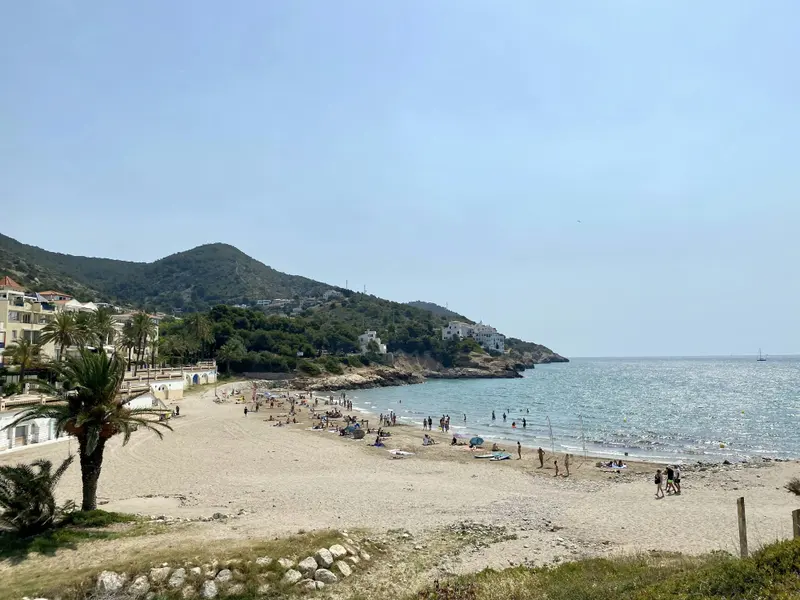
La Ribera, La Fragata and Sant Sebastià
La Fragata lies below the church. Next to it, La Ribera is a convenient stop if you want to spend some of the day in the old town. Sant Sebastià sits on the other side of the church with a different view of the headland. If you are visiting by train, you can see these central choices on foot and decide where to stop after looking at the sea.
Balmins, Aiguadolç and La Barra
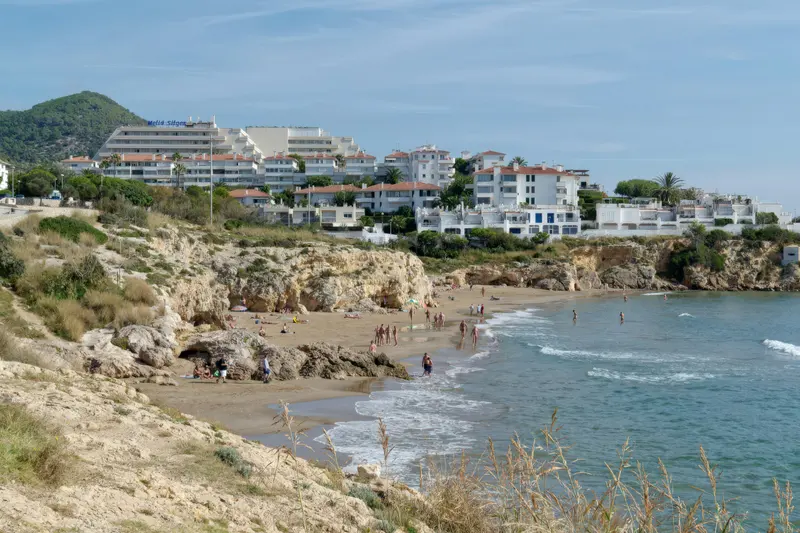
Balmins is between Sant Sebastià and Aiguadolç. The beach has a naturist tradition and is shared by swimmers with and without swimwear. Continue to Aiguadolç beach to stay close to the marina. In the other direction, La Barra is a good destination if you want a walk west of the centre before spending time on the sand. With children, base your choice on the way down to the beach and the water conditions that day.
Festivals and traditions
At Corpus Christi 2026, local groups made floral carpets in the streets of the old town. The main day for the carpets, announced by the tourism office, was Sunday 7 June 2026. Patterns are laid on the pavement, so the route itself matters if you want to see several designs. Check the streets involved in the edition you plan to attend and when the finished carpets will be visible.
Carnival, the Festa Major de Sant Bartomeu and the Sitges International Fantastic Film Festival of Catalonia are different reasons to stay overnight. Carnival brings processions to the streets, the Festa Major uses traditional figures and dances, and the film festival divides its programme across venues. Find the route or screenings that interest you before deciding which part of town to use as your base.
Routes and itineraries
One day. Walk down from the station through Cap de la Vila and start with the Baluard. Use the morning for Cau Ferrat, the surrounding lanes and Sant Sebastià. After lunch, choose between the long promenade to the west and the bays leading east to the marina. You will have time to linger if the afternoon has one direction.
A weekend. Start the second day with the Museu de Maricel, then follow the Ribera and the promenade west to Terramar. If you would rather see a different beach and village, swap Terramar for Garraf. Back in Sitges, finish with the view from the opposite side of the church from the one you visited on the first morning.
Day trips
Vilanova i la Geltrú. Put the railway museum at the centre of a visit if you are travelling with children who like trains or want to see what the railway meant for the coast. After the exhibits, walk towards the seafront and return through part of the older town if you still have time.
Garraf and the hills. The village of Garraf is part of the same municipality but lies beyond the hills from the main town. Look for the old beach huts along the sand. If your plan is a walk in Parc del Garraf, find the exact trailhead first. The exposed limestone country has less shade than an outing through the town.
Where to stay in Sitges
Old town and station. If you plan to go between galleries, beaches and trains, look at addresses between the commercial centre and the seafront. Check the route from the station to the door if you will arrive with heavy luggage.
Sant Sebastià, Aiguadolç or Terramar. Sant Sebastià has a short waterfront and an easy walk back to the church. Aiguadolç suits a stay near the marina on the eastern side. Choose Terramar for a longer stretch of promenade and a change of pace near the gardens. Compare the station walks if you will be making day trips.
See places to stay in Sitges (opens in a new tab)Affiliate link: if you book through it, we may earn a commission at no extra cost to you.