

 Español
 English

Why visit Monistrol de Montserrat
To decide what to see in Monistrol de Montserrat, split your visit between the old town by the Llobregat and Montserrat Abbey. The town is built beside a river crossing, close to where pilgrims began the climb. The abbey sits on a ledge below high rock walls, with a basilica, a museum and walking paths. Even if the sanctuary is the reason for your trip, leave time for the bridge and Font Gran square. They show how the village fitted between the river and the mountain.
Monistrol is in the Bages district of Barcelona province in inland Catalonia. It makes a day trip from the city of Barcelona. Staying a night in the valley makes it easier to see the old streets and leave a whole morning for the mountain trails.
When to go
Spring and autumn are often comfortable for walking near the river as well as around the monastery. Conditions at the two heights can differ. A clear morning in the village can coincide with cloud or wind by the abbey. Have a second option if your main reason for going up is the view. The village streets and the museum make a better choice than an exposed ridge when visibility is poor.
In summer, consider doing the steepest part of your walk early. Build in time to stop before the return, especially on a route with little shade. In winter, use the daylight for views and check the condition of paths before heading away from the abbey. If cloud closes in, focus on the paved areas and the buildings.
Getting there and around
In 2026, FGC passengers from Plaça d’Espanya could change to the rack railway at Monistrol de Montserrat, also called Monistrol Enllaç. The rack railway then stops at Monistrol Vila before climbing to the monastery. Monistrol Vila is the station to look for if driving to the village and going up by train. If you are visiting the old streets as well, check the walking route between the town and the station you plan to use.
The FGC stop labelled Aeri de Montserrat serves the cable car, a separate route up the mountain. Choose your interchange before travelling. For a drive right up to the monastery, check parking and road access for the date. Once you are in the village, it is easiest to see the river crossing, squares and streets around Sant Pere on foot.
What to see in Monistrol de Montserrat
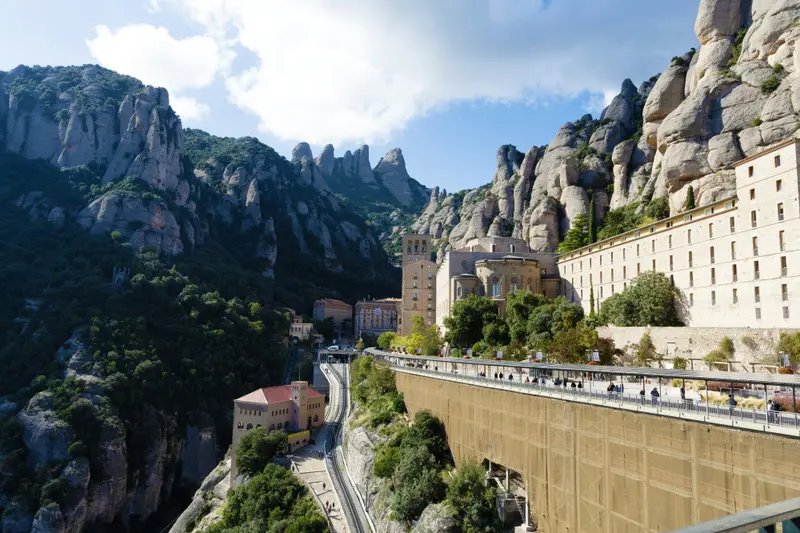
What to see beside the Llobregat
Cross the bridge over the Llobregat and look back at the houses below the rocky slopes. Walk towards Sant Pere church and the Font Gran, where water from the mountain emerges in a square. That short walk gives you a sense of the way the village was shaped by the crossing and the climb. If you have more time, follow the higher lanes behind the centre and come down by a different route to the river.
The abbey and basilica
Start in the squares of Santa Maria de Montserrat and look for the entrance to the basilica. Move between the station side and the rocks behind the buildings to see the site from different angles. The basilica houses the statue of Our Lady of Montserrat, known as La Moreneta. If seeing the statue matters to you, check the arrangements for access. For a shorter visit, leave time to look at the setting of the monastery from outside as well as going inside the church.
Monuments and heritage
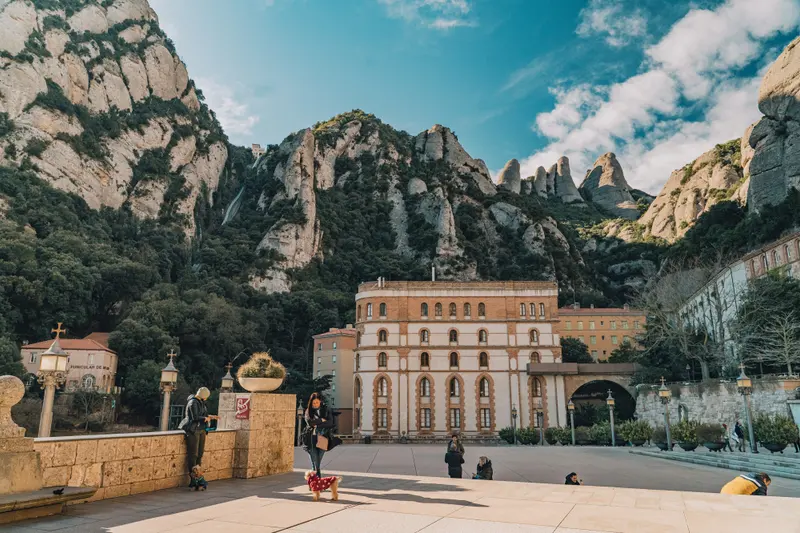
The village developed on a route used by pilgrims and had a close relationship with the monastery. The bridge shows where that route met the river valley. Walk up from it to see how the streets occupy the ground that lies above the water, then use Sant Pere church as a landmark on the way back.
The Benedictine abbey was founded in the eleventh century. The buildings were damaged during the Peninsular War and rebuilt over a long period. The squares and the buildings around them reflect changes made for different purposes over time. Behind the grounds, the path to Santa Cova takes you to the chapel associated with the traditional discovery of the statue. The walk offers different views from those you get in the squares above.
Museums and culture
The Montserrat Museum contains paintings, sculpture and archaeological collections. If you are seeing the basilica on the same morning, choose one part of the museum in advance. You could concentrate on Catalan modern painting or on archaeology from the Near East. This gives you enough time for the exhibits and leaves the rest of the day open for a walk or a visit to the village.
Montserrat’s open-air museum takes you to artworks around the monastery grounds. On the way towards Santa Cova, look at how the monuments of the Rosary are positioned along the path and at the changes in the view between them. The Escolania boys’ choir is part of the life of the abbey. Look at its programme for your dates if you hope to hear it.
Neighbourhoods and areas
Old town and Font Gran. The streets around Sant Pere and Font Gran square make the best starting point for a walk through the village. The land rises quickly behind the square. If you have a pushchair or are carrying bags, check how the lanes connect before aiming for a distant street.
The river and Monistrol Vila. The bridge gives you a way to see how the village, the railway and the rising ground around the mountain fit together. Monistrol Vila, the rack railway stop, is useful if arriving by road. Compare the location of the station with the part of the village you want to visit before choosing your return train.
The monastery complex. The station, basilica and museum all open onto the group of squares at the top. They can fit into a short visit because they start at a similar height. Save a longer block of time for the paths, which can climb or drop away from the paved part of the site quite quickly.
Nature and protected areas
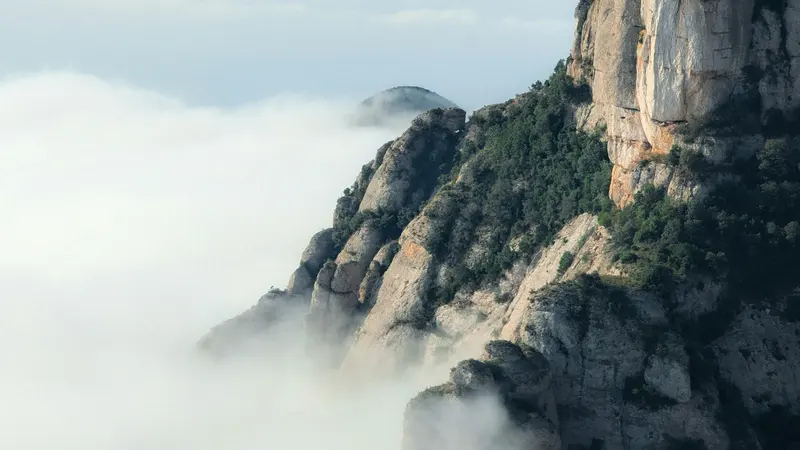
The Montserrat Mountain Natural Park stretches across several municipalities. The rounded pinnacles and conglomerate rock faces are visible from the monastery and change shape as you move along the trails. The Creu de Sant Miquel is a useful destination for a walk beginning at the abbey. Check path conditions before you set out, and remember that extending the walk may add climbing on the return.
The route to Santa Cova descends along the hillside. The Sant Joan funicular climbs to a higher area with trails of its own. Compare the return journey as well as the distance on the map before deciding which to take. A short-looking link between two paths can add a lot of effort where the terrain changes height.
Festivals and traditions
The Fira de Romeus took place on 31 January and 1 February 2026. The programme used scenes in the old streets to tell the story of sixteenth-century village life, the plague and the ties to the abbey. It makes an interesting focus for a visit to the lower town, where some of the settings can also be seen outside festival time.
The Festes dels Carrers de Dalt ran from 26 September to 2 October in 2026 in the upper part of the village around Sant Pere. Look for the dates and the location of individual events in the programme for the year you travel.
Routes and itineraries
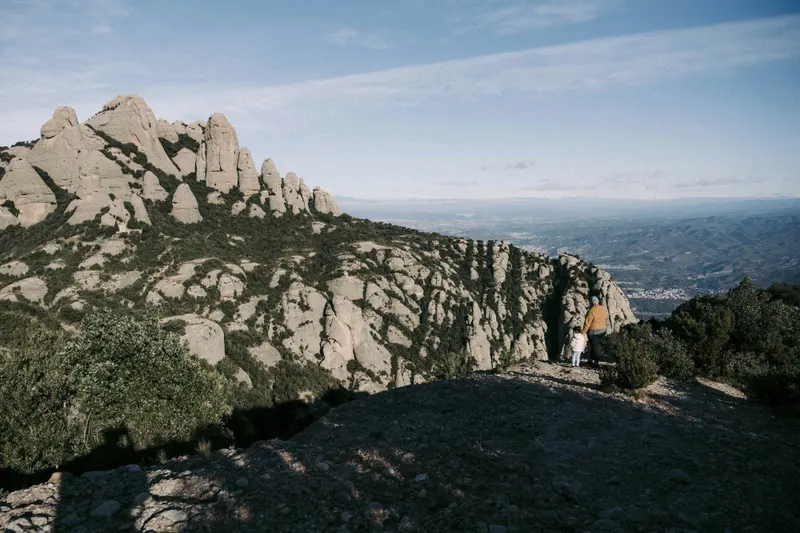
One day. Go up to the monastery in the morning and start with the basilica. Pick the museum or a short walk afterwards according to the conditions. Back in the valley, walk between the bridge and Font Gran by way of Sant Pere. Check where you need to go for the return train while you are still near the station.
Two days. Explore the village and the abbey on the first day and give the second to one area of the mountain, such as Sant Miquel or the paths near Sant Joan. Leave enough time to stop along the way and to return without rushing downhill to catch a train.
Day trips
Manresa. The Seu and the Cova de Sant Ignasi make an outing centred on two very different buildings above the Cardener valley. Start at the Seu and walk through part of the old town before heading to the cave and sanctuary. Check your return journey before leaving if you plan to sleep in Monistrol again.
Cardona. The castle and the salt mountain tell related parts of the town’s history. Plan around whichever of the two sites requires a timed visit for your date, and use the time in between for the streets of the old town. This is particularly easy to organise if you are continuing through Bages by car.
Where to stay in Monistrol de Montserrat
In the old town of Monistrol. Stay near the river if you want to see the lower streets and make separate trips up to the sanctuary. Check the walk between your door and the railway station you need, especially if you will have luggage.
At the abbey or elsewhere in Bages. A room at the top puts the trails and the basilica within walking distance. A base in the valley works well if you want to spend time in Manresa or Cardona. Decide whether your first priority each morning will be a walk starting at the abbey or a trip by road.
See places to stay in Monistrol de Montserrat (opens in a new tab)Affiliate link: if you book through it, we may earn a commission at no extra cost to you.