Español
 English

Why visit Burgos province
When choosing things to do in Burgos province, divide the map into four areas: the city and Atapuerca, Las Merindades in the north, the Arlanza and Duero valleys, and the higher ground of the Sierra de la Demanda. The guide to Castile and León puts Burgos in the context of a longer trip. Once here, pick a single area to explore each day. A glance at the straight-line distance from a gorge on the Ebro to a village in the Duero valley tells you little about the drive.
Burgos city gives you a way into two stories. The collections at the Museum of Human Evolution explain what was discovered in the ground at Atapuerca. The city gates, the cathedral and the approaches along the Arlanzón show how a town developed on the Camino Francés. A night in the centre lets you look at the city in two separate walks and start for Atapuerca with a clearer idea of what you want to learn.
In Las Merindades, a cave, a waterfall or a stretch of river typically has its own approach. An Arlanza day can be shaped around a cloister and two small towns. In the Ribera del Duero, one winery and a long lunch leave time for a walk through the vines or the old streets. For glacial lakes and forest, sleep in the mountains and keep enough of the itinerary open to choose an outing based on visibility.
When to go
In spring, running water makes the side valleys and the spring at Orbaneja del Castillo particularly interesting. Allow a day you can move around if you plan to follow a path down to the river. After heavy rain, take a higher route or go to a town or museum. May and June also give you long enough evenings to walk the old streets in the morning and take the quieter roads back with a stop along the way.
An early start is useful for summer mountain walks, with a shorter option in case of thunderstorms. In Aranda de Duero and the lower lands, arrange open-air stops around an indoor visit or lunch. In the city, the Arlanzón river walk works well as an evening outing after a long time inside the cathedral or museum. Bring a warm layer if you are pairing a cave with a walk in the open. In summer one can be much cooler than the other.
September and October are good for two bases if you want to visit both Duero vineyards and woods in the Demanda. During the grape harvest, ask what the tour covers and how long it takes. The cellar will be working around its own schedule. In winter, build days around indoor visits and shorter walks. Check separately for ice, snow and fog before going to a lake or crossing a pass. Weather in the valley gives little indication of what you will find at the start of a high trail.
Getting there and around
By rail to the city and by car to the valleys
In 2026, Renfe listed trains between Madrid and Burgos Rosa Manzano. The Burgos station lies outside the historic centre, so include the transfer in your plans. If you are flying into Madrid, confirm the departure station for the exact train you are booking and leave time to get there from your terminal. A relaxed connection is worth more than a nominally faster itinerary if the flight and train are on separate tickets.
Spend time on foot in the city and collect a hire car when you leave for the countryside. For Atapuerca, check the arrangements with the Museum of Human Evolution before booking transport. Its visit information consulted in 2026 distinguishes the archaeological sites, experimental archaeology centre and museum. Each is a different place. Keep the meeting point from the booking confirmation and use that address, rather than putting Atapuerca into your satnav and relying on the default result.
Where to start a driving itinerary
For the Arlanza valley and the Ribera, choose between a start near Lerma and one near Aranda depending on where you want to end the day. In Las Merindades, enter by the valley you plan to explore. This saves driving across the district twice. Arriving from Cantabria, you might start near the upper Ebro. If coming from Álava, Pancorbo or the eastern end of Las Merindades makes sense for a journey west.
On public transport, distinguish the ride between towns from the final leg to a cave, a winery or a trail. Think about the return when you book a room away from the village centre. If you are driving, save the exact name of the parking area or signed entrance before leaving. It is easy to approach from the opposite bank in a gorge and discover there is no crossing where the shortest line on the map would put one.
What to see in Burgos province
The capital and Atapuerca
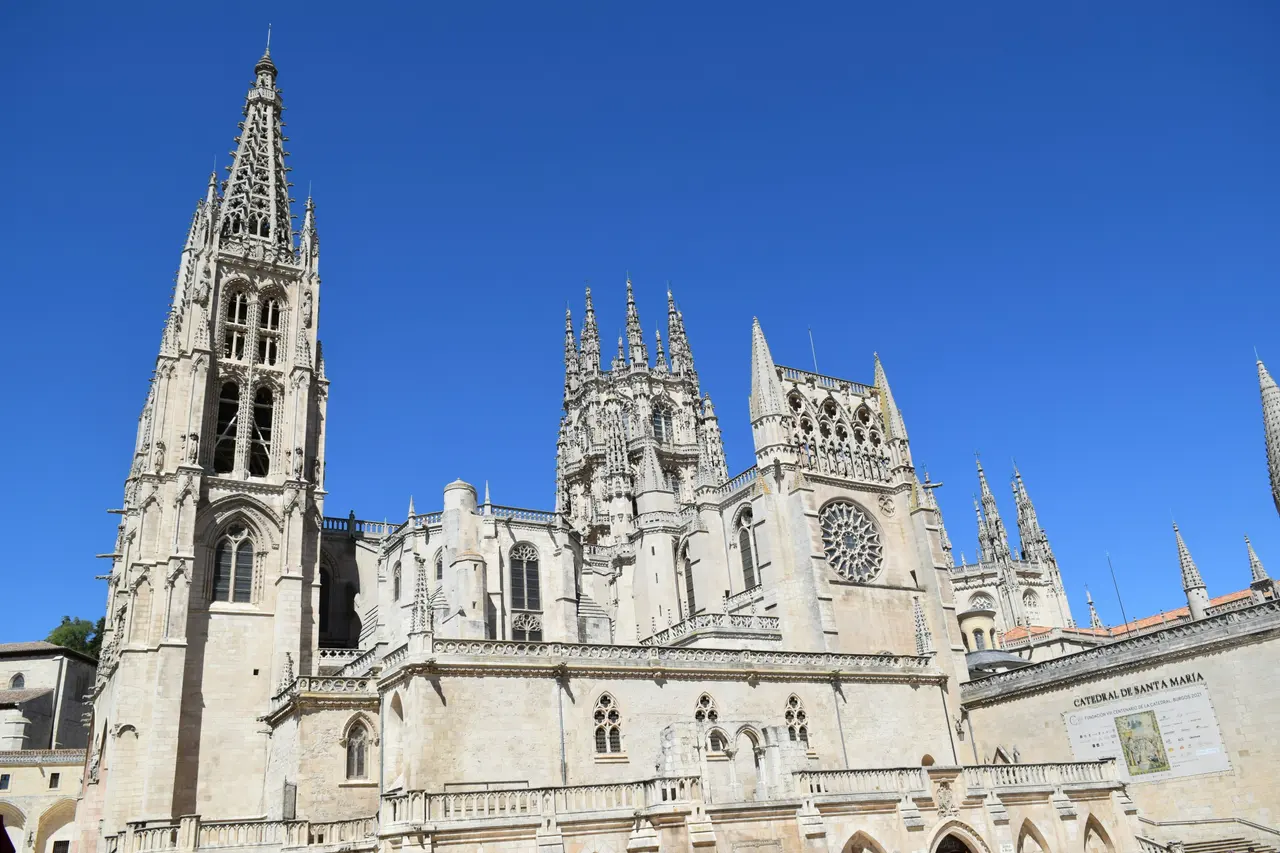
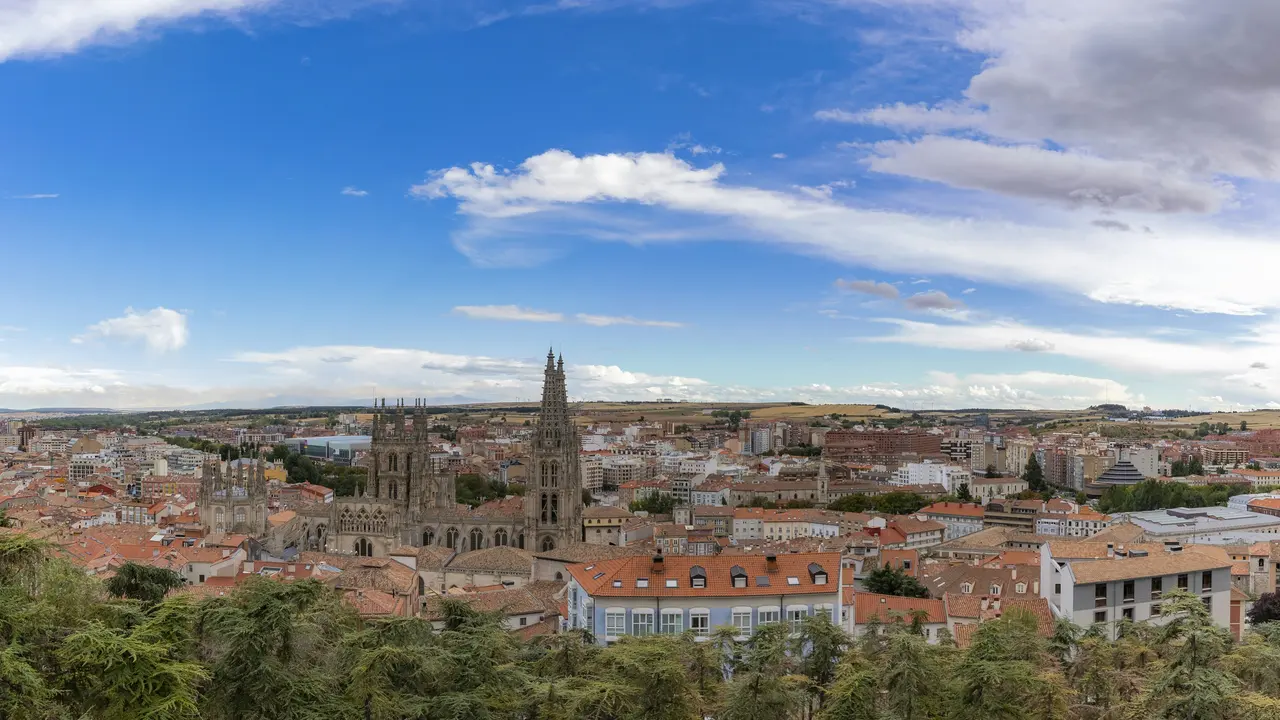
Start in the plaza del Rey San Fernando and walk round the cathedral to see how it sits against the hillside. Then go down through the Arco de Santa María and across the Arlanzón. The Museum of Human Evolution is on the other bank. This compact walk gives you medieval architecture, river views and archaeology in one day on foot. Leave the royal monastery of Las Huelgas for a separate outing if you are spending time inside both buildings.
In the Sierra de Atapuerca, a former railway cutting made layers of archaeological deposits visible. A visit to the excavation area helps you relate the layers to what has been found in them. The experimental archaeology centre gives a different perspective, showing how materials and working methods can be used to test ideas about how early people lived. The city museum presents finds and reconstructions. For an unhurried trip, allow separate time for these three parts of the story.
The Arlanza and Ribera del Duero
Start Lerma in the ducal square and look out over the slope to the river. The terrace shows why the old palace and the surrounding town occupy such a conspicuous position. In Covarrubias, walk through the half-timbered streets and use the bridge for a view of how the town fits the valley. At Santo Domingo de Silos, pair the cloister or another interior with a walk out into the village. To visit all three, keep a single timed stop in the morning and give yourself freedom with the rest.
In Aranda de Duero, look at the carved doorway of Santa María and then choose a visit that explains Aranda’s network of underground cellars and its use for wine. Nearby Gumiel de Izán and Peñaranda de Duero give the day another townscape as well as views over vines. Roa is further west and works well with wineries in its own part of the valley. Ribera del Duero is the name of a wine designation across provincial boundaries. It helps to limit the day to stops near each other, even when they share the same regional label.
Villages and river gorges in the north
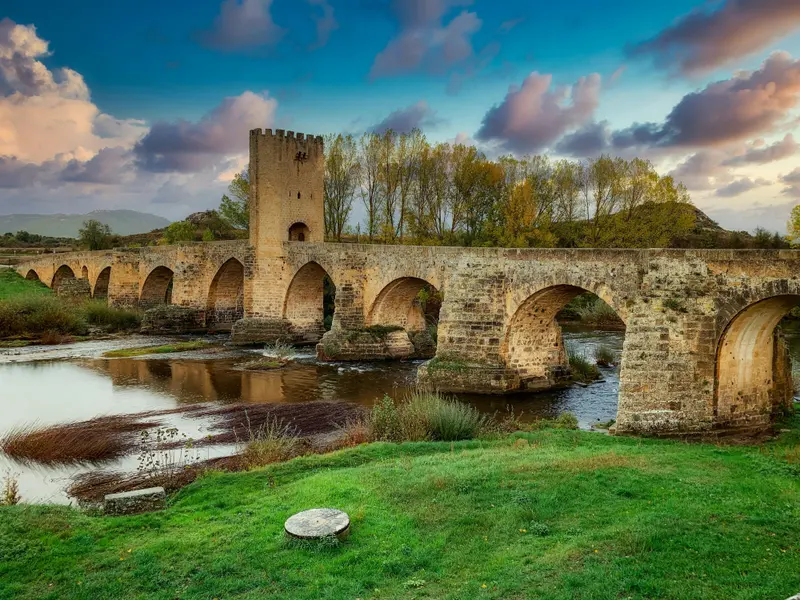
In Frías, see the castle above the houses and the bridge over the Ebro from lower down. The two perspectives explain how this small town commands both valley and crossing. Add Tobera for a walk beside water or Oña for the monastery. If you are spending a long time inside a monument or walking far enough to descend into the valley, two of those stops will fill the day.
Further west, use Orbaneja del Castillo or Pesquera de Ebro as your focal point. Water runs through the streets and over rock in Orbaneja before heading down to the Ebro. Pesquera makes sense when you want the broader setting of the gorge along with the old village. Keep a short stop for a view of the beds of rock and the shape of an entire bend in the river. What you see changes considerably between the roadside above and a path beside the water.
Monuments and heritage
The cathedral, the charterhouse and the abbeys
Go beyond the outline of the towers at Burgos Cathedral. Differences in scale and ornament become clearer when you compare a few of the chapels or see the building from two sides. UNESCO lists the cathedral as a World Heritage site. On the edge of town, the Cartuja de Miraflores offers funerary sculpture and the altarpiece associated with Gil de Siloé. At Las Huelgas, the focus is on an abbey shaped by royal patronage. Either is a useful second visit if the cathedral has occupied much of your morning.
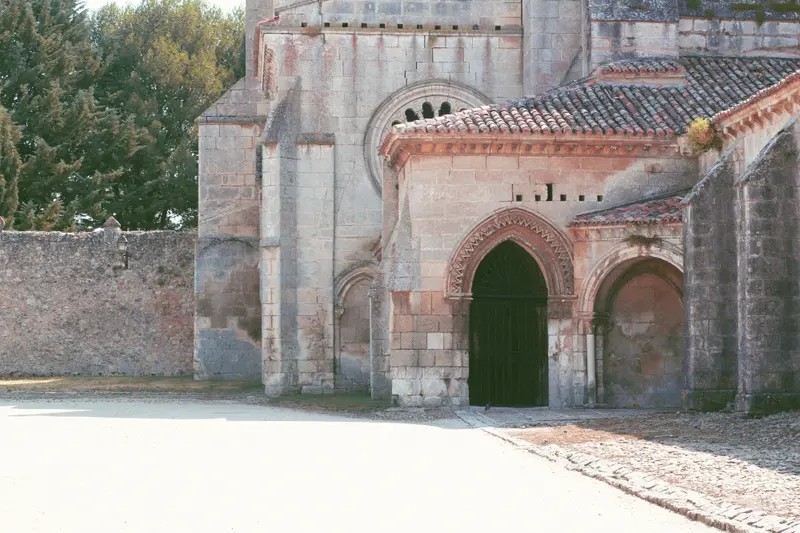
In the cloister at Silos, look for figures and leaves on the capitals, then spend time at the larger corner reliefs. Take a moment to see how they sit within the covered walk and how the sequence changes as you turn a corner. At Quintanilla de las Viñas, the interest is concentrated in a much smaller building and details in its carved stone. Check arrangements with the site you want to see before making a diversion, especially when your trip depends on getting inside a small rural monument.
Towns set up for passage
The Camino Francés comes into Burgos province from the east, passes through the city and carries on across the plateau. Belorado, San Juan de Ortega and Castrojeriz show how differently places along the route are arranged. In Castrojeriz, walk the long street of the settlement and look up towards the castle. For a single stage, choose the finish by how you will get back. To get a feel for one short section, follow the street out of town on the pilgrim way and turn back once the buildings give way to fields.
Museums and culture
At the Museum of Human Evolution, give yourself a single idea to follow rather than covering every case. Look at where finds from Atapuerca came from, what can be learnt from a fragment and where the exhibit gives an interpretation. With a group, leave time to talk about it before transferring to another site. This is a good centrepiece on days when heat or rain makes an outdoor visit less appealing.
In Ribera del Duero wine country, a guided visit to historic cellars puts the vents at street level in context. It also shows how one network can join spaces built and used at different dates. Ask how much of a cellar tour is underground if that is what you want to see. If your focus is the modern wine, look for a visit that describes the work in the vineyard as well as in the cellar. Two very different experiences can be advertised as winery visits.
Charming villages
Towards the northern passes
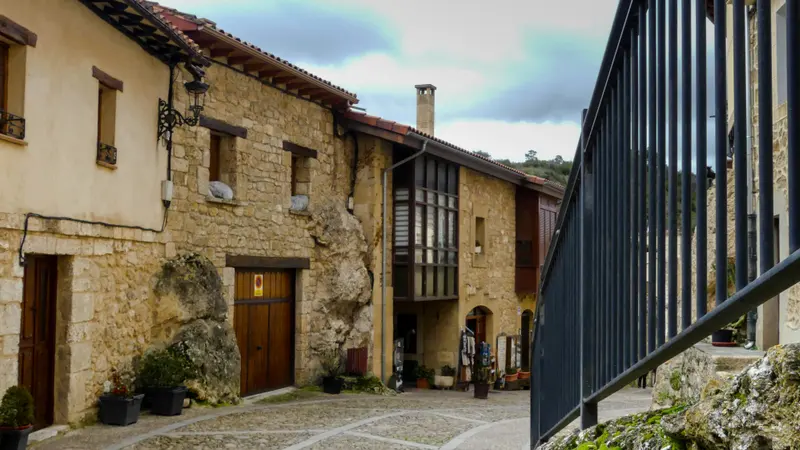
In Espinosa de los Monteros, walk through the centre before driving towards the passes. Look at the stone houses and coats of arms before moving between very different elevations. Medina de Pomar has a bigger centre, with the towers of the Alcázar de los Condestables visible above nearby streets. If they are on the same day, put the mountain outing first whenever the early forecast offers the better visibility.
At Puentedey, the River Nela passes beneath a natural rock arch, very close to the village. See the opening from lower ground and spend some time in the streets to understand the position of the houses. Combine it with Ojo Guareña if the underlying limestone is what interests you and you have confirmed the cave arrangements. Leave the village walk flexible around a timed tour.
On the plateau and in the forests
Quintanar de la Sierra is a useful starting point for the pine woods and glacial lakes. Travelling from Salas de los Infantes, decide whether you are heading for a site in the district or continuing to a longer mountain walk. Hacinas is a shorter stop where you can look at fossil trees near the village. In Sasamón, further west, the large church of Santa María la Real makes a strong contrast with the plain around it. If your route goes towards the Canal de Castilla, consider a short walk by the water in the Melgar de Fernamental area.
Nature and protected areas
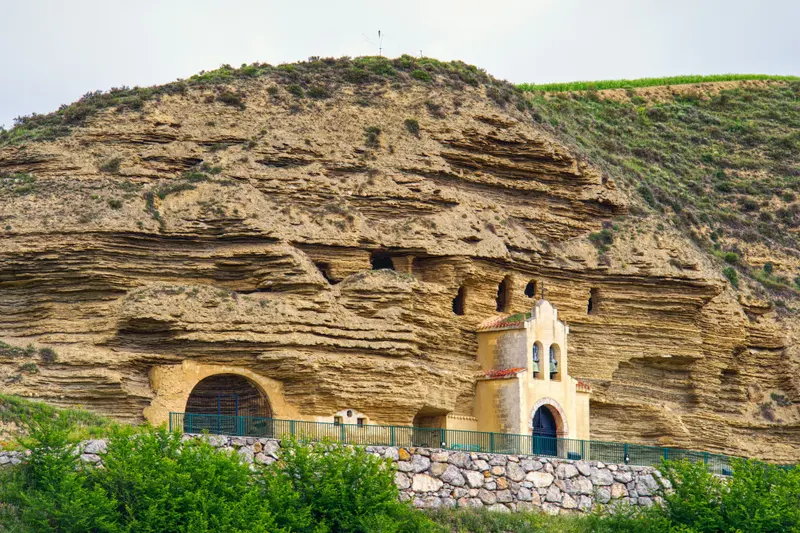
In the upper Ebro and Rudrón gorges, distinguish riverside paths from routes on the cliffs above. They take different roads to reach and have different conditions. A lookout from a safe path can show the whole river bend. A longer route may combine slopes in full sun with narrow or slippery ground, and some require returning by the same track. Take water and binoculars, and use the distance from the start and back as part of the choice of route.
Ojo Guareña is a name for an extensive limestone cave system and its surroundings. An underground tour of the Cave-Chapel of San Bernabé and walks in other parts of the landscape make separate outings. Check the visit you are actually booking. The entrance and the chapel against the rock give the trip an architectural element. Staying outside also gives you time to go into the Sotoscueva valley without planning around a long underground visit.
At Neila, glacial basins sit above woodland at different elevations. Check access and the forecast for the high ground before setting off. Pick a viewpoint as an outing in its own right if daylight or mixed experience limits the group. On a longer walk, count the time to reach the trailhead as well as the ascent and the return. Leave an open slot afterwards so you can turn round or spend more time there without rushing to a fixed admission.
Festivals and traditions
The official 2026 Holy Week programme ran from 27 March to 5 April across the region, with Burgos city and towns in the province among its entries. For a later year, choose where you want to watch and look up that edition’s local programme. In the capital, stay near a walkable route back after dark. In a village, leave space for the time it takes to walk to a parking area or get out after an event.
The Curpillos celebration in Burgos is associated with the monastery of Las Huelgas and its neighbourhood. In Frías, the Fiesta del Capitán evokes the history of the town and its castle. The wine harvest is another chance to see a local tradition in action. Check for activities announced for the dates you plan to travel. What is happening in a vineyard depends on when each grower picks.
What to eat
Burgos morcilla is a black pudding made with rice, served in portions or as part of a dish. For a more substantial lunch, look for olla podrida, a bean and meat stew. Allow time to sit down for it. In small places, ask what is being cooked that day if you have come for a particular dish. If you usually eat early, check when the kitchen serves a full lunch, especially before a drive with few villages along it.
Near Aranda de Duero, build a day around lechazo, roast suckling lamb. Ask about portions when booking, since the roast may be served for sharing. For a simpler meal on the road, look for torta de Aranda, the local bread. At a Ribera del Duero tasting, ask where the vineyard lies and compare the way the guide describes the plots with the land you have seen from the road.
Wines labelled D.O. Arlanza are a good pairing with an outing through Lerma or Covarrubias. In the mountain districts, a stew or a local mushroom dish in season can make a full lunch after walking. Work out who is driving before a tasting or find a room within walking distance of dinner. For a quieter rural drive, buy drinking water and food before a stretch with few shops and make the lunch stop as long as you wish.
Sport and outdoor activities
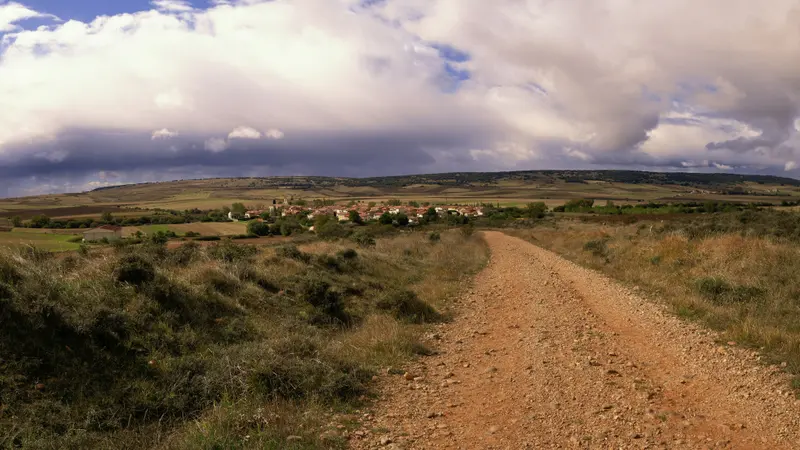
The Sierra de la Demanda greenway follows a former mining railway. Arlanzón is a place to start an out-and-back ride without arranging a pickup at the other end. Read the description of the surface and route before choosing how far to go. Bring a bike light where you expect shade or low visibility. On a hot day, agree on a turnaround point while the group still has enough water for the return.
For walking, pair a lower route through a valley or wood with a day on higher ground at Neila. The latter calls for extra attention to the forecast and the chance of losing visibility. The Montes Obarenes and the gorge at Pancorbo work as a short outing if you want to see the relationship between the rocks and the historic pass. To walk further, read the official description of the terrain and gradients before choosing distance alone.
Routes and itineraries
A weekend in the city and at Atapuerca
On day one, see the cathedral, the Arco de Santa María and the river. Give the museum the afternoon if your group wants a second substantial visit. The next morning, book one of the options at Atapuerca and leave time to get back. Add Las Huelgas if you know when you can go in, or keep a short second walk through the centre as a flexible finish. A single Atapuerca visit on a short stay leaves room for both city and countryside.
Three days from the Arlanza to the Duero
Begin in Lerma and spend the night in the Arlanza district. Pair Covarrubias and Santo Domingo de Silos on day two and continue to Aranda after exploring the villages. Keep the third day for the centre of Aranda, a winery and a long lunch, adjusting their order to your onward journey. If you choose a winery outside Aranda, look for one in the direction you plan to leave. In autumn, it helps to keep an outdoor walk flexible and let light and visibility decide its time.
Four days in Las Merindades and the upper Ebro
Pair Frías with Tobera on one day, and choose Oña or Montes Obarenes for the next. Change sector for Puentedey and Ojo Guareña. On the last day, choose between Orbaneja and Pesquera depending on how much you want to walk. If you are staying in one town, check the return drive from the furthest stop. If you move accommodation, use the transfer for one stop near your route and arrive in time to get settled before dinner.
Where to stay in Burgos province
Burgos city is the straightforward base if you are arriving by train, exploring the centre and making a single trip to Atapuerca. Choose somewhere you are happy to walk back to after dinner. With a car, ask where to unload and where to leave it for the night. Lerma makes sense for two days in the Arlanza district. Aranda de Duero is handy for wine country and for eating in town without driving again in the evening.
In Las Merindades, consider Medina de Pomar or Villarcayo for outings in several directions. A room in a smaller village near a gorge serves you better if you want to be on two nearby trails in the early hours. In the Sierra de la Demanda, choose a side of the hills according to the main walk, driving route or lake you plan to visit. That is a more useful criterion than straight-line distance to a mountain.
See places to stay in Burgos province (opens in a new tab)Affiliate link: if you book through it, we may earn a commission at no extra cost to you.
Practical tips and common mistakes
Check the exact meeting point for Atapuerca and Ojo Guareña. Both names describe areas with more than one visit and approach. Save your trail details and the names of any places you can use as a turnaround point if a gorge walk proves more demanding than expected. Call about a rural building that depends on a guide or a key before you drive out.
When the route crosses between districts, spend the night where you will begin the next morning. In places with few restaurants, consider the evening meal while booking the room and check when you can buy breakfast or supplies. Between rural wineries and their nearest towns, check how much of the route is walkable before assuming you can return on foot.
In the city you can leave the car once and walk from sight to sight. In the hills, getting to the right entrance makes the walk shorter and gives you more options if the weather closes in. Leave one part of every day flexible. If you have travelled a long way for the cloister, the gorge or the archaeology, give that visit enough time before starting towards the next place.