

 Español
 English

Why visit Santillana del Mar
To decide what to see in Santillana del Mar, picture three separate places. The historic village leads downhill from the main square to the collegiate church. Altamira is outside the old streets and deserves a visit of its own. At the coast, Ubiarco and Santa Justa show how the municipality reaches the cliffs of the Bay of Biscay. A full day gives you time for the village and Altamira without having to rush through one on the way to the other.
In western Cantabria, Santillana lets you explore three eras close together. At Altamira the paintings tell a story older than the village. The Romanesque cloister shows why the church mattered to the settlement. The stone towers, houses and wooden balconies tell you what grew around it. If you stay overnight, walk the length of the old town again towards the end of the day. It is easier to pay attention to the side streets when you have no timed visit to catch.
When to go
Spring and early autumn suit a mix of indoor visits and walks. Use a dry morning for the cloister and the paths around the village. If the weather closes in, go to Altamira or to one of the museums in the old town and save Ubiarco for clearer skies. Rain affects the cobblestones and the rocky coast in different ways, so plan each walk separately.
In summer, most visitors to the village follow the same stretch between the square and the church. If you are staying nearby, take a turn through the side streets early in the day. Give the cave museum a separate slot so that you can finish the walk at your own pace. In winter, a morning at the museum and a short turn around the village make good use of daylight when the coast looks less inviting.
Getting there and around
The A-8 is the main road when approaching from Santander or from farther west. Local roads cover the final stretch. Campo Revolgo, shown on the town’s visitor map, is a useful reference on the upper side of the village. From there, walk down towards the collegiate church and choose a different street for the return.
If travelling from Santander without a car, check where you arrive and the return service before booking Altamira. The historic centre, the museum and Ubiarco are all within the municipality but they are separate stops on a map. You can walk around the whole centre. If you also want to walk to Altamira, consult the map from your starting point and allow time for the return. Planning Ubiarco separately leaves more of the morning to spend on the coast.
What to see in Santillana del Mar
The main square and the road to Santa Juliana
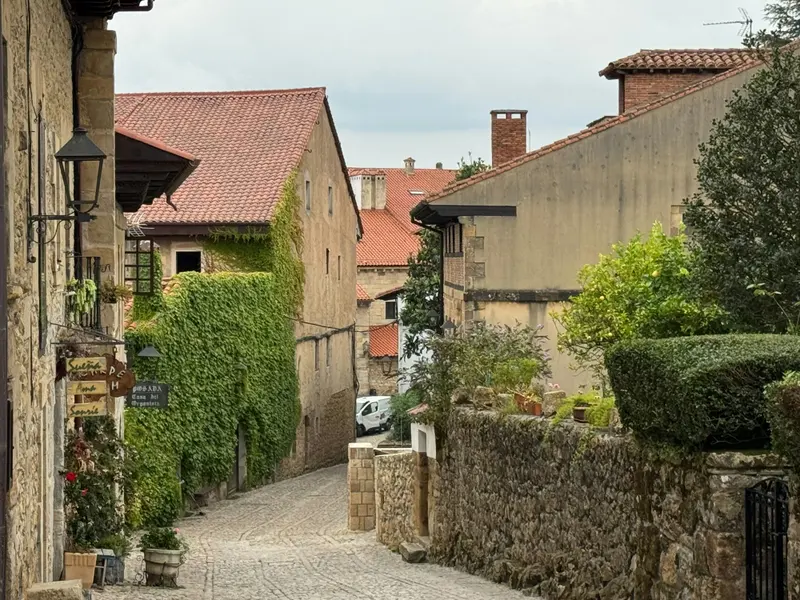
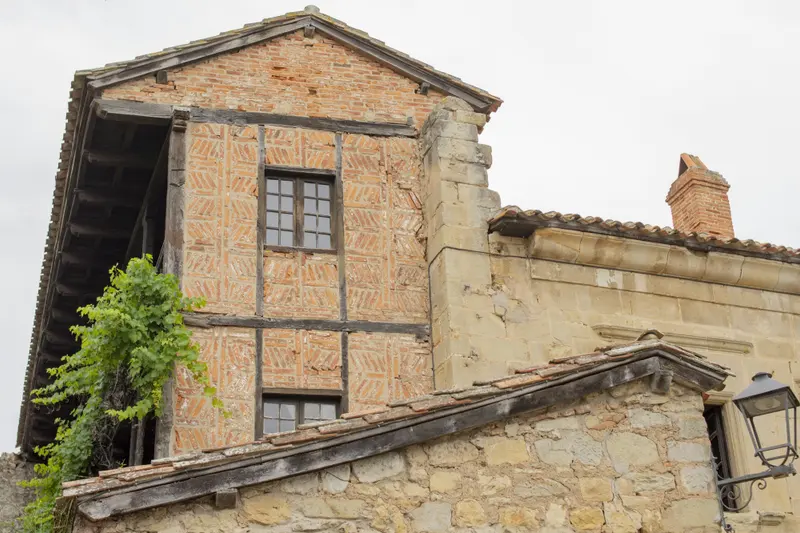
In Plaza Mayor, the towers of Merino and Don Borja stand where narrow streets open up to form a square. See the whole group from the far side, then approach for a look at the carved shields, eaves and wooden balconies. Look up when you are standing still: cobblestones and slopes need attention once you start moving again.
Continue to the collegiate church along Calle del Río. Notice how the houses follow the slope while leaving room for a narrow passage through the village. On the way back, try a different street towards the square. The paths between buildings tell you more about the village than a straight walk past its main sights.
Altamira Museum and the Neocueva
The National Museum explores the lives and tools of Upper Palaeolithic people and recreates the space in which the artists worked. Inside the Neocueva, look at the shape of the ceiling itself before picking out individual figures. Ridges and bulges help give shape to the bison. Back in the galleries, look at the materials and think about how the artists made the colours and applied them.
The Ministry of Culture’s conservation information, consulted in 2026, sets out a separate regime for the original cave. Plan your visit around the museum and the replica. The UNESCO inscription covers the original cave as part of a group of northern Spanish sites with Palaeolithic rock art.
Monuments and heritage
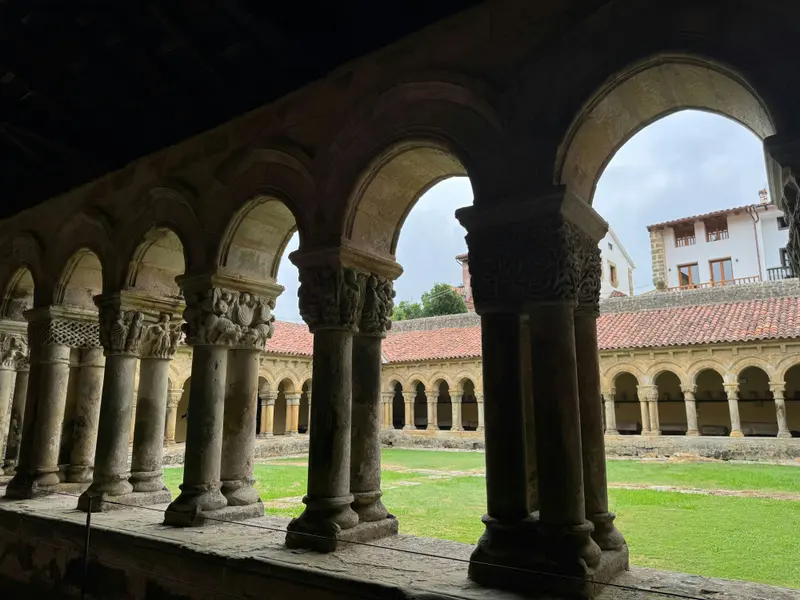
Santa Juliana collegiate church is the landmark around which the settlement grew. Look at the proportions of its tower and church from outside. In the cloister, see how the Romanesque capitals differ across the courtyard. A leaf pattern has a different rhythm from a carved scene with figures. Then stand back to see how groups of columns interrupt the line of the arches.
The village is on the Camino del Norte, the Northern Way to Santiago. Follow the main street towards the square to see how the towers and church relate to the route. Looking back gives you the view a walker might have when entering from the eastern part of the coast.
Museums and culture
The Jesús Otero Museum and Foundation stands by the collegiate church. The local sculptor’s work brings carved stone down to eye level. Walk through it after seeing the capitals in the cloister and compare how much the shape of a carving depends on where you are standing. This museum is a short detour within the historic centre.
If you are choosing how to spend a few hours, give Altamira the longer slot. The Jesús Otero collection is an easy addition to Santa Juliana for travellers who want another way to look at the place’s stonework.
Neighbourhoods and areas
Campo Revolgo is on the upper side of the village and offers a different approach from the street by the church. Use it to navigate between the open squares and the area around the convents. Herrán extends the rural landscape to the south. Yuso and Ubiarco lie apart from the old centre, and a listing with the municipality’s name can be a long way from Plaza Mayor.
Beaches in Santillana del Mar
Santa Justa is near Ubiarco. Start by taking in the cove and the rock face behind it, where there is a small chapel. The tilted layers reveal the fold in the cliff, part of the Costa Quebrada Geopark. In rough conditions, enjoy the outline of the cliffs from the approach above the cove.
Puerto Calderón, farther west, is an inlet described in local tourism information as an old embarkation point. It offers another view of the way the sea cuts into this coast. If you have only a short morning, stay around Santa Justa and watch how the water changes the amount of sand and rock you can see.
Festivals and traditions
The municipal calendar consulted in 2026 places Santa Juliana, the patronal celebration of the village, on 28 June. The old town and the church are its main points of reference. The same calendar places Ubiarco’s main Santa Justa celebration on the Monday after Corpus Christi Sunday, with a procession and dancing. Check the programme for the year of your trip before arranging your days around either celebration.
Routes and itineraries
A day in the village and at Altamira. First decide when to visit the museum. If you begin in the old town, walk from Plaza Mayor to Santa Juliana and back through the side streets. Give Altamira the longest stretch of time. If you have an early entry, save the square and the cloister for after your visit.
An overnight stay with a morning on the coast. Explore the historic centre and the replica cave on the first day. On the next morning go to Ubiarco and Santa Justa. If the weather turns, choose one of the inland walks on the municipal map or spend that time at the Jesús Otero Museum.
Day trips
Comillas. The buildings around Sobrellano show architecture at three different scales. If you have only half a day, visit Gaudí’s El Capricho and walk down to the harbour. With more time, pair it with the palace or the former seminary to see why the bigger buildings stand on separate hills.
Santander. Split the day between the central waterfront and the Magdalena Peninsula. At the prehistory museum, MUPAC, you can see finds from other sites in Cantabria after visiting Altamira. For more time outdoors, walk from Pereda Gardens to Puertochico and give El Sardinero a separate visit.
Travelling with children
At Altamira, choose one figure to find on the ceiling. Afterwards, follow an animal or material through the galleries. In town, ask children to compare the old towers to the houses with wooden balconies. The outdoor intervals between visits can be short, with time left on another morning for Ubiarco.
Where to stay in Santillana del Mar
Historic village. Choose it for early and late walks. Before travelling with luggage, check how to approach the property and how much of the route from your drop-off point is cobbled.
Herrán and the edge of the village. These places give you a feel for the fields around Santillana and make it easier to keep Altamira and the village as two visits. If you plan to have dinner in the centre, look at the walk back in the evening before choosing a base.
Ubiarco. Stay here if you want to start the day near the coast and take the old town as an outing. Santa Justa is in this part of the municipality. The collegiate church and Altamira are farther inland.
See places to stay in Santillana del Mar (opens in a new tab)Affiliate link: if you book through it, we may earn a commission at no extra cost to you.