

 Español
 English

Why visit Comillas
To decide what to see in Comillas, first find its two hills. Sobrellano is home to the palace, its chapel and the house Gaudí designed for Máximo Díaz de Quijano. The former seminary rises on the opposite hill. Below them, the streets around Corro Campíos lead towards the harbour and the sand. The appeal of Comillas is how easily you can see these big architectural projects and the coast on the same walk.
On the west coast of Cantabria, Comillas makes a day of architecture between Santillana del Mar and San Vicente de la Barquera. It also deserves a night of its own. In the evening, return to the town beach or go to Trasvía to look out over La Rabia. If you have just one morning, choose one building to visit inside and spend the rest of the outing looking across the two hills.
When to go
Spring and September suit a day divided between walking and indoor visits. Keep the best of the weather for the harbour or the estuary. On a cloudy morning, you can still appreciate a tiled wall or a carved window from close up. On the coast at Trasvía, the distant views depend much more on visibility.
In summer you can plan the beach and the monuments as separate outings. If you leave Sobrellano at midday and the group wants to swim, go down to the town beach and leave the climb to the former seminary for another walk. On shorter winter days, aim to finish the uphill sections in daylight. The old town and the coast can be visited in either order, depending on the wind.
Getting there and around
The A-8 is the main approach from Santander and the west. Local roads connect with the coastal routes through Cóbreces and towards San Vicente. Travellers without a car should check the services in both directions before booking a timed visit. From the centre, the harbour, Sobrellano and the former seminary are separate walks.
The town is small, but the hills matter. Start at Corro Campíos to get your bearings, then climb to Sobrellano or head downhill to the harbour. If you plan to visit the former seminary after swimming, allow for the full climb from sea level. Two entrances that look close to each other on a map can take longer to reach on foot.
What to see in Comillas
Gaudí’s El Capricho
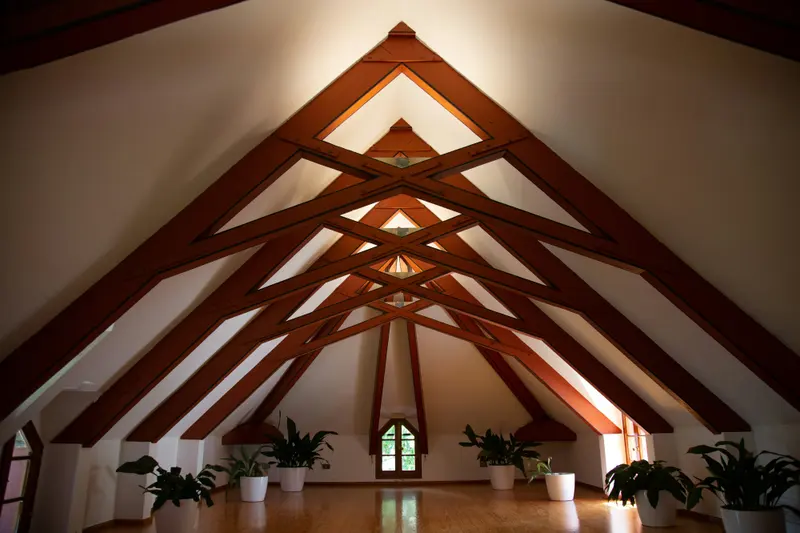
Approach from the garden and walk around the outside before turning your attention to the tower. Bands of ceramic sunflowers are set into the brick exterior. The windows and porch show how Gaudí used iron alongside the solid parts of the building. Villa Quijano was built from 1883 to 1885. Look at the way this summer house opens onto the garden, as well as the details you might recognise from the architect’s other work.
From Corro Campíos to the harbour
Walk through the streets around the square before setting off downhill. The harbour sits at one end of the town beach. On the way back, the area around Güell y Martos Park and the monument to the marquis offers another angle on the coast. For a shorter walk, finish by the sand. The hills deserve time of their own and the harbour makes an outing even when you only have half an afternoon.
Monuments and heritage
Sobrellano Palace and chapel
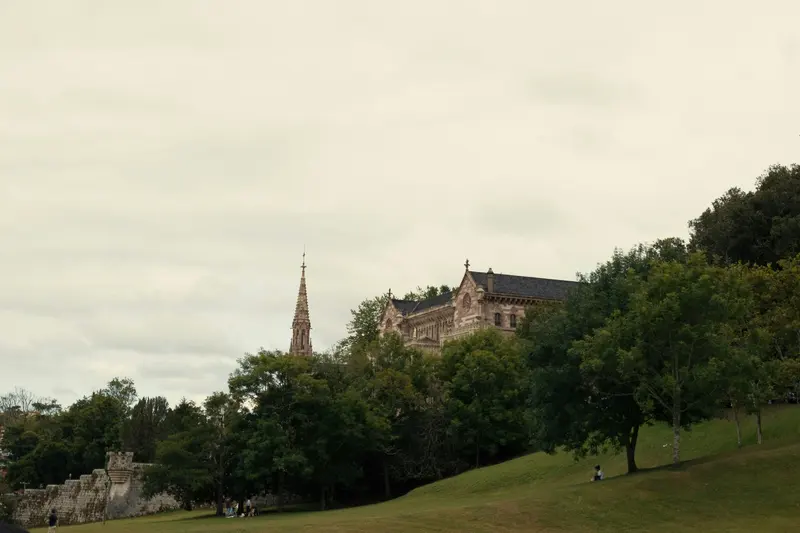
Joan Martorell designed the buildings associated with the first Marquis of Comillas. Look at how the palace and chapel use Gothic Revival forms at different scales. From the garden you can see their outlines and the way the eye is drawn upwards. Inside the palace, the library, dining room and other spaces show how a large nineteenth-century house was used. Check which building a visit covers if you hope to see both the palace and the chapel.
The former seminary and the cemetery
The former Major Seminary stands on La Cardosa and is linked to the Pontifical University. Joan Martorell drew the plans and Lluís Domènech i Montaner worked on spaces including the entrance hall and staircase. Look back towards Sobrellano once you reach the hill. At the cemetery, the ruins of an old church and Josep Llimona’s angel are recognisable from outside. Plan to see them from the exterior and check current access before arranging to go in.
Museums and culture
The architecture itself is the thread that connects the main indoor visits. El Capricho is a place to study ceramic, iron and the proportions of a small house. The former seminary shows how corridors, stairs and entrances were used in an institutional building. Sobrellano adds a private residence and a family chapel. Two visits give you a comparison without having to spend the entire day moving between bookings.
The town’s cultural calendar includes events around Corro Campíos. If one coincides with a visit to the monuments, find the venue before arranging the rest of your afternoon. Depending on where it is, you can end by the harbour or go back towards the upper part of town.
Neighbourhoods and areas
Corro Campíos connects the old streets to the way down to the sea. Its nearby squares and houses make a close-up change from the large buildings on Sobrellano and La Cardosa, which are visible across town. A walk between the three shows how a public square, a private estate and a former seminary sit at different levels.
Trasvía lies west of the town. From here, look across La Rabia towards Oyambre and the Picos de Europa when visibility is good. Allow a separate stretch of time for this area. If you add it after the monuments, choose an outdoor viewpoint to make use of the remaining daylight.
Beaches in Comillas
The town beach lies next to the harbour below the centre. It is easy to combine a spell on the sand with a walk through the old streets, although the way back to Corro Campíos is uphill. In rough weather, you can see the shore from the harbour or the area around the park.
Oyambre is farther west, with dunes and estuary scenery as well as open beach. The official Camino del Norte stage leaves Comillas by La Rabia, crossing the bridge towards San Vicente de la Barquera. Use that route as a reference when choosing between an outing to the estuary and an afternoon at the town beach.
Festivals and traditions
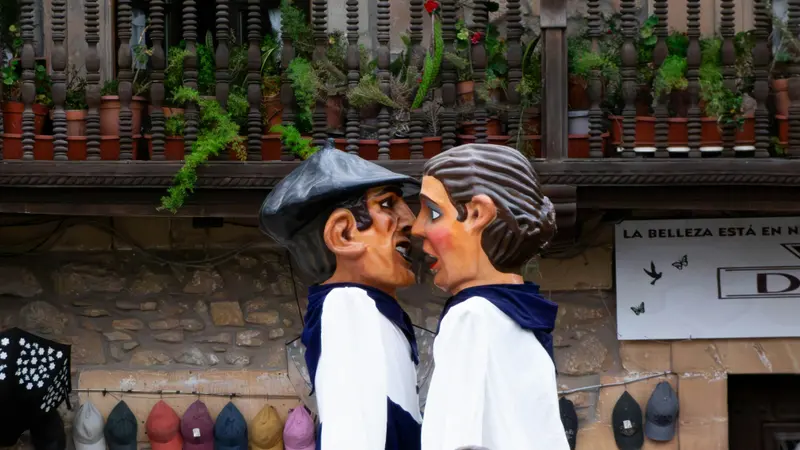
The festivities of Santo Cristo del Amparo honour the town’s patron. The municipal programme ran from 11 to 19 July in 2026. That year’s cultural calendar also listed Día del Indiano on 28 and 29 August in Corro Campíos. It recalls the people who emigrated to the Americas and the influence of those who returned. Check the calendar for the year of your visit if you want to catch one of the events.
Routes and itineraries
A day of architecture and coast. Start at El Capricho and see the outside of Sobrellano. Cross Corro Campíos and go down to the harbour. If you booked the palace for the afternoon, return via the old town and leave the final walk for the beach. Choose one high viewpoint and one stop at water level to see what the hills do to the layout.
Two days with the estuary. Use the first day for Sobrellano and the former seminary. Split the second between the old town and a trip to Trasvía and La Rabia. Swap the order if the forecast favours the coast on your first day and use the poorer weather for a longer indoor visit.
Day trips
Santillana del Mar and Altamira. The museum is outside the old village. Give the replica cave its own time and visit Plaza Mayor and Santa Juliana in the other half of the day. The excursion adds prehistory and Romanesque architecture to the modernist sights of Comillas.
San Vicente de la Barquera. The ría and the upper town show a different side to this coast. Walk from the harbour to the Puebla Vieja, the old part of town, and see how the view changes with the climb. If you plan to stop at Oyambre on the way, pick between the inner shore and the open beach before setting off.
Travelling with children
At El Capricho, look for the sunflowers, compare different windows and try spotting the tower from several points in the garden. Afterwards, choose the harbour or the beach for a chance to move around. Save the walk up to the former seminary for another day if the group has already climbed back from the water.
Where to stay in Comillas
Old town. A useful base for walking to both hills and the harbour. Check the approach with luggage if the property is part of the way up to Sobrellano.
Beach and harbour. Stay down here if you want to step out onto the seafront in the morning. Allow for the uphill walk when you have an early entry at a monument or dinner in the old town.
Trasvía. Start the day looking towards La Rabia and Oyambre. Plan a separate journey into town for the museums and interiors.
See places to stay in Comillas (opens in a new tab)Affiliate link: if you book through it, we may earn a commission at no extra cost to you.