

 Español
 English

Why visit Puerto de la Cruz
Start at the fishing harbour when deciding what to see in Puerto de la Cruz. From the quay you can walk into La Ranilla, head east to San Telmo or spend a little longer watching the waves against the lava shore. In this corner of northern Tenerife, a historic garden, old streets and a walk above the Atlantic fit into the same day on foot. The town also makes an easy base for journeys into the Orotava valley, with time to go back out by the water after you return.
Puerto de la Cruz tells part of the story of tourism in the Canary Islands. Look at three parts of the shore and you can see the changes. The customs house stands near the working harbour. To the east, the Costa Martiánez complex turns the Atlantic edge into a piece of public design. West of the centre, gardens meet dark sand on the way to the houses of Punta Brava. Choose a single stretch if you are passing through, or keep the western and eastern walks for different parts of a day if you are staying here.
When to go
Cloud often hangs over the slopes on the north side of the island while the south coast is in sunshine. An overcast morning suits an old-town walk or the Botanical Garden, where there is plenty to see at close quarters. When the cloud lifts, save the late afternoon for the coast. Teide may show above the rooftops or disappear for the whole day, and a short uphill walk can change what you see of the valley.
Spring and early autumn work well for walks and gardens. In winter, think about swell as well as air temperature before making plans involving the sea. In summer, the coast is easier to enjoy early if you prefer to walk in cooler conditions. The main maritime festivities take place around the middle of July, and the harbour becomes one of the busiest places in town. If you are specifically coming to see the procession, check the programme for the year of your trip. If you are coming for a quiet break, check which streets your room overlooks.
Getting there and around
Aena’s 2026 airport information lists a bus connection from Tenerife North (TFN) to Puerto de la Cruz. If your flight arrives at Tenerife South (TFS), look up the date in the TITSA planner and allow time for any connections between the airport and your hotel. With a late flight, compare the transfer door to door before choosing a ticket. Travellers combining the island with mainland Spain should check the airport code on both journeys, particularly if their flights are on separate bookings.
The bus station is west of Plaza del Charco. You can walk from it into the old town, whereas accommodation east of Martiánez may leave you with a longer walk and a climb. The Botanical Garden is uphill in La Paz. Starting there and walking down to the water makes an easier sequence if you would rather not climb back up later. For a day trip by bus, save the return stop as well as the outward one. The two sides of a road can have very different routes back to your accommodation on foot.
Use Plaza del Charco as the centre of a walking map. San Telmo gives you a coastal route east, and the castle of San Felipe makes a good waypoint to the west. A hotel a short distance inland can still sit above a steep street, so check the end of the route if anyone in the group has a buggy, a heavy case or limited mobility. You can get much of the way between the coast’s main sights in a single walk, then use shorter explorations of the back streets to see a different part of the centre.
What to see in Puerto de la Cruz
Plaza del Charco and the fishing harbour
Take the short walk from the square to the harbour and return past the customs house. From the quay you can see why that building occupies this part of town and how close the old routes inland start to the water. Leave time for the square on the way back. It is a useful place to regroup before the next stretch, and the streets offer enough choices for anyone wanting a shorter walk to stay close to the harbour.
San Telmo and Costa Martiánez
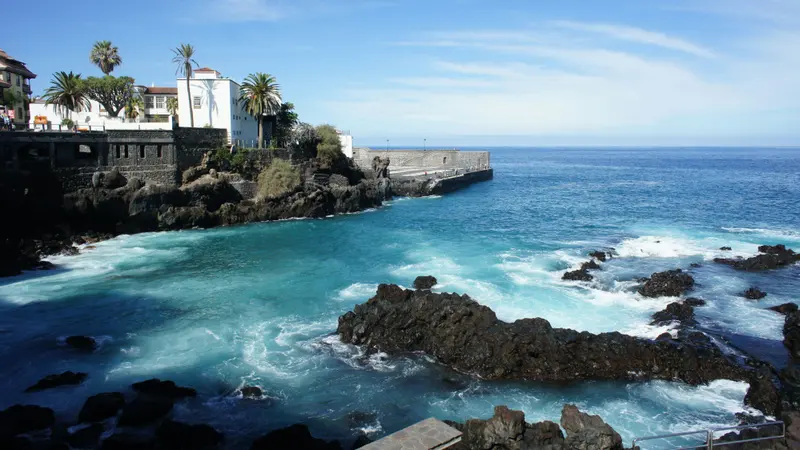
The path to the San Telmo chapel gives views along a shoreline with little inlets and shelves of volcanic rock. Continue towards Martiánez to see the point where the coast opens into a scheme of seawater pools designed with César Manrique. Look for how the planting, sculptural elements and pools break up the space. It is worth allowing a separate period for a swim if the complex is open on your date. You can also make the waterfront a walk in its own right and save the pools for a day when the whole group wants time in the water.
Botanical Garden and La Paz viewpoint
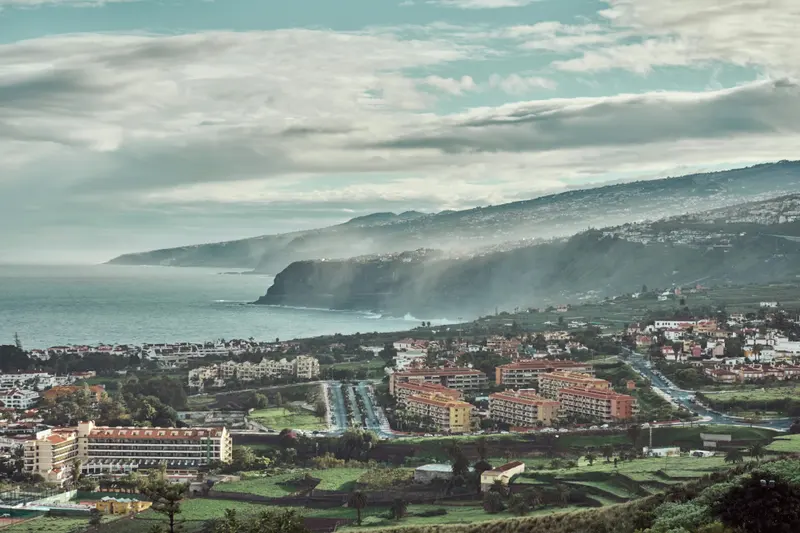
The garden was founded to acclimatise species introduced from other regions. Wide paths among established trees make a good starting point, but allow time for the paths between smaller plantings too. Look closely at the roots and read where a few specimens come from. You will see shapes and textures that are easy to miss if you approach the visit as a quick circuit. The nearby La Paz viewpoint gives you a different scale, looking from the higher town across the waterfront and the coast towards Martiánez.
Monuments and heritage
The customs house and the church of Peña de Francia
The Casa de la Real Aduana sits near the old landing point. Notice how easily people could move between the water and the building, then follow the start of the climb inland. The church of Nuestra Señora de la Peña de Francia stands in a square a little way up from the waterfront. With the sea out of sight, the old centre feels more enclosed. Look at the change from broad spaces at the water to sheltered gardens and buildings set around the church square.
San Felipe castle and San Telmo chapel
Castillo de San Felipe stands near the western approach to Playa Jardín. The old defence site helps you picture the harbour when the town’s relationship with passing ships required watchfulness. On the other side of the centre, San Telmo chapel recalls the religious life of seafarers. The two buildings fit naturally into a walk between either end of the shore. If you want to see inside, treat any exhibition or opening as a separate visit and check the relevant listing before choosing a time.
Museums and culture
The Eduardo Westerdahl Museum of Contemporary Art occupies rooms in the Casa de la Real Aduana. It is an easy way to introduce twentieth-century art into a walk that might otherwise take you straight past the building. Check what is on view before planning around a particular work. In the streets of La Ranilla you can do an outdoor circuit of murals. Notice how each image uses the shape of the building or the line of a side street, and leave time to look at the doors and balconies between the painted walls.
Puerto de la Cruz also has an Archaeological Museum whose collections relate to the people of Tenerife before the conquest. Check access for your dates before making it the focus of a trip. Local cultural programmes can introduce performances or exhibitions in buildings you will already pass in the centre. A short indoor visit goes well with a walk in this town, since you have time afterwards to see part of the surrounding neighbourhood on the same outing.
Neighbourhoods and areas
La Ranilla and Punta Brava
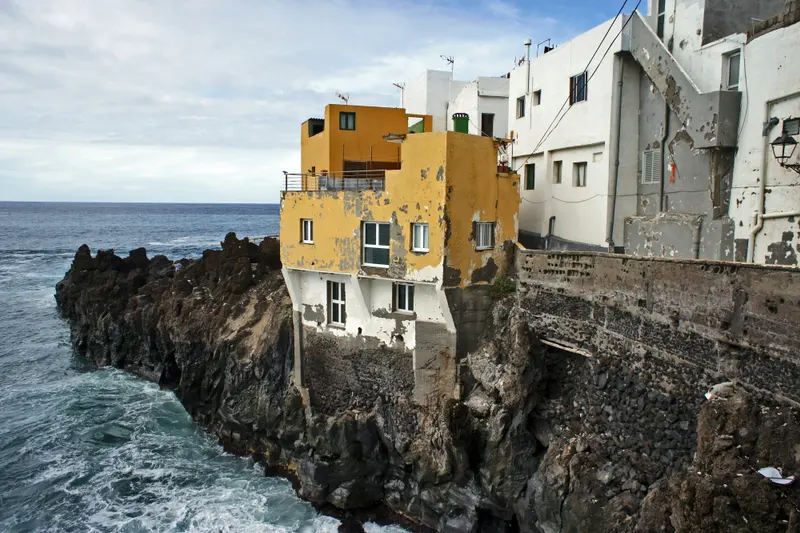
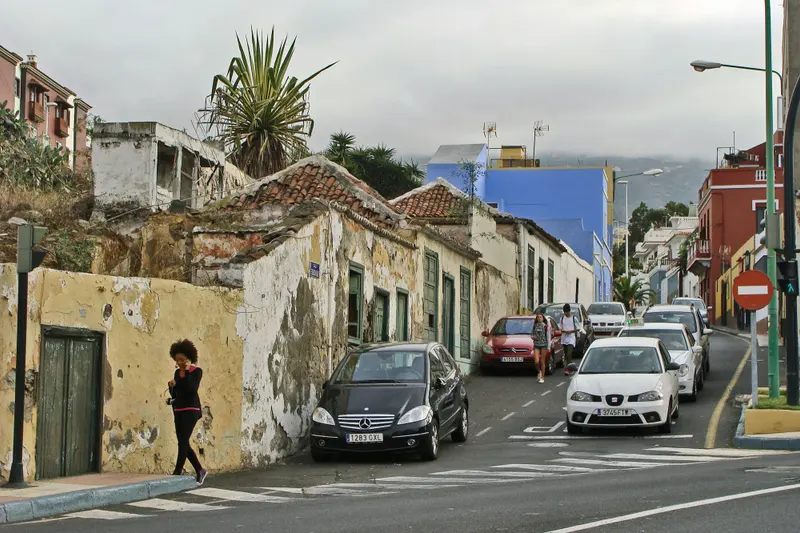
La Ranilla begins just west of Plaza del Charco. Walk along Calle del Lomo and turn down a side street towards the shore to see how close the old neighbourhood lies to the harbour. For more time by the Atlantic, carry on towards Punta Brava, where houses line the edge of the lava coast. You can turn around at the castle or the beaches, which makes the walk easy to shorten if the day is hot or someone wants a rest.
La Paz and the upper east side
La Paz is a useful address if you are drawn to the Botanical Garden and want an easier departure towards the inland valley. Housing in the upper part of town feels separate from the busy promenade. El Durazno, further into this part of town, illustrates the change from dense coastal development to roads among the slopes. If you plan to spend most evenings by the water, compare the uphill return from Martiánez with a room near the promenade before booking.
Beaches in Puerto de la Cruz
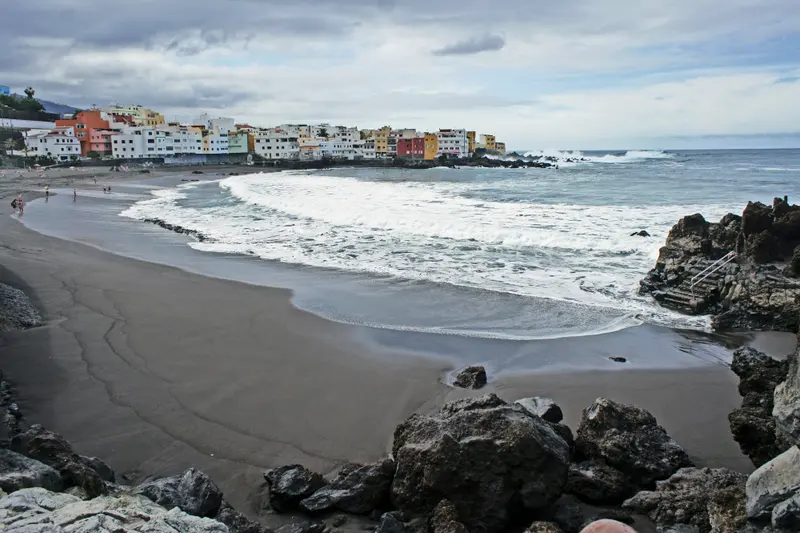
Playa Jardín, Playa Chica and Punta Brava
Playa Jardín is the name of a landscaped stretch of coast and the first of several sections of dark sand. The other sections are Playa Chica and Punta Brava. The walkway and planting give you a reason to go even if you spend the afternoon out of the water. Plan to check sanitation notices and the flags at the section you would actually use. From one part of the shore to another the approach to the water can change, even though all the beaches look close on a map.
San Telmo and Martiánez
San Telmo is a small patch of coast between the seawall and volcanic rock. It is an easy place to stop during an old-town visit. The beach at Martiánez lies close to the pool complex but faces the open Atlantic, so conditions there are a separate matter. You can enjoy the view from the path when it is rough. Families wanting an afternoon in the water can check whether the nearby pool complex is open and make the beach a separate stop on the way.
Festivals and traditions
The Embarking of the Virgen del Carmen is a harbour procession in which the religious image is taken out to sea. The local council confirmed 14 July for the main event in 2026. If you hope to see it in another year, use the new programme to work out where to approach the fishing harbour. The beginning of a procession can feel quite different from the moment the boats leave. A walk around La Ranilla earlier in the day helps connect the streets and the coast to the event.
Around the eve of St John, the waterfront is associated with bonfires and the traditional bathing of goats in the harbour. In November, St Andrew’s festivities include the noisy dragging of metal objects through the streets. Look for the council’s programme before choosing travel dates around either tradition. The fishing harbour, surrounding streets and squares are worth seeing in ordinary circumstances too, particularly if you want a sense of where the celebrations take place.
Routes and itineraries
An extra walk on the eastern coast
Use the tourist map to find the start of the shore path on the east side of town before going down to Martiánez. Walk one section and return by the La Paz viewpoint if you want a change of perspective. This part of town gives a view of cliffs and open sea quite unlike the enclosed fishing harbour. Check the route before leaving, since a closure or slippery ground can make the lower promenade the better choice.
One day around the old port
Start in Plaza del Charco, then take the harbour and customs house together. Walk through La Ranilla towards the castle and decide whether to continue to Punta Brava. Go back through the centre for a break before taking the eastern walk via San Telmo. Finish around Martiánez. This order keeps both sides of the coast in the day while letting you cut the western walk short if you prefer a museum or a longer lunch.
Two days with the garden and the valley
Give the first day to the promenade and one cultural visit. On day two, visit the Botanical Garden in the morning, then stop at the La Paz viewpoint. Choose a downhill afternoon by the sea or a separate outing to La Orotava, where houses and gardens sit on the slope above the coast. Look at the way a street of wooden balconies in La Orotava frames the view, then compare it with the long view from the sea wall when you get back.
Day trips
La Orotava is a straightforward trip into the hills above town. Start in the higher part of the historic centre and work downhill towards the gardens, allowing time to stop in the steeper lanes. You can make it a half-day and be back on the waterfront for the evening. For an all-day outing, follow the north coast to Garachico. Walk between the old centre and the lava pools of El Caletón. The edge of the lava is worth seeing from land if sea conditions rule out swimming.
For a longer cultural outing, spend a day in San Cristóbal de La Laguna, where courtyards and grid streets give the historic centre a very different feel. If you are heading to Teide, make the mountain your main plan. Choose the day using the outlook at altitude, and allow time for the journey home even if the coast is still sunny when you come down.
Travelling with children
Take the waterfront in short blocks. Show children the boats at the fishing harbour in one outing, then try the waves and viewpoints of San Telmo on another. In the Botanical Garden, look for roots above ground, a leaf bigger than a hand and trunks with two different textures. Loro Parque, on the Punta Brava side, can be a full outing if you decide to visit. Check how you are getting there from your own part of town before walking the beaches with children of different ages.
Where to stay in Puerto de la Cruz
Book around Plaza del Charco or La Ranilla if your first priority is walking out to the harbour and into the old streets. The centre also makes a good short-stay base if you want a choice of waterfront walks without checking bus times. Avenida de Colón and the surroundings of Martiánez put the eastern promenade and the pools closer to your door. Check whether your building actually opens onto the promenade or sits on a road above it.
La Paz suits stays focused on gardens and day trips into the north of Tenerife. The walk to the sea is downhill from this area, so plan the return if you like to go out twice in a day. Punta Brava is a different choice for the western shore. Check the walk to town after dark and the distance from the door to the specific part of Playa Jardín you want to use most often.
See places to stay in Puerto de la Cruz (opens in a new tab)Affiliate link: if you book through it, we may earn a commission at no extra cost to you.