

 Español
 English

Why visit Adeje
When choosing what to see in Adeje, start by putting Adeje’s old town and Costa Adeje on different parts of your map. The municipality stretches down the south-west side of Tenerife. In the upper town, Santa Úrsula church and the remains of Casa Fuerte are close to the approach to Barranco del Infierno. Down on the coast, Fañabé, El Duque and La Caleta make up different stretches of a long walk. Separating them helps if your idea of a holiday is to be by the water early but spend at least one morning somewhere with a different history.
Adeje works for several days by the coast with a walk inland and time for heritage. If the water is the main reason you are coming, choose a stretch of promenade and make a separate trip from Puerto Colón. If you’re interested in land and landscape, spend an unhurried morning in the old town. Save a different day for the high country around Teide, one of the places to see a change of scenery in the Canary Islands. Even within the municipality, changes in altitude affect transport choices and the layers you will want to take with you.
When to go
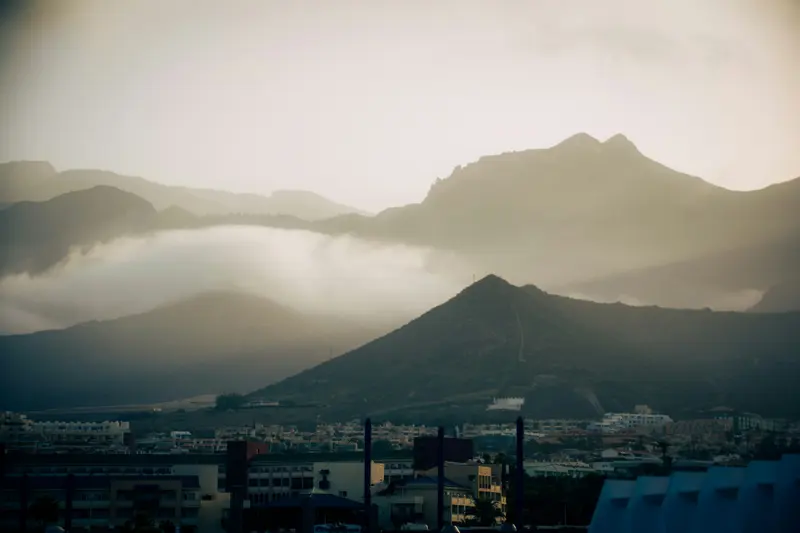
The south-west coast has mild winters and is generally drier than the north side of Tenerife. From autumn to spring, the seafront and town make an easy pair of outings, with different options if the weather varies at different heights. In summer, start exposed walks early and choose a stretch of beach with a comfortable route back to where you are staying. Conditions on the water vary along the shore. Keep a short coastal walk in mind in case swimming does not suit the day.
For Barranco del Infierno, look at the route status and the weather above the coast before relying on a reserved visit. Adeje’s patronal celebrations take place in October. If you want to see one of the religious events, set aside time in the old town. Your route through the streets during a procession may differ from the easiest walking circuit on an ordinary day. The beach promenade can make up another day’s outing with time to finish as far west as you want.
Getting there and around
Tenerife South (TFS) is the nearer airport for Costa Adeje. Aena’s travel information checked in 2026 lists bus connections to Costa Adeje. Work out the last leg from the station to your hotel before comparing the journey with a taxi or hire car. Tenerife North (TFN) is on the other side of the island. This matters if you are combining a flight from overseas with one from another island or the mainland, and again if you are choosing a transfer after a late landing.
Costa Adeje bus station and the historic town of Adeje serve different parts of the municipality. For the old town, look for Calle Grande and Plaza de España. For Barranco del Infierno, use the official trail entrance instead of looking up the name of the ravine as a whole. On the coast, start near the first beach you want to see and make the bus or walk back a separate choice. In 2026, TITSA’s planner shows stops and routes. Check the return for your date if you intend to end the walk in another district.
On foot, the coast is easiest in short sections. There are curves, ramps and streets above the promenade. Check the actual way to the beach, particularly with a buggy or if someone in the group needs a gentler slope. In the old town, put the main sites together in one circuit before changing elevation again. You can break a day at the plaza after the heritage walk and make the coast the second half, with the middle of the day available for travelling between them.
What to see in Adeje
Old town and Plaza de España
Start on Calle Grande and make your way to the square. The church of Santa Úrsula gives you a point of reference while you look at the rise of the land behind the town. Walk past the former convent before going up to the outside of Casa Fuerte. Once you are in this part of Adeje, it becomes easy to see how a set of landmarks that looked scattered on a road map lie close to one another. Save part of the visit for looking out from the square as well as across it.
Puerto Colón and the promenade
Puerto Colón gives you an obvious starting point on the coast. From the marina you can walk past La Pinta towards Torviscas and Fañabé. Use the beaches as landmarks and stop where you want to spend time rather than measuring the day in distance covered. Further west, El Duque gives a more open view of the coast. Decide there whether to keep going towards La Caleta. With less time, stay between the marina and Fañabé, where you have several places to leave the promenade and rejoin it later.
La Caleta
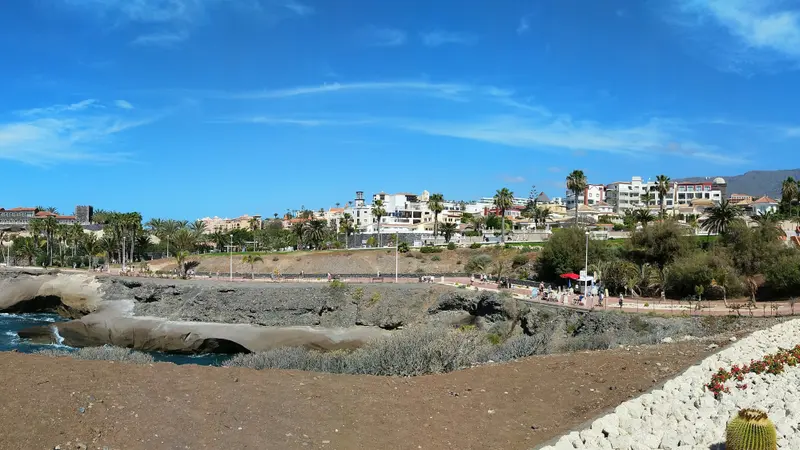
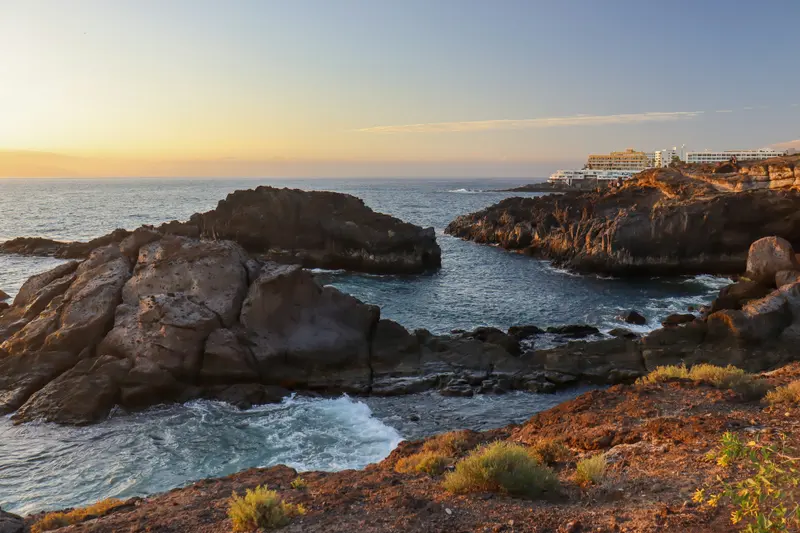
La Caleta changes the scale of the walk. The lower streets and the rock shore put you close to the Atlantic, with views back towards a more developed part of the coast. Walk through the settlement before deciding whether to explore farther. If you take a coastal trail beyond the built-up area, allow enough time to return on the same ground if the surface or weather slows the group down. The smaller turns in the coast are places to stop and look along the headlands.
Monuments and heritage
Casa Fuerte, Santa Úrsula and the former convent
Casa Fuerte is part of Adeje’s history as a seat of local power and a centre of sugar production. Remains of the compound help show that the site had a defensive function as well. From outside, look for the relationship between the fortification, the town and the approach to the ravine. Check separately whether any of the interior is open. If it is closed, there is still enough to make sense of where the complex sat and how it relates to the surrounding streets.
By Santa Úrsula, observe how the church is set into the edge of the square. The former Franciscan convent is nearby, so the principal religious and civil sites fit together into one walk. Watch how the terrain falls away below the square and think about how close the town was to the land where crops were grown. That change in ground is much easier to read from the old town than it is among the main roads and hotels below.
Museums and culture
The local council’s heritage material on Casa Fuerte and on devotion to the Virgen de la Encarnación can give the old-town visit a theme. Choose one story to follow as you go between buildings. The Auditorio de Adeje puts present-day performing arts in the same part of the municipality. Look through its programme if you want to build a show into the trip, and leave time for a short circuit of the square and surrounding streets before going in.
For another approach to Tenerife’s architecture, spend a separate day in San Cristóbal de La Laguna. Its protected historic area works at a different scale. Compare how the main squares connect with churches and houses. In Adeje the outlook from the town is important to that story, while in La Laguna the layout of several connected blocks is part of what makes the heritage recognisable.
Neighbourhoods and areas
The old town contains the principal heritage sites on the slope. On the coast, San Eugenio and Puerto Colón identify the eastern part of the main resort area. Torviscas, Fañabé and El Duque are more helpful names when you are choosing a specific beach, bus stop or route back to where you are staying. Look at the slope between the main promenade and your room, especially if you plan to walk that distance more than once in a day.
La Caleta, Playa Paraíso and Callao Salvaje are further west. Each works as a separate base, and the fastest route on a map may take you inland to pass a ravine or a stretch of main road. Choose your base according to the places you would actually walk to on most days. An accommodation listing that gives the municipality as Adeje covers a much larger area than the cluster of streets and shops beside the room.
Nature and protected areas
Barranco del Infierno is in a protected nature reserve. The path goes from above Adeje into the ravine and back the same way. The trail operator’s information checked in 2026 describes a round trip of about 6.5 kilometres and requires an advance reservation. Check the route status before setting out, particularly if you are transferring from the waterfront. Leave time after the walk before any scheduled visits. You can return more comfortably if you do not need to hurry through the final stretch in the afternoon.
The coastal nature area at La Caleta is protected for its habitats. Follow established paths if you explore the shore beyond the village and account for uneven ground. The short inland walk from the sea in this area feels very different from the Barranco del Infierno trail. Look for sections where the changing shoreline gives different viewpoints, and enjoy the water from above if waves are breaking across the rocks.

Beaches in Adeje
La Pinta, Torviscas and Fañabé
La Pinta is next to Puerto Colón, so it is easy to pair with a look at the marina. West of there, Torviscas and Fañabé give you adjoining stretches of sand and paths. Compare entrances before setting up for the day, especially if one person wants a short walk back to a bus or a ramp. Agree on a named access point if members of the group are going to split up. There are several ways in and the beach names can cover more ground than you might expect.
El Duque and Ajabo
At El Duque the walkway goes around a rocky point. The change in angle gives a good view back over the bay. Ajabo at Callao Salvaje works as a local outing if you are staying at the western end of the municipality. Decide on swimming using the signs at the beach and the conditions when you arrive. Going to a second beach makes sense if it gives you the kind of access or afternoon you want. It can be easier to stay put and spend the rest of the day walking along the nearest shore.
Festivals and traditions
Adeje’s patronal festivities use Plaza de España and the surrounding old town. The council records that the Romería took place on 18 October in 2026 and was dedicated to the Virgen de la Encarnación, Santa Úrsula and San Sebastián. The Virgen de la Encarnación is also associated with a traditional religious petition in the local calendar. Use the published programme for the year you travel, especially if you are relying on access to a particular street. Looking around the square before the celebration gives you a better sense of how it connects with the religious and civic buildings.
Sport and outdoor activities
Puerto Colón is a departure point for whale and dolphin watching. Tenerife Tourism identifies authorised boats through the Barco Azul scheme. Treat the boat as an outing in its own right and check conditions at sea. For a day on land, the sections between Fañabé and El Duque make an easy walk to shorten, while the ravine needs an approach from the old town and a separate reservation. The coast and inland walk help to show the same municipality from quite different elevations.
Routes and itineraries
One day from the old town to the coast
Start on Calle Grande and visit Santa Úrsula and the outside of Casa Fuerte before leaving the higher part of Adeje. After the transfer, choose Puerto Colón for a marina and beach walk or El Duque for wider sea views. From the port you can take in Torviscas and Fañabé on the same outing. If you start at El Duque, see how far you want to go towards La Caleta before turning around. Keep the full ravine walk for another morning.
Two days with the ravine and the water
Begin in the old town for your booked trail visit and give yourself a free afternoon. On the second day, choose a beach morning or a boat trip from Puerto Colón and leave time for the promenade afterwards. If boat plans change, the harbour or La Caleta makes a separate walk you can adjust to the weather without moving your visit inland. Splitting the longer outdoor activities gives you room to enjoy either one without having to watch the time on a transfer.
Day trips
Los Cristianos offers a walk near the ferry port and another perspective on the developed south coast. Be specific when you search for an address around Playa de las Américas at the boundary with Arona. A resort name can cover a wider area than the municipality shown in a street address. In the other direction, Los Gigantes offers a coastal walk with high cliffs as a backdrop. For Teide, set aside a separate day based on the mountain forecast and account for the trip back. Give yourself the choice of a short stop by the coast at the end, without making it essential to the itinerary.
Travelling with children
La Pinta or Fañabé makes a useful starting point for a short morning. Plan to return to the same entrance if you are taking extra bags or a buggy. Siam Park is a separate all-day option in Adeje. Check the attraction information for height requirements relevant to your own children before making promises about a particular slide. For a shorter visit on the next day, place the old-town square between two quick heritage stops so the group can take a break without moving the car or waiting for another bus.
Where to stay in Adeje
Look at Fañabé and Torviscas for daily walks between the beach and promenade. La Pinta and Puerto Colón make sense if your main outing is from the harbour. El Duque gives you a base further west, and La Caleta suits walks beside the sea with a separate visit to a larger beach. With each address, trace the walk from the door to the part of the coast where you expect to spend the most time.
The old town suits trips that start with heritage and treat the coast as a day out. In Callao Salvaje or Playa Paraíso, look for the daily services you want near the room and work out how you would come back from the larger resort beaches. If you need to get to the airport early, compare that transfer with the distances you’ll walk during the rest of the stay.
See places to stay in Adeje (opens in a new tab)Affiliate link: if you book through it, we may earn a commission at no extra cost to you.
