

 Español
 English

Why visit Ronda
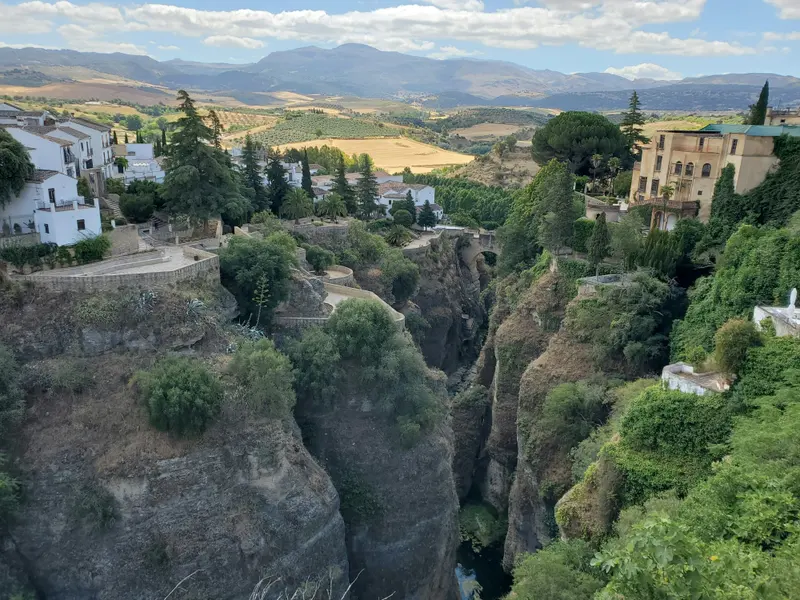
Ronda looks out over a gorge that divides the city in two. On Puente Nuevo, look down at the cliffs of El Tajo, then back at the streets. On one side is El Mercadillo, the newer part that grew north of the gorge. On the other is La Ciudad, the old town. Farther down are Puente Viejo, the Arab Baths and the old suburb of San Miguel. Changing level tells you just as much about Ronda as crossing the bridge.
It is one of the main inland sights in Málaga province and a good starting point for exploring the mountains of Andalusia. A day is enough for the main bridge and squares. A night in town gives you time to reach the baths, explore Mondragón Palace or follow the old walls to one of their gates before the afternoon ends. The town suits both travellers drawn by the scenery and those who want to trace the history of a former frontier city.
When to go
Spring and autumn usually provide comfortable conditions for sloping streets, indoor visits and viewpoints. The air on the edge of the gorge can feel cool even when it is mild in the square. If the mountains are under cloud in the morning, start with the museum or baths and return to the Alameda or the bridge when the view improves.
In summer, save the steeper walks for cool hours. When planning the descent to San Miguel, think about the climb back as well. A pleasant time to go down can still leave you facing the hottest part of the day on the way up. In between, the inner squares and museum collections offer a quieter change of scale after the exposed cliff edge.
Winter means shorter days and early shadow along the river. Mornings can be cold, and rain changes the footing on the stone paths. A walk along the upper edge still makes sense if conditions favour leaving the lower part for another day. If you are going for the Pedro Romero Fair, check the programme for that year before choosing dates and accommodation.
Getting there and around
Ronda’s rail and coach stations are both in the northern part of town. From Málaga or its airport, compare the available connections for your dates and check whether your chosen journey involves a transfer. If driving from Marbella, allow for mountain bends and a possible change of weather as you gain height above the coast.
From either station to Puente Nuevo you walk through El Mercadillo. With luggage or limited mobility, it helps to use a map that shows elevations and entrances. The high squares and the Alameda make for a different kind of walk from the paths down to the baths. Leave the car somewhere you can enter the centre on foot and use it again on days when you plan to visit sites out of town.
In 2026 Adif scheduled a closure of the railway corridor for engineering works and Renfe arranged replacement transport. Check whether your ticket includes a coach and find out where it leaves, as the departure point may differ from the town bus station.
A walk to San Miguel involves a descent and a climb back unless you have another way to return. Decide whether the group would rather tackle the slope at the beginning or the end of the day. With two days you can split up the upper town and the steeper route without leaving the baths until the minutes before a train or coach departure.
What to see in Ronda
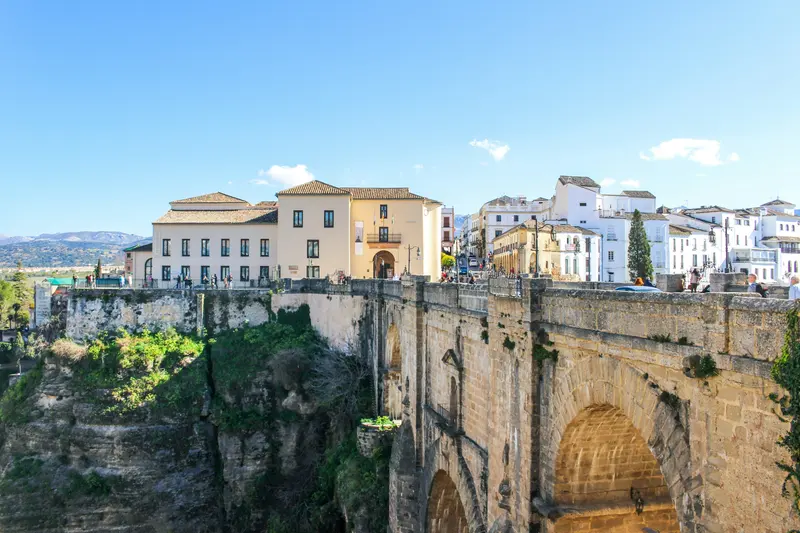
Puente Nuevo and the edge of El Tajo
Start at Plaza de España and cross Puente Nuevo towards La Ciudad. The views change depending on whether you are looking upstream or towards the side where the ground opens into the valley. From the roadway you can judge the depth of the gorge; from an off-bridge viewpoint you can see how the structure fits between the two rock faces. For a single photograph, look for a side angle that takes in the whole bridge.
The present bridge was completed in 1793, according to Ronda’s tourist office. It joined La Ciudad to El Mercadillo without the descent to the older crossings. That change explains the position of Plaza de España and the continuity between the main streets on either side. Look at the point where the masonry gives way to balconies and chimneys. The built town comes right up against the gorge.
Alameda del Tajo and the upper walks
From the bullring, enter the Alameda del Tajo and continue to its balconies. Here the view opens towards farmland and mountains, a different perspective from the bridge itself. This is a good stretch for anyone who prefers to avoid the descents. Leave it for the end of the afternoon and spend the morning with the courtyards and buildings when they are in a different light.
Puente Viejo and San Miguel
The descent near the Felipe V Gate takes you towards the lower crossings. Puente Viejo gives an intermediate view of the town. Around the San Miguel bridge and the baths, it is the river and slopes that shape the walk. Leave time to look back up before you return. This is where you can see how a suburb beside the water related to the centre on higher ground.
Monuments and heritage
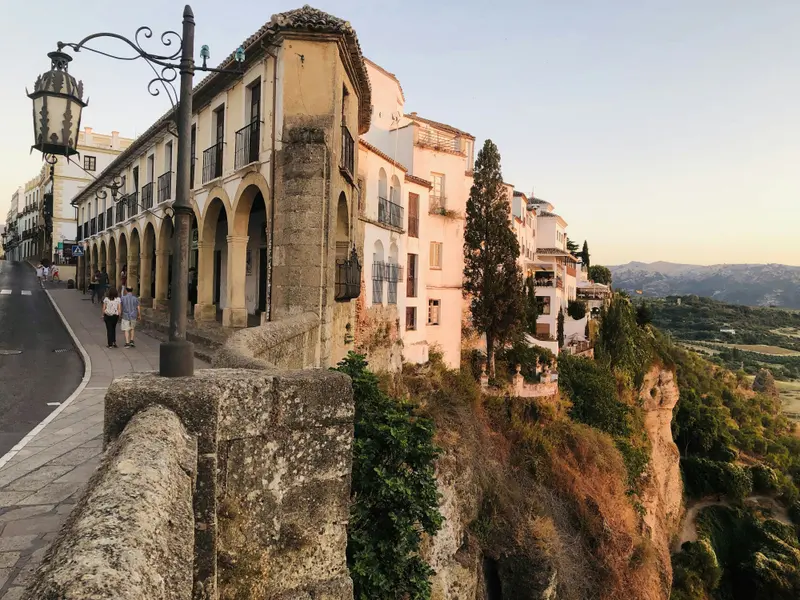
At the Arab Baths, pay attention to how a hammam was laid out. Walk through the spaces for the cold, warm and hot rooms and look up at the openings in the vaults. Surviving features help explain how heat reached the rooms. The setting in San Miguel is part of the visit. The river, the former approach to town and the life of the suburb help explain the choice of site.
The Almocábar Gate on the south side gives a sense of the transition between open country and the walled town. Nearby you can see how the gates and walls follow the change in level. From there come back up to Plaza Duquesa de Parcent. To distinguish different periods, compare the defensive stonework and the bulk of the Church of the Holy Spirit with the buildings around the square.
Santa María la Mayor stands on the square. The site combines traces of the former mosque with the church built later, a transition suggested by the mix of forms in the building. There is space in the square to take in the exterior before going inside. The streets towards Mondragón Palace continue the heritage walk without taking you back to Puente Nuevo straight away.
Museums and culture

Mondragón Palace houses the Municipal Museum. The rooms, courtyards and gardens offer two ways of getting to know the place: as a historic house and as a museum of Ronda and the surrounding country. If you like archaeology it can help put sites outside town, such as Acinipo, in context. Give yourself time to see how the building opens towards the valley. Where it stands is part of the story.
The Joaquín Peinado Museum takes you into a different period without leaving La Ciudad. It occupies the Palace of the Marquises of Moctezuma and focuses on the work of a painter born in Ronda. It is a different sort of visit from the Municipal Museum. If you go inside both, leave a break to walk the streets between them before starting another indoor visit.
The Real Maestranza de Caballería maintains the bullring, which opened in the eighteenth century. You can appreciate its shape by moving from the outside into the arena, where arches and galleries form a circle around you. Travellers more interested in other kinds of heritage can stay at the Alameda or spend the time with Peinado’s paintings. The nearby promenade is an easy meeting point for a group with different interests.
Neighbourhoods and areas
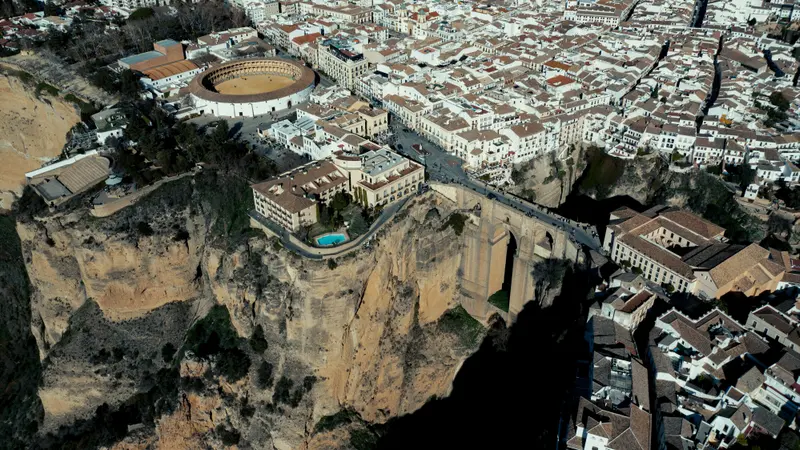
La Ciudad. This is the old quarter south of Puente Nuevo. Its streets connect gates, palaces and squares, and the façades often reward taking a few steps back. Allow room for a walk with short stops and a return by different lanes. At the southern end you reach the Almocábar Gate and San Francisco neighbourhood.
El Mercadillo. Plaza de España, Plaza del Socorro and Carrera Espinel organise the shopping district north of the gorge. If arriving on public transport, much of your first walk is likely to be on this side. The Alameda is close, making it easy to move from busy streets to open views.
Padre Jesús, San Miguel and San Francisco. To get a feel for Ronda’s shape, walk down from Padre Jesús towards the bridges and the old suburb of San Miguel. San Francisco lies in a different part of town, at the foot of the Almocábar Gate. These outings begin at different levels. Treat them as separate walks if you want to avoid doing one long climb straight after another.
Nature and protected areas
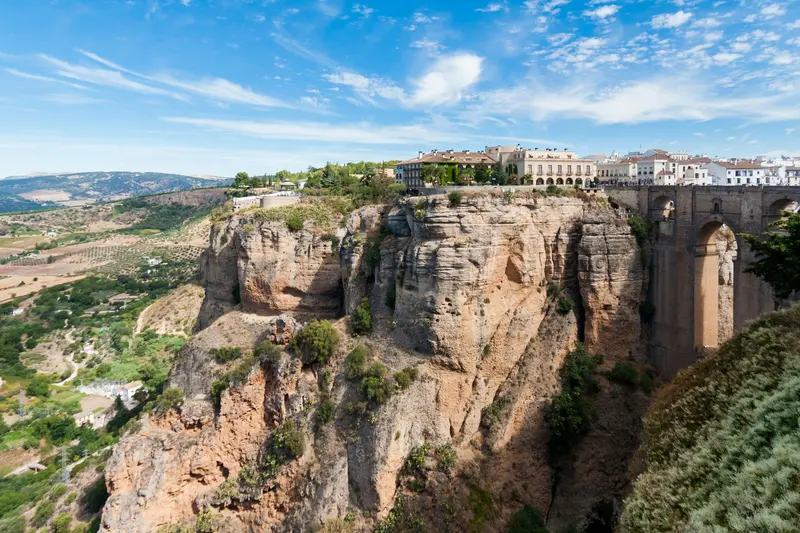
El Tajo is the gorge carved by the Guadalevín River between walls of rock. From above, compare the side where the river is hemmed in with the opening towards the valley. You can follow the outline of the gorge from the upper edge without taking a path down. For a lower walk, check the current status of the stretch you have in mind with the tourist office and stick to marked access routes.
The Sierra de las Nieves widens the visit into mountain country. To pick an approach and a walk, start with the park information and pay particular attention to the location of the trailhead. Looking out over the country from the city and walking in the national park are quite different outings. Keep a separate day for the latter and choose a route that suits the weather and the distance and climb your group wants to take on.
Festivals and traditions
The Pedro Romero Fair ran from 1 to 6 September in 2026, according to Ronda’s tourist office. Events take place in more than one part of town. For performances, parades or the daytime fair, locate the venue and your accommodation on the map before setting out. The programme for each edition shows which events are taking place and where.
During Holy Week, processions transform the way the streets and squares are used. With few crossings over the gorge, it helps to know which side you will be on when the procession ends. Consult the programme for the year of travel, since the dates change and each brotherhood follows its own route. Plaza del Socorro is a useful reference point if you only intend to watch for part of the evening.
Routes and itineraries
One day on both sides of the bridge. Start with the Alameda and the bullring, then cross Puente Nuevo into La Ciudad. Choose one interior, such as Mondragón Palace or Santa María la Mayor, and continue to the Almocábar Gate. If the Arab Baths matter most to you, swap the Almocábar stretch for San Miguel before returning to the upper town.
Two days including the lower bridges. Use day one for the higher walks and museums. On the second, head down to Puente Viejo and the Arab Baths. Splitting the sights gives you a chance to see the river in different light and puts the steeper slopes into a single outing. If coming back through Padre Jesús, use the Fuente de los Ocho Caños fountain to get your bearings.
Three days with the surrounding mountains. Give the city two days and use the other for Acinipo and Setenil or an outing into Sierra de las Nieves. For both archaeology and country walks, check access before leaving. If you also want to go to Grazalema, give it priority on another day so that you have time to walk around the village.
Day trips
Acinipo. The Roman archaeological site lies on high ground outside Ronda. At the theatre you can see how the slope was used to build the seating. The Andalusian regional government reported an access closure in 2026 after damage to the road. Confirm that it has reopened before setting off. If it remains closed, spend the day in Setenil. If you visited Mondragón, the site and museum make a good pair for understanding the area.
Setenil de las Bodegas. In this village in Cádiz province, houses occupy streets sheltered by wide shelves of rock. Cuevas del Sol and Cuevas de la Sombra show the difference the sun’s direction makes between two locations close to each other. From Ronda you can devote the trip to the village or combine it with Acinipo once you have confirmed that you can visit the Roman site.
Grazalema. To see a mountain village and its surroundings in one outing, walk around the square and upper streets first, then decide whether to add a country walk. Check the park information for the route you have in mind. Some itineraries call for more preparation and may require permission. For a short visit to the village, set aside enough time to explore it on foot.
Travelling with children
With a pushchair, begin at the Alameda and the squares of El Mercadillo. The balconies reveal the drop and the farmland without requiring a descent into the gorge. You can add the Puente Nuevo as a short part of the outing. When it is busy, it is easier to take in the bridge from a side viewpoint than to stop on the pavement. In wind or rain, shorten the outdoor section and look for a covered route around the museum.
For children who can walk independently, the three bridges suggest a simple game. At each one, work out where the river comes from, what stands above it and which neighbourhood the crossing leads to. Pick just one descent and plan the return as well, since the distance on a map tells you little about the slope. The baths make a natural continuation if you ask children to find the openings in the vaulted roof and think about how water and heat reached the rooms.
If everyone moves at a different speed, agree on a square as a meeting place. Plaza del Socorro works for anyone who stays up top and for the walkers returning from San Miguel.
Where to stay in Ronda
El Mercadillo. A convenient base if you arrive by coach or rail and want to walk to Puente Nuevo and the Alameda. For luggage drop-off or an early departure, look at the actual distance to the station you will use. A location partway between station and bridge works well if you intend to walk around town each day.
La Ciudad. Staying south of the bridge gives you a straightforward start to a morning around the squares and courtyards. It suits a short break focused on historic buildings and short walks. Check the street’s position, the gradient and the approach with luggage. It is worth thinking about which side of the bridge you will want to reach at the end of each day.
Outskirts and rural accommodation. Choose the outskirts if you have a car and want to make several trips into the hills. Look at the approach to the property and the actual drive back into town. From a rural base, you can head into the mountains without crossing the centre. Set aside time for the journey if you want to spend the evening in town.
See places to stay in Ronda (opens in a new tab)Affiliate link: if you book through it, we may earn a commission at no extra cost to you.