

 Español
 English

Why visit Úbeda
Start in Plaza Vázquez de Molina, where several kinds of Renaissance building stand close enough to compare from a single square. El Salvador is a noble family’s funerary chapel. The civic offices in the Palacio Vázquez de Molina and the hotel in the Palacio del Deán Ortega occupy former residences. The basilica of Santa María provides a link with the site’s earlier history. The buildings give you a starting point for the rest of the visit, from the edge of the walls to the former hospital and pottery quarter.
Úbeda is in La Loma, in Jaén province, in inland Andalusia. The joint World Heritage inscription with Baeza gives particular weight to the noble commissions around the main square. Stay longer to see how that group fits into the older street plan and to explore the less formal streets of San Millán.
A day is enough to see the square, choose an interior and walk across the centre. An overnight stay makes it easier to set aside time for the Santiago Hospital or a pottery collection. If you have already visited several Renaissance monuments elsewhere in Spain, spend some time walking out towards the gates and look at how the city sits above its olive country.
When to go
Think about where you want to finish the day. If you are staying near the monumental square, an evening walk can take in the quieter streets towards the wall without another transfer. If you need to get back to a railway station, take your longer indoor visit earlier and keep the last part of the day for the walk towards your departure point. Visitors interested in photography can use the same approach by saving the open views for the best light and moving a museum or chapel visit into the middle of the day.
Spring and early autumn favour a combination of indoor visits and walking. Start with the building you most want to see inside and keep the viewpoints free for the clearest part of the day. The edge of town gives you a good position for seeing the lines of trees across several slopes.
In summer, plan around the exposed squares. Take any walk down to San Millán early or late enough that the uphill return is comfortable. The archaeological museum and the hospital can break up an otherwise outdoor day. In winter, fit the viewpoint into the available daylight and use the longer indoor visit if the horizon is hazy.
Staying overnight helps when you are visiting both towns. Give each a morning if you want to see the chapel in Úbeda, the cathedral in Baeza and more of their streets than you can fit into the remaining half of a day trip.
Getting there and around
Arriving via Linares-Baeza
Linares-Baeza railway station is in an outlying part of the municipality of Linares. Arrange the onward journey to Úbeda before choosing a train, especially for a late arrival. The coach station is away from the monumental square, towards the Santiago Hospital side of town. It can make sense to begin at the hospital if your bags are already at the hotel or you have somewhere to leave them.
The municipal Úbeda Monumental route suggests the area around Parque Norte as a starting point for drivers. From there the hospital is a logical first visit. Travellers staying within the old town should check which street to use for arrival and where the car can be left before starting the sightseeing on foot.
Walking between the squares
Make a note of the names the Spanish signs use. El Salvador refers to the chapel near the palaces, and Santa María de los Reales Alcázares is the basilica across the same square. Hospital de Santiago is on the other side of the central streets. Keeping those three stops separate makes it easier to choose a route when you only have time for one or two interiors. For the pottery quarter, mark the Losal gate as an intermediate point so that you can judge how much walking remains before the climb back to the centre.
Use the route between Vázquez de Molina, Primero de Mayo and Plaza de Andalucía as the spine of the day. Walks to the gates and the edge of the old town can be added to it. The route down to San Millán brings a change of gradient. Leave enough time to walk back up or stay with the more central squares if a member of the group finds slopes difficult.
Allow time to get between the two town centres if visiting Úbeda and Baeza on the same day. Entering the chapel and the cathedral makes the schedule very different from a walk past both buildings.
What to see in Úbeda
Plaza Vázquez de Molina
Start in the open part of the square. Look at the chapel, the basilica and the palaces before deciding which to enter. A small change of position brings the relationship between the buildings into view, especially where their main doors turn towards the square. It is a place to see how different purposes were expressed through architecture in the sixteenth century.
Choose the Sacra Capilla del Salvador for an interior closely tied to the life and legacy of Francisco de los Cobos, who commissioned it as a funerary chapel. Move from the façade towards the circular east end to see how the shape of the building changes. Outside, look again at the Palacio del Deán Ortega, an example of a palatial building adapted as a parador.
Primero de Mayo and the Santiago Hospital
Walk to Plaza Primero de Mayo and take in the position of San Pablo church among the houses. Move around the square to compare its entrances and its relationship to the street. The Torre del Reloj in Plaza de Andalucía helps mark the change from the historic core to the shopping streets and the route towards the hospital.
Give the Santiago Hospital its own visit. The symmetrical exterior and towers make the size clear, while the passage into the courtyard shows how the building is organised. Look along both levels of galleries and towards the staircase. A concert or exhibition, when one is scheduled, offers another way to experience a building that now serves cultural uses.
Monuments and heritage
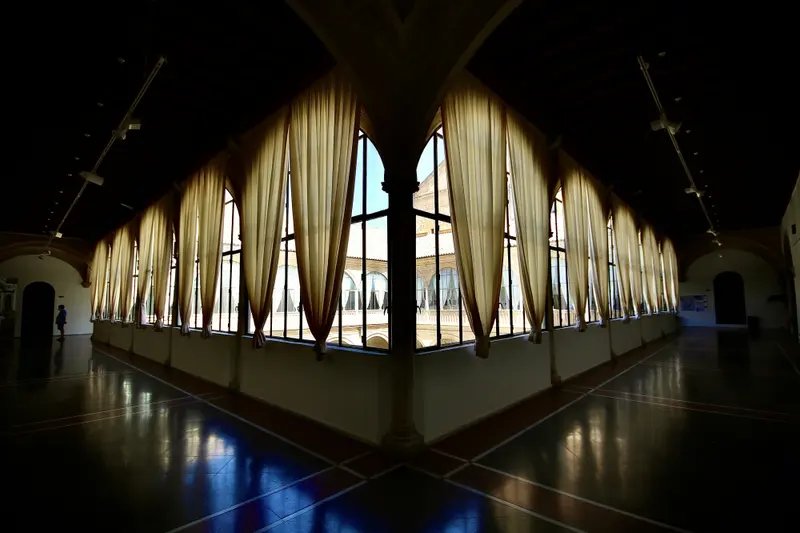
Vandelvira and the city’s major commissions
The Palacio Vázquez de Molina, also known as the Palacio de las Cadenas, is a good place to study how Andrés de Vandelvira gave order to a civic façade. Compare the sizes of its storeys and the patterning around the windows. Look at the adjoining buildings from the same viewpoint, then walk over to see where the chapel and the residences actually open onto the square.
The Santiago Hospital, also designed by Vandelvira, makes the value of the comparison clearer. The façade and central courtyard serve an institution with different needs from the palaces. Follow the approach from the front of the building to the galleries. The staircase draws the eye upwards and changes the sense of scale you get from the street.
The basilica and gates
You can read much of the old town by putting one of the gates and the basilica in the same walk. Begin with the scale of the square and the steps approaching the church, then move into the narrow streets towards the wall. Stop where the street begins to descend and see how much of the surrounding landscape comes into view. The route takes you from the open space designed around the major monuments to the limits of the earlier town, without having to follow a complete circuit around the walls.
Santa María de los Reales Alcázares preserves several phases and belongs to the history of the former alcázar precinct. Compare this layered building with the single purpose of the commission for El Salvador. The view from outside helps you understand how both are fitted into the same square.
Puerta de Granada marks a clear passage through the old town wall. Further east, Santa Lucía and the Losal gate give you reference points for a walk towards San Millán. Look at one gate from both sides. The slope and the view beyond the passage help explain its place in the city.
Museums and culture
Pottery and the archaeological collection
Choose the collection according to the part of the city you want to understand better. The Casa Mudéjar keeps the museum visit close to the main squares and brings the scale of a historical house into the day. San Millán makes a better focus if you want to start with the streets of a working quarter and finish at the pottery museum. If you are seeing both, take a break after the first so that the two collections and their buildings have time to register as separate places.
The Paco Tito Pottery Museum in San Millán brings workshops and finished objects into the same visit. Pick a shape or a type of glaze and see how it varies across objects. Check arrangements with the museum if you want to see a demonstration.
The Archaeological Museum occupies the Casa Mudéjar, a historical house with a courtyard. The rooms are worth seeing as part of the visit. After walking through the palatial end of town, the house gives you a different sense of scale and of the way daylight reaches the interior spaces.
The Museum and Oratory of St John of the Cross offer a further thread for a trip centred on religious history. The Sinagoga del Agua presents an interpretation of spaces in the old town. Check how the visit is presented if you are particularly interested in the historical attribution of the rooms.
Neighbourhoods and areas
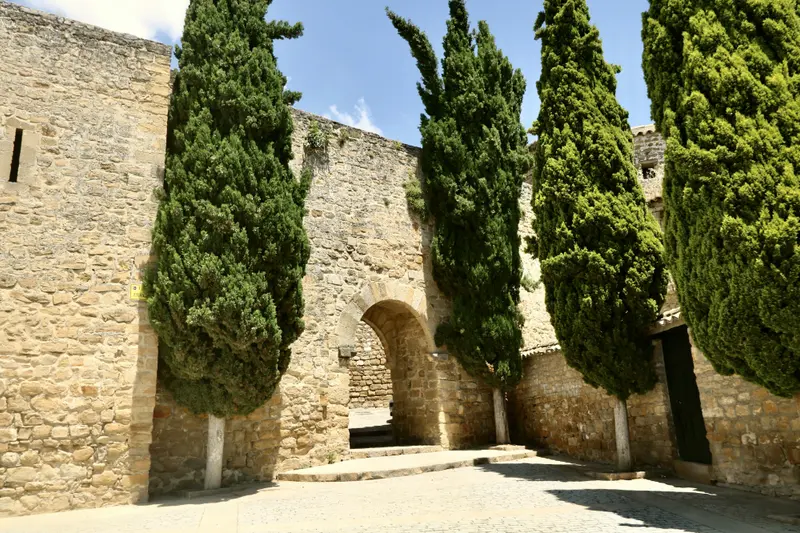
The streets between Vázquez de Molina and Primero de Mayo are a good base for a first walk. With two days you can use that walk to orient yourself, then head out towards the hospital along the broader axis on the other side of the old town.
San Millán is the pottery quarter. Approach past the Losal gate if you want to see how it connects with the streets inside the walls. Leave some time to walk back up. On the south side, the Puerta de Granada and the San Lorenzo area show where the city meets the slope. They work well as a shorter extra walk after the monumental square.
Nature and protected areas
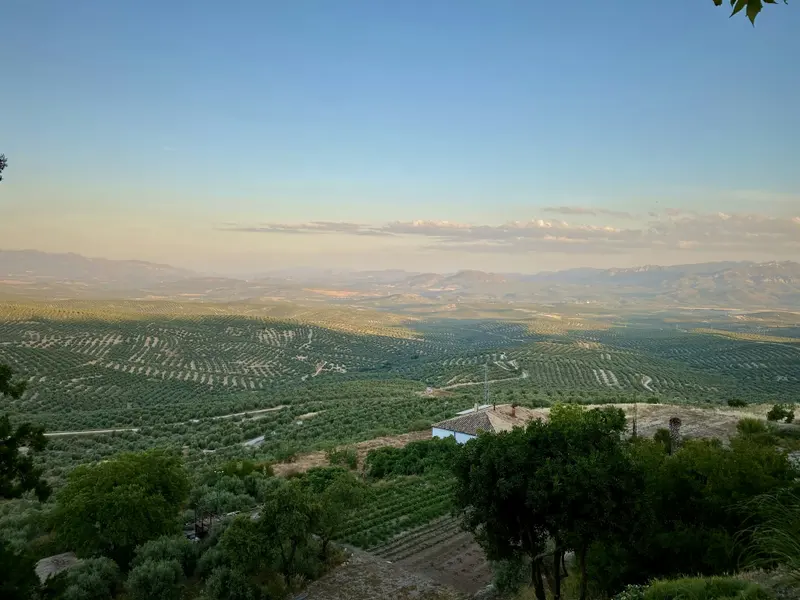
For a short landscape walk, go from the Puerta de Granada area towards the viewpoints on that side of the city. Close to the walls, tiled roofs and stonework frame the land beyond. At the more open points, look at how the rows of trees follow the slopes. Take an inner street back if you want some shade on the return.
Festivals and traditions
During an event, check which street approaches to your accommodation are practical and plan your visits around a single part of town at a time. A concert offers a different kind of visit to a historic building, especially in a chapel or former institutional space. Arrive with time to identify your entrance and see the venue from outside. If the programme takes you between the two towns, deal with the return journey before you commit to a late performance.
Holy Week processions give the squares a different role. In 2026 the main general procession departed from Vázquez de Molina on Good Friday, 3 April. Check the published route for the year of your visit if you want to attend or have walking plans across the old centre.
The Úbeda and Baeza Early Music Festival uses venues in both cities. Úbeda’s 2026 programme included a concert at El Salvador Chapel on 22 November and one at the Santiago Hospital on 26 November. Check which city hosts the concert you are interested in and consider how you will get back if you are staying elsewhere.
Routes and itineraries
One day on both sides of the centre
- Morning. Visit Plaza Vázquez de Molina and El Salvador Chapel. Add a walk towards the southern edge if time allows.
- Middle of the day. See San Pablo and Primero de Mayo, then follow the streets towards the Torre del Reloj.
- Afternoon. Spend time at the Santiago Hospital. If pottery is the main reason for your visit, give the afternoon to San Millán and move the hospital to another day.
Two days for interiors and workshops
See the monumental squares and the hospital on the first day. Begin the second at the Casa Mudéjar, then walk to San Millán and finish with a viewpoint. This leaves time to look closely at a few buildings and see how the architecture of a grand commission differs from that of a house or working quarter.
Day trips
When Úbeda is your base, make one place the focus of an excursion. The visit to Baeza benefits from time on foot between its cathedral, university buildings and the edge of the old town. Sabiote suits a shorter circuit if you have already spent the morning at the hospital. Cazorla involves a change of scenery and is best left for a day with enough time to pause in the town. Each works as a different continuation of the visit to Úbeda, whether your starting point was architecture, fortifications or the landscape.
Baeza continues the Renaissance story with a different emphasis. The cathedral, the Jabalquinto Palace and the Old University shape a route around religious institutions and education. Start in Plaza de Santa María and finish with the walk near the walls if you only have part of a day.
Sabiote is a shorter outing for a fortified building and the surrounding village streets. Cazorla is a longer trip and introduces the mountain landscape. If you need to return to Úbeda that evening, choose the town and the Yedra Castle area. For a walk inside the natural park, start by deciding which access point and sector you actually want to visit.
Travelling with children
Ask children to find the entrances, coats of arms and towers from one point in Vázquez de Molina, then walk closer to look. At the hospital, compare the courtyard and the upper galleries. For a change of pace, choose the pottery museum and look for ways the same material is used in different objects.
A gate and a viewpoint make a short walk with recognisable goals. If the slopes are tiring, use the squares on higher ground for the return and save San Millán for a day when there is more time.
Where to stay in Úbeda
Look near Vázquez de Molina or Primero de Mayo if you want to step out into the historical centre. For a stay with a car, check how the last part of the arrival works and how far you will carry your bags from parking.
The Santiago Hospital and Parque Norte side of town suits people who want a direct approach by road and are happy to walk into the old town. If spending a day in each of the two Renaissance cities, choose your base according to how you arrive and where you are going afterwards. You can do both visits from the same room.
See places to stay in Úbeda (opens in a new tab)Affiliate link: if you book through it, we may earn a commission at no extra cost to you.