

 Español
 English

Why visit Tarifa
Start with the things to do in Tarifa that you can reach from the old town on foot. Walk through Puerta de Jerez, visit the castle and continue to the causeway to Isla de las Palomas. Save a separate part of the trip for Bolonia. There you can step out of a Roman town and walk down to the sand in the same bay.
Tarifa is at the southern end of Cádiz province. Migrating birds, ships and strong winds converge at this narrow stretch of water in Andalusia. Give yourself two or three days if you want to choose the best weather for the beaches and retreat to the streets when the sea is rough. With just one day, pick the town for walls and lanes or go to Bolonia for archaeology and coast in one outing.
When to go
Spring and autumn suit a walk through the old town or out onto the Colada de la Costa. The wind is important here. Check its direction and gusts as well as the temperature. Levante means an easterly and Poniente a westerly. A path and a beach facing different directions can feel quite different on the same day.
In summer, keep beach time flexible. If blowing sand cuts a walk short, a stroll round the harbour or a castle visit can take its place until conditions change. For a trip built around birdwatching, leave several different chances to go out. Wind and visibility affect what you can see from shore.
Getting there and around
The N-340 connects Tarifa with Algeciras and the turn-offs for Valdevaqueros and Bolonia. The old town and waterfront are within walking distance of the coach station. In 2026 the Campo de Gibraltar transport consortium listed bus M-150 between Algeciras and Tarifa. To connect with a train at Algeciras, check both departures and allow some time between them.
Once in town, use the walls, harbour and beach as landmarks. Walk from Puerta de Jerez past San Mateo to reach the waterfront. Keep the car for outings beyond town if you are already staying near the centre. For accommodation along the beach road, look at the actual walking route to the sand. A short line on a map can involve a road crossing or a stretch you would prefer to avoid after dark.
What to see in Tarifa
Puerta de Jerez, San Mateo and the harbour
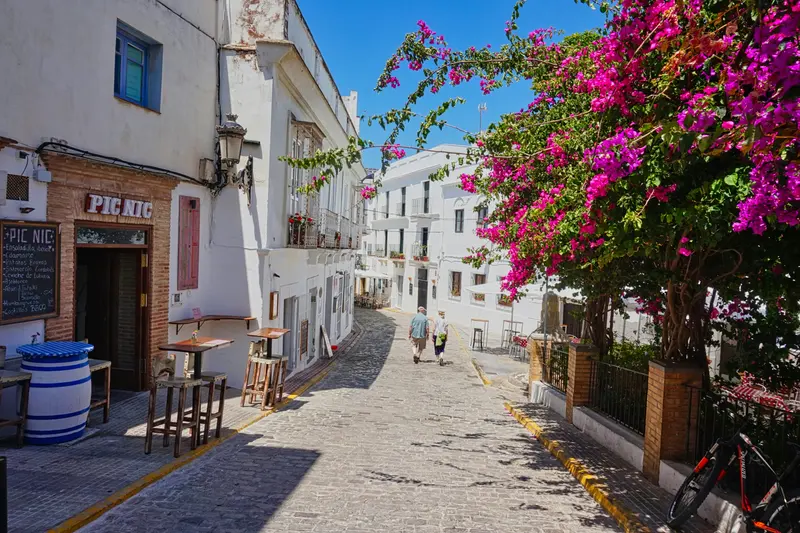
Enter through Puerta de Jerez and follow Calle Sancho IV el Bravo to San Mateo church. Try one of the side streets before going downhill to the Alameda. The walk takes you from close-set buildings to the open port and the stone of the fortifications.
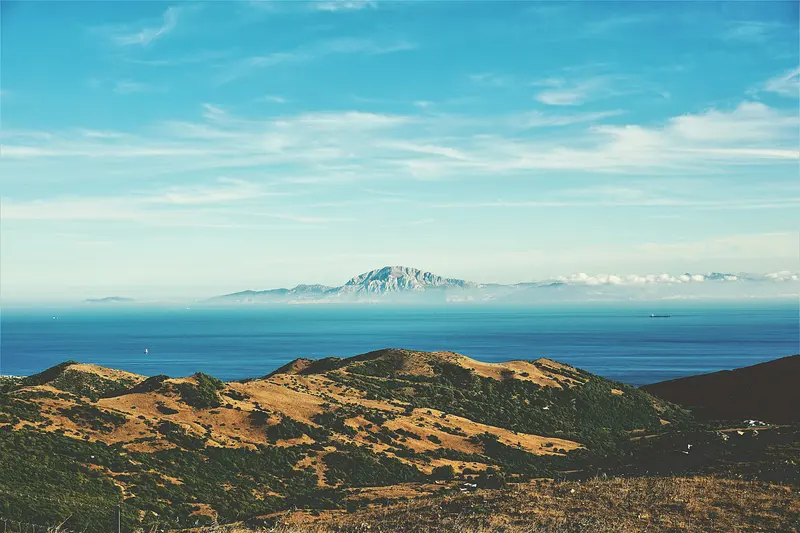
For a view towards Africa, look for a clear stretch of the waterfront. Haze can hide the coast across the strait even when it looked clear a short while earlier. Walk from the harbour to the causeway to Isla de las Palomas. On one side is Mediterranean Playa Chica, on the other the Atlantic shore at Los Lances. Check visitor arrangements separately if you plan to go inside the island enclosure.
Monuments and heritage
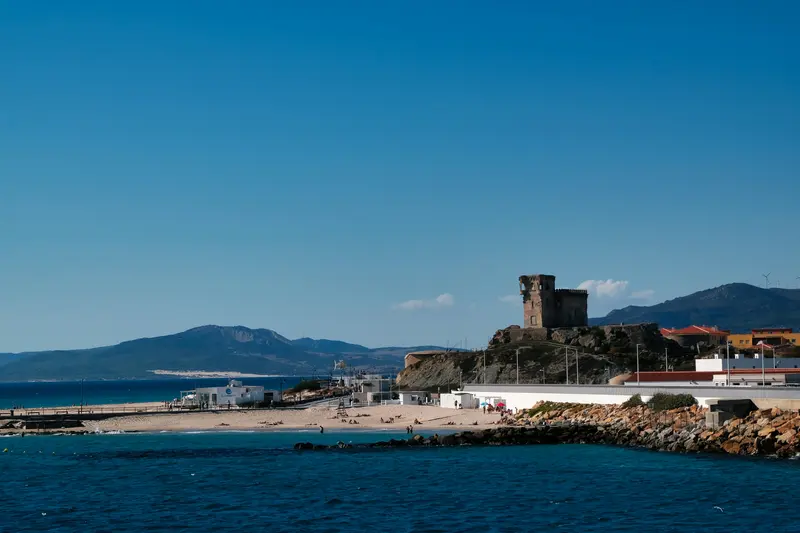
Guzmán el Bueno Castle stands on higher ground beside the port. The town’s tourism office dates the caliphal building to the tenth century. Walk around the outside to see how its walls follow the changes in level. Once inside, look at the connection between the terraces, defences and the shipping channel below.
At San Mateo, spend a few minutes looking at the entrance before you go down to the Alameda. The church is a landmark you can keep returning to when exploring the lanes. On a separate hill by Playa Chica you can see another stone building, Santa Catalina Castle. Check which one you are looking at before following directions to the visitor entrance of Guzmán el Bueno Castle.
Museums and culture
For the maritime history of the strait, look up the interpretation centre on Isla de Tarifa. You can get your bearings from the causeway, but going into the enclosure is a visit to organise on its own. Back in town, the castle gives you a different way to read the same coast and see why control of this crossing mattered.
The visitor centre at Baelo Claudia provides context for the ruins at Bolonia. Follow the forum, theatre and the remains of the fish-salting industry. Look at their position in relation to the bay to make sense of the different buildings. The walk to the beach is short, but you may want a separate spell for the ruins and their exposed paths before time on the sand.
Neighbourhoods and areas
Walled town. Puerta de Jerez, San Mateo and the lower lanes give you three landmarks for exploring without a fixed route. You can return from the castle by a different street. If carrying bags, find the most straightforward way through the walls to your accommodation.
Port and the island end of town. The Alameda connects the harbour with the path to Playa Chica. It is easy to walk between stops here. Los Lances begins across the causeway and opens straight out onto a wider view of the coast.
Bolonia, Facinas and the coast road. Bolonia is in its own bay, reached by road. Facinas is inland and makes a landmark for countryside outings. If booking outside Tarifa town, locate your accommodation, the nearest beach access and the road you will be using on a map.
Nature and protected areas
The Strait of Gibraltar Natural Park covers land and water between the Atlantic shore and the Algeciras side. At Los Lances, follow the marked walk by the wetland. Bring binoculars and look at the edges of the channels and mud as well as out to sea. Knowing which part of the beach has firm dry sand is less important here than being able to watch the water margin for a few minutes.
East of town, the Colada de la Costa follows the cliffs of the strait. The local tourism office gives about 16 kilometres for the trip to Guadalmesí tower and back. If you prefer a shorter walk, choose a turnaround point and keep the same distance in hand for the return. At Bolonia the dune is protected as a natural monument. Use the signed access and let the vegetation hold the sand in place.
Beaches in Tarifa
Playa Chica and Los Lances. Playa Chica is the small beach by the port. Los Lances opens out onto the Atlantic, with a stretch beside town and another further north. It gives you space to walk and the shore feels more open as you move away from the buildings. Check your exact stretch of beach and the conditions there if you want to swim.
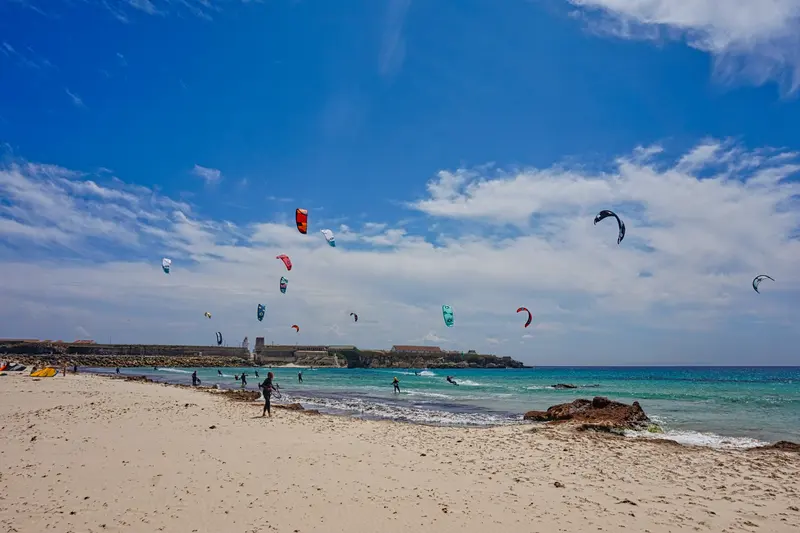
Valdevaqueros and Punta Paloma. Valdevaqueros is further west and attracts windsurfers and kitesurfers when the wind picks up. Locate the access road and your chosen stretch before setting out. Take note of the signs marking the areas for different uses if you want to walk the shore or swim.
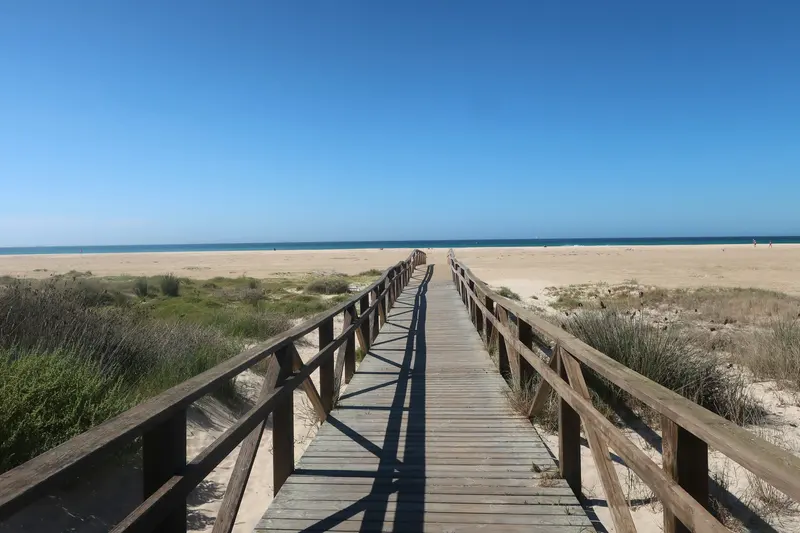
Bolonia. Devote a day to the bay if you want to see the ruins and the dune. From one side you can see the sand climbing the hillside. From another you can see how Baelo Claudia fitted against the shoreline. Leave time for both parts of the day, with separate entrances and a different pace on the site and on the beach.

Festivals and traditions
The 2026 Tarifa fair ran from 6 to 13 September in honour of Nuestra Señora de la Luz. On 6 September 2026, the riders of the cabalgata agrícola accompanied the image of the Virgin from its outlying sanctuary to San Mateo. Use the council programme for your own year. The procession into the old town and events on the fairground take place in different settings, so look up which approach suits what you want to see.
Sport and outdoor activities
Los Lances and Valdevaqueros have areas for wind sports. As a beginner, choose a school that can explain where it is teaching that day and what happens if gusts get stronger. The town’s 2024 to 2027 beach plan divides the shore into areas for different uses. Read the signs on arrival and give the kites room when you pass.
For a whale- and dolphin-watching trip, ask the operator about its route and what happens if the sea turns rough. A walk at Los Lances is a shorter alternative when you want time outside without committing to the full Colada de la Costa. You can also keep to town and look across the strait from the waterfront.
Routes and itineraries
One day on foot. Visit San Mateo and the castle, then follow the port to the causeway. Choose Playa Chica or the start of Los Lances for a seaside stop. Walk back by the Alameda to take in a different part of town on the return.
Two days including Bolonia. Give the second day to Baelo Claudia and the bay. Visit the archaeological site first and take the rest of the day at the speed the weather allows. In strong winds, keep the walk along the shore short and spend longer on the archaeology.
Three days. Add part of the Colada de la Costa or a day at Valdevaqueros. If you are here for kitesurfing, arrange your outing around conditions on the day and keep the old town or Bolonia available as alternatives.
Day trips
Vejer de la Frontera. This hilltop town has a different rhythm from Tarifa’s waterfront. Start at Plaza de España and work through the lanes around the walls. If you plan to go on to the coast, allow time to return downhill and change locations. Vejer works in its own right as a separate day from Bolonia.
Algeciras. Continue the maritime theme around the bay or use the day to walk towards Río de la Miel in the Los Alcornocales area. Check the walk and your return to the trailhead before choosing that option.
Where to stay in Tarifa
Old town and port. Stay here if the main stops are the castle, old streets and Playa Chica. Ask about access if arriving by car. A room inside the walls can involve a different approach from one near the Alameda.
Town end of Los Lances. This is convenient for a morning walk on the sand. Check the distance back to your room from the old town if you expect to head there each evening.
Valdevaqueros or Bolonia. Choose one of these for time around a specific part of the coast. Look at your options for getting to and from your accommodation if you plan to spend evenings in town or need to reach the port early.
See places to stay in Tarifa (opens in a new tab)Affiliate link: if you book through it, we may earn a commission at no extra cost to you.